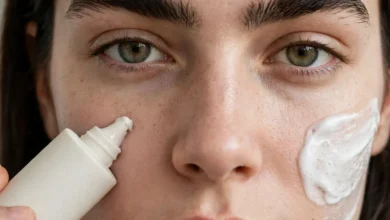
This Is the Nighttime Skincare Routine Your Skin Is Begging For, According to Derms


Sleep matters more than most of us give it credit for — and not just for how you feel in the morning. When it comes to your “beauty sleep”, the right evening routine can genuinely level up your skin health. The idea is simple: while you sleep, your skin gets its best chance to reset and repair, and what you put on it before bed decides how well that reset goes. Ahead, Dr. Parvaneh Rafaeloff, a medical doctor at Le Jolie Medi Spa, joins dermatologists Dr. Anna Guanche and Dr. Carl Thornfeldt to break down the ideal step-by-step nighttime routine — seven steps, no more complicated than it needs to be.
The short version first. Start by cleansing twice to get makeup and sunscreen properly off, using a gentle, non-foaming cleanser so your skin is not left irritated. Put any targeted treatments on dry skin after cleansing. And finish with moisturiser no matter your skin type — even oily skin needs it — choosing a formula that will not clog your pores.
Meet the Experts
Dr. Anna Guanche is a board-certified dermatologist with offices in Calabasas and Beverly Hills, California. Dr. Carl Thornfeldt is a board-certified dermatologist and the founder of Epionce skincare. Dr. Parvaneh Rafaeloff is a physician for Le Jolie Medi Spa. The original article was medically reviewed by board-certified dermatologist Dr. Julia A. Siegel. The piece was written by Allie Flinn and Holly Rhue and published on January 14, 2026.
Why Is It Important to Have a Night Skincare Routine?
According to Rafaeloff, your skin enters a reparative phase while you sleep — which is exactly why a good nighttime routine is so important. There are no environmental stressors working against you at night, no pollution and no sun damage to contend with while you sleep, so your products are able to penetrate better when you are not wearing makeup and your skin can simply breathe. In other words, the evening is when your skin does its repair work, and your routine is there to support it.
Step One: Remove Your Makeup and SPF
Step one is all about the clean slate, and Guanche is a big fan of double-cleansing — washing your skin twice at night so the cleanse is actually effective. She recommends starting your evening routine by taking off your makeup (if you wear it), along with your sunscreen and the oil and debris the day has left behind. For this first pass, she suggests a gentle, non-foaming cleanser, such as a cleansing balm or micellar water. If you wear waterproof makeup, an oil-based makeup remover with cotton rounds will do the job instead.
Step Two: Gentle Cleanser
Whatever your skin type, the second cleanse calls for a gentle cleanser — one that will not strip your skin of its natural oil or disrupt your skin’s microbiome, which is a fast route to irritation. That is the advice of Thornfeldt, a practicing dermatologist and founder of the skincare line Epionce. Sensitive and dry skin types should look for a hydrating cleanser, he says, while oily and acne-prone skin types can opt for a gentle foaming cleanser.
A quick note on toner: you can use one after cleansing if you like, but the dermatologists interviewed for the piece agree that it is not necessary — especially if you have already double-cleansed.
Step Three: Targeted or Spot Treatments
This is the step where the routine becomes personal. As Thornfeldt puts it, this is where you tailor things to your own skin concerns — whether that is a serum for hyperpigmentation or a prescription acne product like tretinoin. It is also where any spot treatments go, applied to active breakouts.
One timing detail matters here: prescription retinoids and spot treatments work best on dry skin, so let your skin dry for about 20 minutes after cleansing before you apply treatments with active ingredients. And you do not need to do this step every night — targeted treatments are typically recommended for three to five nights a week, so you can simply skip it on your “off” nights.
Step Four: Hyaluronic Acid Serum
Hyaluronic acid is a well-supported, hydrating ingredient that almost anyone can add to their routine — especially if your skin runs dry. But it is worth knowing that hyaluronic acid serums are not considered a “mandatory” step in an evening routine. If you use one, apply it after your targeted treatment. Or, if you would rather keep things simpler, look for a moisturiser that already contains hyaluronic acid and let it do two jobs at once.
Step Five: Eye Cream
Eye creams are far from pointless. Used as a form of preventative care, they are genuinely useful, because they give the thin skin around your eyes a targeted treatment of its own. Some under-eye creams promise to brighten and reduce the look of dark circles, but the most important thing is keeping that delicate area hydrated — especially since our under-eyes go through the wringer with eye makeup removal every night.
When you are choosing an eye cream, look for formulas with peptides, which boost hydration and help firm the skin to smooth fine lines and wrinkles.
Step Six: Always Moisturize
Every skin type should end the evening routine with moisturiser — even oily or acne-prone skin. Thornfeldt recommends a “skin barrier–repairing moisturizer to help rejuvenate the health of the skin.” In plain terms, pick something hydrating that will not clog your pores. Products that contain hyaluronic acid are a good bet here, because hyaluronic acid helps your skin hold onto moisture.
Skip this step and your skin may feel tight and very dry, unable to get the full benefit of a good night’s sleep. And if breakouts are a concern, choose an oil-free formula — one that still replenishes your skin with the moisture it needs without adding excess oil to your pores.
Step Seven: Optional Face Oil or Occlusive
The last step is entirely optional, and it is mainly for dry skin: sealing everything in with an occlusive product, such as a face oil — or “slugging” with good old-fashioned Vaseline. Occlusives like these trap moisture into your skin, which makes for deeper, more effective moisturisation.
There is one important exception. Occlusives are not recommended if you have acne-prone skin, and they should not be layered on top of retinoids — trapping a retinoid underneath an occlusive can cause irritation. If neither of those applies to you, though, this final sealing step is a perfectly good way to end the night.
That is the whole routine: cleanse twice, cleanse gently, treat what needs treating, add hydration, look after your eyes, moisturise without fail, and seal it in only if your skin wants it. Seven steps, in that order, and your skin gets to do its overnight repair work properly supported.
Sources named in the original article: a 2019 study on the anti-wrinkle benefits of a peptides complex (Jeong and colleagues, International Journal of Molecular Sciences) and a 2012 review of hyaluronic acid as a key molecule in skin aging (Papakonstantinou and colleagues, Dermatoendocrinology).