
For January sorority recruitment, start with your campus dress guide, then build each outfit around the shoes and coat your weather requires. A cardigan and dark jeans can suit a casual opening event; dressier separates can work for sisterhood; a cocktail dress or dressy pants outfit may fit preference. If Panhellenic supplies a shirt, plan around that shirt.
The first thing to check is what spring rush means at your school. It may be structured primary recruitment with several rounds, or it may be continuous open bidding, usually called COB. Those need different calendars—and potentially very different outfits.
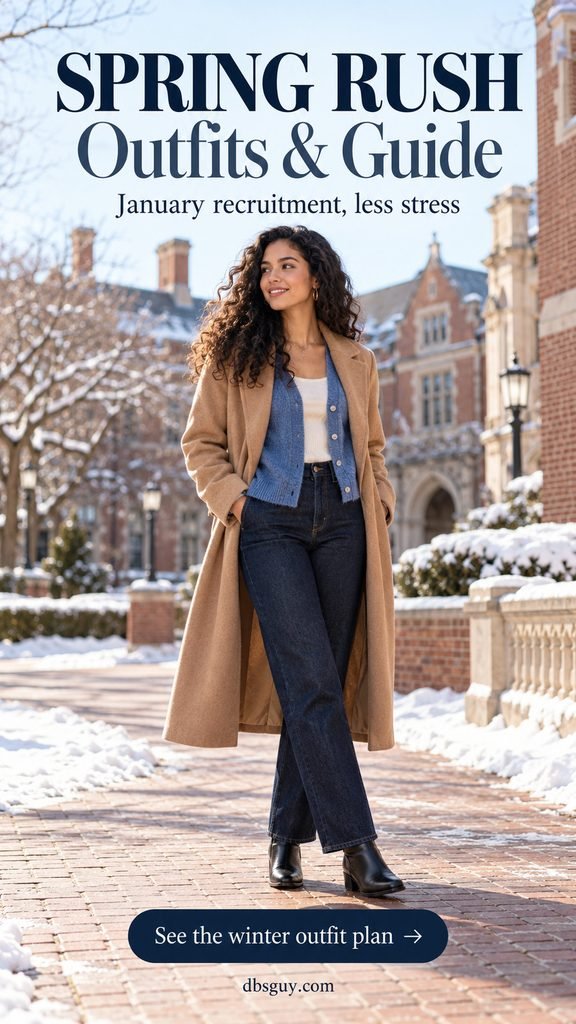
The visuals are AI-generated outfit concepts, not photographs of actual recruitment events or examples of a university’s required attire.
Before You Plan Outfits, Confirm Your Recruitment Format
This guide focuses on College Panhellenic sorority recruitment. Other councils and organizations use their own membership processes, so start with the office or council responsible for the organizations you want to explore.
January primary recruitment
Some colleges hold their main recruitment process during winter or spring term. There may be an orientation, introductory events, philanthropy and sisterhood rounds, preference, and Bid Day. Names, order, dates, and whether events happen online vary by campus.
“Spring” describes the academic term; it does not tell you how warm the walk between events will be. Also check when residence halls reopen. Recruitment can begin before classes, and a registration confirmation does not necessarily settle your housing or travel arrangements.
Spring COB
COB is a less structured opportunity offered by eligible chapters. It can involve smaller gatherings such as a coffee conversation or an activity, rather than the same round schedule for everyone. Not every chapter participates, events may happen at different times, and attending does not guarantee a bid. The National Panhellenic Conference explains the differences in its guide to continuous open bidding.
For a COB invitation, ask the organizer what the event involves and what to wear. A casual coffee outfit and an outfit for a dressier chapter event are different decisions; the word “informal” alone is not a complete dress code.
Get these details before buying anything
- Registration and eligibility: Confirm the deadline, any fee, and your school’s academic or enrollment requirements. A chapter may have additional membership standards.
- Your actual schedule: Note orientation, event locations, online rounds, and the process for reporting class or work conflicts.
- Round-specific clothing: Check for a required shirt, permitted bottoms, dressier events, and any current campus lookbook.
- Winter logistics: Ask about outdoor waits, bags, coat storage, and whether there is a practical place to change shoes.
A useful question for your recruitment counselor is: “My guide says dressy casual for sisterhood. Would tailored pants, a fine-knit sweater, and ankle boots fit that guidance?” A specific outfit gets you a clearer answer than “What should I wear?”
5 Spring Rush Outfits to Adapt for January
These are styling suggestions to use after checking your campus instructions. You can repeat coats, shoes, and bottoms. There is no need to turn every event into a separate shopping trip.
1. Open House or Casual COB Coffee: Cardigan + Dark Jeans

A soft blue cardigan, cream crewneck, dark straight-leg jeans, and black ankle boots make a useful starting outfit when the event allows casual clothes. The cardigan gives you a removable layer, while the cream top keeps the outfit complete if the room gets warm.
Try the jeans and boots together before the day. The hem should clear the ground, and the waistband should stay comfortable when you sit. Choose a flat or low heel you already walk comfortably in. Add your winter coat outdoors; a cardigan is the indoor layer.
If your school requires a Panhellenic shirt for open house, use that instead of the cream top and follow its layering rules. For a virtual round, test your outfit on camera with the lighting you will actually use. Small, busy patterns can distract more on screen than they do in a mirror.
2. Philanthropy: The Required Tee + Tailored Trousers

If your campus assigns a T-shirt for this round, let it be the starting point. Charcoal straight-leg trousers and simple ankle boots give the shirt a neat finish without adding much to manage. The illustrated periwinkle tee is only an example; wear the actual shirt your school provides.
Where permitted, a thin long-sleeve base layer adds coverage beneath a short-sleeve tee. Try it on first so the sleeves do not bunch and the neckline sits comfortably. Use a puffer or another weather-appropriate coat for travel.
No assigned shirt? Read the actual round instructions. Some campuses recommend casual jeans and a top. If you already have comfortable dark jeans, they may do the job without another purchase. Do not cut, crop, or otherwise alter a required shirt unless your campus explicitly permits it.
3. Sisterhood: Fine-Knit Sweater + Pleated Midi Skirt
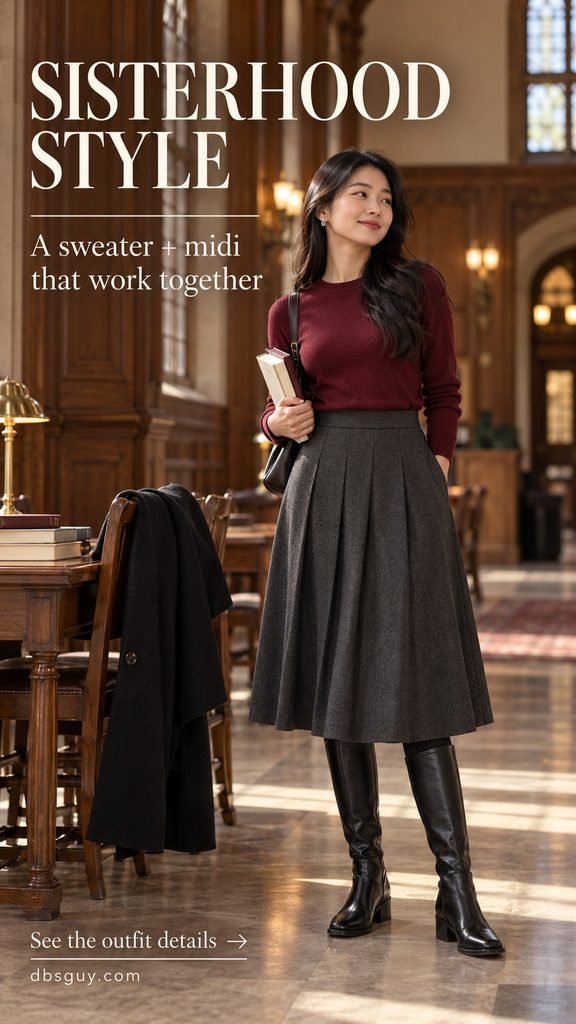
For a dressy-casual sisterhood round, try a burgundy fine-knit sweater with a charcoal A-line midi skirt and low-heeled knee-high boots. Opaque tights can add coverage beneath the skirt. A thinner knit is easier to tuck without creating a bulky ridge at the waistband.
Check the skirt and boot combination while walking and sitting. The hem should move freely over the boot shaft instead of catching, and you should be able to take a normal stride. Keep the coat separate so the outfit still looks finished indoors.
If skirts are not your style, keep the sweater and wear tailored trousers instead. A blouse with those same trousers is another way to meet a dressier brief. Ask about the whole combination if your campus examples show only dresses; you need an outfit you can participate comfortably in.
4. Preference: Long-Sleeve Dress + Closed-Toe Shoes

Where the guide calls for cocktail or semi-formal attire, a navy long-sleeve dress in a substantial fabric is a practical January option. Opaque tights and closed-toe low block heels make the illustrated outfit feel dressed up without relying on bare legs or open sandals.
Use a dress that lets you sit, reach, and move without constant adjustment. Check the neckline, sleeve comfort, and how the fabric falls when you put your coat on. Simple earrings are enough if you want the dress to carry the outfit.
A dressy jumpsuit or tailored pants with an occasion top may also fit your campus guidance. Heels are a styling choice, not a universal recruitment requirement; dressy flats can be an alternative. For snow or ice, travel in suitable winter footwear and change only if the schedule and storage arrangements make that workable.
5. Bid Day: Easy Layers + Jeans + Sneakers

If your campus describes Bid Day as casual, a zip fleece over a plain tee, straight-leg jeans, and familiar sneakers is an easy combination. An opening layer is useful if you are given a chapter shirt and the organizers ask you to change into it.
Confirm the plan before choosing footwear: an indoor gathering and an outdoor celebration have different needs. The fleece shown is an indoor or mild-weather layer. Add a proper winter coat, warm socks, and weather-appropriate shoes when conditions call for them.
You can reuse the jeans from an earlier day. Lay out a clean base top beforehand, then follow the instructions for your own event rather than assuming every Bid Day follows the same routine.
Make the Outfit Work Between Buildings, Too
Choose your outdoor layer for the forecast, the wind, and how long you may wait outside. A coat that looks polished in an inspiration image may still be the wrong choice for your campus conditions. Ask the organizers about indoor waiting areas or weather changes to the schedule.
- For cold, dry weather: Use a coat with room for your outfit underneath, plus gloves and a scarf as needed. Make sure your indoor top works after you remove them.
- For rain, slush, or ice: Prioritize weather protection and appropriate footwear. Keep trouser hems off wet ground. Dress shoes belong indoors if they cannot handle the route.
- For heated rooms: Use layers you can remove without disrupting a required shirt or the rest of your outfit.
Do a short rehearsal in the full combination: walk, climb stairs if your route includes them, sit down, and put your coat on. Check for slipping heels, twisting tights, scratchy seams, or a bag strap that catches your sweater. Fix those problems while you still have time to change pieces.
If you use mobility equipment, check that hems, straps, and coat lengths clear moving parts and stay comfortable while seated. Ask the organizing office about accessible routes, seating, breaks, and accommodations before the event.
A Simple January Recruitment Prep Plan
Before winter break
Check the official registration deadline now; do not assume you can register when you return in January. Save your confirmation and the current campus guide. Confirm early-arrival arrangements, travel, and any steps needed to verify eligibility.
Pull possible outfits from your closet and compare them with the guide. Make a short list of actual gaps—a comfortable pair of dress shoes, perhaps, rather than an entirely new wardrobe. Borrowing works best when you have time to check the fit and return arrangements.
The week before events
Check for schedule updates and the local forecast. Photograph each complete outfit for your own reference, including shoes and outerwear. If a round spans multiple days, plan how you will rewear or wash the pieces. Ask about meal arrangements and breaks rather than assuming they are included.
The night before each round
Set out the clothes, required shirt or identification, and your route. Charge your phone. If bags are permitted, pack only what fits the day: a charger, tissues, lip balm, a small stain wipe, water or a snack if allowed, and any personal items you normally need. Check where the bag will stay during events.
After each conversation
When you have an appropriate break, make a short private note: one thing you learned, one question still unanswered, and how comfortable you felt being yourself. Follow campus rules about phone use and confidentiality. These notes can help when several conversations start to blur together.
What to Ask When You Want More Than Small Talk
You do not need a polished speech. Prepare a short introduction about what you study, something you enjoy, and what you hope to find in a campus community. Then leave room for the other person’s answer.
Use questions that reveal everyday membership:
- “What does a normal week in the chapter look like, including required events?”
- “How do members balance chapter commitments with a job, labs, or commuting?”
- “What does the chapter’s philanthropy work involve beyond fundraising events?”
- “Where can I see the full new-member and ongoing costs, including extra fees?”
- “What helped you get to know people when you first joined?”
Get current written cost information and ask which expenses are required, optional, or tied to housing. A friendly conversation cannot tell you whether membership fits your budget and schedule unless you also have those details.
Primary recruitment involves mutual selection, so your preferences do not determine every invitation. If your schedule changes or you are disappointed, speak with your recruitment counselor before deciding what to do next. Before signing a membership agreement, ask them to explain the terms and how they affect future recruitment eligibility.
Keep a familiar routine outside recruitment—a meal, a call home, or time with a friend. If you decide sorority membership does not fit right now, you can still explore campus communities through How to Join Clubs in College: Find Your People Freshman Year.
Spring Rush Questions You May Still Have
Is spring rush always easier than fall rush?
No. Spring may be your campus’s primary recruitment period, with a structured schedule. COB can involve smaller gatherings, but available chapters and places vary. Neither format guarantees an invitation or a bid.
Can I wear jeans to January recruitment?
For a casual round that permits them, yes. Check the instructions for that specific event. Jeans that work for an introductory conversation may not fit a dressy-casual sisterhood round or semi-formal preference.
Do I need a different coat or pair of shoes for every round?
No. Reusing practical outerwear and comfortable shoes keeps the plan manageable. Check that each pair meets the event’s guidance and works with the weather. If you need separate indoor dress shoes, confirm when and where you can change.
What if I cannot afford the outfits shown in inspiration posts?
Start with the combinations you already own and ask your recruitment counselor how they fit the dress guide. Borrow only what you need and can comfortably wear. Discuss membership costs early, too, so clothing does not become the expense you focus on while larger commitments remain unclear.
What should I wear to a spring COB event?
Ask about the activity and dress expectations. The cardigan-and-jeans formula can suit a casual coffee meetup; it may need changing for a dressier event. Follow the invitation, and get clarification from the organizer when the wording is vague.