
Start with one generous main, one or two sides, and a simple sweet finish. Red chile pork tamales and pozole rojo are wonderful places to begin, but a Mexican Christmas dinner can also center on salt cod, adobo roast pork, turkey, or a pot of birria. Below are 15 distinct dishes, with serving ideas and preparation notes to help you build a menu that fits your gathering.
Nochebuena is Christmas Eve, and the food on the table varies by region and family. This collection brings together Christmas favorites, celebration dishes, and practical dinner alternatives. You do not need to cook all 15—or make every component from scratch.
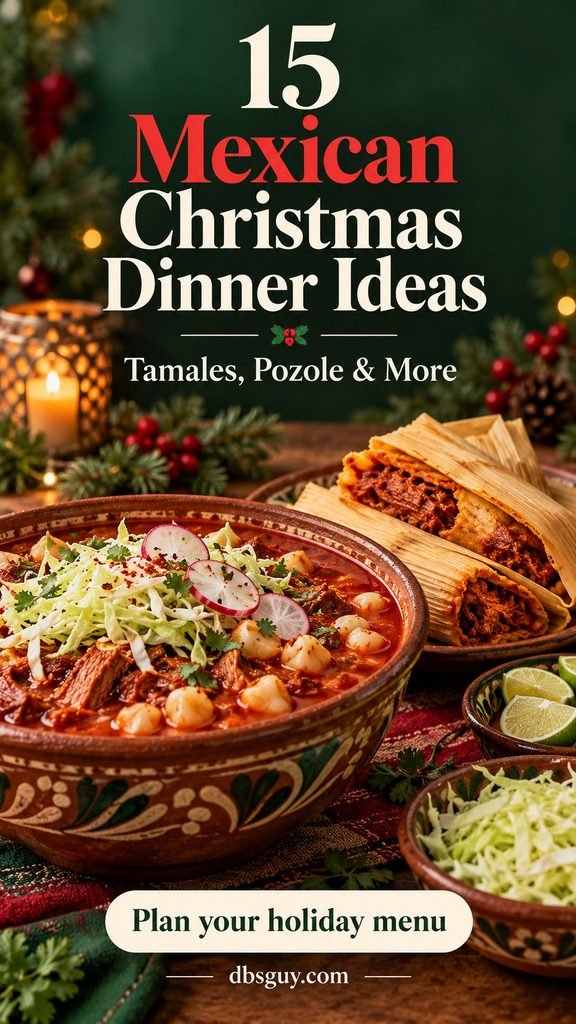
The visuals are AI-generated food concepts. The portion estimates and preparation notes are menu-planning guidance, not kitchen-tested recipes; use your established recipe for exact dough, sauce, and cooking instructions.
Choose Your Mexican Christmas Dinner Menu
Pick the menu that sounds most like your evening, then use the numbered ideas below to adjust it.
- A relaxed tamale supper: red chile pork tamales, arroz rojo, and Christmas Eve salad, followed by buñuelos. Order the tamales ahead if you want to spend your time on the sides.
- A cozy dinner for a crowd: pozole rojo with separate bowls of cabbage, radishes, oregano, and lime. Add tostadas and finish with buñuelos. A substantial soup needs fewer side dishes.
- A seated holiday dinner: pierna adobada or adobo turkey, creamy poblano spaghetti, and Christmas Eve salad. Choose one roast so the oven schedule stays manageable.
For a smaller table, put garnishes on a nearby counter and leave room for the serving bowls. These small Christmas table decor ideas that still leave room for dinner can help you plan the space around the food.
1. Red Chile Pork Tamales
Choose tamales when you want a meal people can unwrap, share, and return to for seconds. The combination of soft masa and red chile pork feels substantial without needing a second meat dish. Corn husks are wrappers: guests should remove them before eating.
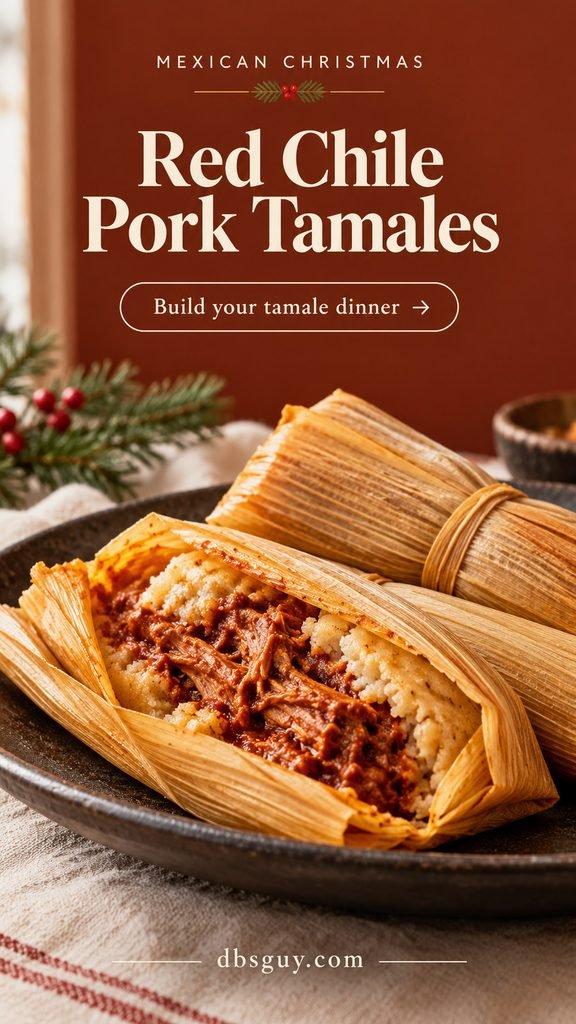
For eight adults: plan roughly 24 medium tamales with sides, adjusting for the size sold by your tamal maker. Add arroz rojo, a crisp salad, and salsa rather than another elaborate main. Ask about filling, heat level, and reheating directions when ordering; holiday pickup slots may need arranging in advance.
If making them at home, split the work across two days. Cook and refrigerate the pork filling first; prepare the masa, fill the softened husks, and steam the next day. Use masa harina or prepared masa intended for tamales, and follow the recipe’s hydration guidance. A dry filling and a thick layer of masa can make the finished tamal feel heavy.
For a meatless guest, arrange a separate cheese-and-poblano or bean filling and confirm that the masa contains neither lard nor meat broth. Label the varieties so guests can find their own.
2. Pozole Rojo With a Help-Yourself Topping Station
Pozole rojo is the strongest choice here for a dinner that revolves around one big pot. Pork and hominy sit in a red chile broth; the fresh toppings give each bowl crunch and brightness. Hominy is treated corn with large, plump kernels, not ordinary sweet corn.
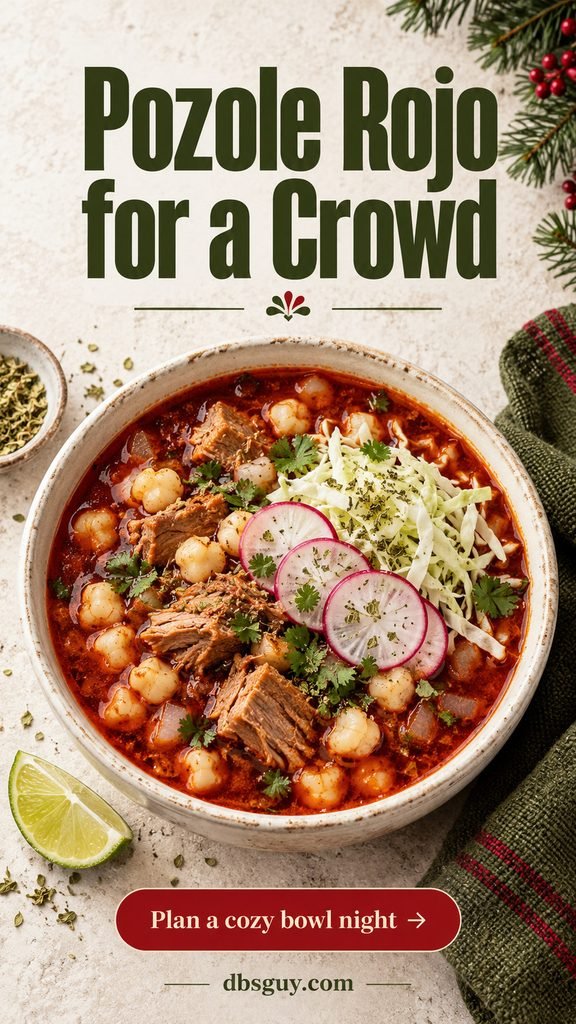
Build the shopping list around: pork shoulder, canned hominy, guajillo and ancho chiles, onion, garlic, broth, and Mexican oregano. For eight main-dish bowls, a useful starting point is a recipe using about 3 pounds of boneless pork and 6 cups of drained hominy. Check its finished yield before choosing your pot.
Cook the pork until tender, prepare and strain the softened-chile sauce as your recipe directs, then combine with the hominy and broth. Canned hominy is already cooked, which removes the separate dried-corn preparation. Leave room in the pot for stirring and adding liquid.
Set out shredded cabbage, sliced radishes, lime wedges, chopped onion, and oregano separately. Keep tostadas dry until serving. For the least rushed evening, cook the stew the day before, cool it promptly in shallow containers, and reheat it thoroughly before guests arrive.
3. Bacalao a la Vizcaína With Bread
Bacalao brings a different kind of richness to the holiday table: flaky salt cod, tomato, olive oil, green olives, and briny accents. Mexican Christmas versions vary; potatoes and pickled peppers make an especially inviting serving dish. Bread is useful for gathering up the sauce.
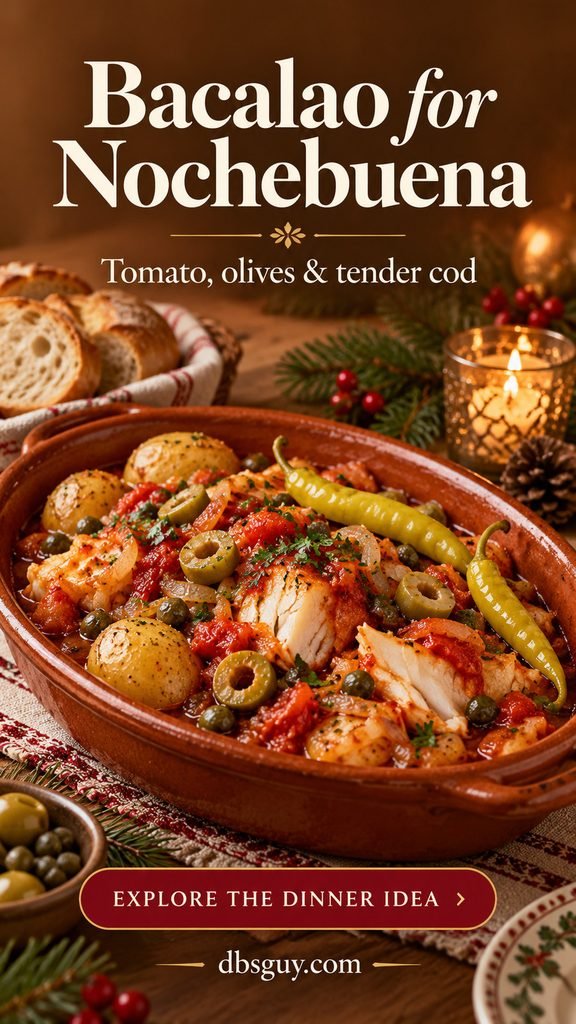
Choose this for: a smaller seated dinner or a seafood centerpiece alongside salad. For six people, look for a recipe built around roughly 1½–2 pounds of dried salt cod, recognizing that desalting changes its weight. The package and recipe should determine the soaking schedule.
Desalt the fish in the refrigerator, changing the water as directed. Do not assume a quick rinse is enough. Once prepared, remove any skin and bones carefully, then fold the fish into the cooked tomato mixture without breaking every flake into crumbs.
Taste the assembled dish before adding salt because the fish, olives, capers, and pickled peppers all contribute it. Unsalted fresh cod makes a useful alternative, but it changes the preparation and flavor: skip the desalting step and cook it as fresh fish. Call that version fresh cod in tomato-olive sauce rather than treating the two products as interchangeable.
4. Romeritos con Mole and Shrimp Patties
Romeritos offer a distinctive Nochebuena dish: tender greens in mole, often joined by potatoes, nopales, and dried-shrimp patties. They are particularly associated with central Mexican holiday tables. The greens are not culinary rosemary, despite the similar name.

Check availability before committing: ask a Mexican grocer about fresh or frozen romeritos, prepared nopales, and dried shrimp. Source the greens first; the rest of the shopping list can follow. For six servings, choose a recipe with enough potatoes and shrimp patties for the dish’s role as a main or a side.
Clean and cook the greens as directed, cook the potatoes separately until tender, and bring the components together in prepared mole. Add broth gradually so the sauce coats the greens without becoming a stiff paste. Keep some shrimp patties visible when serving rather than stirring them all into pieces.
If romeritos are unavailable, spinach can make a greens-and-mole adaptation, but the texture and flavor will differ. Also, this dish is not vegetarian when it contains dried shrimp or meat broth. Ask about the mole’s ingredients, including nuts, sesame, and any animal products, before serving guests with dietary restrictions.
5. Pierna Adobada as the Holiday Centerpiece
A platter of sliced adobo pork works beautifully for a seated dinner. Pierna adobada uses pork leg coated in a chile-based marinade; its reddish exterior and savory pan juices give it a clear place at the center of the menu.
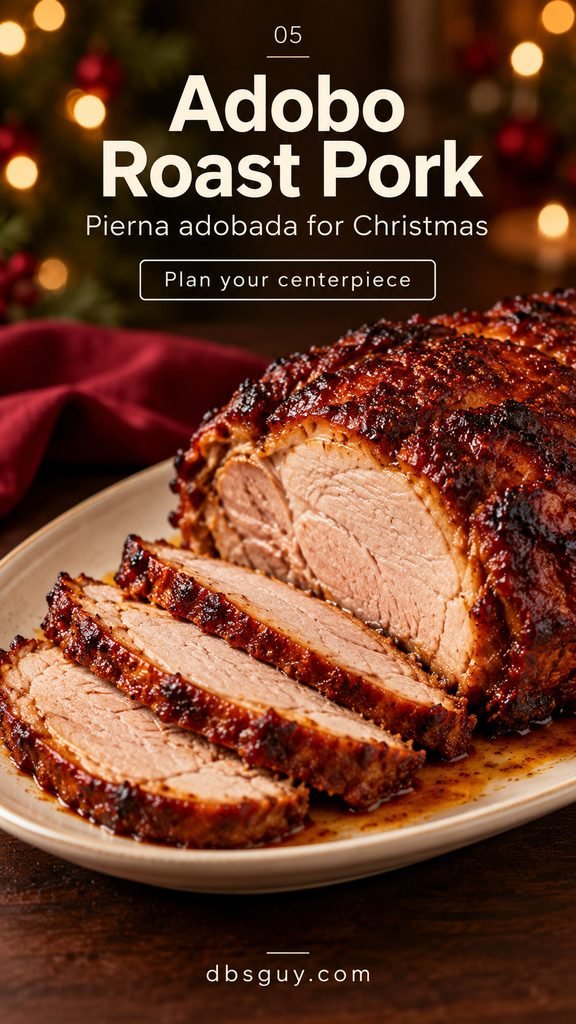
Ask the butcher for: a pork-leg roast sized for your guest count, and confirm whether its weight includes bone. For eight adults with sides, about 4–5 pounds of boneless roast is a planning starting point. A bone-in piece needs a different buying allowance and roasting schedule.
Build the flavor around dried chiles, garlic, oregano, vinegar, and citrus, following a recipe matched to your cut. Refrigerate while marinating. Keep a clean portion of sauce separate before it touches raw meat if you want extra sauce at the table.
Plan the oven around this dish and make the salad elsewhere. Let the roast rest before slicing, and serve the pan juices separately so guests can add what they like. Pork leg and pork shoulder behave differently; a shoulder substitution needs a recipe suited to that cut. Creamy poblano spaghetti is a comfortable pairing, while a citrusy salad keeps the plate from feeling too rich.
6. Mexican-Style Adobo Turkey
Adobo turkey is a good bridge for a family that enjoys a whole holiday bird and wants Mexican flavors around it. A chile, garlic, citrus, and spice coating gives the turkey a different character while leaving familiar carving and serving rituals in place.

For eight to ten diners: a 12–14-pound whole turkey is a reasonable planning range when served with sides. Buy according to your preferred recipe and appetite for leftovers. A frozen bird also needs thawing time before any marinating begins.
Use a turkey-specific recipe for the adobo quantity and roasting schedule. Keep the bird refrigerated while thawing and marinating, and avoid piling on a thick, sugary coating that can darken before the inside cooks. If the surface colors too quickly, shield it as the recipe directs.
Check the breast, innermost thigh, and innermost wing with a thermometer; poultry must reach 165°F. Cook stuffing separately for a simpler schedule. You can make the sauce and salad components ahead, then cook the pasta while the turkey rests. For a small household, an adobo turkey breast gives a similar menu direction with a different cooking time.
7. Chicken in Mole Poblano
Chicken in mole poblano suits a dinner where the sauce does most of the celebrating. Its layered chile, spice, seed, and sometimes nut flavors deserve simple accompaniments. A little chocolate may be part of the sauce, but mole should not be treated as chocolate syrup poured over chicken.
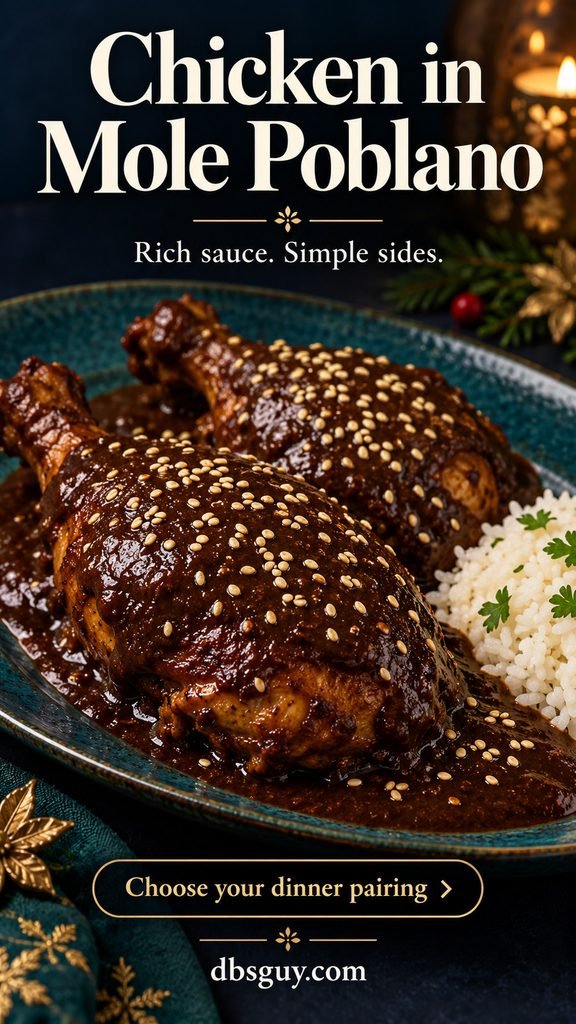
A practical shortcut for eight: use eight generous cooked chicken portions and enough prepared mole for the serving quantity on its label. Some products are concentrated pastes; others are ready-to-use sauces. Their broth requirements differ, so do not dilute them all by the same amount.
Cook the chicken to 165°F, prepare the sauce separately, then bring them together gently. Thin the mole gradually until it pours slowly from a spoon and coats the chicken. Taste before adding extra chocolate, sugar, or salt.
Serve with plain white rice or warm tortillas and a crisp vegetable side. A small sprinkle of sesame can finish the platter, but check the ingredients first: mole may contain peanuts, tree nuts, sesame, wheat, or other allergens. Keep a clearly separate alternative for anyone who cannot eat the sauce. Making mole ahead can free up useful time on Christmas Eve.
8. Beef Birria With Broth and Warm Tortillas
Birria is a celebration dish that can make a cozy Christmas main without requiring a roast to carve. This beef version pairs tender meat with chile-rich broth, onion, cilantro, lime, and warm tortillas. It is a dinner of bowls and soft tacos; there is no need to fry a separate batch of cheesy dipping tacos.
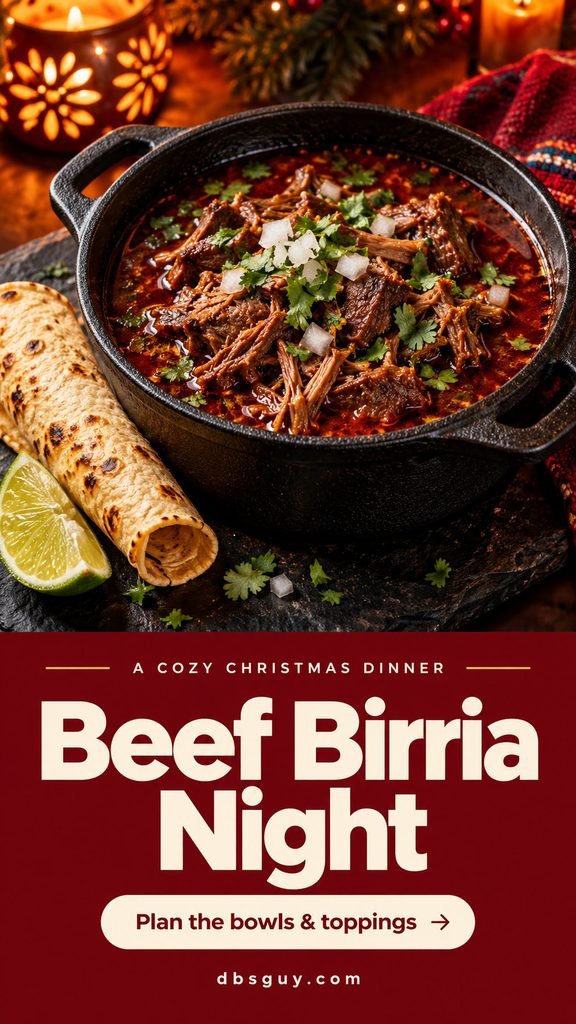
For eight adults: start with a recipe using roughly 4 pounds of boneless beef chuck and buy about 24 small corn tortillas. Keep extra tortillas available for generous appetites. Goat and lamb versions also exist, so specify beef if you are ordering from a restaurant.
Use a covered braise suited to your cut, with dried chiles, garlic, spices, and enough liquid to preserve a useful amount of broth. The meat should pull apart easily; that tenderness takes longer than simply reaching a safe minimum temperature.
Cook a day ahead if convenient, refrigerate promptly, and remove excess solidified surface fat before reheating. Serve the broth in bowls or cups so it does not flood the tortillas. Keep garnishes in small refillable dishes and pass the lime separately. A bright salad is enough alongside a generous portion.
9. Cochinita Pibil With Pickled Red Onions
Cochinita pibil brings achiote and sour-citrus flavors to the table. An oven-made version of this Yucatán dish works especially well for a casual holiday gathering: guests can fill warm tortillas with the orange-red pork and add sharp pink onions.
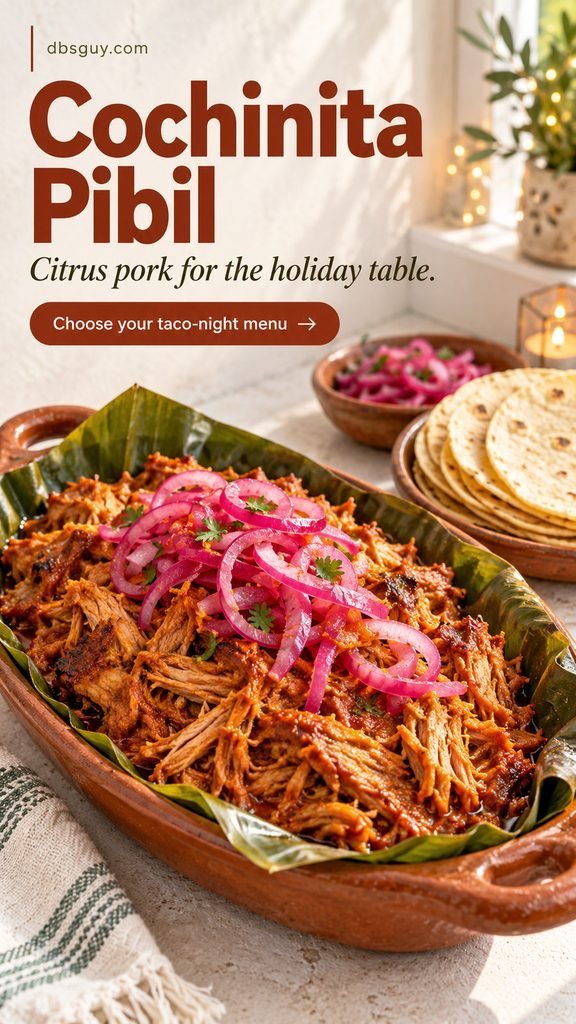
For eight: plan around a 4–5-pound boneless pork shoulder, achiote paste, the citrus specified in your recipe, two red onions, and 24–32 small corn tortillas. Achiote pastes vary in salt and seasoning; taste and measure according to the product and recipe.
Marinate under refrigeration, then roast covered until the pork shreds easily. Banana leaves add character when available; use food-grade leaves prepared according to the package. An oven version is an adaptation of traditional pit cooking, not the same cooking process.
If sour orange is unavailable, use a recipe that gives an orange-and-lime substitution rather than replacing it with sweet orange juice alone. Toss the shredded pork with its cooking juices, and serve pickled onions separately. Keep any habanero salsa on the side so each guest controls the heat. Black beans make a useful simple accompaniment if you want another substantial dish.
10. Enchiladas Verdes for a Manageable Dinner
Enchiladas verdes are a practical choice when you want a festive dinner without an all-day cooking project. They are not exclusive to Christmas; their appeal here is a pan of warm corn tortillas, chicken, and tangy tomatillo sauce that is easy to portion.
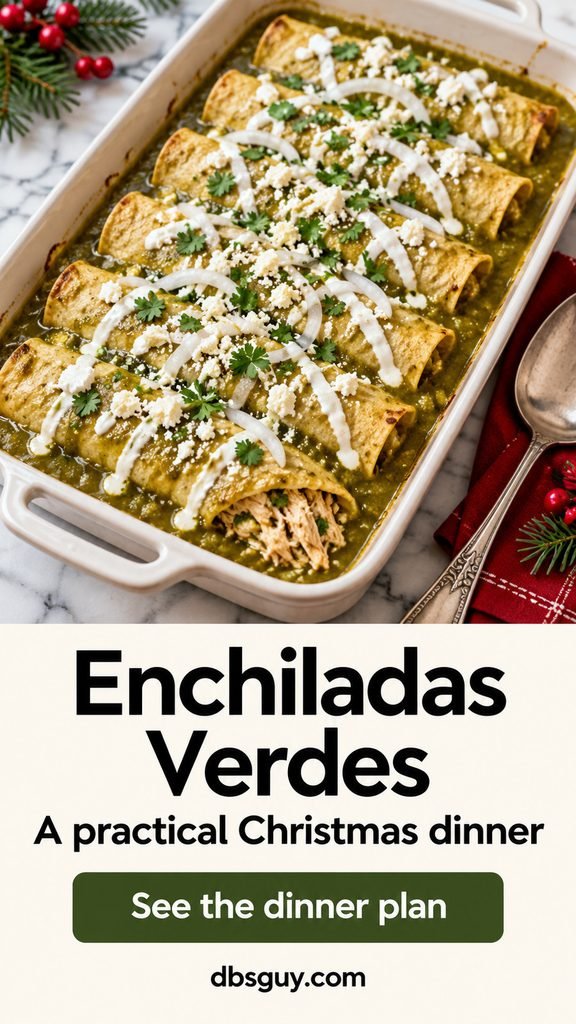
For six with sides: gather 12 corn tortillas, about 3 cups of cooked shredded chicken, 3 cups of prepared salsa verde, and modest amounts of crema and crumbled queso fresco. Check whether the purchased sauce is ready to use or needs cooking first.
Warm the tortillas until flexible, fill them without overstuffing, and place seam-side down in a lightly sauced baking dish. Spoon sauce across the rolls, cover, and heat at 350°F until the center reaches 165°F; begin checking around 20 minutes, allowing longer for cold ingredients. Add crema, cheese, and thinly sliced onion after heating.
Prepare the filling and sauce ahead, but assemble closer to dinner to limit sogginess. For a meatless pan, substitute cooked beans and sautéed mushrooms, use vegetarian sauce, and label it separately. Arroz rojo and salad finish the meal without another main.
11. Cheese-Stuffed Chiles Rellenos
Chiles rellenos give meatless guests a main that feels deliberately chosen. Roasted poblanos hold melting cheese, with a light egg coating and cooked tomato sauce. This version is different from chiles en nogada, which use a walnut sauce and a different filling.
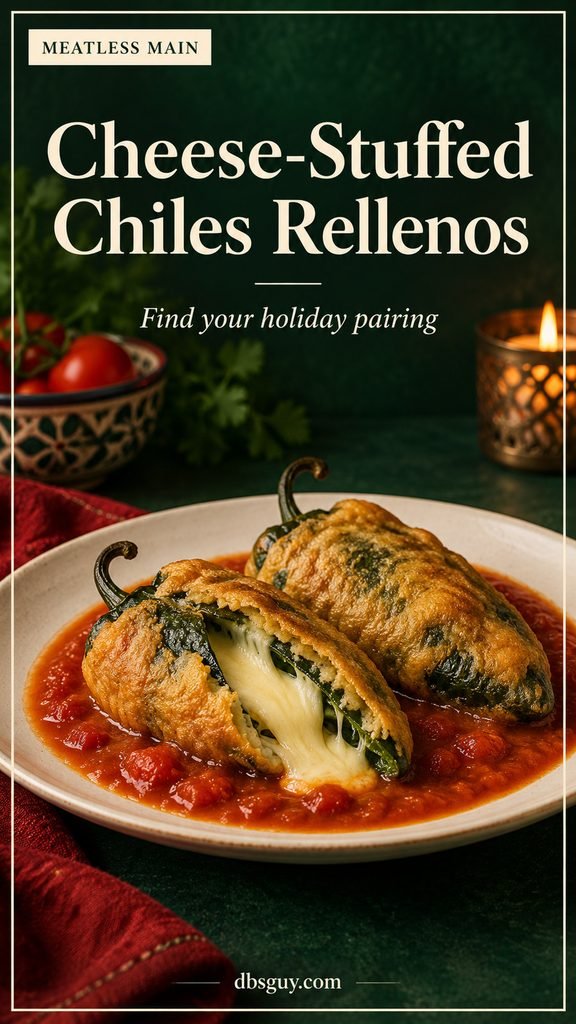
For six: plan six large poblanos, roughly 12 ounces of Oaxaca or Monterey Jack cheese, and enough tomato sauce for serving. Use a complete batter recipe for its egg, flour, and frying-oil quantities. Allow two peppers for larger appetites or especially small poblanos.
Roast and peel the peppers carefully, keeping them intact. Cut a slit, remove the seed cluster, and pat dry before filling. A light flour coating helps the egg batter adhere; overfilled or wet peppers are harder to handle. Fry in small batches and remove any securing toothpicks before serving.
The last-minute frying makes this a better choice for a small gathering than a large buffet. Roast the peppers and prepare the tomato sauce ahead, then finish near dinner. Serve the sauce beneath or beside the peppers to preserve more of the coating. For a vegetarian menu, check the broth, frying fat, and cheese ingredients too.
12. Creamy Poblano Spaghetti
Espagueti verde is a creamy side that fits beside adobo pork or turkey. Roasted poblanos give the sauce its soft green color and savory flavor; this is not pesto pasta. Keep the sauce coating the strands rather than collecting in a heavy pool.
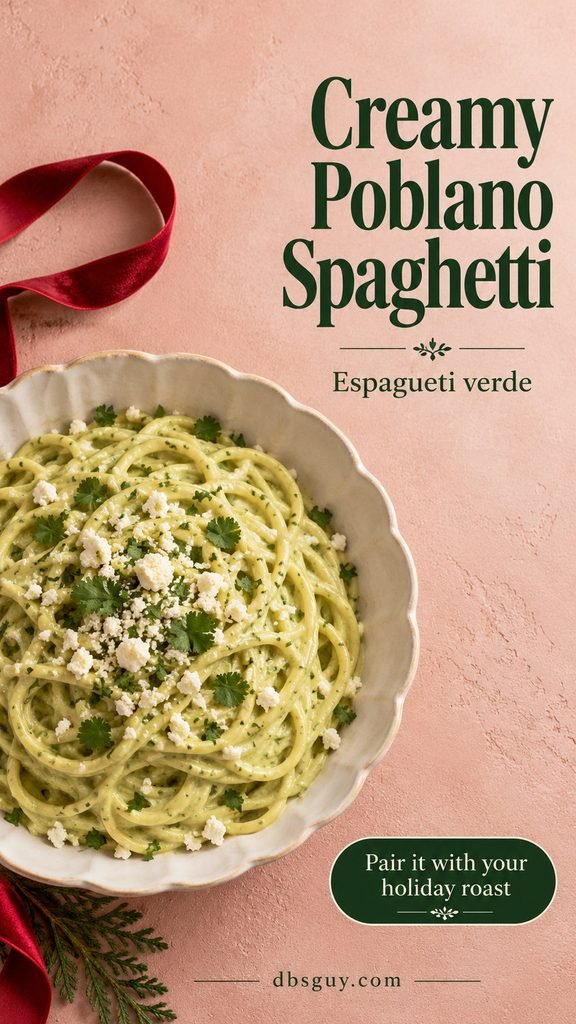
For six to eight side portions: plan about 12 ounces of dry spaghetti, 3–4 medium poblanos, Mexican crema, onion, garlic, and a little broth. Some versions include cream cheese. Choose one sauce recipe so the dairy and liquid stay in balance.
Roast, peel, and seed the poblanos, then blend them with the sauce ingredients. Heat the sauce gently and toss with freshly cooked pasta, loosening with reserved pasta water a little at a time. Add a restrained amount of crumbled cheese just before serving.
Make the sauce ahead and refrigerate it, but cook the spaghetti close to dinner for a better texture. Poblanos vary in heat, so taste before presenting this as a mild option. Use vegetable broth and suitable cheese for a vegetarian side. If you serve it alongside a large roast, you can skip an additional rice dish and give the salad more room on the plate.
13. Arroz Rojo to Round Out the Meal
Arroz rojo is a useful supporting dish when the main is tamales, enchiladas, or chiles rellenos. Tomato gives the rice its orange-red color, and a few peas or diced carrots add contrast. It also stretches a menu without introducing another rich sauce.

Plan about ½–¾ cup cooked rice per person. For eight side portions, roughly 1½–2 cups of dry long-grain white rice is a useful buying estimate. You will also need tomato, onion, garlic, oil, and broth; use your recipe’s total liquid ratio, including any tomato purée.
Rinse and drain the rice well if directed, toast it lightly in oil, and add the aromatics and measured liquid. Simmer covered, then let it rest before fluffing. Repeated stirring after the liquid goes in can break the grains and make the texture less distinct.
Use vegetable broth for a vegetarian table, and check bouillon ingredients rather than relying on its color or name. A heavy pot with a close-fitting lid helps with even cooking. Once dinner is over, cool and refrigerate the rice promptly with the other perishables; a pot of cooked rice should not sit on the counter overnight.
14. Ensalada de Nochebuena
A bright Christmas Eve salad provides welcome contrast to mole, roast pork, and creamy pasta. Versions vary, but cooked beets, citrus, jicama, and pomegranate make a colorful combination. This crisp salad is separate from the creamy apple salads also found on some holiday tables.

For eight small side portions: use about 3 medium cooked beets, 3 oranges, 2 cups of jicama matchsticks, ½ cup of pomegranate arils, and a small head of romaine. A little orange juice, lime juice, and salt can dress the mixture; add sweetness only after tasting the fruit.
Cook and chill the beets ahead. Peel the citrus and cut away the membranes you do not want in the bowl. Keep the beets separate until assembly so they do not immediately stain every pale ingredient. Add dry lettuce and dressing near serving time.
Roasted peanuts are an optional finishing touch; put them in a separate labeled bowl when allergies or preferences are uncertain. For a buffet, use a shallow serving bowl so guests can take a balanced portion without crushing the fruit. This is a particularly helpful side when your other dishes are soft, saucy, or rich.
15. Crisp Buñuelos for the Sweet Finish
Finish with thin, crisp Mexican buñuelos dusted in cinnamon sugar, with piloncillo syrup on the side if you like. These flat fried discs are different from the small round fritters called buñuelos in some other cuisines. A shared platter keeps dessert relaxed after a substantial dinner.

For eight: order 8–12 large buñuelos from a Mexican bakery, depending on their size and whether guests will share. Ask how to store them and whether they are sold already sugared. Buying dessert is an especially sensible choice if you are making tamales or a long braise yourself.
For homemade buñuelos, use a complete dough recipe with a resting stage and frying instructions; rolling them thin is part of achieving the characteristic texture. Fry in manageable batches, drain well, and add cinnamon sugar while it can adhere.
Let them cool completely before covering so trapped steam does not soften the stack. Serve syrup separately and drizzle it only at the table. Break large discs into pieces for a sharing platter, or give each guest one with a small dish beneath it to catch the flakes. Coffee makes an easy companion.
Make the Preparation Schedule Fit Your Menu
Two or more days ahead: confirm guest numbers, order bakery items or tamales, and source specialist ingredients such as salt cod, romeritos, and achiote. Begin turkey thawing and salt-cod preparation on the schedule required by the bird’s size or the fish’s package. Neither is a job to leave until the last minute.
The day before: make a stew or braise, cook and chill the beets, prepare pickled onions, and portion sauces. Cool cooked food promptly in shallow containers and refrigerate it. Keep raw-meat preparation separate from salad ingredients.
On dinner day: cook the roast if chosen, reheat prepared mains thoroughly, and set out serving utensils. Cook pasta near mealtime, assemble the salad last, and warm tortillas in small batches. Choose only one dish that demands your attention at the stove immediately before serving.
For a menu of tamales, rice, salad, and bakery buñuelos, the day-of work is much lighter than a menu containing homemade tamales, fried chiles rellenos, and homemade fried dessert. Decide where you want to spend the cooking time before buying ingredients.
Serve and Store the Dinner Safely
Use a thermometer: poultry, casseroles, and reheated leftovers should reach 165°F. Whole-cut pork roasts need at least 145°F followed by a three-minute rest; braised shoulder may need considerably more cooking to become tender. Fish should reach 145°F. The FoodSafety.gov safe minimum temperature chart explains the targets.
Keep hot food at 140°F or above and cold food at 40°F or below. Refrigerate perishables within two hours, or one hour above 90°F; use shallow containers rather than cooling a large pot on the counter. Eat refrigerated leftovers within three to four days or freeze them sooner. Label containers with the cooking date, and reheat portions to 165°F.
Questions About Mexican Christmas Dinner
What is a traditional Mexican Christmas dinner?
There is no single menu shared by every family. Tamales, bacalao, romeritos, roast pork, and turkey are among the dishes associated with Mexican Christmas celebrations. Region, family traditions, and ingredient availability shape the meal. Start with a dish meaningful to your household, then choose sides that suit it.
Are tamales enough for Christmas dinner?
Yes. With rice and a crisp salad, two or three medium tamales per adult can be a useful starting estimate. Size matters more than the count: ask the seller about portions, and buy more if tamales are the only substantial food or you want leftovers.
Which option is easiest for a first-time host?
Purchased tamales with homemade sides is the most manageable route in this collection. Enchiladas verdes made with cooked chicken and prepared salsa are another practical option. Pozole is useful when you have time the day before and enough refrigerator space for the cooled stew.
How can I make the menu vegetarian?
Choose cheese-stuffed chiles rellenos, vegetable-broth arroz rojo, and Christmas Eve salad. Check the cheese ingredients and all sauces. Meatless tamale fillings still require a check of the masa, and traditional shrimp-containing romeritos do not fit a vegetarian menu.
How do I keep the dinner from becoming too spicy?
Choose recipes that let you control the chiles, taste prepared sauces, and serve hotter salsas separately. Red does not automatically mean hotter than green. Poblanos and individual batches of dried chiles vary, so do not promise a dish has no heat based only on its appearance.
What should I serve if I only want three dishes?
For the main meal, choose tamales, arroz rojo, and Christmas Eve salad. For a roast-centered version, choose adobo pork, poblano spaghetti, and the salad. If dessert must fit within your three-dish limit, serve pozole with its toppings, a salad, and buñuelos.