Ralph Lauren–Inspired Christmas Table Decor: 15 Cozy Ways to Style Plaid and Vintage Details

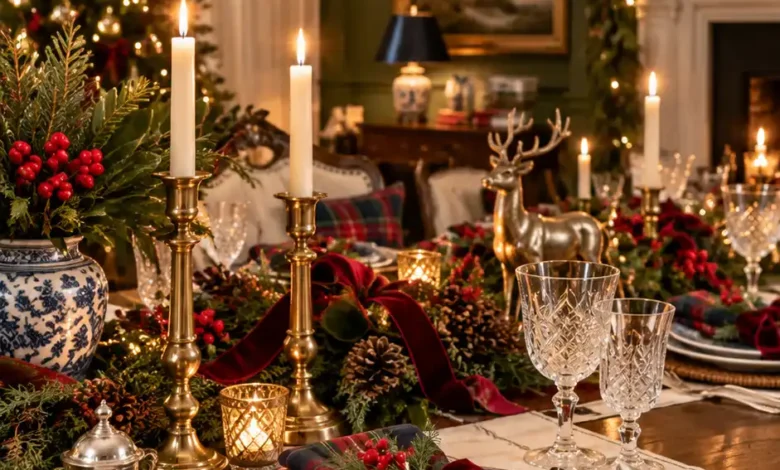
The easiest way to build a Ralph Lauren–inspired Christmas table is to choose one plaid, add the dishes you already love, and give a few vintage details room to stand out. A red tartan runner on dark wood can do most of the decorating. So can plaid napkins beside cream china, or navy-and-green checks paired with silver.
You do not need a matching designer collection to get that warm, collected feeling. Below are 15 ways to bring it to your table, from a single place setting to a Christmas breakfast spread. Each idea explains what to use, where to put it, and how to keep the table comfortable for an actual meal.
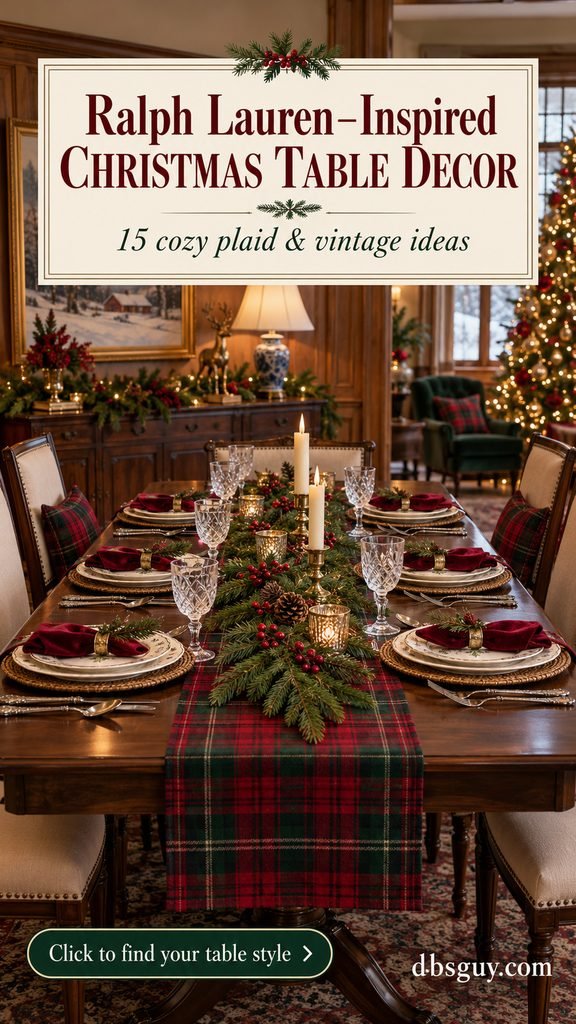
The images in this article are AI-generated styling concepts, created to illustrate the color combinations and layouts.
What gives this Christmas table style its warmth?
The appeal comes from the mix: patterned textiles, wood, softly reflective metal, and tableware that feels chosen over time. In Ralph Lauren’s own holiday entertaining guide, traditional silver sits alongside modern porcelain, while tartan provides another route to a festive table. That leaves plenty of room to work with your own family pieces and everyday dishes.
For an easy starting palette, pull two colors from your plaid and add cream. Red, hunter green, and cream feel familiar and festive; navy, forest green, and ivory create a quieter evening setting. Treat these as decorating choices, rather than rules you have to follow.
Before buying anything: lay out one plate, one glass, your flatware, and a sample of the fabric. If those pieces work together, repeat the setting. Choose a centerpiece only after checking how much space is left.
1. Run classic red tartan down a bare wood table
A runner gives you the recognizable plaid look while letting a beautiful table remain part of the design. This is a useful first choice if you already have a walnut, mahogany, or warm stained-wood dining table.
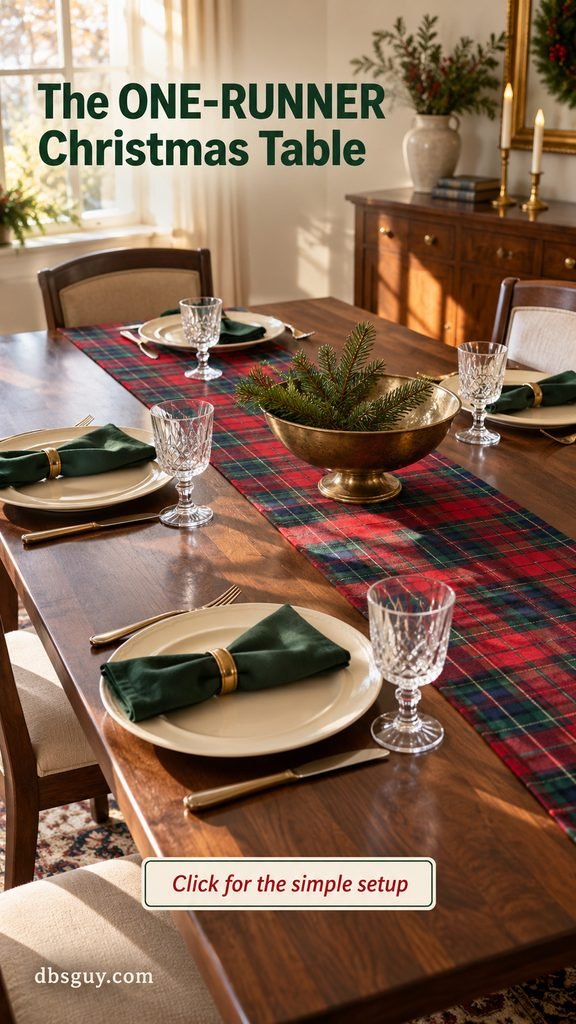
Try a red tartan containing a little navy and green, then repeat the green in solid napkins. Plain cream plates provide a resting place for the eye. A small brass bowl with a few evergreen tips adds an older-looking detail without taking over the center.
As a styling starting point, a runner about 12 to 16 inches wide can work on many rectangular tables. Check yours with the plates in position: you want visible wood on both sides and enough room for glasses to stand flat. Either finish the runner near the table ends or let it hang slightly, keeping it clear of guests’ knees.
Skip extra placemats if they crowd the settings. The runner already supplies the pattern; a clean strip of wood around each plate makes the arrangement feel relaxed.
2. Make plaid napkins the only patterned layer
If your tablecloth is already white or ivory, a set of plaid napkins is a small change with a noticeable effect. It also suits a room where the tree, curtains, or wallpaper already provide plenty of color.
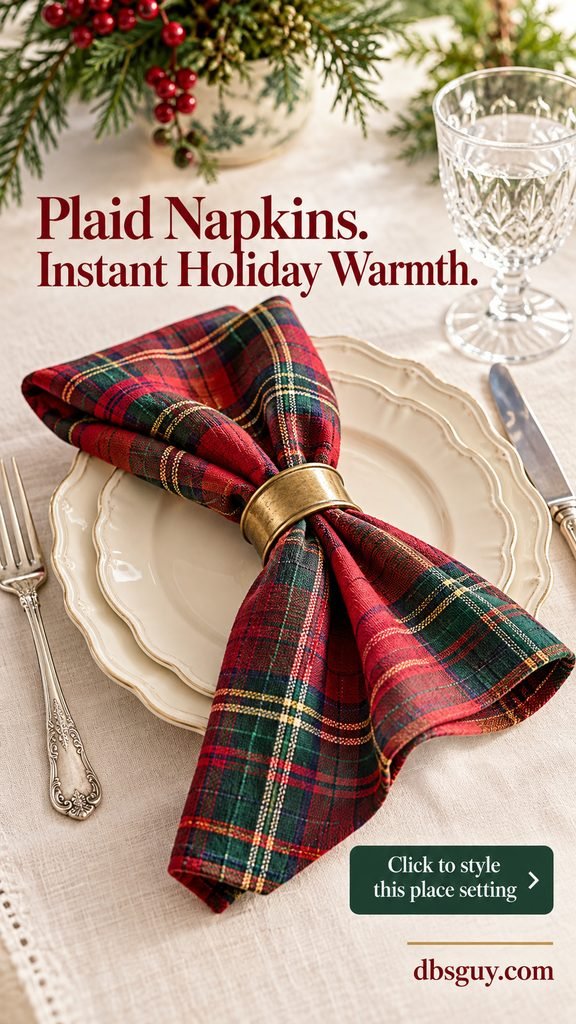
Loosely gather a red-and-green cotton napkin through an aged brass ring and place it on a plain plate. Let enough fabric spread out to show the checks. A ring that squeezes the napkin into a tight rope hides the very pattern you are trying to feature.
A gently scalloped plate and a vintage-style clear goblet bring character to the otherwise simple setting. Your flatware can stay silver-colored; the small brass ring does not require an entirely new set of utensils.
Without rings, fold each napkin into a long rectangle and lay it across the plate. Wash and press the napkins according to their care labels before setting the table, and leave any elaborate folding for another occasion.
3. Choose navy-and-green plaid for a quieter Christmas dinner
A deep navy-and-green plaid, often associated with the Black Watch look, offers a Christmas palette without a large dose of bright red. It feels especially at home near wood furniture, bookcases, or navy walls.
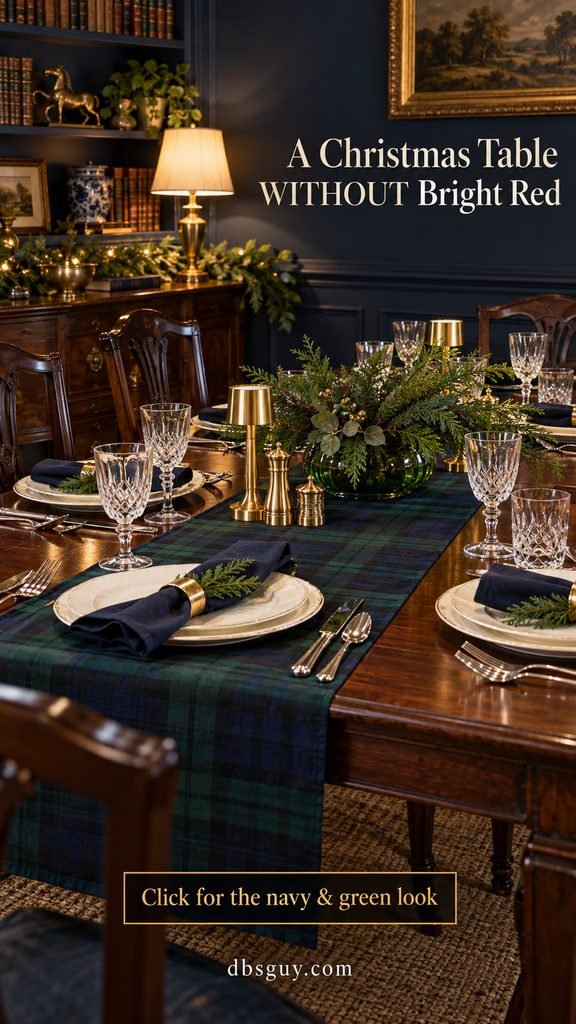
Use the plaid for a runner, choose solid navy napkins, and keep the plates ivory. Silver flatware and clear glasses help the place settings remain visible against the darker textiles. A low green glass bowl with a few evergreen branches repeats the green without introducing another pattern.
The balance matters more than the number of accessories. If the runner looks almost black in your dining room, bring in more cream through the dishes or a pale centerpiece vessel. Look at the setting under the lighting you will actually use for dinner.
A warm shaded lamp nearby can soften the room. Keep enough light on the tabletop for guests to see their food and read place cards comfortably.
4. Let a full tartan tablecloth carry the whole scene
A full plaid cloth changes the room more dramatically than a runner. It is also a useful way to bring a rich Christmas pattern to a plain dining table without adding lots of separate decorations.
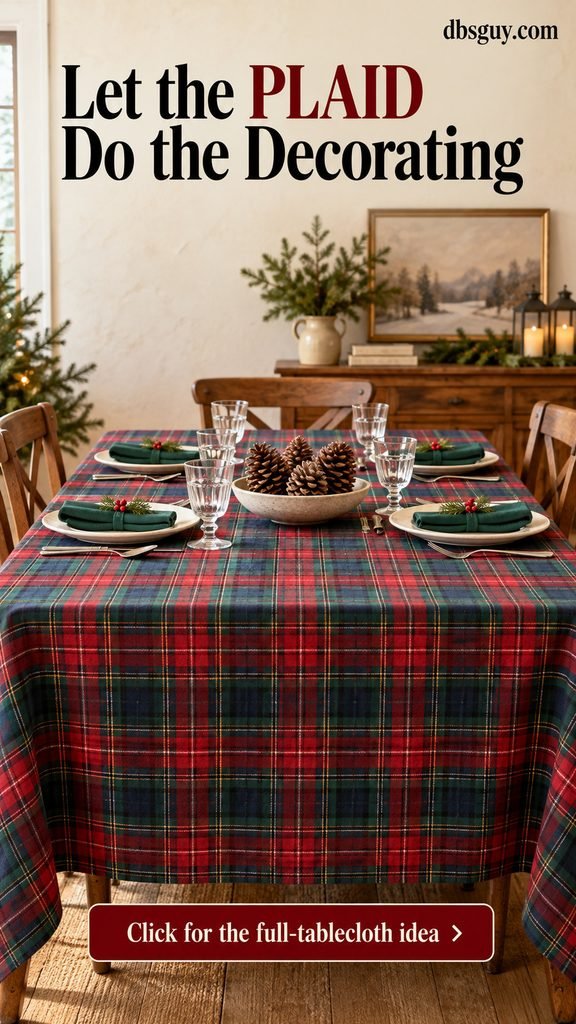
Once the cloth is on, simplify everything above it. Try ivory plates, dark-green napkins, ordinary clear glasses, and a low bowl of pinecones. The hanging fabric supplies the visual abundance; you do not need another patterned layer across the middle.
Measure the tabletop before choosing the cloth. For a casual seated meal, you might start with a drop of about 6 to 10 inches on each side, then adjust for your chairs and the way guests sit. This is a practical styling suggestion, not a fixed rule. Check that the fabric does not bunch against chair arms or gather in anyone’s lap.
Choose washable table linen if spills are likely. A wool throw may suggest the right mood, but its thickness and care requirements can make it awkward as a working dinner cloth.
5. Frame simple plates with gold-rimmed heirloom-style china
Gold-rimmed china looks particularly lovely against tartan because the delicate edge and bold fabric do different jobs. This idea works when you want to feature a special piece without making every setting elaborate.
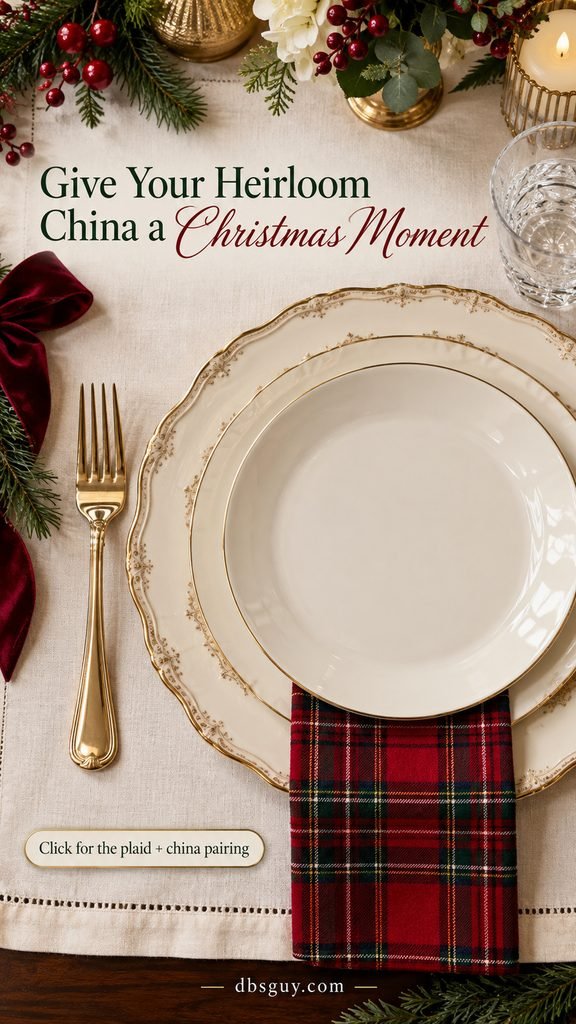
Set a plain cream dinner plate inside a larger gold-rimmed plate or charger. Let a folded red plaid napkin peek out beside or beneath the stack, leaving enough of the rim visible to appreciate it. Brass-toned flatware can echo the gold, while one clear water glass keeps the setting light.
If you only own two or three special plates, feature them at the ends of the table or in a display nearby. There is no need to build a complete set in a hurry. Modern vintage-style pieces are another way to get the look.
For actual older ceramic dishes, establish that they are suitable for food use before serving on them. The FDA’s ceramicware guidance identifies antique, worn, and unknown-origin pottery as pieces needing particular attention. Keep uncertain items for display; use known food-safe dishes for the meal.
6. Pair green transferware with a small red plaid accent
Green transferware brings a different kind of pattern to the table: fine scenic or botanical detail rather than blocks of color. A restrained plaid accent keeps the combination from becoming visually busy.
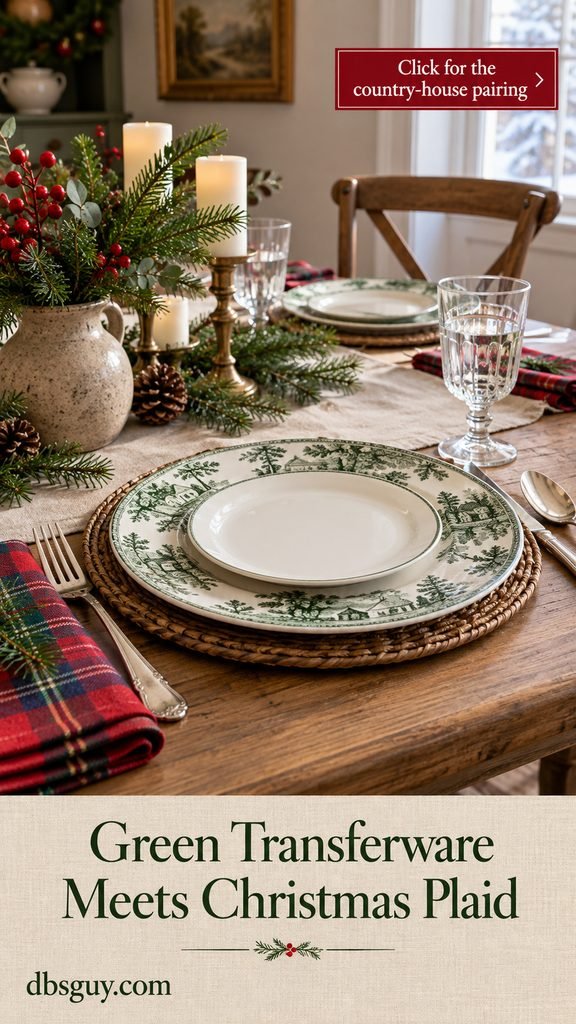
Start with a flax linen runner, a green-and-white patterned plate, and a small folded red tartan napkin beside it. A plain white salad plate can sit on top, allowing the patterned border underneath to frame it. Silver flatware and clear glassware give the setting some breathing room.
Keep the red mainly in the napkin. Large red flowers, red glasses, and red chargers would pull attention away from the green detail that makes this setting different.
A simple stoneware vase with short evergreen tips suits the country-house feeling. If your plates are genuine older pieces with uncertain food-use suitability, display them and choose modern vintage-style transferware for dining. The visual idea still works beautifully.
7. Warm burgundy plaid with amber glassware
Amber glasses add a honey-colored glow to a Christmas table, especially beside burgundy, brown, and dark wood. This is a good option when your dining room already has warm tones and you want to build on them.
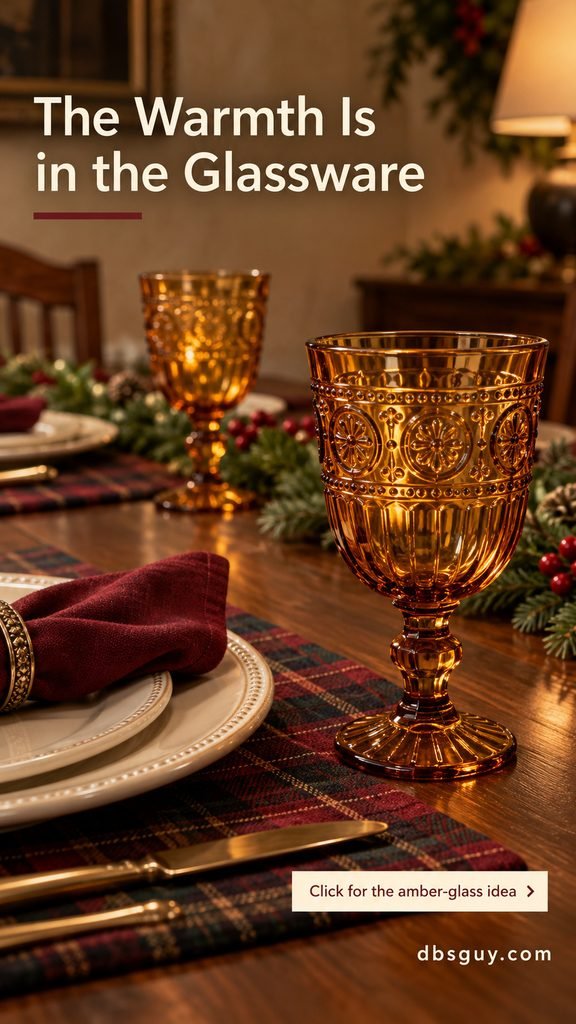
Use burgundy-and-chocolate plaid placemats, cream plates, and solid burgundy napkins. A pressed-glass texture gives the glasses an older-looking character, while the plain dishes keep the amber color easy to see.
Put the goblets where they belong for drinking, above and to the right of the plate, rather than scattering them through a centerpiece. Repeat one glass shape at each seat if you want a tidy appearance; the rest of the table does not need to match perfectly.
Choose drinkware intended for food use, including modern vintage-look options. Place a lamp nearby so the glass catches warm light, then check that the setting still looks inviting before you dim the room for dinner.
8. Give old silver a turn in the spotlight
Silver creates a softer, cooler reflection than brass, making it a lovely partner for muted green and charcoal plaid. One small tray can give several collected candleholders a clear place on the table.
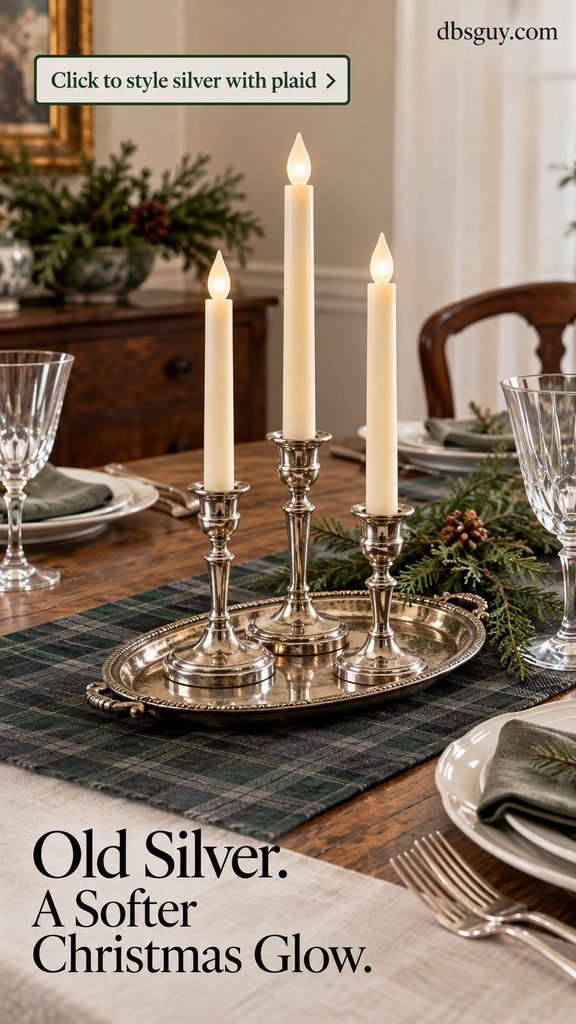
Arrange a few sturdy silver candlesticks on a low oval tray and use flameless taper lights. Keep the surrounding dishes white, the napkins gray-green, and the runner subdued. A single evergreen sprig beside the tray is enough to connect the silver to the season.
Before dinner, check that the holders fit the tapers securely and that guests can see around them. If the tray takes up the space needed for a serving bowl, move it to a sideboard once everyone sits down.
For any real candles, follow the National Fire Protection Association’s candle guidance: keep them at least 12 inches from anything that can burn, and never leave them unattended. On a table layered with fabric and greenery, flameless lights are the easier choice.
9. Build a low evergreen centerpiece in a stoneware crock
A squat stoneware crock has the character of an old household piece, and its low shape is useful at dinner. You get a little woodland texture without asking guests to talk through a wall of foliage.
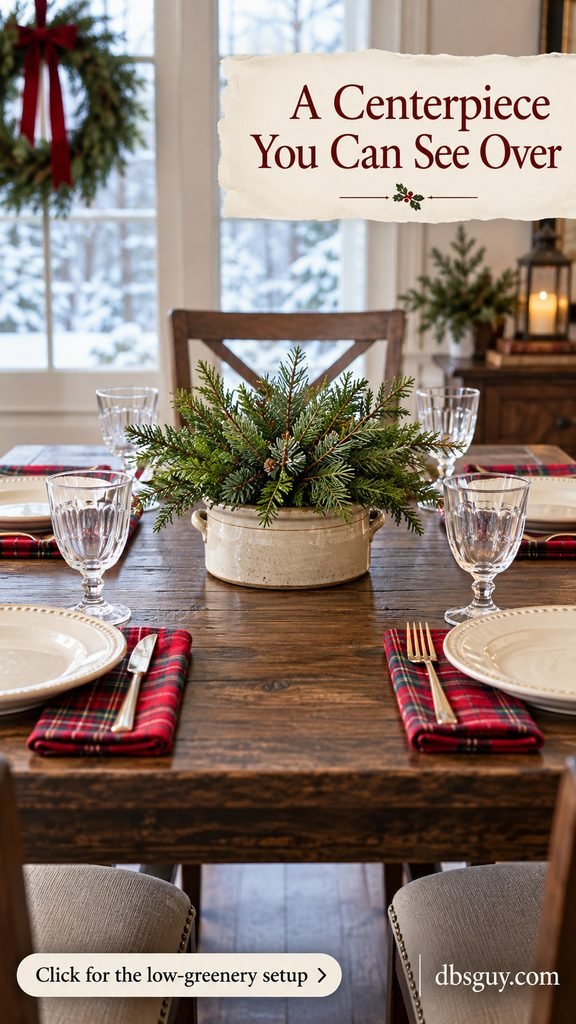
For a four-seat table, start with a vessel roughly 6 to 8 inches wide and trim the greenery so the finished arrangement stays low. Around 8 inches overall is a useful place to begin, but test the view from your own chairs before settling on the height.
Arrange short branches loosely, letting some turn outward. Leave room around the crock for the serving dishes you plan to use. Red plaid napkins and plain plates supply the color, so the greenery can stay simple.
If the older vessel is not reliably watertight, place a suitable watertight insert inside it and protect the tabletop. Keep branches away from eating surfaces, and remove the centerpiece temporarily if the meal needs more room.
10. Add a plaid border to handwritten place cards
A name card is a small detail that makes a setting feel considered. A narrow piece of tartan ribbon brings the Christmas pattern to each seat without requiring another set of linens.
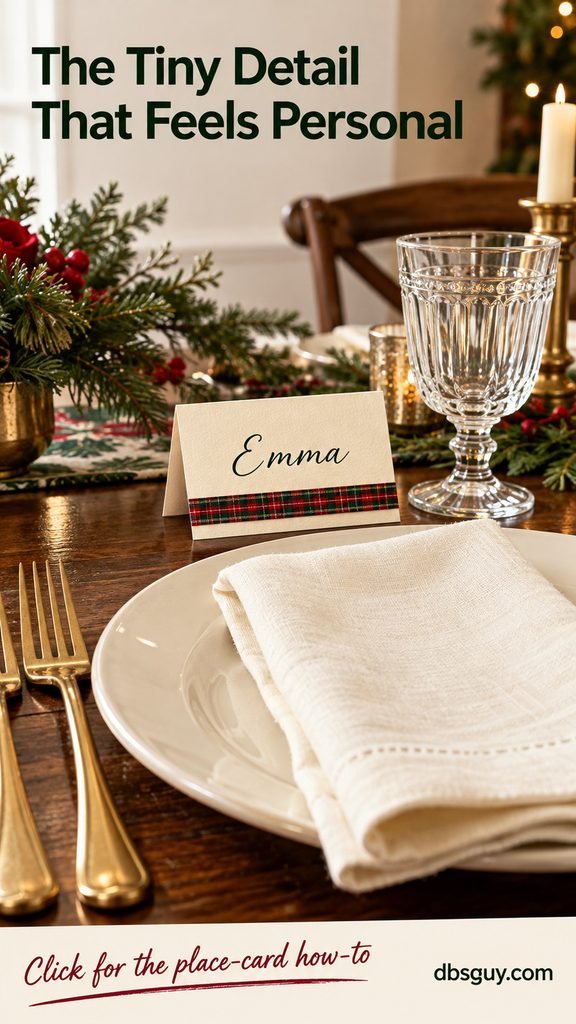
Fold heavy cream cardstock into tent cards. Write each guest’s name in dark green or brown, then attach a short strip of narrow plaid ribbon near the bottom edge. Leave a clear gap between the ribbon and lettering so the name remains easy to read.
Stand the card above the plate, facing the chair. In this version, a solid ivory napkin, old-fashioned brass flatware, and a clear glass keep attention on the personal detail.
Make one sample before cutting ribbon for every guest. If the checks overwhelm the card, use a narrower strip. Let any adhesive dry completely before putting the cards beside your tableware, and save spare ribbon for replacing a damaged card next year.
11. Tie burgundy velvet bows around solid green napkins
Velvet adds a soft surface that looks particularly rich against woven plaid. Keeping the napkin solid lets a small bow become the focus rather than another competing pattern.
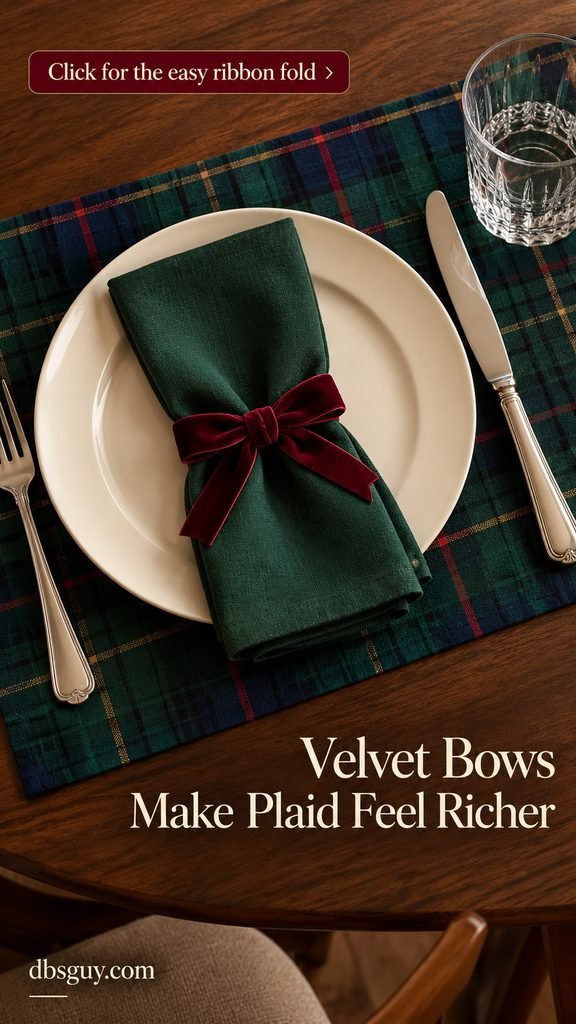
Place a plain cream plate on a navy-and-green tartan placemat. Fold a forest-green napkin into a relaxed rectangle and tie burgundy velvet ribbon around its middle. Keep the loops modest and trim the tails so they stay within the plate.
For a medium cloth napkin, cut one trial length of ribbon and tie it before preparing the rest. Ribbon width, napkin thickness, and bow size all change how much you need. Use a knot guests can undo easily; this detail should not delay dinner.
With a bow at every seat, the center can remain simple. Avoid glittered or wired decorative ribbon against napkins that will touch faces and hands. Plain, soft ribbon gives you the texture the idea calls for.
12. Bring in one small equestrian detail
A small horse figurine introduces the equestrian side of the inspiration without turning the dining table into a themed display. The key is its scale: a decorative accent that leaves the meal and place settings in charge.
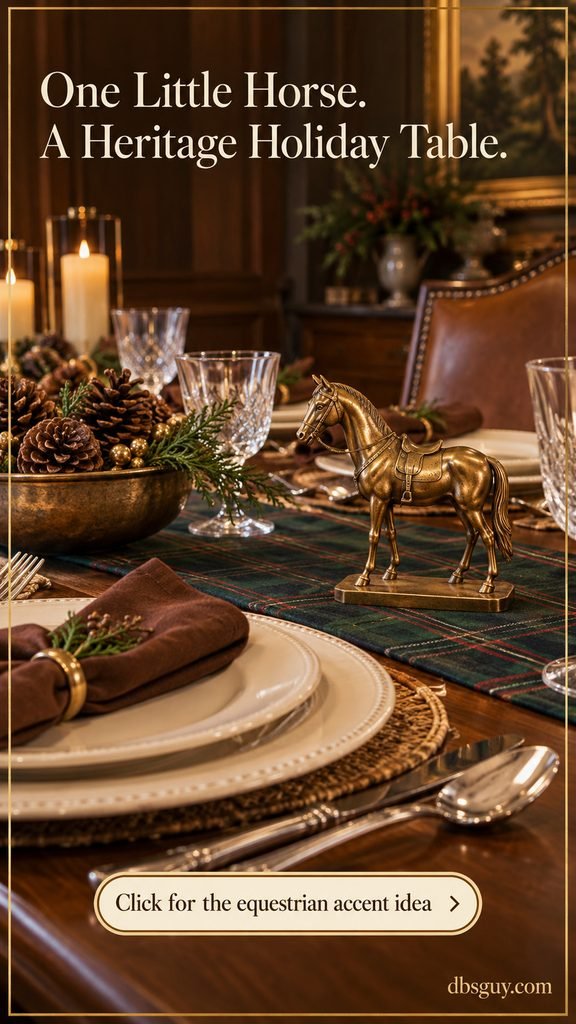
Try one brass horse on a dark-green plaid runner, surrounded by ivory dishes and chestnut-brown cotton napkins. A low bowl of pinecones nearby can echo the warm metal and wood tones without adding another strong color.
Choose a piece with a stable base and position it away from plate edges and reaching hands. Sit across from it before guests arrive. If it feels too tall or blocks conversation, move it to the sideboard and keep the table’s palette.
You do not need several matching figurines. One well-placed object gives the setting personality. An existing equestrian piece you enjoy is more useful here than a hurried purchase that feels out of place in your home.
13. Use individual plaid placemats on a small round table
A round table can lose its useful center quickly when a runner, garland, and place settings all compete for room. Separate plaid placemats keep the pattern close to each guest and leave a clearer shared space.
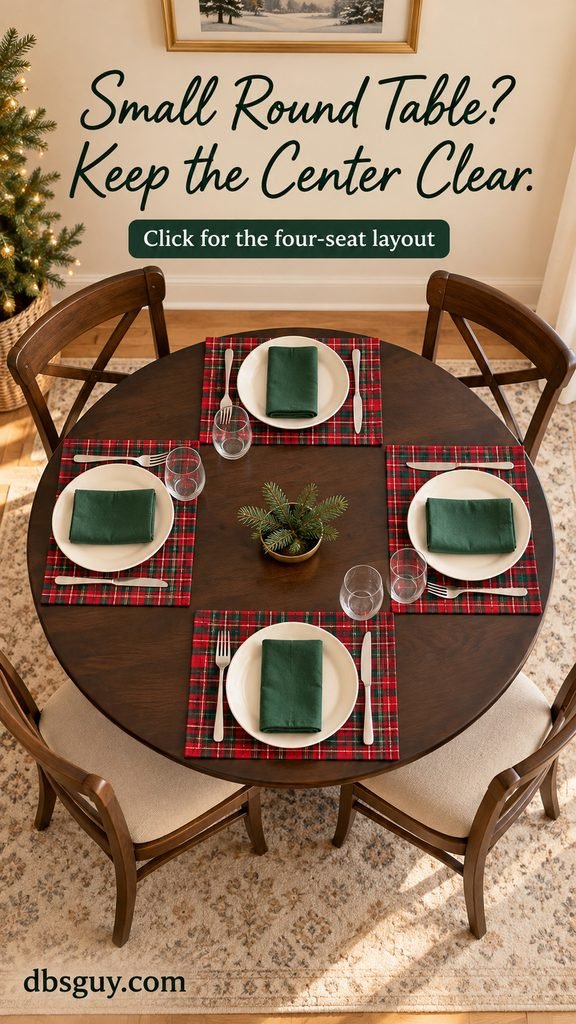
For a four-seat arrangement, point each placemat toward its chair and use one plate, one napkin, and one water glass per person. A tiny low brass bowl with a few fir tips can sit in the center. The concept shown uses a compact table of about 42 inches in diameter.
That measurement is an example, not a promise that every four-person setting will fit. Test your actual plates and placemats. If the mats overlap too much, choose smaller ones or use plaid napkins instead.
Serve larger dishes from a counter or sideboard when the center is tight. You can still carry a bowl around the table; you simply avoid making guests balance it between decorative pieces.
14. Set a vintage-style Christmas breakfast table
The plaid-and-vintage approach works in daylight, too. For Christmas morning, trade formal dinner layers for sturdy mugs, a familiar coffee pot, and simple breakfast plates.
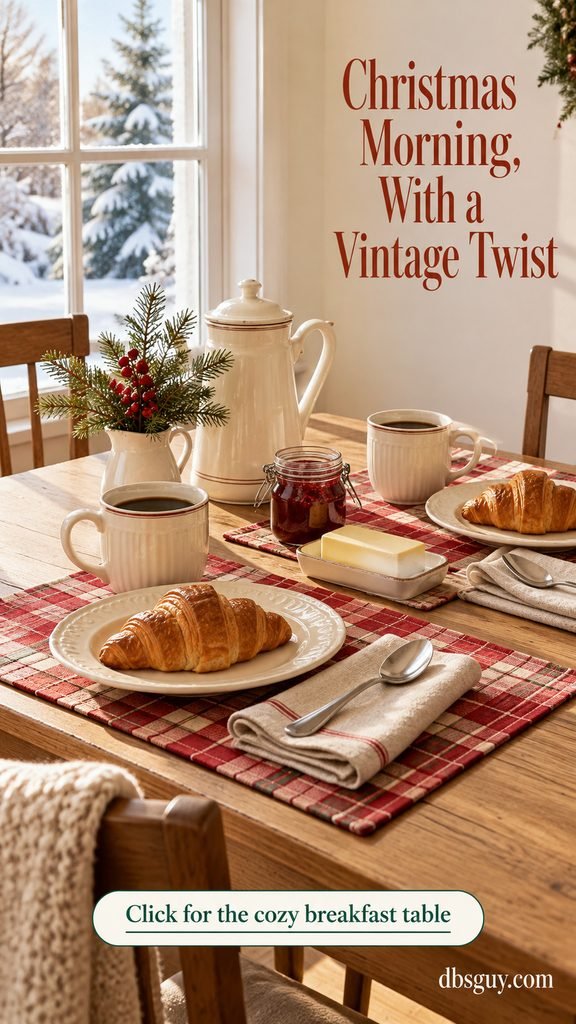
Red-and-oatmeal plaid placemats look warm beside cream ceramics and a lighter wood table. Add folded oatmeal napkins, teaspoons, a butter dish, and a jam jar. A few evergreen tips in a separate tiny pitcher give the table a festive touch without crowding the coffee service.
Put the food and hot drinks in vessels intended for serving them. If an old family coffee pot is decorative or its suitability is uncertain, display it nearby and use a modern vintage-style pot at breakfast.
Keep enough clear surface for refills, extra toast, and a newspaper or book if that is your Christmas morning rhythm. This table gets its charm from everyday rituals, so it does not need wineglasses or a formal centerpiece.
15. Carry the plaid through to an after-dinner dessert spread
After dinner, a short stretch of plaid at one end of the table can make coffee and cake feel like their own little occasion. It is also a useful place to feature serving pieces that had no room during the main meal.
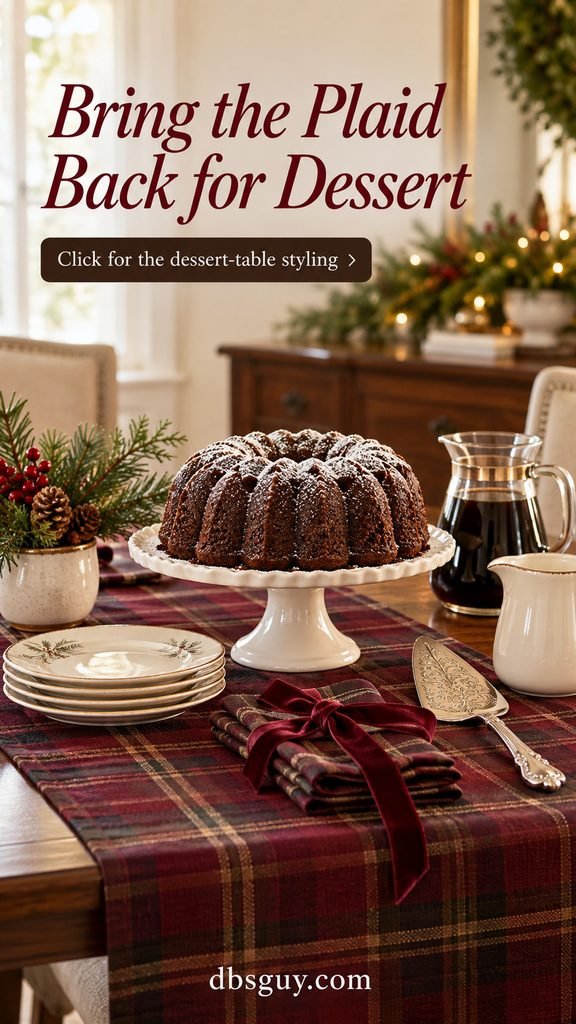
Cover only the dessert end with a burgundy-and-chocolate plaid cloth. Set out a cake on a food-safe pedestal stand, a neat stack of small plates, a suitable cake server, and a coffee pot. Keep napkins alongside the plates, with a little burgundy velvet ribbon if you want to repeat the soft texture.
Arrange the plates and utensils near the front, where guests can reach them without leaning over the cake. Place decorative greenery off to one side, away from food. Use the food itself as the focal point rather than building a second centerpiece.
If guests remain seated, bring individual portions to the table and let the plaid-covered end hold the coffee service. The idea is a welcoming finish with enough room to serve comfortably.
How to put your chosen look together without overbuying
Start with the pieces that are hardest to change: the table, chairs, and dinnerware. A warm wood table may need only a runner; a plain folding table may benefit from a full cloth. Cream dishes give you plenty of freedom with either red plaid or a navy-and-green palette.
- Choose the patterned layer first. Decide whether it belongs on the tablecloth, runner, placemats, or napkins. One main plaid is the easiest starting point.
- Add one vintage focal point. Feature the silver tray, stoneware crock, special china, or horse figurine you already have. Leave it some clear space.
- Set the table for the menu. Add the glasses and utensils guests will actually use, then bring out the serving bowls to check their fit.
- Look from a guest’s seat. Check sightlines, legroom, readable name cards, and whether someone can lift a glass without catching a decoration.
In the weeks before Christmas, sort the linens, count complete place settings, and do one quick trial arrangement. Leave fresh greenery until closer to the meal. If you decide to buy something, fill a specific gap—such as enough napkins for all the seats—rather than replacing a whole collection.
Questions about Ralph Lauren–inspired Christmas table decor
Can I create the look without buying Ralph Lauren tableware?
Yes. The ideas here use the relationship between plaid, classic tableware, wood, and vintage details. A tartan runner with your everyday cream plates and a family serving piece is a useful starting point. Choose the pieces that work in your room.
Is red plaid necessary?
No. Navy-and-green plaid works beautifully with ivory and silver, while burgundy-and-brown checks suit amber glass and warm wood. Choose a palette that makes sense beside the colors already in your dining room.
Can I mix different plaid patterns on one table?
You can, but start with one if you want an easy-to-balance arrangement. To mix two, look for a shared color and make one pattern noticeably smaller in scale. Lay out a full place setting first; if the patterns make the dishes hard to see, simplify.
What should I look for when thrifting vintage table details?
Look for stable candleholders, intact decorative vessels, and pieces you can inspect and care for appropriately. Check dimensions before buying a centerpiece. For dishes or drinkware, establish food-use suitability rather than relying on age, appearance, or a seller’s description alone.
How do I keep a rich-looking Christmas table from feeling crowded?
Let the fabric provide most of the pattern. Use a low centerpiece, limit extra ornaments, and set out only the tableware your menu needs. Put large serving dishes nearby if they do not fit comfortably. The best finishing touch is space for people to enjoy the meal.