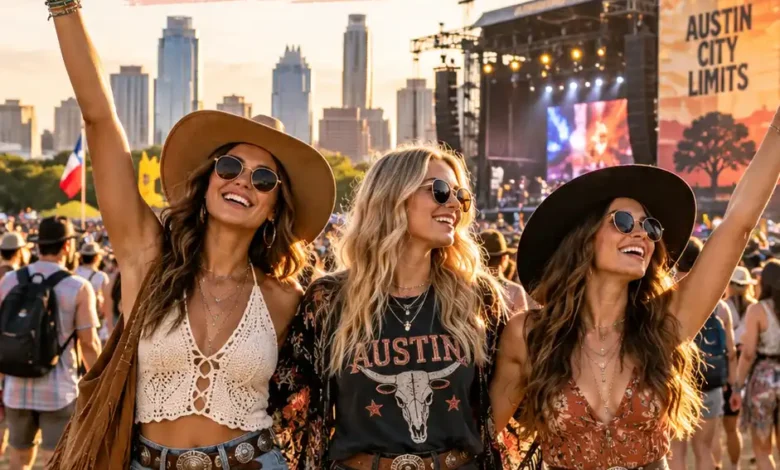
For ACL 2026, start with a breathable top, shorts or an easy dress, broken-in sneakers, a sun hat, and a bag that meets the festival rules. Add a packable weather layer after checking the forecast. Your outfit should work for walking between stages, sitting on grass, and getting home after the last set.
The official festival dates are October 2–4 and October 9–11, 2026, at Zilker Park in Austin, Texas. Updated October 9, 2026: Weekend 1 has finished and Weekend 2 runs October 9–11. Check the official site for day-of changes before heading out.
Below are three wearable outfit formulas, followed by the bag rules, packing checklist, and a practical plan for your festival day.
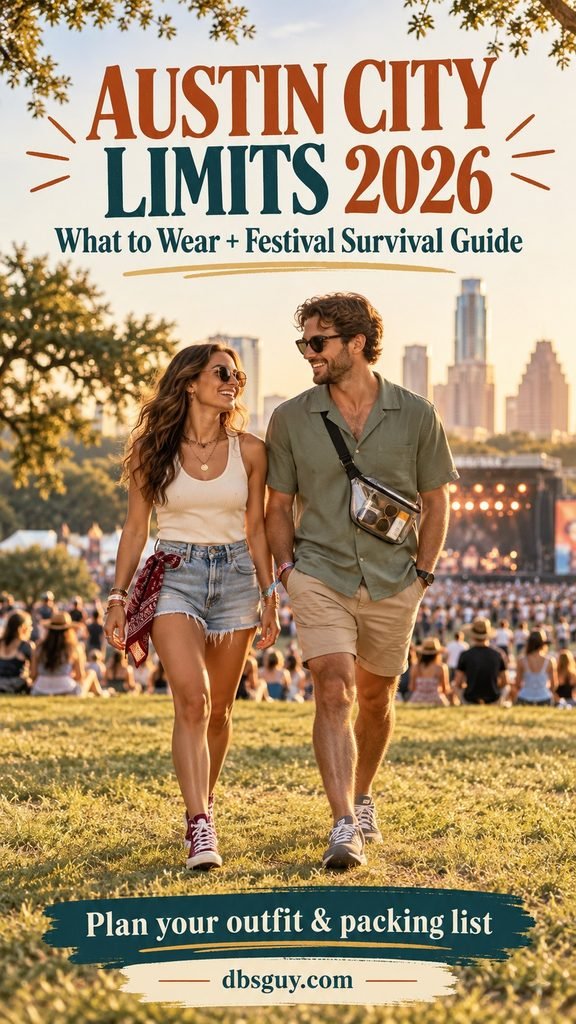
Images are AI-generated styling and packing concepts, not photographs from ACL or endorsements of specific products. Measure actual bags; the illustrations do not establish entry approval.
What to wear: three outfits you can actually spend the day in
Build from your own closet first. Try the complete outfit with your packed bag: walk, sit, reach overhead, and check whether a strap slips or a waistband digs in. Choose your favorite formula, then adjust the coverage and fit to suit you.
1. The easy tank, shorts, and sneakers outfit
An ivory ribbed tank, relaxed blue denim shorts, and burgundy sneakers make an uncomplicated starting point. A wide-brim hat adds shade, while a compact clear crossbody keeps your hands free. The color in the shoes does the styling work, so you do not need a pile of accessories.
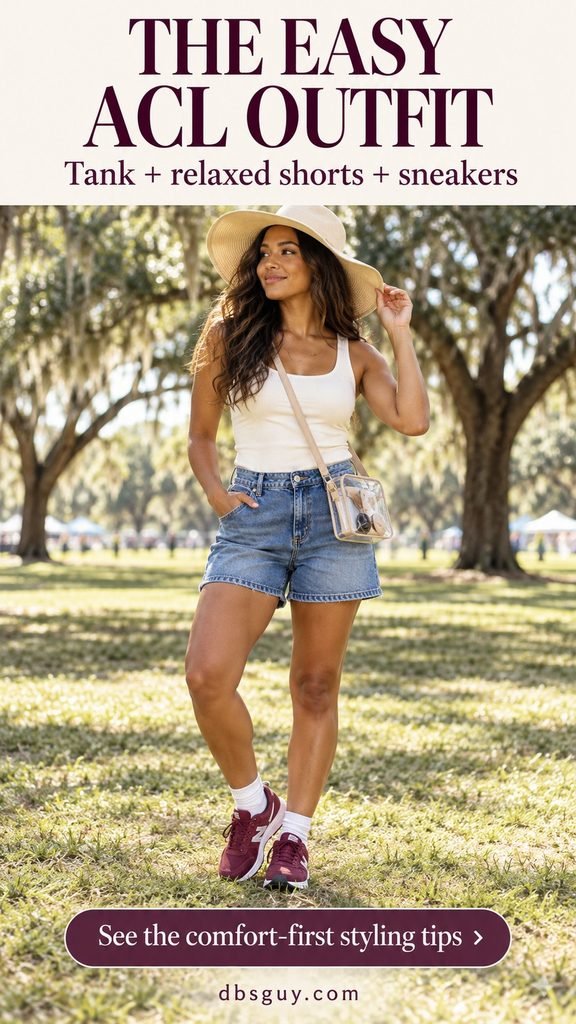
Pick shorts with enough room through the thigh to sit comfortably. If short hems ride up, use a longer inseam; if stiff denim already feels restrictive at home, switch to a lightweight pair with the same relaxed shape. Wear socks that stay put rather than a new pair that slides into your shoes.
This is the easiest formula for someone who wants a casual festival look without buying an entire outfit. For more shoulder coverage, swap the tank for a loose tee or add a lightweight shirt. Keep jewelry small and check the prohibited-items list before choosing statement accessories.
2. The breezy midi dress with real walking shoes
A terracotta midi dress with broad straps and a roomy skirt gives you a softer look without needing boots or heels. Cream sneakers, a sun hat, and a small clear bag keep it grounded. The pictured hem sits above the ankles, which makes more sense on grass than a floor-length dress.
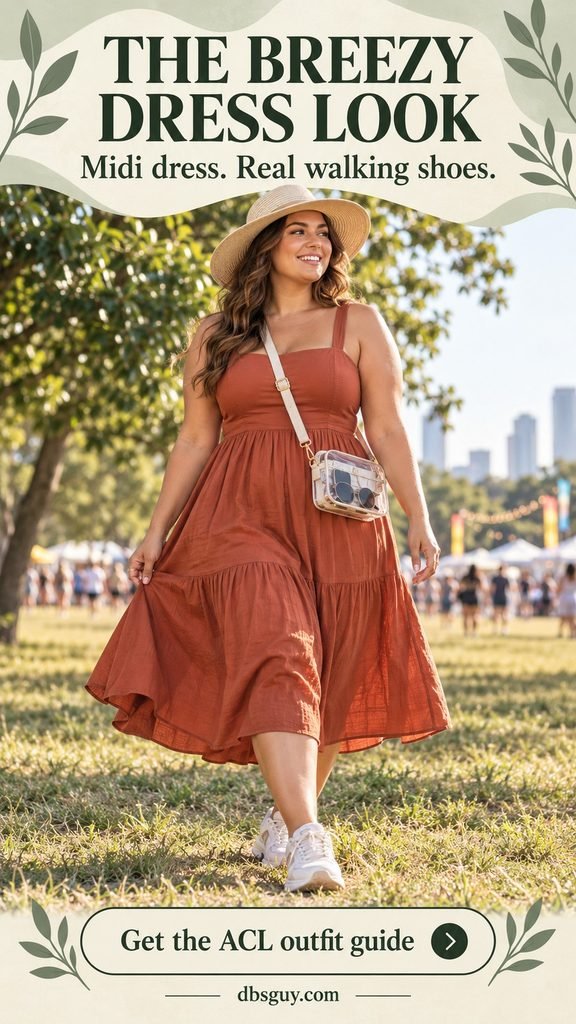
Look for an easy waist and fabric that lets you take a full stride. Check the dress in daylight for transparency, and sit down in it before deciding on the length. Soft fitted shorts underneath can add coverage and reduce skin-to-skin rubbing; choose a pair you already find comfortable.
A dress can be simpler than a romper in a portable restroom, but long skirts and dangling ties still need managing. Skip a trailing hem, and test whether your crossbody strap pulls the neckline out of place. This formula suits anyone who prefers less waistband pressure and a little more leg coverage.
3. The camp shirt and lightweight shorts combination
A sage camp-collar shirt, tan shorts, gray sneakers, and a bucket hat create a relaxed outfit that works across personal styles. Choose a shirt with room at the shoulders and shorts that let you sit without tugging. The clear crossbody keeps the look useful without stuffing every pocket.
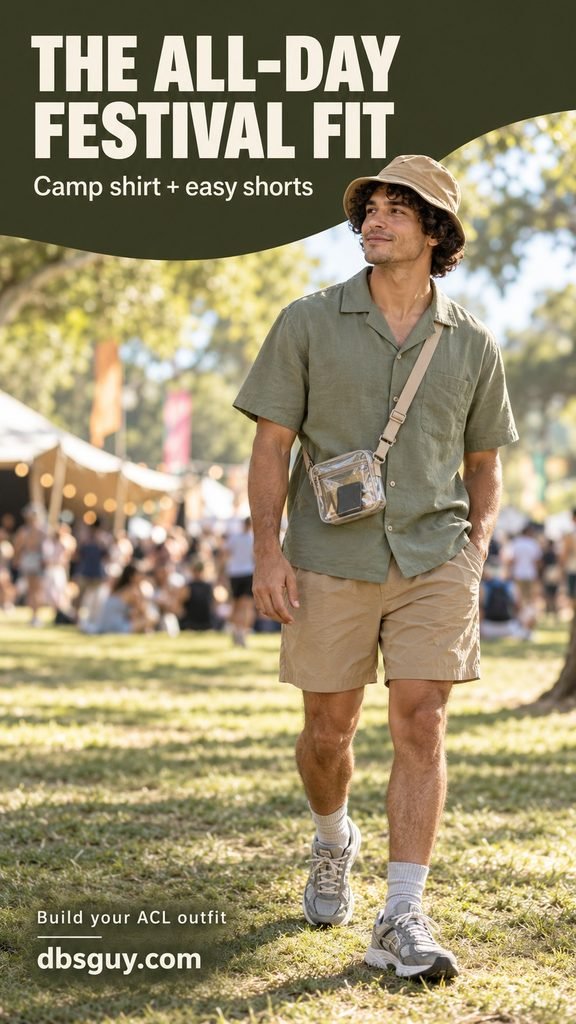
Lightweight woven or technical shorts are an alternative to heavy denim. Check the fabric against bright light, especially in pale colors, and avoid scratchy seams. Keep the shirt comfortably loose instead of adding a thick undershirt purely for styling.
If you prefer more coverage, use the same shirt with lightweight pants hemmed clear of the ground. Keep essentials secured in your bag; open cargo pockets are not a great place for a phone in a dense crowd. This is a useful formula for a low-fuss outfit you can repeat with a fresh shirt the next day.
Choose shoes and weather layers before accessories
Sneakers are the practical default. Pick a pair you have already worn for a long walk, with secure laces and enough toe room. Brand-new cowboy boots can look right for Austin while making the walk back miserable. If boots are your preference, use a broken-in pair you know you can stand in for hours.
Thin-soled fashion shoes, unstable platforms, and open toes deserve extra thought on uneven ground and in crowded areas. A small blister kit helps with friction spots, but it cannot rescue shoes that do not fit. Do not sacrifice the shoes that work for your feet just to match a picture.
Plan from the National Weather Service Austin/San Antonio forecast, including the evening temperature, rain chance, and any alerts. These are outfit options, not a forecast for your attendance day. On a warm day, keep layers light. If the evening looks cooler, pack a thin long-sleeve layer. For rain, choose a compact poncho or light rain jacket; umbrellas are prohibited. Follow festival instructions during severe weather.
ACL 2026 bag rules: measure before you pack
The official ACL bag policy, checked October 9, gives three routes:
- Small clutch or fanny pack: 6 × 9 inches or smaller, with no more than one pocket; it does not need to be clear.
- Larger bag: it must be clear and smaller than 12 × 6 × 12 inches.
- Hydration pack: it can be opaque, but must arrive empty and have no more than two main compartments plus one smaller compartment.
Do not assume a bag labeled “stadium approved” automatically matches ACL’s rules. Measure the bag, count compartments where relevant, and leave room to close it without bulging. All bags are searched, and the policy can change. A transparent bag with minimal trim makes the contents easy to see; final entry decisions belong to festival security.
Your festival packing checklist
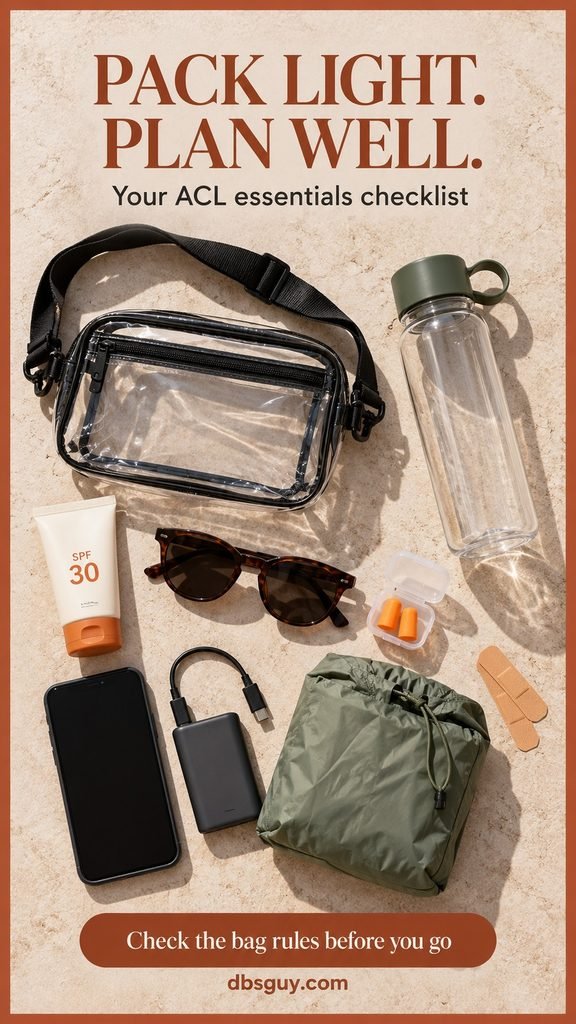
Use the official allowed and prohibited items list as the final packing check. Keep essentials reachable instead of filling the bag with “just in case” extras.
- Entry and payment: your festival wristband, photo ID, phone, and a backup payment card.
- Water: an empty reusable bottle or compliant empty hydration pack.
- Sun care: non-aerosol sunscreen, 3.4 ounces or less, plus your hat and sunglasses.
- Phone power: a portable battery pack and the correct short charging cable.
- Small comforts: earplugs, blister dressings, tissues, and hand sanitizer of 3.4 ounces or less.
- Weather backup: a compact poncho and a light layer if the forecast calls for them.
- Optional: factory-sealed, single-serving electrolyte packets.
Leave aerosols, glass, outside food and beverages, umbrellas, and selfie sticks at home. For prescriptions, bring only the day’s supply in the pharmacy-labeled container and present it to entrance medical staff. Consult the official policy for medication details and any medical accommodation questions.
Lay everything out, then remove duplicates. Carry the bottle separately if it will not fit comfortably; do not upgrade to an oversized bag just to fit more extras. The packing image shows individual essentials, not a promise that every item fits inside the pictured crossbody.
Make your first 20 minutes count
Before leaving, save the current festival map, your must-see set times, and your route home on your phone. Choose two or three priority performances instead of building a schedule that requires you to sprint between distant stages.
Once inside, locate water refill points, restrooms, medical help, and a clear meeting spot. Agree on a specific landmark and a time to reconnect if service drops; “near the main stage” is too vague. Refill your bottle, check your bag closures, and leave enough time to walk to the first set you care about.
Build meal and shade breaks into the gaps between performances. If the front of a crowd feels uncomfortable, choose a position farther back with room to leave. A good view is not worth feeling trapped.
Handle sun, heat, and a long day on your feet
The American Academy of Dermatology recommends broad-spectrum, water-resistant SPF 30 or higher, reapplied about every two hours outdoors and after sweating, following the label. Apply before arrival, including ears and the back of your neck. Use shade, clothing, and a hat alongside sunscreen.
Drink water regularly and take cooling breaks rather than waiting until you feel unwell. If you develop dizziness, headache, nausea, or unusual weakness in the heat, stop, move somewhere cooler, and seek festival medical help. Confusion, slurred speech, or loss of consciousness can signal heat stroke: alert staff and call 911 immediately. Start cooling with wet cloths while help comes; do not give fluids to someone with suspected heat stroke. See the National Weather Service heat-illness guidance.
Use earplugs for loud sets, keep your phone and wallet in a closed compartment, and take a seated break before your feet are exhausted. If you are attending multiple days, let shoes dry overnight and change into fresh socks each morning.
Plan the trip home before the headliner
ACL’s 2026 transportation guide says there is no festival parking at Zilker Park or in the surrounding neighborhoods. Choose your arrival and return route in advance.
The listed festival shuttle boards at Sand Beach Park, at Walter Seaholm and Electric Drive, and drops off outside the Barton Springs West entrance. Service begins at 11:30 a.m. each festival day, with return trips to the same pickup location. Recheck the official page for updates and confirm return-service details before relying on it.
For public transit, ACL points to CapMetro Route 803 among the options; check current schedules and service alerts. If using rideshare, allow for walking and queues and use the currently designated pickup area. Save the address of your lodging offline and keep enough phone battery for the return trip.
If you need accessible parking or entry arrangements, use the accessibility link in the official transportation guide before travel rather than assuming the general route suits your needs.
Quick answers before you go
Do I need cowboy boots for ACL?
No. Sneakers fit all three outfit formulas here. Wear boots only if they already work for long walks and long periods of standing.
Can I wear a dress?
Yes—a relaxed dress with a hem clear of the ground is a practical styling option. Test the stride, neckline, and seated coverage, and pair it with shoes you trust.
Does every bag have to be clear?
No. The small-clutch/fanny-pack and hydration-pack exceptions have their own size and compartment rules. Check the bag-policy section above before choosing.
Should I dress for fall because it is October?
Let the actual Austin forecast decide. Start with comfortable, breathable clothes and add the lightest useful weather layer. A calendar date alone is not a reason to wear a heavy jacket all day.
What should I check just before leaving?
Confirm your wristband, empty bottle, sunscreen, phone charge, bag measurements, current schedule, weather alerts, and ride home. Then enjoy the outfit you chose instead of readjusting it all afternoon.