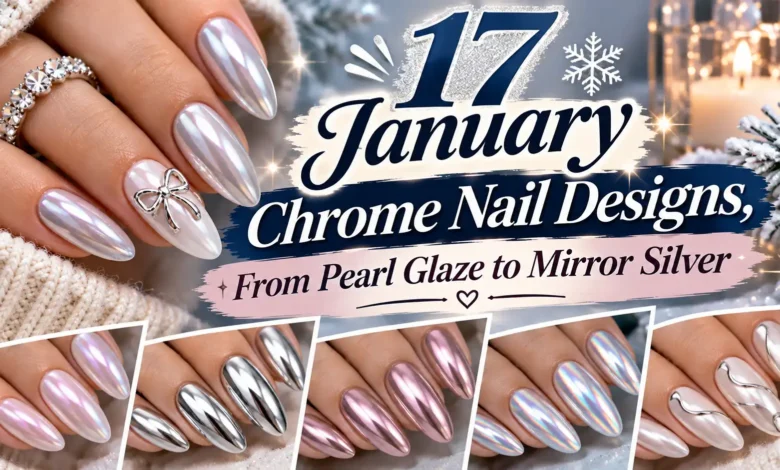
For January chrome nails, decide how much reflection you want first. A translucent pearl glaze lets the base color show through; a full mirror silver makes the finish the main event. A narrow chrome tip or one metallic accent gives you a place in between.
These 17 January chrome nail designs move from soft, sheer finishes to darker metallics and precise silver details. Each includes the color, placement, and adjustment worth discussing with your nail artist, so you can save a reference with a clear idea of what you want to keep.
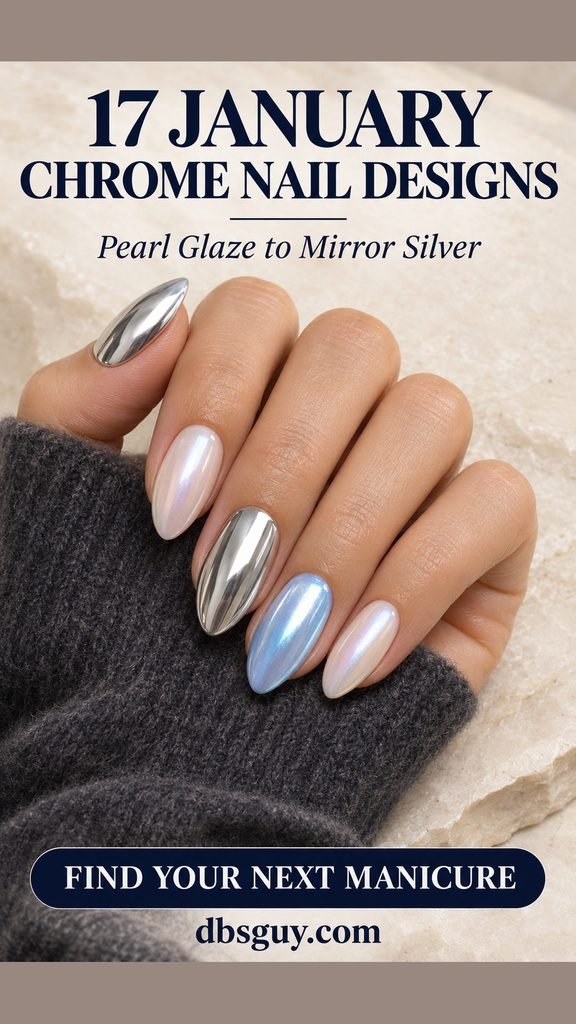
The visuals are AI-generated manicure concepts created for dbsguy.com. They illustrate finish, shape, and placement, not completed salon work or wear-test results. Actual products and lighting will change the appearance.
Choose the Finish Before You Choose the Color
“Chrome” can describe several quite different looks. OPI’s guide to glaze and chrome finishes distinguishes pearly effects, reflective silver powder, and lacquer glaze toppers. It also shows why the base shade matters. A powder name alone is not enough to explain the result you want.
- For a soft glow: start with the blush pearl, milky white, or champagne designs in ideas 1, 2, and 5.
- For a visible winter color: compare the ice blue, lilac, and midnight blue in ideas 3, 4, and 7.
- For a small amount of metal: look at the micro French, half-moons, and outline in ideas 9, 11, and 12.
- For a strong reflection: choose gunmetal in idea 6 or bright mirror silver in idea 17.
With sheer designs, choose the base against your own hand. Rose, peach, caramel, and beige create different starting points; you do not have to match the model’s pink to keep the same design.
1. Sheer Blush With a Pearl Glaze
A translucent pink base and a light pearl sheen make this the gentlest starting point. The short oval nails still have a little visible natural edge, so the manicure looks sheer rather than painted solid white.

Tell your artist that seeing through the base is part of the request. Ask to compare a sheer rose and a sheer beige before choosing the pearl layer; the difference is easier to judge on a finished sample than in a bottle. Keep the glaze translucent enough that it does not erase the base you just chose.
This design needs no extra length or accent nail. If your nails are almost flush with your fingertips, preserve the all-over sheen and work with your existing rounded outline.
2. Milky White Pearl on Almond Nails
Choose this when you want white to register as a color, with a pearly reflection across it. Compared with the sheer blush above, the milkier coverage makes the whole almond shape easier to see.

The useful distinction is milky white with pearl, rather than bright opaque white or silver metal. Show your artist how much white you want to see between the highlights. The reference has softly tapered almond tips; on a shorter oval, keep the same creamy coverage without forcing a point.
Leave the surface plain if the white glow is what drew you in. A colored French edge would change the focus of this particular set.
3. Ice-Blue Glaze on Short Squoval Nails
A pale blue base supplies the winter color while a translucent pearly finish catches the light. The short squoval outline keeps a flatter front edge with softly rounded corners.
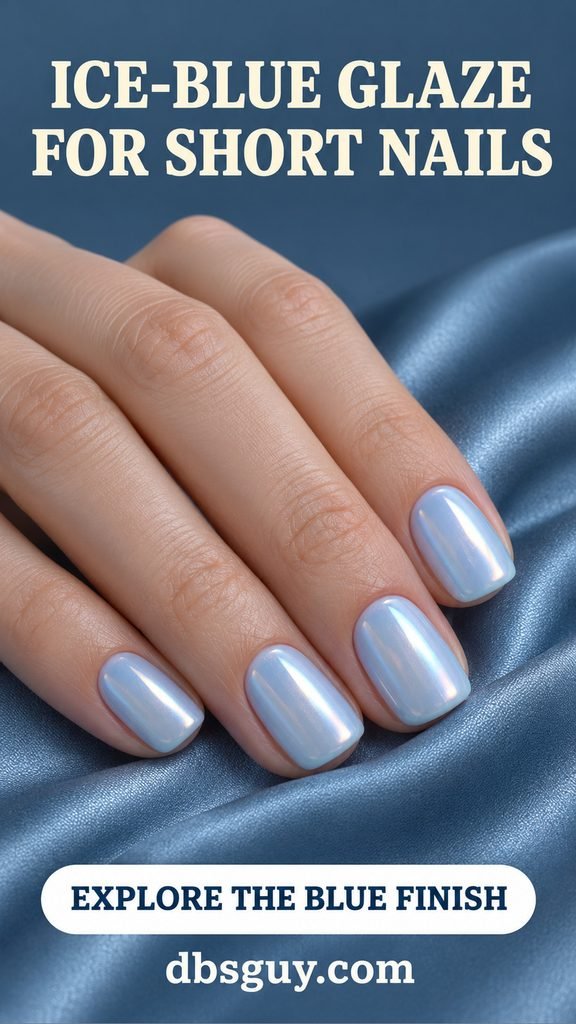
Check that the blue is still visible when the finished sample faces away from the brightest light. If it reads almost white, choose a slightly clearer blue base or a less opaque glaze. Adding glitter would introduce separate sparkling particles; the reference is about a smooth, continuous sheen.
Because there is no linework to fit, this is a useful option for a compact nail. Keep the blue across the whole nail rather than trying to squeeze in a French band.
4. Lilac Opal With Pink-and-Blue Reflections
Soft lilac gives this iridescent manicure its identity even before the reflected pink and blue appear. The elongated rounded tips leave the color shift uninterrupted.
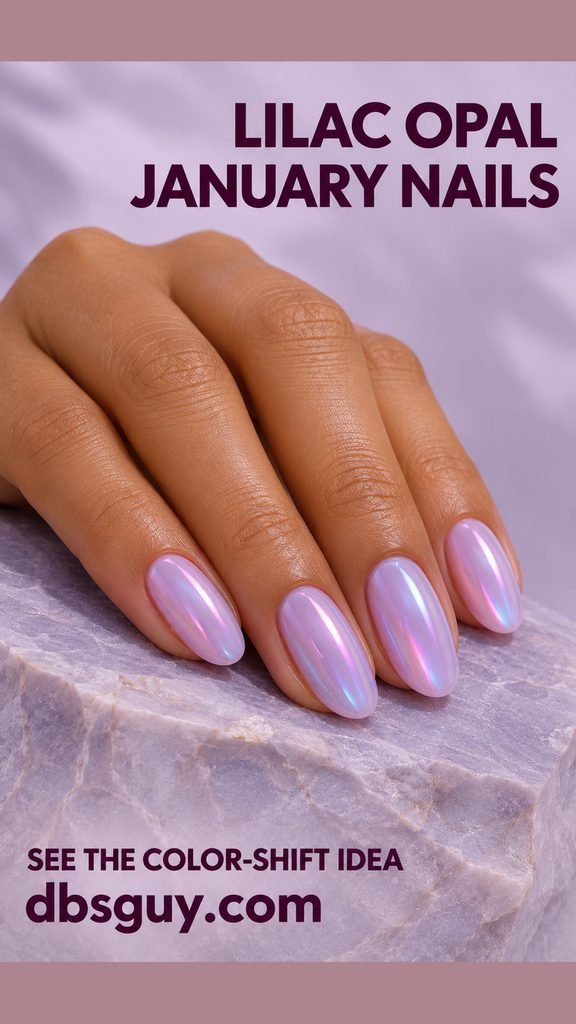
Ask for a lilac base and an iridescent chrome that gives a similar pink-blue cast. Tilt the sample under ordinary room light as well as the salon light. A still image cannot tell you how strongly a real finish will shift, and a purple shimmer polish may look quite different from the reference.
For a quieter version, keep the lilac pale and shorten the nails. You can reduce the length without changing the color relationship that makes this design distinct.
5. Warm Champagne Pearl on Short Nails
January nails do not have to be icy. A warm beige-champagne base with a soft golden pearl sheen gives this short, softly squared set a warmer direction.
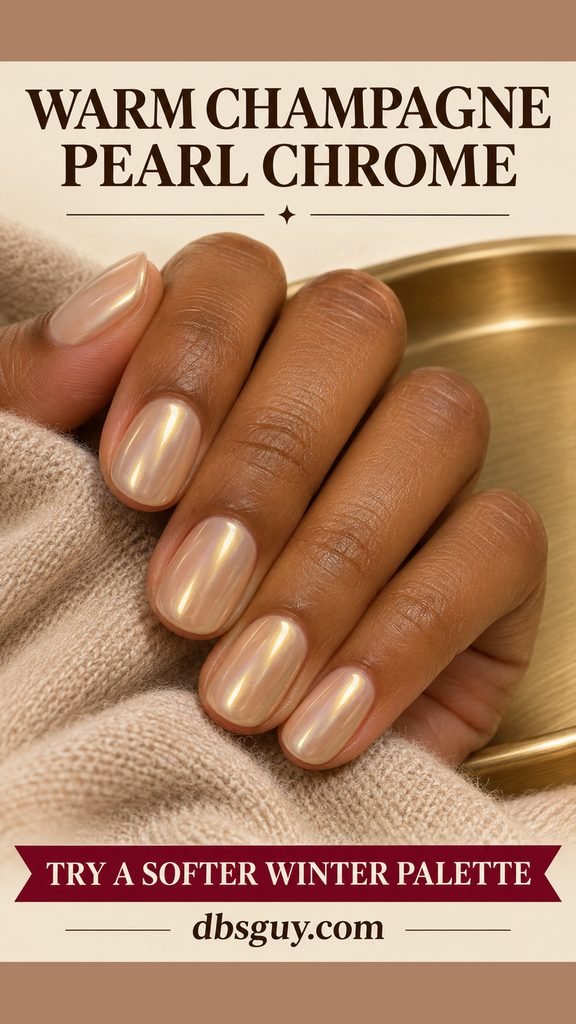
Compare the finished color beside a ring or watch you wear often. If it becomes too yellow for your taste, move the base toward beige instead of adding a cooler decoration over it. The goal here is pale champagne, with the warmth spread evenly over the nail.
Keep the corners softened and the surface free of foil pieces. That lets you see the difference between a warm pearl glow and a bright gold metallic manicure.
6. Gunmetal Chrome on Short Square Nails
Gunmetal gives you a dark metallic surface with a clear silver-gray reflection. It carries more contrast than pearl glaze while staying smokier than the bright silver at the end of this list.
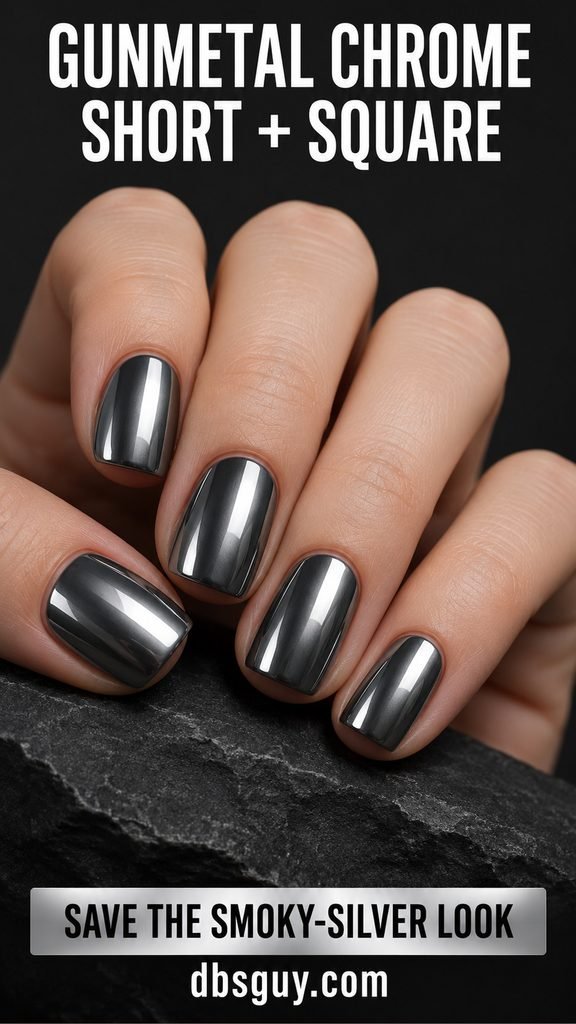
Use the reference to show both the dark body color and the bright reflected bars. Asking only for “gray chrome” leaves room for anything from pale pewter to nearly black. Request a finished dark-silver sample before the full set begins.
The short square outline makes the ends look crisp. If you prefer softened corners, retain the compact length and gunmetal coverage; neither depends on a sharp corner.
7. Midnight-Blue Chrome on Longer Almond Nails
This set keeps blue visible inside a much darker manicure. Bright cobalt-blue reflections cross a deep navy surface, and the longer almond shape gives those highlights room to stretch.
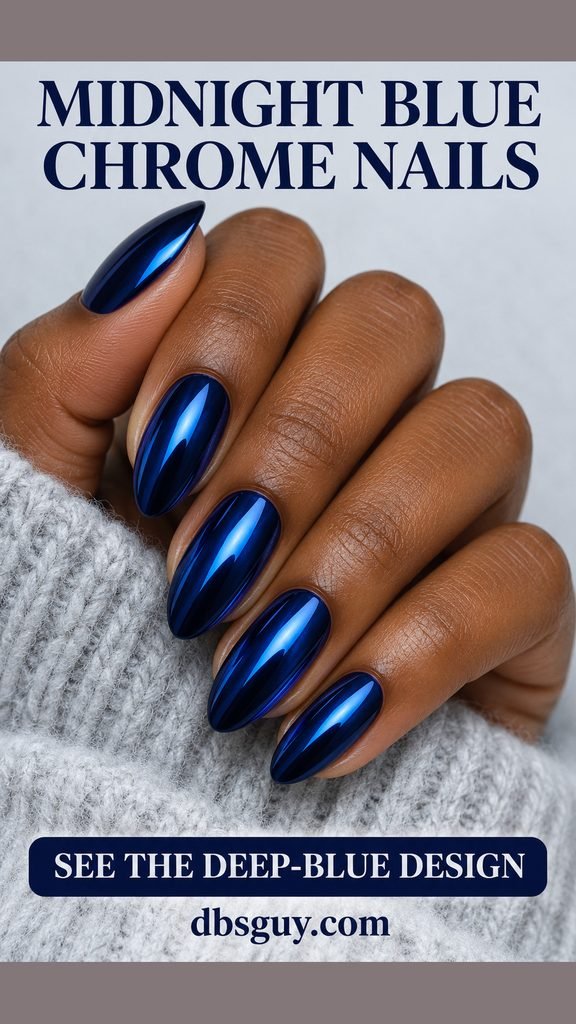
Ask for dark blue chrome that still reads blue in normal lighting. An opaque silver finish over a navy base may cover the very color you wanted, so judge the completed combination rather than assuming every silver powder will preserve it.
If you wear shorter nails, keep the all-over blue reflection and reduce the taper. The color can do the work without stars, rhinestones, or a second pattern.
8. Espresso Brown With a Bronze Glaze
A deep brown base stays visible beneath warm bronze reflections. The short rounded nails make this an option for someone who likes a dark manicure but would rather wear warmth than icy silver.
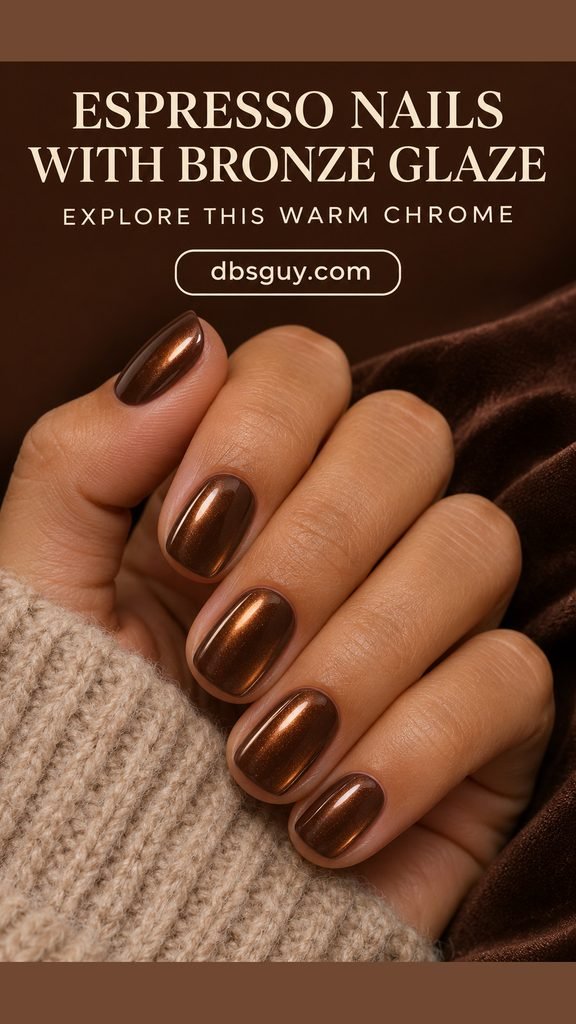
The important part of the reference is the brown between the highlights. Describe it as espresso with a bronze sheen, then check that your sample has not become opaque copper. If the effect is too orange, ask to compare a more neutral brown-and-glaze combination.
A plain surface makes that color balance easier to appreciate. You can echo the warmth with an oatmeal sleeve or brown leather accessory without adding a separate nail-art detail.
Also Read: Brown January Nails: Espresso, Cocoa and Latte Looks for Sweater Weather.
9. A Silver Micro French on Sheer Rose
A hairline of reflective silver follows the free edge while nearly all of the nail stays sheer rose. This is the smallest dose of chrome in the collection.
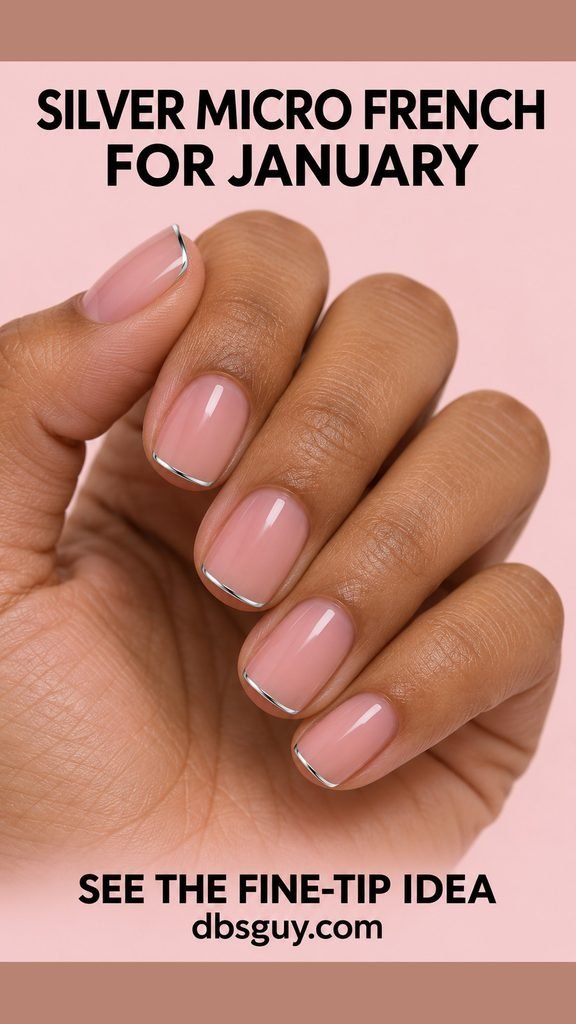
Ask for a narrow silver band, not a white French tip with an all-over glaze. Point out that the pink centers should stay unchromed. On short nails, compare the band across the whole hand before making it wider; a heavier line on the pinky can overwhelm the available space.
If there is almost no free edge, ask your artist whether a fine metallic rim will read clearly at your current length. The all-over pearl in idea 1 is another way to keep the shine without relying on a visible tip.
Also Read: 17 January French Tip Nail Ideas Beyond the Classic White Edge.
10. Icy-Blue Diagonal Chrome Tips
A slanted border turns the French tip into a pale-blue metallic wedge. The sheer pink base remains open, and the blue slopes consistently across the almond ends.
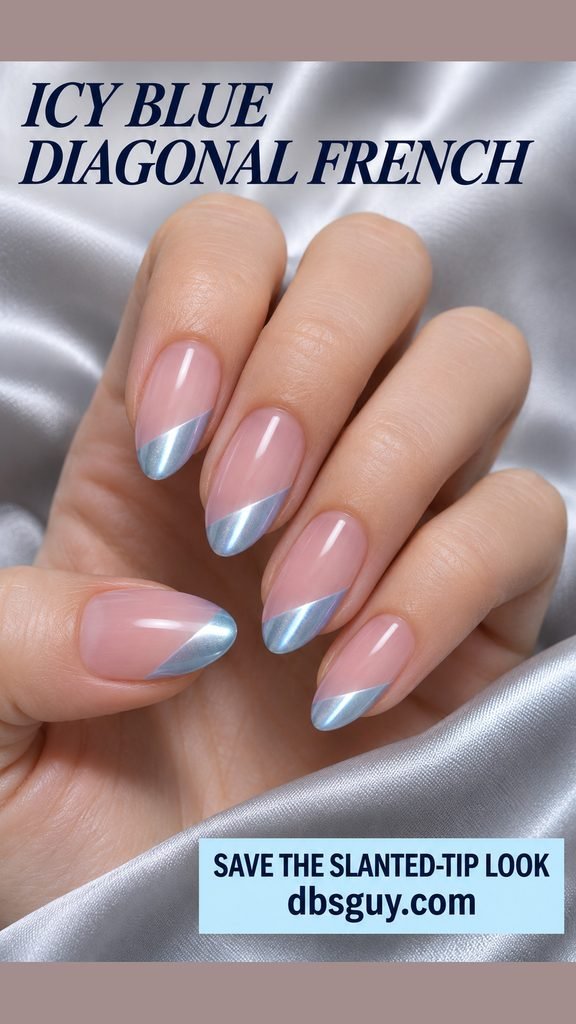
Show your artist the diagonal boundary as well as the blue. A curved smile line would produce a different design. Decide how far down one side the wedge should reach before repeating it on every nail.
On a shorter set, use a shallower wedge so the pink center remains visible. Keep the reflective blue confined to the tip; an all-over pearl layer would soften the contrast between the two areas.
11. Small Silver Chrome Half-Moons
Here the metallic detail sits at the base of the nail instead of the tip. A small silver half-moon repeats across sheer blush, leaving the rounded free edges plain.
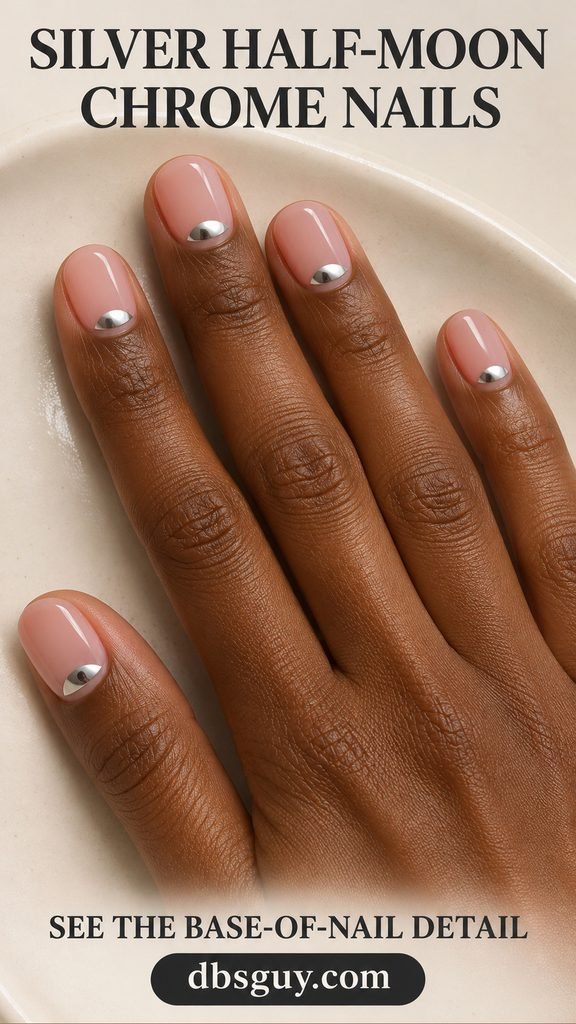
Specify a filled half-moon with its curved edge facing the tip, and leave a visible blush margin between the silver and the surrounding skin. It is easy to confuse this placement with a silver cuticle outline, which is a thin curve rather than a filled shape.
Keep the half-moons small enough that the blush remains the main surface. If you want less repetition, put the silver shape on the ring nails only and keep the rest sheer.
12. A Fine Silver Outline Around a Sheer Base
This design frames the nail without filling it. A fine silver line follows the almond perimeter, enclosing a completely sheer-looking rosy center.
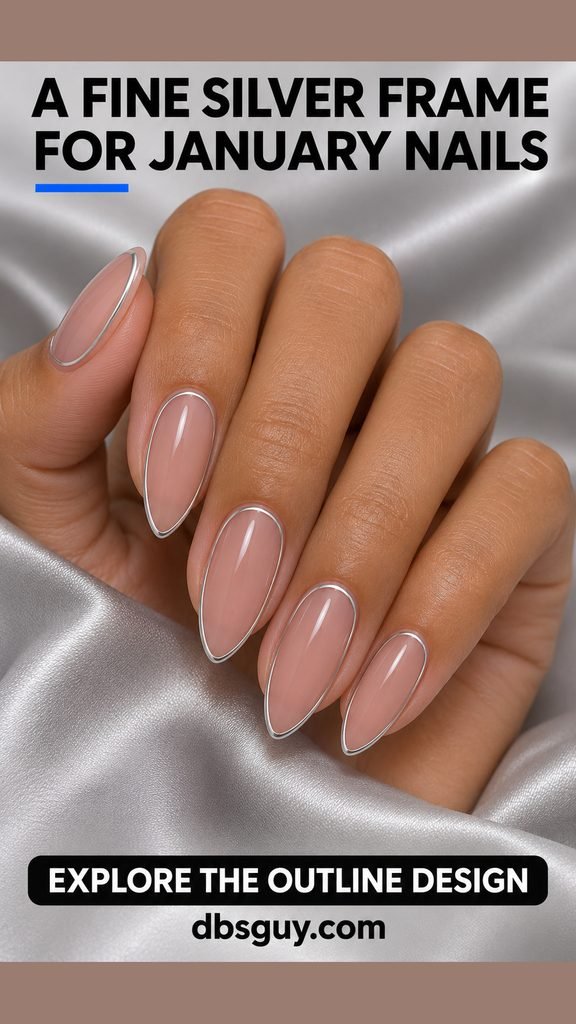
For the salon brief, say: “Please outline the nail in thin silver chrome, with the center left unfilled and a small clear margin near the skin.” Show the base curve in the reference so the request does not become a standard French tip.
A thicker border changes the balance quickly. If a full outline feels too busy at your preferred length, keep one framed accent nail and leave the others sheer. That retains the same detail without crowding every nail.
13. A Silver Chrome Fade at the Tips
Reflective silver gathers at the almond tips, then softens into a translucent cool pink-gray base. Unlike a French manicure, there is no crisp line dividing the two areas.
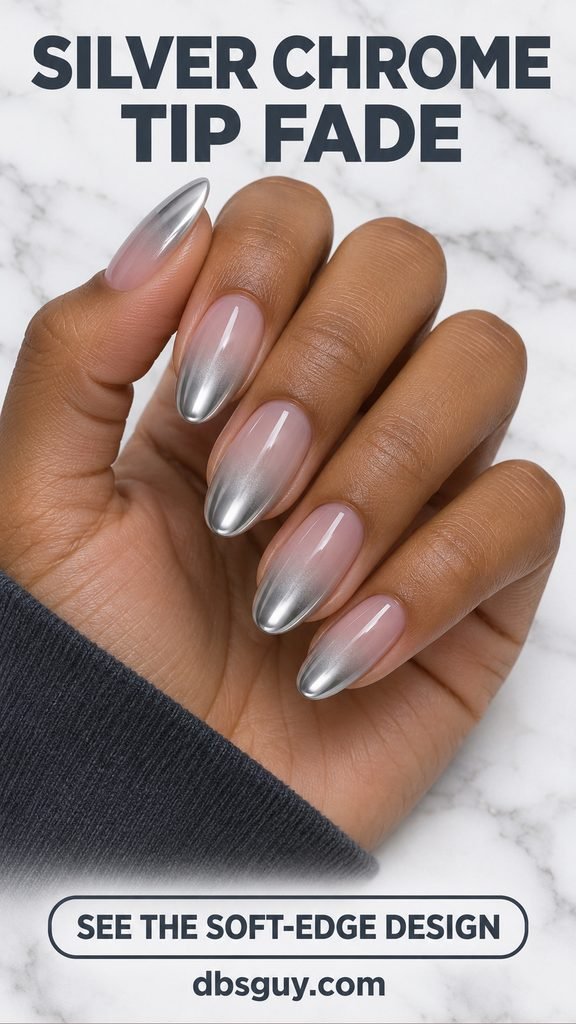
Save a close crop of the transition. Ask for dense metal at the ends and a gentle fade that leaves the lower part of the nail visibly sheer. Scattered glitter would create a different texture, even if the overall color were similar.
The longer reference provides room for the fade. On short nails, reduce its depth so silver does not cover most of the nail; your artist can show you where the transition will end on a sample.
14. Pearl Glaze With One White Snowflake
One small white snowflake gives a plain pearl set an unmistakable winter detail. It sits high on the ring nail, with enough open space around its branches to remain visible.
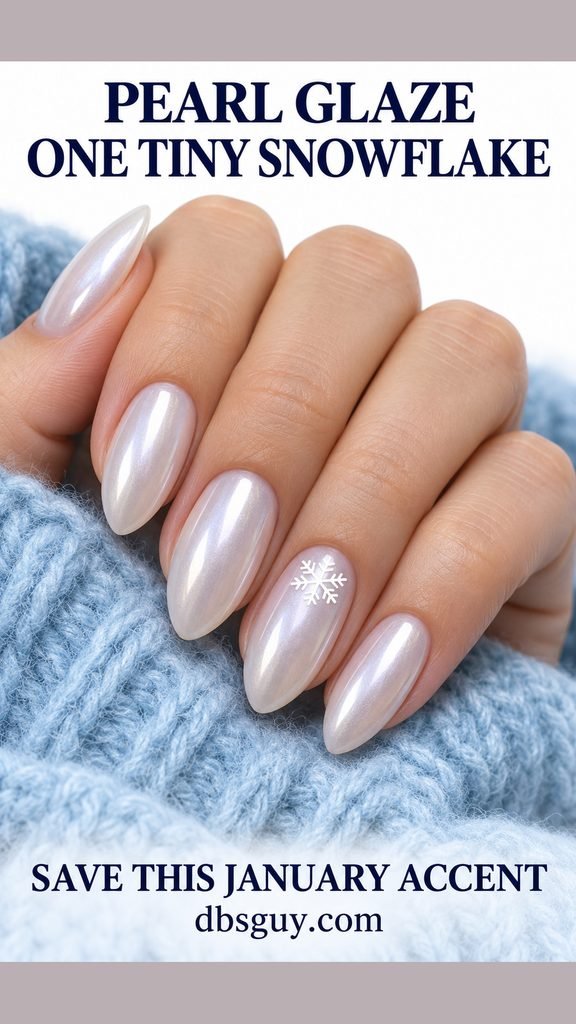
Keep the other nails plain and ask for flat white artwork over the pearl background, using compatible products. The white can be subtle against the pale base, so check a sample for contrast rather than making the snowflake larger straight away.
On a smaller nail, simplify the branches before shrinking the whole motif. A single readable flake preserves the idea better than several crowded snowflakes.
Also Read: 17 Winter Nail Art Ideas for January That Feel Cozy, Icy or Both.
15. Cobalt Blue With One Mirror-Silver Accent
Glossy cobalt covers four nails on each hand; the ring nail alone gets full mirror silver. The distinction is deliberate: the blue is a shiny solid color, while the accent is metallic.
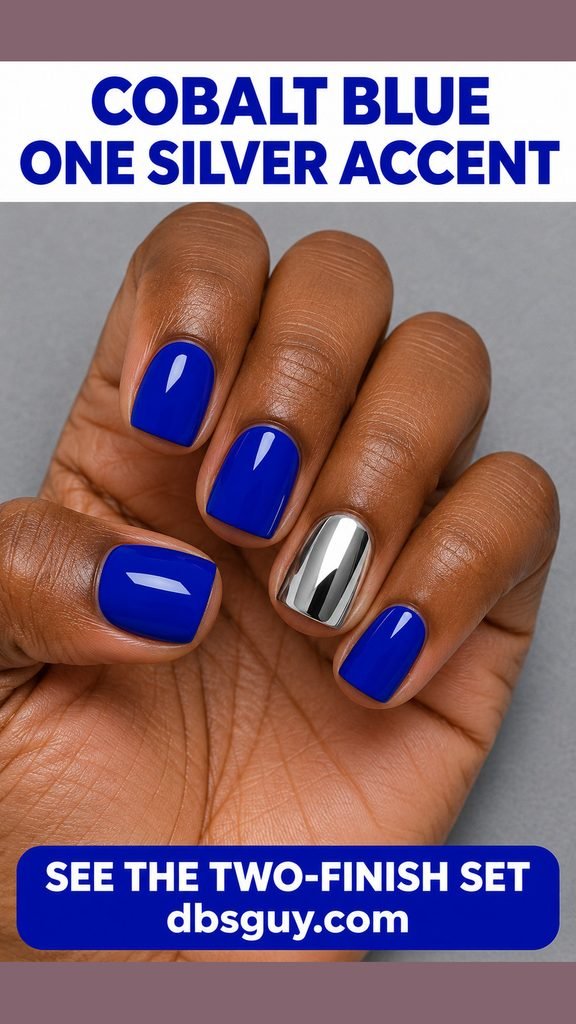
Bring that two-finish request to the appointment. If all five nails receive chrome, you lose the contrast that makes this set work. The short square shape gives both the blue and the silver a clear, compact outline.
Try the blue and silver samples side by side before choosing the cobalt. If you want a darker palette, change the solid blue to navy while keeping the single bright silver accent.
16. A Raised Silver Ribbon on Sheer Taupe
A single sculpted silver curve runs along the ring nail, while the remaining almond nails stay glossy taupe. The narrow S shape adds actual relief rather than only a painted metallic line.
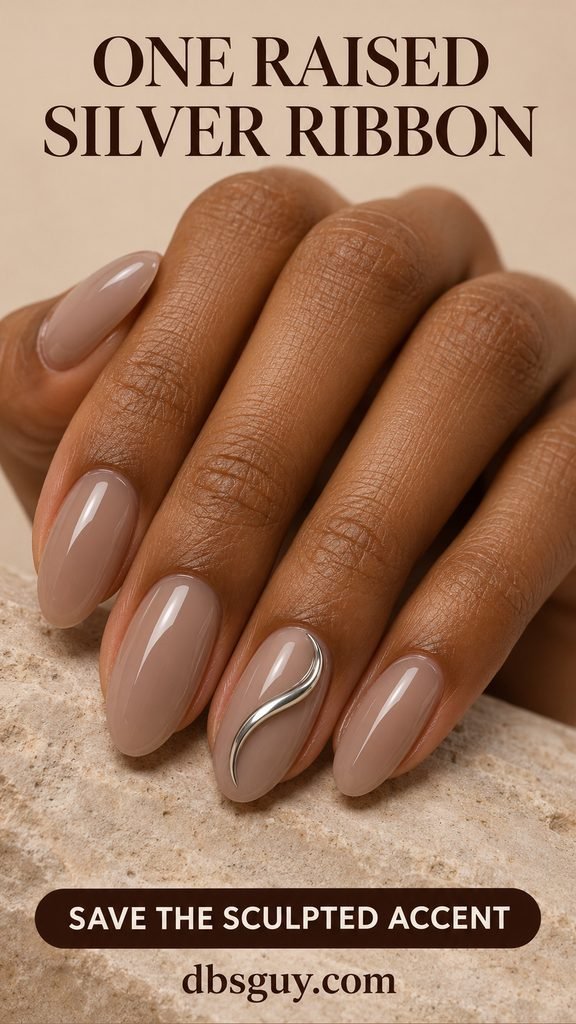
Book this as dimensional nail art and show the side angle. Ask your artist whether a low raised ribbon can be created with their compatible sculpting and chrome products, leaving space around the design and keeping it inside the nail perimeter.
If you prefer a smooth surface, request the same curve as flat silver linework. That is a practical adaptation, but it will not have the raised profile shown in the reference. Confirm which version you want before the appointment is priced.
17. Full Mirror Silver on Almond Nails
This is the bright-metal finish the title promises: every nail is opaque silver, with crisp dark-and-light reflections and no base color showing through.
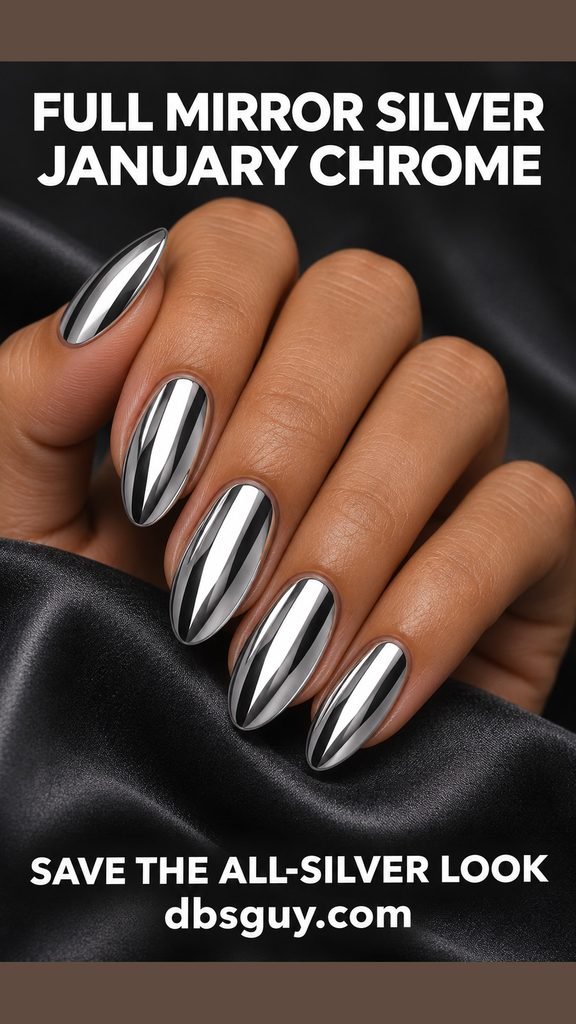
Ask to see a mirror-silver sample, not only a silver shimmer polish or translucent pearl glaze. The reference keeps the entire surface uninterrupted, which lets the metallic reflection follow the almond curve.
Choose the length you already enjoy wearing. There is no artwork to resize, so shorter rounded nails can keep the same all-silver idea. If you want this much reflection but a darker color, return to the gunmetal in idea 6 rather than adding black artwork over the silver.
Turn Your Saved Image Into a Clear Appointment Request
Send one main reference and identify four things: shape, length, base color, and where the chrome belongs. “Short squoval, sheer rose, silver on the free edge only” gives your artist a more usable brief than “January chrome.” Add whether you want a flat surface or raised art.
Chrome describes the finish, not the underlying nail service. Confirm whether you are booking color over your natural nails, an overlay, extensions, or another service your salon offers. Ask whether selective chrome and dimensional art need additional booking time, and request a quote for your chosen design.
Also Read: January Nail Bookings: What to Decide Before Your Appointment.
January Chrome Nail FAQs
Can I get this effect with regular nail polish?
A compatible air-dry glaze topper can give a soft pearly interpretation of ideas such as blush pearl or champagne. It should not be assumed to reproduce an opaque mirror-powder finish. If mirror silver is the feature you want, compare the actual finished product or press-on set before choosing a method.
Does every chrome powder need a black base?
No. The result depends on the powder and base combination. Some finishes are intended to let a light or colored base show through. Choose the finished effect you want, then have your artist select a compatible combination; do not assume black is a universal requirement.
Which designs work if I want to keep my nails very short?
Start with all-over blush pearl, ice blue, champagne, or gunmetal. None requires room for a pattern. The micro French needs enough space for a visible edge, while the outline, fade, and snowflake may need less decoration to fit a smaller nail.
Can I use one chrome tutorial for any gel system?
Follow the directions for the exact color, chrome-compatible layer, top coat, and lamp being used. Even manufacturer instructions can give different curing sequences for different systems. Avoid borrowing one tutorial’s partial-cure time for another product. For a salon appointment, choosing the look is your job; selecting and applying the compatible system is a conversation to have with your nail artist.
Save the design whose reflection you like, then write down the one detail you would change: shorter length, a warmer base, a thinner tip, or one accent instead of five. That note helps keep the finished manicure close to the reason you chose it.