
For your first manicure of 2027, try milky blush for a soft wash of pink, dusty periwinkle for a cooler change, or petrol teal for a dark color with a blue-green edge. If those do not feel like you, greige, cocoa brown, garnet red, and pewter pearl give you four other clear directions.
These January nail color ideas are a starting palette for choosing your next set, rather than a prediction of what everyone will wear in 2027. Each option below keeps the artwork simple so you can focus on the shade, its coverage, and how it looks on your own hand.

The images are AI-generated color concepts created for dbsguy.com. They illustrate the intended look and are not records of salon work or exact matches to a polish brand.
Start With the Change You Want to See
Think about what you want after your last manicure. Perhaps you are ready to put away the glitter, want something lighter beside a dark coat, or simply want a different color on short nails. Use that small preference to narrow the choices:
- Less visual weight: milky blush leaves some natural nail visible.
- A gentle color change: dusty periwinkle brings a blue-lavender tint without a bright primary blue.
- An everyday solid: greige or cocoa keeps the palette muted, with a cooler or warmer brown base.
- A stronger color statement: garnet or petrol teal provides depth without needing decorations.
- A little light movement: pewter pearl adds a fine silvery sheen.
Look at a painted sample with its intended top coat. A glossy bottle can hide how sheer a formula is, and a bright salon lamp can make a dark shade look lighter than it will at home.
1. Milky Blush for a Soft Pink Reset
Milky blush is the lightest-looking option in this group because the natural nail remains part of the color. Choose a muted rosy tint with translucent coverage, rather than an opaque baby pink. The reference uses short squoval nails with softly rounded corners and a faint natural edge showing through.
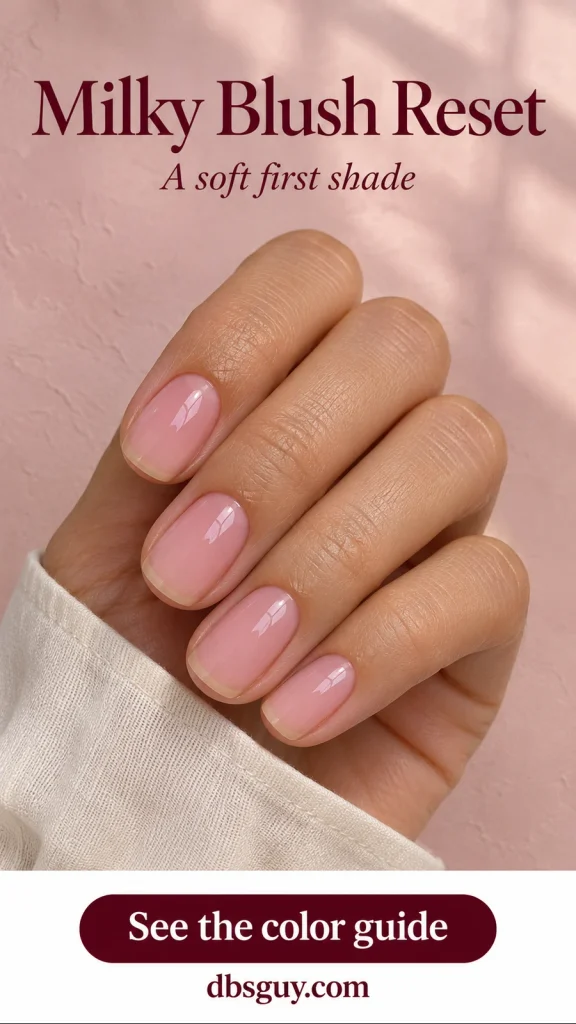
This is a good place to start if your holiday set felt visually busy. Before committing, decide whether you enjoy seeing the free edge. If you want it concealed, compare a more covering pink formula; the same pale pink can look quite different when it becomes opaque.
Say at the salon: “A translucent milky blush on short squoval nails, finished glossy. I would like a little natural nail showing, with no French tip or sparkle.”
For a closer-to-skin effect, compare a deeper rose tint too. “Subtle” does not have to mean choosing the palest pink on the display.
2. Dusty Periwinkle When You Want Color Without Brightness
Periwinkle gives a winter blue a lavender turn. Here, the shade is muted and fully covering, with a smooth glossy surface. It is more visibly colorful than blush or greige, while the grayish cast keeps it away from a vivid blue manicure.
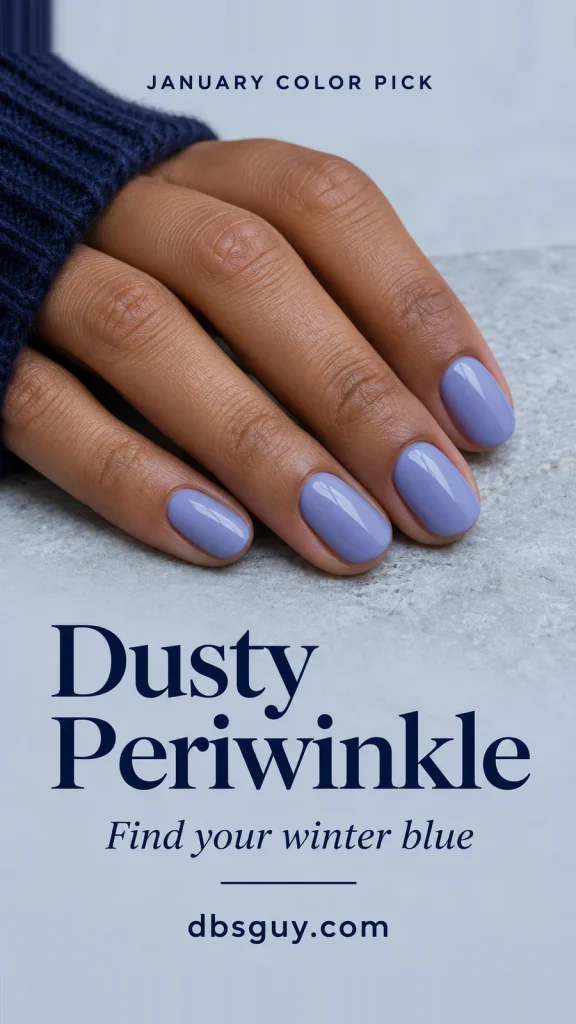
Compare this one beside navy or denim if those are the colors you reach for most. You are looking for a blue-lavender balance you enjoy: some swatches lean lilac, while others read mostly blue. There is no need to add a snowflake to make the choice feel appropriate for January.
Keep the request specific: “An opaque, dusty periwinkle cream with a glossy finish; a little lavender in the blue, without shimmer.” The short, softly rounded outline in the image works well with this plain color treatment. Keep your usual shape if you prefer a squarer edge.
3. Medium Greige for a Neutral With Some Definition
Greige sits between gray and beige-brown. A medium-depth version gives the nails a clearer outline than a very pale beige, while keeping the overall color quiet. The reference pairs fully opaque, glossy greige with a camel cuff and a dark surface.

The most useful comparison is between two greiges of similar depth: one with more brown and one with more gray. Hold them beside your hand and a coat sleeve. Choose the warmer version if you like how it relates to camel; try the grayer one if you want a cooler contrast.
Ask for: “A medium brown-gray greige with opaque coverage and plain gloss. Please show me a warm and a cool version before we choose.”
Keep the finish free of shimmer if you want the brown-gray balance to remain the main feature. A polish labeled “nude” may give you a completely different depth, so show the reference as well as naming the color family.
4. Cocoa Brown for a Warm, Solid-Color Manicure
Choose cocoa when you want a brown that remains recognizable as brown. The image uses a medium milk-chocolate tone with full coverage on short rounded nails. Against oatmeal knitwear, the color has enough depth to stand out without the near-black appearance of a much darker espresso.
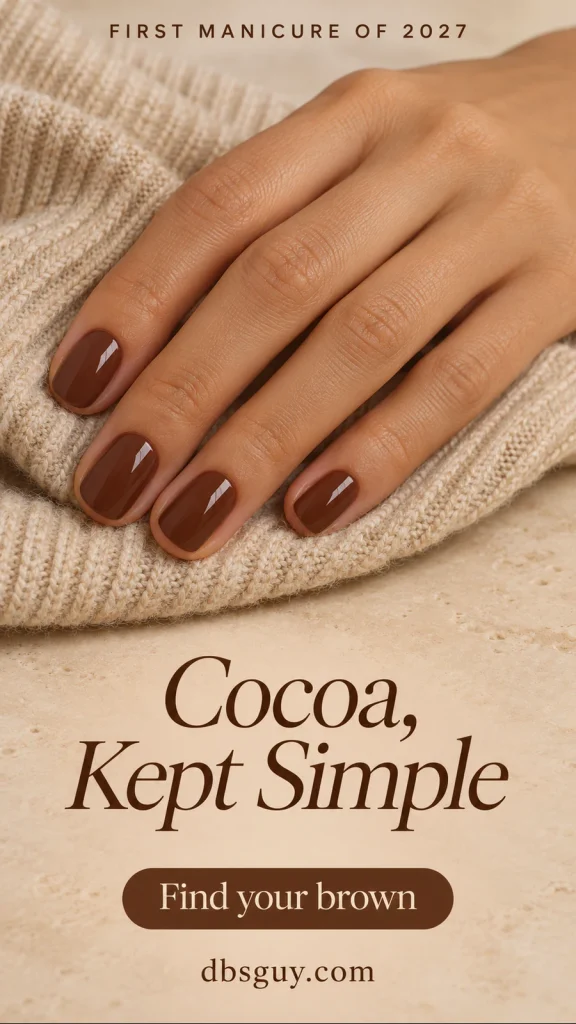
Brown swatches can vary toward caramel, red, or gray. If the first sample feels too orange beside your hand, ask to see a more neutral cocoa at the same depth. If you want a lighter manicure, compare a lighter brown rather than assuming a sheer coat of a dark formula will give the same result.
A useful description is “opaque milk-chocolate brown, short rounded nails, glossy, with no metallic finish.” Bring the shade into the appointment as your priority; you can keep the length and shape you already find comfortable.
5. Garnet Red When You Still Want a Rich Red
January does not require putting red away. Garnet works here as a deep jewel red with a restrained wine undertone. The very short, softly squared nails in the reference keep the silhouette compact; the glossy red supplies the interest.

Check how much red you can see away from the brightest light. If the sample turns almost black and that is not what you want, move a step lighter. A slightly brighter garnet may give you more of the red you liked in the reference during an ordinary evening indoors.
Salon wording: “A deep garnet cream that still looks red indoors, on very short soft-square nails. Plain glossy color, without glitter or gold details.”
Try it beside a black sleeve if you want the red to be the focal point, or beside cream if you prefer a lighter overall outfit. Neither combination needs matching red accessories.
6. Petrol Teal for a Dark Blue-Green Change
Petrol teal is the choice for a dark manicure when you want a visible mix of blue and green. It differs from navy through that green cast, and from a brighter turquoise through its depth. The reference uses a plain glossy cream on short oval nails.

Choose this one by the painted sample, because “teal” can describe a wide range of colors. Look for blue-green across the nail, rather than only in a narrow reflection. If you only see black in normal room light, ask for a lighter teal sample before choosing.
Ask for: “A deep petrol teal, opaque and glossy, with both blue and green visible. No cat-eye effect or shimmer.”
A gray cuff gives this shade room to stand out. If your wardrobe is mostly navy, put the swatch beside it first and decide whether you like the close, slightly different tones together.
7. Pewter Pearl for a Small Amount of Shine
Pewter pearl is a soft gray with a fine silver sheen. It gives you a reflective finish without large glitter pieces. In the reference, the short rounded nails have a diffuse, pearly glow rather than a sharp mirror reflection.
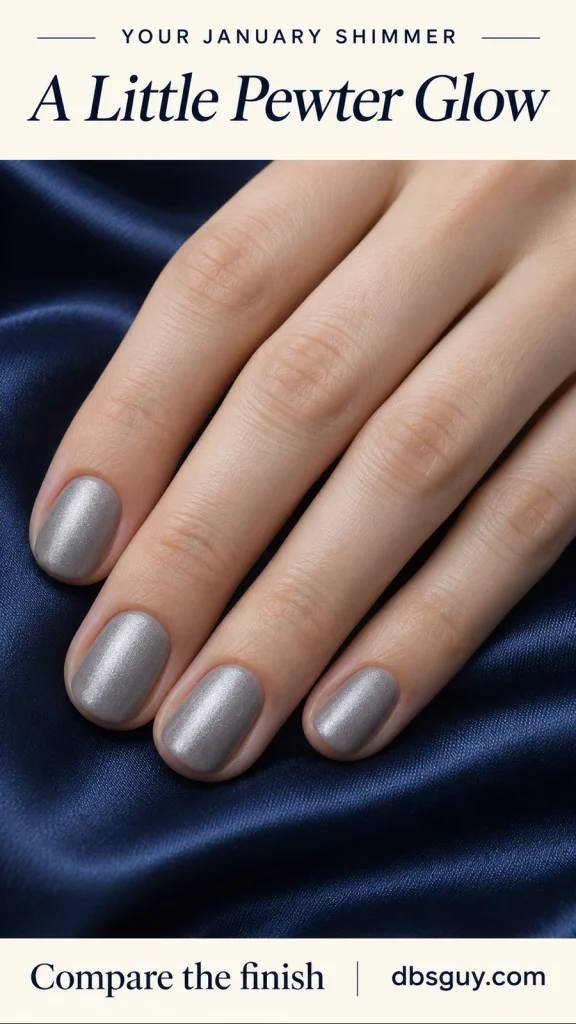
Turn the finished sample slowly under the light. Notice whether you like the gray when the brightest reflection moves away, and how strongly the shimmer shows. If you want the restrained look pictured, specify a fine pearlescent polish rather than asking only for “silver nails.”
Say: “A soft pewter-gray base with very fine silver pearl, on short rounded nails. I want a gentle metallic sheen, without chunky glitter or a mirror finish.”
Keep every nail the same color for this version. The moving reflection already gives the manicure a detail to notice.
Turn Your Favorite Color Into a Clear Salon Request
Save one image and send four details: color family, coverage, finish, and your current length and shape. For example: “Dusty periwinkle, opaque cream, glossy, at my current short rounded length.” That gives the artist something more usable than “fresh January nails.”
These references do not require a specific brand or service. If you want gel, our January gel nail color guide offers a more focused blue, white, and red comparison. If shape and appointment type are still undecided, start with how to choose your first manicure of the year.
For an at-home version, look for a regular polish in the chosen color family and check its coverage description. Follow that product’s application and drying instructions; a sheer shade and an opaque cream are different starting points, even when their bottles look similar.
A Little Care Before the New Color
The American Academy of Dermatology’s manicure guidance recommends moisturizing nails, particularly after polish removal, and avoiding cutting or forcefully pushing back cuticles. Keep that in mind when planning your appointment or doing your own manicure.
Questions About Your First January Manicure
Which color should I pick if I cannot decide?
Start with the type of change you want. Choose milky blush for less coverage, greige for a muted solid, or teal for a deeper color. Compare two finished samples rather than adding more options to the shortlist.
Can I wear these colors on very short nails?
Yes. All seven ideas use an all-over color or fine sheen, so none depends on space for a large motif. Keep your comfortable length and compare the color on a sample with a similar shape.
Which option hides the natural nail edge?
The opaque cream options are the better starting point: periwinkle, greige, cocoa, garnet, or teal. Check the finished coverage of pewter pearl, since shimmer formulas vary. The milky blush reference deliberately leaves a faint edge visible.
Are these confirmed January 2027 nail trends?
No. These are editorial color ideas for planning your first manicure of 2027. Choose the shade you want to wear, and confirm the actual polish and finish available at your appointment.
Also Read
- January Dip Nail Colors for Winter: Soft Neutrals and Rich Jewel Tones — a palette to discuss if you prefer a dip service.
- Easy Nail Art for January Using Dots, Lines and a Little Shimmer — simple details to try when you want to build on a plain base.