If you’re torn between soft and moody January nail colors, start with mushroom taupe or smoky mauve. Both give you more depth than a pale pink without taking you straight to an almost-black manicure. If you already know you want one end of that range, sheer rose milk and dusty blue keep things lighter; midnight navy and wine burgundy bring the drama.
The useful question is what you like about each mood. Is it the light color, the see-through finish, or the darker outline around each nail? Those are separate choices. The six references below help you name the difference before you buy a bottle or sit down at the salon.
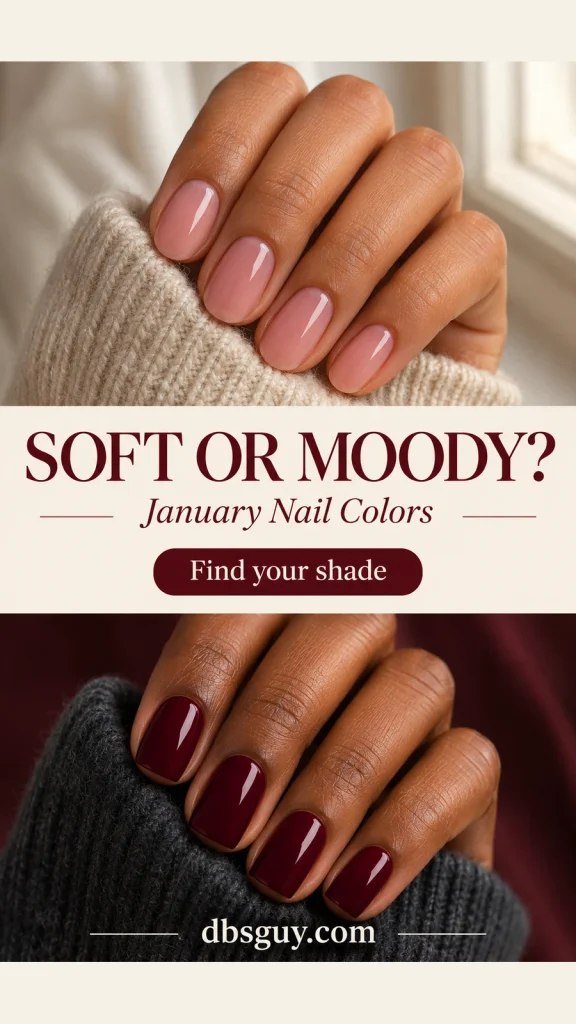
These visuals are AI-generated manicure concepts. They illustrate color, shape, and coverage; they are not salon photographs, product swatches, or wear tests. Compare a real finished swatch before choosing a polish.
Find Your Starting Shade
- You want your natural nail to show: sheer rose milk.
- You want a light color with full coverage: dusty blue.
- You like neutrals but want some weight: mushroom taupe.
- You want a muted color between pink and plum: smoky mauve.
- You want a dark manicure with a cool cast: midnight navy.
- You want a rich, warmer-looking dark: wine burgundy.
These are color directions, not standardized shade names. Two bottles labeled “mauve” can look quite different. Ask to see the finished color in the polish system you plan to use.
1. Sheer Rose Milk When You Want the Softest Change
Choose this if an opaque pastel feels like too much color. A translucent rosy veil lets some of the natural nail remain visible, so the effect comes from the gloss and gentle tint. In the reference, short oval tips show through softly rather than forming a painted white edge.

Look for a polish described as sheer. “Light pink” alone does not tell you the coverage: a pale pink can still be completely opaque. Compare a sheer rose with a milky version, then decide how much of your natural tip you want to see.
If you would rather conceal differences in the color of your natural nails, request more coverage from the outset. Don’t choose a transparent finish and expect it to behave like a concealer.
Salon wording: “A glossy, sheer rose-pink manicure on short oval nails. I’d like a soft milky tint with a little natural tip visible, without a painted French edge.”
This is the reference to save when you like the airy half of the cover image. Keep the rosy tint visible if a white-based milk shade feels too stark beside your hand.
2. Dusty Blue When You Want Light Color Without Pink
Dusty blue gives you a different kind of softness: the shade is pale and muted, but the coverage is solid. A gray undertone keeps it quieter than a bright sky blue. The short squoval shape in the concept gives the creamy color a clear outline.

Bring a gray-blue reference rather than asking for “winter blue.” That phrase could lead to anything from a nearly white pastel to navy. For this look, the blue should be easy to recognize, with enough gray to take away the candy-colored effect.
Try the swatch beside a gray sleeve and then a cream one. If it looks whiter than you wanted, compare a slightly deeper blue-gray. If it feels too somber, move toward a clearer blue at the same lightness.
The detail to specify: pale dusty blue, full coverage, a glossy cream finish, and no shimmer. You want softness from the color itself.
Also Read: Extra Short January Nail Designs With Tiny Details That Fit, if you want to adapt a winter color to very little free edge.
3. Mushroom Taupe When Beige Feels Too Pale and Brown Feels Too Dark
This is the most neutral middle option. Look for a medium brown-gray with enough depth to look deliberate beside your skin. The reference is closer to a muted mushroom brown than a pale greige, with short, softly squared tips and a glossy surface.
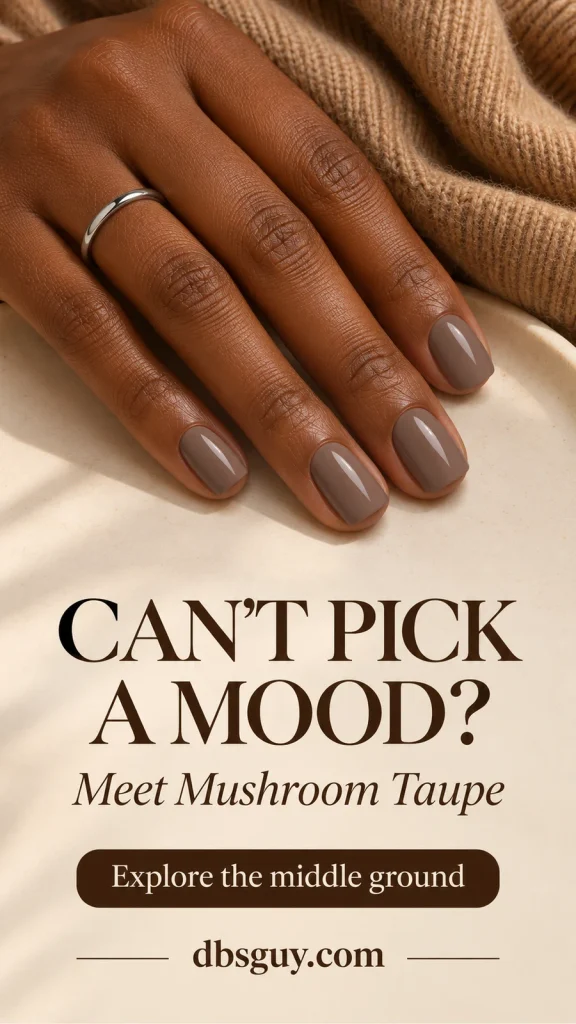
Taupe is useful when you enjoy both soft cream clothing and darker winter layers. It can echo the warmth of a camel sleeve while retaining the muted quality of gray. You don’t need to add an accent nail for the manicure to have definition.
At the salon, compare one browner taupe with one grayer taupe at a similar depth. That reveals the undertone difference more clearly than comparing a very light beige with a dark brown. Choose the version you like against your own hand; “neutral” does not have to mean a skin match.
Ask for: “A medium mushroom taupe, opaque and glossy. I want a balanced brown-gray rather than a pale beige or a deep chocolate.”
If you prefer dip powder, the January dip nail color guide gives you references to discuss within that service.
4. Smoky Mauve When You Want Both Moods in One Color
Smoky mauve is the place to start if taupe feels too brown. It has a muted rose-purple base and a gray cast, giving you visible color without the brightness of a clear pink. The medium oval nails shown here keep the shade smooth and uninterrupted.
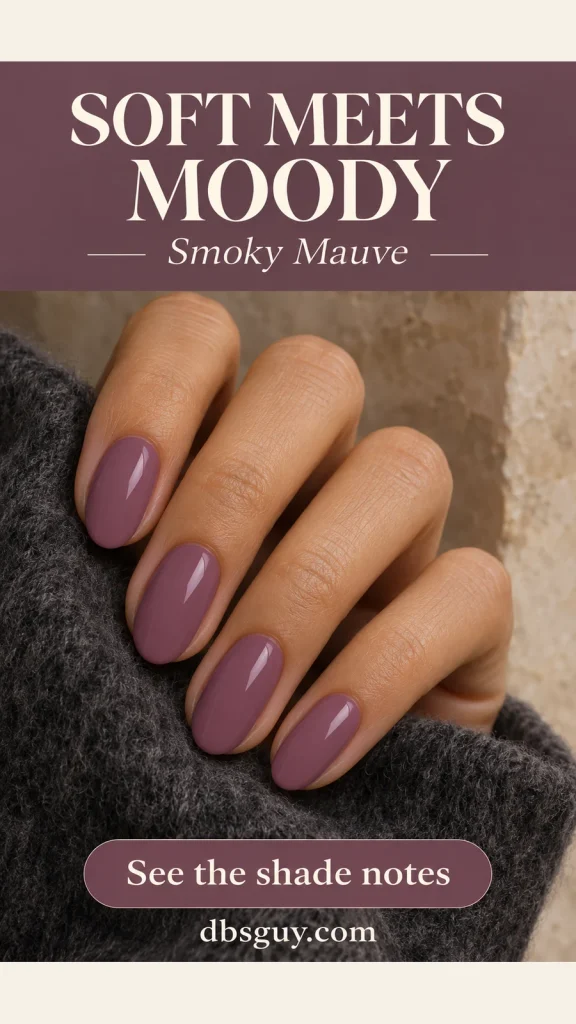
Pay attention to the balance between rose and purple. A rosier mauve may feel closer to the soft manicure you usually wear; a grayer, plum-leaning version moves toward the moody side. Neither needs to be especially dark to feel different from a milky pink.
Check the color beside something you wear often, such as a charcoal sweater or a camel coat. If you love it only under the salon’s brightest light, look at another swatch before committing.
A helpful request: “A medium smoky mauve with a muted rose-purple base. Glossy and opaque, without shimmer. I’d like it to stay visibly mauve rather than look beige or nearly black.”
Choose this over taupe when you want your manicure to register as a color, even while the overall look stays subdued.
5. Midnight Navy When You Want a Darker Outline
Midnight navy is for the days when a pale shade disappears into the rest of your outfit. Its appeal is the deep blue color and the stronger outline it gives each nail. A short rounded-square shape, as shown here, makes a complete look without extra length or artwork.
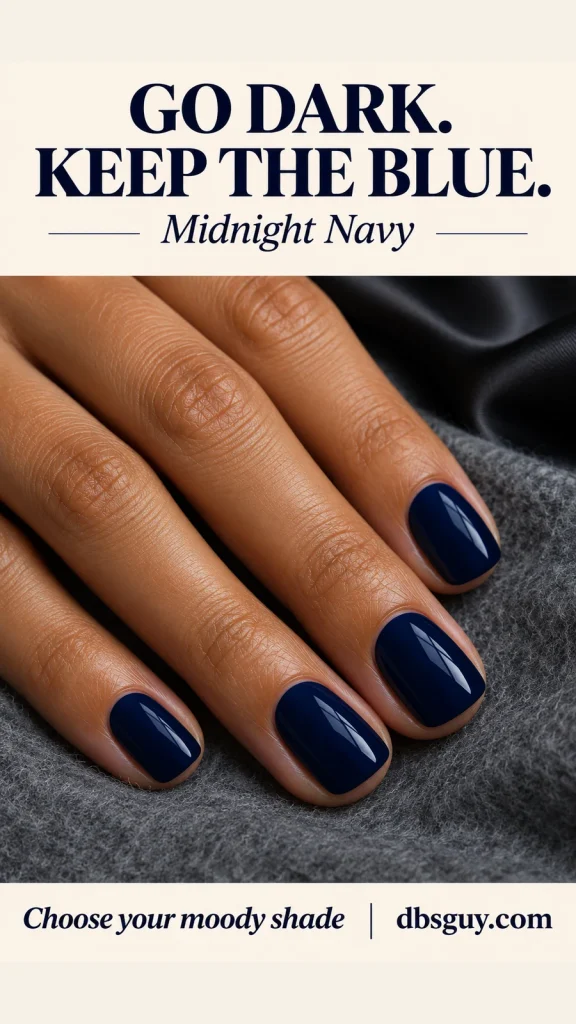
The key choice is how close to black you want to go. Hold the finished swatch next to a black object in ordinary room light. If you cannot see the blue and that bothers you, choose a navy with more visible blue rather than relying on a bright photo to reveal it.
A glossy finish gives the dark surface a clear reflection. Check that you like the body color between those reflections, too; that is the navy you will see when your hand is still.
What to say: “A deep midnight navy on short rounded-square nails, fully covered and glossy. I’d like the blue to remain noticeable indoors, with no glitter or metallic effect.”
If you are hesitating because dark polish feels like a big change, keep your familiar nail length and shape. Let color be the one thing you change.
6. Wine Burgundy When You Want a Rich Red That Goes Beyond the Holidays
Wine burgundy gives you depth with a recognizable red base. The concept uses medium-short soft-square nails and a plain glossy finish. Against an ivory knit, the red becomes the focus without needing a festive motif.

Choose the kind of burgundy you actually enjoy. Some versions lean brown, some lean purple, and some retain more red. For the reference shown here, ask for a deep wine red that remains red in normal light.
Compare a wine swatch with a brighter red and a darker burgundy. The brighter one helps you judge how much depth you want; the darker one shows whether you are comfortable moving toward an almost-black result.
Salon wording: “A rich wine-burgundy cream with full coverage and a glossy finish. Please keep a visible deep-red base rather than a brown or nearly black shade.”
A dark solid color can make small chips easier to notice when there is a strong contrast with the natural nail underneath. That is a visual tradeoff, not a reason to avoid it—and it does not tell you how long a particular formula will last.
Make the Final Choice With Two Real Swatches
Narrow the list to two options before comparing bottles. If you’re choosing between rose milk and burgundy, ask what is pulling you toward each: translucent coverage or dark color? If both appeal equally, try smoky mauve as your middle candidate.
Then make the comparison manageable:
- Keep the finish consistent. Compare glossy with glossy so shimmer or a matte surface does not distract from the color.
- Look near your hand. A palette photo cannot show the contrast a shade will make against your skin. These six colors are options to compare, not rules for particular skin tones.
- Check two lighting conditions. Use indirect daylight and ordinary indoor light where possible. Avoid choosing solely from an edited picture or a phone screen.
- Confirm the coverage. Ask whether the finished swatch is sheer or opaque and which product system was used. A color name does not identify the formula.
For a home manicure with regular lacquer, follow that polish line’s directions for preparation, layers, and drying. Essie’s application FAQ explains why thin coats and avoiding repeated brushing help with common application problems. Don’t pile on thick layers to force a sheer polish to look opaque; choose a formula made for the coverage you want.
If you’re still deciding on length or service, read January Nails: How to Choose Your First Manicure of the Year before booking.
Questions About Soft and Moody January Nails
What January nail color sits between light and dark?
Start with medium mushroom taupe for a brown-gray neutral or smoky mauve for a muted rose-purple. Choose the depth from a real swatch. Neither name guarantees how light or dark a particular polish will be.
Can short nails look good in a moody color?
Yes. Navy and burgundy can make the color itself the feature on short nails. Keep the shape you enjoy wearing; extensions are not needed to create the darker look shown in these references.
Is milky polish the same as sheer polish?
Not necessarily. “Milky” describes an appearance, while “sheer” describes see-through coverage. A milky shade can be translucent or more covered, depending on the formula and application. Check the product description and finished swatch rather than assuming the terms are interchangeable.
Do I need gel to get these colors?
No. The references describe color and finish, not a required service. Look for the closest shade in regular lacquer or your preferred salon system. A matching name in two systems does not guarantee an identical finished color.
Do January nails have to be blue, white, or icy?
No. Rose, taupe, mauve, and burgundy all give you other directions. Choose the color you want to see with your everyday clothes; a January manicure does not need snowflakes or a seasonal effect.
Save the Reference That Answers Your Actual Dilemma
If you want lightness and transparency, save rose milk. If you want a muted shade with some depth, save taupe or mauve. If you keep returning to the darker half of the cover, bring navy or burgundy to your appointment and check how much blue or red remains visible indoors. One clear reference and a few precise words are enough to start that conversation.
Also Read: 17 January French Tip Nail Ideas Beyond the Classic White Edge, if you next want to explore color concentrated at the tips.