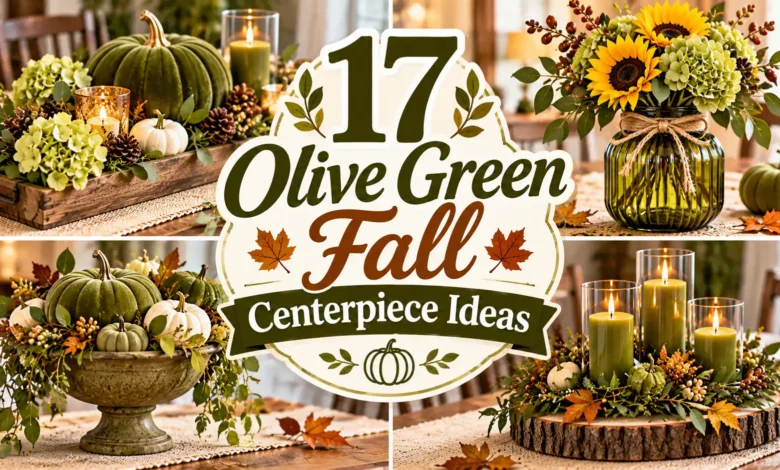
For a narrow dining table, start with two olive-green squash on a slate board. For Thanksgiving, try short clusters of olive sprigs with space for serving bowls between them. And if you want flowers, tuck green hydrangeas and rusty mums into a bowl low enough to see over.
These fall centerpiece ideas use olive green in different ways, from the color of a squash rind to a ribbon you can untie and reuse. Pick your base after you set out the plates and serving dishes. You’ll know how much room you really have before you buy a single stem.
The images are AI-generated styling concepts.
Easy Centerpieces From the Market and Garden
1. Set Olive Squash on a Slate Board
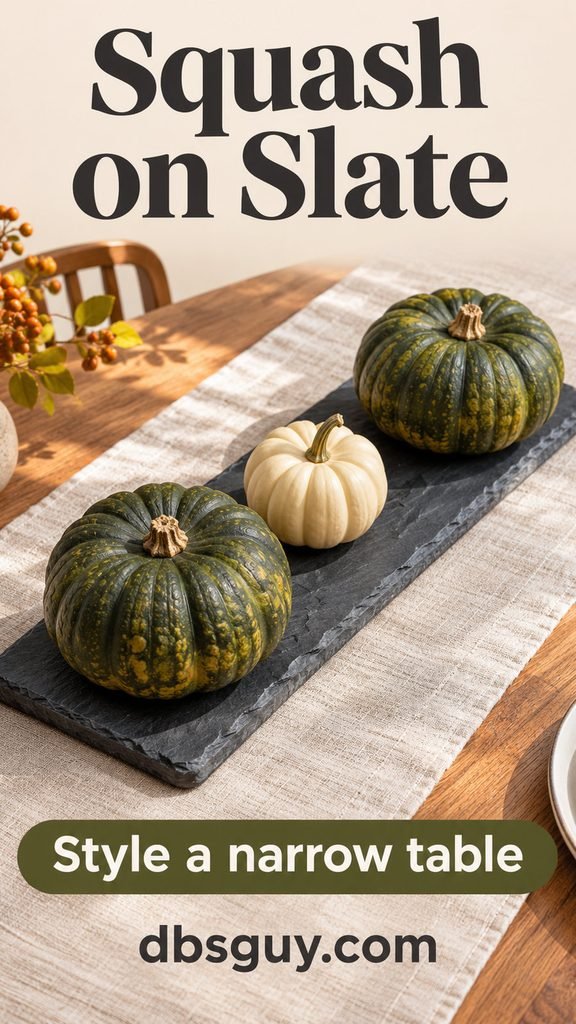
Set two small kabocha squash at either end of a narrow slate cheese board, with an ivory mini pumpkin in the middle. Turn the squash until their flattest sides sit securely, then angle the stems so the shapes feel a little less symmetrical. Bare slate between the squash makes each outline visible.
For a small table, use a short board and three pieces that stay inside its edges. If the board has a rough underside, set it on a folded cloth to protect the table. Move the whole board when the serving platters come out.
2. Line an Orchard Basket With Olive Linen

Use a shallow woven basket, an olive napkin, and a loose layer of green apples and yellow quinces. Fold the fabric over one rim and tuck the other corners under the fruit. Golden pears give the same yellow accent if quinces are hard to find.
Choose a basket shallow enough to show the fruit when you’re seated. If you plan to eat it, use a clean basket and liner and wash the fruit under running water before serving. Swap in fresh fruit as pieces soften.
3. Make a Terracotta Herb Trio

Line up three small pots of rosemary, thyme, and sage on a slim olive-painted tray. Put the taller rosemary toward one end and let the lower thyme soften the other. The terracotta gives the greens the same warm contrast as an orange pumpkin.
Use individual saucers and water the plants at the sink. Let them drain before returning them to the tray, then move the herbs back to a bright spot after dinner. For a breakfast nook, make the same arrangement with just two pots.
4. Build a Woodland Cloche With Wooden Mushrooms
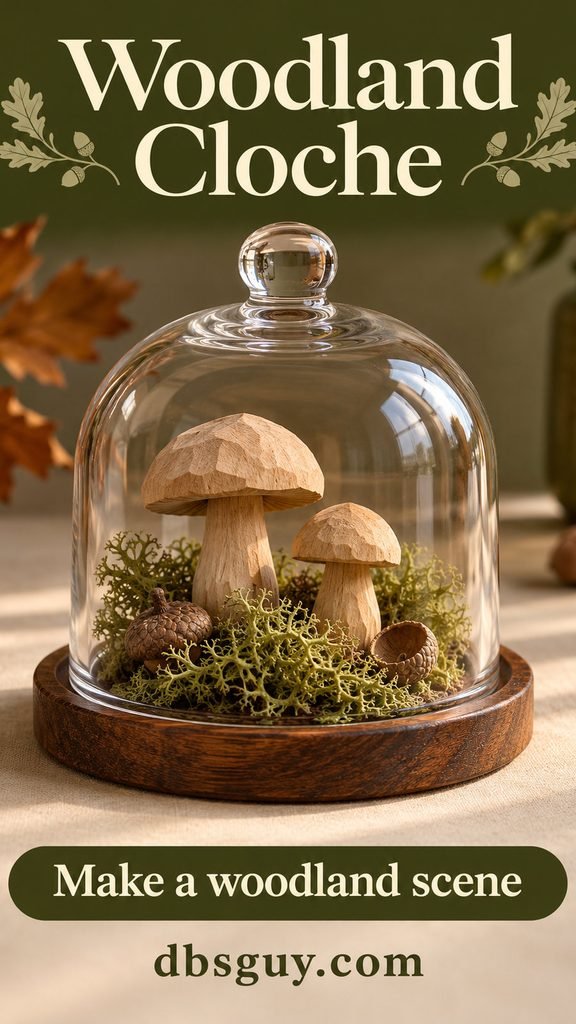
Fit a thin patch of olive craft moss onto a wood saucer, set two carved wooden mushrooms off center, and add a few acorn caps at their feet. Lower a short glass dome over the scene and check that the moss clears the rim so the dome sits flat.
Leave a little of the saucer exposed to frame the scene. A miniature dome works as the single focal point on a round table. Keep the glass and small pieces on a sideboard if the table is busy with children or shared dishes.
Low Arrangements for a Set Table
5. Lay an Olive Sprig Runner With Gaps
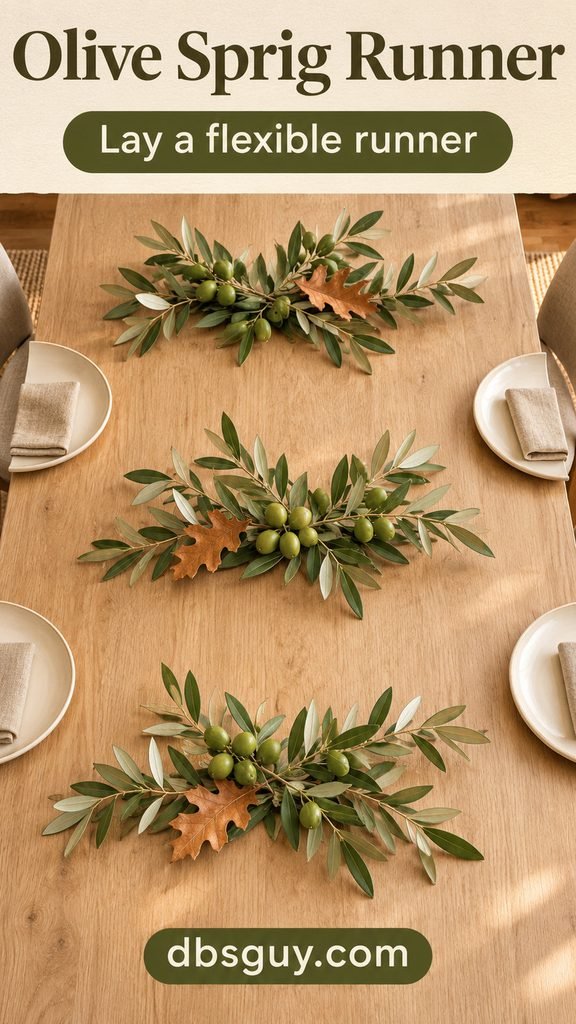
Place the empty platters and their trivets first. In the spaces between them, lay small overlapping clusters of faux olive sprigs with the silvery sides of a few leaves turned up. Tuck in a handful of copper-brown oak leaves. Group the stems with short ties if you want to lift each cluster in one piece.
Space the clusters down the length of the table and keep stray tips away from plates and hot dishes. For a longer Thanksgiving table, add another cluster only if there’s another usable gap. Browse 19 Olive Green Fall Tablescape Ideas for a Cozy Dinner Party for linens and place settings to go with the greenery.
6. Wrap a Flameless Lantern With Paper Leaves
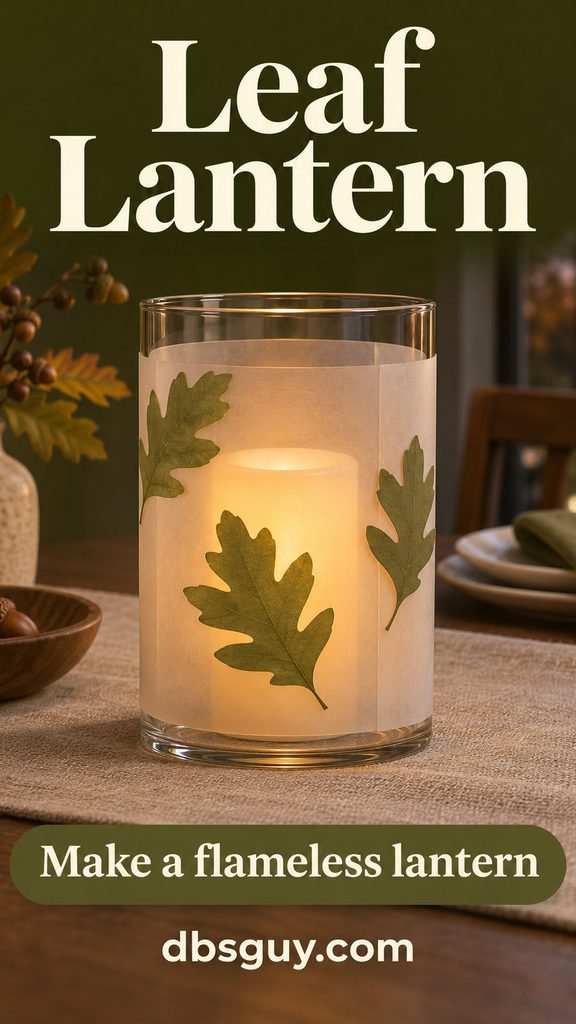
Cut vellum to fit around the outside of a straight-sided glass cylinder, leaving a small overlap for the seam. Cut oak leaves from olive paper, attach them to the sleeve with double-sided tape, and turn the seam to the back.
Drop a warm-white, battery-operated LED pillar inside. Test the glow in the room where you’ll use it, then remove a paper leaf or two if the silhouette looks crowded. Use only a flameless light in this paper-wrapped lantern.
7. Space Amber Bud Vases Along Olive Linen
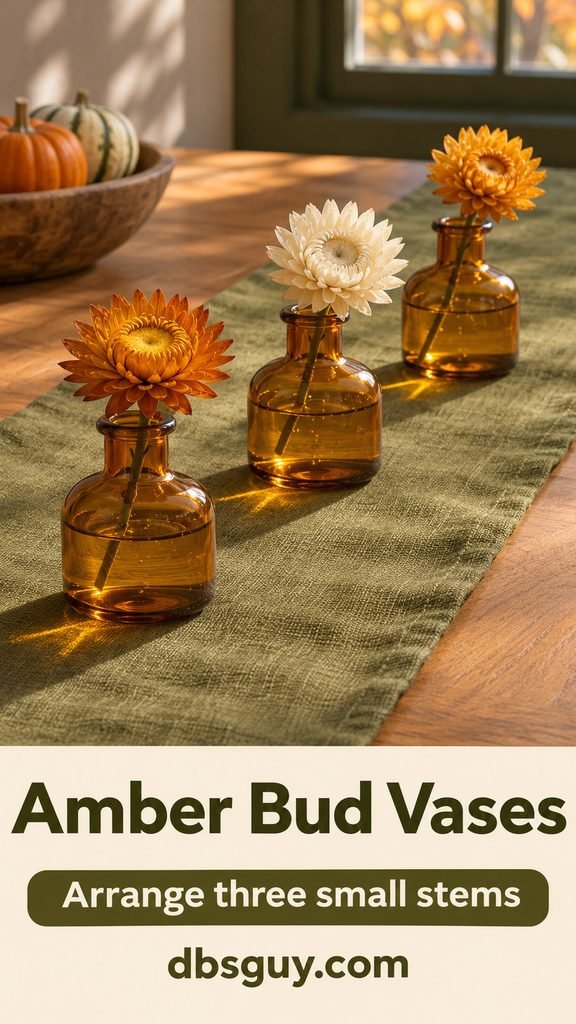
Set a few short amber bud vases along an olive linen runner and give each a single dried strawflower stem. Set a pale bloom between two ochre ones to repeat the gold without making all three bottles look alike. Cut the stems at slightly different heights so the arrangement feels relaxed even if the bottles match.
These look especially good near a window where light catches the glass. For a narrow table, use bottles with broad bases and stand them in a straight line. Stop after three on a four-seat table and see how the space feels before adding more.
8. Tuck Green Hydrangeas Into a Low Bowl

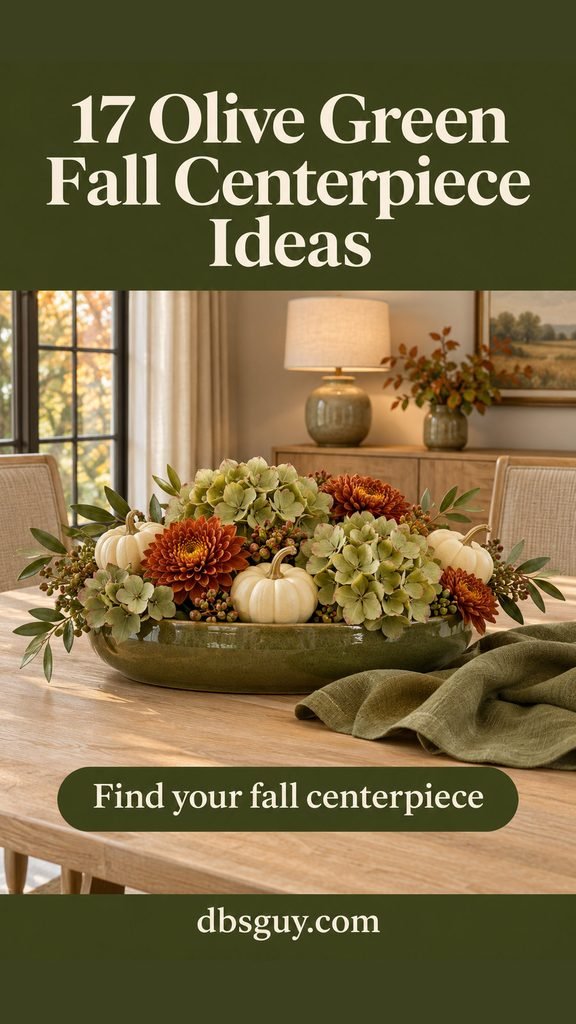
Start with a shallow watertight bowl and a flower frog, the pin holder that keeps short stems upright. Set it securely inside the bowl. Trim one hydrangea stem at a time until the flower head rests just above the rim. Fill out the bowl with a few green heads, then tuck short rust-colored mums into the gaps so some of the green stays visible.
Add water before arranging and check that each stem reaches it. Remove leaves that would sit below the waterline, and check the water level before guests arrive. Find more cut-stem care tips from Illinois Extension.
9. Pair Dried Okra Pods With Oat Stems
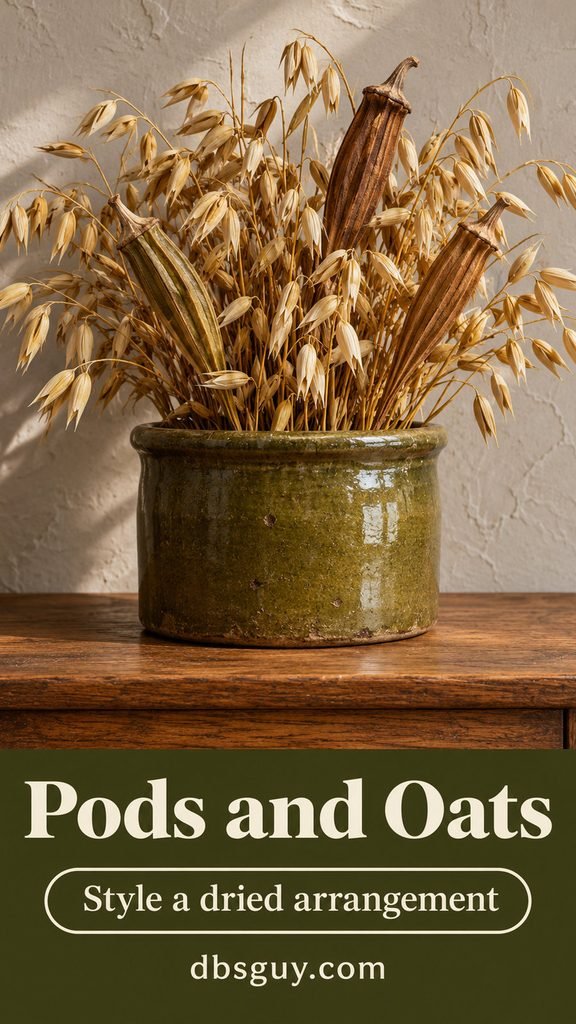
Give dried okra pods a little room to show off their ridges. Set a few in a squat olive crock, then slide in oat stems to soften the outline. If the pods fall to one side, put a small crumpled ball of kraft paper in the mouth of the crock and push the stems around it to hold their positions.
Keep the arrangement dry. It works on a sideboard if you like the stems tall. For a dining table, trim the longest stem first and use it to judge the rest from a chair.
DIY Fall Centerpieces You Can Reuse
10. Fold Olive and Ochre Paper Fans
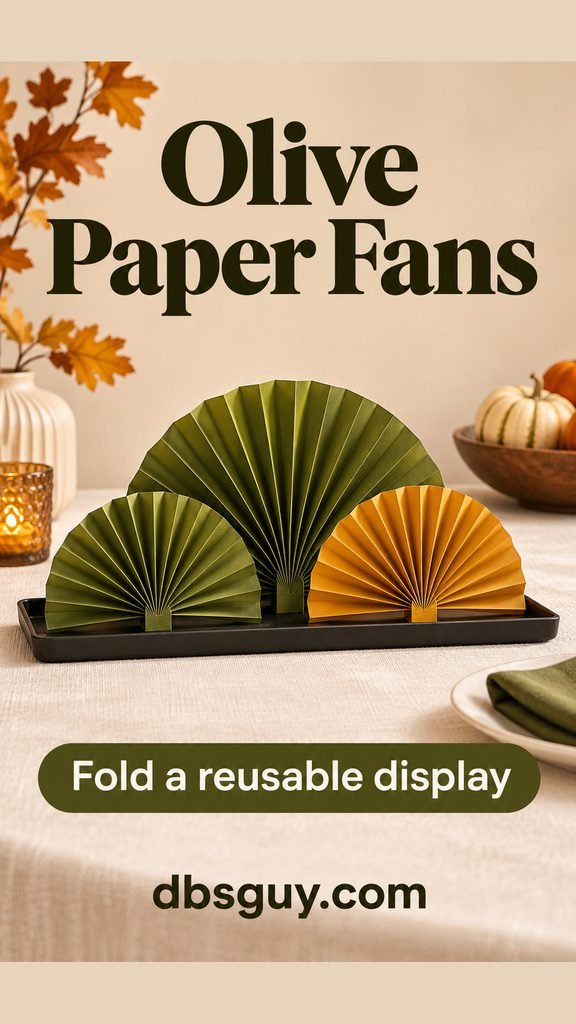
Accordion-fold a strip of heavyweight olive paper, pinch and tape one end, then spread the other end into a half-circle. Tape the flat ends of the fan to a folded cardstock base so it stands. Repeat with a shorter ochre strip and a second olive one to vary the height.
Arrange the fans on a slim black tray. Make the first fan small enough to sit below your sightline across the table, then use it as a guide for the other two. Remove the fans from their bases to fold them flat for storage and keep the finished display away from steam and spills.
11. Tie Olive Ribbon Around a Pinecone Bowl
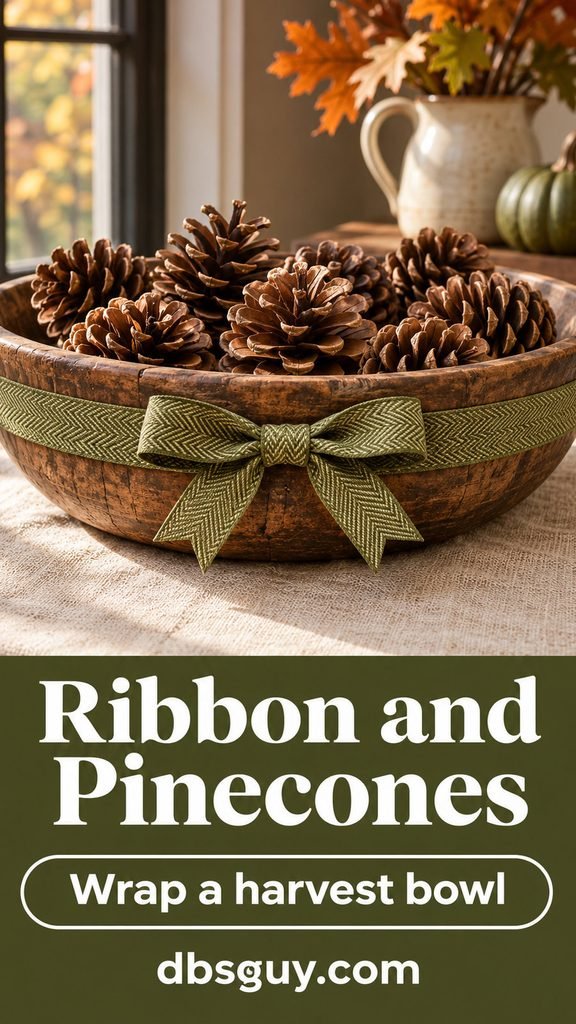
Wrap wide olive herringbone ribbon around a straight-sided wood bowl and tie a small bow at the front. If the bowl slopes and the ribbon slips, tie it around the narrower part or use a little removable tape on the ribbon where the ends meet. Fill with a single loose layer of clean, dry pinecones.
Turn the most open pinecone so you can see its scales. A few larger cones are easier to lift out than a bowl of loose filler, and the ribbon comes off when you want the bowl back.
12. Stack an Olive, Ivory, and Tan Pumpkin Topiary
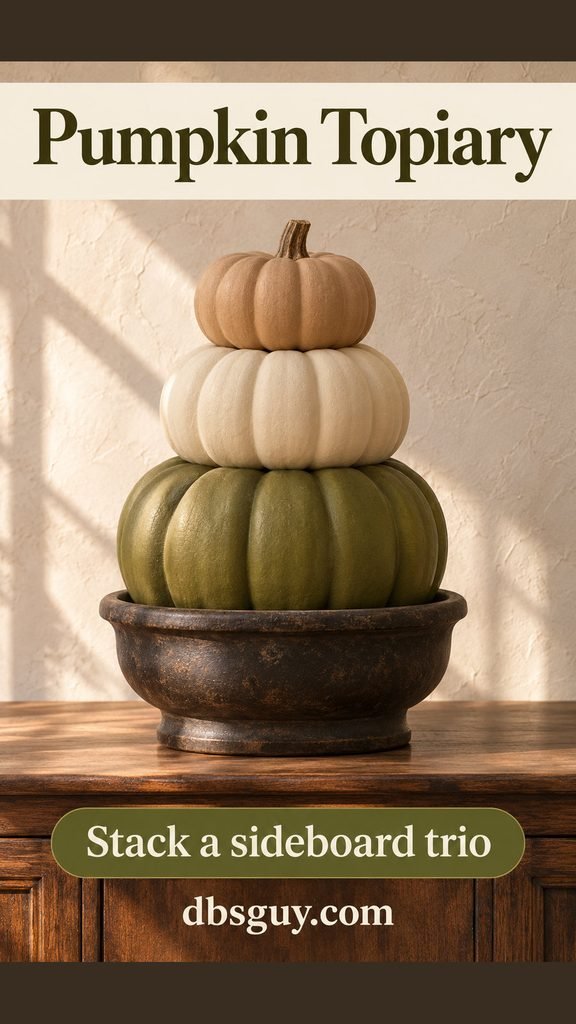
Choose three lightweight faux pumpkins with flat contact points. Start with the largest olive pumpkin on a broad, stable pot. Dry-fit an ivory one above it and a smaller tan one at the top. If a stem makes an upper pumpkin rock, choose a stemless piece or remove the detachable stem on the pumpkin below it.
Once the stack sits straight, secure the pieces with a craft adhesive labeled for their material and let it cure as directed. Place the topiary on a sideboard or at the back of a buffet, where the height frames the table without getting between guests.
13. Shape a Corn Husk Ring Around a Mini Pumpkin
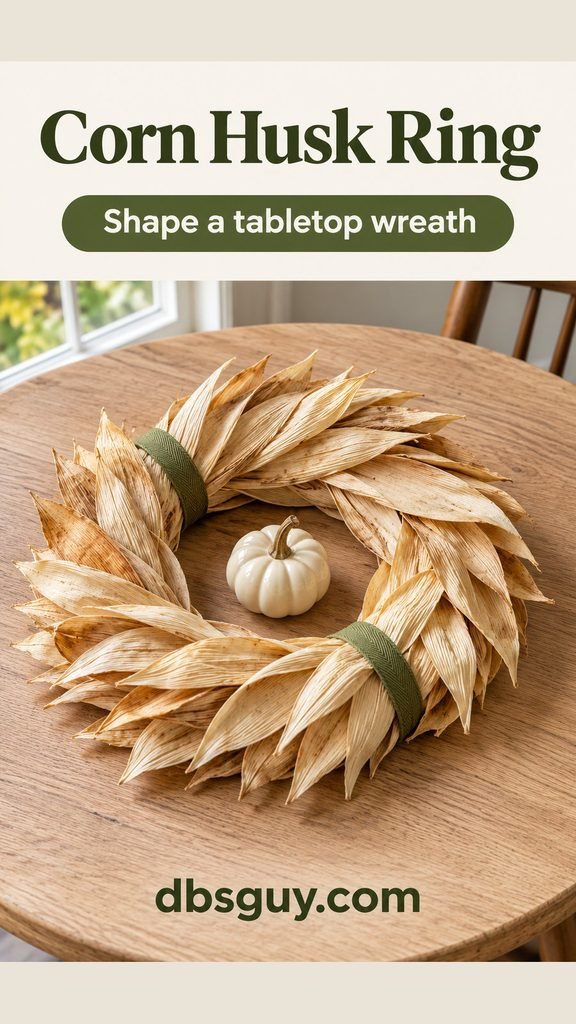
Cut a small ring from sturdy cardboard and wrap it with olive twill. Layer dried corn husks clockwise around the ring, gluing their bases to the band with craft glue and overlapping their tips. Leave a little olive binding visible in two or three spots.
Set the ring flat around a tiny ivory ceramic pumpkin. Keep the pumpkin separate from the ring so you can swap it for a different fall piece later. If a husk curls up into a place setting, shorten it or tuck its end beneath the next one.
14. Press Oak Leaves Into Clay Tiles
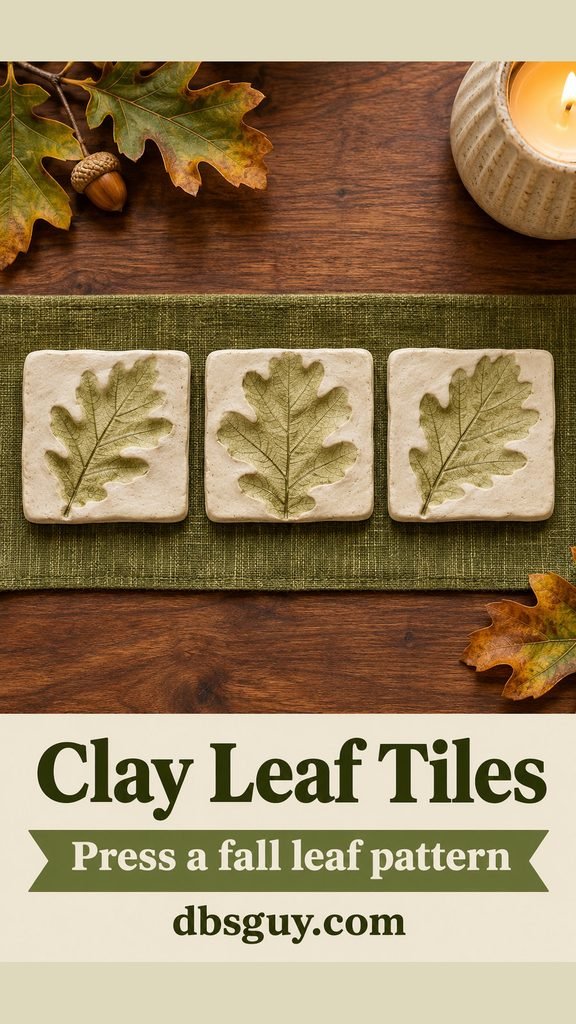
Roll out air-dry clay evenly, cut a few small squares, and press a clean, dry oak leaf vein-side down into each one. Lift the leaf by its stem and let the tiles dry according to the clay package. Brush olive craft paint lightly over the dry surface so the imprint remains visible.
Space three finished tiles along an olive linen runner or group them in a triangle on a round table. Leave enough fabric around each tile to see its outline. Keep the tiles decorative and set hot serving dishes on proper trivets.
Centerpieces for a Buffet, Island, or Sideboard
15. Put Persimmons on a Gingham-Wrapped Stand
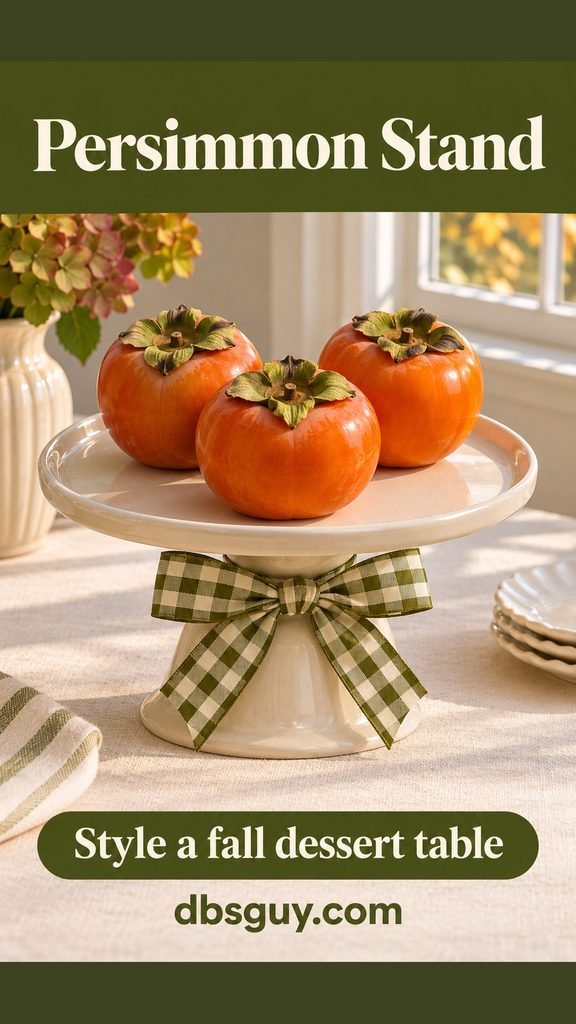
Tie an olive-and-cream gingham ribbon around the neck of a cream cake stand. Place a few whole persimmons in the middle, turning their leafy tops in different directions. Keep the ribbon tails away from the serving surface so you can lift the fruit off and use the stand for dessert.
This works at the back of a dessert buffet, where guests can reach the lower plates in front. For a small display, use a short pedestal or a footed dish that already fits the space.
16. Nest Golden Mums in an Olive Colander
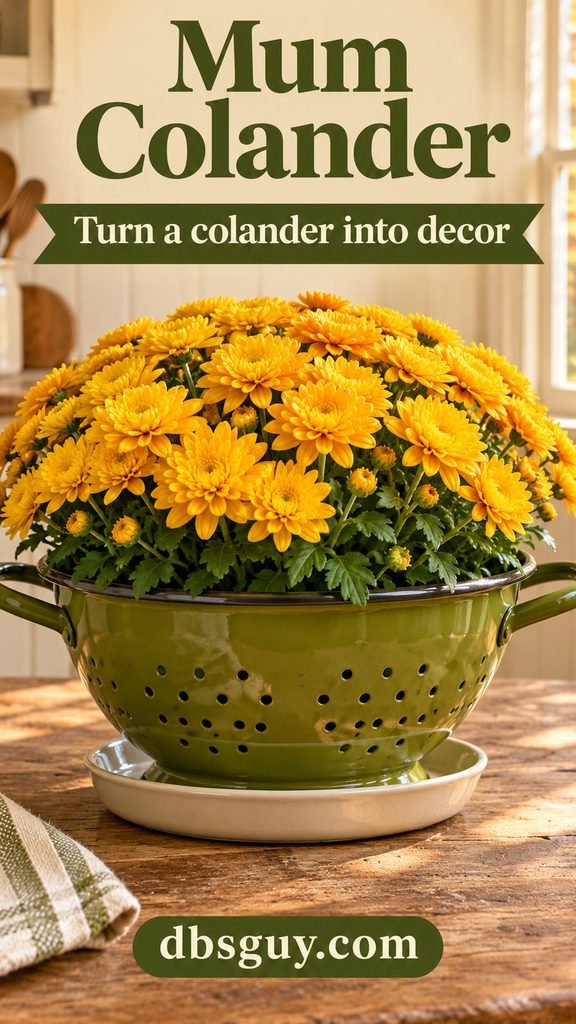
Slip a nursery pot of compact golden mums into an olive enamel colander. Check the fit first. The pot should sit securely with the colander’s rim and handles visible below the flowers. Set a waterproof saucer under the colander to protect the surface.
Lift the nursery pot out to water it and let it drain at the sink before putting it back. On an island, place it at the end away from your cutting board and prep bowls. See Fall Decorations Kitchen Island to Brighten Your Space for more ways to arrange that counter.
17. Shape a Magnolia Crescent on an Olive Board
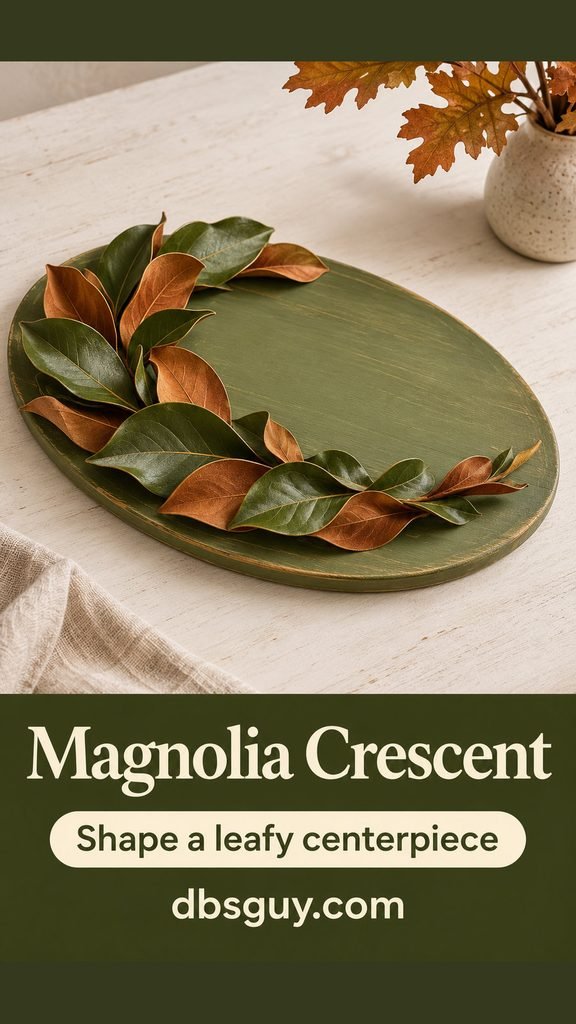
Lay faux magnolia leaves along one edge of a narrow olive-painted oval board. Start with larger leaves at the center of the curve, then taper to smaller ones at the ends. Turn a few over to show their cinnamon-colored backs and leave the open center of the oval bare.
Secure the leaves to a strip of cardstock cut in a crescent if you want to store them as one piece. Place the board with its open side toward the front of the sideboard. The profile is low enough to try on a long dining table, too.
Make It Fit Your Table
For a round table, start with one container you can lift in both hands. On a long table, break the arrangement into short groups and put the gaps where people will reach for food. For a plated dinner, sit down across from a guest’s chair and check whether you can see their face over the centerpiece. For family-style service, use your empty serving dishes and their trivets to test the layout before dinner.
Frequently Asked Questions
What colors go with olive green in a fall centerpiece?
Ivory and natural wood give olive a lighter backdrop. Rust, cinnamon, and amber bring out its warmer side. Try one of those as the accent, then use the color of your table or everyday dishes as the neutral.
What’s an easy fall centerpiece without flowers?
The squash on slate and the orchard basket are both quick to put together with whole produce. For a display you can pack away, use the ribbon-wrapped pinecone bowl or the magnolia crescent.
How do I keep olive green from looking too dark?
Set it beside a lighter surface, such as an ivory runner or pale oak. If the table is already dark, make olive the color of a single vessel or ribbon and give it room around the edges so its shape reads in evening light.