Start with the dishes you already use, add one textile with some texture, and choose a detail that makes each guest feel expected. A Friendsgiving table can look considered without a tall centerpiece or a new set of everything.
These 13 ideas cover different jobs: softening the table, tying borrowed dishes together, adding light, and making a potluck easier to serve. Pick the pieces that fit your meal. You do not need to put all 13 on the same table.
The images are AI-generated styling concepts, not photographs of completed or tested setups.

1. Lay a Relaxed Linen Runner Over Bare Wood
An oatmeal runner gives ordinary plates a softer background without hiding the whole table. The loose weave and slightly rumpled surface suit a casual dinner; the important part is that the fabric lies flat beneath anything that could wobble.

Measure the usable strip between opposite place settings before choosing the runner. Leave the plates, glasses, and serving-dish handles comfortable room. If your table is narrow, skip placemats rather than squeezing every layer together.
The shallow bowl of greenery shown here is optional. Use it on a buffet-served table, or remove it when shared platters arrive. A textile adds color, but it does not replace the trivets your hot dishes need.
2. Connect Mismatched Plates With One Napkin Color
Borrowing dishes for extra guests? Set two different plates next to each other and look for something they share: a cream background, a blue rim, or a similar size. Repeat one solid napkin color across the table to connect them.
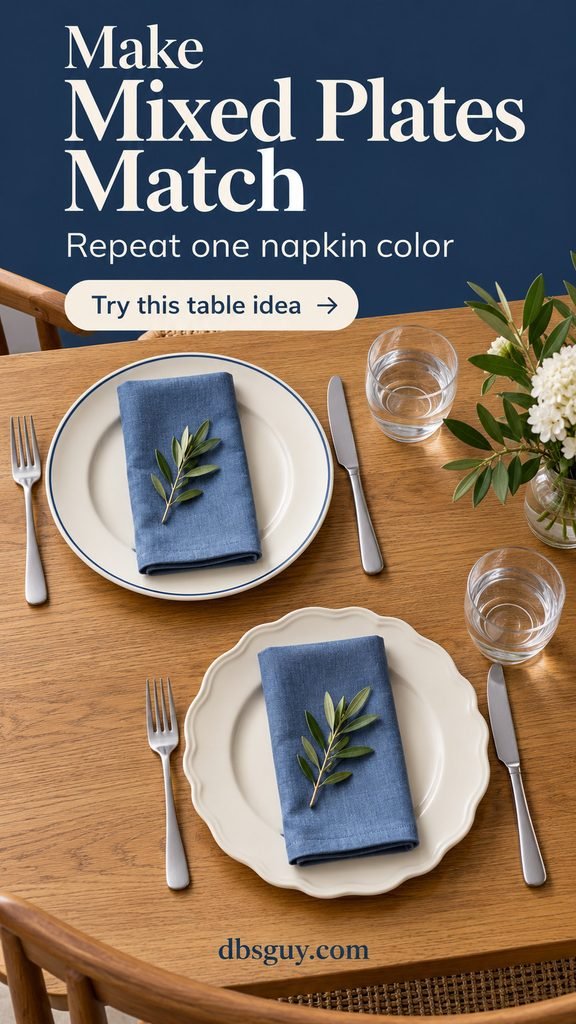
The example pairs a thin blue border with a plain scalloped edge. Dusty-blue napkins provide the link, so there is no need to match every glass or buy a second dinner service. Keep the folding style consistent, too.
Small green sprigs are a styling extra; keep decorative stems separate from food and remove them before eating. The plates and matching napkins are enough on their own. Use dishes intended for food service and in sound condition.
3. Let Gingham Be the Main Pattern
Rust-and-cream gingham brings a little picnic-table ease indoors. On a round table, run a narrow strip straight through the center and keep the surrounding plates and napkins plain. This works particularly well when your everyday dishes are white.

Try the runner with the chairs pushed in before trimming or hemming anything. Its ends should hang clear of laps and chair seats. If the fabric bunches beneath a glass or pitcher, smooth it or move that item fully onto the tabletop.
The pictured flowers are an optional finishing touch for a table with room to spare. For a small dinner, keep the useful pitcher and move the vase nearby. If you prefer green checks or linens, explore our olive green fall tablescape ideas.
4. Tie a Soft Napkin Into One Loose Knot
A knotted napkin adds a sculptural detail where a centerpiece cannot fit. Soft cotton or linen is easier to handle than a stiff, heavily starched napkin. Test one first: if the knot becomes a hard ball, choose a simple flat fold instead.

Gather the napkin loosely into a long band. Cross one end over the other, pass it through the loop, and pull only until the knot holds. Leave two relaxed tails and place it across the plate. Guests should be able to undo it without tugging.
Rust makes cream dishes feel autumnal, but the same fold works with the napkins you own. Keep forks and knives outside the knot so nobody has to dismantle a bundle to sit down.
5. Turn a Pear Into a Personal Place Card
A whole pear gives a name card enough presence to feel like part of the table. Choose fruit that sits steadily, and use a small side plate to give it a defined spot. Pale green pears look especially good with sage napkins and cream paper.

Write each name before assembling the tags, punch a hole near one corner, and loosely tie cotton string around the stem. Avoid pulling on a delicate stem. If it is too short, stand a folded name card beside the pear instead.
Keep paint, glue, and glitter off fruit you intend to eat. The fruit and tag can move to a side surface before the meal; do not leave guests holding a pear while you serve the first course.
6. Divide Flowers Among Short Bud Vases
A few short stems in separate vases give you more placement options than one spreading bouquet. Start with three small, stable vessels and a handful of flowers in two related colors. Peach and burgundy create contrast without needing a lot of greenery.

Fill the vases with water, remove leaves that would sit below the waterline, and trim the stems gradually. Set the arrangements on the table, then sit in a dining chair. Shorten anything that hides the face of the person opposite you.
Spread the vases only as far as the meal allows. On a crowded table, use one and put the other two elsewhere. Keep floral material out of serving bowls, and choose flowers appropriate for your household if pets can reach the display.
7. Corral Mini Pumpkins in a Shallow Bowl
Loose pumpkins can spread into the space needed for glasses and serving spoons. A shallow bowl contains the display. Start with three miniature pumpkins that sit in a single layer, with their stems clear of one another.

Use the bowl you have before buying a special centerpiece container. The pumpkins should sit securely inside it rather than balance on the rim. Wipe them clean, dry them, and check for soft or damaged areas before arranging.
On a small round table, this can be the only centerpiece. On a larger table, repeat its colors in the napkins instead of adding more bowls. Keep it decorative; do not assume ornamental gourds are ingredients for dinner.
8. Add Warm Light With Flameless Candles
Battery-operated pillars are a practical choice when people will be passing dishes across the table. Choose a warm light color, test the batteries before guests arrive, and use stable holders that leave the switches accessible.
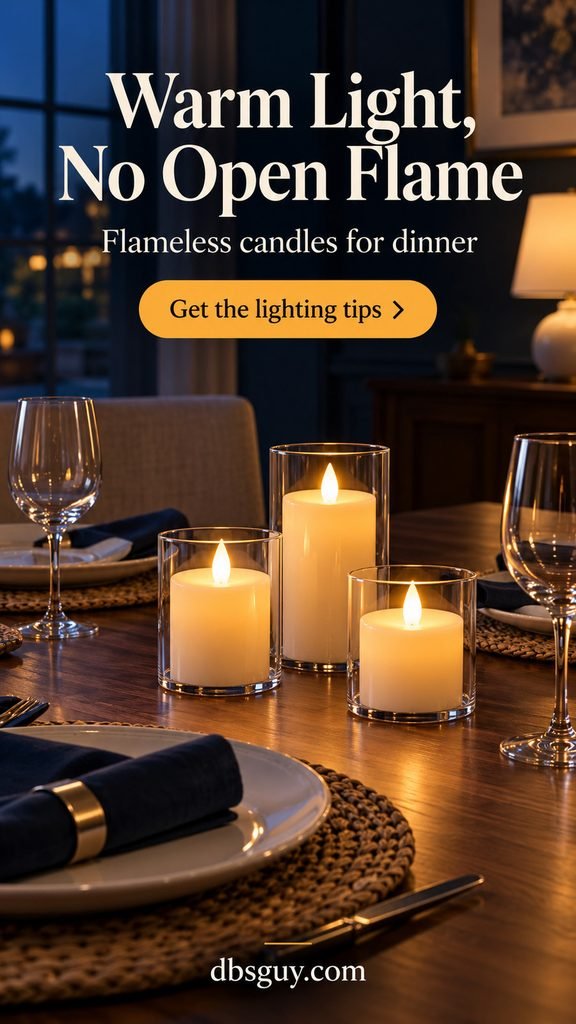
Try the lights with the room lighting you plan to use. Keep enough ambient light to read a menu and see the food comfortably. A few low lights usually fit the table better than a line of tall objects between guests.
If you substitute real candles, follow the U.S. Fire Administration’s candle guidance: use stable holders, keep flames at least 12 inches from anything that can burn, and extinguish them when leaving the room. If that spacing will not fit, stay with flameless lights.
9. Make Amber Water Glasses the Accent
If you already have amber tumblers, let them supply the autumn color. Keep the plates and napkins neutral so the glass feels like a deliberate accent. There is no need for an orange tablecloth, pumpkin-print plates, and matching ornaments as well.

Put one water glass within easy reach of each guest, with a coaster where your table needs protection. Only add another glass if you will actually use it. Keeping the number modest makes it easier to pass serving bowls.
Clear tumblers work just as well if that is what you own; use a rust napkin for color instead. This idea is most useful as a reason to bring out a set you like, rather than a reason to replace serviceable glassware.
10. Put a Small Menu Card at Each Seat
A small menu card can make a casual meal feel planned, even when the food arrives in mismatched baking dishes. Use cream cardstock, dark lettering, and one thin border. Place it on the napkin so it is easy to pick up and move.

List the dishes you actually expect to serve. For a potluck, confirm contributions before writing the cards, or leave room to add a late dish by hand. The photographed menu is a styling example, not a required meal plan.
Skip tiny script and crowded descriptions. A short welcome line or the gathering’s date can make the card a keepsake, but the dish names should remain the easiest part to read. One shared card at a buffet also works if individual menus feel unnecessary.
11. Let the Bread Basket Earn the Center Spot
When the table is small, a useful serving piece can provide the focal point. A low basket of rolls brings woven texture and warm color without a separate decoration competing for room.
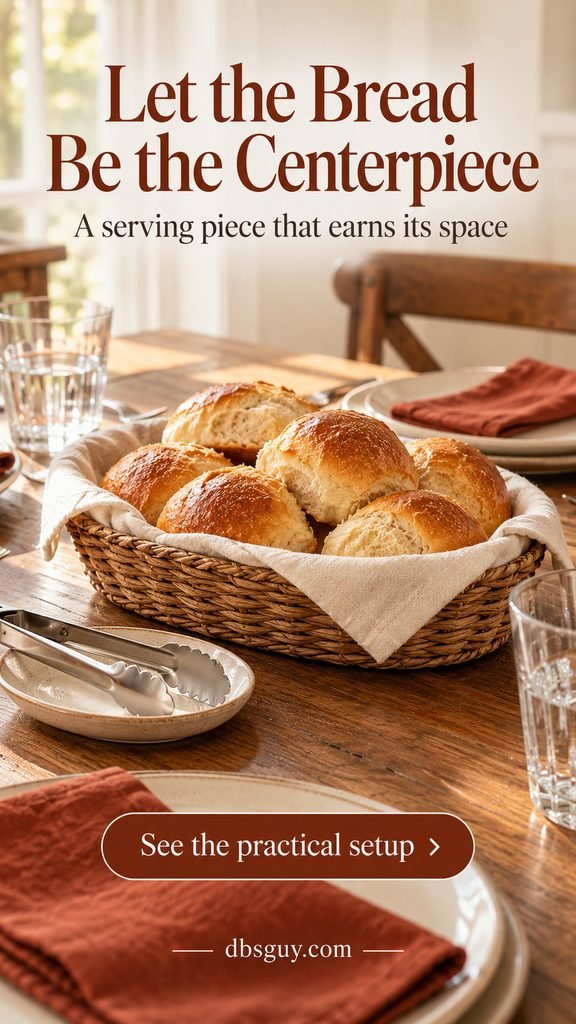
Use a basket intended for serving bread, with a clean cloth liner, and place the tongs on a small dish beside it. Keep flowers, loose leaves, and craft decorations out of the basket. Add the bread close to serving rather than leaving it on display all afternoon.
Check that guests can pass the basket comfortably. For a long table, two smaller baskets may be easier to share than one large one. Coordinate the liner with the napkins if you want a more finished look; there is no need for a bow around the handle.
12. Give Potluck Dishes Clear, Coordinated Labels
The food table is part of the decor, especially when everyone brings a different dish. Fold cream cardstock into sturdy tent cards and repeat the menu card’s border color. Clear dish names make the display look organized without disguising anyone’s serving bowl.

Write the cards after confirming what each person brings. Put each one in front of its dish, outside the area where a serving spoon will drip. Keep labels away from hot surfaces, and leave room to grasp handles without knocking them over.
If you include ingredient information, get it from the person who prepared the dish. A decorative label is not a guarantee about allergens or cross-contact. Guests with dietary needs should be able to speak with the cook. Keep a separate serving utensil with each dish.
13. Build a Centerpiece You Can Lift Away
A tray arrangement works when you want a welcoming table before dinner but need the middle for food afterward. Use a low tray with handles, one compact vase, and a couple of small pumpkins. Keep every piece inside the tray’s edge.
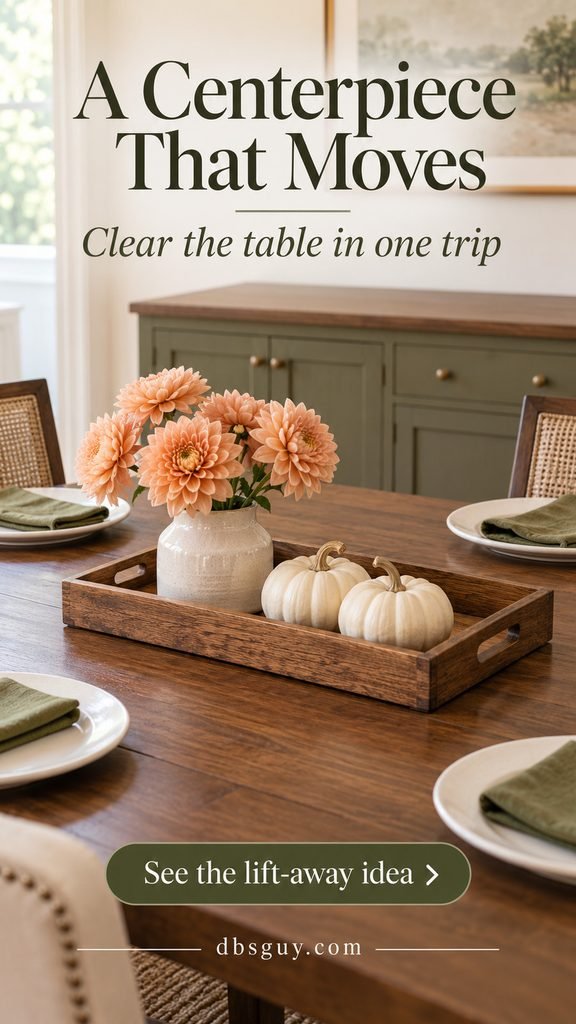
Test the weight after adding water to the vase. Leave the handles clear, and check that nothing slides when you lift it. If the arrangement is awkward to carry, remove a piece before guests arrive.
Reserve a landing spot on a sideboard before setting the table. Move the tray before bringing out hot platters, rather than reaching over dinner to clear it. Our burgundy and plum fall tablescapes offer a deeper palette if peach and cream do not suit your room.
Choose What Fits Your Meal
For a family-style dinner, begin with the napkin detail and the bread basket, then leave room for the actual serving dishes. For a buffet, you can give flowers or the pumpkin bowl more space at the dining table. Labels belong wherever guests serve themselves.
Before calling the table finished, set out the empty platters and their trivets. Sit down, reach for a glass, and try passing the largest dish. Remove any decoration that makes those ordinary movements awkward. If you are planning activities and food beyond the table, our Friendsgiving gathering ideas cover the wider celebration.
Friendsgiving Table Questions
What should I buy first on a small budget?
Count your usable plates, glasses, and seats first. Once those are covered, choose one visible upgrade: a runner, a set of napkins, or cardstock for name tags. Borrow serving pieces before buying decor that only fills space.
Can I set the table the night before?
Set out clean, dry linens and dishes if the table will remain undisturbed. Add bread shortly before serving, check flowers and fruit on the day, and switch on the lights before guests arrive. Make a final adjustment when you know how much room the food needs.
How do I make a tiny table feel festive?
Put the decoration at each seat: a knotted napkin or a small menu card. Skip chargers and extra glasses that you do not need. Serve from another suitable surface if possible, and keep the center open.
Do I need a traditional fall color scheme?
No. Dusty blue with cream works with mixed dishes; amber glass warms up neutral linens. Choose a color already present in your tableware, then repeat it in one or two details. The gathering does not need orange on every surface to feel seasonal.
Choose one detail you will enjoy setting out, then leave enough room for dinner to happen around it. A place to sit, a glass within reach, and food that can move easily around the table are part of a welcoming setup.