Welcome to the era of acne neutrality.
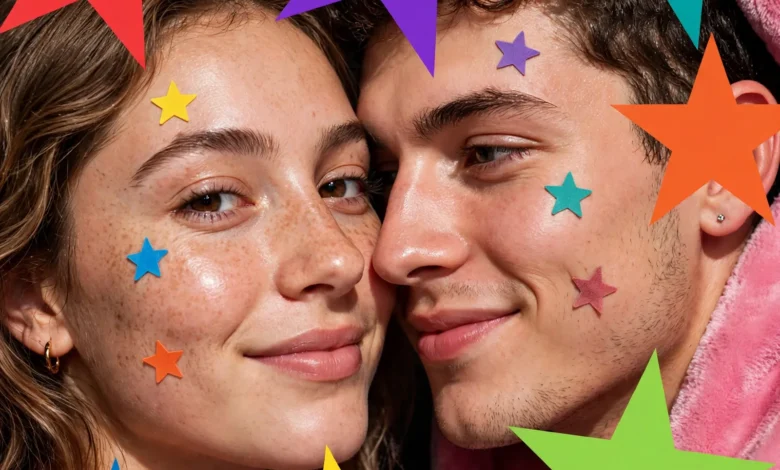
If someone had to dress up as the 2020s, the costume would need more than baggy jeans and tiny sunglasses. It would also need bright, neon, star-shaped pimple patches. Those bold little stickers had travelled well beyond skincare — they had become part of culture, even a kind of status symbol — and they helped open a period of acne positivity, when treating breakouts and showing them openly were both encouraged.
Later in the decade, though, the patch started to feel like a leftover from one particular moment. What has taken its place is something quieter: acne neutrality. It is neither a showy celebration nor a source of shame. It is simply treating a breakout as an annoying, ordinary thing the body does — and, as Ross puts it, that plain acceptance may be the most freeing stance of all.
The move from positivity to neutrality looks a lot like what happened with body positivity, only on a faster timeline. Radical body acceptance goes back to the 1960s, then became mainstream in the 2010s, when big brands began showing a much wider range of shapes, sizes and abilities in their advertising. By the later part of that decade, though, the movement was drawing criticism for still keeping too much attention on how bodies look — and a more respectful distance was suggested as the more realistic approach.
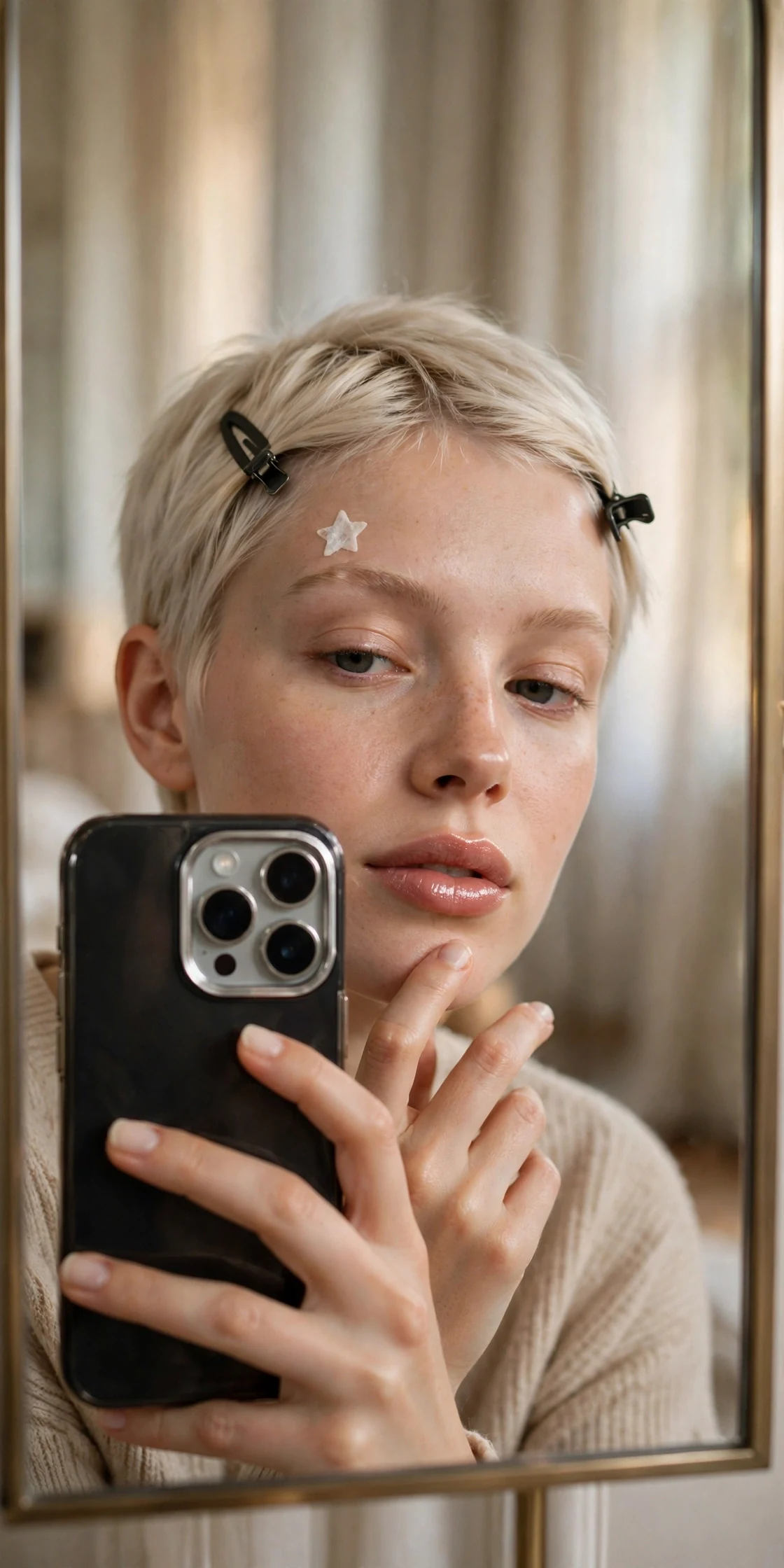
Acne positivity itself grew fast in the late 2010s and early 2020s. Beauty advertising began showing breakouts, and celebrities posted unfiltered skin and spoke publicly about their complexions. Ross calls that progress, but adds an important qualification: for someone with severe acne, a celebrity selfie showing only a few mild spots does not feel radical at all, and it can even suggest there is a right way to have acne. Severe acne, she notes, is widespread, painful and isolating — at her own worst, she says, she would have needed far more than a single pack of cheerful stickers, and she questions the idea of celebrating deep, painful cysts that can affect the lymph nodes nearby.
Celebrities may feel the same tension. Keke Palmer has spoken about a years-long struggle with hormonal acne and a search for a lasting solution, describing emotional pain she called indescribable, a burden she had carried all her life but did not want. The point, Ross argues, is that nobody actually wants acne, so treating it as a lifelong feature to simply accept does not ring true. Rachel Sennott offers another example: she has said an HBO executive once offered to keep her visible breakouts on screen, gesturing toward them. Well meant as that was, the direct attention to her skin reportedly pushed her to start Accutane.
Alix Earle, by contrast, is presented as a strong mainstream example of neutrality. Her acne story was central to her rise: she showed severe breakouts openly even while building a glamorous public image, and she was frank both about her insecurity and about starting Accutane. Even after launching her own skincare line, she stayed candid about pairing her products with medical-grade treatments, which Ross notes are often the only answer for long-standing skin problems. She does not soften any of this with reassuring slogans. The closing point is simple: no one wants acne — but that does not mean staying home until the skin is completely clear.
Notably, the acne-positive years did not damage the acne market. A foundation advertisement featuring a model with a breakout did not send large numbers of people away from salicylic acid. Instead, acne shifted from a private insecurity into a public identity, complete with its own products, looks, influencers and market — and the article reports the acne industry growing by nearly 6% a year.
From a psychological angle, acne is distinctive because it sits where visibility and identity meet, according to clinical psychologist Rachel Goldman, Ph.D., author of When Life Happens. Compared with other appearance concerns, she explains, its unpredictability and the loss of control it brings can raise anxiety, and because the face is so central to identity and interaction, it can leave a person feeling socially exposed. Neutrality, in her view, is not a guaranteed fix. She favours building emotional flexibility rather than trying to remove every negative feeling — moving away from rigid, all-or-nothing self-judgment toward a more balanced way of seeing oneself.
Esthetician and brand founder Sofie Pavitt, known as “The Acne Queen,” sees the same reality from her New York studio, where clients show that acne affects people on the inside as well as the outside, whatever the positive messaging says. She once saw a brand describe acne as a gift. Her own position, as reported, is blunt: she has never found a client who is truly comfortable having acne, it is miserable, and clearing it is always her main goal. Her more measured view is that acne is normal — and that wanting it gone, and wanting to clear it, is normal too. Patience, consistency and possibly professional help, she suggests, can make clearing it possible.
Whether neutrality ends up being better than positivity is still an open question, Ross concludes — but it certainly asks less of us. In a culture that encourages building an identity around every visible trait, that restraint feels refreshing. She does not want to be an acne warrior, or to feel that leaving a cyst uncovered is a statement. Sometimes, she suggests, a pimple can simply be a pimple.