
Most couples do not fall apart because of one dramatic moment. More often, it is the small, repeated patterns that quietly wear a relationship down: the tone that turns sharp, the conversation that never happens, the apology that arrives far too late. On their own, these moments can look harmless. Over time, though, they shape how safe, respected, and valued each partner feels.
That is why it is worth paying attention to the subtle signs, not to panic over a single bad day, but to notice when a pattern is forming. Here are 25 subtle signs that a couple may be heading for trouble, and what each one really says about the relationship underneath.
1. A Joke That Humiliates, Not One That Lands

There is a big difference between laughing together and laughing at someone. A playful joke only works when both people are in on it and both people enjoy it. When a joke leaves one partner embarrassed, upset, or exposed in front of other people, it stops being funny and starts feeling like a small public humiliation.
The classic example is the wedding cake moment. Some couples agree beforehand that a little cake smash is all in good fun. But when one partner has clearly said no, or has spent hours on hair and makeup and simply does not want it, smashing cake in their face anyway sends a message: my moment of fun matters more than your comfort. In a healthy relationship, consent matters even in the silly moments.
2. Contempt in the Everyday Tone

Relationship experts often point to contempt as one of the most damaging patterns a couple can develop, and it rarely starts with shouting. It starts small: an eye-roll when a partner speaks, a sigh that says “here we go again,” a sarcastic reply that makes the other person feel foolish for even bringing something up.
The danger is that contempt teaches a partner to stop trying. If every opinion is met with disgust or dismissal, it becomes easier to stay quiet than to risk being mocked. A relationship needs room for both people to speak without fear of being belittled, and once that respect goes, affection usually follows it out the door.
3. The Wedding-Favor Superstition People Joke About

Every wedding tradition seems to attract a superstition, and commemorative koozies are one of the lighter ones people joke about online. The idea goes that couples who hand out personalized koozies at their wedding are somehow doomed, which is, of course, not a real predictor of anything at all. It is a joke, not a warning sign backed by evidence.
Still, it is worth mentioning because it shows how easily people look for omens in ordinary choices. A wedding favor says nothing about how a couple communicates, resolves conflict, or supports each other. If you handed out koozies at your wedding, enjoy them. The real signs of trouble are the patterns in this list, not the party favors.
4. Avoiding Every Difficult Conversation

Some couples pride themselves on never fighting, but never fighting is not always a sign of harmony. Often it means both people have quietly agreed to avoid anything uncomfortable, so money worries, unmet needs, and small resentments pile up unspoken. On the surface everything looks calm, while underneath the distance keeps growing.
Healthy couples do not avoid hard conversations; they learn to have them kindly. That means raising a problem early, while it is still small, and listening without turning it into a blame game. A relationship that cannot survive an honest conversation will struggle to survive the real pressures of life together.
5. A Fundamental Disagreement About Children

Whether or not to have children is one of the few disagreements that cannot easily be compromised. One person cannot have half a child, and neither partner should be expected to give up a deeply held wish simply to keep the peace. When a couple fundamentally disagrees on this, the tension tends to return again and again, no matter how much they love each other.
The kindest thing a couple can do is talk about it honestly and early, before resentment builds. Sometimes the answer is that both people find a path they can genuinely accept. Sometimes it is the painful realization that they want different lives. Either way, pretending the disagreement will disappear on its own only makes the eventual reckoning harder.
6. No Personal Space Left

Closeness is wonderful, but closeness without any breathing room can feel like control. When one partner checks the other’s phone, questions every friendship, or expects constant contact throughout the day, the other partner starts to feel watched rather than loved. Independence is not disloyalty; it is part of being a whole person.
Healthy couples trust each other enough to allow separate friendships, hobbies, and quiet time alone. If one person needs to monitor the other to feel secure, that insecurity itself becomes the problem. Space, given freely, usually brings a couple closer, while control almost always pushes them apart.
7. A Relationship That Lives for the Audience

There is nothing wrong with sharing happy moments online, but a relationship that exists mainly for the audience is a different story. When every date night is staged for a photo, every anniversary post is carefully crafted, and the couple seems far happier on camera than they do at the dinner table, the performance may be covering up real distance.
The question to ask is simple: would this moment still feel good if nobody saw it? Couples who are genuinely happy do not need constant public proof. When the online version of a relationship becomes more important than the private one, the couple may be performing happiness instead of actually living it.
8. The Silent Treatment as a Weapon

Taking a short break to cool down during an argument is healthy. Withdrawing for hours or days to punish a partner is not. The silent treatment turns communication into a power play: one person decides when the other is allowed to be spoken to again, and the punished partner is left anxious, guessing, and desperate to fix something they may not even fully understand.
Over time, this pattern teaches a partner that honesty leads to being shut out, so they stop raising problems at all. A healthier approach is to say, “I need some time to calm down, and then I want to talk about this.” That keeps the door open. Silence used as a weapon slams it shut.
9. Outsiders in Every Disagreement

It is normal to talk to a trusted friend or family member when you need perspective. It becomes a problem when every disagreement is immediately taken outside the relationship, so that parents, siblings, or friends are recruited to take sides before the couple has even tried to resolve things together.
When outsiders are always involved, private issues become public, and family loyalties can make a small argument much harder to forgive. Couples do best when they protect their privacy and work through problems as a team first, seeking outside advice only when they genuinely need it, not as a way to win an argument.
10. Marrying Before Knowing Yourself

There is no perfect age to marry, and plenty of couples who marry young build wonderful lives together. The risk comes when someone has never had a chance to live independently, make their own decisions, or figure out who they are outside a relationship. Without that foundation, it is easy to build an identity entirely around a partner.
Later, when that person starts to grow and change, the relationship can feel like a cage rather than a home. Knowing yourself first does not guarantee a lasting marriage, but it does mean you are choosing a partner as a whole person, not simply because you have never known life any other way.
11. Fights That Always Happen in Public

Every couple argues sometimes, but where those arguments happen matters. When fights regularly play out in restaurants, at family gatherings, or in front of friends, both partners lose dignity, and bystanders are put in an awkward position they never asked for. Public arguments also tend to escalate faster, because neither person wants to back down in front of an audience.
A simple rule helps: if something upsets you in public, note it and discuss it privately later. That does not mean bottling things up; it means giving the conversation the privacy and calm it deserves. Couples who protect each other in public tend to fight more fairly in private, too.
12. A Big Life Change Used to Save the Relationship

When a relationship is struggling, it can be tempting to believe that a big change will fix it: having a child, buying a house, or opening up the marriage. The problem is that major life changes add stress, responsibility, and complexity, and they rarely solve the problems that were already there. Instead, they tend to magnify them.
A child deserves to be welcomed into a stable, loving home, not asked to hold a relationship together. The same is true of any big decision. Couples are far better off working on communication, trust, and connection first, and then making big life choices from a place of strength rather than desperation.
13. A Third Party Already Waiting in the Wings

One of the clearest warning signs is when someone starts lining up their next relationship before the current one has ended. It might look like a new “friendship” that suddenly takes up a lot of time and attention, or a growing emotional closeness with someone else while the current partner is kept at arm’s length.
This is painful for two reasons. First, it means the person has emotionally checked out without being honest about it. Second, it denies the current partner a fair chance to understand what went wrong or to decide how they want to move forward. Ending a relationship honestly is hard, but it is far kinder than quietly replacing someone before they even know they have been left.
14. A Couple That Seems Too Perfect

A couple that claims they have never had a single problem can sound admirable, but it is often a sign that problems are being hidden rather than solved. Real relationships involve disagreements, bad days, and moments of friction, because two different people are learning to share a life. A complete absence of conflict usually means someone is holding back.
Performative perfection is exhausting to maintain, and it leaves no room for honesty. Couples who can admit they struggle sometimes, and who work through those struggles openly, tend to be far stronger than couples who insist everything is flawless while quietly growing apart.
15. Fighting on the Wedding Day Itself
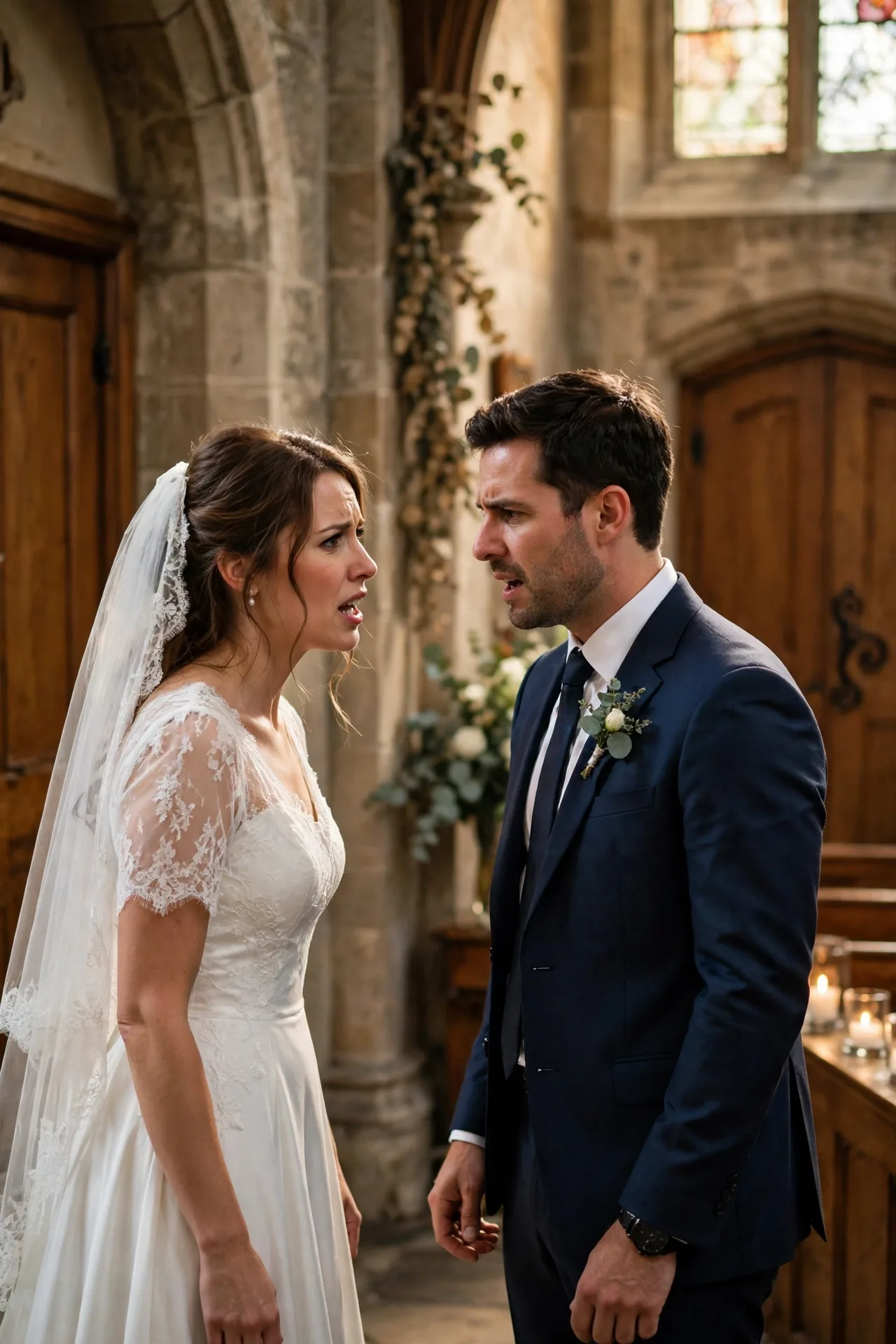
Wedding days are stressful, and a small disagreement on the day itself does not doom a marriage. But a serious, bitter fight on the wedding day is worth noticing, because it often reflects deeper issues that were already present: poor communication under stress, unresolved resentment, or an inability to put each other first even on a day meant to celebrate the relationship.
The wedding day is not a test that a couple must pass perfectly, and nerves can make anyone snappy. The real question is how the couple handles it. Do they pause, apologize, and reconnect, or does the fight set the tone for the marriage that follows? That response tells you far more than the argument itself.
16. No Life Left Beyond the Children

Parenting is demanding, and there are seasons when the children genuinely need almost all of a couple’s time and energy. The trouble starts when that season never ends, and the couple stops being partners altogether. No alone time, no shared interests, no conversations that are not about schedules, school, or chores.
Children benefit most when their parents have a strong relationship of their own. Even small efforts help: a regular walk together, a weekly date night at home after bedtime, or simply asking each other how their day really went. A couple that only exists as co-parents risks discovering, years later, that they no longer know each other at all.
17. Turning on Each Other When Things Go Wrong

Life will throw crises at every couple: a job loss, an illness, a financial setback, a car breaking down at the worst possible moment. In those moments, the healthiest couples turn toward each other and face the problem as a team. The warning sign is when a crisis immediately turns into blame, with each partner trying to prove the other one caused it.
Blame feels satisfying in the moment, but it solves nothing and leaves both people feeling attacked. A better response is to ask, “What do we do now?” Couples who can stay on the same side, even when things go wrong, build the kind of trust that carries them through far bigger storms later.
18. No Room to Laugh at Each Other’s Flaws

Every person has quirks, and in a healthy relationship those quirks become part of the shared humor of the household. When every lighthearted comment is taken as an insult, though, the atmosphere becomes tense and careful, and both partners start walking on eggshells around each other.
This does not mean a partner should have to laugh at jokes that genuinely hurt. It means there should be room for grace: the ability to assume good intent, to laugh together at small imperfections, and to apologize quickly when a joke misses the mark. A relationship without any lightness in it becomes very heavy to carry.
19. Simply Not Showing Up Anymore

Showing up is one of the simplest forms of love: being there for birthdays, holidays, hospital visits, and ordinary hard days. When a partner repeatedly misses the moments that matter, without a good reason and without much apology, the message is hard to miss. The relationship is no longer a priority.
Occasional absence is understandable; life gets busy and plans clash. But a pattern of absence, especially during illness or grief, reveals where someone’s attention really lies. Indifference is often more damaging than anger, because it tells a partner they are no longer worth the effort of even turning up.
20. One Person Carrying the Whole Load

Unequal labor is one of the most common sources of quiet resentment in a relationship. It is not just about who washes the dishes; it is about the mental load too: remembering appointments, planning meals, keeping track of the children’s needs, and managing the household. When one person carries all of it, exhaustion turns into bitterness.
Fairness does not mean splitting every task exactly in half. It means both partners noticing what needs doing and sharing the responsibility willingly, without waiting to be asked. A partner who steps up without being managed shows respect for the other person’s time and energy, and that respect is the foundation of a lasting partnership.
21. Attention Sought Anywhere but at Home

Everyone enjoys attention from friends, colleagues, and social circles, but a warning sign appears when a partner consistently seeks validation everywhere except at home. Flirtatious behavior with others, constant compliments sought from strangers, or a social life that deliberately excludes a partner can all point to needs that are not being met in the relationship.
The healthier path is to bring that need home first: to tell a partner, honestly, that you miss feeling wanted or appreciated. When someone instead looks elsewhere for the attention they crave, the distance between the couple only grows, and trust becomes harder to rebuild.
22. Core Beliefs That Pull in Opposite Directions

Couples do not need to agree on everything, and differences in taste, hobbies, or opinions can make a relationship richer. Core beliefs are different. When partners hold fundamentally opposite views on faith, politics, or the values they want to live by, everyday decisions can become battlegrounds, from how to raise children to how to spend money or treat family.
Some couples navigate these differences with deep mutual respect, and that respect is the key. The warning sign is not disagreement itself, but an inability to honor each other’s beliefs without contempt or constant pressure to change. Without that respect, core differences tend to widen over time rather than narrow.
23. Criticism Delivered in Front of Other People

There is a time and a place for honest feedback, and in front of friends or family is rarely it. Public criticism, whether it is a sarcastic put-down at dinner, a complaint about a spouse shared as a joke, or a story told at their expense, humiliates the person being criticized and makes everyone else uncomfortable.
Partners should be each other’s safe place, especially in public. That does not mean never disagreeing in front of others, but it does mean handling criticism privately, with kindness and respect. A partner who regularly corrects or mocks the other in front of an audience is showing the world how little regard they have left for the relationship.
24. Communication That Only Arrives Too Late

One of the saddest patterns in a failing relationship is the partner who only opens up once the other has already decided to leave. Suddenly, all the feelings, needs, and regrets that were never spoken come pouring out, but the moment has passed. The other partner has already grieved the relationship and moved on emotionally.
This is why timing matters so much in communication. Saying what you feel while there is still time to act on it is an act of love. Waiting until a breakup is already underway turns honesty into a last-minute plea, and it rarely changes the outcome. Speak early, even when it is uncomfortable.
25. Insecurity That Erodes Trust

A little jealousy now and then is human, but chronic insecurity is corrosive. When one partner constantly suspects the other, checks messages, questions innocent friendships, and needs endless reassurance, trust cannot take root. The accused partner begins to feel trapped and resentful, while the insecure partner never feels reassured for long, no matter how much proof they are given.
Trust is built through consistent honesty over time, not through surveillance. Couples who struggle with insecurity do best when they address it directly, sometimes with outside support, rather than letting suspicion run the relationship. Without trust, even a loving partnership slowly falls apart.
None of these signs, on their own, means a relationship is doomed. Every couple has bad weeks, sharp tones, and conversations they wish they had handled better. What matters is whether the patterns repeat, whether both partners are willing to notice them honestly, and whether they choose to work on them together. The couples who last are not the ones who never struggle; they are the ones who face their struggles as a team, with kindness, honesty, and respect.