23 Winter Nail Ideas in Warm Tones That Make Sweater Weather Feel Even Cozier


If icy blue and silver are not the colors you reach for, build your winter manicure around cinnamon, caramel, brick red, or a creamy peach. Warm winter nails can be a single glossy shade, a narrow French tip, or one sweater-inspired accent. You get the seasonal mood without needing a snowflake on every finger.
These 23 winter nail ideas in warm tones give you different ways to wear that palette: light or dark, sheer or opaque, smooth or textured. Start with a length you already enjoy wearing, then borrow the color and placement from the reference. The almond-shaped looks can be adapted to shorter nails by reducing the artwork.
The visuals are AI-generated design concepts, not photographs of completed salon manicures or wear tests. Use them to discuss the palette, shape, and placement with your nail artist; actual color and finish will vary with products and lighting.
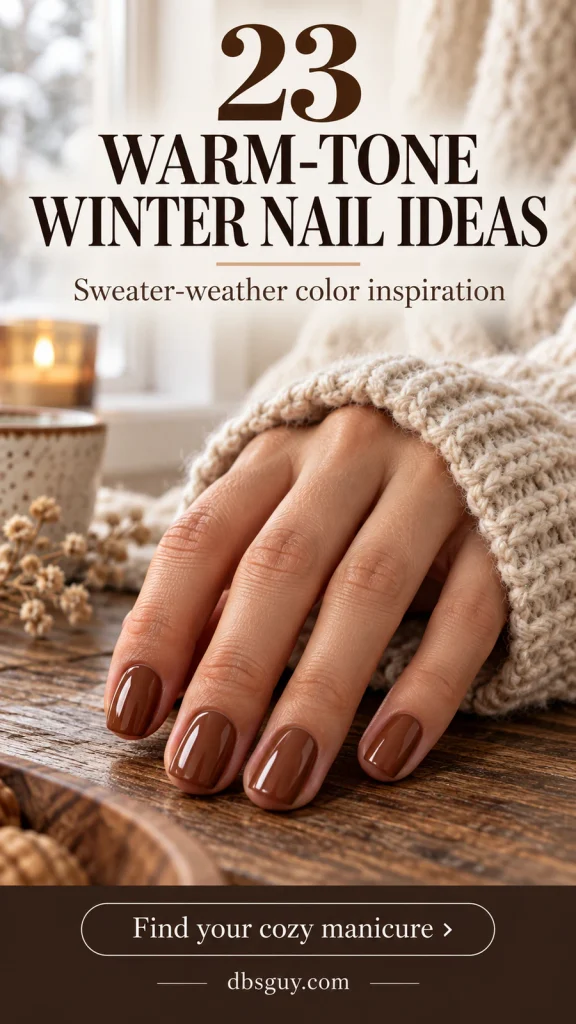
Find Your Warm Winter Nail Mood
- For simple polish at home: start with cinnamon gloss (1), matte terracotta (3), rosewood (8), or the five-shade palette (15).
- For a small amount of detail: compare caramel tips (2), copper foil (9), gold pinstripes (20), and the single star (22).
- For shine that is the whole design: choose amber cat-eye (5), peach pearl (14), or bronze glitter fade (16).
- For a sweater-inspired accent: look at the raised cream cable (4) or flat oatmeal plaid (11).
If your nails are very short, scale down the pattern before adding length. Our short December nail ideas offer more examples of small details with room around them.
1. Cinnamon Gloss on Short Squoval Nails
Cinnamon is the easy starting point when you want more warmth than a neutral beige but less brightness than a classic red. Look for a reddish brown that stays visibly brown in daylight. On short squoval nails—square with softened corners—the uninterrupted glossy color feels neat alongside chunky sleeves.
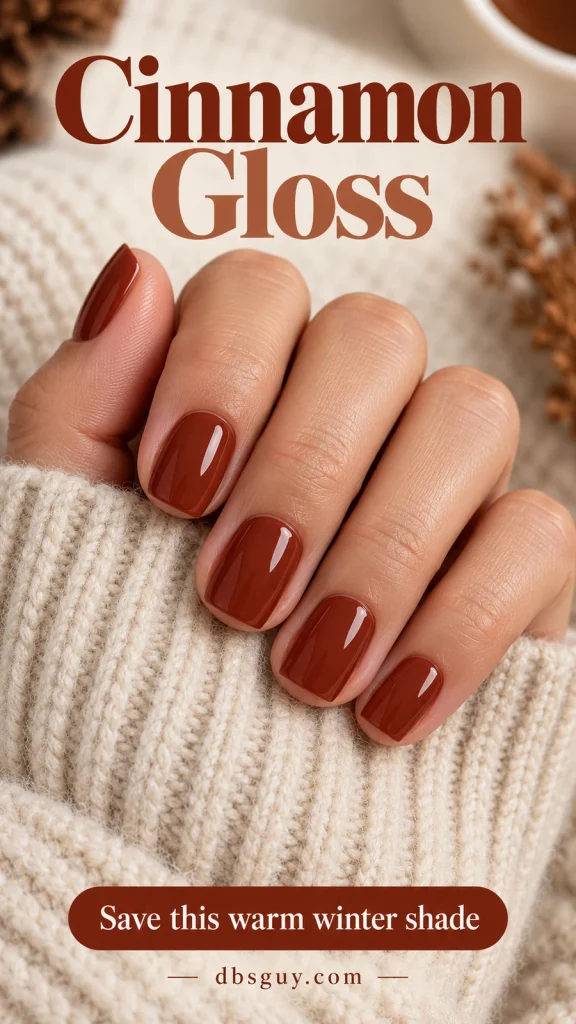
This is a straightforward regular-polish option because the effect comes from the shade and finish. Compare a red-brown and an orange-brown swatch beside your hand before choosing; both may be labeled cinnamon. Ask for full cream coverage, a comfortable short length, and clear gloss, with no extra shimmer.
2. Caramel Micro French Tips
Keep most of the nail translucent and let a slim caramel edge supply the color. The peach-beige base and golden brown tips give this French manicure a softer contrast than white. The reference uses almond nails, with the tip following the curve rather than cutting straight across.
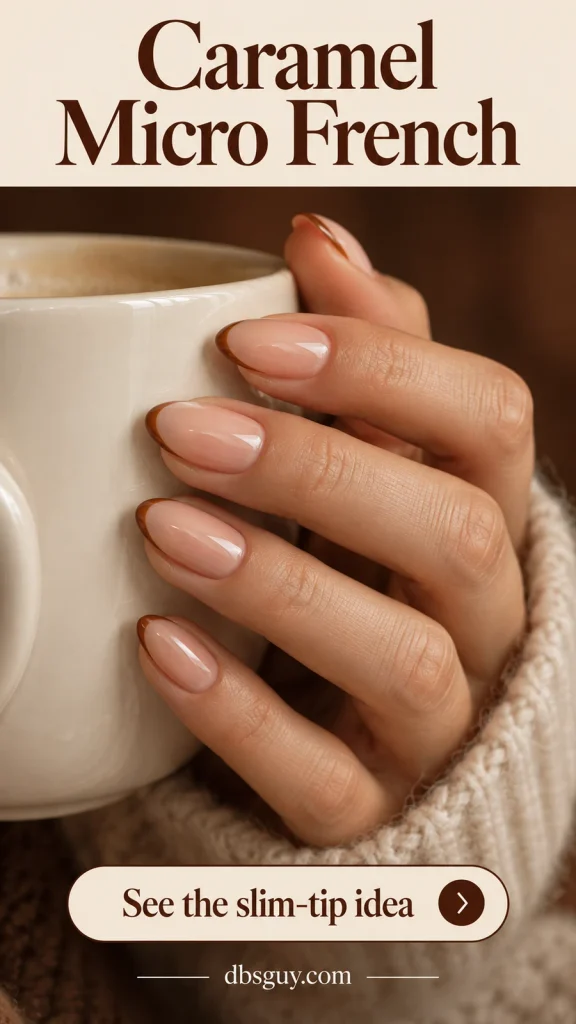
Show the technician how narrow you want the band before the full set is painted. On a very short nail, a fine colored outline can replace the deeper tip shown here. Choose the base against your own skin first; it should look intentionally sheer, rather than like an opaque beige that happens to be thin.
3. Matte Terracotta for a Soft Clay Finish
Muted terracotta brings orange into the winter palette without turning the manicure bright pumpkin. Here, the matte surface is as important as the clay-brown color: it echoes the quiet texture of a camel coat instead of reflecting the window like a glossy polish would.

Ask for a warm, muted terracotta on short oval nails and a matte finish across the whole set. For a home version, use a matte top coat compatible with your color polish and follow its directions. A glossy final coat would change the look, so check the finish before reaching for your usual top coat.
4. Cocoa Nails With One Cream Cable-Knit Accent
One cream ring nail brings a literal sweater detail to an otherwise glossy cocoa set. The raised cable stays the same cream color as its base, so light and shadow reveal the pattern. Keeping the surrounding nails plain makes that small panel easier to see.
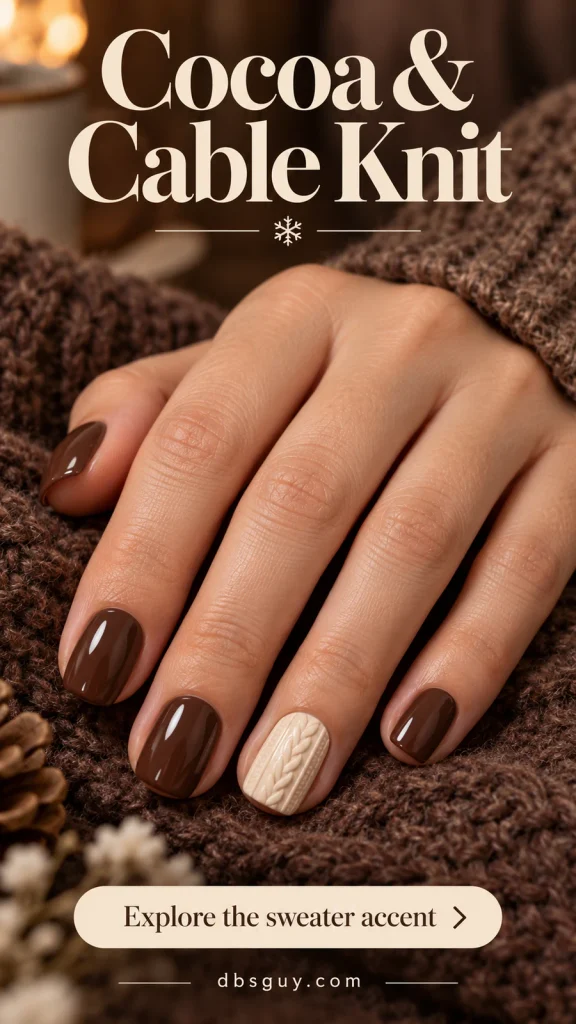
Request a low-profile cable rather than a bulky sculpted braid, and ask how the finished texture will feel against knitwear. If you prefer a smooth surface, choose a flat painted cable in a slightly darker beige. That adaptation keeps the sweater reference, although it will not have the raised shadows in the concept.
5. Amber Cat-Eye With a Golden Band
A diagonal golden highlight turns amber brown into the dressier option in this group. The finished surface is smooth; the cat-eye effect is a visual band created with magnetic polish and a magnet. It gives you movement and depth without adding a separate drawn pattern.
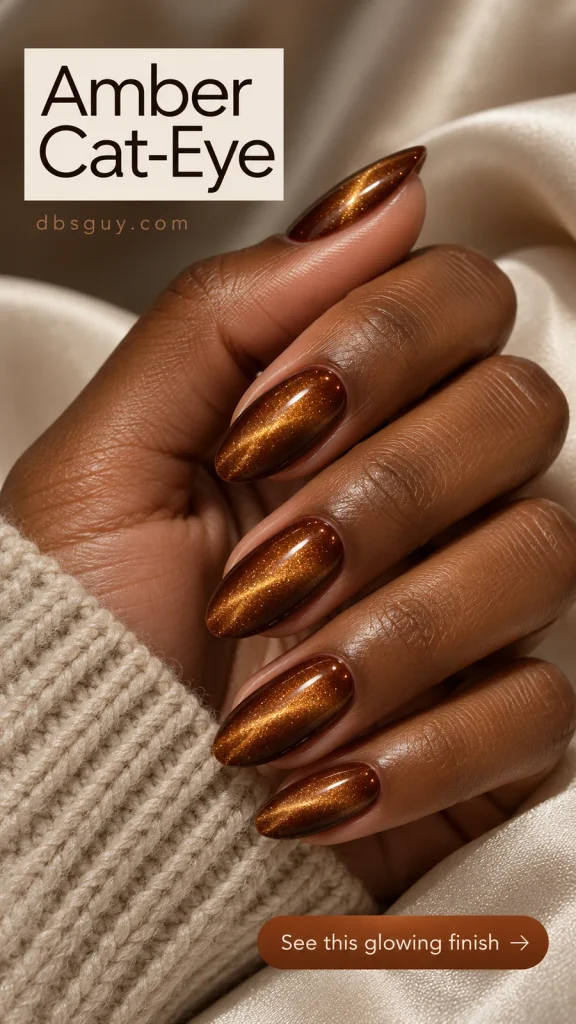
Bring a reference that shows both the dark amber edges and the concentrated highlight. Ask to see the effect on a sample nail under diffuse and direct light before choosing. A bronze shimmer lacquer can echo the warm sparkle at home, but it will not reproduce the same magnetic band.
6. Rust French Tips Swept to One Side
Rust side tips are a useful choice when a conventional French manicure feels too symmetrical. A diagonal sweep crosses the end of each sheer peach-beige nail, putting the red-brown color on a slant. There is still plenty of quiet base around it.
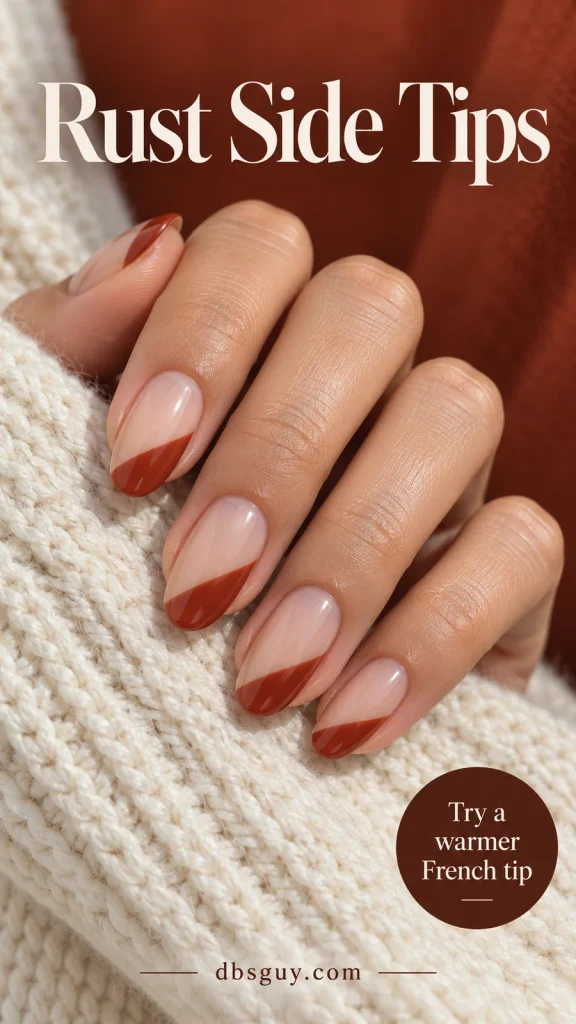
For the salon brief, describe the direction as well as the shade: a solid rust tip that travels from one side toward the opposite edge. Keep the diagonal similarly angled across the set. If your nails are shorter than the reference, reduce the colored area so the design still reads as a tip rather than an almost-solid manicure.
7. Chocolate Half Moons With a Sheer Base Detail
This design puts the open space at the base instead of the tip. Most of each short rounded nail is deep chocolate, with a small translucent semicircle following the cuticle area. The pale half moon gives a dark manicure a clear, graphic break.
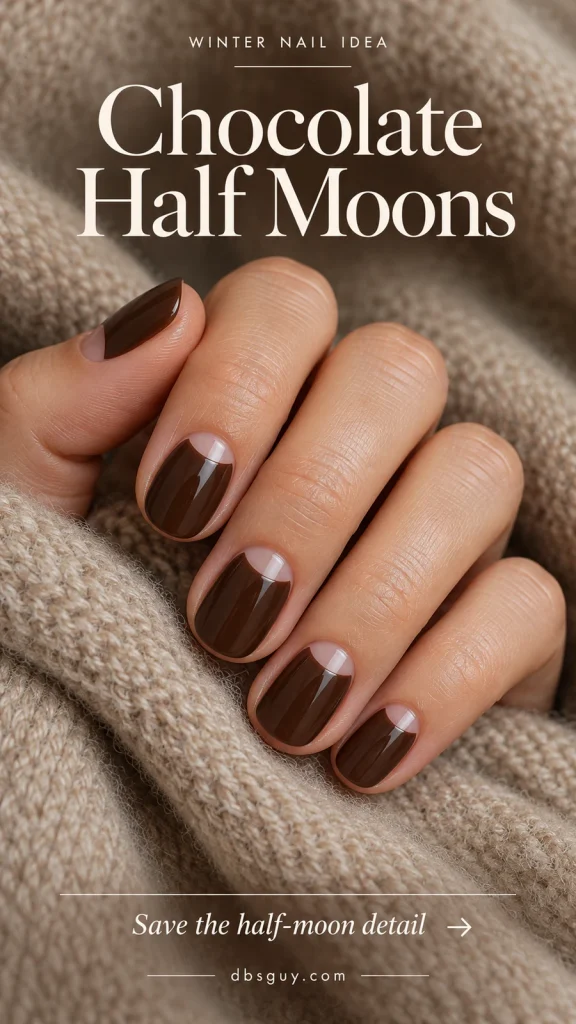
Ask for the half moons to be scaled to each nail rather than identical in width. They should remain small enough that chocolate is still the dominant color. If doing the look with regular polish, a fully dry sheer base is a better starting point for guides than a tacky one; follow the guide and polish instructions when removing them.
8. Warm Rosewood for a Softer Red
Rosewood gives you the feeling of a muted red with a little dusty brown underneath. It is a softer color choice beside oatmeal, faded denim, and pink knitwear than a bright cherry shade. Short oval nails let that creamy color read clearly without extra decoration.
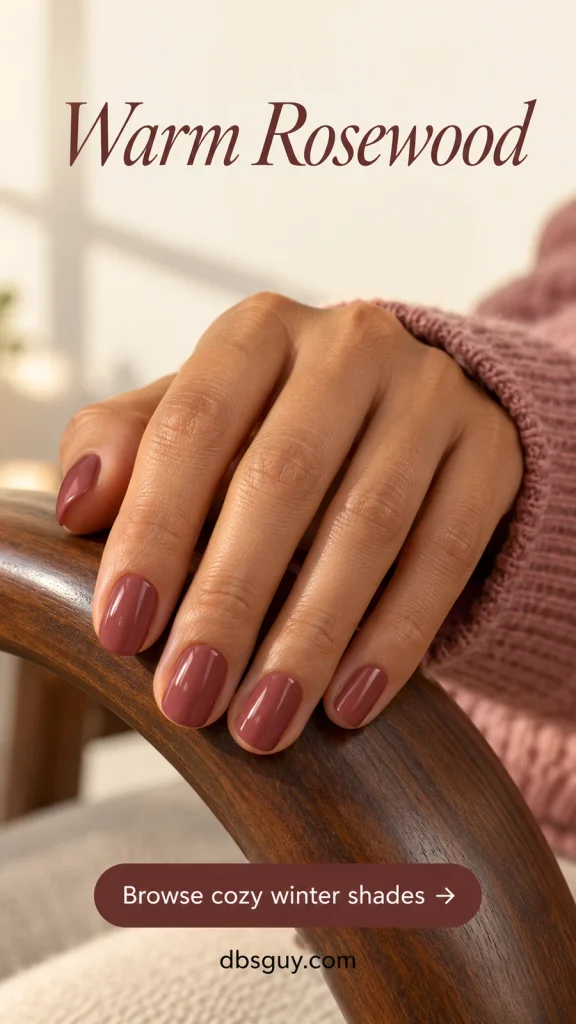
Choose a swatch with visible brick-rose warmth if you want this version. Some rosewood shades lean mauve or gray, which will give a different result. Ask for opaque coverage and clear gloss; a sheer jelly formula would change both the depth and the way the natural tip shows through.
9. Pecan Brown With a Copper-Foil Edge
Pecan is the light brown base here, while irregular copper fragments add a small metallic interruption on the ring nail. Keeping the foil along one side makes the placement feel deliberate. Most of the tan-brown polish remains visible, including on the accent.
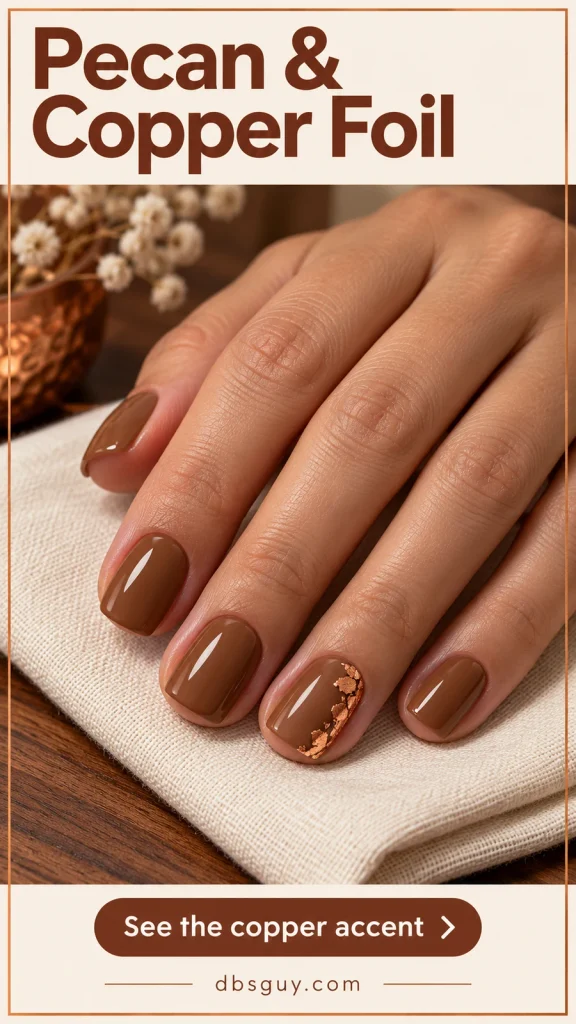
Ask for sparse flat foil and a smooth sealed finish, with no raised pieces at the sidewall. A copper-fleck topper is a simpler home interpretation if placing individual fragments feels fiddly. Test it on one nail first: a dense glitter topper can cover the pecan rather than giving you the scattered foil effect shown.
10. Toffee Tortoiseshell With Amber Space
Tortoiseshell gets its depth from the contrast between a light amber ground and uneven dark brown patches. The toffee areas need room to show through. If the patches join into one dark mass, you lose the translucent, layered feeling that makes this pattern different from solid brown.

Medium almond nails give the irregular shapes space, but a short oval can carry fewer, smaller patches. Show the artist the balance of light to dark you prefer instead of asking only for tortoiseshell. A full set makes the pattern the focus; keeping it to one accent per hand is a quieter adaptation.
11. Oatmeal Nails With a Chestnut Windowpane
An airy windowpane pattern is a lighter way to borrow from a winter scarf. Most nails stay warm oatmeal, while chestnut lines cross on one ring accent. The simple grid gives the set a fabric reference without the density of a multicolor tartan.
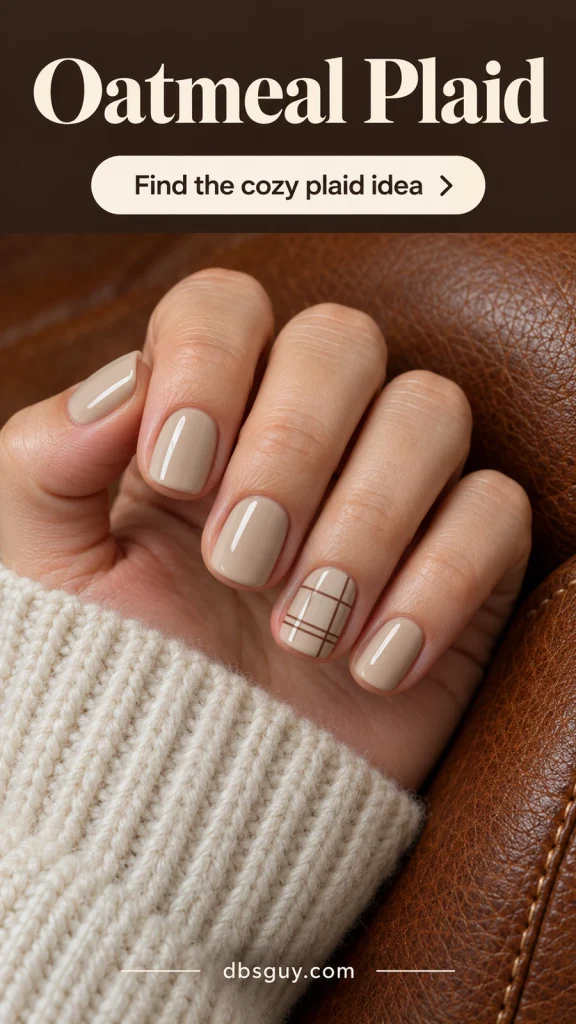
Keep the crossing lines fine and widely spaced. On a short accent nail, a few clean intersections are more useful than squeezing in extra squares. At home, practice the line width on a spare surface before using a striping brush. The oatmeal base should be dry enough for detail work according to the polish directions.
12. Oxblood With Fine Gold Cuticle Cuffs
Warm oxblood and a narrow gold arc make a compact evening combination. The gold follows the base of the nail, while the almond tips stay plain. That placement gives you a little jewelry-like detail without adding a charm or outlining the whole nail.
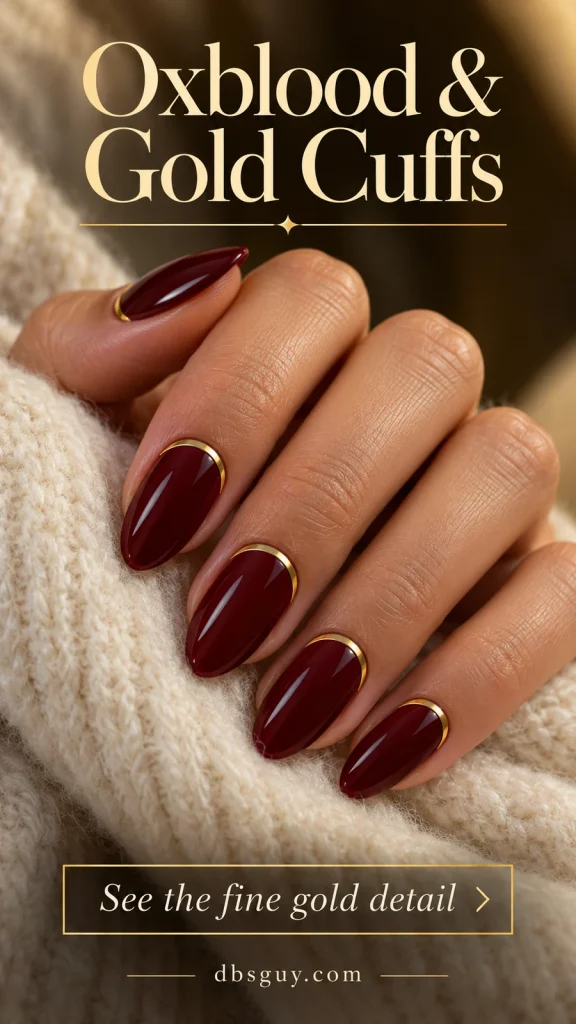
Ask for flat gold polish, a very fine curved line, and a small gap between the art and skin. An oxblood that remains visibly brown-red in ordinary indoor light will keep the warm palette clearer than a shade that reads almost black. On shorter nails, reduce the cuff thickness before changing the length.
13. Maple and Cream Latte Swirls
A latte-beige background holds one broad maple ribbon and a slimmer ivory curve. The flowing lines make this more graphic than marbling: you can follow each ribbon along the nail. The related colors keep the movement gentle rather than creating a high-contrast stripe.
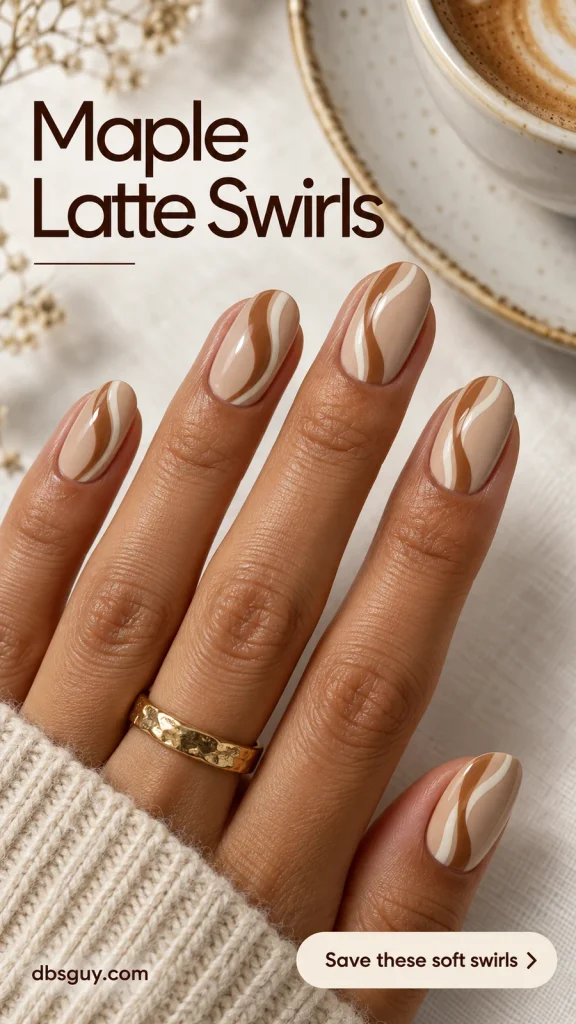
Tell the artist you want separate curves with visible beige between them. On narrow nails, keep one main caramel wave and one small cream companion instead of adding more loops. A slightly different curve on each finger belongs in this design, so the goal is a coordinated rhythm rather than ten exact copies.
14. Toasted Peach With a Pearl Sheen
Warm winter nail ideas do not have to be dark. Toasted peach-beige gives you a light option, while a fine pearl sheen adds a little glow beside soft knitwear. Keep the underlying peach visible so the manicure stays warm rather than turning into a silvery white glaze.
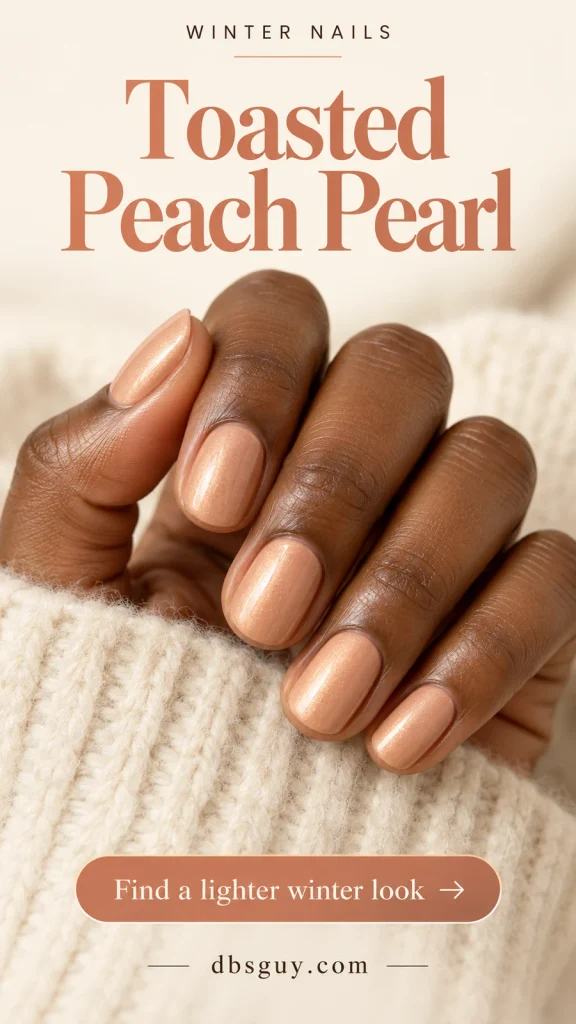
For a home version, compare a pearl-finish polish with a translucent pearl topper over a peach base. Test the combination before painting the full set, since the topper may change the base more than expected. Ask for a soft sheen on short oval nails if you want the reference, rather than a fully reflective chrome surface.
15. A Caramel-to-Cocoa Skittle Manicure
If choosing one brown is the difficult part, give each nail its own shade. This set moves from oatmeal on the thumb through caramel, toffee, and chestnut to cocoa on the little finger. Every nail stays solid, so the color sequence supplies all the detail.
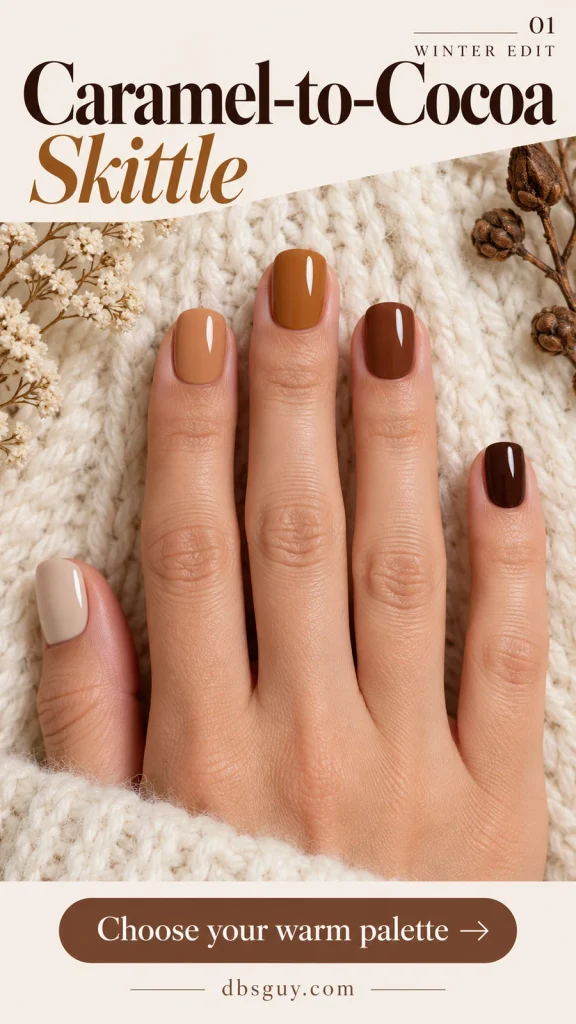
Line up the swatches together before applying them. A noticeably gray taupe among golden browns may interrupt the progression, while two almost-identical colors may disappear beside one another. Use the same glossy cream finish throughout to make the palette feel connected. Repeat the order on the other hand if you want a balanced result.
16. Toffee-Beige Nails With a Bronze Glitter Fade
For sparkle that still belongs with your daytime sweater, concentrate fine bronze glitter at the tips of a warm toffee-beige base. The glitter becomes lighter toward the middle, leaving the cuticle half mostly clear of sparkle. You still see the creamy brown color beneath it.
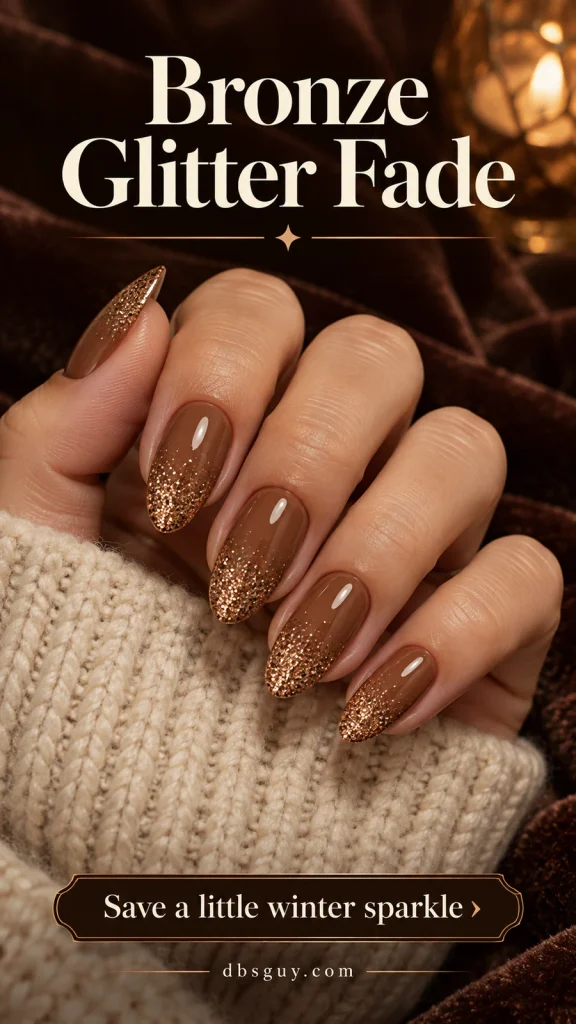
Request fine particles and a gradual fade rather than a hard glitter French line. With regular polish, follow the glitter formula’s directions and use a light hand when extending it inward. Keeping the densest layer at the edge gives the gradient a clear direction. Large sequins would create a different, more scattered look than this fine shimmer.
17. Matte Cocoa With Glossy Espresso Tips
This French manicure uses finish contrast as well as color contrast. The cocoa body stays matte, while darker espresso tips catch the light. From farther away, it reads as a brown manicure; close up, the shiny edge becomes the detail.
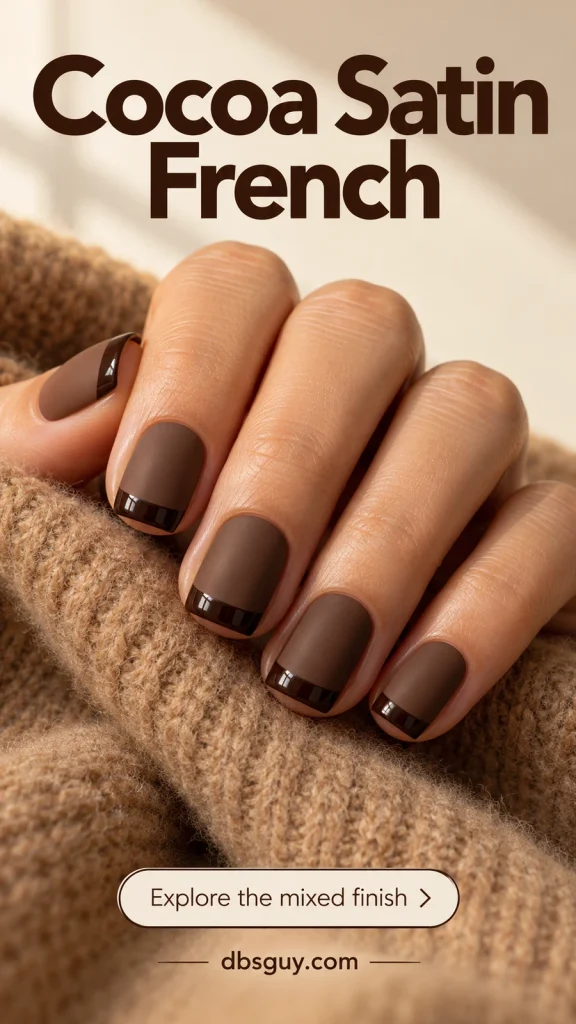
Describe both finishes when booking or showing the reference. An all-over glossy top coat would erase the matte part of the design. For a regular-polish attempt, establish the matte base first and use a compatible glossy product only where you want the tips, following drying directions between stages. A soft square edge makes the narrow tip easy to read.
18. Amber Jelly With Sparse Gold Flecks
Amber jelly keeps a little transparency, with tiny gold flecks adding irregular points of light. This is a lighter-looking alternative to opaque toffee or dark tortoiseshell. The natural nail can remain subtly visible through the honey-brown color.
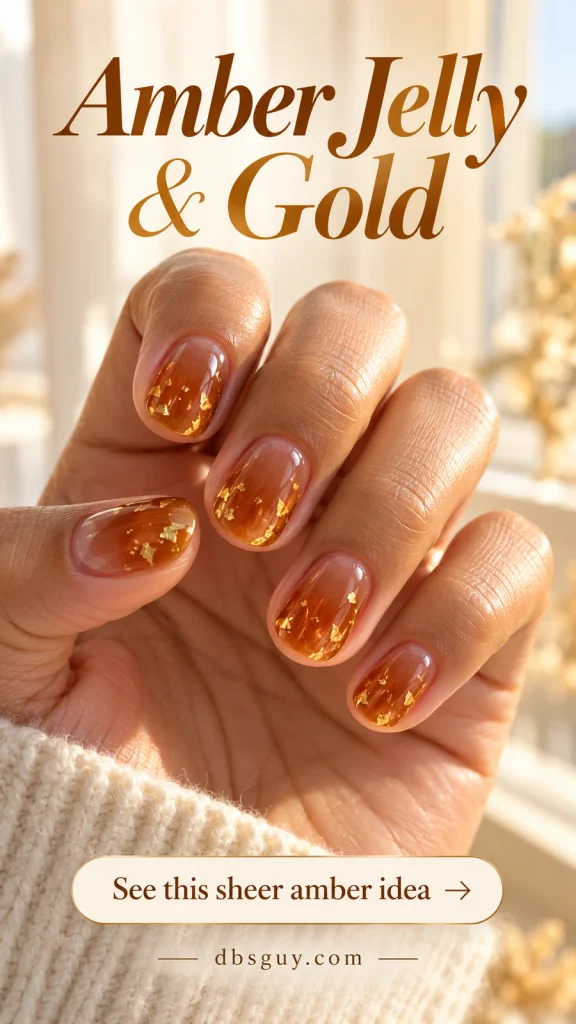
Choose a formula intended to be translucent rather than thinning an opaque polish yourself. Build only to the depth you like within the product instructions; extra layers can darken the amber and hide the sheer effect. Ask for small, flat gold fragments concentrated toward the outer half, with open amber around them and a smooth finished surface.
19. Vanilla Cream With Tiny Chestnut Dots
Small chestnut dots give warm vanilla nails a playful pattern without using a character or seasonal symbol. The brown-on-cream contrast is easy to see even on short round nails. Leave enough plain cream around each dot for the pattern to stay light.
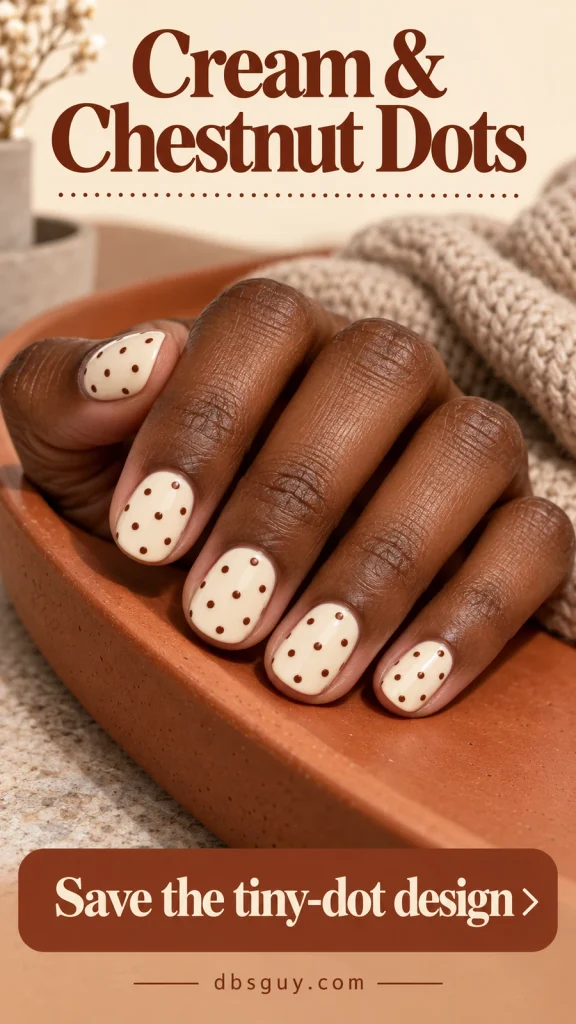
For a home manicure, practice the dot size before touching the nail and reload the tool as needed for a consistent result. Fewer small dots are a better starting point than filling every gap. If the full patterned set feels busy, keep the dots on the ring nails and use plain vanilla cream elsewhere.
20. Brick Red With Two Fine Gold Pinstripes
An earthy brick red gives this set its warmth, while two slim gold lines on the ring finger add a restrained vertical detail. The other nails remain plain. It is a useful middle ground when you want more than solid color but do not want an illustrated accent.
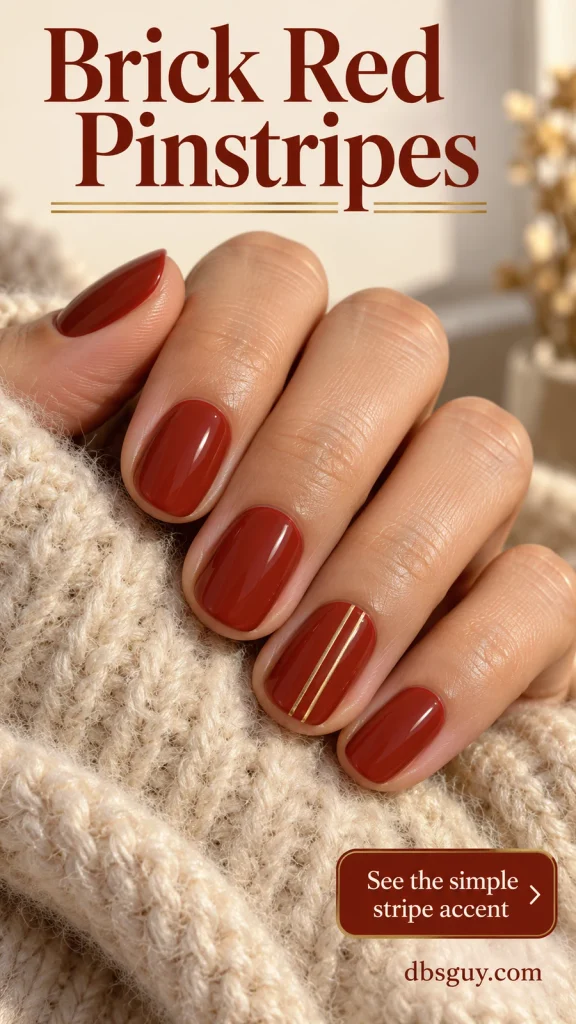
Ask for two parallel lines with a visible strip of red between them, running lengthwise from near the base toward the tip. On a narrow nail, keep the lines especially fine so they do not merge into a gold panel. Flat metallic nail-art strips or careful striping-brush work can provide a home interpretation.
21. Honey-Center Aura With Espresso Edges
A honey-caramel center surrounded by espresso creates a warm halo on each nail. Unlike the cat-eye, this design depends on blended color rather than a reflective magnetic stripe. The light stays in the middle, with dark brown framing the nail’s perimeter.
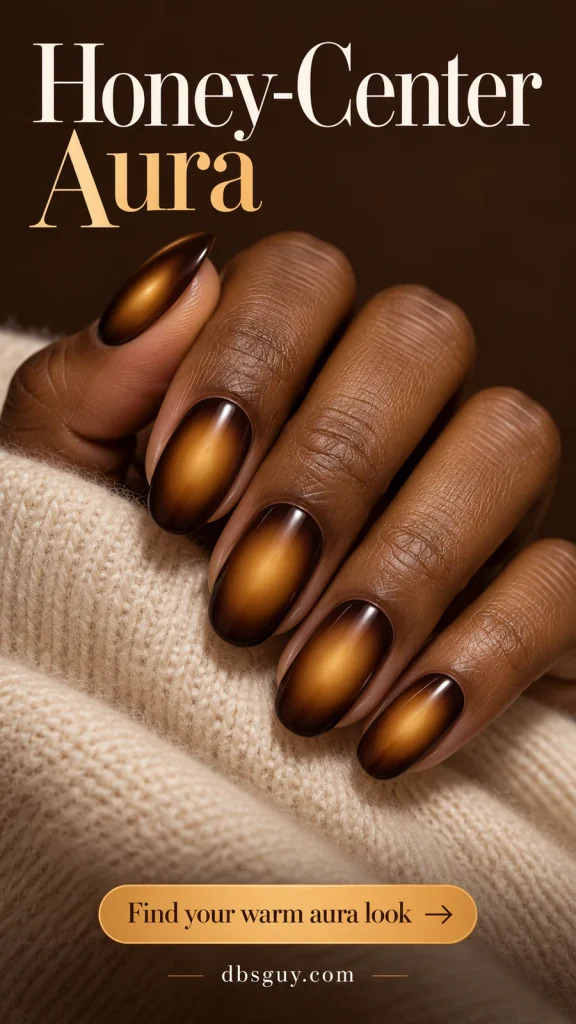
Bring a close reference and ask for a soft transition with no obvious ring around the center. Medium almond nails leave room for the fade; a shorter version needs a smaller light center and a simpler blend. This is a good look to discuss with an artist comfortable with gradients or airbrush work rather than treating it as a quick solid-color service.
22. Buttercream With One Copper Star
Buttercream brings a little yellow warmth to the pale end of the palette. One small copper star on the ring nail supplies the decoration, while the rest stay plain and glossy. The limited placement works when you want a tiny winter-evening detail beside everyday knitwear.
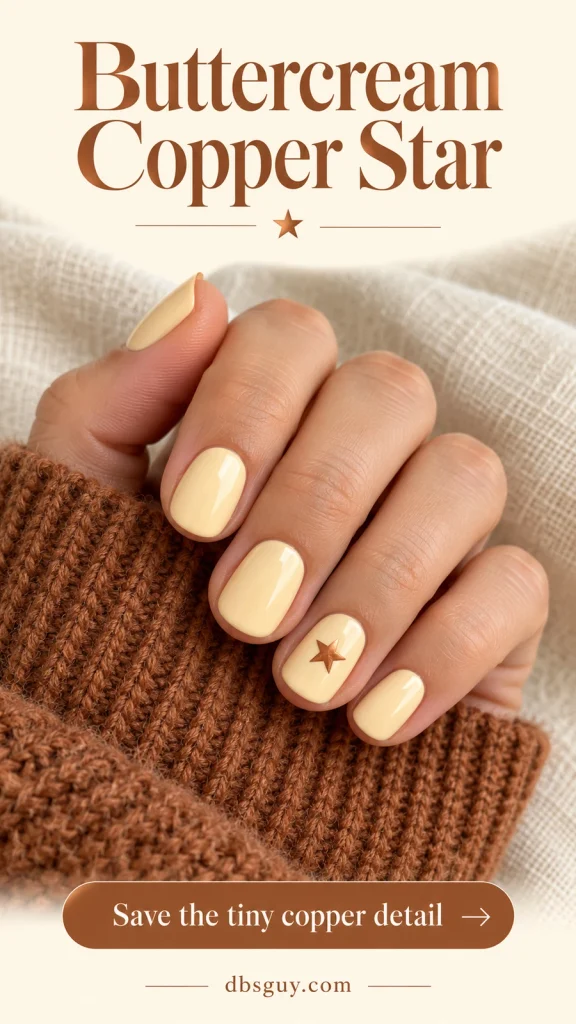
Choose a flat five-point star that fits comfortably within the nail, leaving a visible buttercream border around it. A small decal is a practical alternative to drawing the points by hand. Keep the copper distinct from the base; a very pale champagne star may be harder to see against this creamy yellow-beige.
23. Burnt-Sienna Waves With Open Space
A broad burnt-sienna wave travels along one side of each sheer beige nail. Most of the center stays open-looking, so you get a warm, graphic shape without covering the whole nail. The wave is wider than the latte ribbons earlier in the list and has no cream companion line.
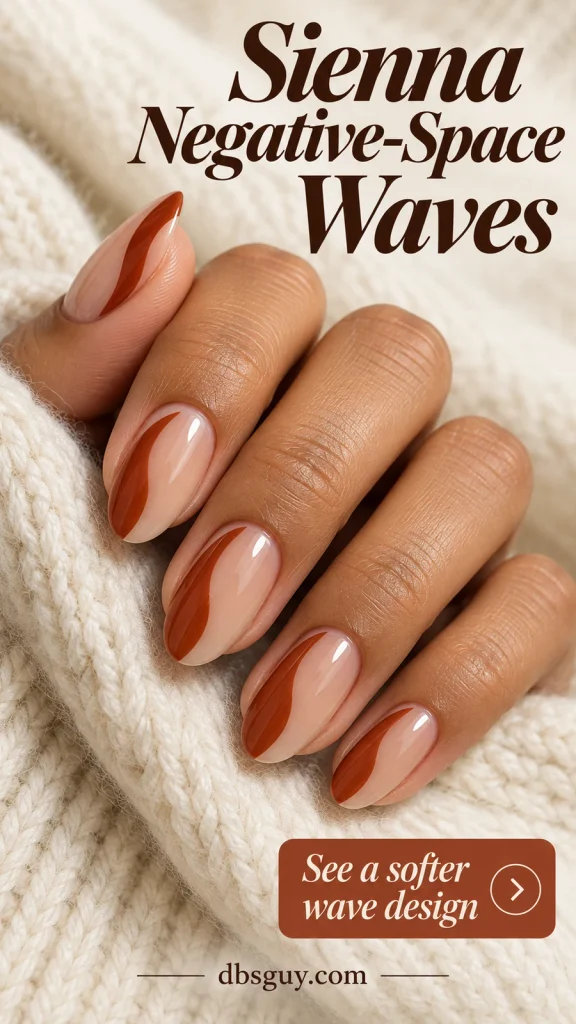
Ask the artist to preserve more sheer base than colored area. The curves can vary slightly from finger to finger, but their width should feel related. On shorter nails, use one uncomplicated bend instead of a tight series of wiggles; the sienna then remains readable as a deliberate side stripe.
Choose the Shade Beside Your Actual Sweater
Put two or three swatches beside the sleeve you wear most, then look at them against your hand in daylight and ordinary room light. Golden caramel, reddish cinnamon, and dusty rosewood create different kinds of warmth. You do not need to follow a skin-undertone rule; decide whether you like a close color match, a gentle contrast, or a much darker nail.
With a heavily patterned sweater, try an uninterrupted color such as rosewood or terracotta. With a plain cream knit, a small copper accent or oatmeal grid has more room to be noticed. These are styling suggestions, so let the combination you enjoy decide the final shade.
Give the salon a brief they can use
Bring one reference and specify the length, shape, coverage, finish, and accent placement. For example: “Short soft square, opaque pecan brown, glossy, copper foil along one side of each ring nail only.” Ask whether the design needs a separate nail-art booking and confirm the service price before starting.
For raised knit, aura blending, and magnetic finishes, discuss the exact effect and products with the artist. For home polish, follow the chosen products’ preparation, drying, and removal directions. Light-cured gel needs its specified compatible system; this inspiration guide does not provide a universal curing time.
If you decide you would rather add snowy detail or a cooler finish, browse winter nail designs with snowflakes, chrome, and cozy knits for another direction.
Keep Nail Care Part of the Appointment
The American Academy of Dermatology’s gel-manicure guidance recommends leaving cuticles uncut and unpushed, moisturizing nails and cuticles between polishes, and avoiding picking off gel. For a light-cured gel appointment, it advises broad-spectrum, water-resistant SPF 30 or higher on your hands, or dark opaque fingerless gloves. Ask about appropriate removal, and seek a dermatologist’s advice for persistent nail changes or irritation.
Warm Winter Nails: Your Questions Answered
Which warm nail colors feel right for winter?
For this palette, start with cinnamon, caramel, cocoa, terracotta, warm rosewood, or brick red. Buttercream and toasted peach give you lighter choices. A glossy, matte, or pearly finish can change the mood even when you keep the same color family.
Can warm-toned nails work with cool-toned clothes?
Yes—try the combination rather than treating the palettes as incompatible. A cinnamon nail can stand out beside a gray sweater; a soft rosewood may create a quieter transition beside blue denim. Compare the swatch with the actual fabric before choosing.
Which ideas are easiest to adapt to very short nails?
Solid cinnamon, matte terracotta, rosewood, and peach pearl need no detailed drawing. For art, try one small star or a few dots. Make French bands shallower and leave space around accents instead of copying the full scale of a longer reference.
Do I need gel or extensions for these designs?
Many of the solid colors, simple stripes, dots, and tip designs can be interpreted with regular polish on natural nails. Raised cable work, magnetic effects, and blended aura art depend on suitable products and technique. A design shown on almond nails does not require you to choose extensions.
Are matte nails and velvet nails the same finish?
No. Matte describes a low-shine surface, as in the terracotta design. A magnetic velvet effect uses reflective pigments arranged with a magnet to suggest depth while the surface remains smooth. Show a reference so your artist can see which finish you mean.