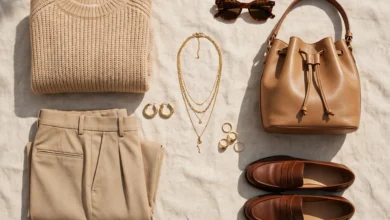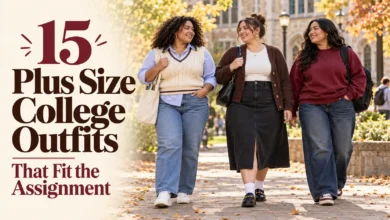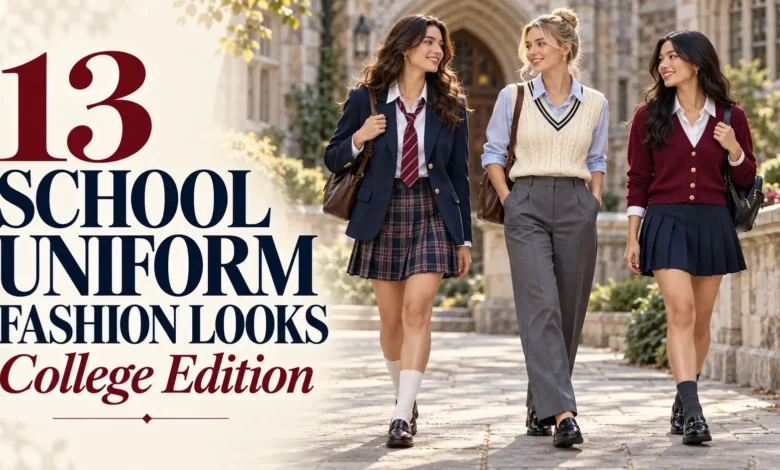
A collared shirt, a knit layer, and a pleated skirt or tailored pants give you a useful starting point for school-uniform fashion in college. From there, change the proportions, shoes, and amount of layering to suit the day ahead.
These 13 looks cover adult campus wardrobes, with skirt, dress, shorts, and pants options. Start with the one closest to clothes you already own. There is no need to buy every piece to try the idea.
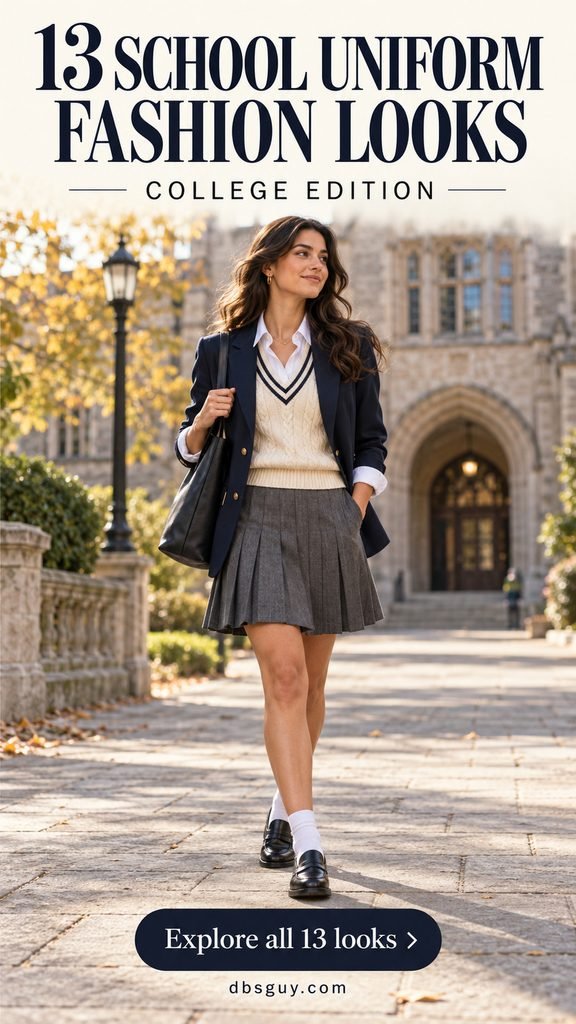
The visuals are AI-generated styling concepts. They illustrate outfit combinations and do not document real students or fit testing.
Choose Your Starting Look
- For classic skirt-and-knit prep: Start with look 1 or 7.
- For pants: Try look 2 for relaxed layering, look 3 for a blazer, or look 12 for short sleeves.
- For a longer hem: Look at the midi skirts in looks 4 and 13, or the knee-length dress in look 9.
- For a sporty version: Choose the rugby shirt in look 5.
Collars, patterned knits, and casual pairings also appear in Aerie’s guide to playful preppy styling. The combinations below are editorial suggestions you can adapt. Check any requirements for your particular class, placement, or event before choosing an outfit.
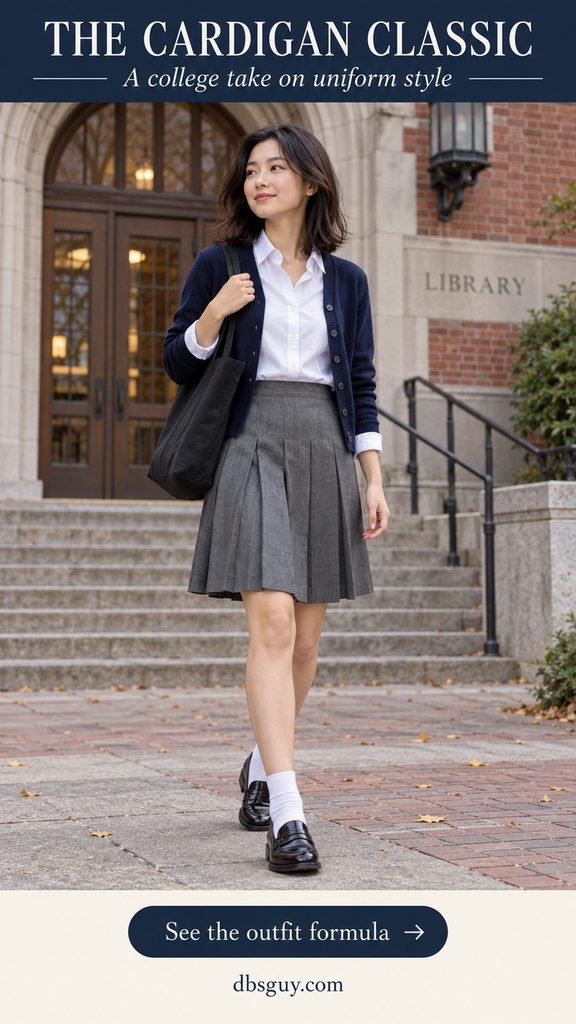
1. The Navy Cardigan and Gray Pleated Skirt
The pieces: A navy V-neck cardigan, white Oxford shirt, gray pleated skirt, white ankle socks, and black penny loafers.
This is the closest look to a familiar school uniform, so let the fit do the updating. Wear the cardigan open and tuck in the shirt to keep the waist visible. An above-knee skirt gives the pictured outfit its shape; a knee-length version keeps the same idea with more coverage.
Before leaving, sit down and climb a few steps in the skirt. If you keep adjusting the hem, choose a longer cut or a pleated skort with coverage you like. Keep the accessories simple: a roomy black tote is enough for a short class day. For a heavy laptop load, use your usual backpack.
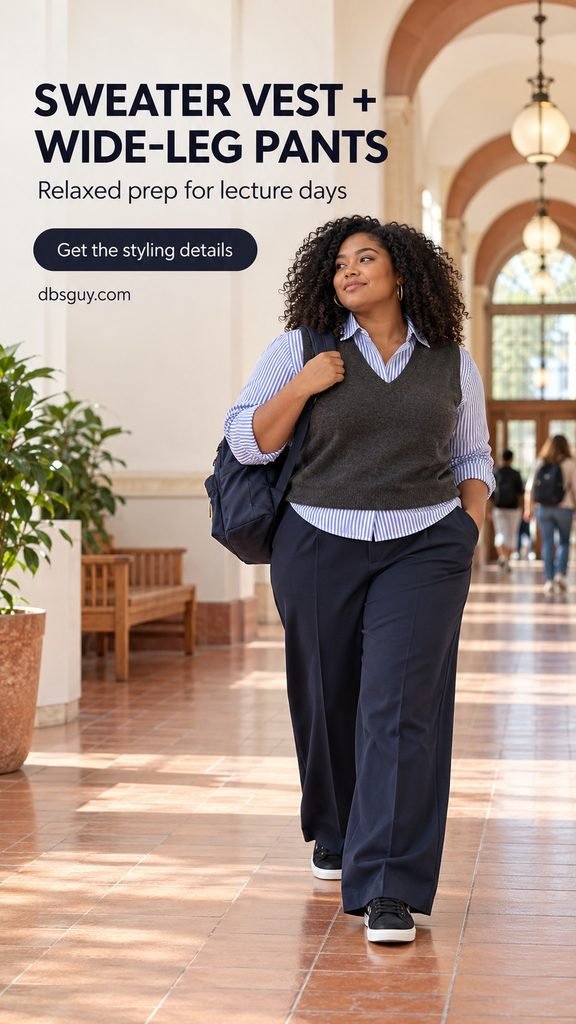
2. The Sweater Vest and Wide-Leg Trousers
The pieces: A charcoal V-neck sweater vest, blue striped button-down, navy wide-leg trousers, and low-profile black sneakers.
Choose this one when you want the collar-and-knit combination with pants. The blue stripes give the outfit detail without adding another heavy layer. Leave a little shirt hem showing beneath the vest, as pictured, or tuck the shirt if you prefer a cleaner waistband.
Check the vest over the actual shirt you plan to wear. Its armholes should let you reach forward without pulling the shirt tight across your shoulders. If the lower edge bunches, try a vest with a looser hem. Hem the trousers for these sneakers so the back edge clears the ground; extra fabric dragging behind your heel will quickly become an annoyance between buildings.
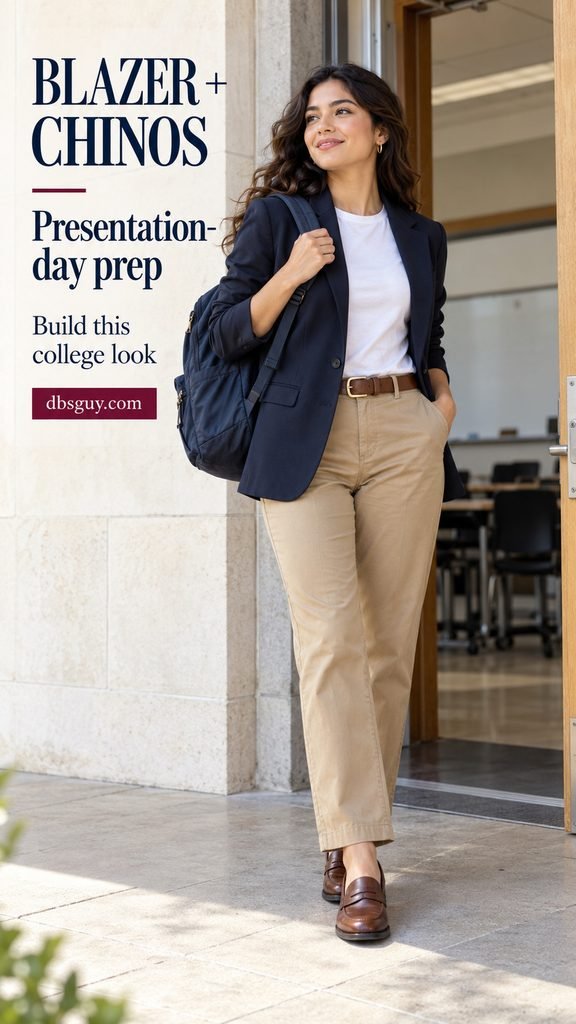
3. The Navy Blazer and Straight-Leg Chinos
The pieces: A navy blazer, white crewneck T-shirt, tan chinos, brown belt, and brown loafers.
Save this combination for a presentation day or a club meeting when you want some structure. The plain T-shirt gives the blazer room to stand out, while the chinos keep the uniform reference clear. An ankle-length hem, like the one shown, leaves the loafers visible without needing a cuff.
Try the blazer with your backpack before committing to it. Reach for a high shelf, sit down, and check whether the shoulders pull. If your event specifies business formal or another dress code, follow that brief and adjust the shirt, shoes, and tailoring accordingly. This casual blazer formula does not establish what an organizer will accept.
Also read: How to Join Clubs in College: Find Your People Freshman Year for planning the meeting behind your club-day outfit.
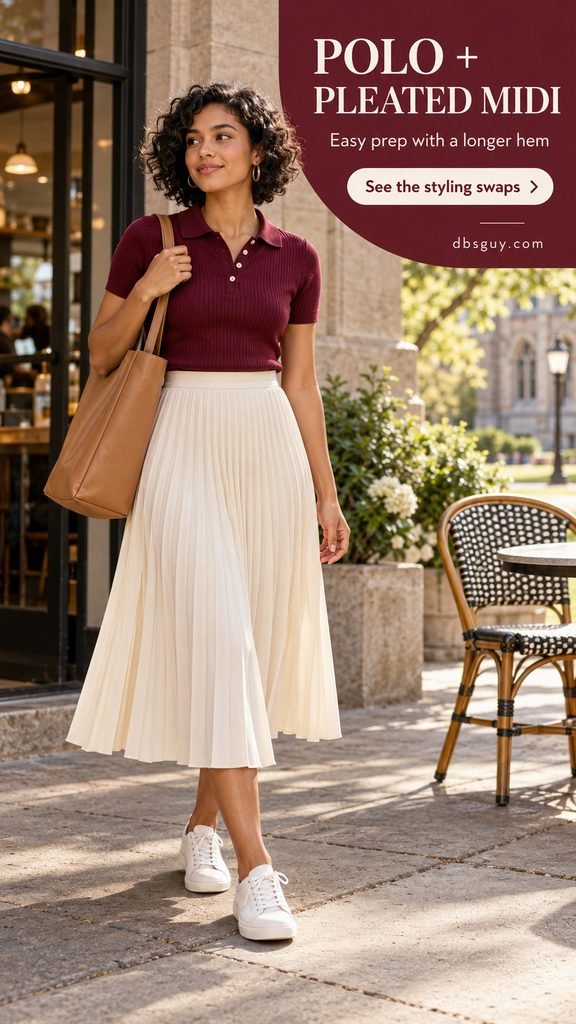
4. The Burgundy Polo and Pleated Midi
The pieces: A burgundy knit polo, cream pleated midi skirt, white sneakers, and a tan tote.
A polo collar supplies the uniform detail here, leaving the longer skirt to change the silhouette. Tuck a lightweight polo into the waistband and let the skirt fall freely. If the top creates a ridge beneath the pleats, try a shorter polo that finishes near the waist instead.
This makes an easy option for a class day with a coffee stop afterward. Check a pale skirt in daylight for coverage and look for a lining if you want one. Walk up a step in your chosen midi length, too: the hem should leave you room to move. A navy skirt is a useful alternative if you would rather avoid a light-colored bottom.
5. The Rugby Shirt and Bermuda Shorts
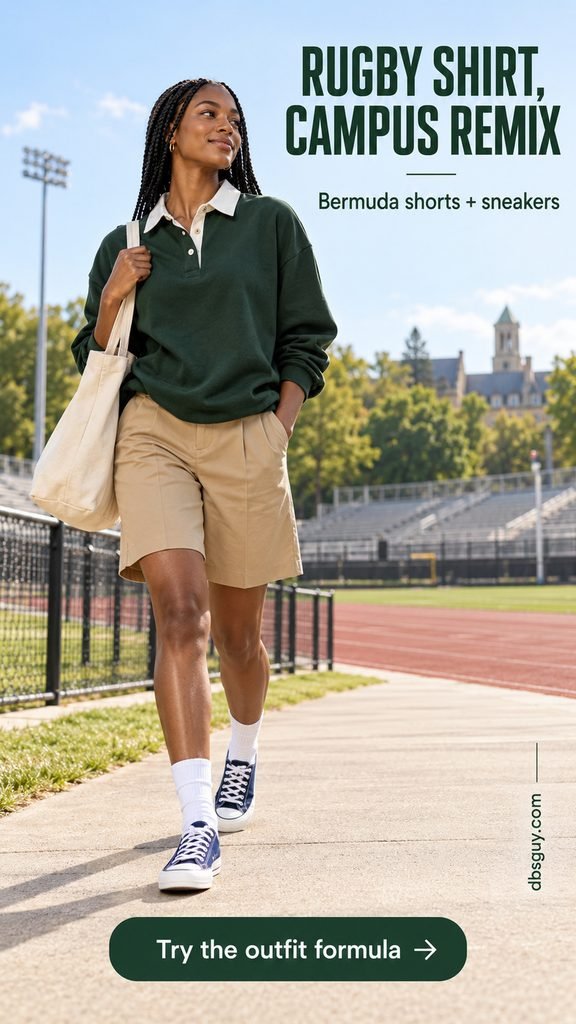
The pieces: A forest-green rugby shirt with an ivory collar, tan Bermuda shorts, white crew socks, and navy canvas sneakers.
The roomy rugby shirt shifts the mood toward sports-field prep. Choose shorts with enough visible length below the shirt; otherwise, the top can hide the tailored part of the outfit. The pictured shirt has a relaxed front tuck, which lets the waistband show without gathering the entire top inside it.
Use this on a mild day when you want shorts but still like a long sleeve. Bend and sit to check the shorts through the hips and thighs. If you would rather wear pants, straight-leg tan chinos preserve the same color balance. A canvas tote works for light supplies, but swap it for a backpack when your day calls for more carrying space.
6. The Argyle Vest and Black Jeans
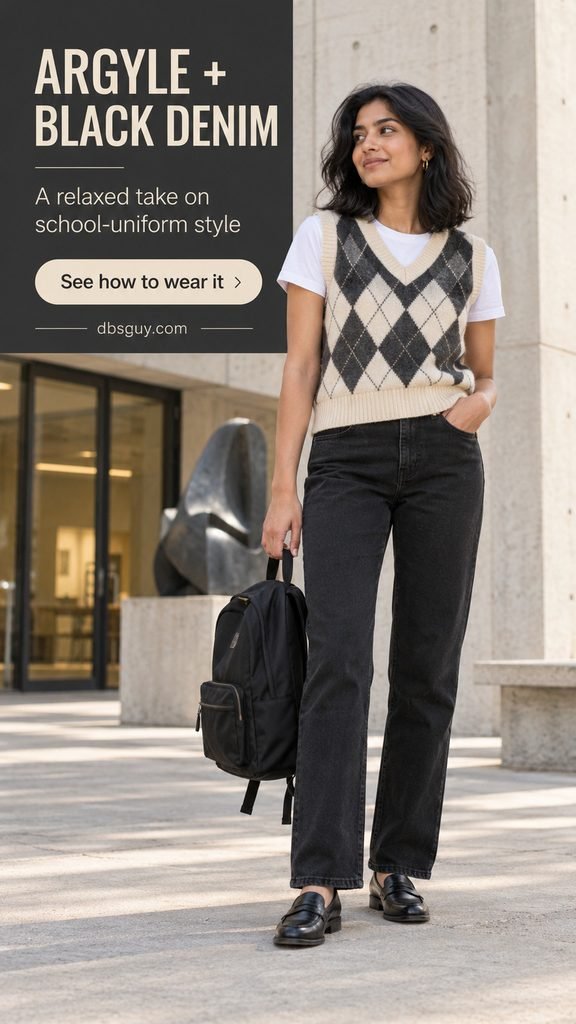
The pieces: A cream-and-charcoal argyle vest, white short-sleeve T-shirt, straight-leg black jeans, and black loafers.
If you like uniform-inspired knitwear but rarely wear button-downs, start here. The white tee leaves the diamond pattern easy to see, and the black jeans make the outfit useful for an ordinary lecture day. Choose denim with enough room to sit comfortably rather than buying a stiff pair just for the straight silhouette.
Keep the vest hem near the waistband if you want the proportions shown. A longer vest can work, too; try it on with the jeans before deciding whether to tuck the tee. Since the argyle already supplies a strong pattern, a plain backpack and simple shoes give your eye somewhere to rest.
7. The Cable-Knit Sweater and A-Line Skirt
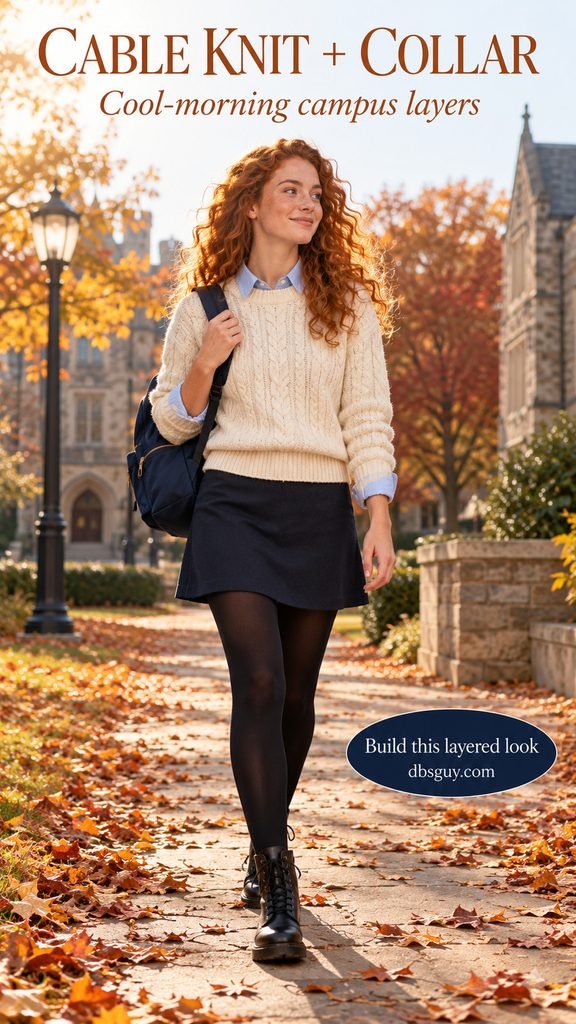
The pieces: A cream cable-knit crewneck, light blue shirt, navy A-line skirt, opaque black tights, and flat lace-up ankle boots.
This is a cool-morning outfit built around texture. Let the shirt collar and a little cuff show outside the sweater. The skirt in the image has a smooth A-line shape, which gives the chunky knit some visual space. You can use an above-knee or knee-length version according to your preferred coverage.
Wear a shirt that lies comfortably under the sweater, especially through the sleeves. If the combination feels crowded, replace the thick knit with a lighter cable style. Leave a bulky sweater untucked rather than forcing it into the skirt waistband. For genuinely cold weather, add suitable outerwear; the tights and knit are only part of the layering.
8. The Trouser-and-Tie Look
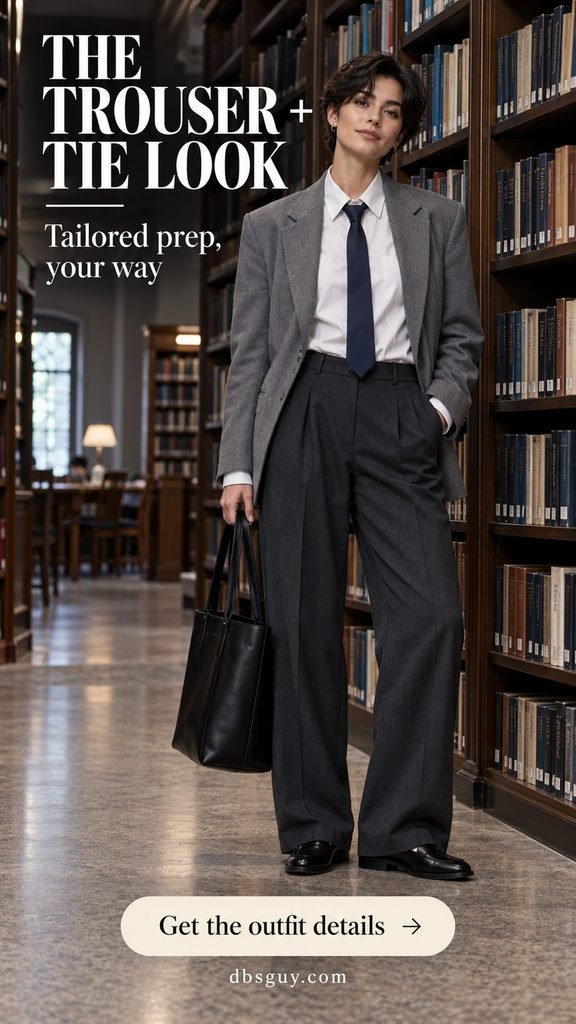
The pieces: A gray blazer, white button-down, slim navy tie, charcoal pleated trousers, and black loafers.
Choose this for a sharper, androgynous take on the theme. Keep the shirt tucked so the tie and trouser waist have a clear meeting point. As a starting point, adjust the tie tip to finish around the waistband, then check the result with the blazer open.
The jacket and trousers can be different grays, as shown. Look at them together in daylight: if one has a strong blue or brown cast, decide whether you like that difference before leaving. The tie is the focal point, so extra uniform accessories are optional. For a less formal class day, remove the tie and open the top shirt button while keeping the same trousers.
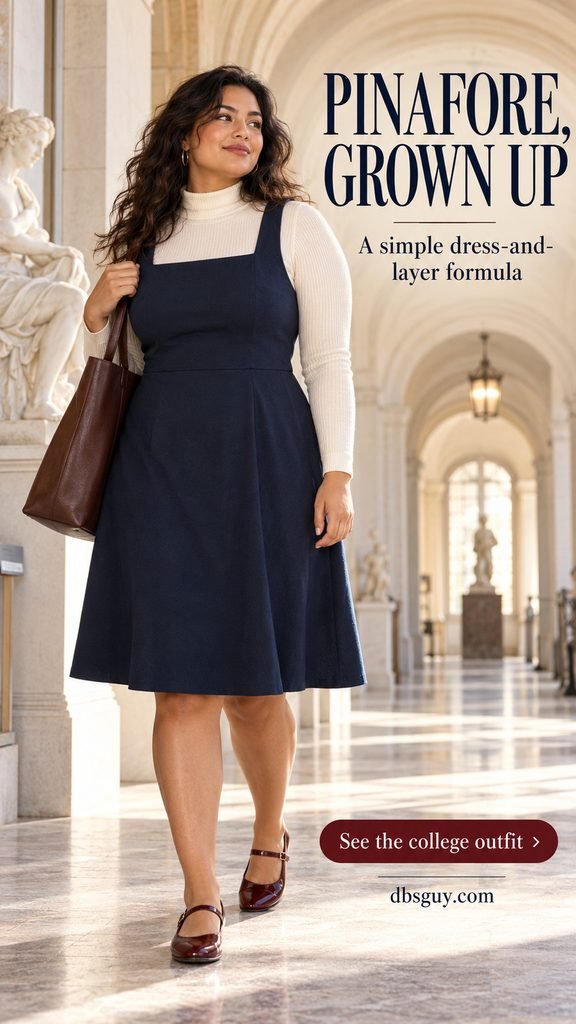
9. The Navy Pinafore and Ivory Turtleneck
The pieces: A navy square-neck pinafore dress, thin ivory turtleneck, oxblood Mary Janes, and a brown tote.
A sleeveless dress creates one continuous shape instead of separate top and skirt layers. Choose a knee-length A-line cut if you want the version pictured. The fine turtleneck gives the square neckline definition without adding another collar.
Try the dress over the turtleneck before judging the fit. The armholes need room for the added layer, and the straps should stay comfortable when you reach forward. If the knit gathers around the waist, use a thinner base layer or a dress with more ease there. Add opaque tights when you want coverage, and test the Mary Jane straps while walking so the shoes stay secure without digging in.
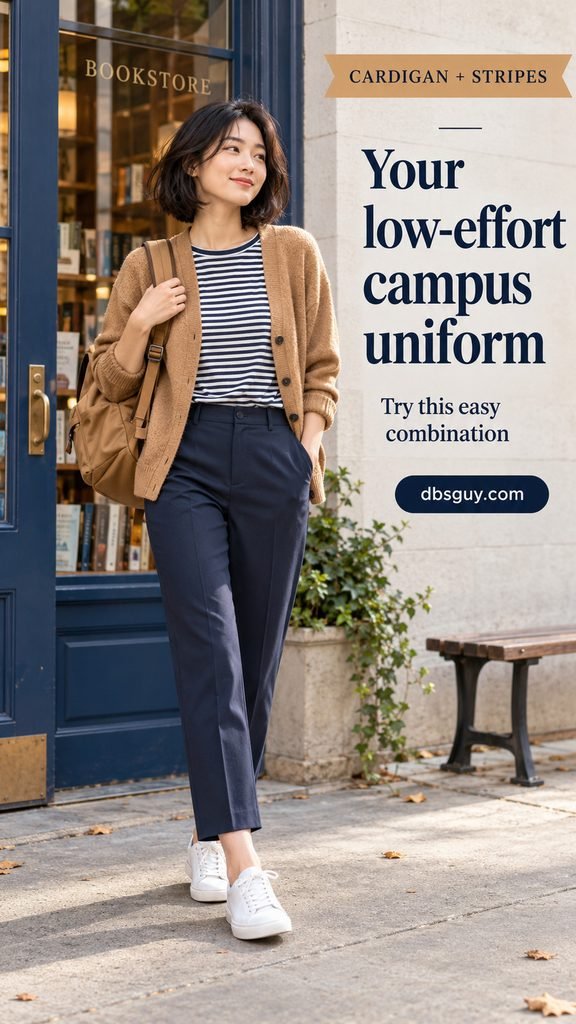
10. The Camel Cardigan and Striped Top
The pieces: An open camel cardigan, navy-and-white striped tee, navy ankle-length trousers, and white sneakers.
This is the quietest uniform reference in the group: a knit layer, a coordinated palette, and a repeatable trouser shape. Use it for an early lecture when you want a combination you can put together quickly. The stripes give the center of the outfit enough detail that jewelry can stay minimal.
Tuck the tee if the cardigan falls below the waistband and you want the same defined line shown in the image. If you prefer everything untucked, compare the two hems so the shirt does not bunch beneath the knit. A tan backpack repeats the warmth of the cardigan, but a navy one you already own works just as well.
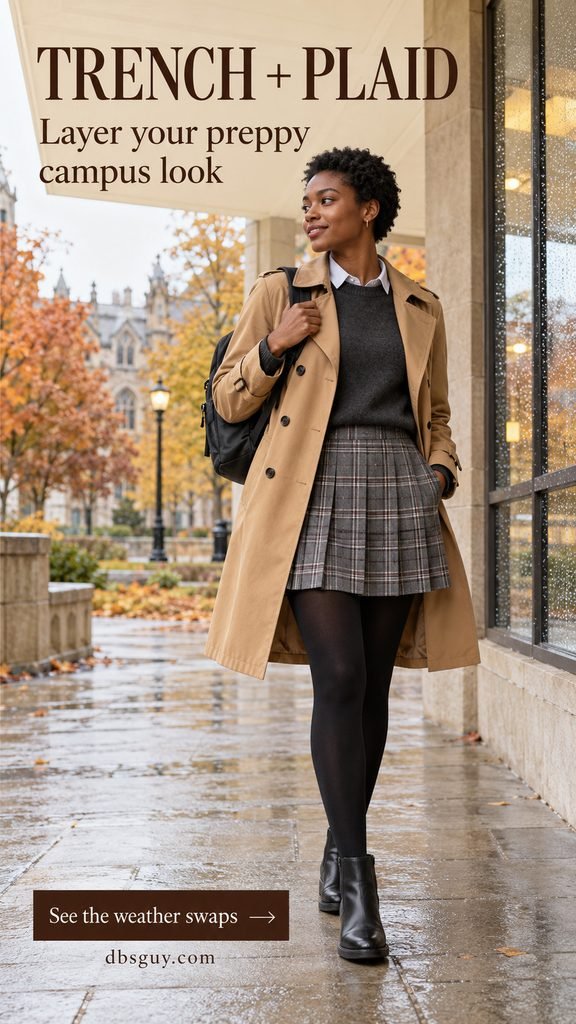
11. The Trench Coat and Plaid Skirt
The pieces: A camel trench, charcoal sweater over a white collared shirt, gray plaid skirt, black tights, and flat ankle boots.
Let the plaid be the patterned piece and keep the layers around it plain. Wear the trench open when conditions allow so the collar and skirt remain visible. This is a useful fall styling option for a day that starts outside and continues in a warm classroom, where you can remove the coat.
The image shows a sheltered walkway after rain; a trench shape alone does not tell you how a coat handles wet weather. Check the actual garment information and choose rain protection and footwear for your forecast. If wind makes the shorter skirt inconvenient, a longer plaid skirt or plaid trousers carries the same palette into a different silhouette.
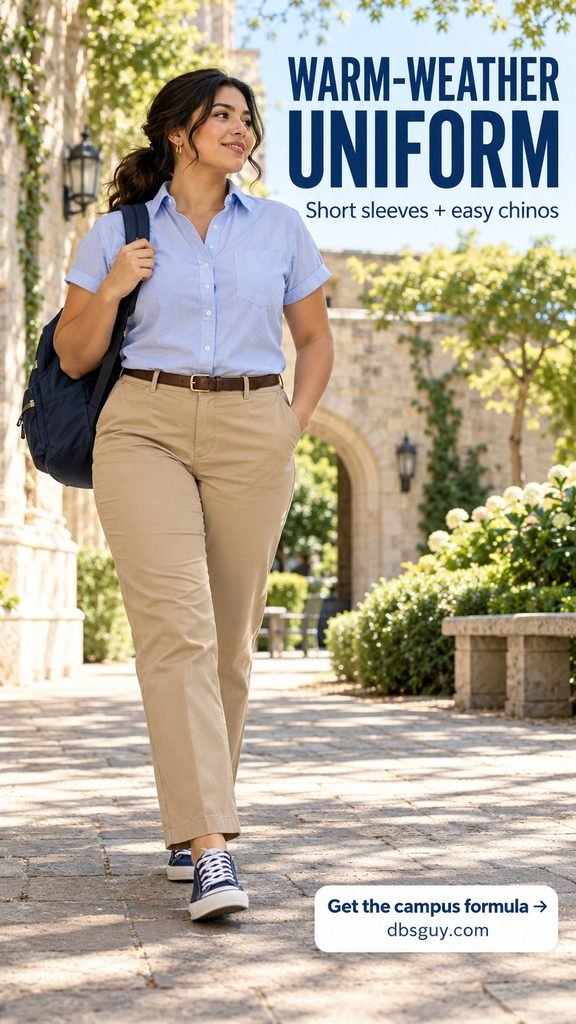
12. The Short-Sleeve Oxford and Chinos
The pieces: A light blue short-sleeve button-down, tan chinos, narrow brown belt, and navy canvas sneakers.
For a warm-weather version, remove the knit layer and let the shirt carry the uniform reference. Tuck it into straight-leg chinos for the clean waistband shown. Check the shirt while seated: if the buttons pull across the chest or the sleeves pinch when you reach, try a roomier cut.
Choose a fabric weight that feels comfortable in your weather and bring a light layer if your lecture rooms run cool. An untucked shirt works, too, especially with a shorter, straighter hem. Use your regular navy backpack to repeat the shoe color. This combination also gives you a simple starting point if you prefer full-length pants to skirts or shorts.
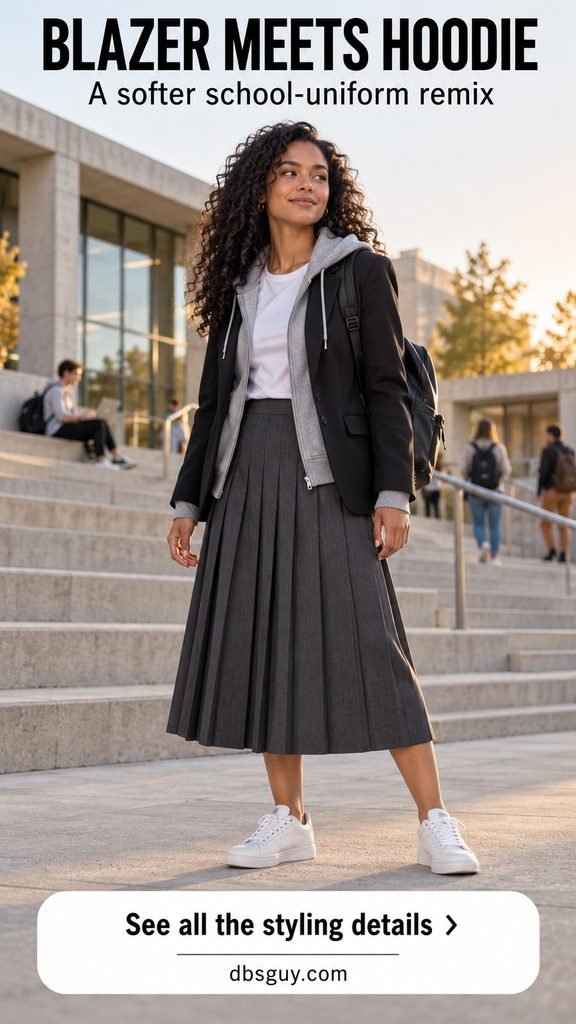
13. The Blazer, Hoodie, and Pleated Midi
The pieces: A black blazer, open gray zip hoodie, white tee, charcoal pleated midi skirt, and white sneakers.
The hoodie changes the feel of a blazer-and-pleats combination. Choose a relatively thin hoodie and try both layers together; the blazer needs room through the upper arms as well as the shoulders. Leave the hoodie unzipped so the white tee gives the outfit a clear center.
Let the hood sit outside the blazer collar instead of trapping it against your neck. If the layers restrict your arms, use a roomier blazer or save the hoodie for another day. The longer skirt keeps this version distinct from the shorter uniform looks above. Try the sneakers with the midi while walking and taking stairs, making sure the hem leaves enough clearance.
Build a Small Rotation From What You Own
Pick three looks that suit your actual week, then lay out their shared pieces. For example, the navy trousers from look 2 can also work with the striped top and cardigan from look 10. The white shirt from look 1 can go beneath the sweater in look 7. Reusing those pieces helps you discover whether you need another garment at all.
Try the outfits with the bag, shoes, and layers you will actually carry. Sit for a few minutes, reach forward, and take some stairs. Check shirt buttons, skirt coverage, trouser hems, and jacket shoulders. Choose the size and cut that let you move; no particular body shape needs to be assigned one of these silhouettes.
When shopping, look for a gap you can name, such as a shirt that fits beneath your vest or pants hemmed for your everyday sneakers. Check the care label before buying, especially if your dorm laundry routine has limited drying space. A thrifted cardigan or blazer is worth considering when its condition, fit, and care needs work for you.
Also read: Capsule vs Uniform: Two Opposite Solutions to the Same Problem if you want to choose between a mix-and-match wardrobe and a repeating outfit formula.
School Uniform Fashion, College Edition: FAQs
How can I make a uniform-inspired outfit feel more personal?
Choose the detail you like most, then build around it. With a plaid skirt, try a plain knit and your usual boots. With a shirt and tie, keep the bag and jewelry familiar. You can add a headband, socks, or another accessory, but the outfit does not need every uniform reference at once.
Can I get this look without a short skirt?
Yes. A pleated midi, knee-length pinafore, tailored chinos, wide-leg trousers, or straight-leg jeans all appear in these looks. Keep the collar, knit, plaid, or blazer that gives your chosen outfit its preppy detail and change the bottom to the coverage you prefer.
Do I need loafers?
No. The sneaker combinations in looks 2, 4, 5, 10, 12, and 13 show other options. Choose shoes that fit your feet and daily route, then check the trouser or skirt length with that pair. A loafer’s appearance alone does not establish its comfort.
What if my college or program has an actual uniform?
Use the current written requirements as your starting point. Check permitted colors, layers, shoes, and accessories before making changes. These styling concepts do not confirm compliance with a campus, lab, clinical placement, or employer’s rules.