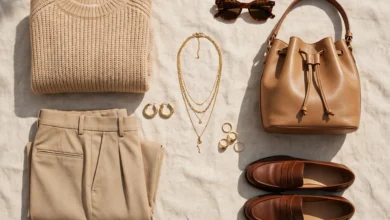
You can get two weeks of study abroad outfits from a small wardrobe if the clothes work together and you give laundry a place in the schedule. This plan uses 11 core garments, two pairs of shoes, and 11 outfit formulas, with three deliberate repeats to cover 14 days.
It is designed for a short, mostly casual study program in mild weather: classes, city walks, a presentation, and relaxed dinners. You will wash around days 6 and 12. For a semester, this can be your starting rotation; it does not cover every season or a formal internship wardrobe.

The images are AI-generated styling concepts. They illustrate the combinations below; they do not document a wear test, a packing test, or a particular destination.
The carry-on wardrobe behind all 11 looks
Start with your own closet. The palette here is black, ivory, indigo, and pale blue, with burgundy and olive for variety. You can change the colors while keeping the same jobs: everyday tops, comfortable bottoms, a dinner option, and layers that work together.
- Five tops: a white crewneck tee; an ivory-and-navy striped long-sleeve top; a pale blue button-down; a burgundy short-sleeve knit tee; and a black sleeveless shell top.
- Three bottoms: dark indigo straight-leg jeans, black relaxed trousers, and a matte olive A-line midi skirt.
- One dress: a simple black sleeveless midi dress with a neckline that works under both layers.
- Two layers: an oatmeal cardigan and a lightweight navy rain shell selected for the forecast.
- Two pairs of shoes, counted separately: white walking sneakers and black flat loafers. Both should already be comfortable on the routes you expect to walk.
That is 11 garments total, including the clothes you wear on the flight. Add eight pairs each of underwear and socks as a starting point for the wash schedule, the bras or other underlayers you use, and one lightweight sleep set. Adjust those quantities for your own needs. A small zippered crossbody, a compressible school bag, and a laundry bag complete the everyday setup; the school bag and crossbody must fit inside your suitcase for boarding if your fare allows only one cabin item.
Swimwear, workout clothes, shower shoes, thermal layers, and program-specific clothing are additional items when your itinerary requires them. Include toiletries, school supplies, chargers, and a laptop in the actual packing check. A short clothing list cannot guarantee that the full load fits your airline’s allowance.
Purdue’s study abroad packing guidance recommends coordinating clothes, planning to do laundry, and checking baggage rules for your airline and ticket. Before departure, also check the local forecast and your program’s clothing requirements.
Also Read: How to Shop Your Own Closet and Find the Outfits You Already Own
1. White tee, black trousers, and a cardigan for travel day

The formula: white tee + black relaxed trousers + oatmeal cardigan + white sneakers.
Wear trousers with enough room through the waist and seat to sit comfortably, then let the cardigan handle a chilly terminal or cabin. The straight trouser leg gives this outfit a different feel from a matching sweat set while staying easy to move in.
Try the whole combination while sitting with your bag at your feet. If the waistband presses, the cardigan sleeves bunch, or the trouser hems drag in your sneakers, fix that before the flight. Keep the cardigan accessible when you remove it rather than burying it under tightly packed clothes.
The shoes and cardigan are already part of the capsule. You are wearing two of its bulkier items instead of adding a separate airport outfit that needs suitcase space later.
Also Read: Airport Outfit Ideas: What To Wear When Traveling
2. Stripes and straight-leg jeans for orientation

The formula: ivory-and-navy striped long-sleeve top + dark indigo jeans + white sneakers.
This is the easy first-day choice when you do not yet know whether orientation means a classroom, a campus tour, or both. The stripes bring pattern into the wardrobe, so the rest of the outfit can stay simple.
Choose jeans you can sit, climb stairs, and walk in without adjusting them constantly. An ankle-length hem keeps the sneaker visible and avoids excess denim at the ground. If denim feels too heavy for your destination, replace this pair with lighter navy trousers and use them in every jeans-based look below.
3. A blue button-down and black trousers for seminar day

The formula: pale blue button-down + black trousers + black loafers.
A tucked shirt and flat loafers make the same travel-day trousers feel more considered for a small seminar or a meeting with your program coordinator. Pick a shirt with enough ease across the shoulders to reach, write, and carry your school bag.
Check the fabric in daylight with your usual underlayers. A shirt that needs a special camisole or constant pressing adds another packing requirement. If your loafers are comfortable only for short distances, wear the sneakers for the commute and change at your destination. Any formal placement or lab dress code takes priority over this casual academic formula.
4. Burgundy knit and an olive midi for a market morning

The formula: burgundy knit tee + olive A-line midi skirt + white sneakers.
Burgundy and olive give the capsule a second color story without adding another jacket or shoe. A short-sleeve knit with a fairly smooth finish works tucked into the skirt; a very thick sweater can create a bulky waistband and take more suitcase space.
Try the skirt on stairs and in a full walking stride. The A-line shape should give you movement without needing a high slit. Keep its hem clear of the ground, and carry your small bag closed while browsing. For a warm afternoon, this combination works without the cardigan; bring the layer when the evening forecast calls for it.
5. A navy shell and dark jeans for a rainy campus day

The formula: black sleeveless shell top + dark jeans + navy rain shell + white sneakers.
The black top fits under the jacket without adding thick sleeves. The navy shell, rather than a second fashion jacket, earns its space when your itinerary includes wet walks between buildings. Choose its weather protection from the garment’s specifications and your expected conditions; its appearance alone tells you nothing about waterproofing.
The image shows the outfit under shelter. Ordinary white sneakers may get wet, and jeans can be inconvenient to dry. For a consistently rainy trip, substitute weather-appropriate walking shoes and lighter, easier-drying trousers throughout the capsule. A short campus walk and an exposed all-day excursion need different levels of protection.
6. A black midi dress and cardigan for a group dinner

The formula: black sleeveless midi dress + oatmeal cardigan + black loafers.
The dress gives you an evening option without a separate occasion-only outfit. Keep the shape simple enough to wear with sneakers later: a comfortable neckline, a skirt you can walk in, and a fabric that follows a care routine you can manage away from home.
Wear the cardigan normally over your shoulders and arms so it provides an actual layer on the way back. This is a relaxed dinner look. If your program includes a reception with a stated dress code, confirm that code before deciding this outfit covers it.
Day 6 is also the first laundry window. While you wear the dress and cardigan, wash the used tops, underwear, socks, and any bottoms that need cleaning. Keep clean underlayers available for that evening.
7. A black shell top and olive skirt for a gallery visit
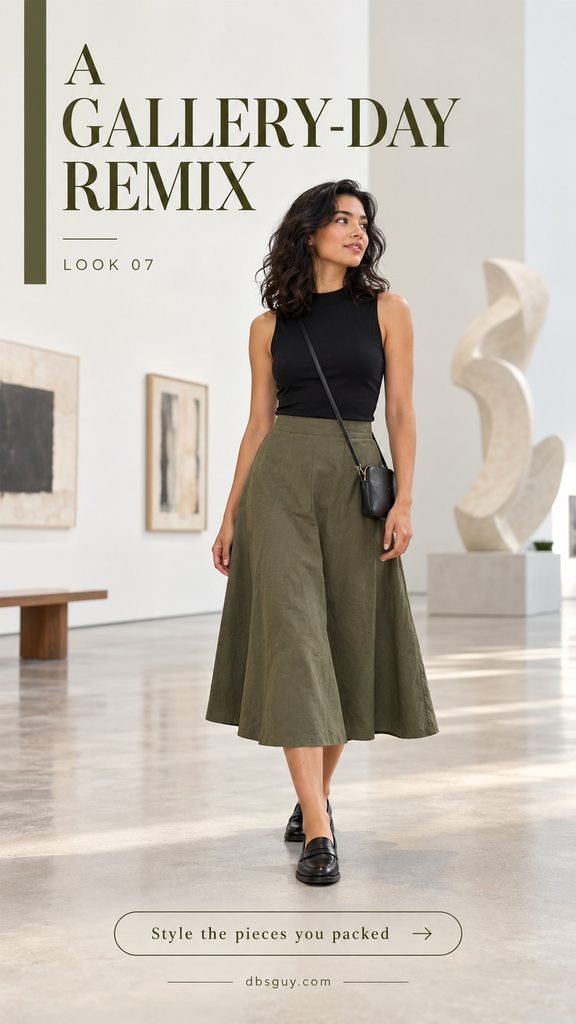
The formula: black sleeveless shell top + olive midi skirt + black loafers.
This outfit changes the skirt’s mood with a sharper color contrast and a quieter shoe. It is useful for a gallery, a casual lunch, or another mostly indoor plan when you want something a little dressier than jeans.
Choose a shell with straps and armholes that work with your usual underlayers. Tuck it smoothly, then raise your arms and sit down to check that it stays comfortable. If you prefer covered arms, add the cardigan; the core black-and-olive pairing stays the same. For a long walking day, use the sneakers you already packed.
8. Burgundy, black trousers, and a knit for a library day

The formula: burgundy knit tee + black trousers + oatmeal cardigan + white sneakers.
This is the cardigan’s most useful repeat: a removable layer over a complete outfit for a long stretch of reading, writing, or group work. The burgundy top makes it visibly different from travel day, while the trousers avoid a second pair of lounge pants.
Keep the cardigan light enough to fit under your shell if the walk home turns wet. Before packing, sit at a desk in both knit layers. If they feel too warm together or the neckline bunches, use a thinner version of the burgundy top in both this outfit and look 4.
9. Stripes, black trousers, and a shell for a train day trip
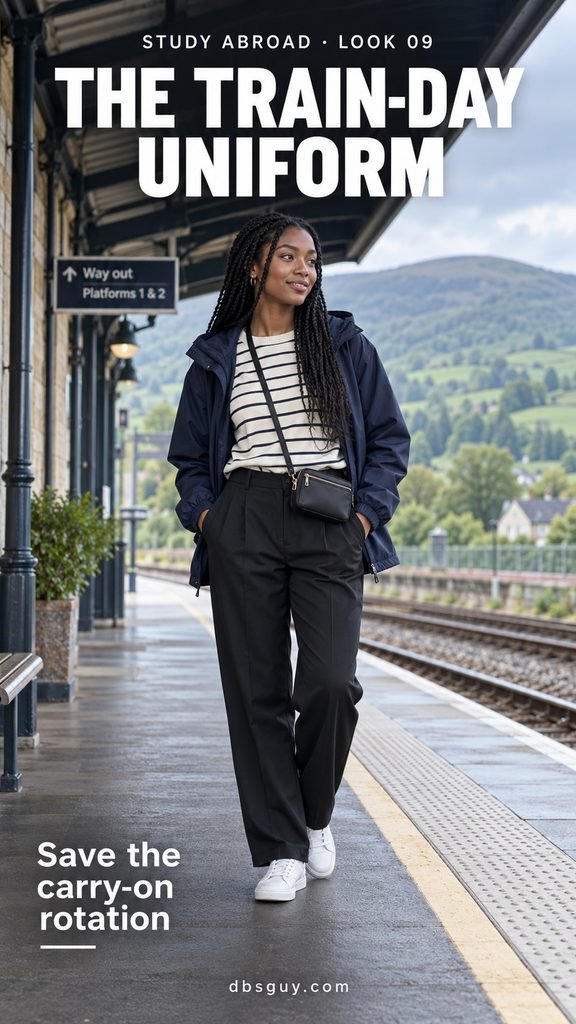
The formula: striped long-sleeve top + black trousers + navy rain shell + white sneakers.
Here the striped top moves out of its jeans pairing and into a travel outfit with more adjustable coverage. Wear the shell open in mild conditions, close it when needed, or put it in your day bag once you are indoors.
Use trousers that let you step onto a train and sit without a tight waistband. Keep their hems off the platform, and use a bag you can comfortably keep with you. This formula suits ordinary city sightseeing; a hike or a destination with sustained cold needs clothing and footwear chosen for that activity.
10. A tucked blue shirt and olive midi for a presentation
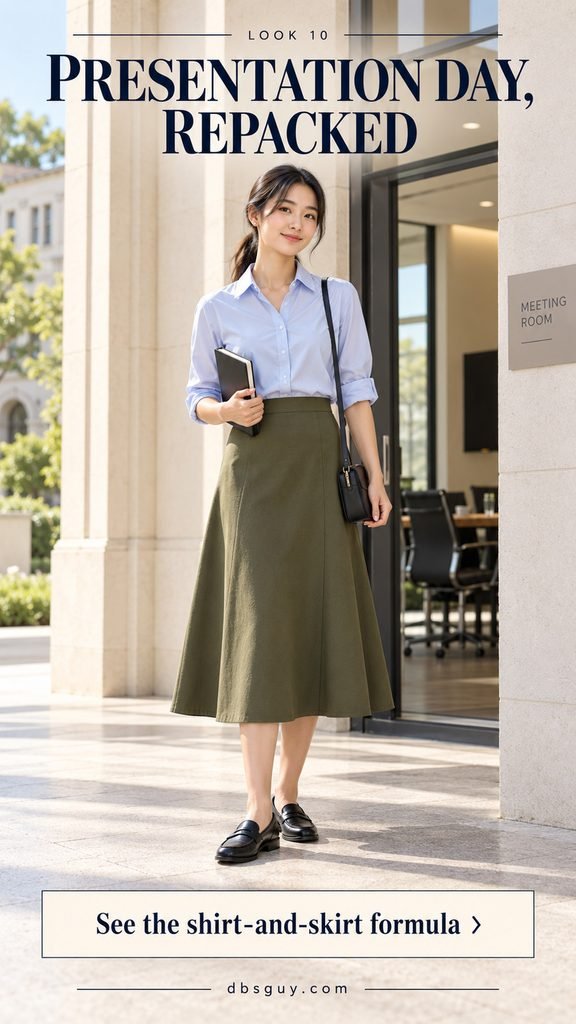
The formula: pale blue button-down + olive midi skirt + black loafers.
The blue shirt now does a second academic job, this time with the skirt instead of trousers. A neat tuck and sleeves rolled below the elbows make the pairing feel intentional without requiring a blazer.
Practice standing, reaching toward a screen, and sitting in the combination before departure. Check that the shirt does not pull open and that the skirt waistband stays comfortable. Wear it for an informal class presentation when your program’s expectations allow it; follow any stated professional dress requirements for an external visit.
11. The black dress with an open blue shirt for an afternoon off

The formula: black midi dress + pale blue button-down worn open + white sneakers.
The dinner dress becomes a daytime outfit when the loafers and cardigan give way to sneakers and an overshirt. Leave the blue shirt untucked and unbuttoned so you can clearly see the simple dress underneath. Roll the sleeves if that feels comfortable.
This works best when the dress is easy enough to move in and the shirt has room to function as a light layer. Try it with your crossbody before packing: the bag strap should sit comfortably rather than pulling the open shirt into a bunch. If the shirt from presentation day needs washing, use the clean cardigan until it is ready.
Your 14-day outfit rotation
Use the schedule below as an example and move the looks to fit your classes, forecast, and reservations. The last three days repeat existing formulas; there are 11 distinct looks in the plan.
- Day 1 — Fly out: look 1, white tee, black trousers, cardigan, and sneakers.
- Day 2 — Orientation: look 2, stripes, jeans, and sneakers.
- Day 3 — Seminar: look 3, blue shirt, black trousers, and loafers.
- Day 4 — Market or free afternoon: look 4, burgundy tee, olive skirt, and sneakers.
- Day 5 — Campus: look 5, black shell top, jeans, navy shell, and sneakers. Wear or carry the jacket according to the weather.
- Day 6 — Relaxed dinner and laundry: look 6, black dress, cardigan, and loafers. Wash the other used clothes as needed and allow time for drying.
- Day 7 — Gallery or lunch: look 7, clean black shell top, olive skirt, and loafers.
- Day 8 — Library: look 8, burgundy tee, black trousers, cardigan, and sneakers.
- Day 9 — Train trip: look 9, stripes, black trousers, navy shell, and sneakers.
- Day 10 — Presentation: look 10, blue shirt, olive skirt, and loafers.
- Day 11 — Afternoon off: look 11, black dress, open blue shirt, and sneakers, provided the shirt is still clean enough to rewear.
- Day 12 — Class and second laundry window: repeat look 1. Wash the used rotation, including the dress, while wearing the white tee, black trousers, and cardigan.
- Day 13 — Free day: repeat look 4 with the clean burgundy tee and olive skirt.
- Day 14 — Return travel: repeat look 2 with clean stripes and jeans; add or carry the cardigan as needed.
The schedule assumes some clean bottoms and outer layers can be reworn. Wash anything sweaty, stained, or otherwise ready for cleaning sooner. If you need a fresh shirt on day 11, wash the blue shirt after day 10 or use the cardigan with the dress instead.
Make the laundry plan work before you leave
Confirm how washing and drying will happen, including opening hours or laundry-service turnaround. A washer in the building is useful only if you can access it when you need it. The day 6 wash must leave you with clean, dry clothes for the next day; move it earlier if drying will take longer.
Follow care labels and separate loads where required. Test any item you intend to hand-wash at home, including how long it takes to dry in ordinary indoor conditions. Keep worn clothes apart from clean ones, and leave a clean set of underlayers out of each load. Bring an extra everyday top if a laundry delay would otherwise leave you without a suitable clean option.
If there is no reliable laundry access, increase your clean next-to-skin clothing and reassess the luggage plan. The outfit formulas can still help you coordinate, but this exact quantity is built around two wash windows.
Check the full suitcase, not just the outfit list
- Pack a complete trial load. Include shoes, underlayers, toiletries, devices, and school items. Close the bag normally, then measure and weigh it against the rules for every flight on your itinerary, including any smaller airline used for a side trip.
- Count each bag. An overhead suitcase and a personal item are separate pieces. A purse, laptop bag, or school backpack may use your second allowance. If you are boarding with one item only, leave enough space to stow the smaller bags inside it.
- Keep travel essentials reachable. Organize the documents and items you need during the journey so they are easy to retrieve. Keep an essentials pouch with you if staff require the suitcase to go into the hold, following their instructions for restricted items.
- Leave room to repack. Clothes may not return to their original folds. If the bag only closes with a struggle at home, remove something or choose less bulky versions before departure.
For a hotter destination, substitute lighter trousers for the jeans and a lighter short-sleeve top for the stripes. For cold weather, build around suitable insulation and footwear before applying these pairings. For sites with specific coverage rules, choose clothes that meet those actual rules. A sleeveless dress or midi hem is not a universal dress-code solution.
Study abroad outfit questions
Do I need a different outfit every day?
You need suitable clean clothing for each day. This plan gives you 11 different combinations and repeats three of them after laundry. You can repeat a favorite more often if it is clean and fits the day’s activity.
What if I never wear skirts or dresses?
Replace the olive skirt with olive trousers and the black dress with a simple matching black top-and-trouser set. Use that set together for dinner, then wear its top or bottom separately for other looks. The replacement adds a garment, so check the full packing load again.
Are two pairs of shoes enough?
For the casual city itinerary here, the sneaker-and-loafer pairing covers the planned looks. Your activities decide the final count. Hiking, communal showers, snow, or a formal event may require additional or different footwear. Replace an unsuitable pair before adding shoes purely for variety.
Can this wardrobe last a full semester?
It can provide a repeatable starting rotation with regular laundry. A semester that spans different weather, a placement, or specialist coursework needs additional planning. Ask your program what students actually need before filling the remaining suitcase space.
Before you zip the bag, save photos of the combinations you tried on. Check them against your itinerary and laundry windows, then remove any extra item that has no clear use during those two weeks.
Also Read: First Week of College: The Freshman Survival Guide (Orientation to First Friday)