A sleek fall table needs a clear shape, a little warmth, and enough room to pass the potatoes. Start with the plates you own, choose one seasonal feature, and give that feature space. A bowl of persimmons can do more for the room than a runner crowded with tiny decorations.
These 21 simple fall tablescapes approach modern style through different layouts, materials, and ways of serving dinner. Some suit a small weeknight table; others give Thanksgiving a stronger focal point. Pick the idea that fits how you eat, then borrow its main move rather than every accessory.
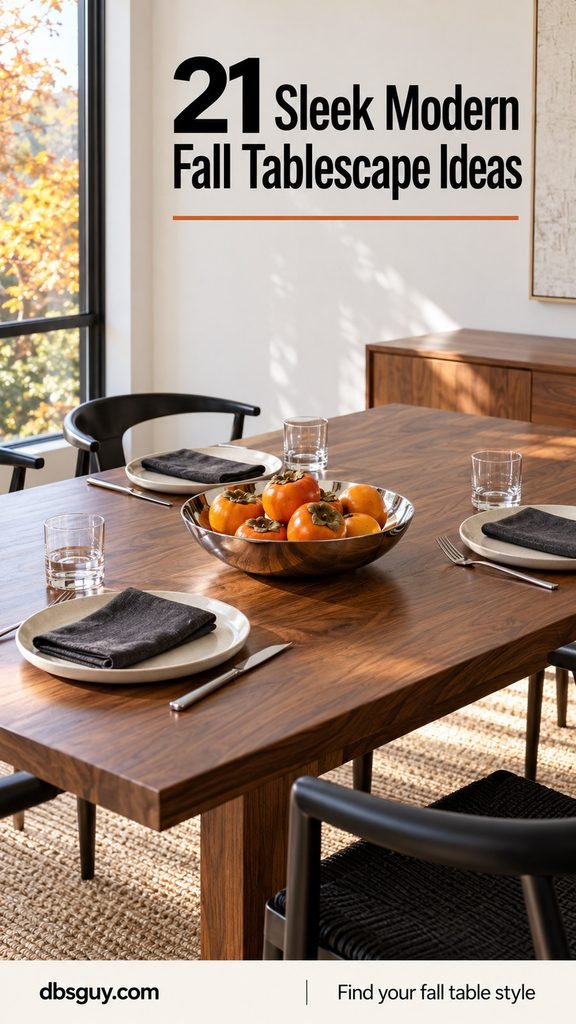
The images are AI-generated styling concepts. They illustrate the ideas below and do not document completed or tested table setups.
Choose the Setup That Fits Your Meal
The best fall tablescape ideas leave room for the way you serve. Put out the plates, glasses, and largest serving pieces before adding decoration, then choose one of these starting points:
- A small table: use the compact round arrangement in idea 3 or the two-person setup in idea 13.
- Food served family-style: choose the removable tray in idea 8, leaf place cards in idea 9, or sideboard display in idea 16.
- A strong modern detail: try polished steel in idea 1, a paper runner in idea 4, or graphic placemats in idea 12.
- A relaxed evening: use the flameless lighting in idea 11, keeping the surrounding table simple.
The quantities shown describe the concepts, not a required shopping list. Scale each arrangement to your table and use fewer pieces when dinner needs the space.
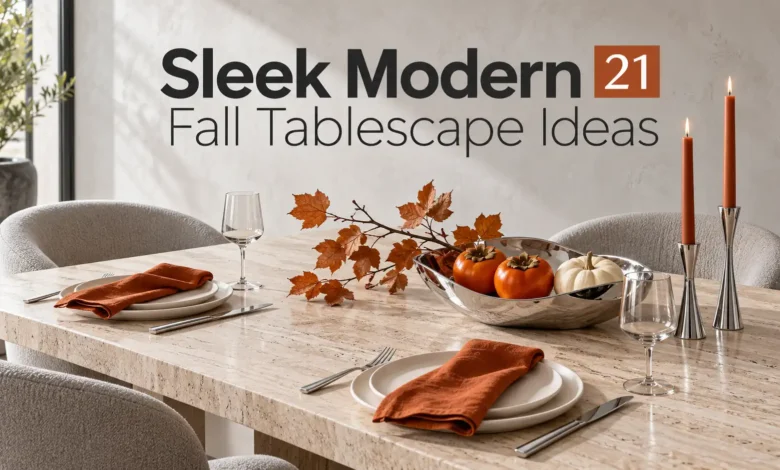
1. Pair Polished Steel with a Bowl of Persimmons
Use one shallow stainless-steel bowl as the centerpiece on a bare walnut or dark wood table. Fill it with whole orange persimmons, keeping the fruit below the rim wherever possible. The reflective metal gives the arrangement a crisp edge; the fruit and wood supply the warmth.
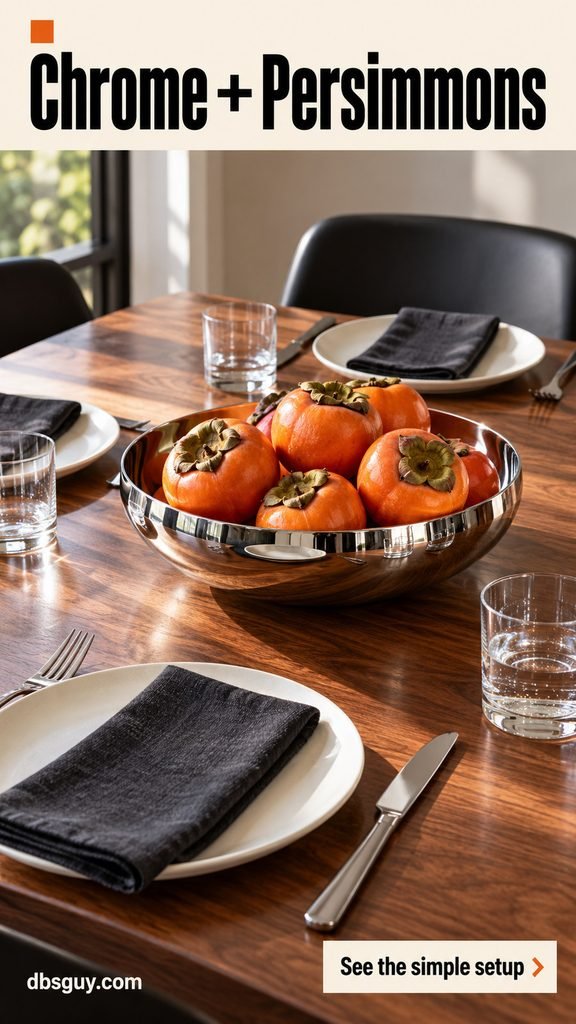
Ivory plates, charcoal napkins, and your everyday stainless flatware are enough around it. Skip metallic chargers so the bowl remains the brightest object. Choose its size after setting down your largest serving dish: if both cannot fit comfortably, serve from a nearby counter and let the fruit stay put. A ceramic bowl works too, though it creates a softer contrast.
2. Move the Fall Branches to One End
When a long centerpiece would compete with dinner, anchor the arrangement at an unused end of a rectangular table. A squat, heavy vase holding a few russet faux branches makes an asymmetrical silhouette without needing decorations down the entire center.
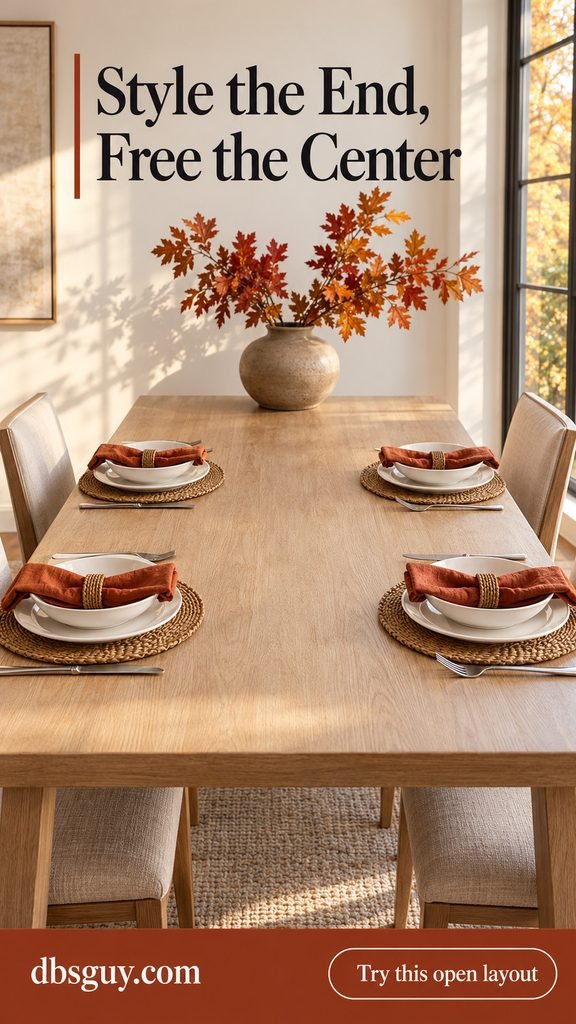
Keep the vase beyond the last active place setting, with the branches leaning away from glasses and walking space. Set the table first and check the arrangement from a seated position. If someone will sit at that end, move the vase to a sideboard instead. A stone-colored vase, white dishes, and rust napkins connect the branch to the table without making every seat match it.
3. Give a Round Table One Compact Center
A round table looks settled when the decoration follows its shape. Put a small, flat-bottomed green kabocha squash on a shallow circular stoneware dish, then arrange four place settings around it. Leave the rest of the tabletop visible instead of squeezing a runner between the seats.
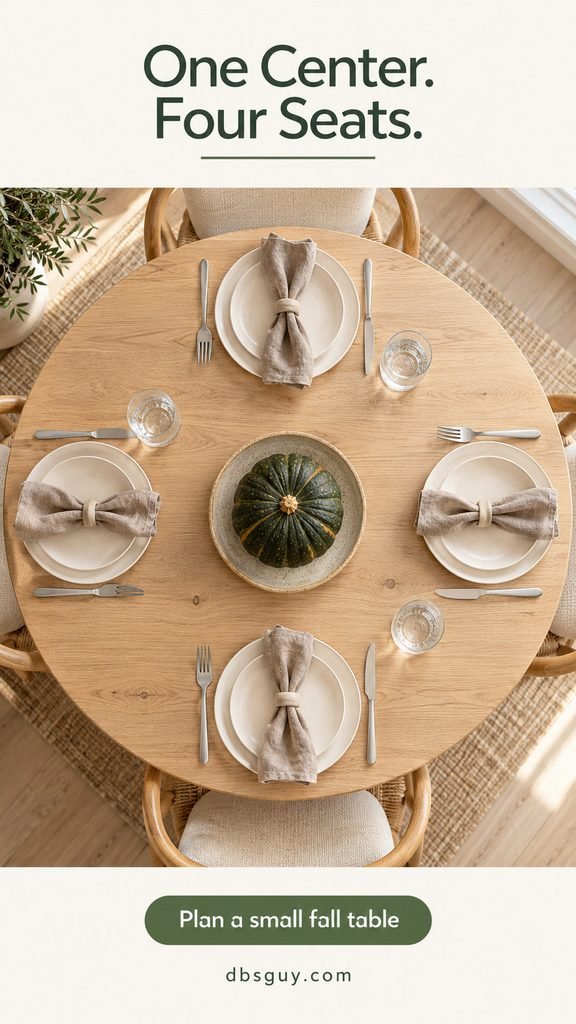
Cream plates and mushroom-colored napkins keep the squash easy to see. Test the dish with the actual glasses and serving bowls you need; a centerpiece that looks small on its own can still crowd a compact table. For a family-style meal, choose a dish you can lift away in one motion before the food comes out.
4. Make a Creased Kraft-Paper Runner
For a graphic fall table, cut a strip of plain kraft paper narrower than the space left between opposing place settings. Fold it back and forth across its width into a shallow accordion, then open it enough that the creases stay visible without creating a tall ridge. The warm brown paper becomes the seasonal color.
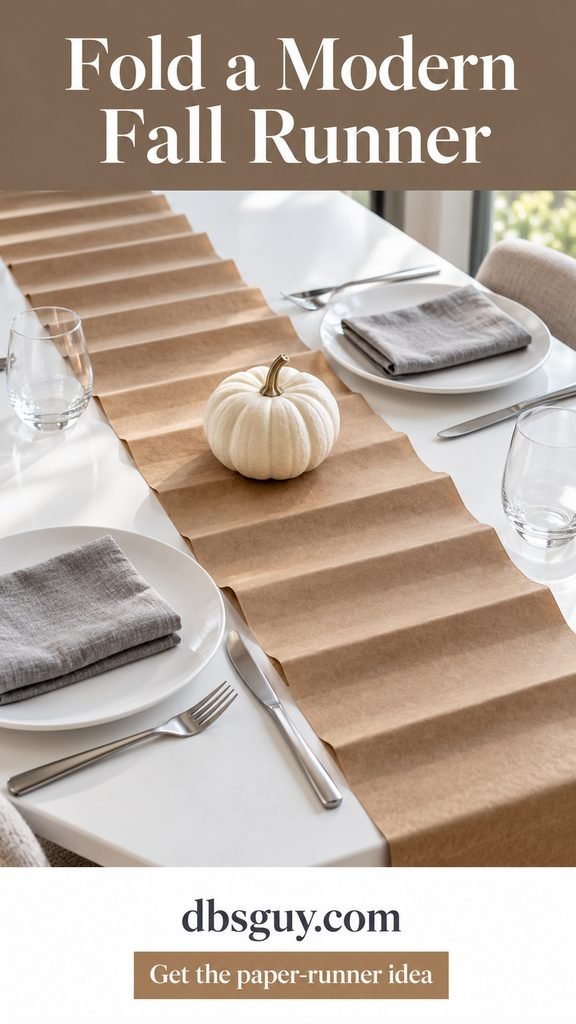
Keep plates and glasses on the flat tabletop, not on the folded paper. Add one little white pumpkin and use flat gray napkins to echo the runner’s clean lines. This is a styling layer rather than protection for hot dishes or spills; keep serving pieces on suitable trivets. If the folds keep springing up, flatten them further instead of weighing them down with extra decor.
5. Run Two Linens Across the Table
Turn runners sideways so each one links a pair of opposing seats. On a four-person rectangular table, two flat terracotta runners create a neat rhythm across the wood instead of one long band down its middle. White dishes look especially clear against the fabric.
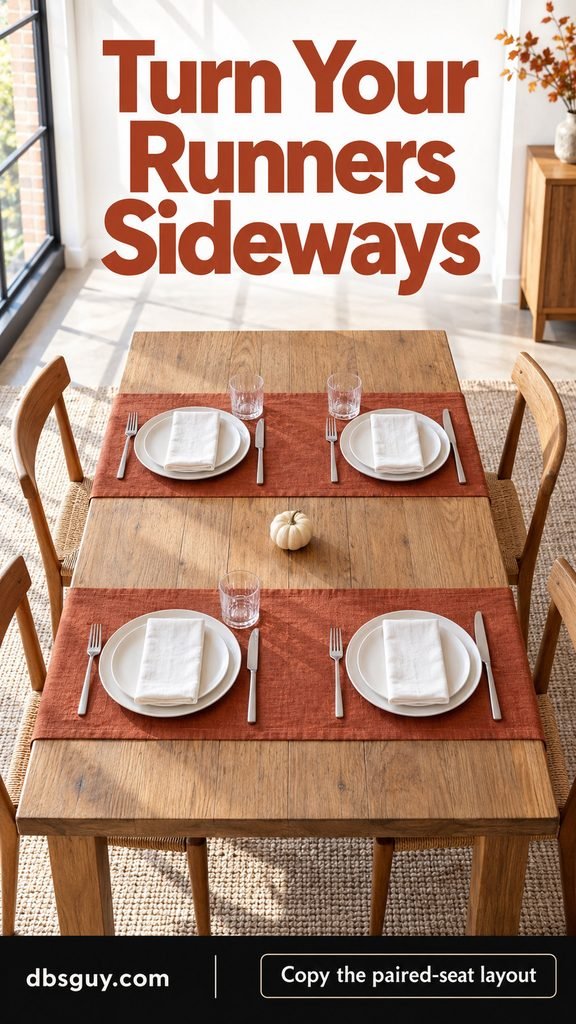
Measure with your place settings in position before choosing the runners. Each band should sit securely beneath the settings it connects, with enough separation that the table does not look fully covered. Put a small cream pumpkin in the exposed gap between the bands. If you are seating people at both ends, check that the fabric does not bunch into their laps; a full cloth may be simpler for that arrangement.
Also Read: 23 Olive Green Simple Fall Tablescape Ideas
6. Repeat Single Stems in Matching Bud Vases
Instead of buying a large arrangement, separate a few rust-colored chrysanthemum stems among small matching glass bud vases. Repeating the same vessel makes the loose flowers feel orderly. Leave visible gaps between vases so the display reads as a sequence rather than a garland.
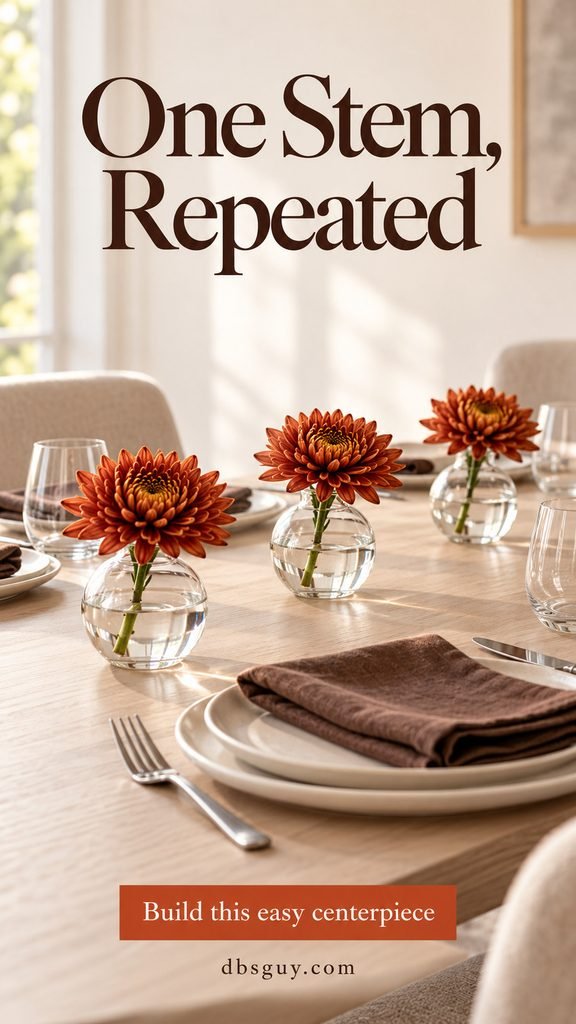
Trim each stem for its own vase and remove foliage that would sit in the water. Keep the flower heads low enough that seated guests can see one another. On a short table, use fewer vases rather than placing them closer together. Pale dishes and chocolate napkins give the flowers a quiet background, and individual vases are easy to shift when a serving bowl arrives.
7. Keep Flowers Low in a Rectangular Trough
A narrow, watertight rectangular vessel gives fall flowers an architectural outline. Group short-cut rust chrysanthemums and cream carnations close to the rim, following the container’s long shape. Leave a little unevenness in the blooms so it still feels like flowers rather than a solid block.
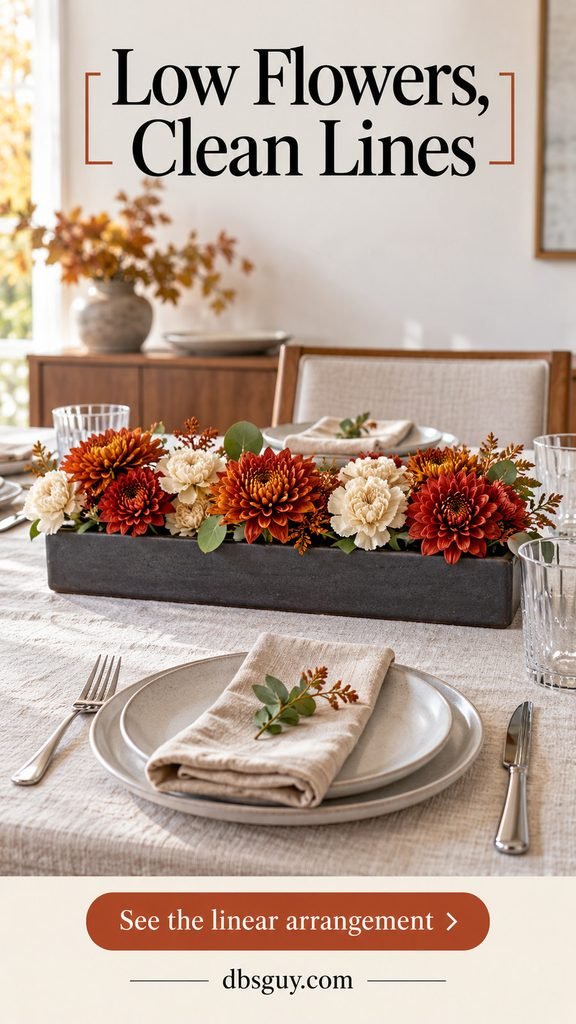
Choose the trough after checking the open center of your table; its width matters as much as its length. Use a vessel designed to hold water, or place a watertight liner inside a decorative outer container. With flowers this low, you can keep the place settings simple: plain stoneware, folded linen, and one drinking glass per person if that is all the meal needs.
8. Put the Entire Centerpiece on a Lift-Away Tray
For Thanksgiving served at the table, give the decoration an exit plan. Arrange two small ivory pumpkins and a short battery-operated pillar candle on a simple black tray. Keep every part inside the tray’s edge so nothing gets left behind when you lift it.
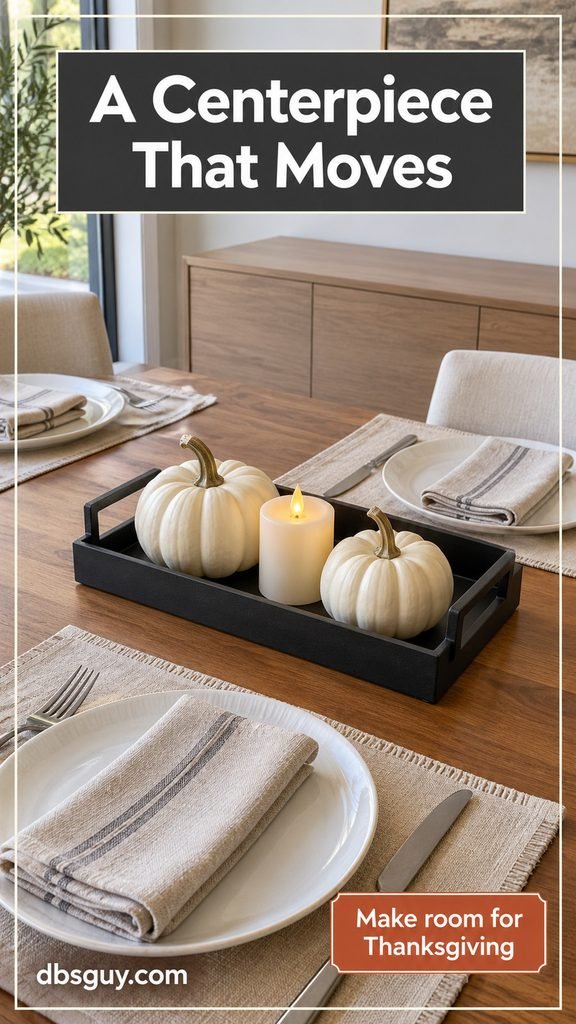
Use a tray that you can comfortably carry while it is full. Before guests sit down, decide where it will go when the platters arrive; an empty sideboard spot is better than searching for space with dinner in hand. The tray’s dark outline provides the modern element, so you can keep familiar white plates and oatmeal napkins. Use a flameless candle for this close grouping.
9. Let Leaf Place Cards Replace the Centerpiece
If the center belongs to serving dishes, move the fall detail to each seat. Cut a simple leaf silhouette from rust cardstock, write a guest’s name on it, and rest it on a plainly folded ivory napkin. A black dinner plate gives the paper a strong outline.
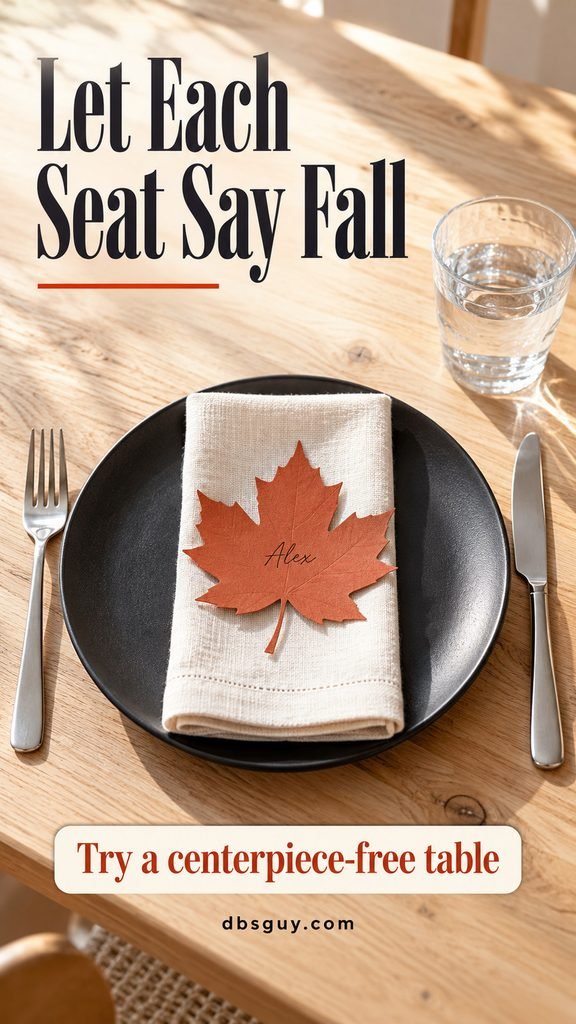
Use one leaf per place setting, without loose acorns, confetti, or extra sprigs. Guests can move the card above their plate as they unfold the napkin. Keep the center empty until dinner, then let the serving bowls supply the shape and color. This is also a useful approach when a wide centerpiece would force people to reach around flowers or candles.
10. Build a Tonal Clay Table with Different Textures
A modern table does not need sharp color contrast. Combine cinnamon linen napkins, smooth pale-peach plates, and a rough terracotta bowl holding one small orange pumpkin. The close shades feel connected, while the different surfaces keep the setting from looking flat.
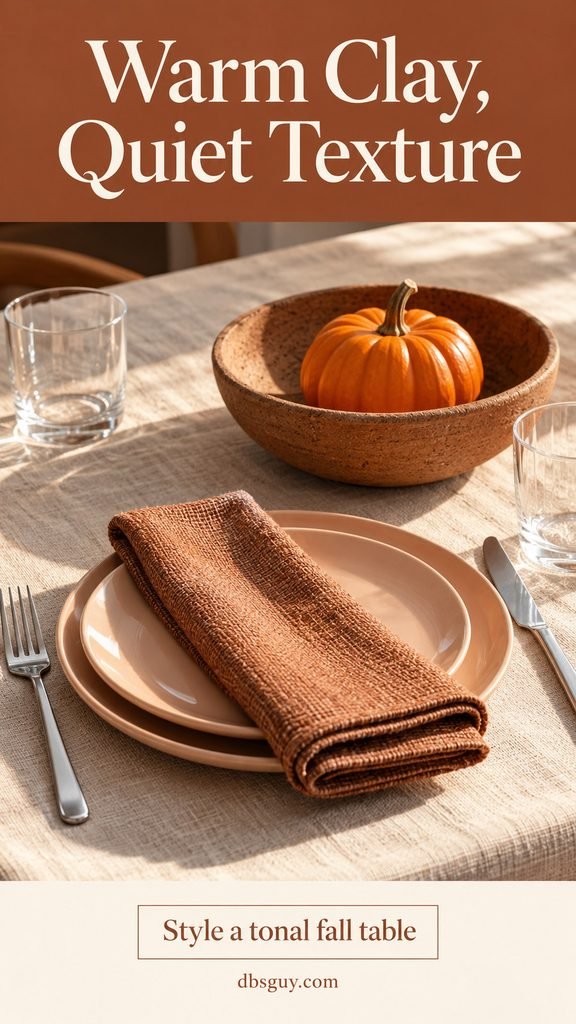
Use the pieces you already own to choose the dominant shade. If your table and dishes are both dark brown, add a light cloth beneath them so their edges remain visible. Keep the bowl low and omit extra pumpkins at each seat. The idea is a deliberate study in texture, with one seasonal shape, rather than a collection of matching orange accessories.
11. Use Smoked Glass for a Soft Evening Glow
Let lighting be the main decoration for an evening meal. Group three short smoked-glass cylinders on a bare dark table and place a battery-operated candle inside each. Add a small cream pumpkin beside the group to make the fall reference clear without filling the table with greenery.
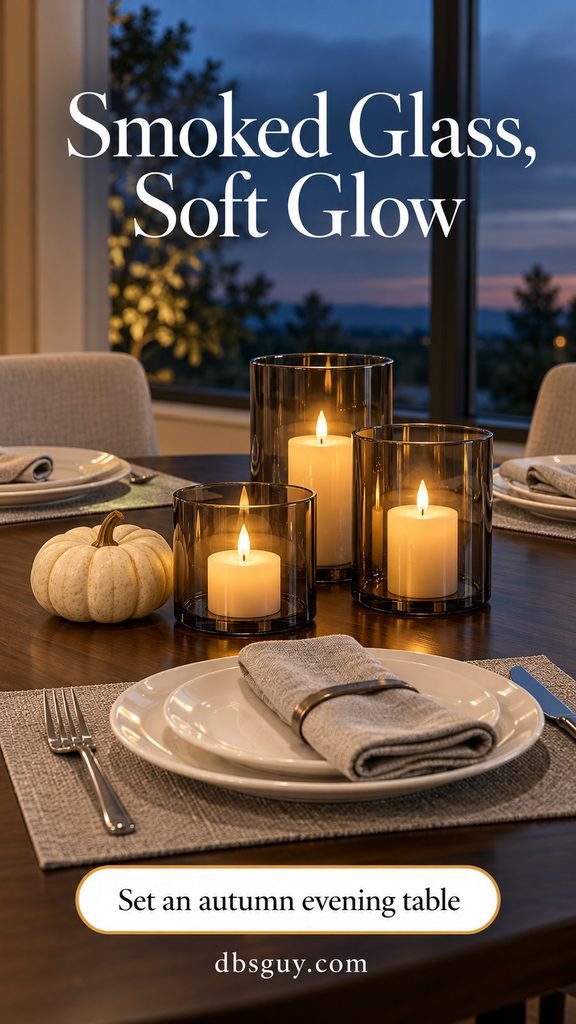
Check the glass with the lights switched on before setting the table. Very dark glass can hide a weak LED, so use a lighter smoke tint if the effect disappears. White plates and pale napkins keep the place settings easy to read. Keep the cylinders short and give the group a compact footprint; the glow should support conversation, not create a wall between guests.
Also Read: 17 Burgundy & Plum Simple Fall Tablescape Ideas
12. Confine the Pattern to Terrazzo-Style Placemats
For a playful modern table, use easy-wipe placemats with a terrazzo-style print in cream, charcoal, and ocher. Plain cream plates leave enough of the pattern visible to do the work. One small orange pumpkin in the center picks up the warm flecks without adding another print.
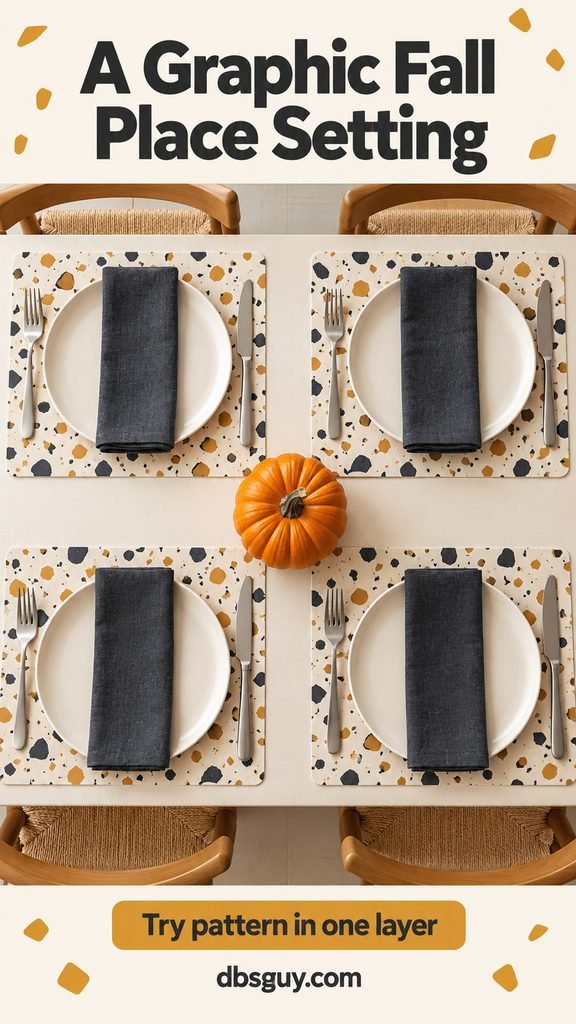
Choose mats large enough that their edges still show beyond your dinner plates, then check how they fit beside one another. Skip patterned napkins and decorative chargers; both would break up the graphic outline. If your tabletop already has a busy stone grain, try a solid cloth underneath or choose a quieter placemat instead. Follow the mat maker’s care and heat-use instructions.
13. Scale the Harvest Look to a Bistro Table for Two
On a small bistro table, two full place settings are already the main shapes. Tuck a tiny oval bowl with two whole pears between them, slightly toward the back where neither diner needs to reach. Use soft blue napkins against cream plates to give the golden fruit a little contrast.
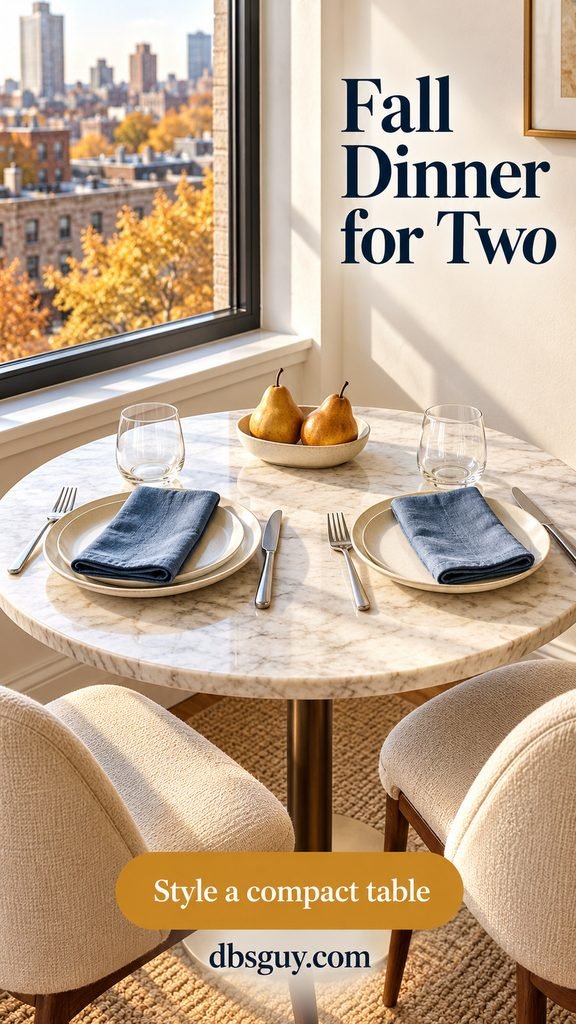
Leave out chargers, extra glasses, and any utensils the meal will not use. Put bread and other shared dishes on a nearby counter if the tabletop becomes cramped. If the bowl interferes with either person’s glass, move it away for dinner. This approach suits a quiet fall supper: the seasonal detail is small enough to live with, not something that needs its own table.
14. Fold the Napkin into a Clean Cutlery Pocket
Make the napkin the design feature when you want a more tailored place setting. Fold a rust cloth napkin into a flat rectangle, turn up the lower edge to form a pocket, and tuck in the fork and knife for an informal meal. Place the packet on a plain white plate.
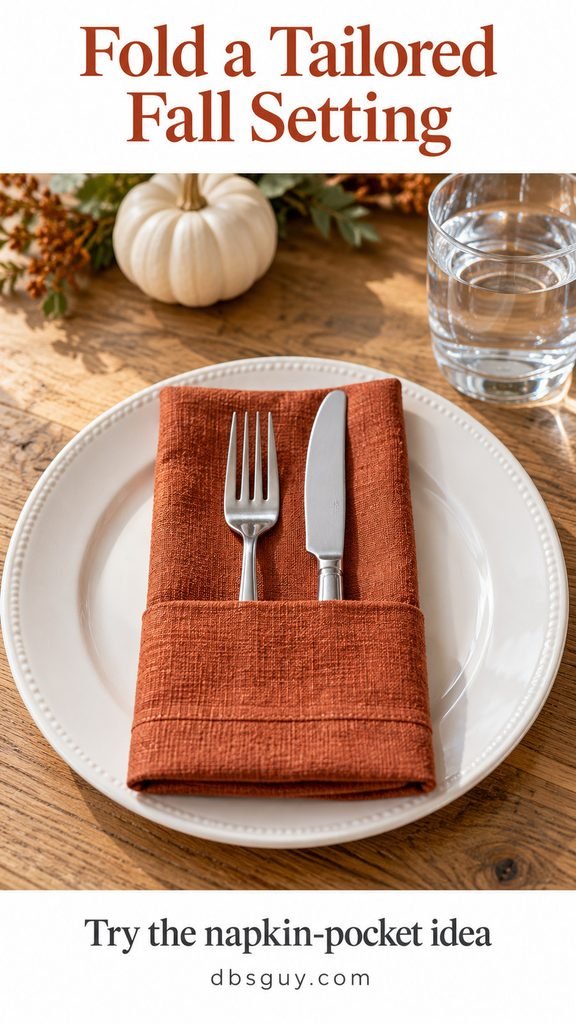
Try the fold with one napkin first; very thick fabric can make a bulky pocket. Keep the cutlery handles visible and easy to lift out. A single little white pumpkin on the table is enough around these repeated shapes. For a more traditional seated dinner, set the fork and knife beside the plate and keep the same pocket fold for a printed menu instead.
15. Repeat Two Different Plate Sets in an Orderly Pattern
Mismatched dishes can still look intentional. Alternate cream and charcoal dinner plates around a four-person table, then give every seat the same oatmeal napkin and clear glass. Repeating the two colors in a clear order turns the mismatch into a pattern.
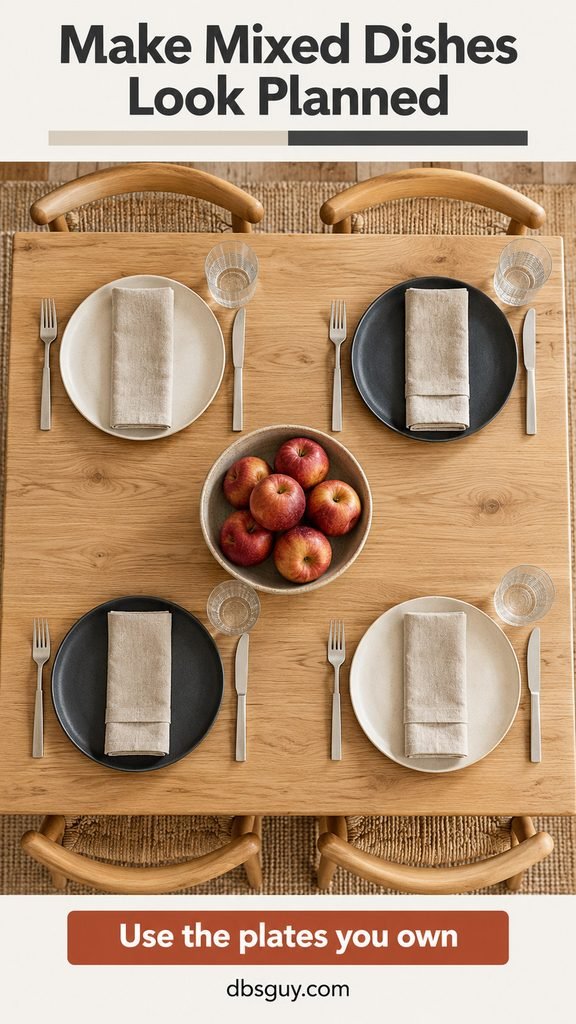
Keep the dishes close in size so one guest does not receive a dramatically smaller setting. For the fall element, put a few whole russet apples in one low bowl rather than adding a different decoration beside every plate. Lay everything out before deciding whether you need placemats; often the repeated napkins are enough to connect the sets. This is a useful way to host with everyday dishes and a second set you already have.
16. Give the Sideboard the Seasonal Display
If you need the whole dining table for dinner, move the big fall gesture off it. A low sideboard behind or beside the table can hold a broad bowl of pumpkins and one vase of bronze faux leaves. The dining table stays open, with ivory dishes and warm brown napkins tying it to the display.
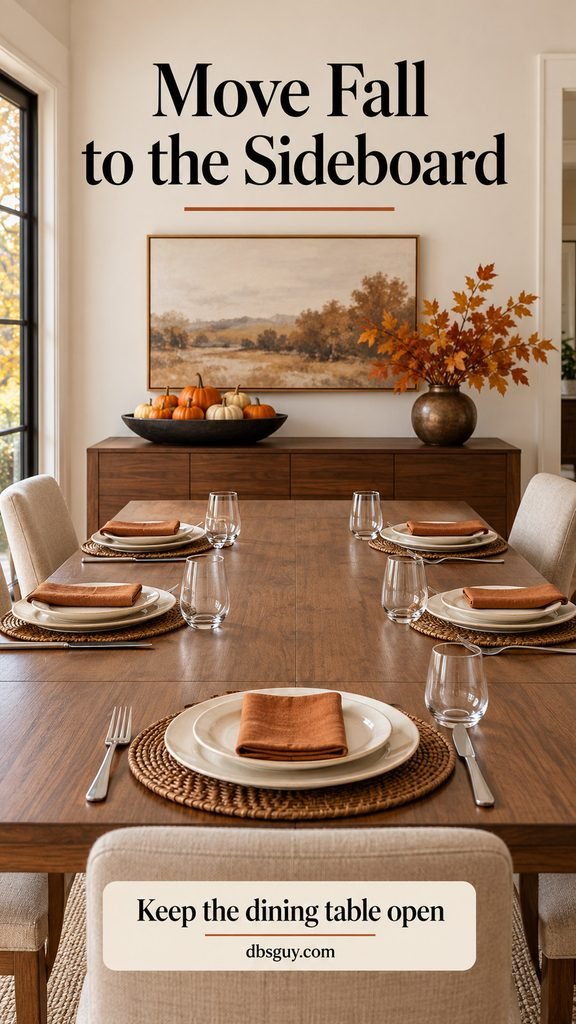
Choose a sideboard area that is not also needed for hot platters or drinks. Keep branches clear of the walkway, and avoid hanging anything directly above food or guests. From the doorway, the table and display should read together. This solves a hosting problem that adding a smaller centerpiece does not: it gives you the entire center back for a generous shared meal.
17. Use Bare Stone and Low Produce on a Sheltered Patio
An outdoor fall table can feel modern without loose linens. Let a smooth stone-look tabletop show, add simple gray dishes, and place a few small gourds in a heavy, shallow bowl. The weight and low profile suit a sheltered patio better than tall branches or a fabric runner that keeps lifting.
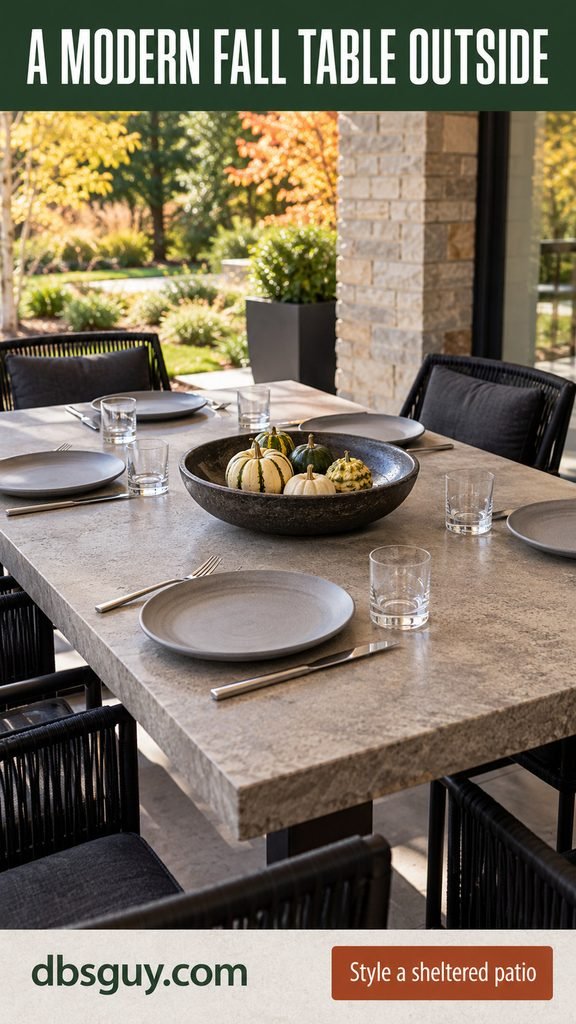
Check the weather before committing to an outdoor meal, and bring tableware out close to serving time. Keep the bowl inside the table edge and give shared dishes their own space. If you want evening light, use battery-operated lights rated for the setting. Avoid scattering leaves across the surface: they are harder to control outdoors and make clearing the table more work.
18. Cut Oversized Paper Leaves for Placemats
For a modern graphic take on autumn, cut broad leaf shapes from sturdy ocher paper and use them beneath plain white plates. Make the leaf large enough that its outer shape remains visible around the dish. A simple rounded oak-leaf outline is easier to keep neat than dozens of fine points.
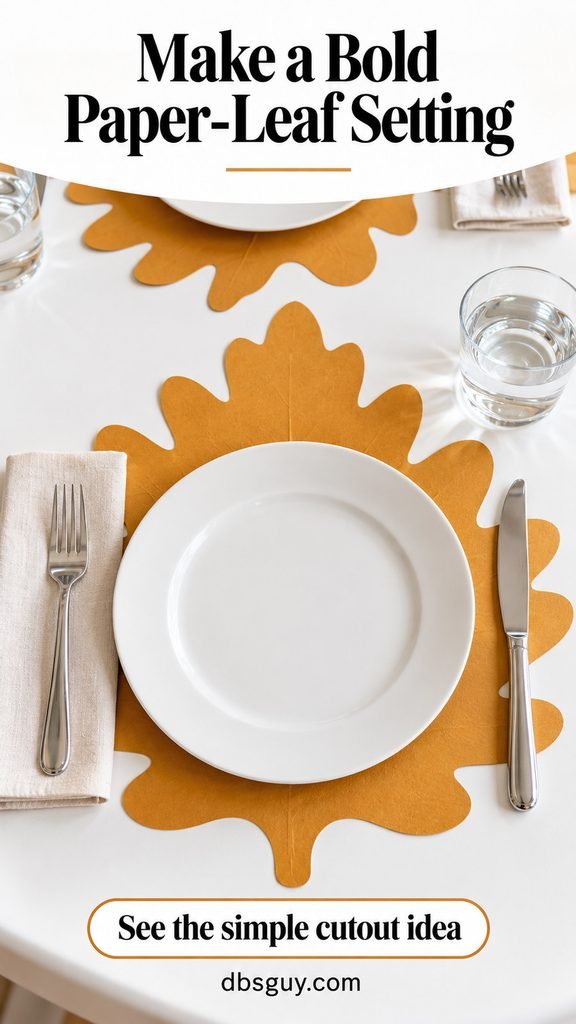
Set one sample place before cutting the whole batch. Check that the paper does not overlap the next setting or curl beneath the glass. Treat these as disposable decorative layers, not heat-resistant mats; keep hot serving dishes on proper trivets. Plain napkins and silverware let the silhouettes stand out, and the repeated leaves supply enough seasonal detail without a centerpiece.
Also Read: 5 Gorgeous Thanksgiving Tablescape Looks That Look Expensive (But Aren’t)
19. Arrange Mini Pumpkins in a Compact Square
On a square table, four similar mini pumpkins can become a small geometric centerpiece. Arrange them in a two-by-two group, keeping a little bare surface visible between them. Their repeated round shapes look more deliberate than a loose scatter.
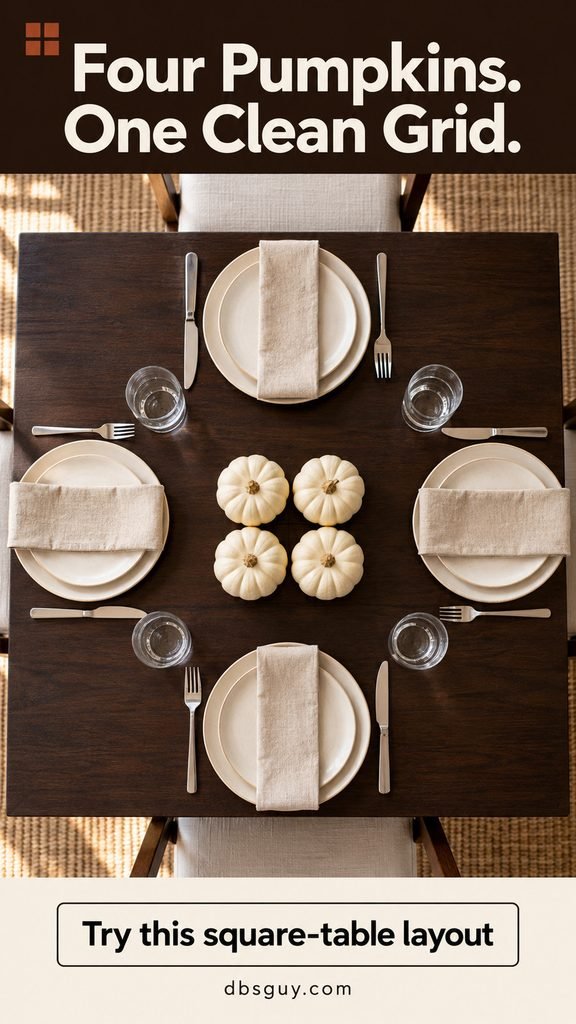
Use pumpkins with flat bases and similar heights, then keep the group away from the edges of the place settings. Cream pumpkins against a dark tabletop make the geometry especially clear. If your table is small, test the arrangement after putting out the serving pieces; reduce it to one pumpkin rather than squeezing the group into everyone’s reach. No runner, confetti, or extra gourds are needed for this version.
20. Draw a Narrow Line with Autumn Foliage
A few russet faux stems can make a lighter alternative to a full garland. Lay them end to end down the center of a bare table, overlapping the stems while leaving small breaks between the leafy sections. Keep the line narrower than the space your serving dishes will need.
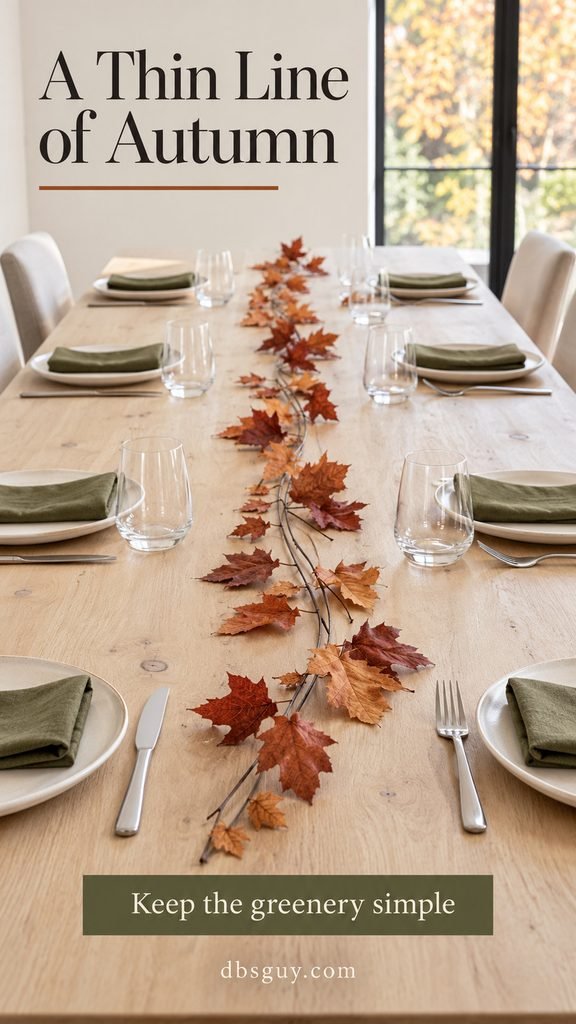
Set the foliage directly on a washable runner if you would rather protect the tabletop. Remove any pieces that brush plates or hang into seats, and keep the arrangement free of open flames. Ivory dishes and muted olive napkins make the rust leaves stand out. For a table served family-style, shorten the line to one section between two platters instead of threading greenery around every bowl.
21. Let a Soup Tureen Become the Centerpiece
When the menu includes squash soup, the serving piece can provide the fall focal point. Put a simple cream tureen on a suitable trivet in the center, with rust napkins and plain bowls at each seat. A matching ladle and a clear spot for the lid make the setup feel considered.
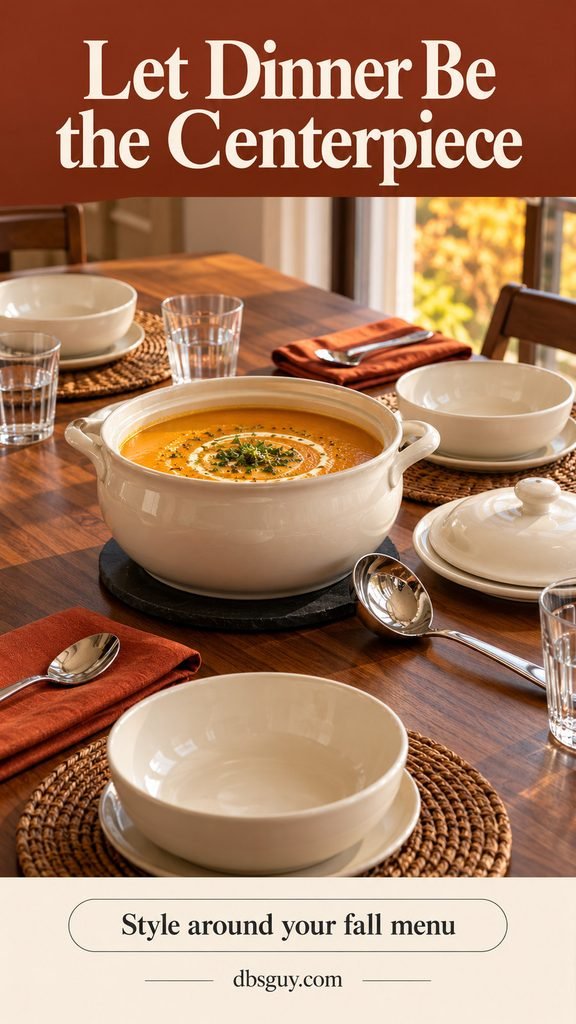
Choose this approach for a table where the host can serve comfortably without reaching across guests. Leave room to set the lid down before lifting it, and follow the serving vessel’s instructions for hot food and handling. Keep flowers and decorative gourds off the table so they do not compete with the meal. Once the soup course is cleared, the center is available for the next dishes.
Check the Table Before Guests Arrive
Sit in each chair and check the view across the table. Move anything that blocks another person, brushes a glass, or makes someone reach awkwardly. Put the serving dishes in place while they are still empty; it is easier to simplify the decoration now than while carrying hot food.
For a straightforward dinner setting, put the fork on the left, the knife on the right with its blade facing the plate, and the drinking glass above the knife. Add other utensils only for the courses you are serving. The pocket arrangement in idea 14 is an informal presentation guests unpack before eating.
Use battery-operated candles for the close decorative groupings shown here. If you choose real candles elsewhere, the U.S. Fire Administration’s candle guidance calls for stable holders, at least 12 inches of separation from anything that burns, and extinguishing candles when you leave the room. A glass sleeve does not make crowded leaves or linens an appropriate place for a flame.
Frequently Asked Questions
How do I make a fall table look modern?
Choose one clear shape or repeated detail, then leave space around it. A low steel bowl, a straight floral trough, or matching bud vases creates structure. Add warmth through the fruit, flowers, wood, or fabric rather than layering several unrelated fall motifs.
Can I use these Thanksgiving tablescape ideas with everyday dishes?
Yes. Start with one of the ideas built around a separate layer: a paper runner, leaf place cards, a lift-away tray, or a napkin fold. None requires new dinnerware. If you need two plate sets, repeat them in an orderly pattern as in idea 15.
What are easy fall centerpiece ideas without flowers?
Try a low bowl of whole persimmons, one kabocha squash on a dish, a compact pumpkin grid, or flameless candles in smoked glass. Choose just one approach. If the meal needs the center, use leaf place cards and move any larger display to the sideboard.
How tall should a fall centerpiece be?
There is no single height that works for every table and chair. Check it while seated: you should be able to see the person opposite without leaning around the display. Keep bulky arrangements low, and move tall branches to an unused end or a separate surface.
How can I keep a simple fall tablescape from looking bare?
Add one meaningful contrast before adding more objects. Try rough clay beside smooth plates, warm fruit in a reflective bowl, or a rust napkin against white dishes. A repeated detail at each seat also makes a sparse table feel planned. Stop when the arrangement supports the meal and the pieces are easy to use.
Choose the main move that solves your table’s problem, then set one place and test it with your centerpiece. Once the proportions work, repeat the setting for the rest of your guests.
Also Read: For more ways to use a green textile with familiar dishes, explore 23 Olive Green Simple Fall Tablescape Ideas.