
A rattan accent chair works best when it has a clear job: a comfortable reading seat, a place to put on shoes, or a companion to your sofa. Start with the room you actually use, then choose a chair shape and cushion that suit that activity.
These 13 styling ideas show how to combine placement, color, and everyday function. For a living room, start with ideas 1–4; for sleeping and dressing spaces, use 5–7. The later ideas cover entries, offices, breakfast nooks, sunrooms, a dry bathroom alcove, and a sheltered porch.

The visuals are AI-generated styling concepts, not photographs of completed rooms or specific products. Check real furniture dimensions, materials, and use instructions before buying.
Before you choose a chair
- Measure the whole frame. Check width, depth, seat height, and the highest part of the arms. Tape its footprint on the floor and open nearby doors and drawers.
- Match the seat to the task. Deep, reclined seats suit lounging. Upright seats are more practical for shoes or dining. A cushion changes both the usable depth and seat height.
- Read the material description. Natural rattan, rattan cane panels, and synthetic rattan-look weaves have different care requirements. A woven appearance alone does not make a chair suitable outdoors.
- Choose the textile deliberately. A fitted seat pad provides support; a small lumbar pillow adds a color accent. Check whether covers are removable and follow their wash labels.
1. Soften a modern living room with one woven seat
A rounded rattan chair brings a softer outline to a room with a straight charcoal sofa and dark metal furniture. Let the frame supply the texture, then keep its seat cushion ivory and the surrounding rug quiet. A black floor lamp connects the chair to the room’s existing hardware.
Angle the chair toward the sofa rather than parking it flat against the wall. Put its front feet on the seating-area rug if the layout allows, and choose a side table you can reach without leaning across an arm. If you are choosing both pieces together, our living room sofa design guide can help you settle the main seating style first.

2. Use a pair to make conversation feel natural
Two matching rattan armchairs can make a living room’s spare end feel like a destination. Turn them slightly inward around a small round table so people can talk without twisting sideways. The matching silhouettes create order; a dark tabletop keeps the grouping from becoming a sea of beige.
Tape the two chair footprints on the floor before ordering. Include room for someone to stand, move around the table, and pass behind the seating. In a shared living room, face the pair toward the sofa as well as toward each other. Skip oversized back pillows that push guests to the front edge.

3. Keep a small living room visually open
Choose a compact chair with a visible open frame and modest arms when your apartment already has a full-size sofa. You can see the floor through the chair, which keeps the arrangement visually lighter, although the furniture still occupies its full footprint.
A nesting table is useful when you need a drink surface only occasionally. Keep the larger table beside the chair and pull the smaller one out for a guest. As an editorial planning starting point, aim for roughly 30–36 inches on a frequently used walking route, with more space where your household needs it. Check the widest part of the arms, not only the seat width, and test the route with the chair actually in place.

4. Build a reading nook around comfort
For reading, choose a deeper rattan lounge chair with a supportive fitted seat cushion. An olive cushion, a small lumbar pillow, and a cream ottoman make this corner feel settled without concealing the woven frame. Keep a book and a drink on a stable table instead of balancing them on an arm.
Place an adjustable reading lamp beside or slightly behind your shoulder and check that it lights the page without shining into your eyes. Try the chair for the length of a typical reading session before committing, if possible. A pretty occasional chair with a thin pad may be fine for a short chat but uncomfortable for an entire chapter.

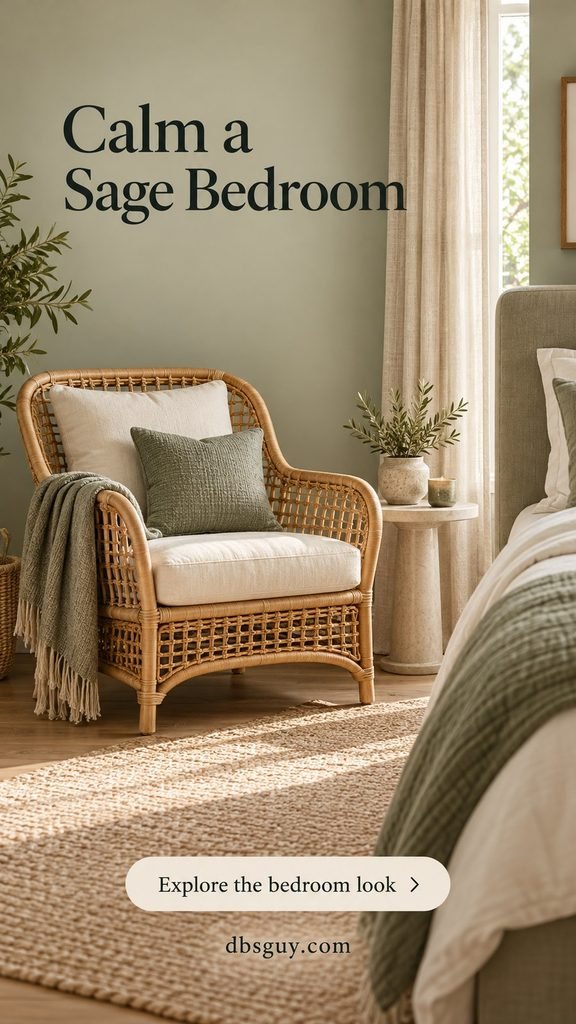
5. Give a sage bedroom a quiet sitting corner
Natural honey-colored rattan looks warm against muted sage walls. Use a cream seat cushion, a sage accent pillow, and oatmeal curtains to create a gentle transition between the chair and the bed. A small round table is enough for a glass of water or your morning coffee.
Place the chair beyond the bed’s main access route, where you can sit without blocking a drawer or curtain. Repeat one existing bedroom color rather than introducing several new ones. Our sage green bedroom ideas offer more ways to coordinate the walls, bedding, and surrounding finishes.
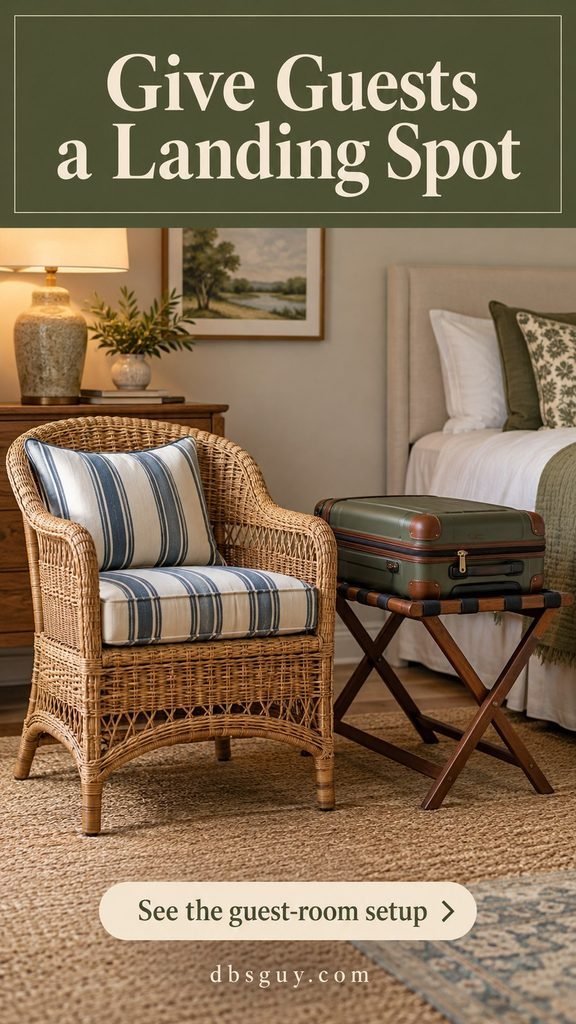
6. Give guests a seat separate from their suitcase
A guest room benefits from a compact upright rattan chair: visitors get somewhere to sit while putting on shoes, and the bed stays available. A blue striped cushion gives the chair a fresh, relaxed detail without needing a full coastal theme.
Add a separate luggage rack beside it so the chair does not become the only place to put a bag. Keep the seat easy to clear and avoid a pile of decorative pillows. If your room has enough space for a larger sitting area, compare the options in our bedroom sofa design guide before deciding whether one chair or a small sofa serves guests better.
7. Make a dressing corner feel intentional
Place a small rattan chair beside a full-length mirror and dresser to create a seat for fastening shoes or deciding on an outfit. A blush cushion softens the wood tones, while the chair’s woven back adds detail to an otherwise practical corner.
Keep the chair to the side of the mirror so you can step back and see your outfit. Open every nearby dresser drawer during your placement test. An upright seat is usually more useful here than a low, reclined lounge chair. If the mirror is freestanding, secure it according to its manufacturer’s directions.

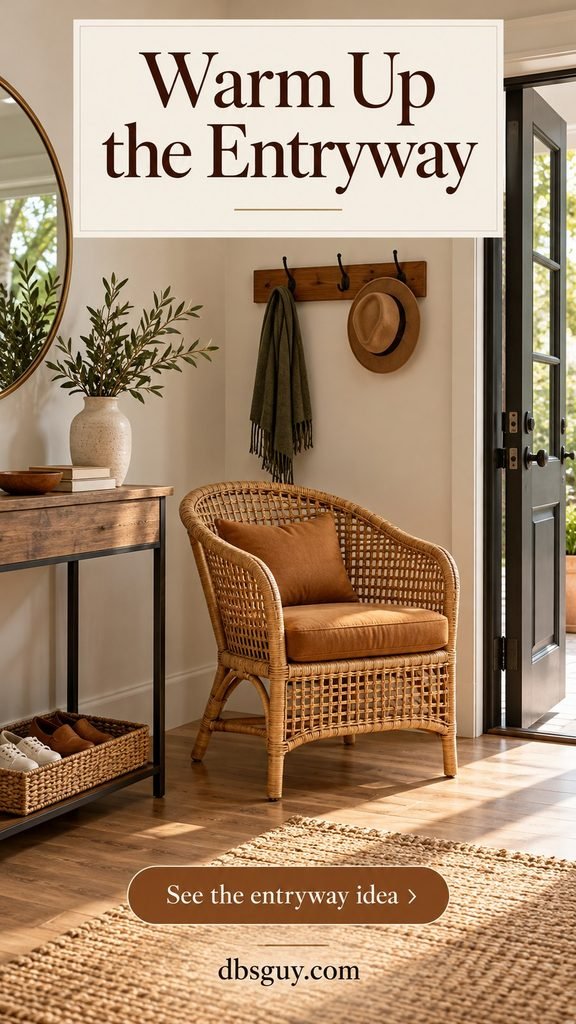
8. Warm up an entryway with a shoe-changing seat
An upright rattan chair beside a narrow console makes an entryway feel welcoming and provides a place to sit while taking off shoes. A caramel seat cushion gives this practical corner a warmer finish. Put a shoe tray or basket beneath the console and coats on nearby hooks to keep the chair clear.
Check the front door’s full swing and the path from the door into the house. This idea belongs in an entry with spare width; a narrow hall may work better with a smaller bench elsewhere. Choose a stable chair, inspect its joints, and add floor protection appropriate to your flooring rather than treating the seat as a decorative prop.
9. Add a pause seat to the home office
A rattan lounge chair with a teal pillow gives a home office a place to read printed notes, take a short break, or talk to a visitor. Against navy walls, its warm weave becomes a clear focal point. A small coffee table keeps this zone distinct from the workstation.
Keep your adjustable task chair at the desk; use the accent chair for a different activity. Position the lounge seat where it will not obstruct desk-chair movement, cords, or cabinet doors. A restrained cushion and one table are enough—leave open space around it so the office remains easy to use.

10. Choose dining-height chairs for a breakfast nook
At a small round breakfast table, upright woven chairs can bring the warmth of an accent chair into an everyday eating space. Ochre seat pads look cheerful with pale walls and morning light. Low arms or armless designs make it easier to approach the table.
Do not move a low lounge chair to the table simply because the materials match. Measure the seat height with its cushion compressed, the table’s underside, and any apron. As a general fit starting point, leave about 10–12 inches between the seat and tabletop, then test your own proportions and knee room. Confirm the chair is intended for dining and that its arms can tuck under the table if that matters to your layout.

11. Layer a sunroom with plants and filtered light
In an enclosed, dry sunroom, a natural rattan lounge chair pairs well with terracotta pots and an olive cushion. A patterned rug gives the corner definition, while sheer curtains soften the light. Choose a smooth ceramic side table if the room already has several woven pieces.
Treat the room’s conditions as part of the design. A space that gets rain through open windows or stays damp is different from a climate-controlled interior. Follow the chair’s placement guidance, keep it away from heating vents, and use window coverings when needed rather than assuming all rattan suits prolonged direct sun. Keep plant watering trays off the chair and its cushion.

12. Reserve a bathroom chair for a genuinely dry alcove
A large bathroom can include a separate dressing alcove with a rattan chair and white cushion. The warm weave balances stone and tile, but the chair belongs well away from a tub’s splash zone, the shower, and damp towel storage. An oak cabinet nearby can handle toiletries and linens.
This is a conditional idea, not a recommendation for a small steamy bathroom. Use natural rattan only if the manufacturer permits the conditions and the alcove stays dry and ventilated. Otherwise, keep the chair in an adjoining bedroom or dressing room. Leave the cushion as a seat cushion; do not use the frame as a wet-towel rack.

13. Use an outdoor-rated rattan look on a covered porch
For a porch, start with an explicitly outdoor-rated woven chair; the concept shown here uses a synthetic rattan look with a navy outdoor cushion. A deep roof and a small side table create a sheltered spot for coffee without turning the porch into a crowded furniture set.
The weave’s appearance does not establish weather suitability. Confirm the frame, weave, and cushion ratings for the exact chair. Natural rattan requires product-specific permission even under a roof. IKEA’s outdoor furniture care guide recommends cool, dry seasonal storage for plastic rattan and storing cushions dry. In colder US regions, plan where the furniture will go before freezing weather arrives.

Refresh the look without replacing the chair
Keep a neutral fitted seat cushion and change just the smaller accent textile. In spring and summer, a blue stripe or pale green pillow can lighten the corner. For fall and winter, try an olive, rust, or chocolate pillow with a soft throw. These are styling choices, not a seasonal rule; use the colors already present in your room.
For everyday care, follow your own chair’s instructions. For example, IKEA’s AGEN care directions specify a damp cloth with a mild cleaner and drying with a clean cloth. That is guidance for that product, not permission to soak, oil, paint, or pressure-wash every woven chair.
Frequently asked questions
What is the difference between rattan and wicker?
Rattan describes a natural plant material; wicker describes a weaving method. Wicker furniture can use natural fibers or synthetic materials. Read the product’s material list rather than relying on either word in its name.
Can rattan accent chairs work with a gray sofa?
Yes. An ivory cushion and a pale rug can bridge warm rattan and a cool gray sofa. Repeat a dark detail from the sofa area in a lamp or side table, then keep any added color to one small pillow.
Should the chair match my other furniture?
It does not need to match exactly. Look for one connection, such as a shared cushion color, a similar curved shape, or a wood tone echoed elsewhere. Smooth upholstery and simple metal or ceramic pieces give the weave room to stand out.
Can I use an indoor rattan chair on a covered patio?
Only if the manufacturer explicitly allows those conditions. A roof does not eliminate wind-driven rain, humidity, or temperature changes. For regular outdoor use, choose a chair with a stated outdoor rating and follow its storage directions.
How do I choose a cushion that fits?
Measure the usable seat between the frame edges and note whether it is round, tapered, or rectangular. Compare those dimensions with the cushion’s actual shape, then check that its thickness leaves enough back support and comfortable foot contact. For a custom pad, give an upholsterer a seat template, the intended use, and your desired cover-care requirements.
Start with the room that needs the seat
Choose one useful placement before buying accessories. A chair that fits, a cushion that supports you, and a reachable surface will do more for the room than a collection of decorative extras. Save your favorite concept, measure the space, and build that corner one piece at a time.