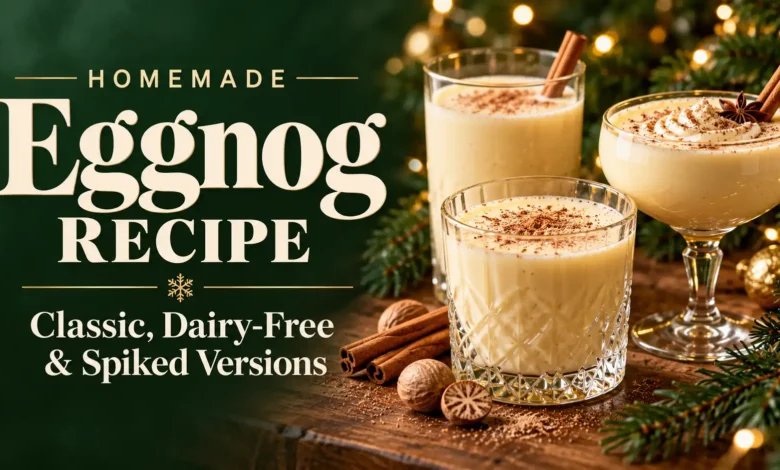
A good homemade eggnog recipe starts with a gently cooked custard: egg yolks, milk, cream, sugar, vanilla, and nutmeg. Make the classic version below, swap in oat and coconut milk for a dairy-free batch, or stir a measured splash of rum, bourbon, or brandy into the chilled drink.
Plan on about 25 minutes of prep and cooking, plus at least 4 hours to chill. The base makes approximately 4 cups—enough for eight small ½-cup servings. Make it the day before a Christmas gathering so you can serve it thoroughly cold.
Choose Your Eggnog Version
- Classic: whole milk and heavy cream give this cooked eggnog its familiar custardy richness. No spirits are added.
- Dairy-free: unsweetened oat milk and canned full-fat coconut milk replace both dairy ingredients. This version still contains eggs.
- Spiked: start with either chilled base and add 1 tablespoon of spirits per ½ cup of eggnog. Keep the remaining pitcher unspiked if guests want different options.
Classic Homemade Eggnog Recipe
This is a pourable drink with a light custard body, not a spoonable pudding. Freshly grated nutmeg gives it that recognizable holiday flavor; cinnamon is optional.
Yield: approximately 4 cups, before optional thinning or spirits
Servings: eight small ½-cup pours
Prep: about 10 minutes
Cook: about 10–15 minutes
Chill: at least 4 hours, or overnight
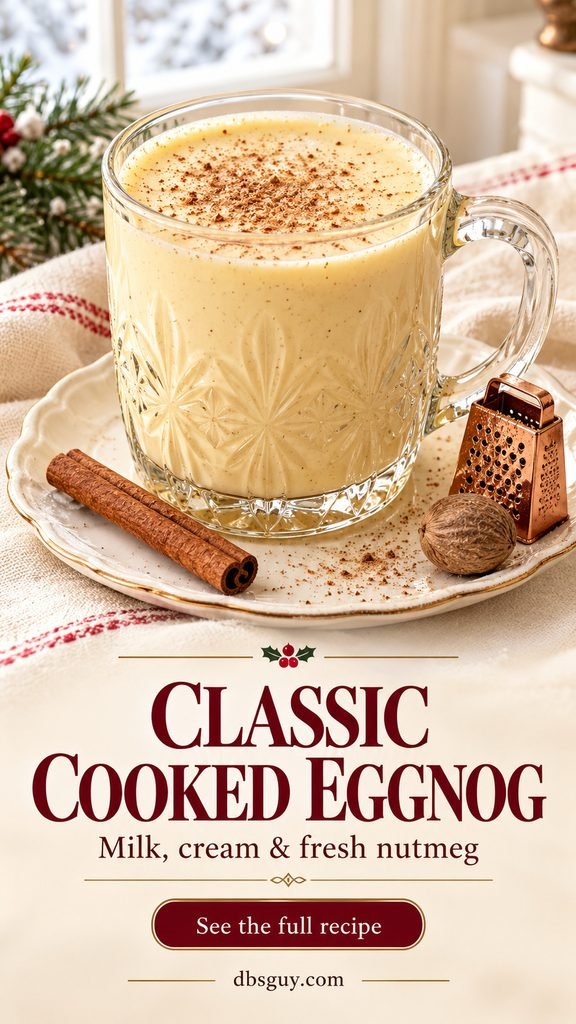
Ingredients
- 5 large egg yolks; reserve the whites for another cooked recipe
- ½ cup (100 g) granulated sugar
- 2½ cups (600 mL) whole milk
- 1 cup (240 mL) heavy whipping cream, not already whipped
- ½ teaspoon freshly grated nutmeg, plus a little more for serving
- ⅛ teaspoon fine salt
- 1½ teaspoons vanilla extract; use an alcohol-free vanilla flavoring if avoiding all alcohol
- ¼ teaspoon ground cinnamon, optional
Equipment: a heavy-bottomed 2- to 3-quart saucepan, heatproof mixing bowl, whisk, silicone spatula, instant-read food thermometer, fine-mesh strainer, and a metal bowl that fits inside a larger bowl of ice water.
How to Make It
- Prepare the cooling setup. Place the strainer over a clean metal bowl. Fill a larger bowl with ice and cold water, leaving room for the smaller bowl to sit inside without water spilling into it.
- Whisk the yolks and sugar. In a separate heatproof bowl, whisk the egg yolks and sugar for about 1 minute, until evenly combined and slightly lighter. Do not taste the raw mixture.
- Warm the dairy and spices. Add the milk, cream, nutmeg, salt, and optional cinnamon to the saucepan. Heat over medium-low, stirring occasionally, until steaming with a few tiny bubbles around the edge. Do not bring it to a rolling boil.
- Temper the yolks. Take the pan off the heat. Slowly drizzle about 1 cup of the warm milk mixture into the yolks while whisking continuously. Begin with a small splash, then add the rest in a thin stream. Pour the warmed yolk mixture back into the saucepan, stirring as you go.
- Cook gently to 160°F (71°C). Return the pan to low heat. Stir continuously with the spatula, sweeping the bottom and corners, until a food thermometer registers 160°F. Keep the probe in the liquid without touching the pan. The mixture may coat a spoon lightly, but temperature is the deciding check. Remove from the heat immediately; do not boil it or keep cooking in pursuit of a thick pudding texture.
- Strain, then add vanilla. Pour the cooked eggnog through the strainer into the clean metal bowl. Stir in the vanilla. Straining removes small cooked egg flecks; it does not replace reaching the correct cooking temperature.
- Cool promptly and refrigerate. Set the bowl in the prepared ice-water bath. Stir for about 10 minutes, refreshing the ice as needed. Transfer to clean, shallow containers, cover, and refrigerate promptly—do not wait for it to sit at room temperature. Keep the refrigerator at 40°F (4°C) or below and chill for at least 4 hours, until cold throughout.
- Adjust and serve. Stir the cold eggnog. If it is thicker than you prefer, whisk in cold milk, 1 tablespoon at a time, until easily pourable. Pour small servings and finish with a light grating of nutmeg.
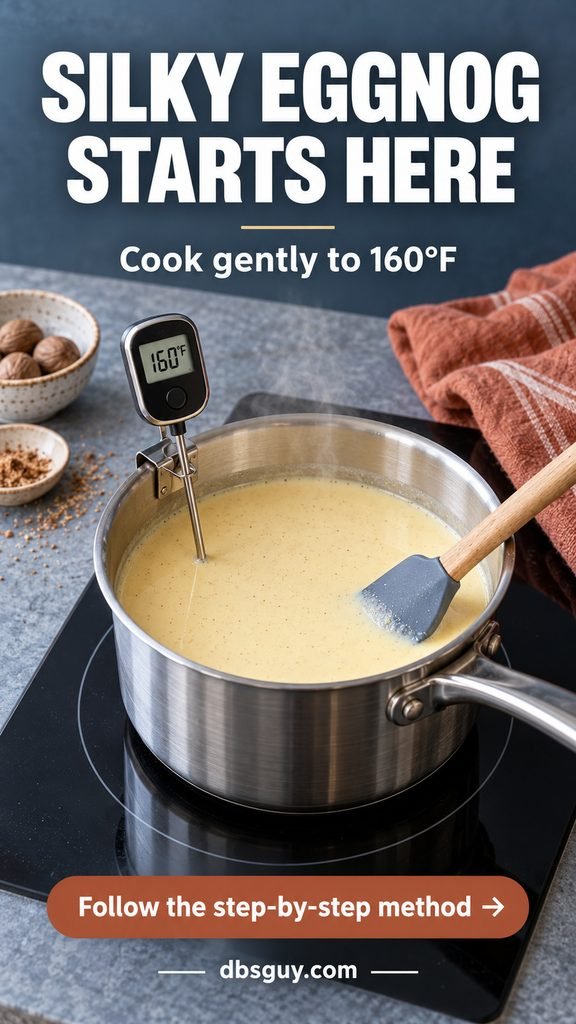
The step that protects the texture: temper slowly, then stir over low heat. Adding all the hot milk to the yolks at once, or letting the finished custard boil, can leave you with cooked egg pieces instead of a smooth drink.
Dairy-Free Eggnog: The Exact Substitutions
For a creamy dairy-free version, replace all 2½ cups of whole milk with 2½ cups (600 mL) unsweetened oat milk and all 1 cup of heavy cream with 1 cup (240 mL) unsweetened canned full-fat coconut milk. Keep the five yolks, sugar, nutmeg, salt, vanilla, and optional cinnamon exactly as listed.
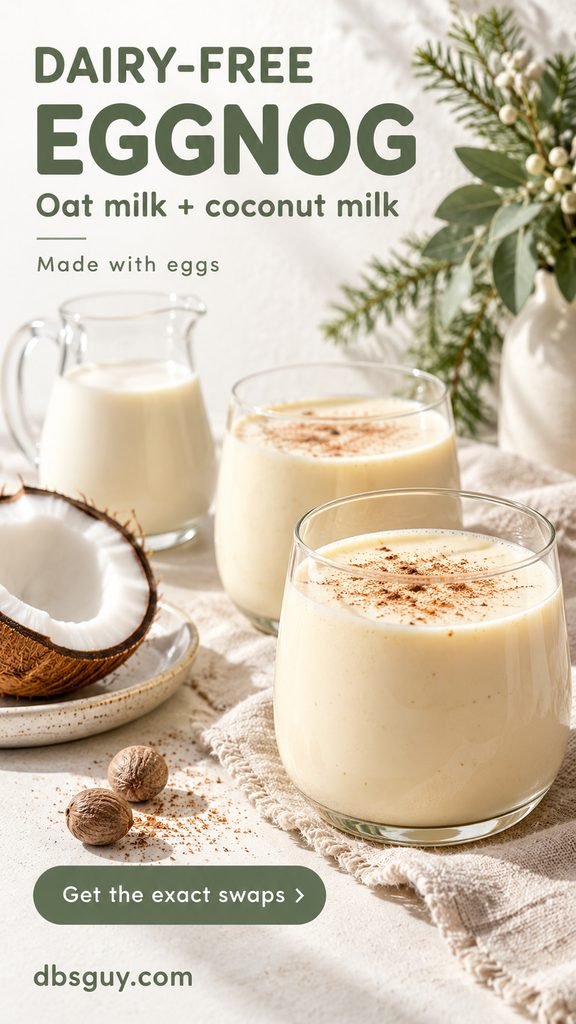
Stir the canned coconut milk until its solids and liquid are uniform before measuring. Use full-fat canned coconut milk rather than a thin coconut beverage from the refrigerated carton. The coconut adds richness, along with a noticeable coconut note.
Follow the same eight steps, including tempering, cooking to 160°F, straining, and prompt chilling. Add the spices when warming the plant milks and the vanilla after straining. After chilling, stir gently and thin with extra cold oat milk only if needed.
Plant-milk brands vary in sweetness and thickness. Start with unsweetened products so the sugar quantity stays predictable. Oat milk keeps the ingredient list free of almond milk, but check every label for your household’s specific allergies and cross-contact concerns.
Dairy-free does not mean vegan. This recipe uses egg yolks for its custard texture. Simply removing them would require a different recipe and thickening method. For milk allergies, check the vanilla and any optional toppings or spirits as well; ordinary whipped cream and cream liqueurs would reintroduce dairy.
Spiked Eggnog: How Much Alcohol to Add
Cook and chill the classic or dairy-free base first. Stir in the spirits just before serving, either by the glass or in a clearly labeled adults-only pitcher. These amounts are starting points for flavor, not a way to preserve the eggnog.

- For one small glass: stir 1 tablespoon (½ fluid ounce / 15 mL) of rum, bourbon, or brandy into ½ cup (120 mL) cold eggnog.
- For the whole batch: stir ½ cup (4 fluid ounces / 120 mL) of spirits into approximately 4 cups of cold eggnog. This makes about 4½ cups total.
- For half the batch: combine ¼ cup of spirits with 2 cups of cold eggnog. Leave the other half unspiked.
Which spirit should you choose? Dark rum brings molasses-like warmth; bourbon leans toward vanilla and oak; brandy gives a softer fruit-and-spice character. Choose one, or use a blend that adds up to the same total amount. Skip additional sweet liqueurs unless you want to change both the sweetness and flavor.
Alcohol does not reliably make raw eggs safe, and adding this amount does not make the pitcher shelf-stable. Cook both bases as directed and use the same refrigeration and storage limits for spiked eggnog. Keep an unspiked serving option separate, and use alcohol-free vanilla flavoring when that option must contain no alcohol at all.
Make-Ahead, Storage, and Safe Serving
The practical make-ahead window is the night before your gathering. Stir before serving, then pour only what you expect to use soon. Keep the rest refrigerated rather than leaving the full batch on a warm counter.
USDA egg-handling guidance supports using a cooked egg mixture that reaches 160°F and lists homemade eggnog for 2–4 days of refrigerated storage. Date the container, keep it at 40°F or below, and discard it after day four. For the dairy-free version, follow this same conservative window.
- Serve cold: use small pitchers or set the serving container in ice to hold it at 40°F or below.
- Watch time out of refrigeration: discard eggnog left above refrigerator temperature for more than 2 hours, or more than 1 hour when the surrounding temperature exceeds 90°F (32°C). Count the total time, including transport and serving.
- Do not mix old and new servings: refill a clean pitcher rather than topping up a partly used warm one. Never return eggnog from drinking glasses to the batch.
- Skip freezing: homemade eggnog is not recommended for freezing. Make a smaller batch if you will not finish it within the storage window.
If the Texture Is Not Quite Right
It is thin while warm
A warm eggnog base is much thinner than pudding and firms up as it chills. If it reached 160°F, cool it promptly and wait until it is fully chilled before deciding whether it needs any adjustment.
It is too thick after chilling
Whisk in cold milk—or oat milk for the dairy-free batch—1 tablespoon at a time. Add a little, stir, and check the pour before adding more. Any extra milk increases the final yield.
There are small egg flecks
A few tiny flecks can be caught by the fine-mesh strainer after the base reaches 160°F. Large curds, a scrambled texture, or a scorched flavor mean the batch overheated; start again over gentler heat. Straining cannot fix burnt flavor or inadequate cooking.
The dairy-free batch has separated
A little settling can occur as plant milks chill. Whisk gently before serving. To reduce the chance of a grainy result, fully combine the coconut milk before measuring and keep the cooking heat low. A spoiled smell or a batch stored beyond the time limit calls for discarding, not blending.
What to Serve With Homemade Eggnog
Small glasses work well because eggnog is rich. Pair them with a modest plate of Quick and Easy Choc Chip Cookies for First-Time Bakers, and keep the drink’s topping simple so the nutmeg comes through.
If you are setting up a holiday drinks corner, leave room for the chilled pitcher, clean glasses, and a small discard tray. The ideas in 15 Christmas Kitchen Decor Ideas That Keep Your Counters Clear can help you add seasonal details while preserving serving space.
Homemade Eggnog FAQs
Does homemade eggnog have raw eggs?
Some traditional recipes do. This one cooks the yolks in the milk mixture to 160°F and does not fold raw egg whites into the finished drink. Use the thermometer rather than relying on steam or thickness alone.
Is the classic version alcohol-free?
It has no added spirits. Standard vanilla extract contains alcohol, so choose an alcohol-free vanilla flavoring if you need a strictly alcohol-free drink. Do not assume the chilling step removes alcohol.
Can I use only milk and leave out the cream?
Replacing the cream with the same volume of whole milk makes a lighter drink with less richness. Keep the cooking method and temperature check the same. The dairy-free recipe above gives a more deliberate alternative if your goal is to avoid dairy entirely.
Do I have to add cinnamon?
No. Nutmeg is the main spice here; cinnamon is optional. Begin with the listed quantity of nutmeg and add only a light dusting to each glass so the drink stays balanced.
Can I double the recipe for a party?
Yes, but two separate batches are easier to heat evenly and cool promptly than one deep pot. Make each batch with the listed quantities, measure its temperature separately, and chill in shallow containers. Combine only after both are thoroughly cold.
Also Read
For a holiday table to go with your drinks, see 19 Burgundy and Gold Christmas Table Decor Ideas You Can Recreate at Home.
Recipe and visual note: This research-informed recipe has not been kitchen-tested for this article. The visuals are AI-generated concepts illustrating the recipes and cooking method, rather than photographs of a tested batch.