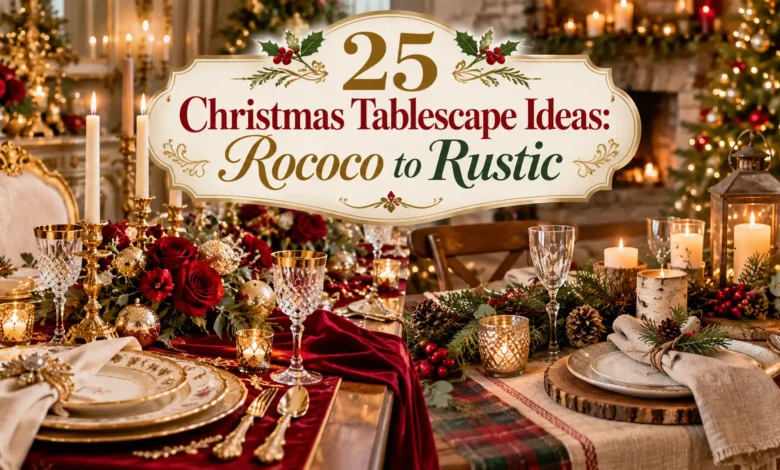
A Christmas table can feel romantic, playful, pared back, or wonderfully rustic—and your everyday dishes can work in more than one of those settings. The easiest way to choose is to start with the mood you want, then match the centerpiece to the size of your table.
These 25 Christmas tablescape ideas move from ornate Rococo-inspired details to natural farmhouse textures. Each one includes the pieces that create the look, where to put them, and an adjustment that makes the table easier to use during dinner. For a small table, start with ideas 19 and 20; for a relaxed breakfast, try idea 21.
The visuals are AI-generated styling concepts. Recreate the candlelight shown with battery-operated LED candles, especially near greenery, ribbons, paper, and fabric.

1. Blush-and-Gold Rococo with Scalloped Plates
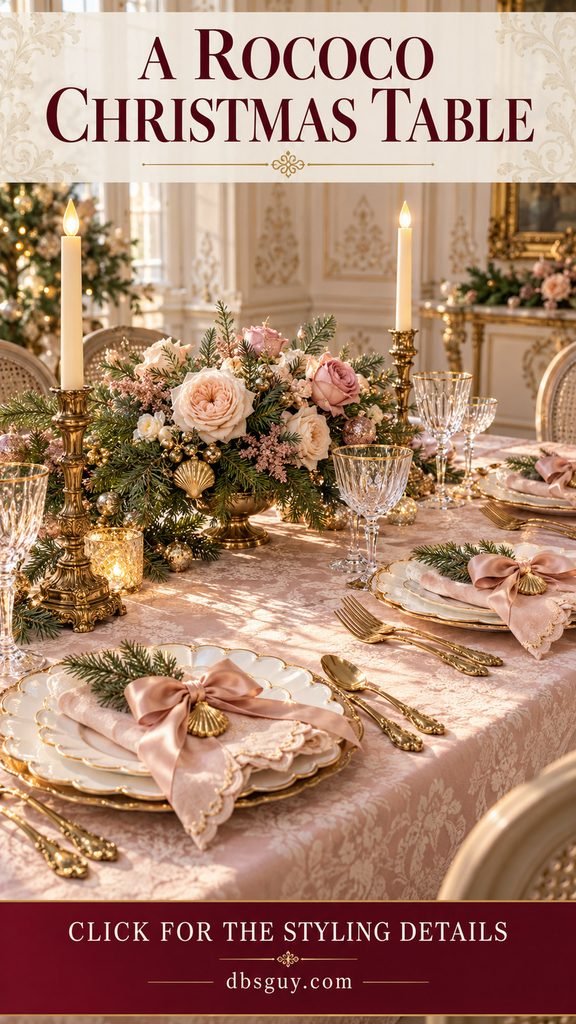
For a romantic Christmas dinner, let the shapes do as much work as the colors. Rococo-inspired styling uses decorative curves, shell-like details, and ornate edges; here, scalloped plates and scrolling gold candleholders give the table that character without requiring antique furniture.
Build the setting over a blush damask cloth. Add white plates with gold rims, clear stemware, and a soft pink napkin tied into a bow. A low bowl of blush roses and evergreen makes the centerpiece feel festive while keeping the palette gentle. Repeat the shell motif once, on a napkin ring or small ornament, rather than decorating every surface.
If your dishes are plain, use one decorative charger beneath them. Keep the flowers below seated eye level, and choose LED tapers for holders surrounded by foliage. The result suits a dressier Christmas Eve meal or an intimate holiday dinner.
2. A Silver Mirror Plateau for Rococo Sparkle
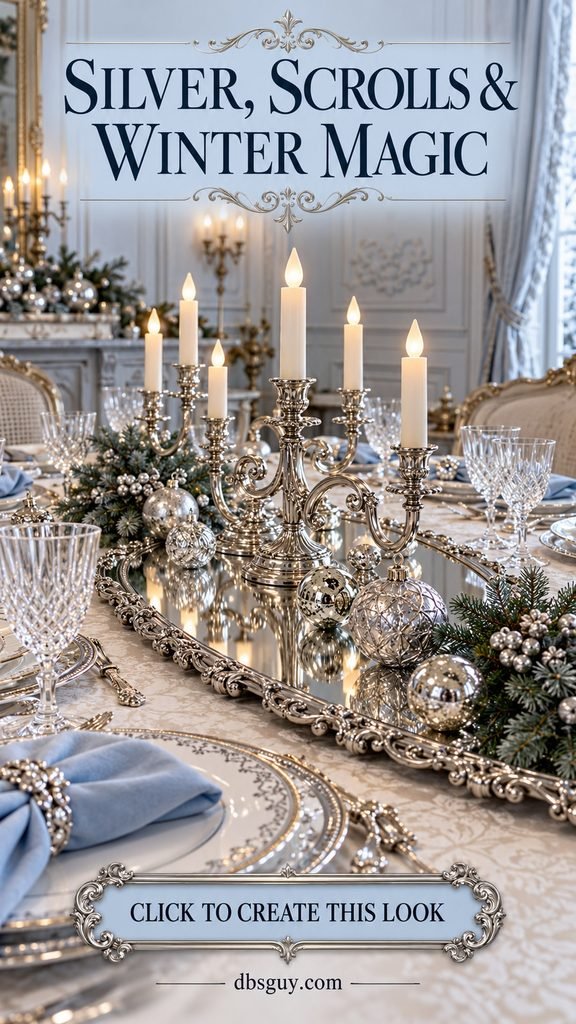
A scroll-edged mirrored tray gives an ornate holiday table a different focal point: reflections instead of flowers. Set a silver candelabra on the tray and surround its base with a few silver baubles. Powder-blue napkins and ivory jacquard keep the setting cool and luminous.
Use the tray as the boundary for the centerpiece. That helps prevent small ornaments from spreading into the cutlery and makes the whole arrangement easier to lift away when serving dinner. Clear cut-glass goblets echo the shine; silver-trimmed dishes are lovely, but plain white plates work too.
Check the arrangement from a seated position before guests arrive. If the candelabra blocks conversation, move it to a sideboard and leave the low tray on the table. Battery-operated tapers give you the reflected glow without putting flame beside greenery. This is an especially appealing look for a formal evening gathering.
3. Emerald Velvet with Plum and Pomegranate
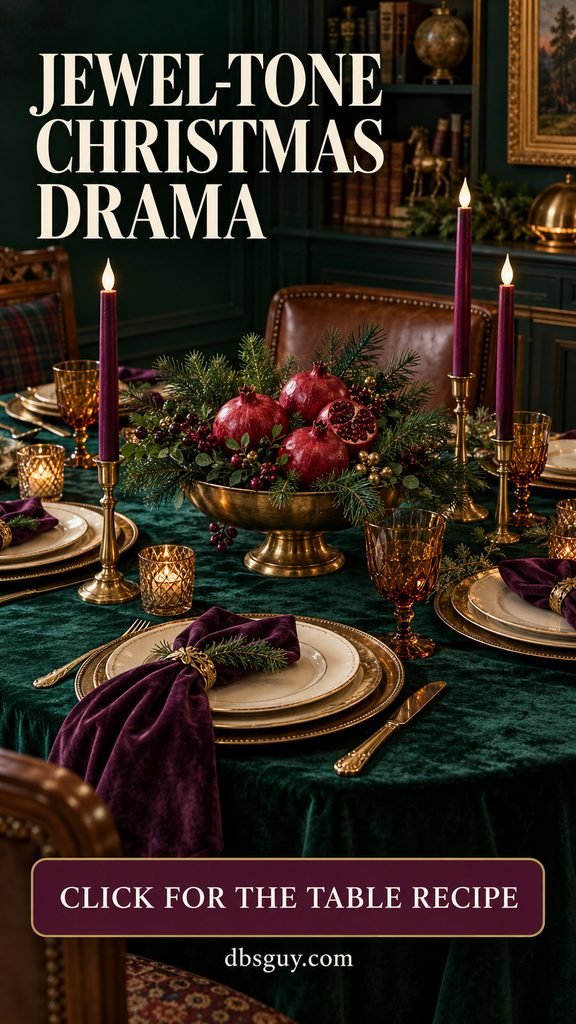
This is the table for a room that already has dark wood, rich upholstery, or cozy evening lighting. Emerald velvet forms the backdrop, while plum napkins, amber glasses, and a brass fruit bowl add depth. The pomegranates give the centerpiece a strong shape even before you add greenery.
Start with a low footed bowl and arrange a few whole pomegranates among short evergreen sprigs. Keep the fruit display separate from food you plan to serve. The pictured cut fruit is a styling detail; whole fruit is simpler to set out before the meal.
Rather than matching every item, repeat each main color in two places: green in the cloth and foliage, plum in napkins and LED tapers, warm gold in the bowl and chargers. For a smaller table, use a shallow brass bowl and skip the chargers. You still get the layered mood with less bulk.
4. Burgundy Bows with Warm Gold

A bow can carry an entire place setting. On this table, generous burgundy bows stand out against white dishes, so the rest of the styling can stay relatively simple. The velvet runner creates a continuous line down the center, and small gold bells repeat the warm finish of the plate rims.
Try an ivory cloth, burgundy runner, white plates, and either gold flatware or your existing silver set. Fold the napkin first, then tie a separate ribbon around it so guests can remove the decoration easily. Keep the tails on the plate rather than letting them cover a knife or glass base.
Short gold lanterns with LED pillars add another layer of light. If the runner, bows, and bells already feel full, reduce the greenery to a few short sections. This color scheme works well when you want the dining table to connect with a burgundy-and-gold tree nearby.
Also Read: 17 Burgundy and Gold Christmas Decor Ideas for a Rich, Candlelit Look
5. Blue-and-White Porcelain with Winter Greenery

You do not need red dishes to make a Christmas table feel festive. Blue-and-white porcelain already brings pattern and personality; a few evergreen branches and white ornaments give it a winter setting. It is a useful option if your favorite dinnerware is floral or your dining room has blue accents.
Choose a crisp white cloth so the plate patterns remain easy to see. Add cobalt napkins, clear glasses, and silver flatware. Two small ginger jars can hold short fir branches; remove the lids and place a water-safe liner inside if the vessels are decorative rather than watertight.
Leave some space between the jars, using a shallow dish of white baubles to connect them visually. For a four-person table, one jar may be enough. Avoid adding several more patterned pieces—the plates and jars already provide plenty of detail. Keep branches compact enough that guests can see around them.
6. A Clear-Glass Table That Catches Winter Light
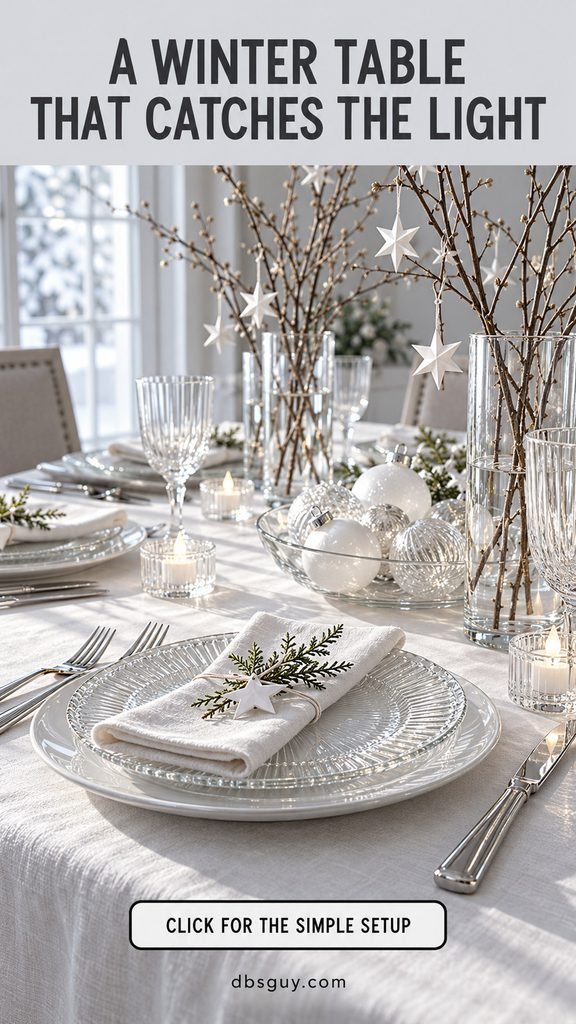
Glass, white linen, and bare branches create a Christmas table that looks especially beautiful beside a window. The interest comes from reflections and ribbed surfaces rather than a bold color. White paper stars add a seasonal detail without making the centerpiece heavy.
Layer a clear glass plate over a plain white dinner plate, then add a white napkin and silver flatware. Use a clear bowl for white or translucent ornaments. One or two glass vessels can hold branches; keep their bases narrow so there is room for glasses and serving dishes.
The concept image uses taller branches for drama. For the actual meal, shorten them, choose an airy arrangement that does not sit between faces, or move the vessels to a nearby console. A few low LED tealights will preserve the sparkle. Skip loose artificial snow, which can migrate onto plates and napkins.
7. Black-and-White Stripes with Ceramic Stars
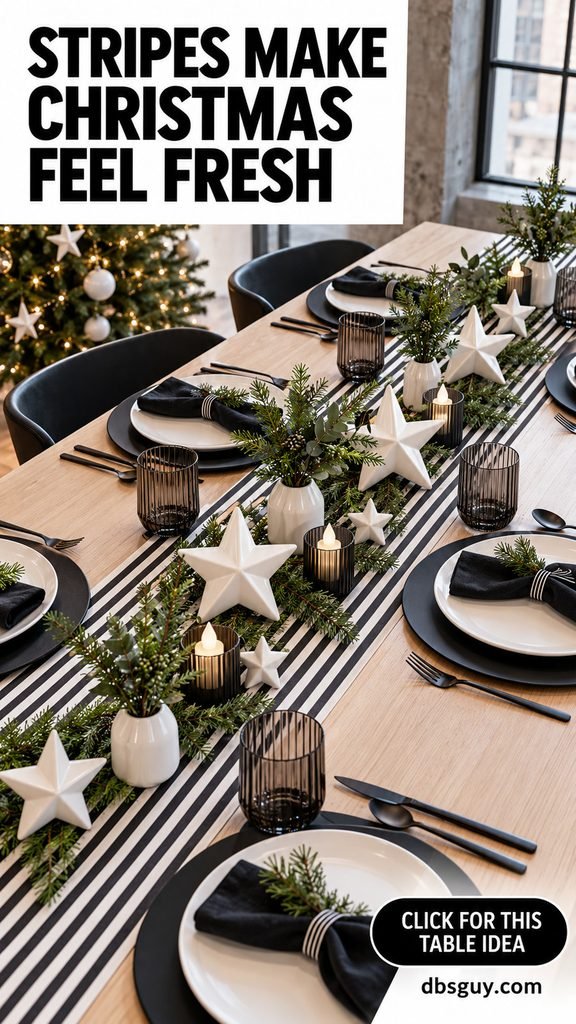
A striped runner gives familiar Christmas greenery a crisp, graphic setting. Matte black chargers and napkins define each place, while white plates and ceramic stars keep the center from feeling too dark. This works well in a modern dining room with simple furniture.
Run the stripes along the table’s length, then arrange small white stars between a few bud vases of evergreen. Smoke-colored tumblers add texture without introducing another strong color. Black flatware completes the look, although stainless steel is an easy substitute.
Make one pattern the main event. A striped runner paired with patterned plates and plaid napkins can become visually busy very quickly. If you already have patterned dishes, switch to a plain runner. Small LED votives can sit between the stars, but the greenery does not need to become a full garland. Leave visible gaps in the center for the dishes that will actually be passed around.
8. Terracotta Stoneware and Copper Lanterns

Terracotta brings warmth to a holiday table without relying on bright red. Pair it with oatmeal linen, cinnamon-colored napkins, and short copper lanterns for a setting that feels relaxed but carefully put together. Greenery and dried citrus connect the earthy palette to Christmas.
Let the stoneware be the main color at each place. Copper flatware and peach or amber glasses are optional finishing touches; ordinary clear tumblers also work. In the center, place the lanterns along a narrow run of greenery, using LED lights inside them.
If you own white dishes, introduce terracotta through napkins or a small serving bowl instead of replacing the whole set. Keep loose dried orange slices in the centerpiece rather than where food will be placed. On a wood table, protect the surface beneath metal lanterns and any vessels that hold water. This look suits a casual dinner in a warm-toned home.
9. Forest Green in Different Textures

A table dressed in green can feel surprisingly layered when the finishes vary. Dark green dishes, softer sage napkins, green goblets, and glossy ceramic trees each catch light differently. Evergreen branches bring an organic shape to those controlled layers.
Start with the green item you already own, then choose one darker and one lighter shade around it. You do not need every shade to match exactly. A matte tablecloth is a useful backdrop for glossy plates or glassware; silver flatware gives the setting a clean edge.
Group the small ceramic trees instead of placing one at every seat. Keep foliage in low vessels or short sections along the center. If your dining room is dim, use lighter napkins and warm LED lights so the details remain visible. The texture changes are what make this idea different from simply setting green plates on a green cloth.
10. Nordic Red Paper Stars on Pale Wood
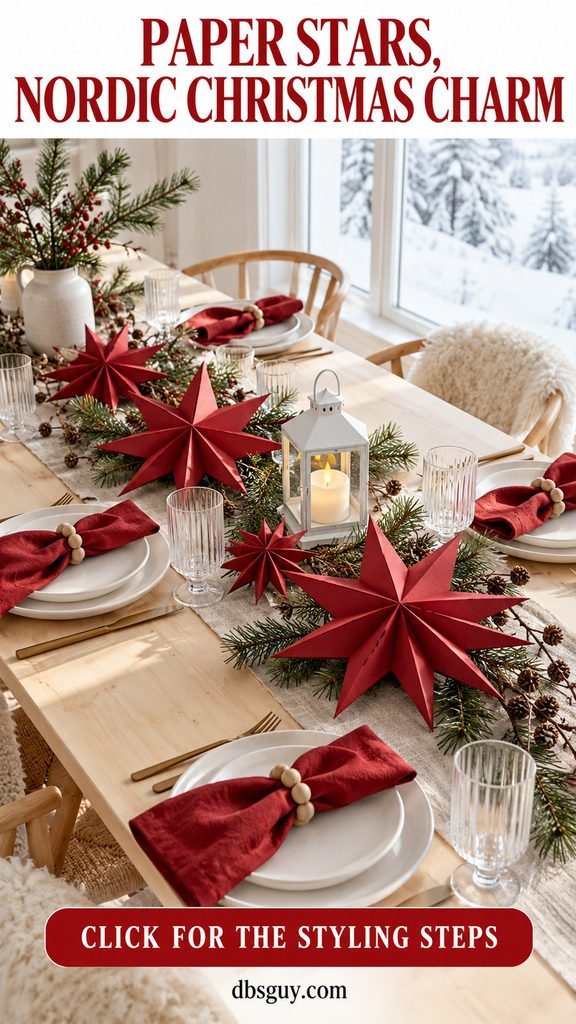
Red paper stars make a pale wood table feel festive with very few pieces. The folded shapes have enough presence to replace a floral centerpiece, and they work particularly well with plain white plates and red napkins.
Set three or four stars along a narrow linen runner, leaving spaces between them. Add a few short evergreen sprigs and one white lantern with an LED pillar. Wooden-bead napkin rings repeat the natural tone of the tabletop. Keep the glassware simple so it does not compete with the stars.
For an easier homemade version, cut flat stars from sturdy red cardstock and crease each point gently to give it dimension. Pre-folded paper stars are another option. Use smaller shapes on a crowded dinner table, and stand the larger ones on a sideboard. Store them flat or in a shallow box after the holiday so the points do not get crushed.
Also Read: 13 DIY Paper Christmas Decorations That Look Surprisingly Expensive
11. A Quiet Japandi-Inspired Pine Branch
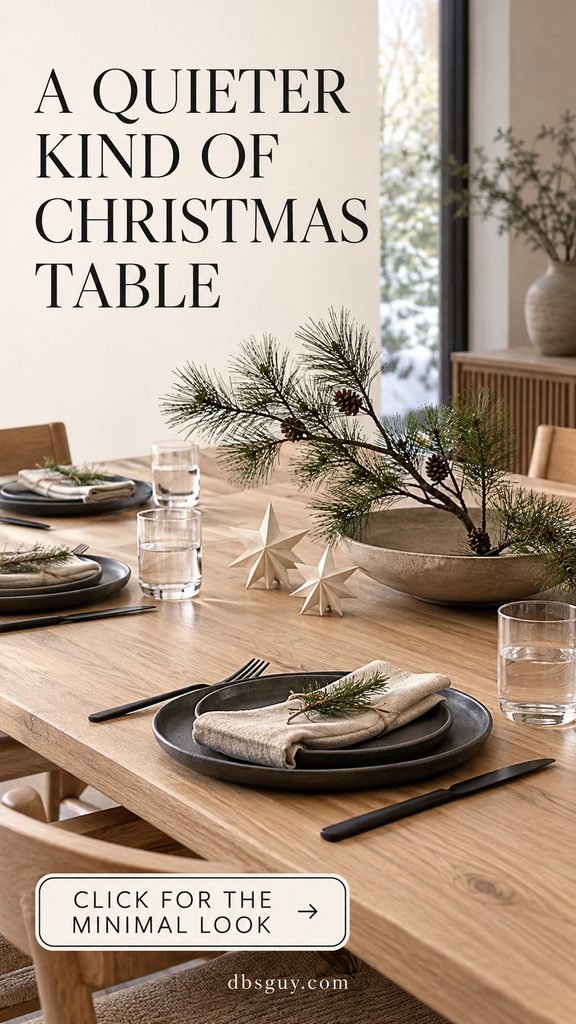
For a calmer holiday meal, choose one sculptural branch and let the table breathe around it. A shallow ceramic bowl, charcoal plates, oatmeal napkins, and pale wood give this Japandi-inspired setting its restrained character. A couple of paper stars quietly signal Christmas.
Place the bowl slightly off center and angle the branch along the table rather than across a guest’s place. Use a small concealed support or a stable vessel insert suited to the bowl; keep any water contained. Set the plates first so the foliage never reaches into the dining space.
This is a useful look when dinner will be served family style. You can leave an open stretch for platters instead of filling the center with decorations. Choose a branch with an interesting silhouette rather than a dense bundle. If fresh foliage sheds heavily, replace it with a good-quality faux stem and reuse the bowl after the season.
12. A Retro Bowl of Colorful Baubles
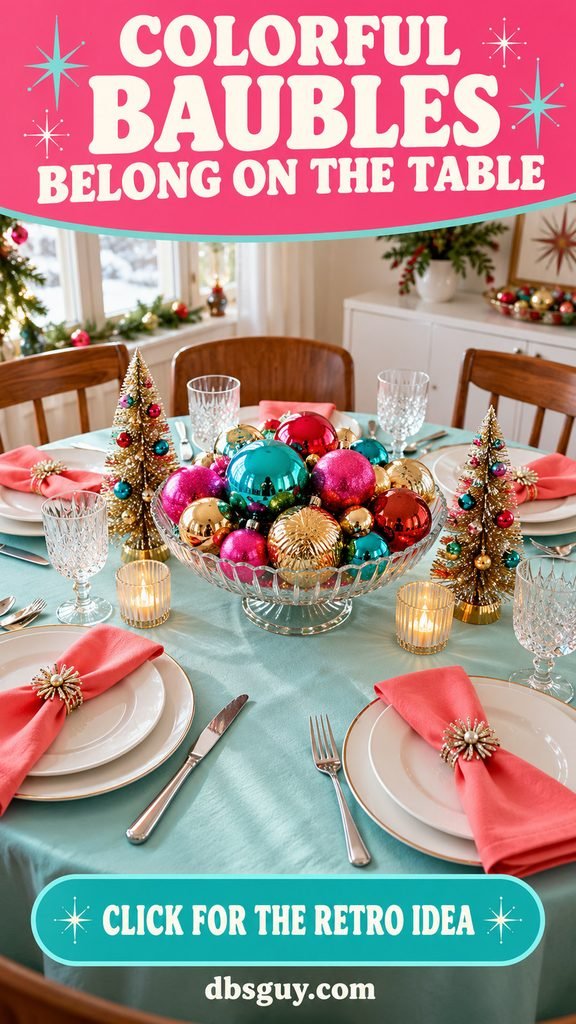
A low bowl of ornaments is one of the easiest ways to make a Christmas table playful. Aqua, coral, hot pink, red, and gold create a cheerful retro palette, especially against a pale tablecloth. Because the ornaments stay in a bowl, the rest of the table remains usable.
Choose a wide, shallow vessel and fill it with shatterproof baubles in a mix of sizes. Keep their hooks off the dining table. Add white plates, coral napkins, and clear glasses; two small tinsel trees can frame the bowl if there is enough space.
You can build this idea from the ornaments that did not make it onto your tree. Pick a limited group of colors from that collection so the mix feels deliberate. For a small table, use just the bowl and skip the trees. Do not use the same decorative bowl for serving food unless it is food-safe and has been cleaned appropriately.
13. A Gingerbread Village on a Removable Tray

A gingerbread village gives guests something delightful to look at while they settle in. Three small houses on a long tray create a little streetscape without taking over the entire table. Oatmeal linen, caramel napkins, and cream mugs echo the cookie colors.
The pictured village combines decorative gingerbread-style houses and foliage on one tray. Use reusable faux houses for that version and make it clear they are decor. For an edible village, keep real gingerbread on a separate clean food-safe tray, away from greenery, ceramic trees, glitter, and other decorative materials. LED tealights in jars can add glow beside the tray.
The most useful part of this design is its portability: move the whole village to a counter when the main course arrives. Choose modest houses rather than one oversized centerpiece, and leave space around the tray for hands and glassware. If you are assembling edible houses, do it before the hosting rush and follow the recipe or kit’s storage instructions.
14. A Nutcracker Table in Red, Navy, and Gold

Small nutcrackers give a traditional holiday table a storybook focal point. A navy runner makes red napkins and baubles stand out, while gold-edged plates bring just enough shine. The combination is cheerful without requiring a busy patterned tablecloth.
Arrange a short line of miniature nutcrackers down the center, alternating them with tiny green trees or low LED votives. Keep the figures out of the place settings so guests have room to lift glasses and move their plates. Clear glassware lets the red-and-navy palette remain the focus.
If you own large nutcrackers, put them on the sideboard and use smaller decorations on the dining table. This also helps preserve sightlines. Choose two or three repeated finishes rather than adding every figure in your collection. For a less formal family dinner, replace the gold chargers with plain white plates and keep the runner, napkins, and small figures.
Also Read: 19 Ralph Lauren–Inspired Christmas Decor Ideas for a Cozy, Classic Living Room
15. Peppermint Stripes with Simple White Dishes
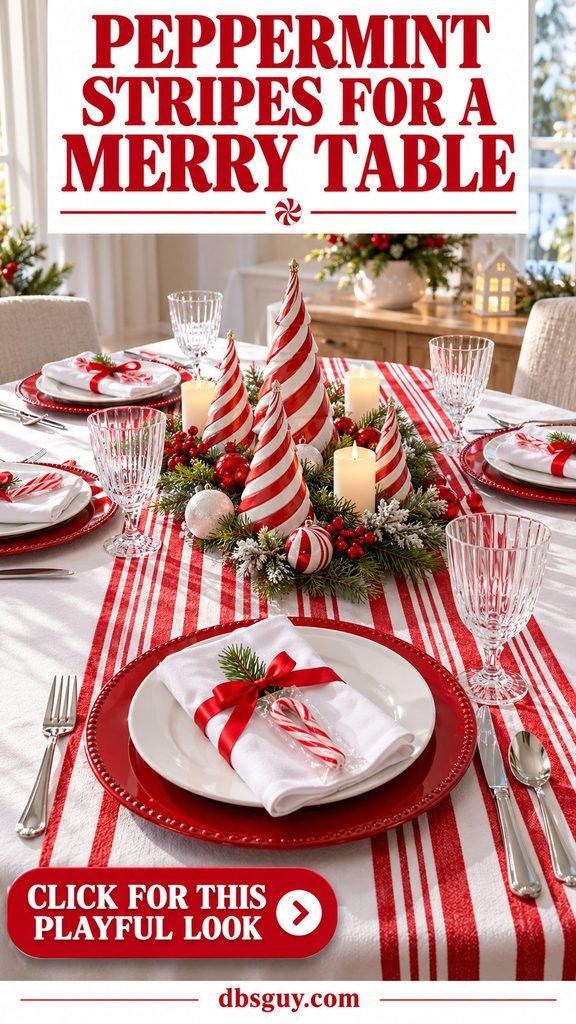
Red-and-white stripes make a Christmas table feel merry before you add much decoration. Keep the dishes white and let a peppermint-style runner and red chargers supply the pattern and color. A white napkin tied with a narrow red ribbon finishes the setting neatly.
Use a few striped ceramic trees in the center, then place an individually wrapped candy cane at each seat if you want a small treat. Keep decorative ornaments off the food surface. Clear glasses and stainless steel cutlery give this playful scheme a familiar everyday base.
There is no need to stripe every item. When the runner has a strong pattern, plain napkins prevent the setting from looking crowded. If you are hosting children, use sturdy tableware and keep small breakable decorations out of reach. The same palette works for a Christmas lunch, a cookie exchange, or a casual dinner after a day of holiday activities.
16. Tiny Potted Rosemary Trees
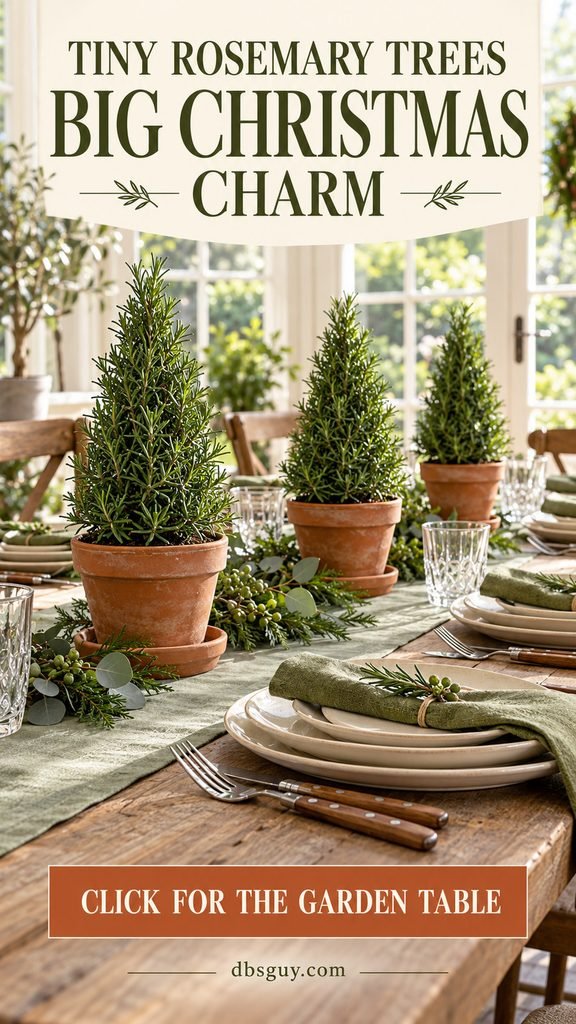
Compact rosemary plants can make a holiday table feel like a little winter garden. Their cone-like shapes provide the tree motif, while terracotta pots and a sage runner keep the setting natural. Cream stoneware and green napkins work well with the foliage.
For a medium rectangular table, start with three small pots and matching saucers. Check each saucer for leaks, and put a protective layer beneath it if needed. Keep soil, fallen needles, and plant containers away from plates and food. The pots should sit comfortably between settings rather than at the edge.
You do not have to trim perfectly symmetrical trees; loosely upright plants still suit the idea. Water according to the plant’s needs and move the pots out of any standing water before placing them on the table. After dinner, return them to a suitable growing spot rather than leaving them as permanent decor in a dark dining room.
17. Clove-Studded Oranges and Evergreen

Orange pomanders bring a traditional holiday detail to a simple wood table. Their warm color looks lovely beside amber glasses, woven placemats, and cinnamon-colored napkins. A low bowl keeps the citrus arrangement contained and easy to move.
Use whole oranges and press cloves into the peel in simple rows or bands. Set them in a shallow decorative bowl with a few evergreen sprigs nearby. A skewer can make starter holes, but handle the pointed tool carefully and prepare the fruit away from the set table. Treat the finished pomanders as decor.
Make the arrangement close to the gathering, check the fruit regularly, and discard any that becomes soft or moldy. There is no need to promise that homemade pomanders will last all season. If the clove scent feels strong beside dinner, move the bowl to the entryway. Dried orange slices offer a lighter-looking alternative within the same warm palette.
18. Cranberry Red in Clear Glass
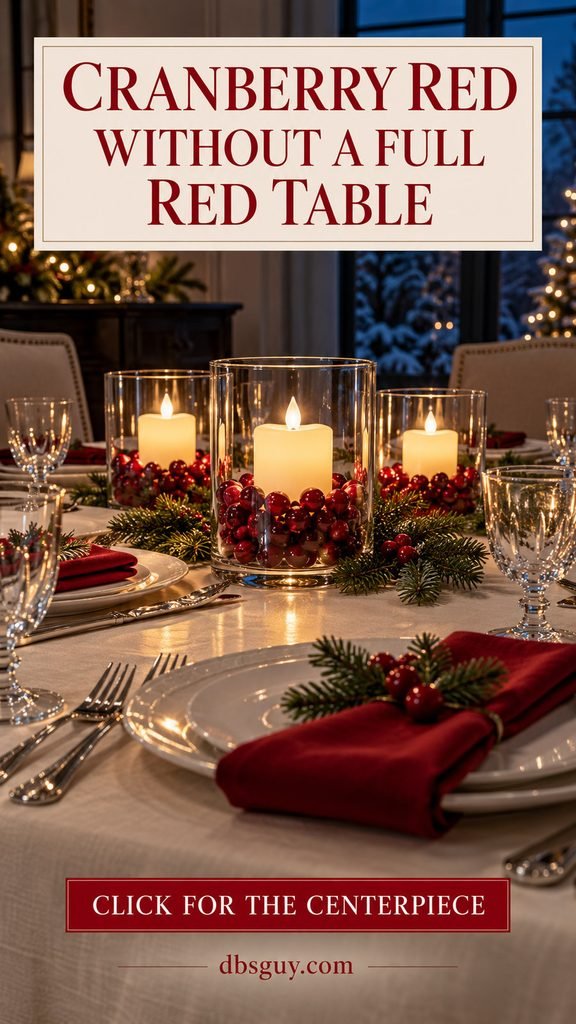
Clear glass vessels can concentrate a little red into a centerpiece without turning the whole table red. Cranberries at the bottom of three low cylinders create jewel-like color, while ivory linen and plain white plates keep the setting light.
Place fresh or faux cranberries in the dry outer display area and place a small LED pillar on a stable inner support so its base and battery compartment stay dry. The pictured concept uses dry vessels; it is not a floating-candle arrangement. Check the light manufacturer’s instructions before putting any electrical decoration near water.
Arrange short fir sprigs around the vessels, with red napkins repeating the cranberry color at each place. Set the cylinders on coasters or a narrow tray to protect the table. Prepare fresh-fruit decor close to the meal and remove it afterward. For a reusable version, use faux cranberries intended for decoration and keep them separate from anything guests might eat.
19. One Low Wreath for a Small Round Table
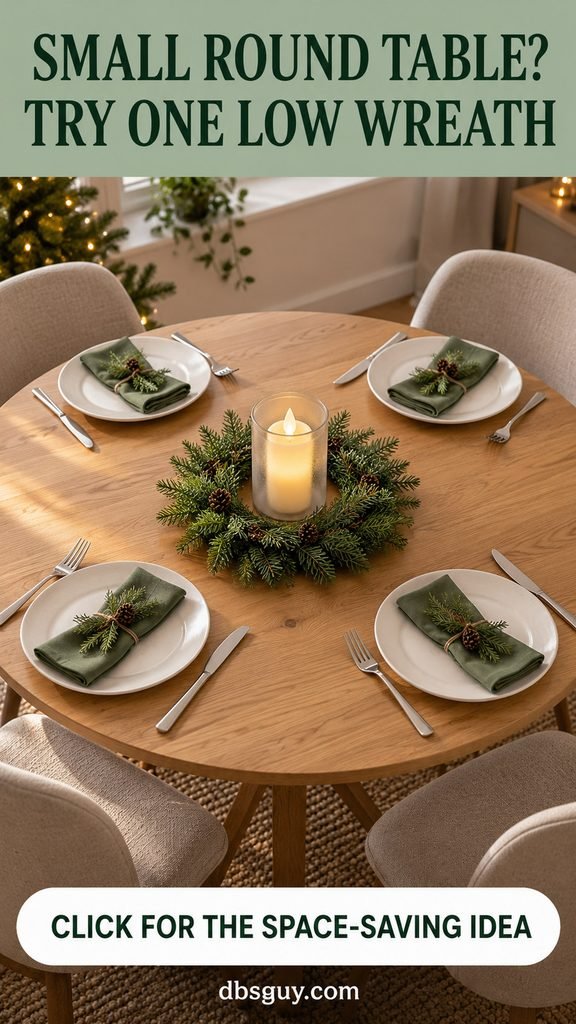
On a round table, a compact wreath gives every seat a view of the same centerpiece. It is a practical alternative to a long garland, especially when you are seating four people in an apartment dining area.
Set all four plates and glasses first, then measure the free space in the middle. Choose a wreath that fits inside that area with a clear gap around it. A frosted jar with an LED pillar can sit in the opening. Green napkins repeat the foliage color, and plain white dishes make the circular arrangement easy to read.
For a roughly 36- to 42-inch table, a wreath around 10 to 12 inches wide is a reasonable starting point to try, not a fixed rule; your plate and glass sizes decide the final fit. If serving bowls still feel squeezed, lift away the wreath and leave the single jar. Guests should not have to work around decorations to eat.
20. A Slim Row of Bud Vases for a Narrow Table

A narrow dining table benefits from a centerpiece made of small separate pieces. Three bud vases give you a festive line without the width of a large floral arrangement. Short evergreen stems are enough; the open gaps are part of the design.
Use low, stable vases with narrow bases and place them along the center. Add one or two small silver ornaments if you want shine. Keep the napkins pale and the tableware simple so the little vessels remain visible. Instead of a thick runner, leave the wood exposed or use a very narrow strip of linen.
Before you fill the vases, put your actual serving bowls on the table. Move the vessels until the bowls have comfortable landing spots. If guests will pass hot dishes, clear that path completely. This is a particularly useful layout for everyday apartment tables that need to feel festive without changing how the room functions.
Also Read: 17 Small Apartment Christmas Decor Ideas That Save Precious Floor Space
21. Christmas Morning Gingham and Coffee Mugs

A Christmas breakfast table can feel special while staying easy to use. Red-and-white gingham supplies the holiday energy; cream mugs, white plates, and green napkins keep the setting familiar. One low pitcher of evergreen is enough for the center.
Set out only the utensils and glasses you will actually use for breakfast. Put cinnamon rolls or pastries on a separate food-safe platter, and leave a clear spot for the coffee pot. The arrangement should make it easy for sleepy guests to sit down, pour a drink, and reach the food.
A washable cloth is helpful for brunch, and a shorter drop avoids fabric gathering around chair legs. If the pitcher is tall, replace it with a short jug or move it to the counter once everyone sits. You can set the dishes and napkins the night before, then add food and check the greenery in the morning.
Also Read: 15 Christmas Kitchen Decor Ideas That Keep Your Counters Clear
22. Coastal Winter Neutrals with Driftwood

A coastal home can keep its soft colors at Christmas. Ivory linen, pale blue napkins, woven seagrass placemats, and white dishes create the base. Driftwood, a few shells, pearl-colored ornaments, and short pine sprigs shift that palette into winter.
Use one low driftwood arrangement rather than scattering shells across the entire table. Keep the ornaments and natural pieces in a central display area, separate from food. Two small white ceramic trees make the seasonal theme clear without adding red or metallic glitter.
Clean and thoroughly dry natural materials before bringing them to the table, and check for sharp edges or loose sand. Place a protective layer beneath rough wood. If your existing coastal decor is bright turquoise, soften it with ivory napkins and use only a few blue accents. The winter feeling comes from the evergreen and tree shapes, so the room can keep its usual relaxed character.
23. A Miniature Woodland on a Tray

A little forest is a charming centerpiece when it stays low and contained. Three miniature trees, two wooden deer, pinecones, and faux moss can form a small landscape on a removable tray. Cream stoneware and linen napkins keep the surrounding places quiet.
Choose a tray first, then arrange the pieces inside its boundary. Put the taller trees toward the middle, the deer near the front, and pinecones in the gaps. Use moss-colored linen beneath the tray if you want the woodland color to extend down the table.
Avoid loose artificial snow or glitter around plates. If the miniature scene includes tiny pieces, keep it away from very young children who might treat them as toys. For dinner, lift the tray onto a sideboard if the serving dishes need the space. This look is especially effective with a winter view, but the miniature landscape also gives a city apartment a woodland mood.
24. Buffalo Check for a Cozy Cabin Table

Buffalo check brings a bold, cozy rhythm to a wood table. A red-and-black runner looks especially good with white enamel-style plates, black-rimmed mugs, and simple red napkins. The contrast feels sturdy and informal rather than delicate.
Place a short line of pine branches in a low galvanized trough, using a liner if it holds water. LED lanterns can sit at either end. Black flatware reinforces the plate rims, but ordinary stainless steel works if that is what you have.
Keep the check concentrated in the runner. Adding checked dishes, napkins, and chair covers can overwhelm the table. If you use real enamelware, check for chips and follow the maker’s care guidance; ceramic pieces with an enamel-inspired finish give a similar look. This setting suits a relaxed family dinner, a cabin weekend, or a holiday meal where everyone is likely to linger with a warm drink.
25. Burlap, Pinecones, and Everyday Cream Plates

For a rustic Christmas table, start with materials that already look comfortable together: wood, flax linen, jute, and pinecones. A narrow burlap runner gives the centerpiece its own lane, while cream dishes keep the places bright.
Fill a low wooden bowl with clean pinecones and a few short evergreen sprigs. Add LED tealights in glass jars and tie the napkins with simple twine bows. You can reuse everyday dishes and drinking glasses; the texture of the runner, bowl, and napkins does most of the styling work.
Shake out the burlap before setting the table and keep its loose fibers away from plates. Check natural pieces for dirt and insects, and use faux pinecones if that is more convenient. Choose a runner narrow enough to leave the place settings on a smooth surface. This is a good final choice when you want the table to feel festive without buying a coordinated dinnerware set.
Also Read: 50+ Elegant Christmas Table Decor Ideas to Inspire You
Make Your Christmas Table Comfortable to Use
Before buying anything, set one complete place with your own dishes. Then add the actual platter, serving bowls, and water pitcher you expect to use. The remaining space tells you how much centerpiece the table can handle.
- Keep a clear sightline. Sit in each chair and check whether branches, figures, or lights block the person opposite.
- Make the centerpiece movable. Trays, bowls, and small vessels are easier to relocate than loose decorations spread across the table.
- Style the places for the menu. Add a soup bowl or extra glass only when you need it; remove decorative chargers if they make settings crowded.
- Separate food and decor. Keep ornaments, craft materials, soil, and decorative fruit away from serving surfaces.
- Set the durable pieces early. Put out clean dishes, linens, and reusable decor ahead of time; add fresh fruit, plants, and food closer to the gathering.
For these foliage-and-fabric arrangements, battery-operated LEDs are the practical choice. If you use real candles elsewhere, the National Fire Protection Association’s candle safety guidance says to keep candles at least 12 inches from anything that can burn, use sturdy holders, and never leave a burning candle unattended. A glass lantern does not remove those precautions.
Christmas Tablescape Questions
What is the easiest way to decorate a Christmas table?
Use your everyday dishes, add napkins in one holiday color, and place one low bowl or small arrangement in the center. An ornament bowl, a compact wreath, or a bowl of pinecones gives you a clear focal point without needing a full collection of seasonal tableware.
How can I get a Rococo-inspired look on a budget?
Pick one decorative feature: scalloped chargers, a scroll-edged tray, shell-shaped napkin rings, or curved candleholders. Pair it with plain white dishes and a soft cloth. The shape of the accent creates the style; every piece does not have to be ornate. Inspect secondhand decorative pieces carefully, and use known food-safe dishes for eating.
What works best for a small Christmas dining table?
Choose a centerpiece that occupies one small area, such as the round-table wreath in idea 19, or use separate bud vases as in idea 20. Set the tableware and serving dishes first. If the centerpiece needs to move when dinner arrives, plan a place for it on a counter or sideboard.
Can I mix rustic and elegant table decorations?
Yes. Connect them through a repeated color or material. Ivory napkins and gold-edged plates can sit happily on a wood table beside a low pinecone arrangement. Keep one part of the setting simple so the ornate and natural details both have room to show.
Do Christmas table colors have to be red and green?
No. Blue and white, blush and gold, terracotta and copper, or ivory with silver can all feel festive. Include a recognizable seasonal element—evergreen, small tree shapes, stars, or ornaments—to give the palette its Christmas context.
How do I decorate without buying a new set of dishes?
Choose the idea closest to what you own. White plates work with almost every setting here; blue-patterned dishes suit idea 5, green pieces suit idea 9, and cream stoneware fits the rustic looks. Spend any decorating budget on one reusable accent, such as napkins or a runner, and build the centerpiece from suitable items already in the house.