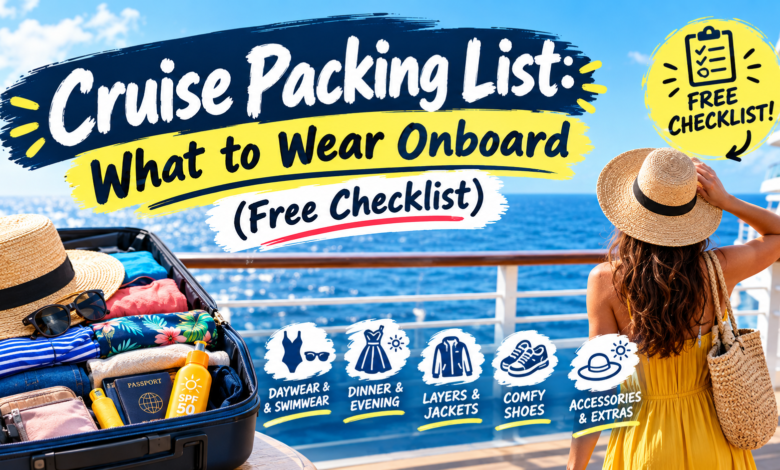
A useful cruise packing list starts with three things: comfortable daytime clothes, outfits that meet your ship’s dinner dress code, and a layer you can grab when the breeze picks up. You do not need a completely new outfit for every meal. You do need shoes you can walk in, swimwear that has time to dry, and a boarding bag that keeps your essentials with you.
This guide uses a seven-night warm-weather cruise as its starting point, with six onboard outfit situations and adjustments for cooler destinations. The free checklist near the end includes clothing quantities, carry-on essentials, and a final-morning reminder. Copy, save, or print it—no signup required.
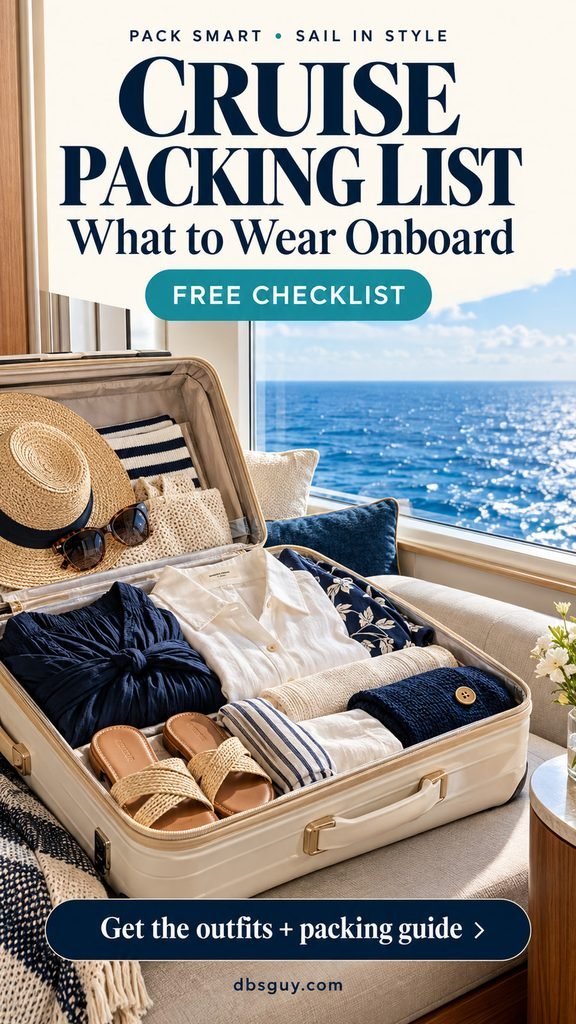
The images in this guide are AI-generated styling concepts, not photographs from a particular ship or a personally tested cruise wardrobe.
What to Pack for a Cruise: The Quick Answer
For a seven-night Caribbean, Bahamas, or warm-weather Mexico sailing, begin with this clothing plan. These are suggested totals, including what you wear to board—not additional items to squeeze into your suitcase.
- Everyday clothes: six mix-and-match tops, three bottoms, and one casual dress or an equivalent separates outfit.
- Evening clothes: one dressier outfit you can repeat, plus daytime separates that also work for ordinary dinners.
- Pool clothes: two swimsuits or swim trunks and one cover-up or pool-to-cabin outfit.
- Layers: one cardigan or light sweater, one compact wrap if useful, and a rain shell when the forecast calls for it.
- Shoes: one walking pair, one pool pair, and one evening pair. Add specialist footwear only for an activity that needs it.
- Personal basics: fresh underwear for each day plus a spare, socks for your sneaker days, sleepwear, and activewear only if you will use it.
This plan assumes you are comfortable rewearing clean outer layers and bottoms. If you want a fresh top every day, expect sweaty excursions, or have extra hotel nights, increase the quantities. A small suitcase is a goal you can work toward, not a promise that every traveler’s clothes will fit.
Check Your Cruise Dress Code Before Choosing Outfits
Look up your cruise line’s current attire guidance, the restaurants you have booked, and any announced theme nights. The same outfit may be fine in a casual venue and too relaxed for a different dining room. Do not assume the word “cruise” means every evening is formal.
For example, Royal Caribbean’s official dress-code guidance distinguishes casual, smart casual, and Dress Your Best evenings. Its current guidance lists two Dress Your Best nights for six- to ten-night cruises, subject to the ship and itinerary; it also keeps swimwear on the pool deck and excludes tank tops from its main and specialty dining rooms at dinner. Treat that as a Royal Caribbean example, not a rule for every cruise line.
For your own sailing, answer three questions before packing: Which dinners require a more polished outfit? Is any specific venue more formal? Will you actually attend the theme party? A white shirt already in your capsule may cover a white-themed event; you do not have to pack a separate costume for every activity.
Build a Seven-Night Cruise Capsule Wardrobe
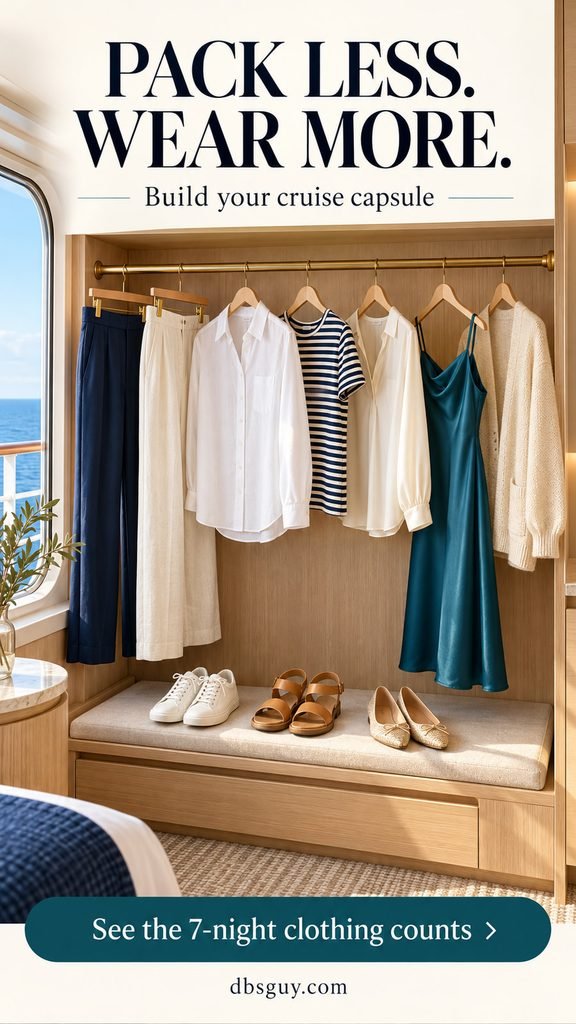
Pick a small color family so your clothes work together without much effort. Navy, ivory, and teal are an easy example: navy trousers go with a striped tee during the day and an ivory blouse at night, while a teal dress adds one stronger color for evening photos. Choose different colors if they suit you better; compatibility matters more than a particular palette.
Before anything goes into the suitcase, try each top with at least two bottoms. Then try the dinner outfits with the shoes and undergarments you will actually bring. A blouse that only works with an unplanned pair of pants is how an “extra” turns into three extras.
The wardrobe image shows a selection of coordinating pieces, rather than every item in the full checklist. Use it as a color-and-shape reference: comfortable trousers, uncomplicated tops, one dressier option, and a soft layer.
Prefer separates? Replace the casual dress with a top-and-bottom combination and the cocktail dress with a dress shirt and suitable trousers, a dressy pantsuit, or another outfit accepted by your venue. Keep the final item count honest when a swap adds two pieces instead of one.
What to Wear Onboard: Six Practical Outfit Situations
1. Boarding Day and Relaxed Time Around the Ship
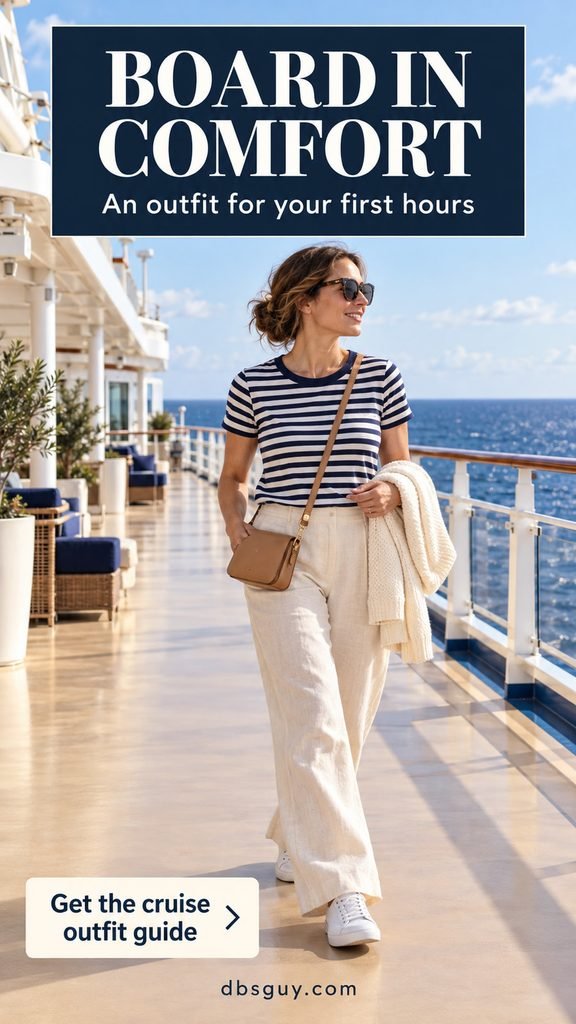
The outfit: a striped tee, relaxed ivory trousers, walking sneakers, a cardigan, and a small crossbody bag. It works for the terminal, finding your cabin, and exploring the ship without needing an immediate change.
Choose a waistband that stays comfortable while sitting, and a trouser hem that clears the floor with your actual shoes. If pale pants feel impractical for your travel day, navy or a darker neutral works just as well. A polo or short-sleeve button-down with lightweight trousers is another straightforward version.
For later sea days, rotate the same bottoms with your other daytime tops. Keep a clean blouse or shirt available for dinner instead of wearing your only evening top through a hot afternoon. A secure bag that fits your phone and cruise card is more useful around the ship than a bulky tote.
Carry-on detail: checked bags may arrive after you board, so keep a swimsuit, a change of clothes, and anything essential for your first hours with you. If you want more boarding-day context, read First Cruise: 29 Things Nobody Tells Beginners.
2. Pool Days and the Walk Back to Your Cabin
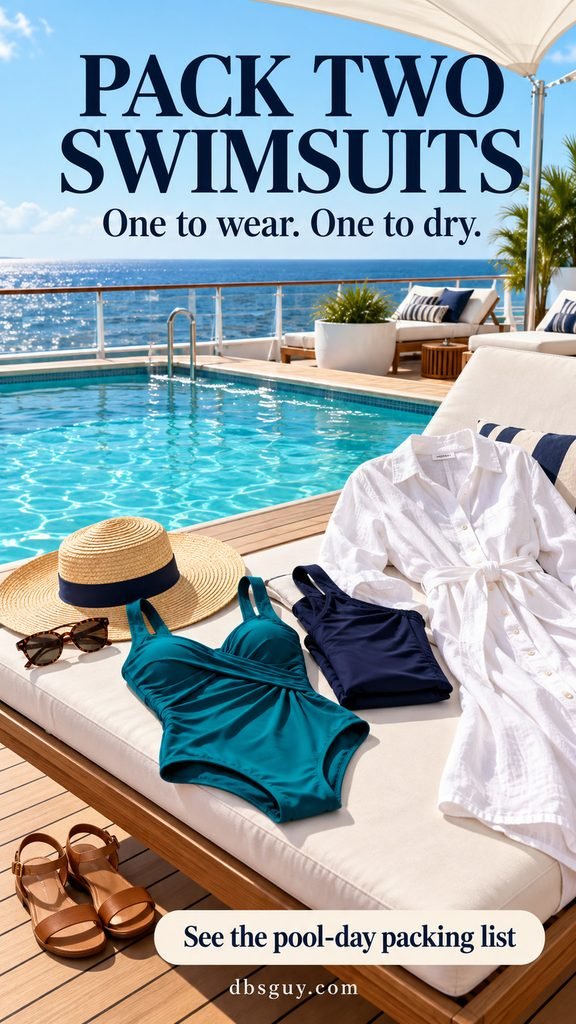
The outfit: a swimsuit or swim trunks, a cover-up or dry shirt-and-shorts combination, and pool sandals. Two swim options make it easier to rotate while one dries; drying time still depends on the fabric and cabin conditions.
The image pairs teal and navy swimwear with a white shirtdress cover-up. For the same effect, choose a cover-up that gives you the coverage you want and is easy to put on without a complicated tie. If you plan to enter a dining venue, check its policy and change into dry, appropriately covered clothing and shoes.
Pack a hat, sunglasses, and your usual sunscreen in the bag you will actually take to the pool. A small wet bag is useful for transporting a damp suit, but take the suit out afterward so it can dry. Do not drape clothing over the ship’s railings.
Check whether your ship supplies pool and excursion towels before giving a large beach towel suitcase space. For more warm-weather styling, see Cruise Outfit Ideas for Your Caribbean Vacation.
3. Casual or Smart Casual Dinner

The outfit: tailored navy trousers, an ivory short-sleeve blouse, neutral evening flats, and a wrap. The trousers can earn their place twice: with a tee for a dry, relaxed day and with a fresh top for dinner.
An opaque blouse is easier to style than one that suddenly needs a special camisole. Try the entire outfit under bright light before packing, and sit down in it to check comfort. Swap in a collared shirt and loafers if that better matches your style and the venue’s guidance.
Change the top, earrings, or bag for another evening rather than adding a second pair of nearly identical trousers. A simple casual dress can also handle a relaxed dinner when it meets the dress code. Carry the wrap in a small evening bag or over your arm so you have it if the room feels cool.
Keep wet swimwear, pool footwear, and workout clothing out of your dinner plan. When you are uncertain about shorts or jeans, check the specific restaurant rather than relying on someone else’s cruise photos.
4. A Dressier Evening or Formal Night

The outfit: a teal cocktail-length dress, champagne low heels or dressy flats, a neutral clutch, and an ivory wrap. A dressy pantsuit or a suit with the required shirt, tie, and shoes can fill the same role, depending on the venue.
Choose a piece you can sit, walk, and enjoy dinner in. The dress should work with the undergarments already in your bag; a neckline that requires a last-minute shopping trip adds stress before you even leave home.
If your schedule has two dressier evenings, repeat the outfit if that suits you. One night, wear the wrap and small earrings; another, put your hair up and choose a different necklace. You can also repeat everything exactly. Fresh styling is optional, and the restaurant’s requirements matter more than making every photo look different.
The image shows low heels, but dressy flats are a sensible swap when they meet the code. Try them with the hem before packing. If you bring heels, let them replace your evening pair rather than becoming a fourth pair by default.
5. The Gym, Walking Track, and Active Ship Attractions
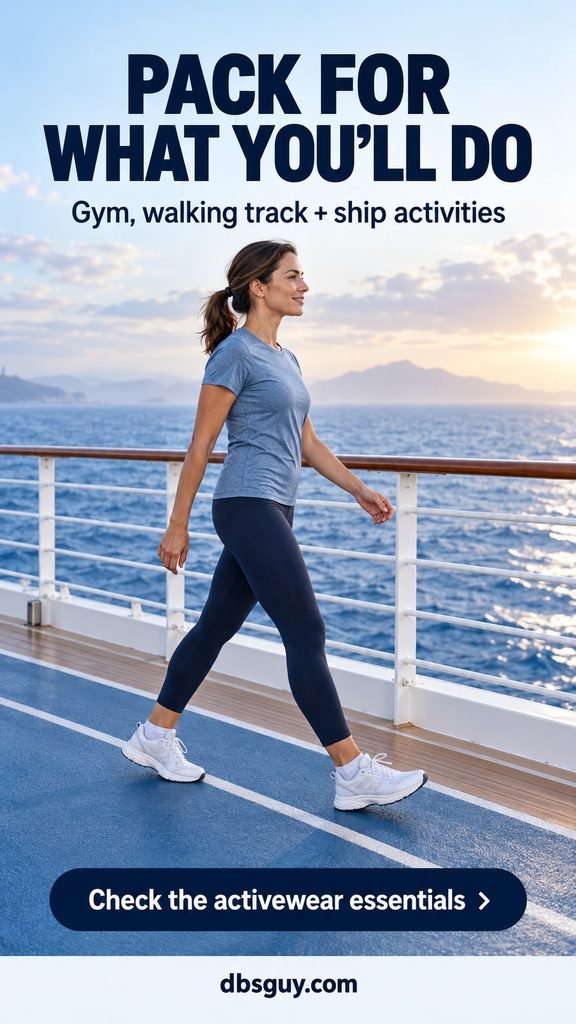
The outfit: an athletic tee, leggings or workout shorts, socks, and supportive sneakers. Pack activewear around the sessions you plan to do. One set may be enough for a light-use trip; bring more or arrange a wash if you expect several sweaty workouts.
Your everyday walking sneakers may also work for gentle gym sessions, which saves space. For running or an activity with specific footwear requirements, bring the appropriate pair and test the fit beforehand.
Check attraction rules before you sail. Some onboard activities require closed-toe shoes or particular clothing; Norwegian, for example, specifies closed-toe flat shoes for its ropes courses and race tracks. Having the right shoes in your cabin is more helpful than finding out about the requirement at the entrance.
Separate worn activewear from dinner clothes with a lightweight laundry bag. If the gym is not part of your vacation, skip dedicated gym outfits. Comfortable everyday clothes can still cover a quiet stroll around the deck.
6. Breezy Decks and Cool-Weather Sailings
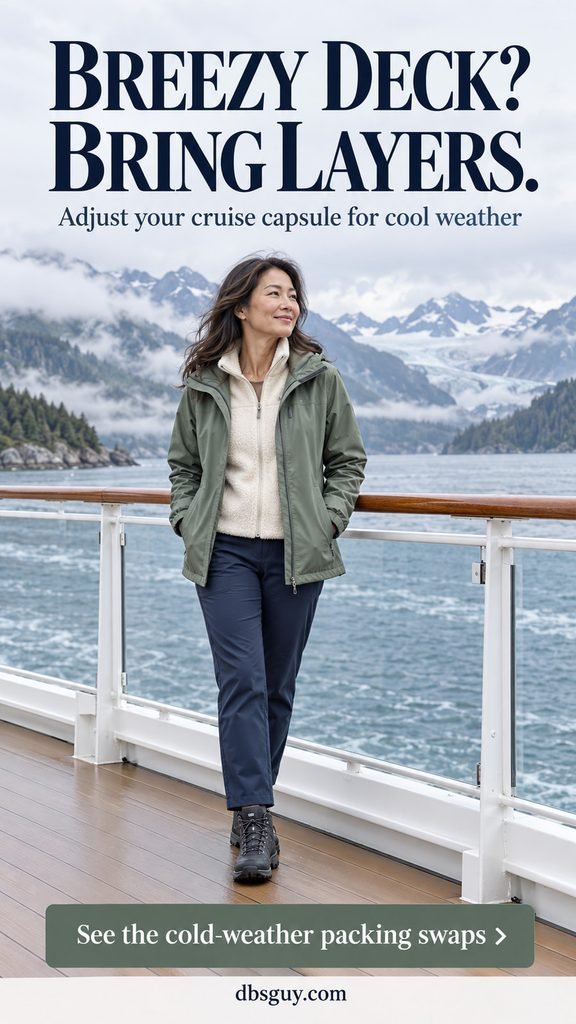
The outfit: for a cool coastal sailing, combine trousers with a fleece or sweater, a weather-appropriate shell, and walking shoes suited to the conditions. The image shows a sage shell over an ivory fleece with navy trousers and ankle walking boots.
On a warm-weather route, start with the lighter cardigan or sweater in your capsule. It is easy to carry indoors and useful outside when you want another layer. A wrap can handle a cool theater, but it does not replace a rain jacket.
For Alaska, Canada and New England, or Northern Europe, revise the warm-weather checklist instead of simply adding a coat to it. Replace shorts and some lightweight tops with long pants and long-sleeve pieces. Add warm layers, a rain shell, and footwear appropriate to your excursions and forecast. Pack a beanie and gloves when the conditions call for them; a tropical wardrobe with one sweater is not a complete cold-weather plan.
Keep one swim option if you expect to use the spa or heated pool. For Mediterranean sailings, retain the warm-weather base when appropriate, but account for shoulder-season rain and the clothing requirements of religious sites you plan to visit ashore.
Plan Repeats Before You Add More Clothes
Build the week from combinations, not seven separate piles. Here is a sample rotation using pieces already on the list; move the evenings to match your ship’s actual schedule.
- Boarding day: striped tee, ivory trousers, sneakers; change into a blouse and evening shoes for dinner.
- Pool-focused sea day: swimwear and cover-up during the day; navy trousers and a fresh top at night.
- Warm port day: shorts and a casual top; wear the casual dress or equivalent separates for a relaxed dinner.
- Dressier evening: wear your designated evening outfit with the wrap if needed.
- Another sightseeing day: repeat a clean bottom with a different top; save a dinner top for later.
- Another dressier evening, if scheduled: repeat the evening outfit with different accessories or the same styling.
- Final full day and departure morning: use your remaining clean pieces and keep the departure outfit accessible overnight.
You may need to replace a planned repeat after a spill, hot excursion, or sudden shower. That is why a spare top and fresh personal basics matter more than a second outfit packed only for a hypothetical photo.
Keep These Items in Your Boarding Bag
Carry required identification and travel documents, medications, valuables, your phone, and essential chargers yourself. Add a complete change of clothes and the swim items you want before your checked bag reaches the cabin. Keep medication in its original labeled packaging and arrange a suitable extra supply for delays with your pharmacist or prescriber.
If you are flying, account for airport security and airline bag limits too. A cruise suitcase allowance does not determine what your airline will accept. Put the small toiletries you need immediately in your permitted flight liquids bag.
Before the final night: if you use the service that collects suitcases outside your cabin, set aside your departure clothes, shoes, underwear, toiletries, documents, and medications first. If you choose to carry your own luggage off, follow your ship’s instructions and make sure you can manage every bag.
Free Cruise Packing Checklist
This is a practical starting checklist for one adult on a seven-night warm-weather cruise. The clothing counts include the boarding outfit and assume some rewearing of clean outer garments. Add items for extra travel days, personal needs, your actual dress code, and the forecast.
Save a screenshot, copy the checklist into your notes, or select this section and print the selection if your browser offers that option. You can also paste it into a blank document to print. Check off repeated carry-on items only once; their second mention tells you where to put them.
Ship / sailing: ____________________ Nights: ______ Extra travel days: ______
Clothing and Layers
- ☐ 6 everyday tops, including the boarding top; add 2–3 if you prefer fresh tops daily or expect heavy sweating.
- ☐ 3 everyday bottoms, including the boarding bottom; aim for at least one pair suitable for dinner.
- ☐ 1 casual dress, or an additional top-and-bottom outfit that suits your style.
- ☐ 1 complete dressier outfit, with any jacket or tie required by your venue; repeat it if appropriate.
- ☐ 2 swimsuits or swim trunks.
- ☐ 1 cover-up or dry pool-to-cabin outfit.
- ☐ 1 cardigan or light sweater.
- ☐ 1 compact evening wrap, if useful.
- ☐ 1 packable rain shell when needed for weather or excursions.
- ☐ 9 pairs of underwear for eight onboard calendar days plus a spare; add pairs for hotel or extra travel days.
- ☐ Socks for each sneaker day, plus a spare; about 8–9 pairs if wearing sneakers daily.
- ☐ 2–3 bras or other support garments, if worn; include what the evening outfit needs.
- ☐ 2 sets of sleepwear or equivalent sleep pieces.
- ☐ 1–2 activewear sets only if needed; increase or plan laundry for frequent workouts.
- ☐ Cold-weather swaps: long pants, long-sleeve tops, fleece or sweaters, suitable outerwear and footwear; hat and gloves as needed.
Shoes, Bags, and Accessories
- ☐ 1 pair of broken-in walking sneakers or suitable walking shoes.
- ☐ 1 pair of pool sandals.
- ☐ 1 pair of evening shoes; choose flats or low heels that match the dress code.
- ☐ Activity-specific footwear only when required by your plans.
- ☐ Sun hat and sunglasses.
- ☐ Small zip-top crossbody or day bag; compact pool tote if needed.
- ☐ Small evening bag, if your day bag will not suit dinner.
- ☐ Minimal jewelry, a belt if needed, and hair accessories.
- ☐ Laundry bag and a wet bag for transporting damp swimwear.
Documents, Toiletries, and Essentials
- ☐ Identification, passport or other documents required for your exact itinerary, visas if applicable, and boarding details.
- ☐ Travel insurance details, emergency contacts, and copies of important documents stored securely.
- ☐ Medications in original labeled packaging, with a planned extra supply for delays.
- ☐ Toothbrush, toothpaste, deodorant, skincare, and personal hygiene supplies.
- ☐ Sunscreen and any other sun-care items you normally use.
- ☐ Hairbrush or comb, preferred hair products, and basic makeup if used.
- ☐ Glasses or contact lenses and their care supplies, if used.
- ☐ Phone, charging cable, and a charging device permitted by your cruise line.
- ☐ Small personal first-aid supplies and any motion-sickness option appropriate for you; ask a pharmacist if unsure.
- ☐ Refillable water bottle, where permitted, and excursion-specific items you have confirmed you need.
Move These Essentials into Your Carry-On
- ☐ Required travel documents, medications, valuables, phone, and essential chargers.
- ☐ Complete change of clothes and underwear.
- ☐ Swimsuit, cover-up or dry clothing, sandals, and sunscreen if using the pool before bags arrive.
- ☐ Glasses, hygiene items, and anything needed for the first few hours.
Before You Close the Suitcase
- ☐ Check the forecast for departure, sea days, and every port.
- ☐ Confirm restaurant dress codes, theme nights, activity rules, and laundry options.
- ☐ Check the line’s prohibited-items list and airline rules; do not assume a travel iron, steamer, or power strip is allowed.
- ☐ Label luggage according to the line’s instructions and check airline size and weight limits if flying.
- ☐ Try on complete outfits with shoes and undergarments.
- ☐ Keep a clean departure outfit and overnight essentials out before any final-night luggage collection.
- ☐ Personal additions: ________________________
Small Packing Choices That Prevent Annoying Problems
Choose clothes that tolerate a suitcase. A textured blouse or knit often needs less fuss than a sharply pressed shirt. Linen is comfortable in heat, but it creases; only pack it if that relaxed look suits you. Hang dinner pieces when you unpack, and check whether paid pressing or laundry is available before you depend on it.
Leave prohibited garment-care tools at home. Royal Caribbean and Norwegian prohibit clothing irons and steamers. Check your own line’s rules rather than packing a small one on the assumption that travel size makes it acceptable.
Count laundry as a plan only after you confirm it. Self-service facilities vary by ship. Norwegian’s current packing guidance describes send-out laundry rather than self-service. Check availability, charges, turnaround, and care limitations before reducing essentials.
Give shoes more scrutiny than accessories. Walk in each pair before departure. Three comfortable pairs that cover your actual activities usually serve you better than several nearly identical evening shoes.
Cruise Packing FAQs
Do I need a new dinner outfit for every night?
No. You can repeat clean clothes and change the combination. One dinner-friendly bottom with two or three suitable tops gives you options without seven complete evening outfits. Pack more if separate outfits are part of the vacation you want.
Can I wear jeans or shorts to dinner?
It depends on the line, restaurant, and evening. Check the exact guidance for your booked venues. A pair of full-length trousers and a suitable top gives you an alternative when your casual shorts or jeans do not meet the policy.
How many swimsuits should I bring?
Two is a useful starting point for a pool-focused warm-weather cruise. Add another only if frequent swimming, fit preferences, or slow drying justify it. For a cool-weather trip where you may only visit the spa, one may suit your plans.
Can I pack a seven-night cruise in a carry-on?
Possibly, with compact clothes, limited shoes, some rewearing, and a bag that meets your airline’s rules. Bulkier cold-weather layers, formalwear, medical supplies, or extra land days may make a larger bag more practical. Test-pack early instead of discovering the problem at the terminal.
Should I bring a jacket on a Caribbean cruise?
A light layer is useful if you feel cool indoors or on breezy decks. A rain shell serves a different purpose and depends on the forecast and excursions. Check your actual route rather than treating every warm-weather departure as identical.
How do I adapt this checklist for a shorter or longer cruise?
For three or four nights, reduce everyday clothes while keeping documents, medications, weather protection, and necessary shoes. For a longer sailing, add fresh personal basics and tops, or confirm a laundry plan. Dressier outfits should follow the announced schedule, not a fixed number per week.
Also Read
- 30 Stunning Cruise Ship Outfit Ideas You’ll Love
- First Cruise: 29 Things Nobody Tells Beginners
- Classy Italy Vacation Outfit Ideas for a cruise with Italian ports or extra days ashore.