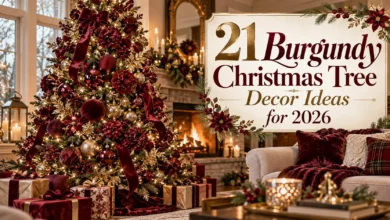
A silver and gold Christmas tree looks expensive when the finishes feel intentional: a little shine, a little softness, and enough room for each decoration to stand out. You can get that effect with ornaments you already own. The real decisions are which metal leads, what texture breaks up the sparkle, and where the eye lands first.
These 27 silver and gold Christmas tree ideas range from snowy neutrals and vintage glass to dramatic velvet and small-space trees. Each look includes the details that make it work, plus a practical way to adapt it without replacing your entire ornament collection.

The images in this article are AI-generated decorating concepts, created to illustrate the color combinations and styling ideas.
1. A Classic Mixed-Metal Tree with Warm White Lights
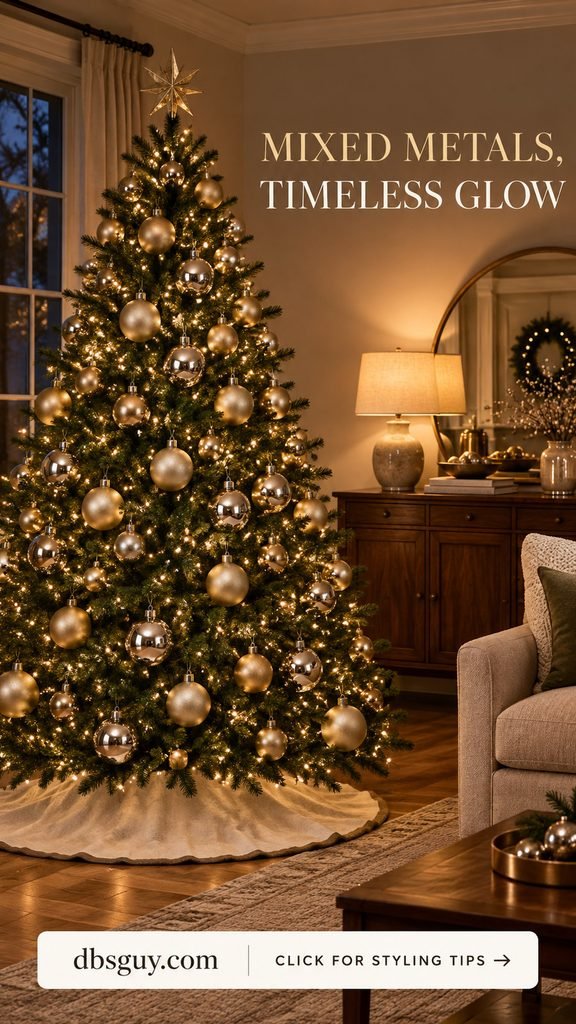
Start with a green tree, pale gold balls, polished silver ornaments, and warm white lights. This is the easiest look to build around an existing collection because it relies on repetition rather than a specialty decoration.
Let one metal be slightly more noticeable. For a warm living room, try roughly two gold ornaments for every silver one as a starting point, then adjust by eye. Scatter both metals through the top, middle, and bottom instead of keeping them on opposite sides. Mix a few reflective balls with softer satin finishes so the tree has highlights without looking like a wall of mirrors.
An ivory linen skirt and simple star finish the look. Before buying another box of ornaments, move some decorations farther into the branches; the extra depth may be all the tree needs.
2. Champagne Gold and Silver on a Flocked Tree
A flocked tree already brings a strong texture, so its ornaments can be quieter. Choose champagne gold, brushed silver, and ivory rather than bright yellow gold and lots of glitter. The pale palette lets the snowy branches remain part of the design.
Keep some ornaments near the outer tips and others inside the foliage. If every ball sits at the same depth, the soft colors can flatten into one pale surface. A handful of ribbed or faceted pieces adds definition without introducing another color.
This combination suits a cream bedroom, a light living room, or a soft winter entryway. Use an ivory skirt to continue the snowy effect, and skip large ribbon swags if they hide too much of the flocking.

3. Vintage-Style Mercury Glass and Antique Gold
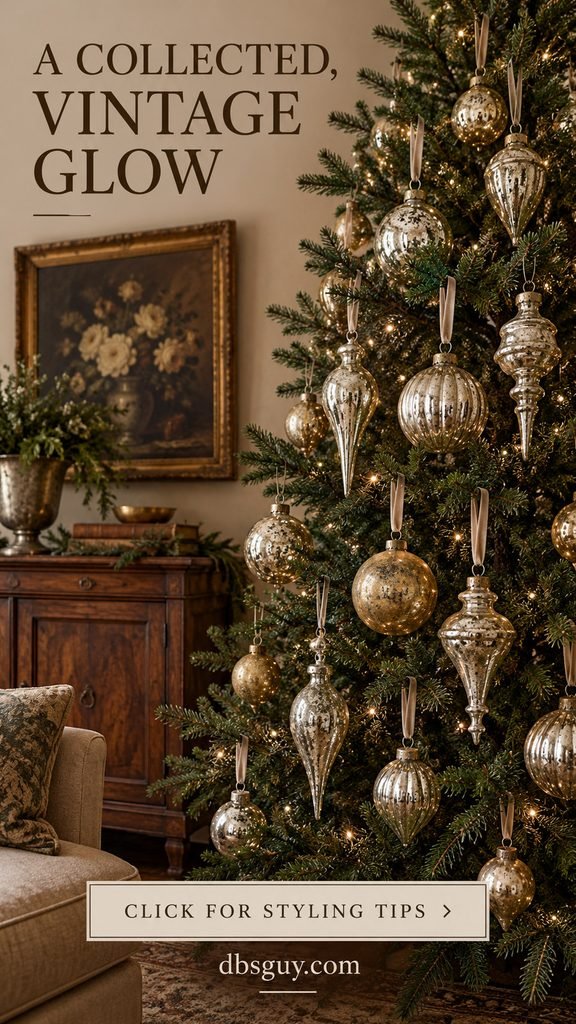
Speckled silver finishes and aged gold give a tree the feeling of a collection gathered over time. Look for mercury-glass-style ornaments in different silhouettes: ribbed balls, long finials, and teardrops. Their shapes do more of the decorating work than a perfectly matching set would.
Hang the longer pieces where they have space beneath them. A finial pressed against the branch below loses the detail that makes it special. Narrow taupe ribbons at the ornament caps add a soft, almost jewelry-like touch.
You do not need genuine antiques. A few vintage-inspired statement pieces mixed with basic metallic balls can establish the look. Keep the surrounding room calm—wood furniture, warm neutrals, and a plain base work particularly well—and use sturdy interior branches for heavier glass ornaments.
4. Two-Tone Ribbon Cascades
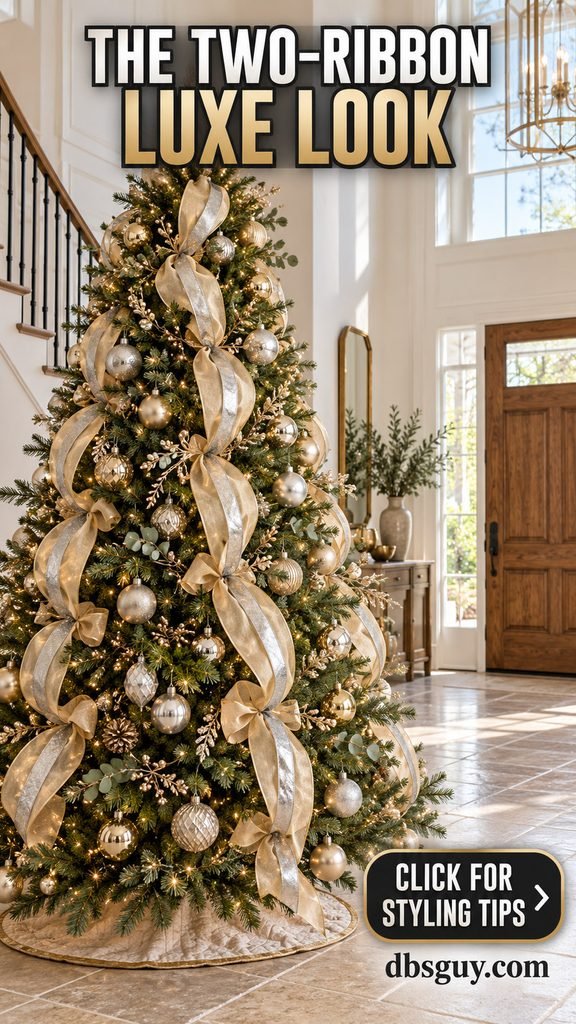
Layer a narrower silver ribbon over a wider champagne ribbon, then guide the pair downward in loose vertical sections. The two edges create a tailored detail that is visible even from across the room.
Instead of trying to manage one enormous length, shape a short test section first. Tuck its ends into the foliage, let the center billow, and check how much branch space it covers. Repeat that movement along a few loose paths, staggering the loops rather than making straight stripes.
Wired edges help the loops hold their form; Balsam Hill’s ribbon guide explains that material choice. Add metallic balls between the cascades, and keep optional leaf picks small. The ribbon should remain the feature, with visible greenery separating each section.
5. Statement Gold Bows with Brushed Silver Baubles
Large gold bows give you a strong focal point without covering the tree in continuous ribbon. Pair them with brushed silver balls, whose quieter finish lets the fabric texture take the lead.
Make one bow and hold it against the tree before cutting the rest of your ribbon. The loops should look generous without swallowing a whole tier of branches. Place the finished bows at staggered heights, with their tails falling into different open spaces. Keep the knots facing the room so they read as deliberate decorations.
A few smaller gold ornaments connect the bows to the rest of the tree. To stretch your supplies, concentrate the larger bows on the sides people actually see, then use smaller matching accents around the remaining branches.

6. Modern Geometric Silver and Gold
Wire diamonds and open-frame gold shapes bring a graphic quality to a Christmas tree. They suit a contemporary room because their outlines feel light, while the metal still catches the glow of the lights.
Choose two related geometric shapes rather than a different shape on every branch. Give the open ornaments visible greenery behind them; against another shiny ball, their outlines become harder to read. A few matte spheres soften the angular pieces.
Leave some spaces undecorated and finish with a simple metal collar. This is a good option if you prefer a clean silhouette or have a narrower tree. Avoid adding elaborate ribbon, floral picks, and a busy skirt—the geometry already supplies the interest.

7. Crystal-Look Icicles with Gold Accents
Clear faceted drops create a wintery sparkle without turning the whole tree silver. Combine them with silver balls and a smaller number of gold ornaments for warmth. Lightweight acrylic versions are an option when you want the appearance of crystal with less weight on the branches.
The important detail is clearance. Place each icicle on a branch where its tip hangs freely, and vary the lengths so the drops do not form an accidental straight line. Keep some clear pieces near lights so their facets remain visible.
A few ribbed gold ornaments give the transparent decorations something solid to contrast with. Skip heavy ribbon over the front: this look depends on seeing the slender drops, especially against darker green foliage.

8. Gold Magnolia Leaves and Silver Ornaments
Broad magnolia leaves change a tree’s outline in a way ordinary balls cannot. Choose artificial leaves with a muted gold finish and tuck them into the foliage beside silver ornaments. The wide surfaces create little pools of reflected light.
Use short stems or small clusters, positioning some leaves to face forward and others slightly sideways. A tree covered with identical front-facing sprays can look stiff. Let a few leaves extend beyond the needles, but keep enough evergreen visible to preserve the tree’s shape.
This works especially well in rooms with cream walls, wood, or bronze accents. Repeat the gold finish in a collar or a few small balls. If the leaves are the statement purchase, keep the rest of the ornament collection simple.

9. Woodland Pinecones with a Metallic Finish
Natural brown pinecones make silver and gold feel comfortable rather than formal. Their rough surfaces are a welcome break from smooth ornaments, especially in a room with wood furniture, woven textures, or an oatmeal-colored sofa.
Use ready-made pinecone ornaments, or give clean, dry craft pinecones a light gold finish on the scale tips. If you paint them, follow the paint’s directions and let them dry fully before decorating. The brown should remain visible; a solid metallic coating loses the woodland contrast.
Add silver balls, small gold accents, and a few taupe linen bows. A basket can disguise an artificial tree stand if it fits around the assembled base without affecting stability. Keep the metallics scattered through the branches so the pinecones do not become the only visible feature.

10. Handmade Paper Stars with Metallic Ornaments
Large ivory paper stars can make a modest ornament collection look thoughtfully styled. Their matte folds give silver and gold balls a soft background, and their size fills visual space without requiring dozens of extra decorations.
Choose one star style and repeat it in a couple of sizes. Hang them with fine gold cord, rotating the faces slightly so the folded edges catch the light. Position the largest stars where they will not hide your prettiest ornaments.
The clean finish matters more than complicated construction: crisp folds, neat attachment points, and a consistent paper color will do a lot. If paper crafts are not your thing, use purchased folded stars. Pair the tree with ivory gift wrap to carry the same texture down to the base.

11. Navy Velvet with Silver and Gold
Navy velvet gives mixed metallic ornaments a deep, quiet backdrop. It is a useful choice for a den or living room with blue upholstery because the tree can connect to the room without becoming a blue-themed display.
Use velvet in broad bows or loose swags, then place silver and gold balls nearby. The metallic pieces should remain plentiful enough to be recognizable from a distance. In a darker room, larger reflective ornaments help the combination read more clearly than tiny decorations alone.
Check your ribbon sample in daylight and with the tree lights on. A very dark navy may look nearly black at night. Keep the base simple, and repeat the blue in only a few gifts rather than adding another competing pattern.

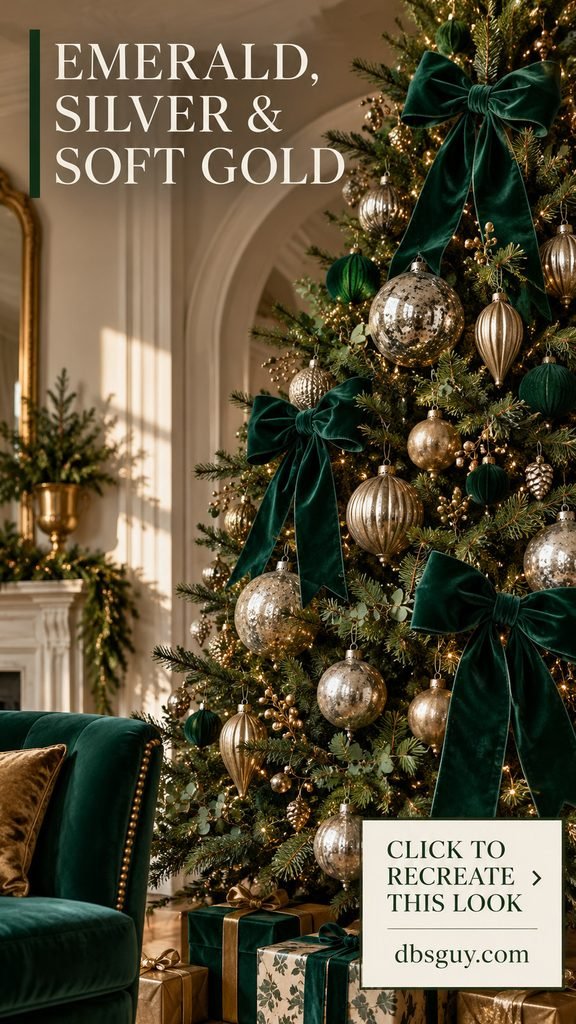
12. Emerald Velvet and Antiqued Metallics
Emerald velvet blends with the tree’s greenery while adding a richer surface texture. Antiqued silver and muted gold keep the effect softer than a collection of mirror-bright ornaments.
Choose ribbon that is visibly different from the needles: saturated emerald, a substantial pile, and clearly shaped loops. If the fabric disappears into the foliage, place an aged silver ball beside each bow to outline it. Long gold drops add another shape without requiring more color.
This look suits a warm neutral room with traditional furniture. A handful of emerald velvet ornaments can echo the bows, but they are optional. For a smaller budget, buy one roll of distinctive ribbon and reuse your existing gold and silver balls around it.
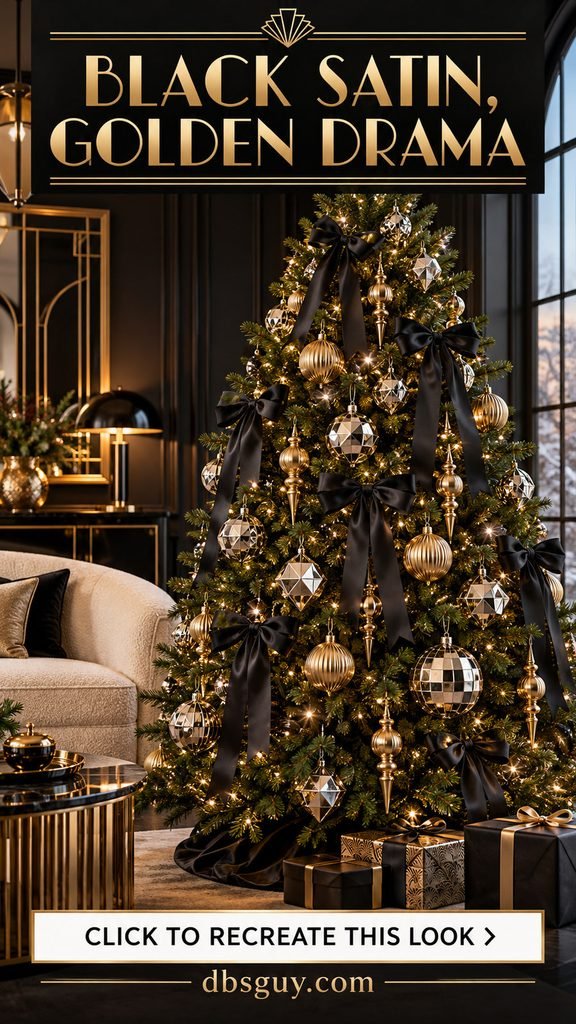
13. Black Satin for an Art Deco Tree
Small black satin bows sharpen a silver and gold palette. Combine them with faceted silver shapes, ribbed gold balls, and elongated finials for a tree that feels more tailored than rustic.
Keep black as an accent. Slim bows and narrow tails will define the metallic ornaments without creating large dark gaps in the greenery. Use a few repeated ornament shapes, and leave room around the longer finials so their vertical lines are visible.
A dark skirt or restrained black-and-gold gift wrap can connect the base to the branches. In a bright room, the bows bring welcome contrast; in a dark room, let reflective silver pieces carry more of the visual weight. Avoid mixing in several patterned ribbons, which can blur the clean geometry.
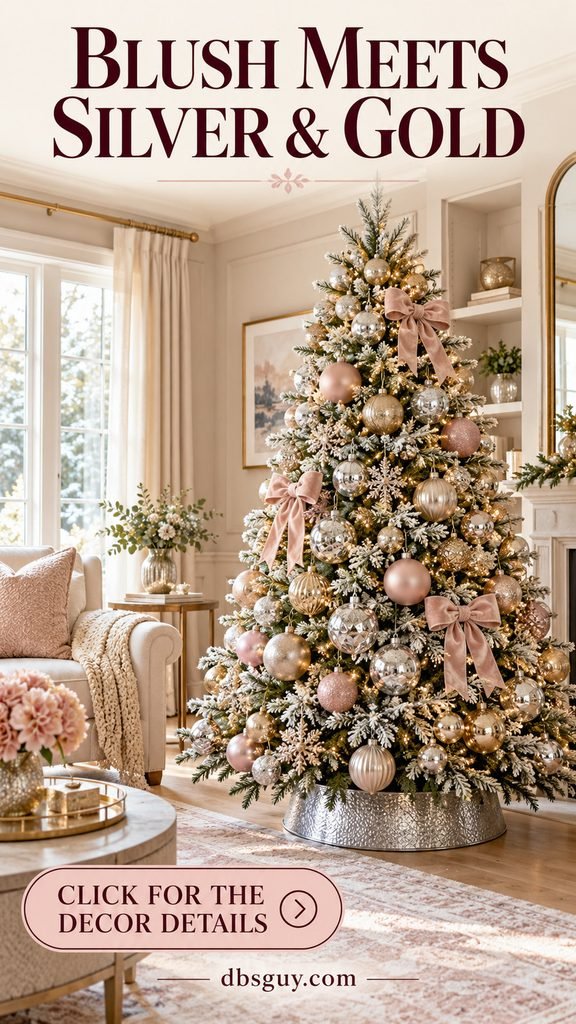
14. Blush Accents with Silver and Champagne Gold
A small amount of dusty blush makes silver and champagne gold feel warmer without turning this into a pink tree. Matte pink balls work especially well against flocked branches, where their color remains subtle but visible.
Build the metallic layer first, then add blush ornaments in scattered pockets. A few soft pink bows can repeat the accent. Step back before adding more: the gold and silver should still be the first colors you notice.
Choose a muted blush instead of several pink shades competing with one another. This combination fits a pale bedroom or a softly colored sitting room. If you already have silver ornaments, a small set of champagne balls and one blush ribbon can make a useful seasonal update.
15. Sage Eucalyptus with Soft Metallics
Dusty sage eucalyptus introduces a different leaf shape, giving an evergreen tree a softer botanical outline. Use artificial sprigs alongside pale gold drops and satin silver balls; their rounded leaves contrast with the needles without becoming another shiny surface.
Tuck the stems deeply enough that their attachment points disappear, then let short portions extend at selected branch tips. Some can angle upward and others sideways. Too many long sprays will obscure the tree’s natural taper.
Keep the gold pale rather than orange-toned, and choose a taupe or oatmeal base. A few sage bows, as shown in the concept, can repeat the leaf color. If you already own faux eucalyptus stems, test a few before buying more—the new foliage shape can have a noticeable effect with very little material.

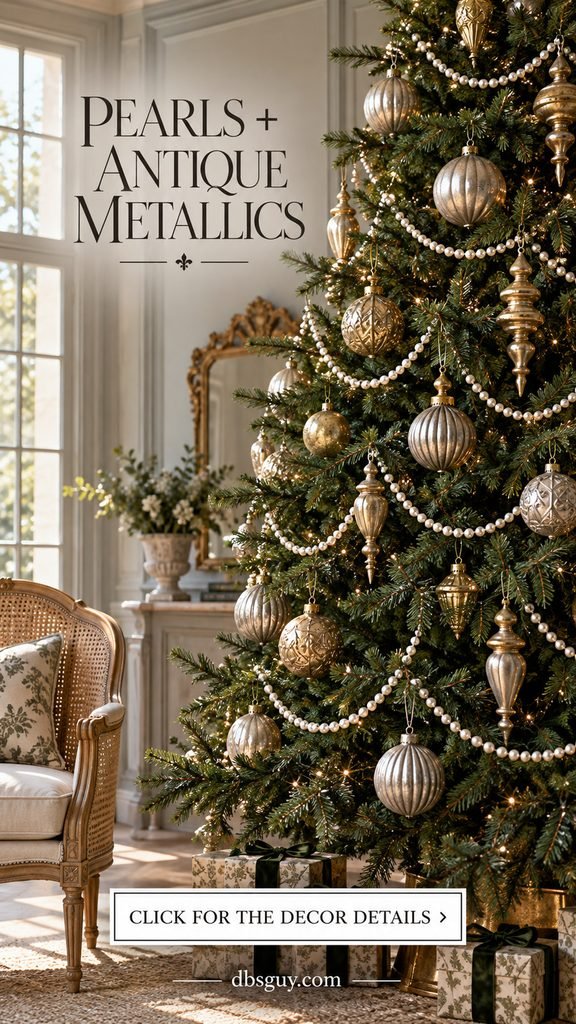
16. Pearl Garlands with Antique Gold and Silver
Faux pearl garlands give metallic ornaments a graceful, jewelry-like setting. Their creamy color softens aged silver and antique gold, making this a good choice for a room with pale gray walls, cane furniture, or traditional details.
Hang the strands in shallow scallops, anchoring each section to sturdy branches. Avoid pulling them tight around the tree like a belt. Keep the curves shorter near the top and allow slightly wider drapes where the tree broadens.
Place long gold finials in the open spaces beneath the scallops, with silver balls nearby. You can skip ribbon entirely. If your pearl strands are heavy, reduce the length of each hanging section and check that the branches do not bend under the load.
17. A Celestial Tree with Gold Stars and Silver Moons
Gold stars and silver crescent moons give mixed metals a clear theme without adding another color. Against green foliage, their silhouettes are easy to recognize, especially when ordinary balls provide a quieter background.
Spread the stars through the tree and use the moons more selectively. Hang the crescents where their open shape is not lost against another ornament. A few different sizes add movement, but keep the largest pieces apart so each has space.
Finish with a simple gold star rather than an elaborate ribbon crown. The concept includes a few navy balls to echo the room; you can omit them for a strictly metallic palette. To keep spending focused, buy a small set of celestial ornaments and build the rest from decorations you already have.

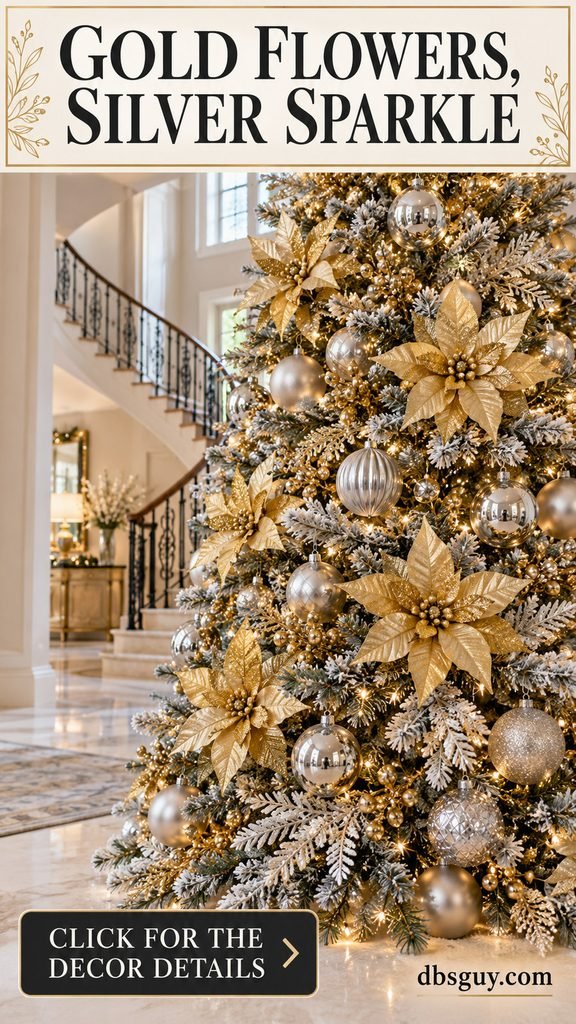
18. Gold Poinsettias on a Silver-Dressed Tree
Gold poinsettia picks create broad focal points among silver ornaments. Their pointed bracts offer a distinct holiday shape, and the gold stands out beautifully against lightly flocked branches.
Choose artificial flowers with a subdued metallic finish. Arrange them at staggered heights, facing slightly different directions, then fill the spaces between them with smaller silver balls. A few flowers placed well are more effective than a dense layer hiding every branch.
Secure the stems within the foliage instead of resting the heads loosely on the tips. For a smaller tree, use smaller flower heads so their proportions remain balanced. If you want to refresh last year’s silver tree, this is an efficient place to put the new decorating budget.
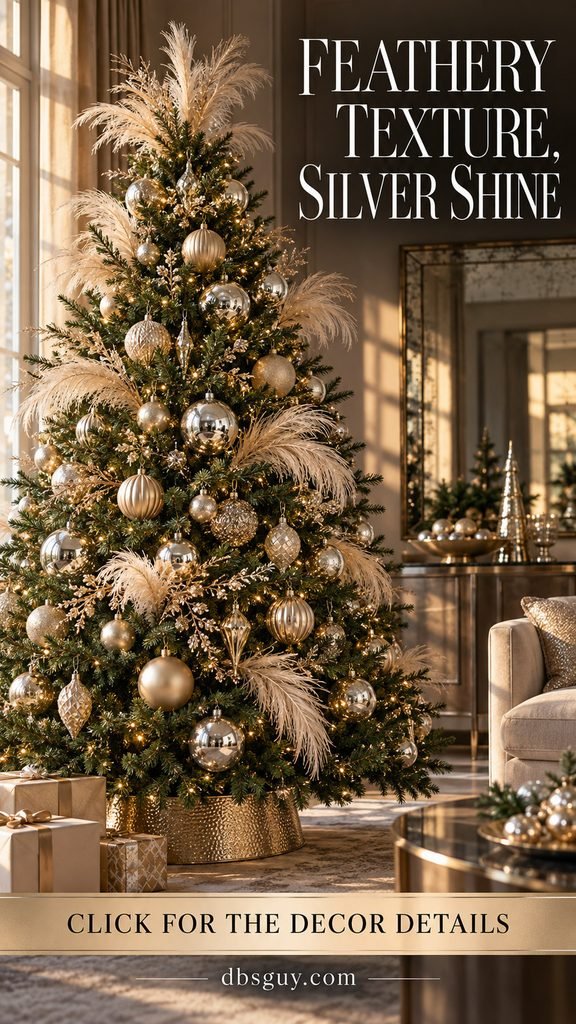
19. Champagne Feather Picks and Silver Shine
Artificial champagne feather picks add a light, airy texture to shiny silver ornaments. Unlike broad leaves or flowers, their fine edges soften the outline while allowing glimpses of the needles behind them.
Use short plumes at a few outer branches and a small cluster near the crown. Turn the tree or walk around it as you work; picks that look graceful from the front can protrude awkwardly from the side. Tuck each stem securely into the foliage.
Keep the ornaments fairly simple—silver balls and pale gold accents are enough. This suits a glamorous room with soft upholstery and smoky mirrors. Resist adding feather picks to every empty spot; the effect depends on small areas of softness interrupting the metallic shine.
20. A Silver-to-Gold Ombre Tree
Organizing ornaments by color creates a completely different look from evenly mixing them. Begin with mostly silver near the top, introduce champagne and mixed metals in the middle, and let pale gold become more prominent toward the bottom.
Make the transitions gradual. Carry a few silver pieces into the lower half and a few gold pieces upward so the tree does not look divided into rigid bands. Repeat similar ball sizes across the color zones; otherwise, size changes may compete with the gradient.
A simple base and minimal ribbon keep the arrangement visible. Sort your existing ornaments by finish before starting. You may already have enough variation to create the progression, and it is easier to spot missing tones while they are laid out.

21. Oversized Baubles for a Fuller-Looking Tree
A handful of large metallic balls can make an artificial tree feel more substantial. The key is depth: nestle larger pieces into open areas, then let smaller ornaments sit farther forward. The varied sizes create a layered surface.
For a broad tree, lightweight balls around 5 or 6 inches across are one possible statement size. Hold one against the branches before buying a set. A size that looks balanced on a full tree may overwhelm a slim one.
Attach the larger balls to sturdy branches, avoiding weak tips that droop. Balsam Hill’s decorating guidance also recommends varying ornament sizes and placing larger pieces deeper in the foliage. Fill around them with smaller silver and gold balls, leaving the lights visible.

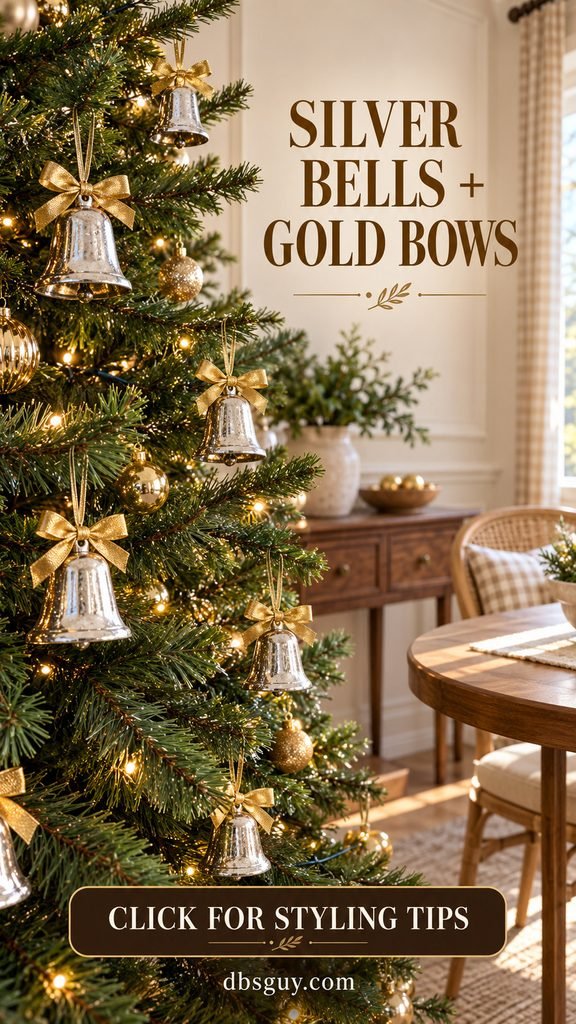
22. Silver Bells with Small Gold Bows
Silver bells tied with little gold bows are charming without becoming overly busy. Their recognizable shape offers something different from the usual collection of round ornaments, and the paired metals are visible on each individual decoration.
Tie the bows near the bell caps or hanging loops, keeping the tails short enough that the bell remains exposed. Thin ribbon works better here than wide wired ribbon. Repeat the bells at different heights, then fill between them with small gold balls.
A few ribbed metallic ornaments can add variety, but avoid competing oversized bows. This combination suits a breakfast nook or cozy family room. You can also update bells you already own by changing their hanging ribbon rather than buying a new set.
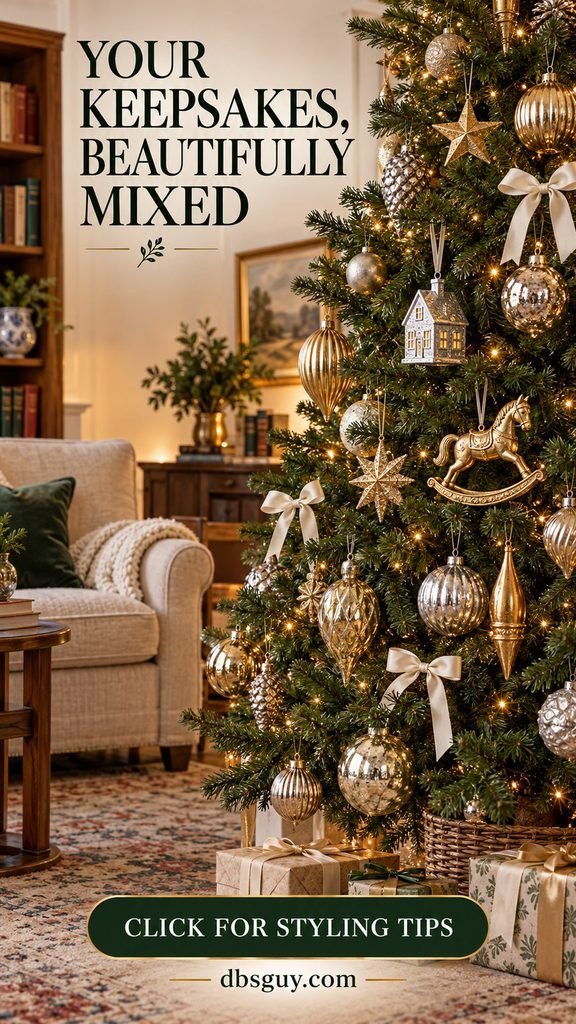
23. An Heirloom-Inspired Mix of Gold and Silver
A coordinated tree can still have personality. Mix silver houses, gold rocking horses, stars, vintage-style balls, and other meaningful shapes, then use small ivory bows to create a gentle thread connecting them.
Place the most distinctive ornaments first, leaving room to see their outlines. Fill the gaps with plain silver and gold balls rather than buying a matching replacement for every keepsake. The ordinary ornaments act as the background.
If an heirloom introduces another color, you can keep it; simply repeat a nearby metallic finish or ribbon to integrate it. There is no need to repaint or alter a sentimental piece to satisfy the palette. Put fragile treasures on supported branches in locations where people will not brush past them.
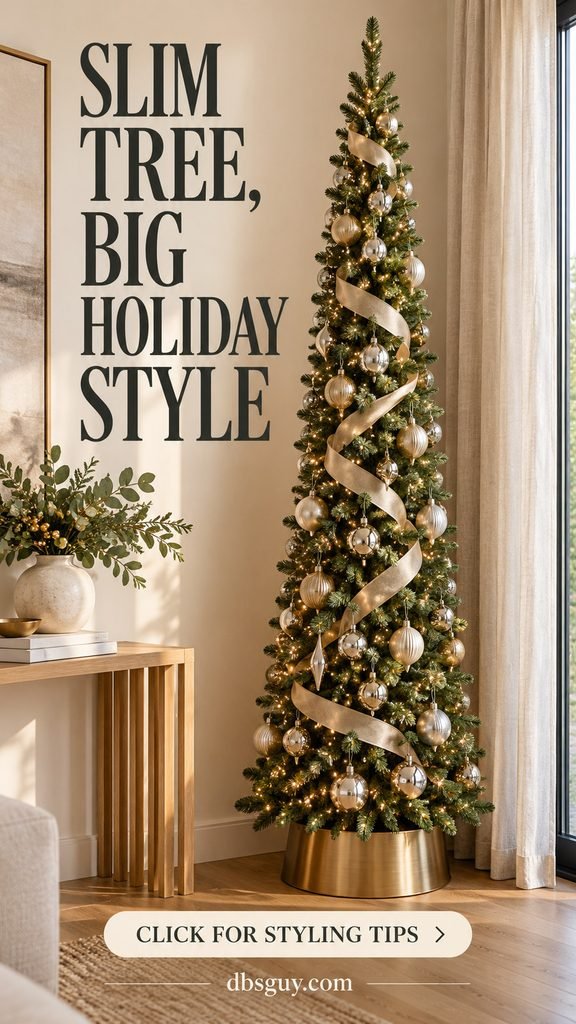
24. A Slim Silver and Gold Tree for Small Spaces
A pencil tree can look carefully decorated rather than squeezed into a corner. Use smaller silver and gold balls, a narrow ribbon cascade, and a compact collar so the decorations support the slim shape.
Leave some branch tips visible along both sides. Large sprays, giant bows, and oversized balls can make a narrow tree look uneven. Try one ribbon path on the front, then add another only if the tree still has enough breathing room.
Measure the assembled tree’s widest point, including decorations, and leave a clear route around it. A corner beside curtains can work if the tree and its lights remain clear of the fabric as directed by their manufacturers. Wrap a few compact gifts in ivory paper instead of crowding the floor.
25. A Tabletop Tree in a Gold Urn
A small tree becomes a deliberate display when its base looks as considered as its ornaments. Put a tabletop tree in a gold-colored urn, then decorate with tiny silver balls and small gold stars. The urn supplies the larger gold accent.
Keep the tree in its proper stable stand; the urn is a decorative outer container, not a substitute for support. Confirm that the assembled tree fits securely and that the table or sideboard can carry the weight. A live cut tree also needs a suitable water-holding stand.
Use just a few delicate lights and ornaments scaled to the branches. A small stack of wrapped gifts beside the urn makes the arrangement feel festive without needing a full-size floor tree.

26. A Sparse Nordic Tree with a Few Beautiful Ornaments
An open-branch tree offers a quieter version of silver and gold. Its visible trunk and spaces between the tiers become part of the design, so you need fewer ornaments—and each one matters more.
Choose a small collection of delicate metallic balls, hang them at different lengths, and keep each piece clear of the branch below. Fine warm white lights can trace the branches without creating a dense blanket of sparkle. Skip ribbon, bulky picks, and garlands.
A flax linen skirt and pale gift wrap suit the relaxed finish. This is a good direction when you prefer uncluttered rooms or have a naturally sparse tree. Before adding anything new, check the view from your usual seat; an undecorated branch may be exactly what balances the arrangement.

27. A Gold Sunburst Topper Above a Silver Tree
A gold sunburst topper gives a mostly silver tree one memorable focal point. Its radiating rays stand apart from ordinary star toppers, while a few small gold ornaments lower down keep the crown connected to the branches.
Choose a lightweight topper and measure its full height and width before positioning the tree. Secure it according to the topper and tree instructions; if the crown bends, the topper needs better support or a lighter replacement.
Use silver satin balls, ribbed drops, and clear ornaments underneath. Avoid adding a large bow beside the sunburst, which can obscure the outline. This dramatic finish suits a formal living room, but the same idea can work on a modest tree when the topper is scaled to its size.

How to Make Silver and Gold Look Intentional
Choose one of the looks above, then decide what you want people to notice first: ribbon, ornament shapes, foliage, or the topper. You can combine details, but keeping one main feature makes shopping and decorating much easier.
- Compare finishes in your actual room. Put a gold and silver ornament beside your sofa or curtains, then look again after dark. Warm lights can change how both finishes appear.
- Repeat the metal, vary the surface. Satin, ribbed, speckled, and polished pieces can work together when their colors are related. You do not need every ornament to match.
- Decorate at different depths. Some ornaments should sit inside the foliage and others near the front. Leave space for hanging shapes to move freely.
- Give the base a decision too. A plain skirt, a correctly fitted collar, or coordinated gift wrap can finish the tree without another expensive purchase.
- Check the room view. Stand at the doorway and sit where you normally relax. Adjust obvious clumps of one color and any decorations that hide the tree’s silhouette.
A Practical Decorating Order
Assemble the tree and shape the branches first. Check the lights before putting decorations in the way. If you are using separate lights, add them before ribbon and ornaments, following the light and tree manufacturers’ instructions.
Next, establish the main feature: ribbon paths, major bows, or larger picks. Add the larger ornaments, fill between them with smaller pieces, and finish with delicate hanging decorations. Fit and secure the topper when you can access it safely; avoid reaching through fragile ornaments. Step back after each layer instead of waiting until everything is attached.
For a polished result on a limited budget, inventory what you own and purchase the missing feature first. New ribbon or a few distinctive ornaments often changes the look more than another large box of basic balls. Test a ribbon section before estimating yardage—tree width, loop size, and how many sides you decorate make a substantial difference.
Keep the display practical as well as beautiful. The Illinois State Fire Marshal’s Christmas tree guidance recommends keeping trees at least 3 feet from heat sources, keeping exits clear, watering live cut trees daily, and turning tree lights off before leaving home or going to bed. Check light strings for damage and follow their connection limits.
Frequently Asked Questions
Can you mix silver and gold on a Christmas tree?
Yes. Repeat both finishes through the tree so the combination feels deliberate. One metal can lead, with the other acting as an accent. A shared detail such as ivory ribbon, matching ornament shapes, or warm white lights helps connect the two.
What other colors work with silver and gold?
Ivory and champagne keep the palette soft. Navy and black add contrast, emerald creates a rich traditional feel, and sage or dusty blush adds a quieter accent. Choose a color already present in the room, and keep it secondary if you want silver and gold to remain the focus.
Should ribbon go on before ornaments?
For broad cascades or wrapped ribbon, it is generally easier to establish the ribbon before filling the tree with ornaments. Small bows tied to individual ornaments can go on as those pieces are hung. If ribbon is only a finishing accent, leave open spaces for it while decorating.
How many ornaments do I need?
Tree height alone is not enough to give a useful number. Width, branch density, ornament size, ribbon coverage, and your preferred amount of visible greenery all matter. Decorate one representative area with what you own, then assess the remaining tree before purchasing more.
Do warm or cool white lights look better?
Warm white is a good starting choice for champagne gold, vintage finishes, and cozy rooms. Cool white can suit an icy, silver-heavy look. Compare a small sample with your ornaments first; light color is a design preference, and the room’s other lighting affects the result.
How can I make inexpensive ornaments look more polished?
Use a restrained palette, hide bulky hanging loops where possible, and mix basic balls with one distinctive feature. Arrange decorations at different depths, remove visible packaging, and use a simple base. Careful placement usually contributes more to the finished look than adding every ornament you own.