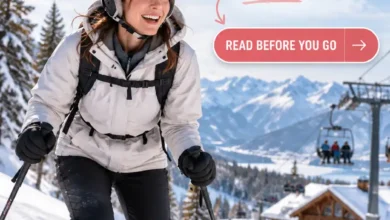
Yes, a ski trip under $500 is possible—per person, in U.S. dollars—if you can drive to the mountain, keep the trip short, and share lodging. A first-timer can build a one-ski-day getaway around a lesson package. Someone who already skis can aim for two weekday ski days and one hotel night.
The two plans below total $384 for a beginner getaway and $458 for a two-day ski trip, including a cushion. They combine published mountain prices with clearly labeled spending targets. Neither is a bookable package or a promise that every departure city and date will fit.
Prices checked October 9, 2026, for winter planning. Confirm dates, availability, inclusions, and checkout totals before paying. Visuals are AI-generated concepts, not photographs of the named resorts.

What your $500 needs to cover
Start with the whole trip: lift access, equipment, a helmet, lessons if needed, transportation, lodging, food, fees, and a reserve. A cheap lift ticket does little good if reaching it requires a flight and a rental car.
Both examples assume two adults sharing an existing, winter-ready vehicle and one hotel room, plus suitable clothing already owned or borrowed. They exclude airfare, a rental car, new outerwear, childcare, lost wages, and optional travel insurance. Add any of those that apply before deciding the trip is affordable. These are trip cash budgets; they do not calculate vehicle depreciation.
Your booking rule: price the entire trip before buying the first nonrefundable item. Keep the reserve available for unexpected expenses rather than treating it as spending money.
Beginner plan: one ski day with a lesson for $384
A first trip works best when learning is the main event. Arrive the evening before, get a good night’s sleep, take a beginner lesson the next day, and drive home only when rested and conditions allow.
For a concrete Northeast starting point, Pats Peak in Henniker, New Hampshire, lists a $140 Starter Special for first-time skiers ages seven and up. It includes a one-hour beginner group lesson, skis, boots, poles, and lower-mountain lift access. It is not an all-mountain ticket. The page has some mixed seasonal scheduling details, so confirm your exact winter date and lesson time when booking.

The per-person breakdown
- Beginner package: $140 — published price.
- Helmet rental: $14 — listed separately on the rental page.
- RFID card: $5 — allow for the initial reloadable card fee listed in the booking information; confirm how it applies to your package.
- One shared hotel night: $80 — target of $160 total, including taxes and mandatory property fees, divided by two.
- Transportation: $35 — target for your share of fuel, tolls, and any parking.
- Food: $45 — target for the arrival evening and ski day, using groceries and simple meals.
- Checkout fees and small extras: $25 — allowance, not a quoted fee.
- Unspent reserve: $40.
Total: $384 per person. Room below the $500 ceiling: $116. Hotel, transportation, food, and allowances are editorial targets, not live quotes. If the room costs $220 all-in instead of $160, your share rises by $30 and the trip becomes $414.
Make the day feel manageable
Pats Peak asks lesson participants to reach the rental shop at least two hours before the lesson. Work backward from the confirmed start time when planning breakfast and the hotel drive. After instruction, practice only on terrain appropriate to your ability, take a real lunch break, and finish before fatigue takes over.
For a nearby resident, removing the $80 hotel share brings this example to $304 before any transportation adjustment. If you need more instruction, use the remaining budget toward a confirmed lesson quote; do not assume one hour will make you ready for every trail.
Returning-skier plan: two weekday ski days for $458
This version fits someone who already skis independently on appropriate terrain and lives close enough to make the drive practical. Ski on day one, stay one night, ski on day two, then head home. If the distance requires another hotel night, add it before booking.
Ski Cooper in Colorado lists 2026–27 adult day passes at $49 for ages 22–68 on eligible Mondays through Fridays, versus $99 on weekends and designated holiday/spring-break dates. Its page says day passes go on sale November 1, 2026. This is Ski Cooper, near Leadville, not Copper Mountain.

The per-person breakdown
- Two eligible weekday tickets: $98 — $49 × 2.
- Standard ski rentals: $90 — the 2026–27 rental listing shows $45 for ages 15 and over; budget that rate for each day and confirm the package details.
- Helmet rental: $30 — listed $15 rate × 2 days.
- One shared hotel night: $80 — target of $160 all-in for the room, split two ways.
- Transportation: $40 — target for your share of fuel, tolls, and parking.
- Two days of food: $60 — target using packed lunches and inexpensive meals.
- Checkout fees and small extras: $20 — allowance to replace with actual charges.
- Unspent reserve: $40.
Total: $458 per person. Room below the ceiling: $42. This plan has no lesson allowance. Lodging and other non-resort figures are spending targets, not verified offers. If your checkout totals exceed them, shorten the trip, change dates, or choose a closer hill.
The published full-rate periods include December 19, 2026–January 3, 2027; January 15–17; February 12–14; and March 13–26, 2027. Recheck the mountain’s calendar rather than assuming every weekday is discounted. Two $99 tickets would add $100, taking this plan to $558.
Check the drive math
Use this formula: round-trip miles ÷ your car’s miles per gallon × fuel price ÷ travelers, then add your share of tolls and parking. For illustration only, 300 miles ÷ 25 mpg × $4 per gallon ÷ two people is $24 each for fuel. That leaves $16 of the $40 target for other driving costs. Your route, vehicle, and pump price may be different.
A $160 room is a price ceiling to search for, not an identified hotel deal. Compare nearby lodging by its final total and winter driving route. An inexpensive room with a long mountain commute may cost you more in fuel and fatigue.
How to choose dates and deals without breaking the budget
Compare two or three hills you can realistically reach. Put the same dates, ages, rental needs, and lesson needs into each quote. Start with nonholiday midweek dates, then check scheduled operating days, available terrain, and cancellation terms. Early or late season can mean reduced operations; cheap dates are only useful if the skiing you need is open.
Night skiing is another option for a short outing. Pats Peak’s published Saturday-night POP program lists $99 for 4–10 p.m., $89 for 5–10 p.m., and $79 for 6–10 p.m., with rentals included. The listed Saturday season runs December 26, 2026–March 27, 2027. Check helmet costs and the initial $5 card charge. Beginner-area lesson tips are listed for 4–6 p.m.; they are not the same as the dedicated lesson in the beginner plan, and the cheapest start time misses that window.
Buy only the access you will use. A season pass or multi-mountain pass can be good value over many outings, but its full upfront cost belongs in your budget if you do not already own it. Do not divide it by hoped-for visits to make a single trip appear cheaper.
Pack what you own and protect the useful spending
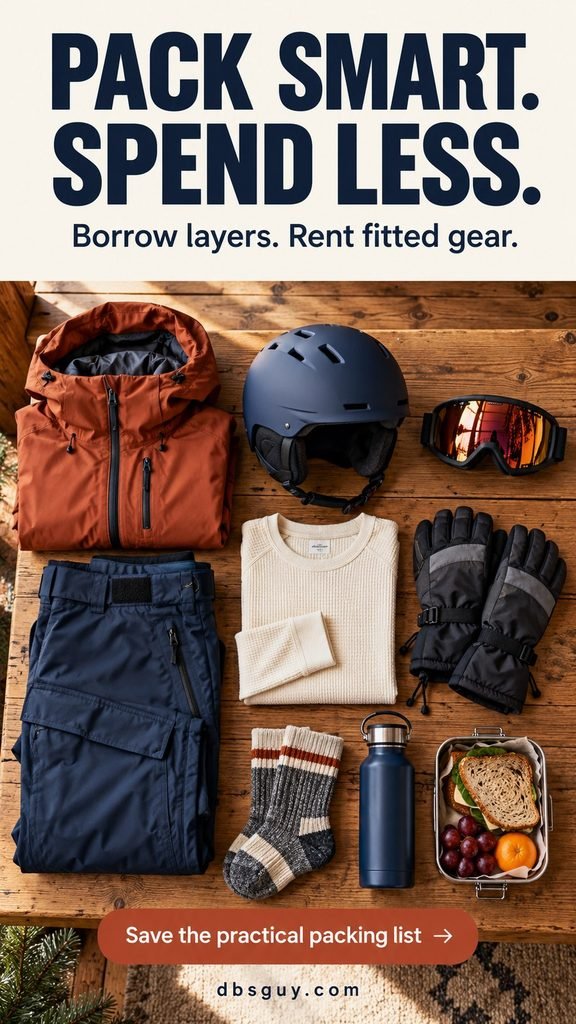
You do not need a new matching ski outfit for a first trip. The packing concept above shows reusable layers, outerwear, gloves, goggles, a helmet, and lunch. Borrow suitable clothing where possible; have rental staff fit your boots and equipment.
- Moisture-wicking base layers and a warm midlayer, such as fleece or wool.
- Weather-appropriate waterproof outerwear and snow pants.
- Ski socks, insulated gloves or mittens, and a neck gaiter.
- Goggles and a properly fitted snow-sports helmet.
- Sunscreen, lip balm, water, lunch, and snacks.
- Dry clothes for the drive home, booking confirmations, and identification.
Keep groceries in the food budget even if you buy them before leaving. Check the lodge’s outside-food rules and where packed lunches are permitted. For a two-day trip, simple breakfasts, two packed lunches, and one casual dinner are easier to price than several mountain restaurant stops.
Keep safety essentials in the plan. Follow NSAA’s Responsibility Code: ski in control, give people downhill the right of way, and obey closures and signs. A budget trip stays on suitable open resort terrain. Check road conditions and applicable traction requirements before departure; if your vehicle needs additional equipment, add that cost or change the plan.
Before you book: the five-minute budget check
- Confirm eligibility. Match dates, ages, beginner status, ticket hours, and terrain access to the actual product.
- Check inclusions. Look for boots, poles, helmet, lesson duration, RFID cards, and any rental protection charges.
- Get the final lodging total. Include taxes, parking, and mandatory fees, then divide by the confirmed number of guests.
- Add transportation and food. Include the entire trip, not just ski-day spending.
- Read cancellation terms and keep a reserve. Weather, illness, or a tired driver can change your plans. Do not assume a purchase is refundable.
If the total is too high, first remove a hotel night or one ski day, choose a closer hill, or shift to an eligible cheaper date. Keep lessons and appropriate equipment in the budget.
Budget ski trip FAQs
Is $500 for the whole group?
No. These are per-person budgets. Two people following the beginner plan would budget $768 together; two following the returning-skier plan would budget $916. Shared room and car costs are already divided in each example.
Can I fly and still stay under $500?
Possibly with unusually favorable circumstances, but neither plan relies on it. Add airfare, baggage, airport transportation, and resort transfers or a rental car. If those push you over, choose a drive-to outing instead.
What if I am traveling solo?
You will absorb more of the room and car costs. In the two-day example, paying the entire $160 room and $80 transportation allowance increases the total from $458 to $578. A local day trip is the easier solo adjustment.
Do I need to buy skis to save money?
No. Both plans include rentals. Buying equipment for a single outing adds upfront spending and requires appropriate fitting and setup. If you already own suitable equipment, remove only the rental costs you actually avoid.
What is the easiest version to start with?
Choose one nearby ski day, reserve a beginner package if needed, pack lunch, and return home when safe. Once you know your real local costs and how much skiing you enjoy, plan a longer trip around those numbers.