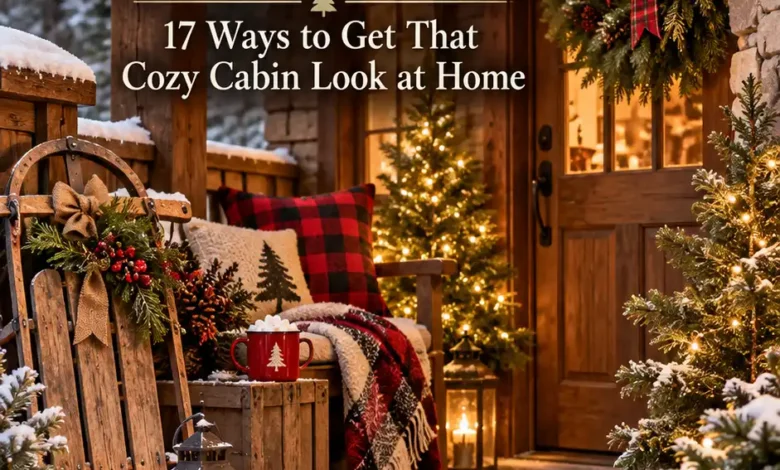
A porch can feel like a Christmas cabin before you add a single giant decoration. Picture dark evergreen branches, pale birch bark, a worn wooden sled, and a small pool of warm light beside the door. The appeal comes from the textures you can almost feel through your mittens.
The trick is giving those textures room to show. If every corner has a plaid bow, a sign, and a bundle of branches, the entrance starts to feel crowded. One strong feature, a few supporting details, and a clear path to the door can create the cozy look you’re after.
These rustic outdoor Christmas decor ideas work for a covered farmhouse porch, a suburban front step, or a compact townhouse entrance. Choose the pieces that suit your space, adapt the materials to your weather, and build a display that looks welcoming in daylight as well as after dark.
Start with a Few Choices That Make Everything Easier
Pick your version of cabin Christmas. For a traditional look, combine evergreen, natural wood, and a little deep red plaid. For something quieter, use greenery, ivory, birch bark, and dark metal. Repeat one accent color across the entrance so your different pieces feel connected.
Look at the space you actually use. Open the door fully, walk up with a grocery bag, and identify where packages usually land. Keep those areas free. On a snowy property, plan where the shovel and cleared snow will go before placing a bucket or a lawn figure.
Choose greenery for the conditions. Fresh branches bring natural variation, while outdoor-rated artificial foliage is useful when you want a reusable display. University of Minnesota Extension’s winter greenery guidance explains that cut branches in porch pots need different care during freezing weather and warmer spells. A display in Minnesota and one in a mild coastal climate will need different attention.
Plan the lighting before styling. Use lights and extension cords labeled for the intended outdoor setting, inspect them for damage, and follow their connection limits. The U.S. Consumer Product Safety Commission advises using GFCI protection for outdoor electric lights. For lanterns near dry greenery, choose outdoor-rated flameless candles.
You don’t need to gather every material at once. Start with a planter, a wreath, or a lantern you already own. Let that piece establish the scale and mood, then choose the next detail to support it.
1. Turn a Summer Planter into a Layered Evergreen Porch Pot
That empty summer planter is a useful starting point. A generous mix of evergreen branches gives it a winter presence, and the container itself adds the weathered texture that makes rustic decorating feel settled. You can leave the flowers behind without putting the pot away.

Use a frost-resistant outdoor container, cut greenery or outdoor-rated faux stems, a few sturdy accent branches, and pinecones. For fresh cut stems, a suitable soil-filled insert can help hold the arrangement. Keep drainage open and confirm that the container is intended to remain outside in your winter conditions.
Build the silhouette in three layers. Put upright branches near the center or back, add fuller evergreen pieces around them, then let a few softer tips spill over the rim. Turn the pot occasionally while arranging it, especially if people will approach from both sides.
Finish with pinecones grouped where they will be visible. A few red dogwood stems can carry the holiday color without requiring a large bow. This works particularly well beside a dark door, where lighter bark and branching shapes have something to stand out against.
Make it last: monitor fresh stems and the holding medium during mild weather; don’t assume cold-season care is the same everywhere. Keep tall branches secured in their support and shorten the arrangement if your entrance catches strong wind. A low, full pot can feel every bit as inviting.
2. Give Birch Logs a Home in a Galvanized Bucket
Birch bark has enough pattern to act as its own decoration. In a galvanized bucket, it creates a simple contrast: light, textured wood against dull silver metal. The result feels like something you might find beside a cabin door, especially with a few evergreen tips around the rim.
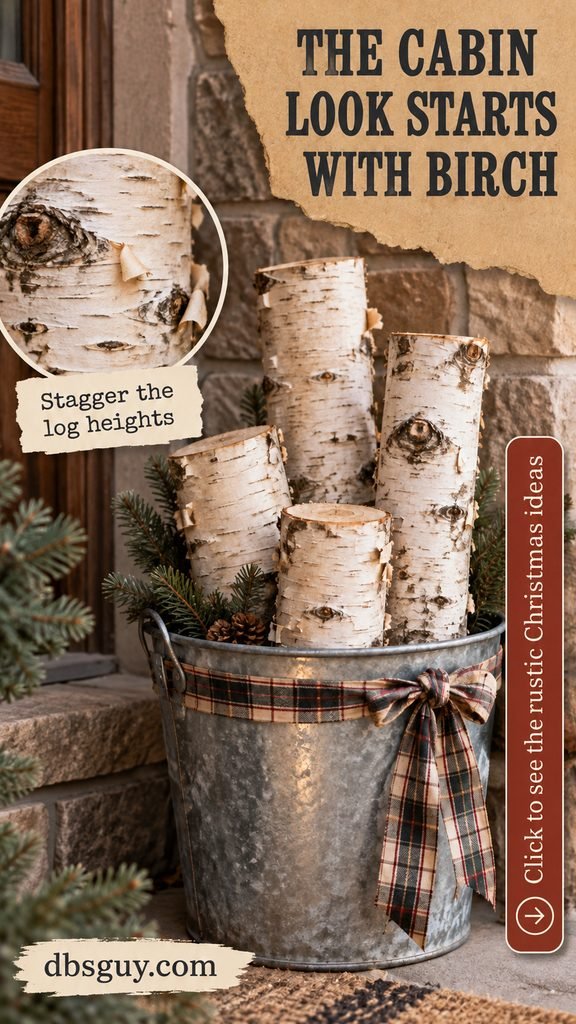
Choose clean decorative logs from a local supplier or realistic faux birch pieces. Use a sound metal container with smooth edges, and place it where it won’t collect standing water. A sheltered porch is a better home for this arrangement than a spot directly beneath roof runoff.
Try several log heights before filling the bucket. Keep enough bark above the rim that the wood remains the main attraction. Arrange the thickest pieces first, then use shorter ones to soften the outline. Make sure the whole container sits firmly and cannot easily tip into the walking area.
A narrow plaid ribbon around the bucket or a little greenery tucked into one side is plenty. You don’t have to wrap the logs in lights; their pale surfaces are attractive in daylight, and a nearby porch light can reveal the texture after sunset.
Skip this common mistake: filling every gap with bows and ornaments. The open spaces between the logs are part of the look. Keep the bucket off the route to the door, and check natural wood for moisture or deterioration before storing it after the season.
3. Make a Pinecone Wreath Feel Personal with One Plaid Bow
A pinecone wreath brings the woodland feeling right to eye level. Its uneven scales and warm brown color give a plain door more texture, while a single plaid bow adds the Christmas cue. This is a good choice when you prefer a natural entrance with a small dose of color.

Start with a sturdy purchased pinecone wreath or a frame designed for your chosen assembly method. If you’re making it, attach the cones securely to the frame rather than relying on a craft adhesive that isn’t suited to the temperature and exposure. Check for loose pieces before hanging it.
Try the bow slightly below center or toward one side. Let the tails be long enough to read as ribbon but short enough to stay away from the handle and door hardware. Tuck a small evergreen accent behind the knot; it should frame the bow rather than conceal the pinecones.
For a wider door, choose a wreath with enough visual weight to be seen from the approach. You can test the size with a paper circle before buying. Leave the peephole, doorbell camera, and identifying numbers visible wherever they apply.
Best location: a sheltered front door. Natural cones, wire connections, and fabric all deserve an occasional check after wet or windy weather. Use a hanger rated for the finished wreath’s weight and appropriate for the door, including its finish and closing clearance.
4. Let Evergreen Garland Follow the Porch Railing
A railing gives greenery a natural line to follow. Instead of covering it in a thick wall of ornaments, let the garland make a few soft curves. The wood stays visible, the entrance keeps its shape, and the branches look relaxed against the straight rails.

Measure the run before choosing your garland, allowing extra length for the amount of drape you want. Lay it out first so the curves have a consistent rhythm. On a short porch, a single graceful section can look better than squeezing in several deep swags.
Use attachments made for the surface and load, and keep the graspable part of the handrail clear. If you’re considering adhesive hooks, Command’s mounting guidance distinguishes outdoor products from indoor strips and emphasizes the correct surface, preparation, and weight limit. Check the exact product’s application temperature and waiting time too.
Weave outdoor-rated warm white lights through the greenery, then add ribbon only at a few attachment points. Choose the same plaid or burgundy ribbon used at the door. You can make the garland feel connected to the wreath without giving every section its own ornament collection.
A useful finishing check: walk up the steps holding a bag. If ribbon tails brush your hands or branches interfere with the rail, trim or reposition them. Keep electrical cords out of the stair route and secure the foliage so wind doesn’t drag it across the entrance.
5. Create a Pool of Warm Light with a Lantern Cluster
The cabin feeling often becomes strongest after sunset. A small cluster of lanterns can give the front step a soft glow without outlining the whole house in lights. Dark metal keeps the shapes quiet during the day, and the candlelight reveals them in the evening.

Use two or three outdoor-suitable lanterns at different heights with flameless candles rated for your location. Check both the lantern and the light; an outdoor metal shell doesn’t automatically make an indoor battery candle safe to leave in rain or freezing weather.
Group the lanterns on a level surface beside the door, outside the door swing. Put the tallest slightly behind the others, and leave enough space around each one that their frames remain easy to see. A low evergreen pot or a few secured branches can soften the metal edges.
Match the warmth of the candlelight to nearby string lights. Different shades of white can make a small display feel disconnected, even when the decorations themselves match. Turn the lights on together before finalizing the position so you can judge the complete evening view.
Keep it practical: use the product’s timer if provided, maintain access to battery compartments, and bring delicate pieces in when the manufacturer’s weather limits call for it. Decorative lanterns add atmosphere; keep the normal porch and stair lighting available for people using the entrance.
6. Turn a Vintage Sled into a Porch Focal Point
An old-fashioned sled has a recognizable shape even before you decorate it. Wooden slats, worn paint, and curved runners bring the winter story on their own. A little greenery near the top is enough to turn it into a Christmas feature.

Use a sound decorative sled or a vintage piece you’ve checked for splinters, loose parts, and sharp edges. A sheltered wall is a suitable backdrop, especially beside a plain door or a quiet stretch of siding. Choose a spot that doesn’t interrupt the path or a seating area.
Secure the sled to a suitable support so it cannot simply fall forward. A casual lean may look convincing in a photograph, but the finished setup needs to account for wind, pets, and people passing by. If the piece is valuable or delicate, use a reproduction outside and keep the original protected.
Attach a narrow evergreen swag with a red plaid bow, keeping the runners and much of the wood exposed. You can place a small lantern nearby for evening light. Avoid adding a second large prop immediately beside it; the sled needs some breathing room to remain the feature.
For a home without snow: let the sled be a nostalgic accent rather than creating a pretend snowbank around it. Wood, greenery, and a little warm light communicate the cabin mood on a dry porch just as clearly.
7. Build a Tall Evergreen Arrangement in a Milk Can
A milk can gives rustic Christmas greenery a different silhouette from a broad planter. Its narrow neck draws the branches upward, making it useful beside a tall door or along a porch wall where floor space is limited. The worn metal contributes character before any ribbon goes on.
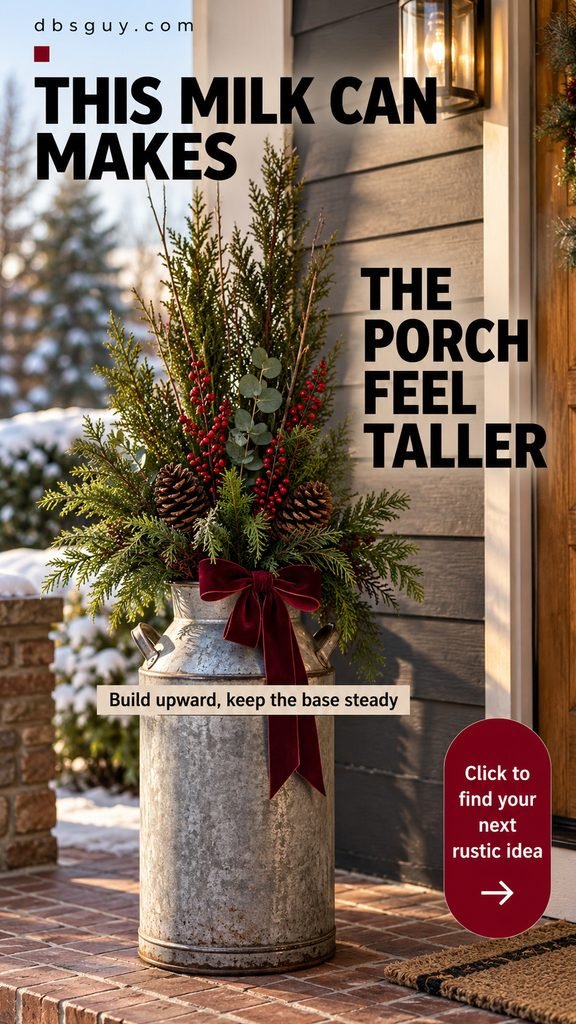
Choose a stable vintage-style container with a sound base and smooth edges. Inspect an older can carefully for rust, flaking finishes, and weak seams. If you want the appearance without the maintenance of an antique, use a decorative reproduction intended for your setting.
Fit an appropriate internal support for the stems. For fresh greenery, use a suitable liner or insert and manage moisture without leaving the metal can full of trapped water. For faux branches, follow the support method suited to their weight and the container; decorative filler alone may not hold tall stems securely.
Keep the arrangement narrower than a porch pot. Set the tallest branches at the back and angle a few shorter boughs forward. A single burgundy ribbon around the neck adds color while leaving the metal body visible. Place the can near a wall, outside the door’s opening arc.
The decision that matters: height. If the top feels unstable or catches too much wind, shorten it. You can still get a strong vertical accent with a compact arrangement that suits the scale of your entrance.
8. Dress a Window Box with Branches and Pinecones
A winter window box can connect the porch to the rest of the front of the house. The greenery sits in a familiar place, so the decoration feels like an extension of the home rather than a collection of holiday props. Pinecones add texture where summer flowers used to be.
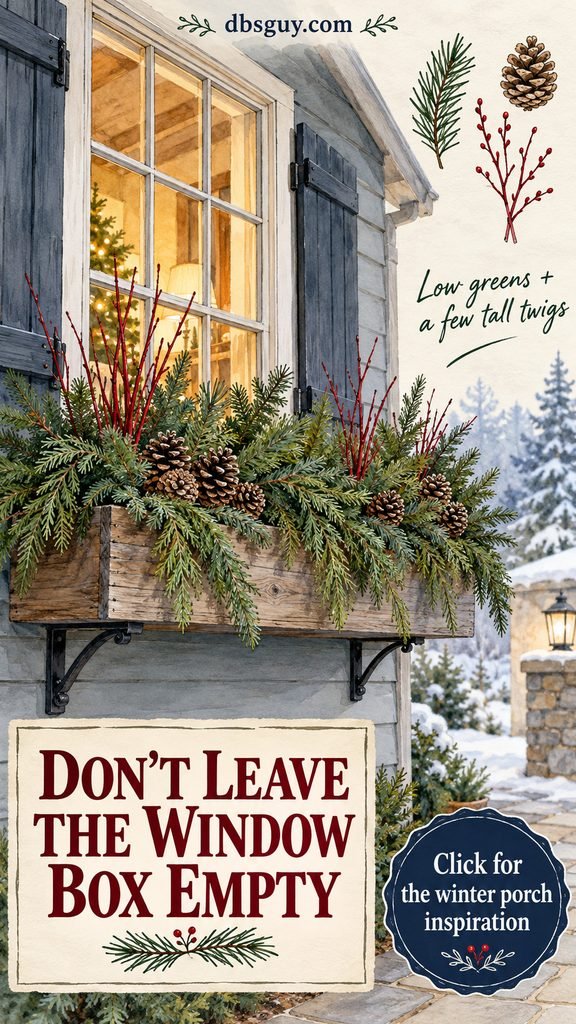
Check that the box and its brackets are sound before adding material. Use branches and lightweight accents that suit its capacity, and keep the drainage openings clear. Avoid relying on an overflowing arrangement to conceal a box that needs repair.
Start with a low layer of evergreen boughs, then repeat a few upright twigs across the length. Keep their spacing intentional without making every branch identical. Nestle pinecones toward the front, where they will show from the street, and secure them so they won’t roll out.
Use the same branch color or ribbon accent as the entrance. That small repetition helps a separate window feel connected to the porch. Keep the greenery below the working window area and away from vents, exterior equipment, or anything that needs to remain accessible.
In a wet climate: let the natural branch shapes carry the design. Minnesota Extension notes that rain and wet snow can wash flocking from greenery, so a plain evergreen mix avoids depending on a snowy coating to maintain the look. Inspect the attachment points after storms and refresh fresh cut stems as needed.
9. Use a Wooden Star as a Quiet Statement Piece
A wooden star can carry a surprising amount of the Christmas mood. Its familiar shape reads from a distance, while the grain keeps it connected to the cabin palette. It is especially useful on an entrance where greenery alone feels a little soft or indistinct.

Choose a ready-made outdoor-suitable star or a properly built wooden version with sound joints and smooth edges. This is a decoration that needs real structural connections; loosely joined craft sticks aren’t a substitute for a sturdy outdoor piece.
For unfinished wood, use a finish system appropriate for the material and exposure, including its edges and joints. Minwax’s wood-finishing guidance recommends exterior protection for outdoor wood and notes that weather affects drying. Follow your chosen product’s preparation, application, and curing instructions before moving the piece outside.
Position the star against a plain wall or door with a suitable rated mounting method. Let the background show through an open-frame design. A small evergreen accent at one lower point can soften the geometry while keeping the star’s outline clear.
Keep the scale intentional: measure the available wall space first and mock up the outline with paper. A star that fits comfortably within the area looks more settled than one squeezed between a light fixture and the door trim. Avoid placing a heavy decoration above seating or the main walking route.
10. Swap a Full Wreath for an Evergreen and Bell Door Swag
A door swag gives the entrance a softer, more vertical shape than a wreath. Add a few aged-looking bells and it feels a little like a cabin welcome, with greenery falling naturally beneath the knot. This works well on a narrow door or when you want the door’s finish to remain visible.
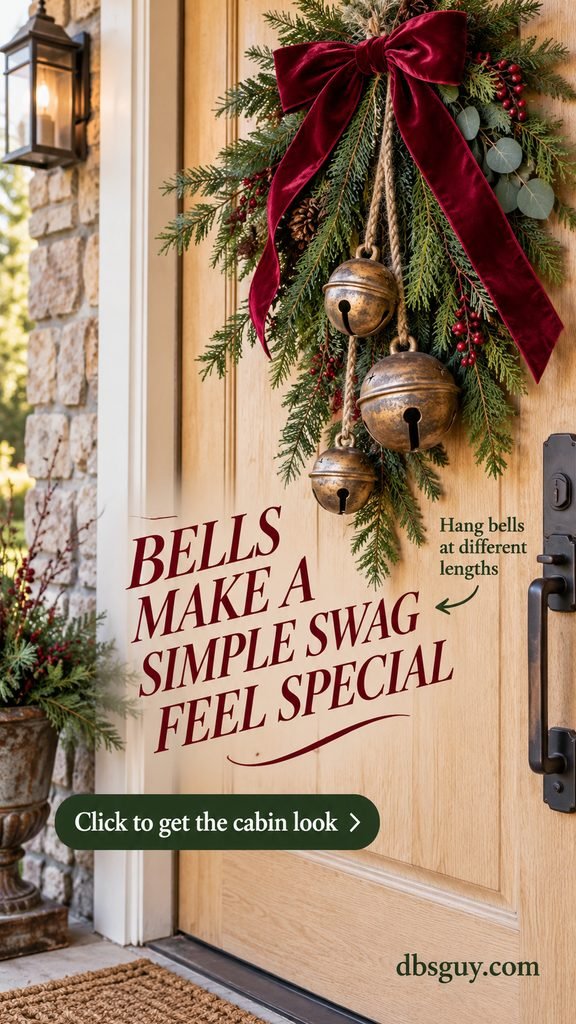
Gather a small bunch of evergreen stems, ribbon suited to the exposure, lightweight decorative bells, and a hanger appropriate for the combined load. Bronze or muted brass tones sit comfortably with wood and dark green. Choose sound bells without sharp edges or loose small parts.
Arrange the stems in your hand before securing them. Let shorter pieces sit toward the front and longer ones trail behind, then tie the bundle firmly. Attach the bells at slightly different lengths, keeping their cords short enough that they won’t swing into the handle or catch when the door opens.
Place the ribbon knot high enough to make the greenery look like it is falling from one point. If you use velvet-style ribbon, keep it on a sheltered door or choose a version intended for outdoor display. A lovely indoor ribbon can become the weakest part of an otherwise weather-ready arrangement.
Make it comfortable to live with: test the door several times. If the bells bump against the surface, secure them closer to the bundle or choose decorative bells with a quieter finish. Your entrance should feel welcoming every time it opens.
11. Give a Porch Bench One Cozy Plaid Accent
A bench makes a decorated porch feel inhabited. One plaid cushion can suggest the warmth of a cabin sitting area without turning the seat into a display shelf. If the bench already has good wood texture, let that be part of the decoration.
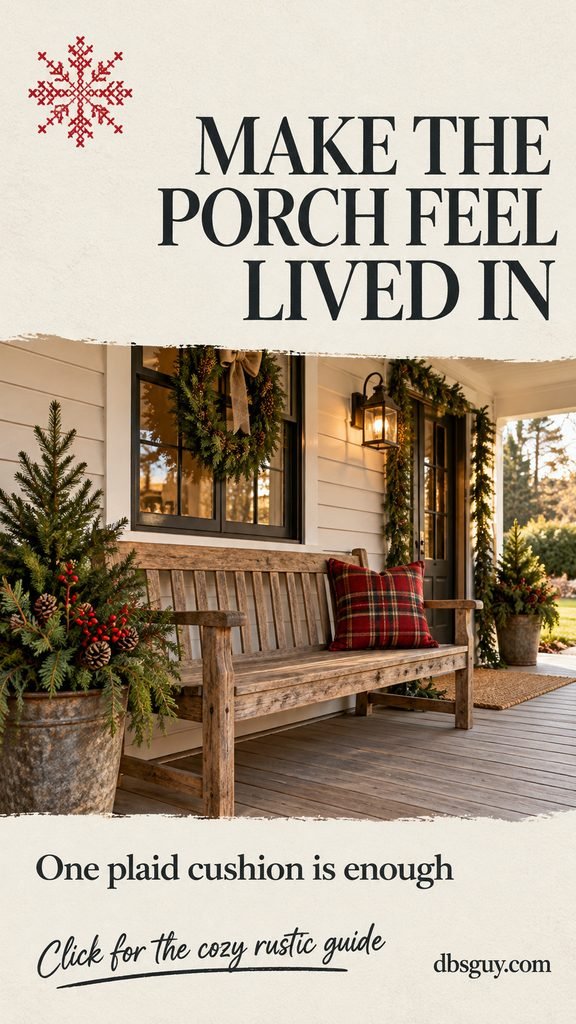
Choose an outdoor cushion or cover suited to the actual location. A covered porch still gets wind-driven rain, and fabrics vary in how much exposure they can handle. Read the care instructions and plan an easy place to bring the cushion indoors when necessary.
Put the patterned cushion at one end rather than filling the whole bench with pillows. If you want a second piece, choose a plain outdoor cushion in a color already present in the greenery or ribbon. Keep a usable sitting area, especially if this is where people change shoes or wait at the door.
Place a small evergreen container beside the bench, clear of its legs and the route around it. The plant softens the furniture, while the plaid connects the seating area to the front door. You can get the cozy effect with those two elements alone.
About blankets: a wool throw looks lovely for a dry-day gathering or a quick photo, but it needs an indoor home afterward. For an unattended seasonal display, use appropriate outdoor textiles and follow their storage guidance. A comfortable porch is easier to enjoy when the fabric isn’t holding yesterday’s rain.
12. Place a Woodland Reindeer in One Garden Corner
A twig-textured reindeer brings a little woodland character beyond the porch. Its open shape lets the garden remain visible, which suits a rustic display built around branches and natural colors. One figure can be enough to give the yard a recognizable Christmas focal point.
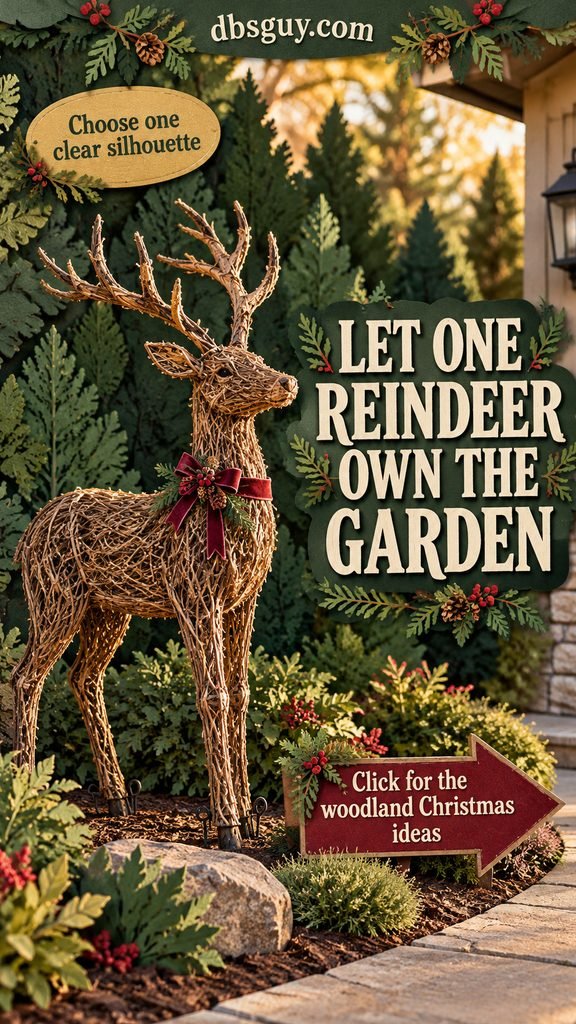
Choose a sculpture explicitly intended for outdoor use. A basket-weave appearance doesn’t tell you whether the actual material, coatings, lights, or connections can stay outside. Follow the product’s site, anchoring, and storage instructions rather than judging weather resistance by its look.
Set the reindeer in a garden bed where its outline contrasts with the background. Pale twig textures show well against darker evergreens; a darker figure may need a lighter wall behind it. Step back to the sidewalk to check whether you can still recognize the shape.
Anchor it with the specified hardware before adding a small bow or greenery accent. Keep cords, stakes, and guy lines away from the public walkway and the places people use to cross the lawn. If the figure is illuminated, match its light color to the rest of the display.
Let it stay the main character: nearby plants, a little light, and one repeated ribbon color are enough. If you add a second figure, vary the height and position rather than scattering several unrelated animals across the entire yard. Keep the arrangement concentrated in one visible corner.
13. Decorate a Small Porch Tree with Wood-Slice Ornaments
A small tree can bring the classic Christmas shape to a porch without asking for a large footprint. Wood-slice ornaments give it a handmade feeling, especially when their designs are simple enough to see from the path: a star, a small tree, or a plain ivory dot.
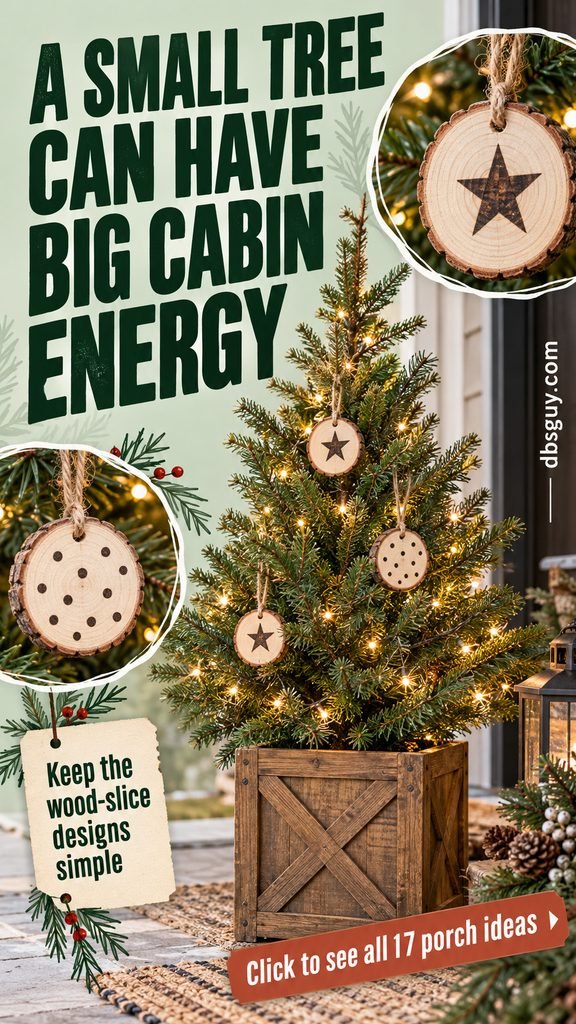
Use an outdoor-rated artificial tree with its specified base, or a living evergreen suited to your climate and container. A living tree needs appropriate plant care; a decorative wooden box should only conceal its proper pot or support, not replace it.
Choose lightweight, smooth wood slices with sound hanging holes. Decorate and protect them using products suitable for the wood and intended exposure. Allow finishes to cure as directed, then use secure outdoor-suitable hanging loops. If your porch is fully exposed, weather-ready ornaments made to resemble wood may be a more practical option.
Spread the ornaments across the visible branches, leaving generous space between them. Put a few toward the outer tips and others slightly deeper so the tree has dimension. Keep the designs consistent, and add outdoor-rated warm white lights only if you want an evening glow.
For a smaller landing: choose a slim tree and place it outside the door swing. Don’t balance it on an unstable stool for extra height. A modest tree with a secure base and a clear outline will do more for the entrance than a taller one squeezed into the walkway.
14. Make Wooden Gift Boxes Feel Like Part of the Porch
Decorative presents don’t need shiny wrapping to look festive. Wooden boxes with broad plaid ribbon bring the familiar gift shape into a rustic palette. Beside a planter or bench, they can fill a low area that otherwise feels unfinished.

Use sturdy outdoor-suitable decorative boxes or wood pieces you’ve properly prepared for the setting. Real cardboard parcels belong indoors. Inspect wooden boxes for splinters, loose lids, and exposed fasteners before putting them where people will pass.
Try two sizes first: one larger box at the back and a smaller one slightly forward. Keep the grouping low and stable. If you stack them, secure the pieces appropriately rather than relying on ribbon to hold them together. Place the finished arrangement outside the walking surface and the delivery drop zone.
Wrap each box with ribbon broad enough to be seen from the approach. A small evergreen sprig at the knot can connect the gifts to the wreath or porch pot. Choose one pattern for both boxes so the wood grain, proportions, and ribbon work together.
Give the display a little restraint: stop before it becomes a pile. Two well-placed boxes can provide the holiday detail you need, especially under a bench or beside an existing planter. Keep the wood off damp ground and bring fabric accents in when their care instructions or weather exposure require it.
15. Let One Wooden Christmas Sign Set the Mood
A wooden sign gives the porch a message as well as a texture. A short phrase such as “Merry & Bright” can make a plain wall feel festive without requiring several extra decorations. The lettering is doing the work, so keep the surrounding arrangement calm.

Choose a purchased exterior sign or build one from sound material suitable for its exposure. For reclaimed wood, use a piece with a known condition and safe finish; weathered appearance alone isn’t a reason to accept loose paint, splinters, or deteriorating joints.
Use large letters with clear contrast against the board. A pale phrase on dark wood or dark lettering on a light board is easier to read than a low-contrast script. Test the wording from the front walk before committing to tiny flourishes.
Mount the sign securely beside the door or on a suitable porch wall, keeping house numbers and cameras unobstructed. If you prefer a standing sign, use an appropriate supported base; a tall board loosely leaned against siding can catch wind or fall when someone brushes past it.
Connect it to the rest of the porch: add one small greenery detail or repeat the ribbon color at a nearby planter. Leave enough bare wood visible to keep the sign’s character. You can choose a neutral winter phrase if you want the board to remain useful after the Christmas decorations come down.
16. Add Grapevine-Style Spheres for a Softer Garden Glow
Grapevine-style spheres bring rounded shapes into a display full of straight boards and pointed branches. In a small garden bed, their open weave looks textured during the day and softly patterned at night. They can be a useful choice when you want outdoor light without another holiday character.
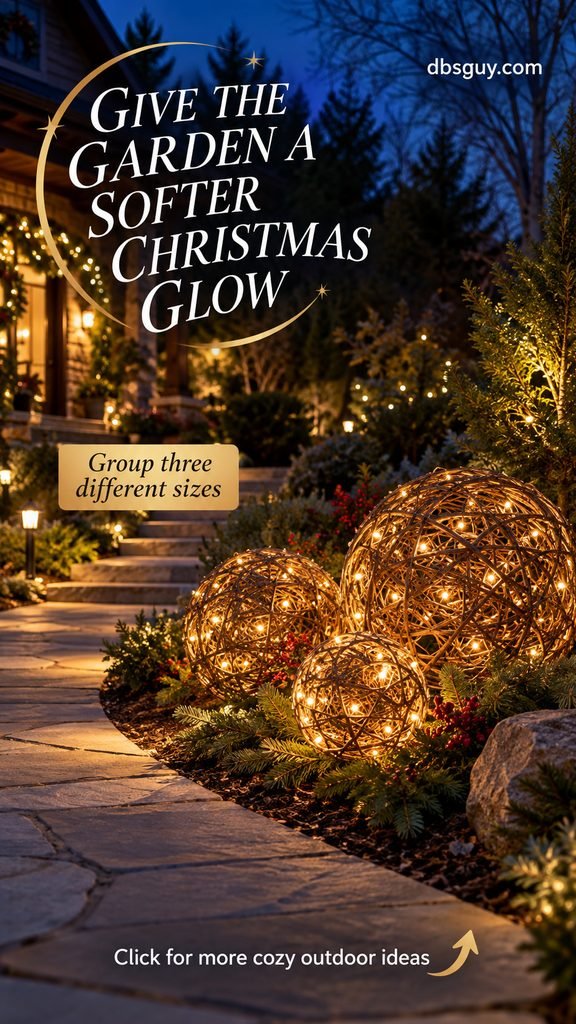
Select spheres and lighting intended for outdoor use. Natural vine, synthetic vine-look material, and pre-lit products have different care needs, so follow the exact item’s instructions. A craft-store grapevine ball isn’t automatically a season-long outdoor decoration.
Arrange two or three sizes close enough to read as one group. Put the larger sphere toward the back and stagger the smaller ones so their circles remain visible. Keep the grouping inside the planting bed, set back from the walk and any area that needs snow clearing.
Secure each sphere using the support or anchoring method suited to the product and site. Use outdoor-rated warm white lights, with connections managed according to their instructions. Route the supply away from foot traffic, and keep cords accessible enough to inspect throughout the season.
Use darkness as part of the design: leave some nearby shrubs unlit so the rounded forms have a backdrop. If the porch already has a strong reindeer or star feature, keep this garden accent small. The soft glow should extend the welcome, not compete with every other focal point.
17. Give a Small Entrance the Cabin Look with Just Three Pieces
A small front step doesn’t need a smaller version of every decoration in this list. It needs a combination that earns its space. Start with three pieces: greenery at eye level, one grounded container, and a source of warm decorative light.
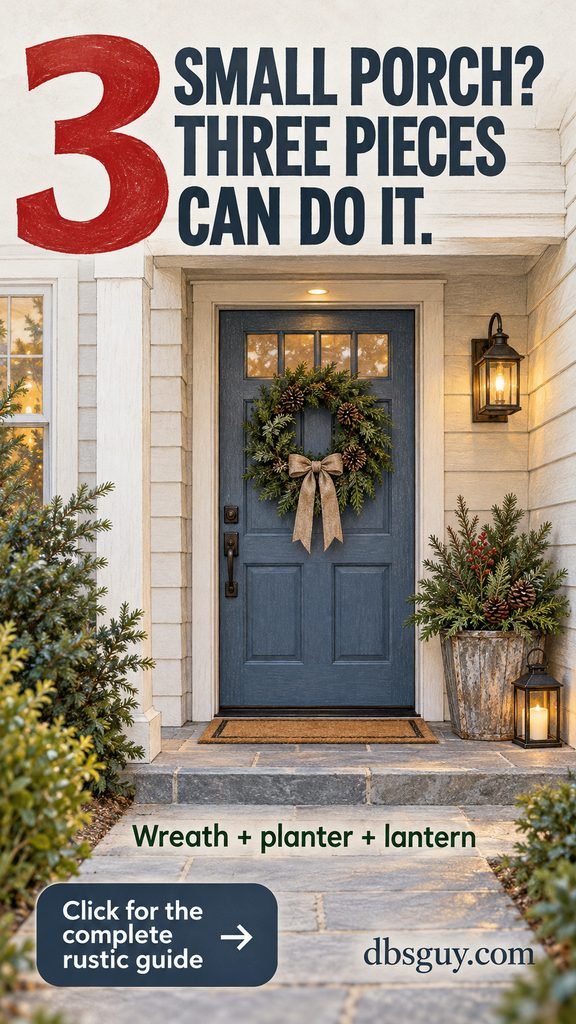
Hang a simple wreath or narrow swag on the door, then place one planter on the side with more clearance. Add a compact lantern beside it, keeping both outside the door swing. The door decoration establishes the theme, the planter gives the arrangement weight, and the lantern makes it welcoming after dark.
Choose one repeating detail. It might be red plaid on the wreath and planter, or pale wood in the container and a nearby door accent. You only need a small connection for the pieces to feel like a set. Let the door color and existing porch material contribute to the palette too.
Test the space with the door open and a delivery box on the landing. If either floor piece gets in the way, simplify further: keep the door greenery and use an existing porch light for the evening mood. Clear access is part of a welcoming entrance.
The final edit: look from the sidewalk and remove the least useful extra. A compact entrance with one clear focal point often feels more thoughtfully decorated than a landing where every available inch is occupied. Keep the rustic textures visible and let the small arrangement be complete.
Choose a Combination That Fits Your Home
For a covered porch: pair the sled from idea 6 with the lanterns from idea 5, then add a little matching greenery at the door. The sled supplies the shape, the lanterns add the evening mood, and the door accent ties them together.
For an exposed front step: start with a weather-appropriate porch pot and a securely hung outdoor wreath. Choose materials for rain, sun, and freezing conditions as they apply to your home. Keep delicate ribbon and wood accents in the most sheltered position available.
For a front garden: choose the reindeer or the grapevine-style spheres as the main lawn feature. Repeat their light color at the porch. You can connect the two areas with a shared ribbon or greenery texture without decorating every shrub in between.
Before buying the next piece, photograph the arrangement from the street and the doorway. The first view shows whether the theme is readable; the second shows whether the entrance still works. That quick comparison can reveal a missing height, an awkward gap, or an extra ornament you don’t need.
Keep the Rustic Look Welcoming Through the Season
Fresh greenery deserves regular attention. Remove stems that become brittle or unattractive, monitor moisture where your arrangement uses it, and keep branches away from heat sources. If you collect material from your own landscape, identify the plant and prune conservatively; ask permission before collecting elsewhere.
Natural berries and greenery are decorations, not snacks. University of New Hampshire Extension notes that several common decorative plants, including holly, yew, and winterberry, are toxic if eaten. Keep unfamiliar greenery and small ornaments out of reach of children and pets, and use suitable alternatives when the display is within easy reach.
After strong weather, check the things that hold the display together: ties, mounting points, bases, and electrical connections. Keep the walking area, handrail, address numbers, and door equipment available. Turn off decorative lights when you leave or go to bed, following the product instructions and your timer setup.
At the end of the season, let reusable pieces dry before packing them. Store fabric, wood, and lighting according to their care instructions, and label the parts that belong together. A photo of the finished entrance can help you recreate the arrangement next year while leaving room for one new idea.
Questions About Rustic Outdoor Christmas Decor
What colors make outdoor Christmas decorations feel rustic?
Evergreen, wood brown, muted metal, and ivory create a natural base. Add deep red plaid for a traditional cabin look, or keep the accents neutral for a quieter winter porch. Choose one main accent and repeat it in a few places rather than introducing a new pattern on every piece.
How can I create the look without buying vintage props?
Use a planter you already own, a simple wreath, and one source of warm light. Branches, pinecones, and a small amount of plaid ribbon can establish the mood. Spend first on the items that need to function well outside, such as suitable lights, secure supports, and weather-appropriate containers. Add decorative antiques only if they fit your space and budget.
Should I use fresh or artificial greenery outdoors?
Both can work. Fresh greenery provides natural texture and needs care that suits the stems, arrangement, and climate. Outdoor-rated artificial foliage is reusable and should still be maintained and stored as directed. You can also use an outdoor-rated artificial base with a few fresh branches, checking that the attachments and fresh material remain sound.
Will rustic Christmas decor work in a warm-weather neighborhood?
Yes. Wood, evergreen shapes, plaid, pinecones, and warm light create the style without snow. Use greenery suited to your conditions, protect moisture-sensitive pieces, and avoid adding artificial snow just to make the theme recognizable. A dry porch with a simple bell swag and a lantern can carry the cabin feeling on its own.
What is the easiest starting point for a small porch?
Choose one door decoration and one floor piece, such as a narrow swag and a compact porch pot. Add a lantern only if there is enough clearance. Repeat a color or texture between the pieces, then check the door swing and delivery space. You can build a complete rustic entrance with very few objects.
Bring a Little Cabin Warmth to Your Door
Choose the idea that makes the best use of what your home already has: a good planter, a wooden bench, a quiet porch wall, or a small garden corner. Let that be the starting point, then add a matching texture and a little warm light.
Keep the greenery loose enough to see its shape, the wood visible enough to show its grain, and the entrance open enough to use comfortably. Those small decisions are what make rustic outdoor Christmas decor feel warm, personal, and ready to welcome someone home.