
A wreath catching the lamplight in the entryway. A little village tucked between the books. A plaid throw waiting at the end of the bed. Those are the details that make Christmas feel woven into everyday life.
The trick is choosing decorations that suit the places you actually use. An entry table still needs somewhere for keys. A kitchen needs clear preparation space. The dining table has to hold dinner. When the festive pieces work with those ordinary routines, the whole house feels more welcoming.
These 25 indoor Christmas decor ideas cover the entryway, living room, kitchen, dining area, bedroom, bathroom, and home office. You can use a few in a small apartment or carry a favorite color through a larger home. Each idea includes a way to style it and a practical detail that makes it easier to live with.
Start With a Simple Decorating Plan
Before unpacking everything, choose one familiar color to repeat. Burgundy ribbon, forest-green fabric, or soft ivory paper can connect several rooms without giving each room the same display. Add a metal or wood finish that already belongs in your home.
Here are three easy combinations to adapt:
| The feeling you want | Colors and materials to repeat | Good pieces to start with |
|---|---|---|
| Cozy and traditional | Burgundy, forest green, warm brass | Tartan pillow cover, velvet ribbon, evergreen wreath |
| Soft and understated | Ivory, natural green, light wood | Paper stars, linen runner, simple greenery |
| Warm and rustic | Cream, warm wood, bronze | Woven basket, lantern, small wooden accents |
Pinterest’s 2026 trend forecast highlights a broader interest in comfort, nostalgia, and personal expression. For Christmas decorating, that suggests a useful direction: build around colors, textures, and keepsakes you already enjoy. It is a styling approach, rather than a requirement to follow a particular theme.
Start with three spots: something you see when you arrive home, something you see from the sofa, and something that greets you in the morning. You can decide how much more to add once those spots feel finished.
For hanging decor, choose hardware approved for the surface and the decoration’s weight. 3M’s Command guidance stresses matching the product to the surface and load, preparing it correctly, and waiting the specified time before hanging. A hook suitable for one wall or wreath may be wrong for another.
1. Hang a Wreath on an Entryway Mirror

The mirror already gives an entryway a focal point, so a wreath has somewhere natural to belong. The reflection adds another view of the greenery, while a ribbon brings the color down toward the console below.
Choose a wreath small enough to leave part of the mirror visible. A deep burgundy velvet ribbon feels especially inviting against warm brass; ivory ribbon gives the same idea a softer look. Hang the wreath from suitable glass-rated hardware or another mounting point approved for your setup. The ribbon can conceal the attachment, but it should never rely on a loose mirror frame to support the weight.
Make it work: Keep the console styling simple. A lamp and key dish are enough to let the wreath have its moment.
2. Dress the Staircase With Garland and Generous Bows
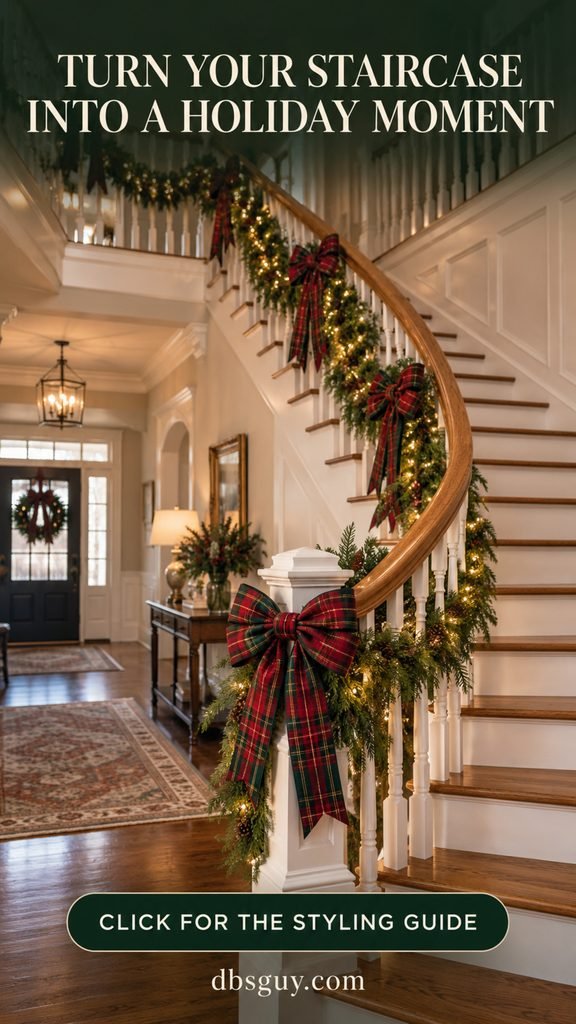
A staircase offers a long line that can carry greenery through an entrance hall. A few well-spaced bows make the arrangement feel intentional, especially when their ribbon repeats a color in the room beyond.
Attach the garland to the outside face of the balustrade rather than wrapping the surface people need to grip. Let the greenery dip gently between secure attachment points. Fluff the branches before adding ribbon so the bows sit among the greenery instead of on a flattened rope.
Use the same bow size along the run, then step back from the bottom of the stairs to check the spacing.
Make it work: Leave the handrail, stair treads, and landing clear. A graceful garland still needs to accommodate an ordinary trip upstairs.
3. Frame One Interior Doorway With Greenery
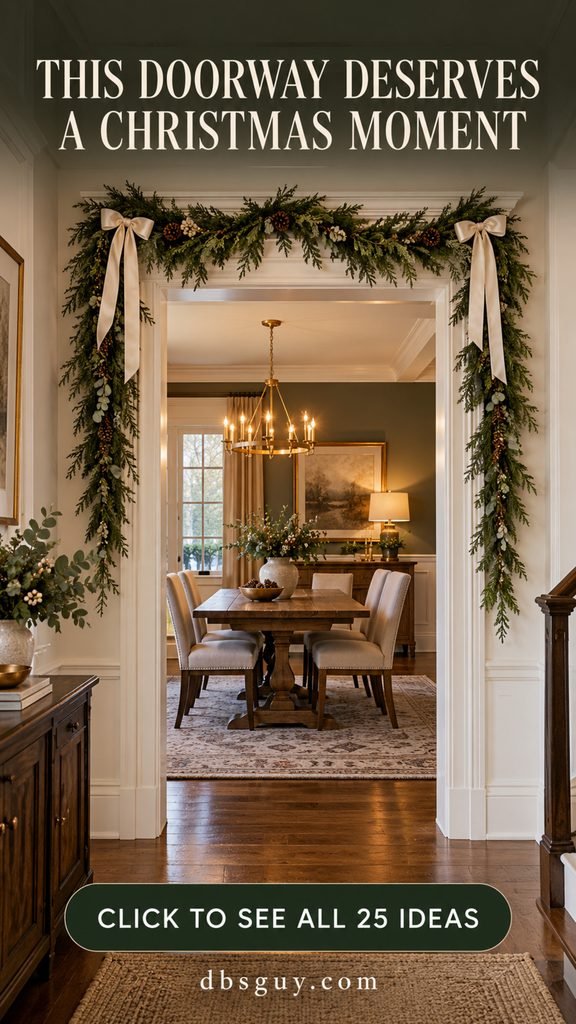
Some rooms have very little free surface space. The doorway gives you an architectural place to decorate while connecting the rooms on either side.
Run a lightweight faux garland around the outside of the upper casing and allow modest tails at the corners. An opening between the living room and dining area is a good candidate because the greenery can be enjoyed from both sides. If the doorway has a door, open and close it before settling on the arrangement.
Repeat a ribbon from the tree or entryway, and let the room beyond provide the background. The whole opening does not need to be densely covered.
Make it work: Secure the garland with surface-appropriate supports and keep every branch and ribbon out of the passage.
4. Give the Entry Console a Small Holiday Landing Spot

An entryway display can welcome guests and still be useful on a busy morning. A small tray gives the seasonal pieces a clear boundary, which helps a narrow console avoid feeling crowded.
Place a ceramic house toward the back, add a short evergreen stem in a bud vase, and keep a shallow dish at the front for keys. A family photo can stay exactly where it normally lives. The varying heights give the little arrangement shape without requiring a large collection.
If your console is particularly slim, use a rectangular tray and turn the house slightly rather than pushing several objects into a straight row.
Make it work: Leave an obvious empty area for mail or a bag. That everyday space is part of a successful holiday entryway.
5. Tuck a Slim Christmas Tree Into an Unused Corner

A full-width tree can be difficult to fit around a sofa, side table, and walking route. A slim tree lets an overlooked corner become the room’s festive focal point.
Measure the available footprint before choosing the tree. Check the space with doors open and furniture in its usual position, then imagine someone carrying a laundry basket through the room. The tree should fit comfortably into that routine.
On a narrow tree, repeat a restrained palette so the smaller outline still reads clearly. Burgundy ornaments, antique-gold accents, and warm lights make a lovely combination. Finish the base with a basket or skirt suited to the stand.
Make it work: Keep the tree away from heat sources and preserve access to doors, outlets, and frequently used furniture.
6. Layer the Mantel Garland Instead of Stretching It Thin

A mantel often looks better when the greenery has depth. Start by shaping one garland across the top, then overlap a second lighter strand where the first looks sparse. Mixing the silhouettes of faux cedar and pine gives the display more texture.
Work on the branches before adding ornaments. Turn some tips forward and others slightly upward, then use ribbon or a few bells to connect the layers. Decide where the fullest part should sit and allow the rest of the arrangement to taper naturally.
Keep all decorations outside the fireplace manufacturer’s required clearances. The pictured fireplace is inactive; an operating fireplace needs its own placement decisions.
Make it work: If you have no mantel, try the same shallow arrangement along a sideboard or substantial wall shelf.
7. Change the Sofa’s Mood With Two Pillow Covers and a Throw

Textiles are useful when you want the living room to feel seasonal without finding storage space for more ornaments. A plaid pillow introduces color and pattern; a solid velvet pillow gives the eye a quieter place to rest.
Choose covers that fit inserts you already own. A forest-green cover beside a burgundy tartan cover works well with a cream sofa. Fold an oatmeal knit throw over one arm, leaving the seats ready for people to use.
The same approach works with your existing colors. Navy, deep brown, or soft red can become the seasonal accent if they already suit the room.
Make it work: Add the covers first and live with them for a day before adding more pillows. Comfortable seating matters more than filling every corner.
8. Build a Coffee-Table Display You Can Move in One Lift

The best holiday coffee table still has room for a cup of coffee. Put the decor on a tray so the entire display can move when a board game, puzzle, or snack needs the space.
Start with one slightly taller piece, such as a small bottlebrush tree, and add two lower companions. A flameless candle in a glass holder brings a warm glow, while one evergreen accent keeps the objects visually connected.
Keep the arrangement below the view across the room. A flat-bottomed tray with enough space between the objects is easier to lift than an overflowing display.
Make it work: Set the tray where it leaves your usual mug or remote-control spot open. Function gives the arrangement a natural stopping point.
9. Add a Soft Evening Glow With Battery-Powered Lanterns
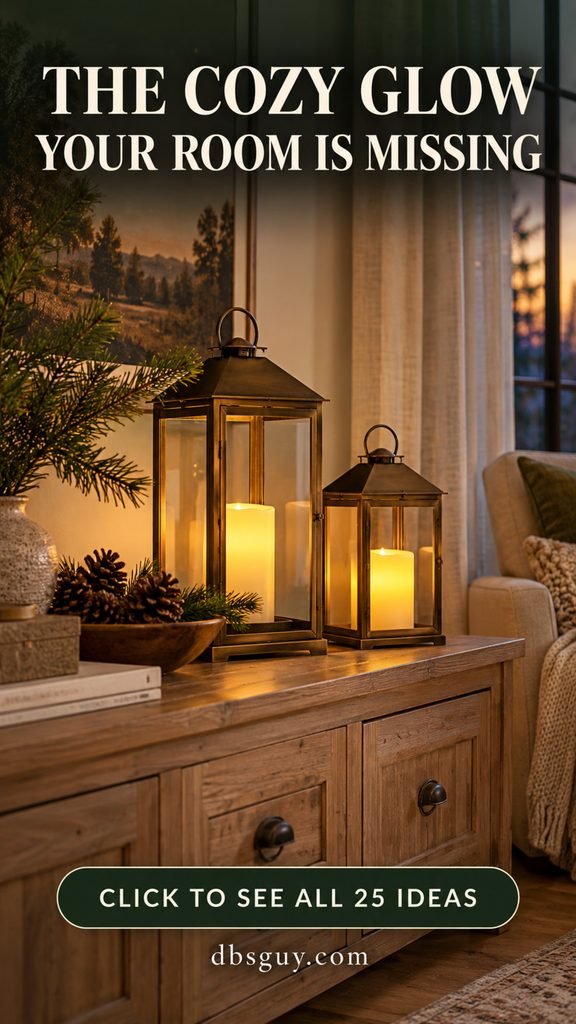
After dark, a quiet corner can become one of the most inviting parts of the room. Group two lanterns of different heights on a broad, stable shelf or sideboard and let their glow sit below your usual lamp light.
Use flameless candles inside the lanterns. The U.S. Consumer Product Safety Commission’s holiday guidance recommends using flameless candles whenever possible. They also let this display stay pleasantly simple around seasonal greenery.
A few pinecones beside the lanterns are enough texture. Match the lantern finish to another metal in the room so the group feels at home.
Make it work: Keep battery compartments secure and follow the product instructions. Use an accessible switch or timer setting so managing the glow is easy.
10. Turn One Bookshelf Shelf Into a Tiny Christmas Village

A little village can feel charming between the books, where it becomes part of a room’s familiar background. Choose one shelf and give a few houses enough room to be seen separately.
Three houses in different heights are a useful starting point. Add a pair of miniature trees, then leave the remaining space open. Small battery-lit houses can provide the evening glow without a long visible cable crossing the shelves.
Keep some books and ordinary objects nearby. Their presence makes the village feel like a seasonal addition to your home rather than a complete shelf makeover.
Make it work: Skip loose glitter and artificial snow if easy cleanup is a priority. The house shapes and light can tell the story on their own.
11. Hang Paper Stars Where the Evening Light Can Catch Them
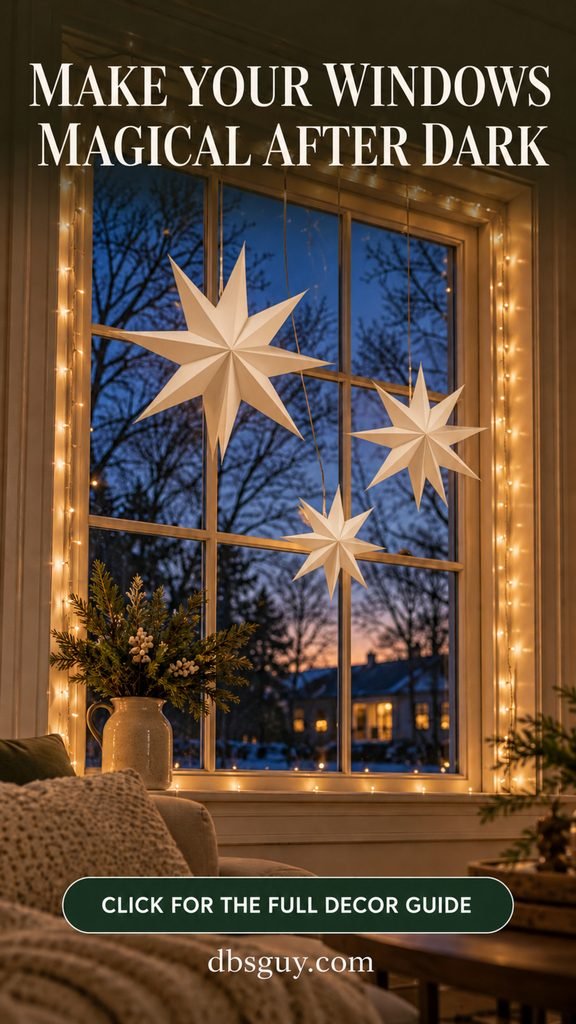
Paper stars have a clear silhouette, so a few larger ones can make more visual sense than many tiny window decorations. Hang them at different heights and leave generous space between their points.
Ivory or cream paper works beautifully against a blue evening sky. If you are making folded stars, begin with one size and add a smaller companion once you know how much room the window allows. You can also use ready-made paper stars and concentrate on the arrangement.
Place indoor-rated lights around the window frame separately from the paper, following their instructions. Check for damaged wiring and switch decorative lights off when leaving home or going to bed, as the CPSC’s decorating tips advise.
Make it work: Open the blinds or curtains to check that their normal movement will not catch the hanging stars.
12. Make a Floating Ornament Display With One Simple Branch

A lightweight branch and a few ribbons can fill a bare wall with an airy Christmas display. The ornaments become the focus, so this works especially well with shapes or colors you love.
Suspend a clean, lightweight branch from two secure, weight-appropriate supports. Tie a modest number of small shatterproof ornaments to it using ribbon in several lengths. Step back and adjust the bottom edges into a gentle, irregular line.
Champagne, ivory, and pale gold give the arrangement a soft look. A collection of inherited-looking colors can feel more playful. Keep enough branch visible to maintain the simple outline.
Make it work: Mount the display on a clear wall above a sideboard. Avoid placing dangling pieces over a bed, busy walkway, or working surface.
13. Tie Small Velvet Bows to the Curtain Tiebacks

Curtains are easy to overlook when decorating, yet their color and texture already occupy a large part of the room. Adding ribbon to the existing tiebacks connects the windows to the rest of your Christmas palette.
Tie a soft bow onto each tieback rather than pinning it through the curtain fabric. Let the tails fall naturally, then trim them to matching lengths. Burgundy velvet against ivory linen feels warm; forest green against a neutral curtain gives a subtler effect.
This detail looks particularly good when the same ribbon appears on a wreath nearby. You can use less ribbon at the windows and let the bigger wreath bow remain the focal point.
Make it work: Check the curtains still open and close comfortably, and keep ribbon clear of heaters and decorative lights.
14. Hang Mini Wreaths on a Few Kitchen Cabinets

Mini cabinet wreaths bring the Christmas color up to eye level while leaving the counter available for chopping, baking, and making breakfast. Choose a few cabinet doors that create a balanced view from the room’s entrance.
Use lightweight faux greenery and repeat one ribbon width. A pair of wreaths can look finished in a modest kitchen; every door does not need its own decoration. Select suitable attachments that will not interfere with the door’s hinges or latch.
Hang them away from the cooktop and busy splash areas. The wreaths should belong to the visual part of the kitchen, while the working areas continue to function normally.
Make it work: Open each decorated door fully before calling the arrangement finished. Adjust any ribbon that catches or rubs against the cabinet.
15. Use the Space Above the Cabinets for a Quiet Greenery Line
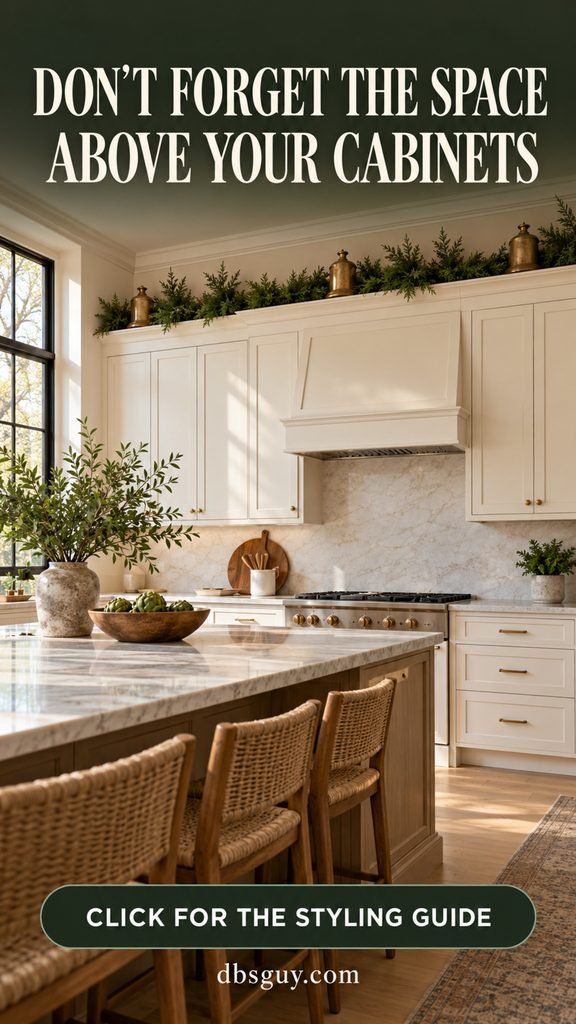
If your upper cabinets stop below the ceiling, their top edge offers another place for a seasonal accent. A light line of greenery can soften that horizontal gap without taking over the kitchen.
Clean the surface before decorating, then place a modest amount of lightweight faux garland securely on top. Keep it shallow so loose branches do not tumble down the doors. A few small brass bells or pinecones can break up the line.
Look at it from your usual standing position, rather than judging it only from up close. The effect should remain readable from below. Cabinets that meet the ceiling can simply skip this idea.
Make it work: Use a stable step stool for access and keep decorations away from vents, heat, and anything the appliance instructions require to remain unobstructed.
16. Set Up a Hot Cocoa Spot on One Small Tray
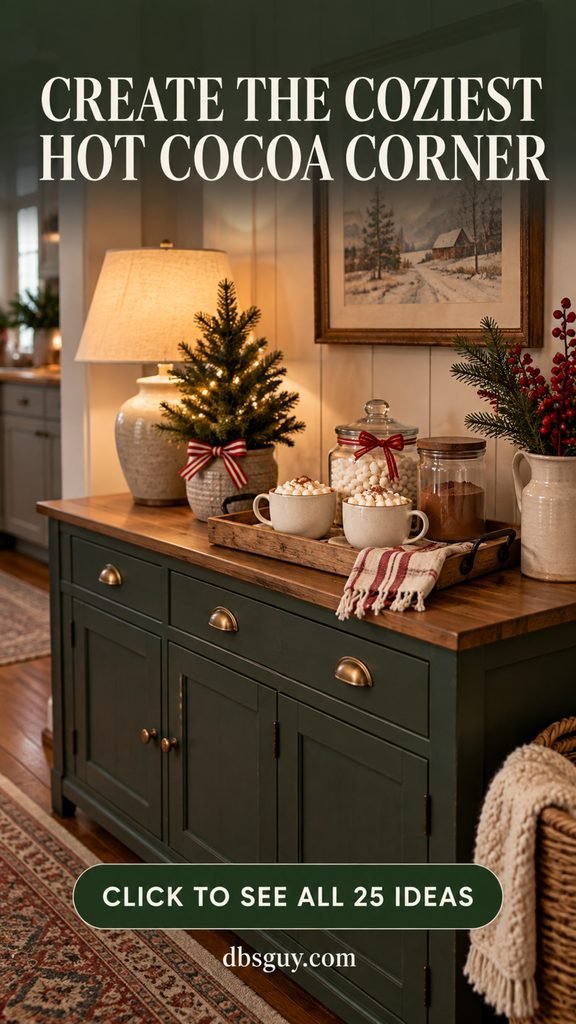
A cocoa spot feels especially welcoming because people can use it. Keep the setup modest: two mugs, cocoa, a closed jar of marshmallows, and a cloth napkin can be enough.
A sideboard or separate cart is ideal when the kitchen counter is busy. Contain the items on a tray and add one small seasonal accent, such as a miniature faux tree. Choose jars that close properly and make their contents easy for your household to identify.
You can bring out extra mugs when guests arrive, then return to the smaller arrangement afterward. That keeps the display appropriate to a normal weekday.
Make it work: Treat this as a useful drink setup first. Leave space for preparing the mug and keep food items separate from decorative greenery.
17. Keep the Dining-Table Centerpiece Low and Easy to Move

A centerpiece earns its place when people can see one another across it. Start with a runner, then arrange a shallow line of greenery through the center of the table.
Small bells or simple ornaments can sit between the branches. Use enclosed flameless votives for a little glow, and keep room for serving dishes. Set out the dinner plates before finishing the decor; they reveal how much space is actually available.
Ralph Lauren’s own holiday styling guide pairs plaid and greenery with layered table settings. You can borrow that traditional mood using your everyday plates and one favorite seasonal textile.
Make it work: Keep the arrangement on a runner or shallow tray so it can be shifted when dinner needs more room.
18. Dress the Dining Chairs With Matching Ribbon Bows

Chair bows repeat the Christmas color around the table without using any of its surface. They look especially pleasing from the doorway, where the repeated shapes help the dining area feel finished.
Tie soft ribbon around the outside backs of suitable chairs, keeping the knot where it will not press against someone sitting down. Make one bow first and sit in the chair before decorating the rest. Smooth upholstered or open-backed chairs may need different attachment methods.
Trim the tails well above the floor and check that they do not catch on neighboring chairs. One ribbon color is enough to connect the arrangement.
Make it work: If a bow slips or feels awkward, decorate the end chairs only. A smaller repetition can still give the table a festive frame.
19. Fill a Favorite Bowl With Shatterproof Ornaments

An everyday bowl can become a Christmas centerpiece in a few minutes. Its shape gives loose ornaments a boundary and makes a mixed collection feel deliberately arranged.
Choose a wide bowl and place the larger ornaments first. Fill the visible spaces with smaller pieces, keeping everything inside the rim. Burgundy, green, and gold work well in a cream ceramic bowl; a wood bowl gives pale ornaments a warmer background.
Try the bowl on a dining-room sideboard, where it can be enjoyed without competing with plates. A few ribbon ends among the ornaments add softness, while the bowl itself remains clearly visible.
Make it work: Use lightweight shatterproof pieces in a frequently used area and keep favorite fragile ornaments for a more protected display.
20. Give the Bed One Cozy Seasonal Layer

The bedroom can feel festive through fabric alone. A seasonal throw at the foot of the bed gives you a generous area of color while your usual sheets and duvet continue to do their everyday work.
Fold a plaid throw neatly across the bottom third of the bed, then try one small coordinating cushion if you want another detail. With white or oatmeal bedding, burgundy and green are easy to see without making the room feel busy.
Use a throw you enjoy handling, not just one that looks attractive in a photograph. It should be simple to move when making the bed or getting ready to sleep.
Make it work: Keep electrical decorations off bedding. The fabric and bedside lamps already provide plenty of atmosphere.
21. Put a Simple Wreath on the Bedroom’s Side Wall
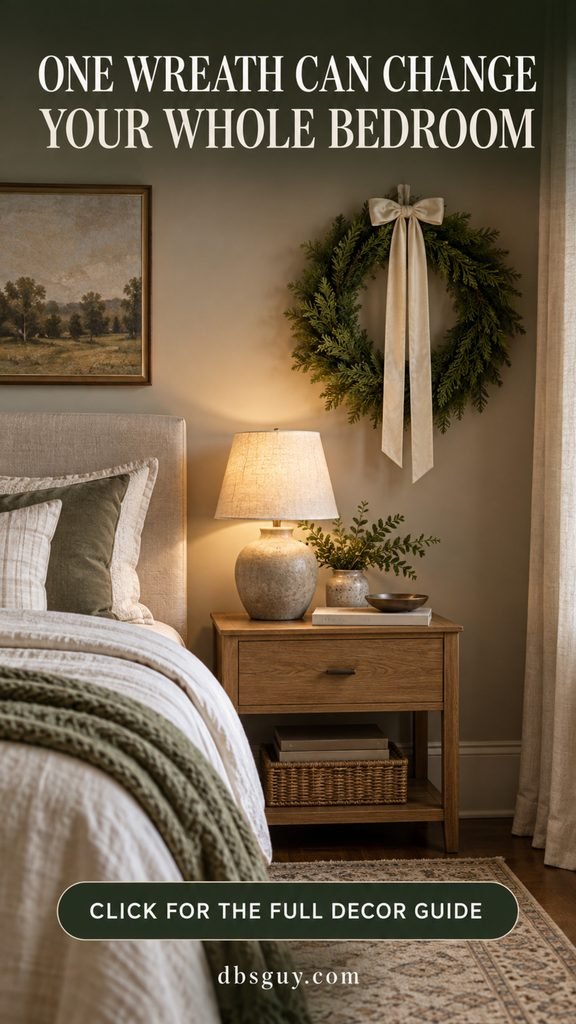
A bedroom wreath works best where it can be seen without becoming something you need to move every night. The side wall beside the bed is a lovely option, especially near a shaded bedside lamp.
Choose a lightweight wreath with a clear, simple outline. Ivory ribbon gives it a quiet finish; a thin plaid ribbon can connect it to the throw at the foot of the bed. Secure it with hardware suitable for its weight and the wall finish.
Leave the nightstand for its usual essentials. The wall decoration can provide the holiday detail while the lamp, book, and glass of water keep their familiar places.
Make it work: Place the wreath beside the bed rather than directly over the sleeping area, and keep it clear of the lamp and any heater.
22. Give the Dresser a Tabletop Christmas Tree

A tabletop tree makes sense when the bedroom has no room for a floor tree. A small version in a simple pot can sit at one end of a dresser and give the mirror something seasonal to reflect.
An approximately 18-inch tree is a useful size to consider, but measure your dresser and mirror before deciding. Decorate it with small, lightweight pieces so the branches keep their shape. Tiny bows and a few bells are often enough.
A faux tree is straightforward for this spot because it does not need a water container. Keep your jewelry dish and other regularly used items within easy reach.
Make it work: Leave most of the dresser top open. This idea should give the room a focal point while preserving the storage surface.
23. Add One Evergreen Accent to the Bathroom Vanity

The bathroom needs only a small gesture to feel included. A faux evergreen stem in a stoneware vase and a seasonal hand towel give it a Christmas mood without crowding the sink.
Choose a stable, compact vase and place it away from the faucet and usual splash zone. Forest green looks lovely with white fixtures, warm wood, or brass hardware. Repeat the towel color elsewhere in the house if you want a subtle connection between rooms.
Use a stem that is easy to wipe clean, and keep soap and everyday toiletries accessible. There is no need to bring decorative lighting into a wet vanity area.
Make it work: If the counter is tiny, use the towel alone. A useful seasonal textile can carry the idea just as well.
24. Add a Christmas Detail to the Home Office’s Quiet Corner

A home office can join the season without competing with the work on your desk. Reserve one small corner for a ceramic tree, or tie a narrow ribbon around a pencil cup.
Keep the display outside the area where your keyboard, notebook, and coffee normally sit. A simple tree shape looks festive even without lights, and ribbon can repeat the color from a wreath in another room.
If the desk is already full, put the detail on a nearby shelf where you can see it when looking up. The aim is a small, pleasant seasonal view while the workspace remains easy to use.
Make it work: Choose one or two pieces with a compact footprint. Avoid weaving decorative lights around the monitor or equipment.
25. Turn Christmas Cards Into the Most Personal Display in the House

Christmas cards make the decorating feel connected to the people in your life. Give them a place to grow throughout the season rather than leaving the pile beside the mail.
Hang a few vertical lengths of ribbon on a suitable wall and attach the cards with small clips. Leave empty sections for new arrivals. Green velvet ribbon feels traditional; plain cotton ribbon gives illustrated cards a lighter background.
Mix card sizes and let some of the ribbon remain visible. You can add favorite cards from previous years, keeping any particularly delicate originals in a protected spot and displaying copies instead.
Make it work: Put the display where people pause, such as above a narrow family-room shelf. The cards provide the variety, so extra decorations can stay minimal.
How to Choose the Ideas That Fit Your Home
You do not need to work through all 25. Choose the places where a decoration will be seen and enjoyed regularly.
For a small apartment, the mirror wreath, slim corner tree, window stars, and card display use different heights and surfaces. A busy family kitchen may suit cabinet wreaths and a movable cocoa tray. For a quieter bedroom, a seasonal throw and one wall wreath give the room a clear holiday mood.
Before adding a new piece, move the everyday objects back into place and use the room normally. Open the cabinet, sit in the chair, draw the curtains, and put the dinner plates on the table. Those small checks tell you whether the arrangement is finished or needs one more adjustment.
A Note on Fresh Greenery
Fresh greenery brings a different texture and scent, while faux pieces make a long decorating season easier to manage. The University of Minnesota Extension notes that cut greens can dry quickly indoors and advises placing pine and cedar in cooler areas away from heat and vents. It also identifies Fraser fir and balsam as options that tend to stay fresh longer in wreaths and garlands.
For a simple approach, use faux greenery for the displays you want to leave up longest. Add a small fresh arrangement in a water-filled vase where you can monitor it, following the care needs of the greens you choose. Check fresh pieces regularly and remove them when they become dry or brittle.
Indoor Christmas Decorating Questions
How can I decorate for Christmas on a tight budget?
Choose one repeated detail before buying anything. Ribbon can connect a mirror wreath, curtain tiebacks, and chair backs. Ornaments you already own can fill an everyday bowl, and incoming Christmas cards can become a growing wall display. Spend only where an item solves a specific gap in your plan.
How do I keep different rooms looking coordinated?
Repeat one color, one type of texture, or one finish. For example, burgundy ribbon can appear in the entryway, the kitchen, and the bedroom, while each room uses a different decoration. The displays can feel related without being identical.
What can I decorate if I do not have a fireplace?
Try a sideboard, bookcase shelf, or entry console. Choose a shallow arrangement that suits the surface and keep anything you use every day accessible. A single village shelf or a low greenery display can provide the focal point a mantel would normally offer.
How can I make indoor Christmas decor feel cozy after dark?
Start with the lamps you already have, then add one small pool of light where the room feels dark. Flameless lanterns or battery-lit ceramic houses are useful options. Keep the lighting manageable and follow each product’s instructions, including switching decorative lights off when you leave or go to bed.
Do I need a different Christmas theme in every room?
One flexible palette is enough. Let the room decide the decoration: textiles for the bedroom, a practical tray for the kitchen, and a wall display where surface space is limited. Your everyday furnishings and family keepsakes give each room its own character.
Bring the Christmas Feeling Into Everyday Life
Start with the view that greets you at the door. Add something you will enjoy from your favorite seat, then give one ordinary morning routine a seasonal detail. Those choices make the decorating feel personal from the beginning.
Once the familiar rooms feel welcoming, you can stop, enjoy them, and add the cards and little memories that arrive as Christmas gets closer.