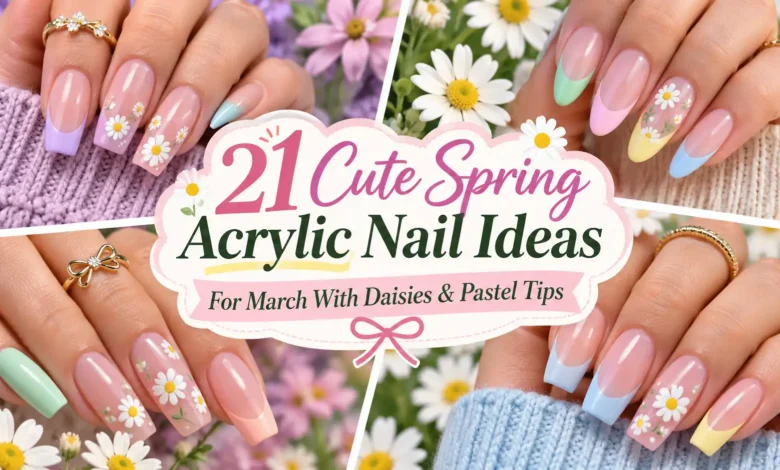
If you want spring nails while your winter coat is still by the door, start with butter-yellow micro tips, sage ovals with one daisy, or dusty mauve with shiny French edges. For more color, try a daisy chain along the tip or a powder-blue and yellow checkerboard.
These 21 March acrylic nail ideas use simple salon instructions to pin down the details, from how wide to make a French tip to where a daisy should sit on a short nail. The images are AI-generated design concepts for planning your manicure. Bring the design you like and choose your polish colors from salon swatches.

Choose a March Manicure by Nail Length
- Very short acrylics: Start with the butter-yellow micro French in idea 1 or the sage daisy in idea 3.
- Medium almond acrylics: Use the extra tip space for the lilac-and-blue double French in idea 9 or the daisy chain in idea 12.
- Medium square or tapered-square acrylics: Try the checkerboard in idea 20. The wider, flat edge makes the rows easy to see.
Short Spring Acrylics With Small Details
1. Butter Yellow Micro French

This is the set to pick if you usually wear sheer pink but want a little spring color. Ask for a short squoval shape, with the straight edge softened at the corners. A narrow band of opaque butter yellow makes the French edge easy to see even when there’s very little length. Hold the sample next to your base shade to make sure the pale yellow still shows up.
2. Lavender French Tips With Tiny Daisies

Give the lavender tips a little curve, then tuck a white daisy with a yellow center against one side of the French line on the ring nail. That off-center placement lets you see both the flower and the curve of the tip. If your nail beds are narrow, ask for one daisy per hand so there’s room for petals around the center.
3. Sage Ovals With a Daisy by the Tip

A muted sage cream gives you a soft green for the part of March when you’re still wearing a coat. Set one white daisy close to the tip of the ring nail and leave a sliver of sage around the petals. Ask for a warm yellow center if you want a little more contrast against the green.
If you want to compare sage with brighter mint, see the green spring nail ideas.
4. Peach and Pink Split Tips

Ask for a straight seam down the middle of each French tip, with pale peach on one side and a cooler pink on the other. The colors can look almost identical on a small nail, so compare two swatches side by side before choosing. A soft square gives the two halves a clear edge and keeps the design compact.
5. Powder Blue Side French

This French tip sweeps along one side of each short oval and crosses the nearest corner of the free edge. Ask to leave the opposite corner nude so the diagonal stays easy to see. If you like the manicure from straight on, check it from that angle at the salon too. The sweep can look much wider on a turned hand.
6. Pastel Skittle Micro French
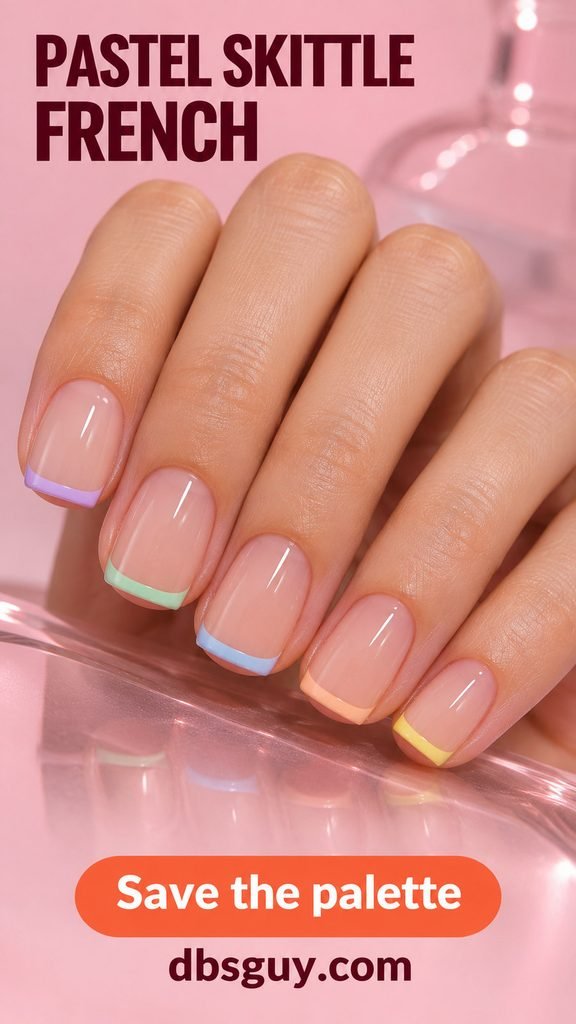
Pick five pastel creams with a similar depth of color. Lilac, mint, powder blue, peach, and butter yellow make an easy starting palette. Decide which shade goes on the thumb before the painting starts, especially if you want the two hands to match. Keep the bands similar in width so the palette is what changes from finger to finger.
7. Dusty Mauve With Glossy French Edges

If lilac still feels a little bright for early March, try a pink-leaning dusty mauve. Give the body of the nail a matte finish and keep the same shade glossy at the free edge. Slanted light makes the contrast easiest to check. Ask to see a sample tipped toward a window or lamp so you can judge whether you want a slightly wider band of gloss.
For options along the same winter-to-spring palette, browse the February and March nail color guide.
8. Pink Gingham and a Daisy Accent

Put the gingham on the ring nail and the white daisy on the middle nail. The pink grid gives the flower a picnic-print feel without crowding it. On a short square, ask for fewer, larger checks and a fine pink grid over a pale base. Keep the other nails blush to give the two accents a quiet background.
Pastel French Tips for Medium Acrylics
9. Lilac and Blue Double French
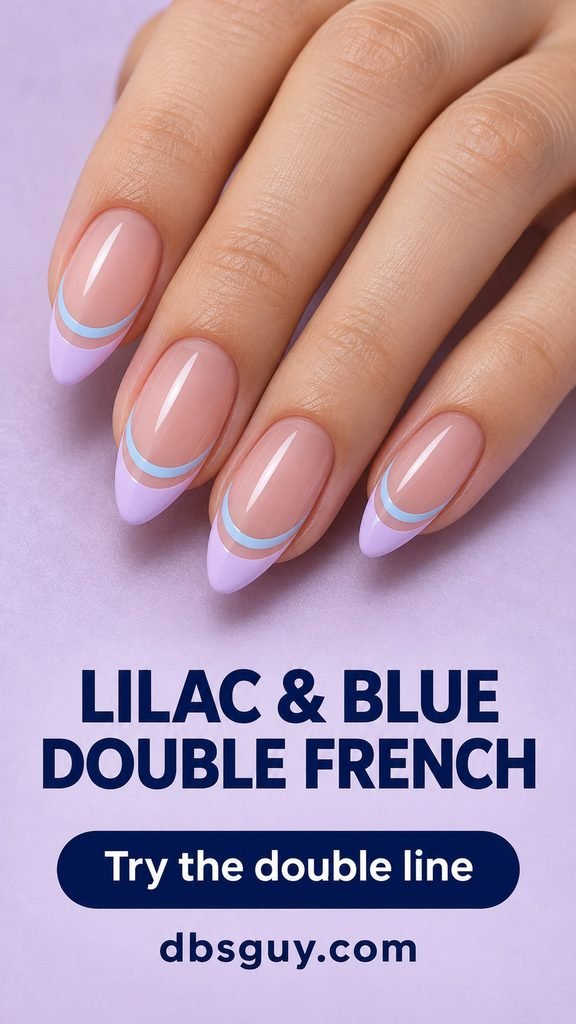
Ask for an opaque lilac tip with a second, thinner powder-blue line tracing its curve below. Keep a sliver of the nude base between the two colors so each line stays distinct. Medium almond tips give that gap room to show. If you go shorter, try the double line on two nails and give the others a single lilac edge.
10. Mint Outline French
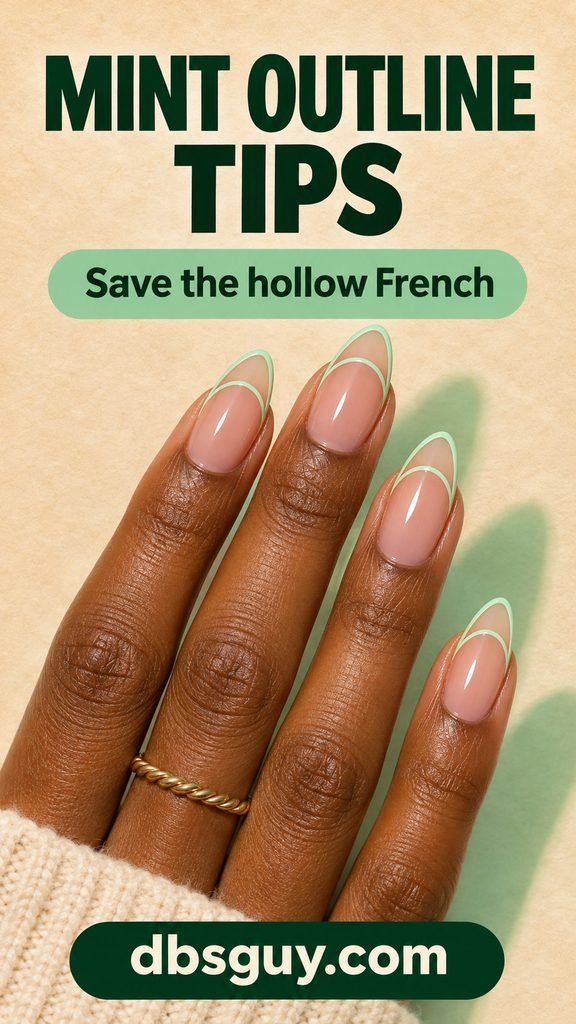
Think of this as a mint frame for the tip. Ask for a fine contour along the outer edge and a second curve joining it across the inside of the nail. Leave the middle of the outlined shape translucent. If the base is very close to your skin tone, choose a slightly stronger mint so you can make out the outline at arm’s length.
11. Butter Yellow Ombré With Two Daisies

Ask for the yellow to fade into nude pink before it reaches the center of the nail. Put the daisies on the softer edge of that fade, where their white petals have enough contrast to show. On a shorter almond, keep the gradient and request one flower so the yellow at the tip still has room to show.
12. Daisy Chain French Tips

On one or two accent nails, let a row of tiny daisies trace the curve a painted French tip would follow. Yellow centers help you see where one flower ends and the next begins. Thin butter-yellow tips on the other nails echo the centers. For a shorter set, ask for three flowers along the widest part of the edge and leave open space toward the corners.
13. Peach Sherbet V Tips

Use a tapered square if you like a flat edge but want a sharp point in the design. The peach climbs the sides and the nude base tapers to a point inside the colored tip. Ask for shorter side strokes if you want to keep more of the nude showing. Look down at your hand to check that the point sits in the center.
14. Pearly Periwinkle Tips
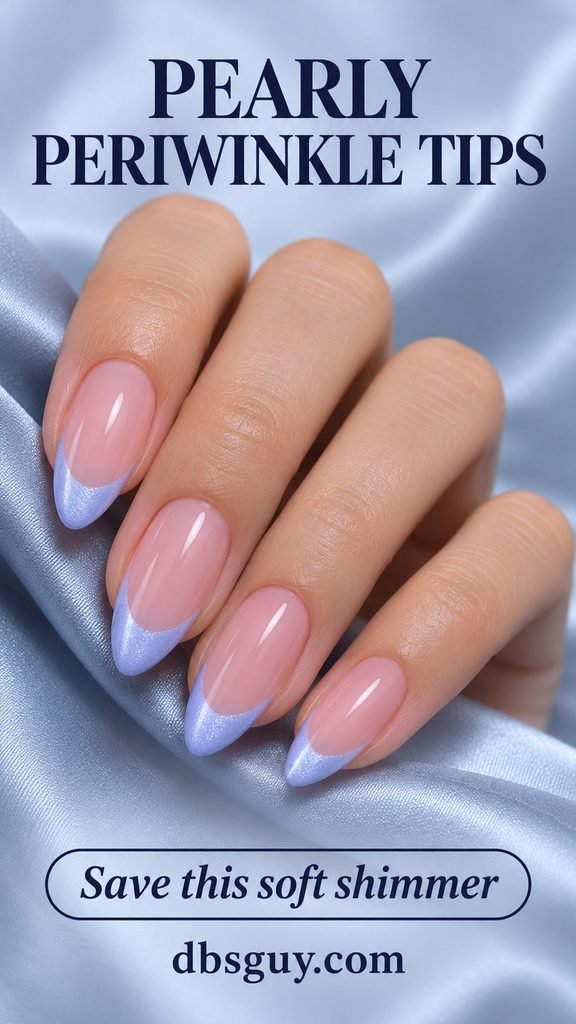
Choose a shade squarely between blue and lavender and keep the pearly finish on the tips. Turn the swatch under salon lighting. If the reflection is strong enough to hide the periwinkle, ask for a finer pearl sheen. A sheer pink base lets you see where the shimmer starts.
15. Sage and Butter Diagonal Tips

Choose sage and yellow with a similar level of softness, then alternate them on neighboring nails. Ask for one straight diagonal seam per nail, with color filling the area from that line to the tip. The soft-square free edge makes the tilt easy to see. If you prefer a quieter set, use sage on most fingers and keep the yellow for two accents.
Daisy Accents and Playful March Patterns
16. Powder Blue With Scattered Daisies

A creamy blue makes the whole nail a backdrop for flowers. Cluster a few tiny white daisies along a loose diagonal on the ring nail, then echo the pattern with one flower on the neighboring nail. On short ovals, ask for two or three flowers with visible blue between them so you can still see their outlines.
17. Peach Daisy Half Moons
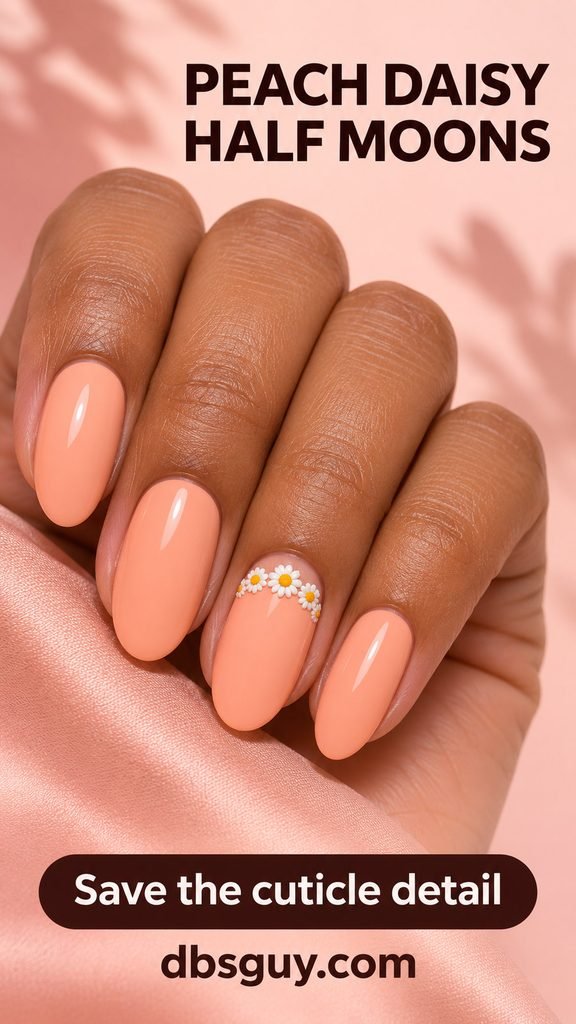
Ask for a shallow crescent of painted daisies just above the base of the ring nail. Choosing the exact placement matters here. Leave a little strip of peach below the flowers and let that gap follow the cuticle curve. If the nail is narrow, one complete daisy and two small buds will suggest a crescent with more room between details.
18. Baby Pink With One Raised Daisy

Put one raised daisy in the middle of a pink ring nail and keep the rest glossy and smooth. At the salon, ask to see the accent from the side so you can judge how much the petals stand up. If you wear gloves or reach into tight pockets throughout the day, ask for a shallow sculpt or a painted version with the same placement.
19. Retro Lilac With Pink Daisies

Use lilac as the full base and make the petals bubblegum pink. A cream center separates the similar pink and purple shades and gives the daisy a round, graphic look. A single larger flower on each accent nail leaves room for the rounded petals. Check that the pink swatch looks a little stronger than the lilac before you settle on the pair.
20. Blue and Butter Checkerboard French

Put the checks on two broad nails where there’s room for a compact two-row grid. Use one solid blue or yellow tip on each neighboring nail to carry the colors across the set. If you want the look on shorter nails, go with fewer checks and keep the squares big enough to read.
21. Wavy Pastel French Tips

Pick this set if you like the varied palette of a skittle manicure but want a looser shape at the tips. Ask for a single shallow wave along the inner edge of each tip. Leave the nail bed sheer and keep one color per nail. On short nails, one broad bend reads more clearly than a row of tiny wiggles.
What to Say at Your Acrylic Nail Appointment
Start with your preferred length and shape, then name the detail you want to keep if the design needs simplifying. For example, “Short squovals, a sheer rosy base, and butter-yellow tips as thin as you can paint them.” For a daisy look, show whether you want the petals near the tip, along the cuticle curve, or in the center of an accent nail.
If two colors look close in your reference, compare them next to your chosen base shade. For detailed art, check the salon’s booking options and mention whether you want one accent per hand or the design on every nail.
Questions About March Acrylic Nails
What is the simplest daisy design for short acrylic nails?
Try one small, flat daisy on each ring nail. A solid sage or powder-blue background helps the white petals show. For a set with both details, put the daisies on the accent nails and give the others a thin colored edge.
Should I choose short almond or squoval for pastel French tips?
Pick squoval for a fine line, a split tip, or checks on a short nail. The flat edge gives the geometry room. Choose almond for a crescent or wave if you have enough length for a gentle taper. Show your nail tech the line you like and ask what will fit at the length you want.
What should I know before getting an acrylic set?
Acrylic application and removal can be hard on natural nails. If yours already feel brittle or damaged, consider wearing the same art with regular polish on your natural nails. The American Academy of Dermatology’s guide to artificial nails explains how application, removal, and maintenance can affect the nail plate.