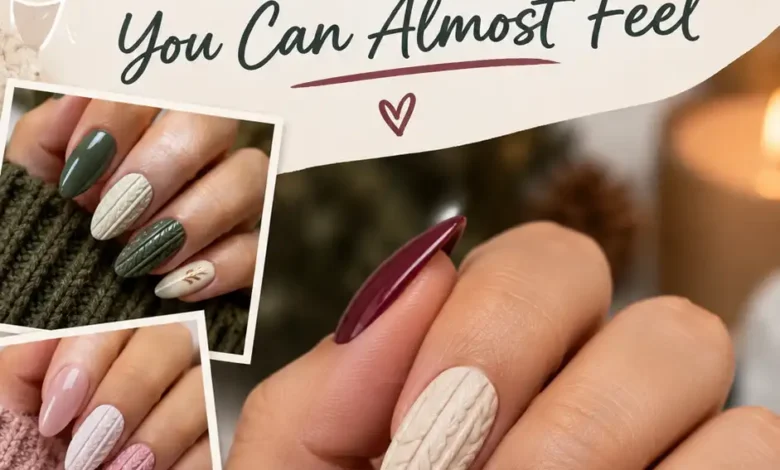
Little cables, tiny seams, and knit-inspired details you will want to see up close.
The best part of a sweater is often the detail you notice with your fingertips: a little braid, a ribbed cuff, the neat line beside a button. Sweater nails borrow those details and shrink them into something you can carry through November, even when your coat sleeves cover everything else.
These 19 November nail designs with sweater textures explore more than the familiar cream cable. You will find cranberry cuffs, olive sweater-vest shapes, quiet navy ribs, and a tiny silver seam on charcoal. Each design has its own reference image, a practical adjustment, and a salon note, so you can turn a saved idea into a clear request.
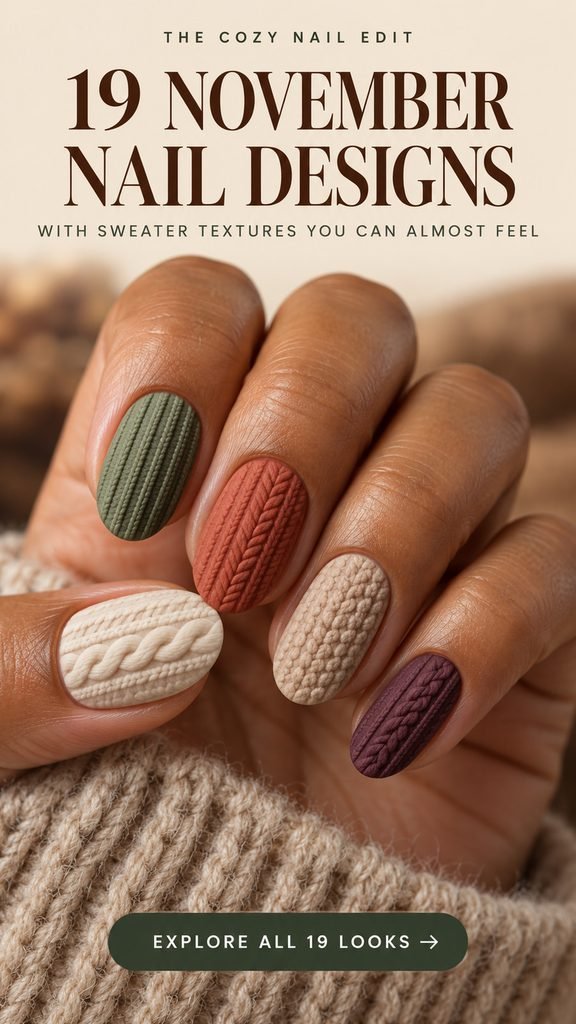
Choose the Texture Before the Color
Start by deciding whether you want to feel the pattern or mainly see it. Young Nails’ sweater nail guide describes knit-inspired artwork that can include embossed details. Erica’s ATA demonstrates a dimensional method using a matte base, gel-drawn patterns, and acrylic powder. Those are useful technique references for an artist; the designs below are visual briefs rather than one universal application recipe.
A raised cable gives the nail small ridges and shadows. A painted cable or row of stitch marks can suggest the same fabric with much less relief. If raised details bother you when dressing or working, ask for a flatter interpretation or try the texture on one accent nail first. The motif can survive that change.
Matte describes the finish, not the height of the design. For example, Essie’s matte top coat changes the shine of its enamel; the little cables still need to be created separately. A matte finish can make the whole idea feel softer, while glossy companion nails give textured accents more contrast.
At the salon, agree on three things: pattern size, accent count, and texture height. Ask for one sample if you are unsure how a detailed repeat will fit. For dimensional gel work, the artist should follow the chosen system’s application instructions and use a compatible lamp and specified curing schedule; The GelBottle’s application guidance explains why the product and lamp need to work together.November sweater nail design 01 / 19
1. Oatmeal Aran Panels
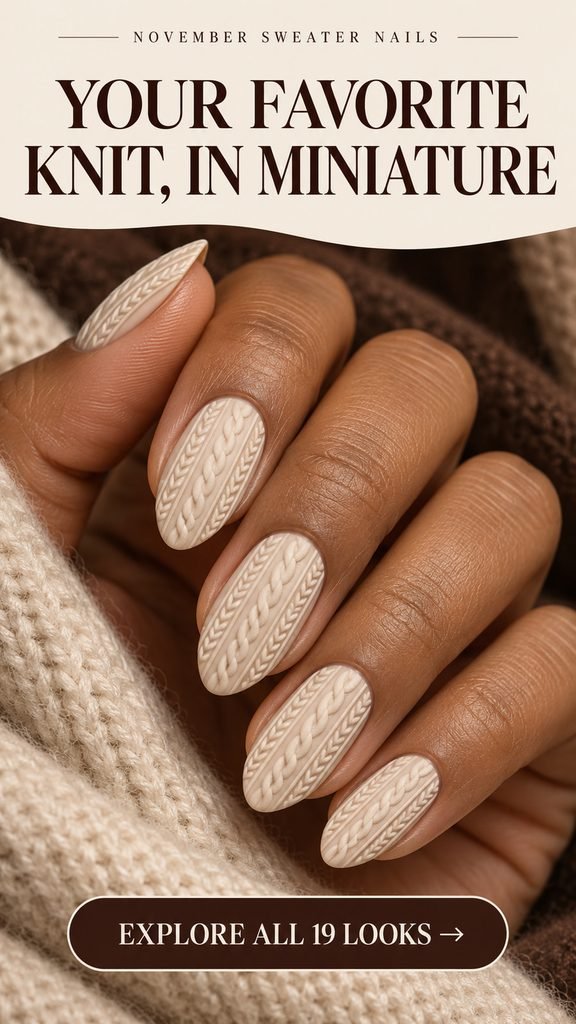
Oatmeal gives the little shadows in this design somewhere to land. A central cable, narrow ribs, and tiny side stitches turn a single cream shade into a whole composition. From a distance, the manicure stays neutral. Up close, you can follow each panel the way you would trace the pattern of an Aran-style sweater.
Choose how many columns your nail can comfortably hold before deciding how intricate to make them. On a shorter or narrower shape, keep the central braid and one slim border on either side. The blank spaces between raised lines matter: they let the pattern remain readable. A warm cream makes this feel soft; a bright white would give the same relief a sharper look.
Salon note: Matte oatmeal with one central cable and fine side ribs. Keep the relief shallow and the columns separated; simplify the side stitches if my nails do not have enough room.November sweater nail design 02 / 19
2. Cranberry Knit Cuffs
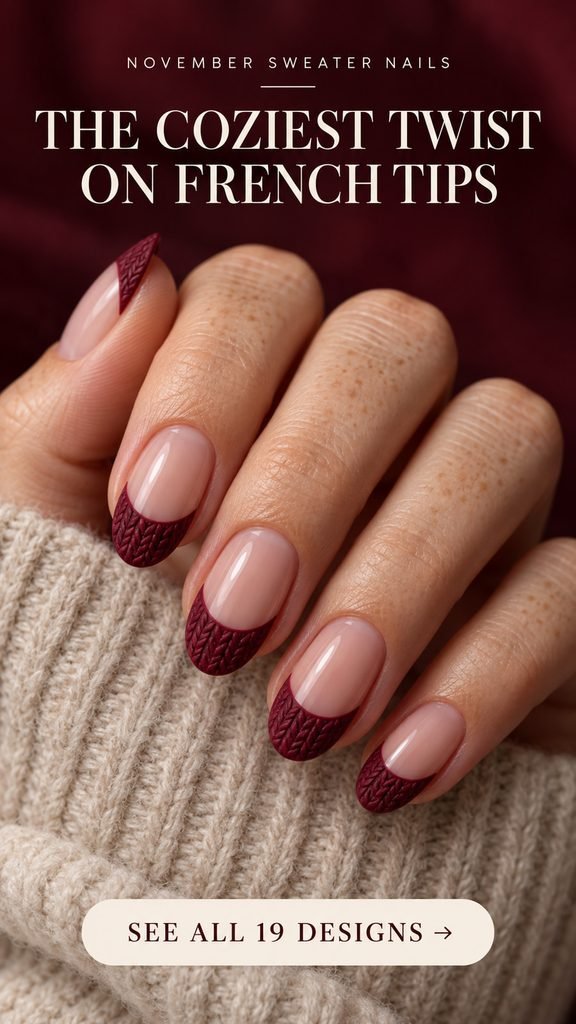
These cranberry tips look like miniature sweater cuffs. The sheer pink base leaves most of the nail light, while rows of small knitted marks give the colored edge something unexpected. It is a useful reference if you love a French manicure and want the seasonal detail concentrated in one place.
Tip depth determines how much pattern you can see. A slightly deeper band can hold a few rows of stitches; a very fine edge may only have space for one. Keep the curved border clean and let the texture stop inside the cranberry area. If your free edge is short, choose a simple stitch repeat instead of stretching the band farther down the nail than you like.
Salon note: Sheer pink-beige nails with cranberry knit-textured French tips. Fine rows of tiny V stitches inside the colored band, a clean smile line, and a matte finish on the tips.November sweater nail design 03 / 19
3. Sage Seed-Stitch Nails
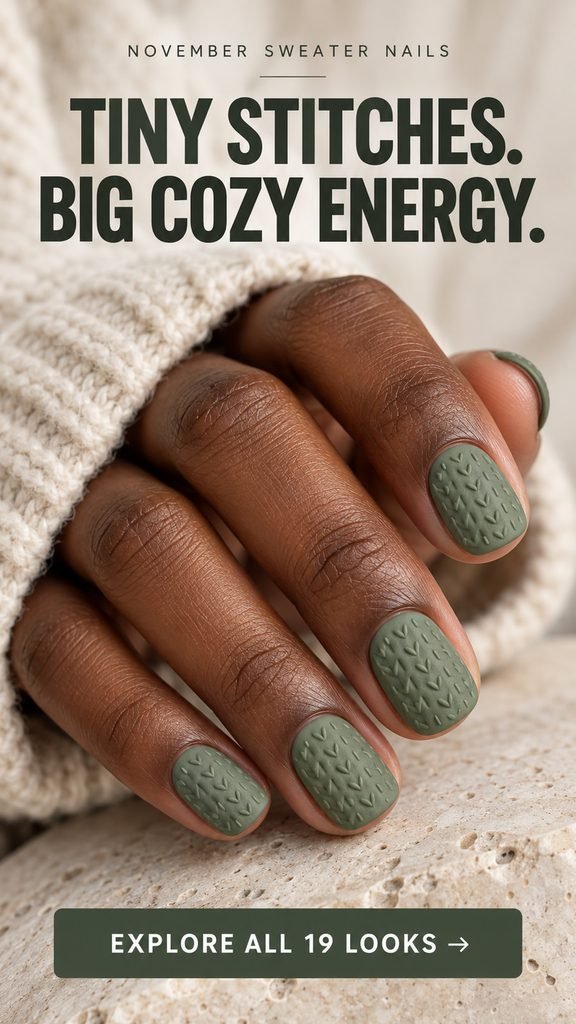
Sage seed-stitch nails take the quieter route. Small alternating marks spread across the surface without a large braid or a contrasting color. The matte green looks especially gentle beside cream clothing, and the repeated texture makes even a short rounded square feel complete.
Ask for a seed-stitch-inspired impression rather than a literal miniature knitting diagram. Tiny V marks and dashes can suggest the fabric while staying clear on a small nail. Even spacing is more useful than adding more marks. If you prefer less surface detail, keep the texture on two fingers and repeat the same sage on the others with a smooth matte finish.
Salon note: Short sage nails with a fine, evenly spaced seed-stitch-inspired texture. Small raised V marks and dashes, no large cable, and a matte surface with subtle relief.November sweater nail design 04 / 19
4. Espresso Cardigan Accents
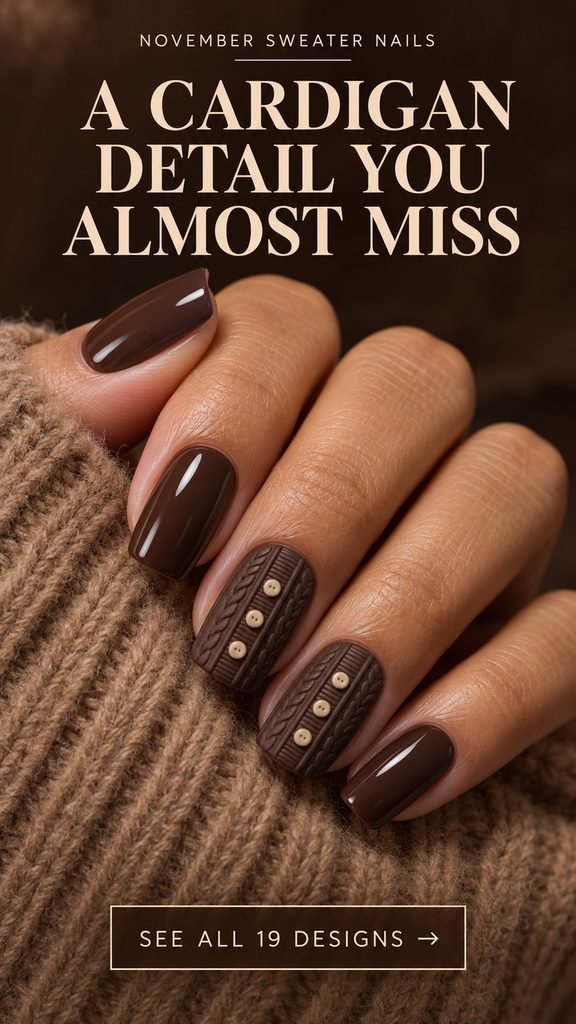
The button strip is the detail that makes these espresso nails read as a cardigan. Two accent nails have a narrow central placket, little beige button details, and knit texture beside it. Glossy espresso on the remaining nails gives your eye a resting place and makes the matte accents easier to pick out.
Keep the button details small and low. The reference shows a little relief; painted cream circles are a flatter alternative if that better suits your routine. On a shorter nail, two buttons may fit more comfortably than three. Ask your artist to establish the width of the central strip first, then use the remaining space for a restrained amount of knit detail.
Salon note: Espresso nails with two matte cardigan accents: a narrow ribbed center strip, tiny beige button details, and subtle stitches beside it. Use painted circles for a flatter version. Other nails glossy espresso.November sweater nail design 05 / 19
5. Terracotta Herringbone Knit
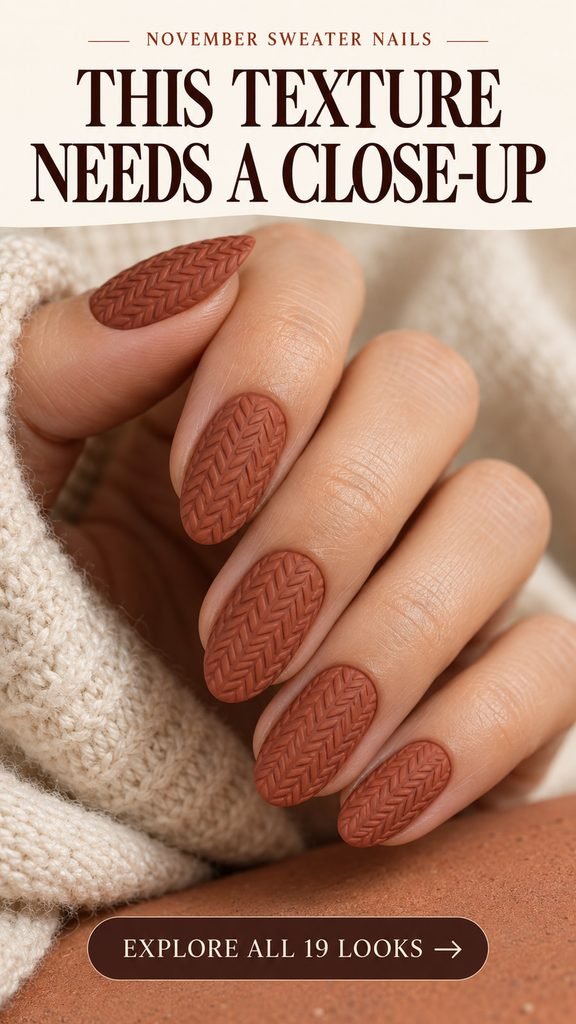
Terracotta herringbone has the warmth of clay and the rhythm of a woven-looking knit. Short diagonal strokes meet and shift in a repeated pattern, creating movement across the nail without adding a second shade. The same-color relief is the point: the design becomes visible through small shadows rather than a bold painted outline.
For the clearest result, keep the slanted strokes similar in size and leave a little space between the rows. On very short nails, fewer repeats will preserve the angle better than densely packed marks. If a full textured set feels like too much, use the pattern on the middle and ring fingers and keep the other terracotta nails smooth.
Salon note: Matte terracotta with fine raised herringbone-inspired strokes. A tidy repeated angle, shallow relief, and enough spacing for the pattern to stay visible on my nail length.November sweater nail design 06 / 19
6. Cream-and-Camel Patchwork
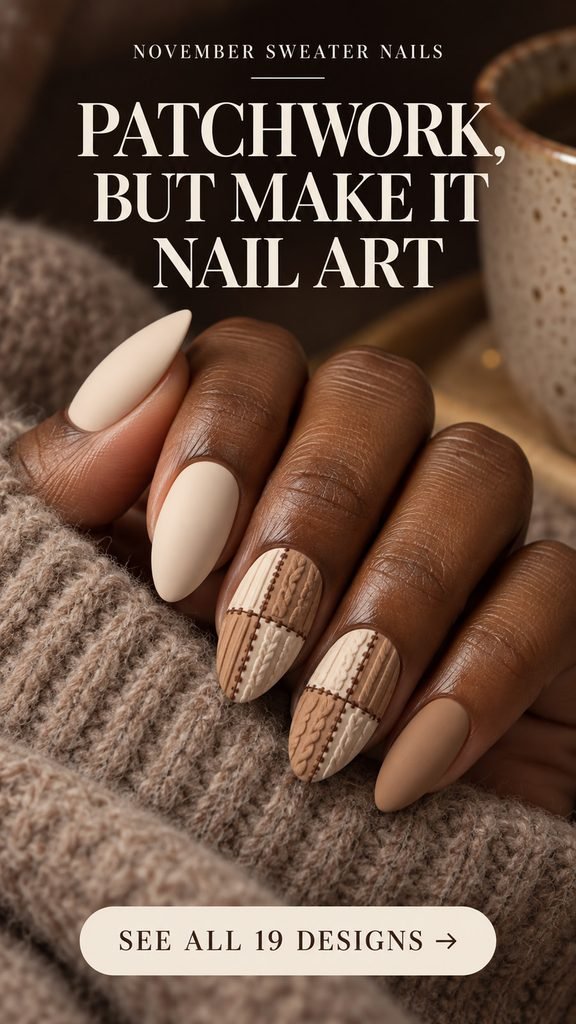
Cream and camel patchwork looks as if several favorite sweaters have been brought together in one manicure. The accent nails use a few roomy sections, each carrying its own small knit detail. Tiny seam marks join the colors, while plain cream and camel elsewhere stop the set from becoming visually crowded.
The patches do not need to be perfectly equal. A slightly uneven arrangement is part of the charm, provided the blocks are large enough to show their textures. For short nails, try two patches instead of four. Keep the seam marks finer than the cable or ribbing inside each block so the stitching connects the design without dominating it.
Salon note: Two cream-and-camel patchwork accents with different small knit textures inside the blocks and fine cocoa seam stitches. Repeat smooth cream and camel on the other nails.November sweater nail design 07 / 19
7. Navy Fisherman Ribs
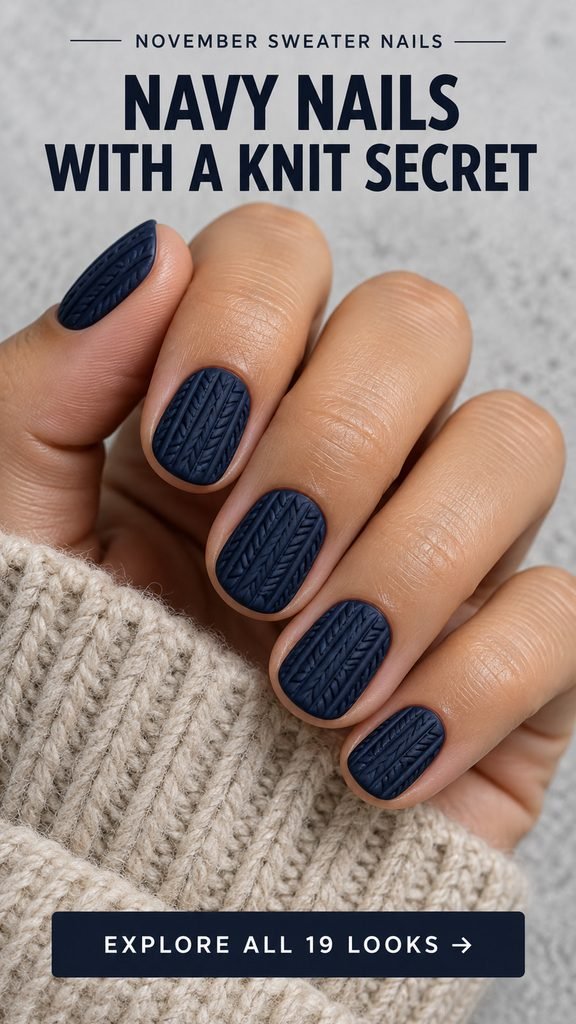
Navy fisherman ribs are a good reference when you want the sweater idea to feel restrained. The long, narrow lines give the surface a knitted rhythm, but the dark color keeps the whole set quiet. There is no need for a separate accent shade; the relief becomes the detail.
Look at a sample from the side as well as straight on. Dark polish can make very fine patterns harder to distinguish in some lighting, so the spacing needs to be deliberate. A few clearly defined ribs can work better than a crowded field of hairline marks. This pattern also adapts neatly to a short round shape because it does not depend on a large central motif.
Salon note: Short matte navy nails with fine vertical fisherman-knit-inspired ribs and small angled stitch details. Keep the rib spacing clear and the raised lines modest in height.November sweater nail design 08 / 19
8. Blush Cables with Burgundy Borders
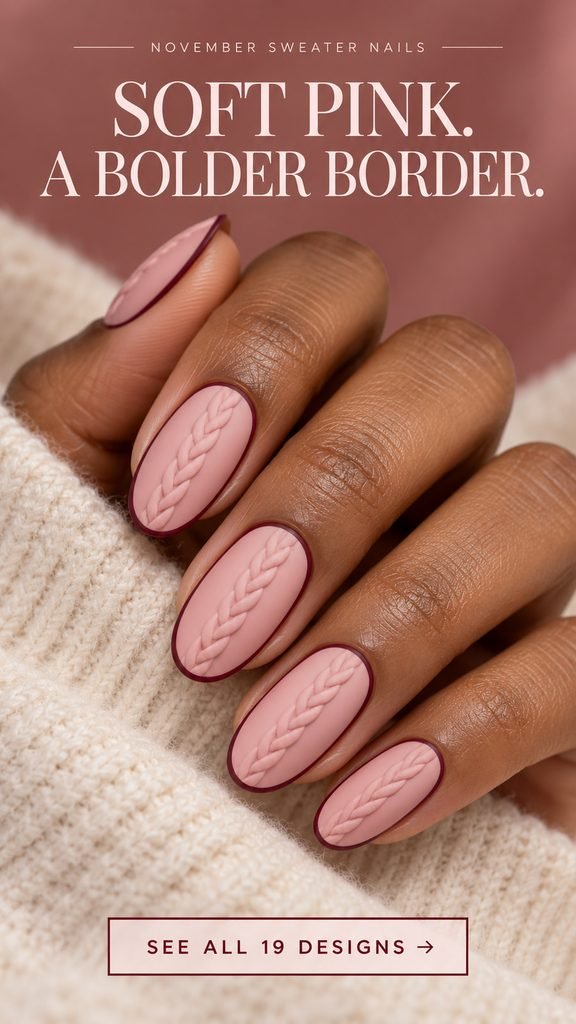
A burgundy border gives blush cable nails a little bite. The center stays soft, with one pale raised braid, while the dark outline makes the silhouette more defined. It is a lovely combination when you like pink nails but want a richer detail that belongs beside November coats and knits.
Keep the braid narrow enough to leave smooth pink space on both sides. The perimeter line should also stay fine, especially around a short or narrow nail. You can limit the cable and outline to two accents if you prefer less detail. A muted blush is useful here because it lets the burgundy feel intentional without making the contrast overly bright.
Salon note: Matte blush with one slim raised central cable and a fine burgundy perimeter outline. Leave smooth pink beside the braid and keep the border delicate.November sweater nail design 09 / 19
9. Mustard Waffle-Knit Accents
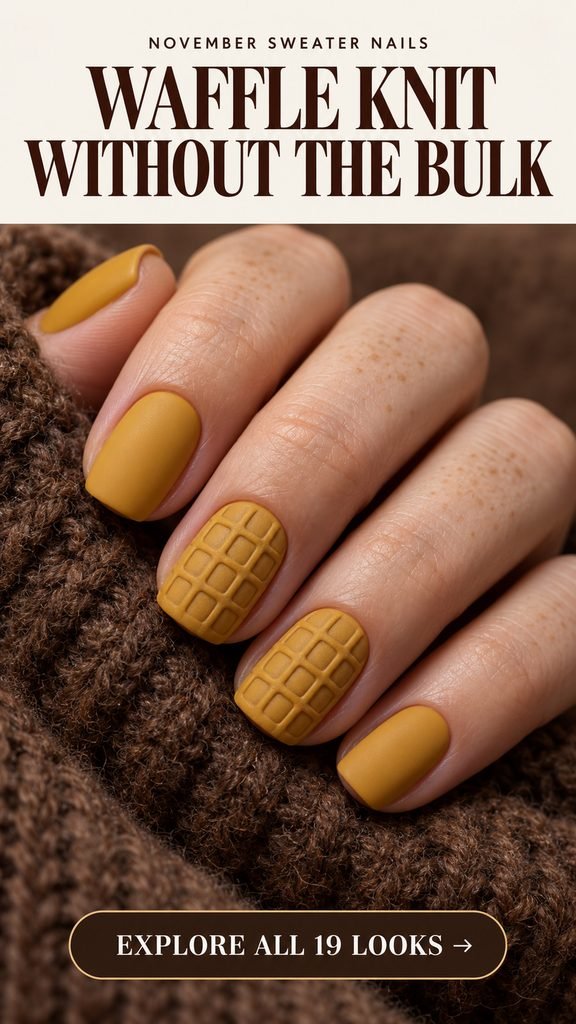
Mustard waffle knit has a small, satisfying geometry. Two textured nails carry softly squared cells, while the rest stay smooth and matte. The little grid makes the warm yellow feel more tailored, almost like the cuff of a well-worn waffle-knit top.
The cells should remain shallow and clearly separated. Making them bigger and puffier changes the look from knit texture to a more sculptural pattern. On short nails, reduce the number of rows and columns before reducing the gaps between them. A muted mustard keeps the effect cozy; a brighter yellow will make the same grid feel much more graphic.
Salon note: Muted mustard nails with two shallow waffle-knit accents. Small squared cells formed by fine raised ridges, generous spacing, and smooth matte mustard on the remaining nails.November sweater nail design 10 / 19
10. Olive Sweater Vest Nails
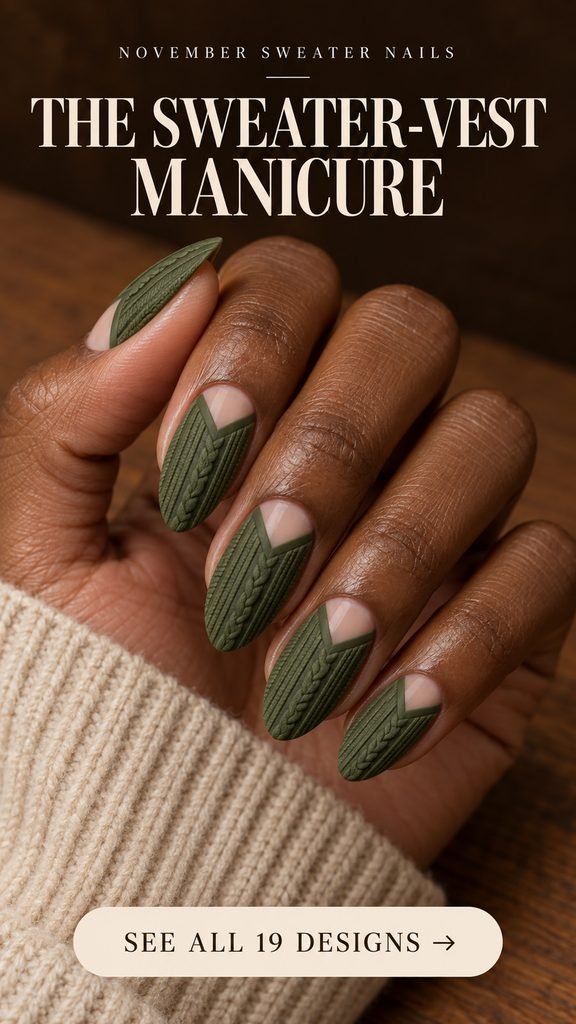
The little V-shaped opening makes this olive manicure look like a sweater vest. Most of the nail carries knit texture, but the nude area near the cuticle suggests a neckline. It is a playful idea with a fairly simple outline, which keeps it from feeling like a tiny costume on every finger.
Choose the depth of the V before filling the olive area with stitches. A shallow opening leaves more space for texture; a deeper one makes the neckline more noticeable. For a shorter nail, keep the central cable small or use a few ribs instead. The shape is already doing the storytelling, so it does not need buttons, a collar, or extra decoration.
Salon note: Olive knit nails with a small sheer nude V-neck opening at each cuticle. Fine cable or rib texture below the neckline, clean diagonal edges, and a matte olive finish.November sweater nail design 11 / 19
11. Dusty Blue Fair Isle Bands
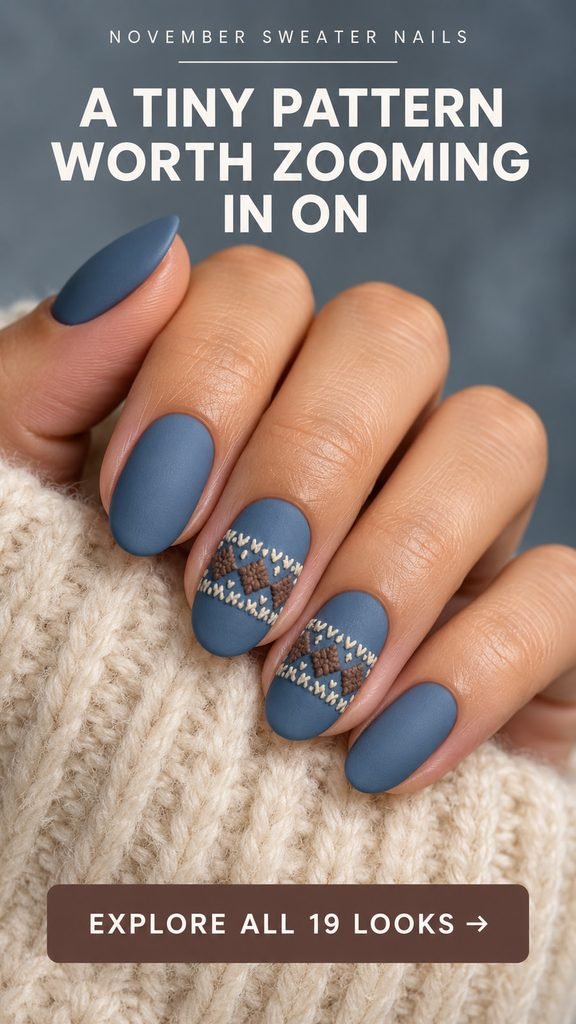
Dusty blue gives Fair Isle-inspired patterning a softer November mood. Across two accent nails, little cocoa diamonds sit between ivory stitch marks. Keeping the repeat in a horizontal band makes the design feel like a detail borrowed from the chest or sleeve of a favorite sweater.
The pattern needs a clear center more than it needs lots of symbols. Start with one row of diamonds and keep the surrounding stitches smaller. A narrow nail may only need one or two diamonds instead of three. Smooth blue companion nails help the tiny color changes stand out, and you can ask for a mostly painted version when you want the motif with very little surface relief.
Salon note: Dusty blue nails with two Fair Isle-inspired accent bands: small cocoa diamonds, fine ivory stitch marks, and restrained relief. Keep the other nails smooth blue and simplify the repeat to fit my nail width.November sweater nail design 12 / 19
12. Plum Diagonal Cable Wraps
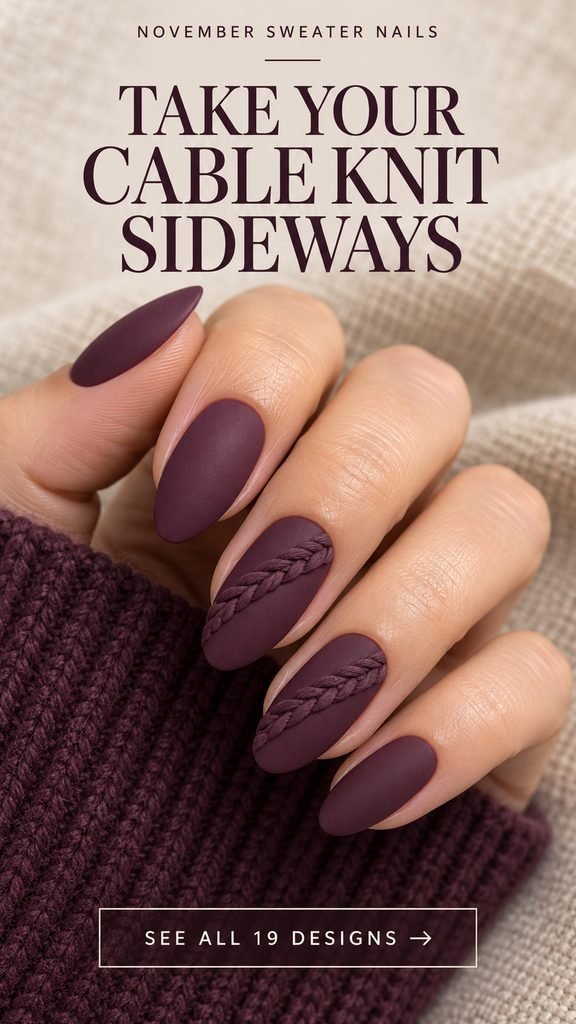
A cable does not have to run straight down the nail. Here, a plum braid travels diagonally across two accents, making the familiar knit motif feel wrapped around the surface. The same plum on the surrounding nails keeps that change in direction easy to notice.
Decide where the braid enters and leaves the nail before choosing its width. It should read as one continuous diagonal, with breathing room around it. On a short shape, one small slanting braid will usually communicate the idea more clearly than two crossing cables. A matte finish makes the little edges and shadows part of the design without needing a lighter outline.
Salon note: Matte plum with two accent nails carrying one raised diagonal cable each. Keep the braid narrow, the surrounding space plain, and the relief low enough to show a clean woven shape.November sweater nail design 13 / 19
13. Burnt Orange Honeycomb Knit
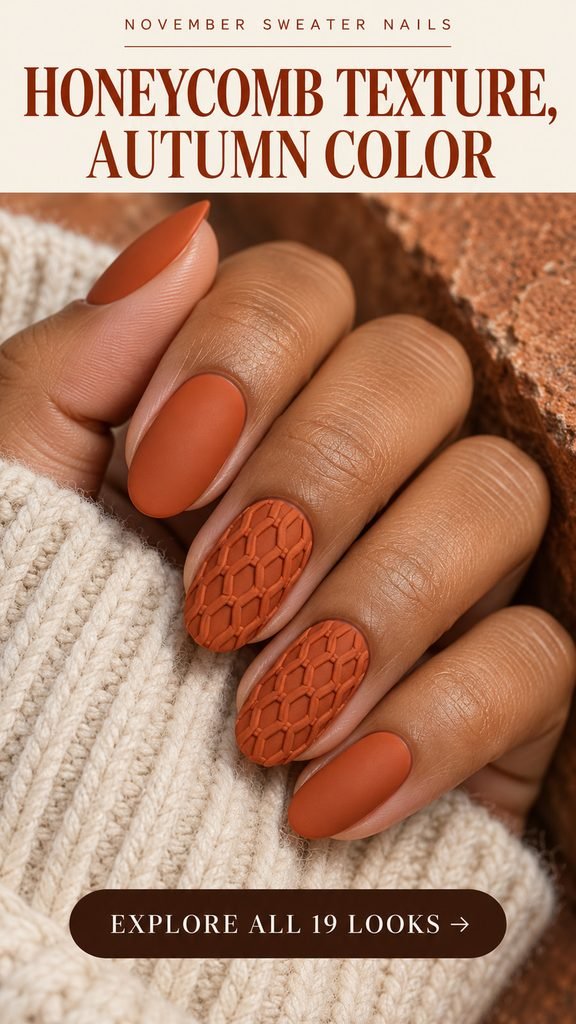
Burnt orange honeycomb knit is all about connected loops. The elongated cells create a gentler rhythm than a sharply outlined geometric grid, while the autumn color gives the design warmth. Two textured accents are enough to show the repeat; smooth orange nails let you appreciate the shape of the loops.
Ask for linked knit-style cells with softened edges, rather than a dark outline around every hexagon. Leaving the pattern in one color keeps the emphasis on relief. If your nails are narrow, use fewer, slightly longer cells down the center instead of squeezing a complete grid across the full width. The result should feel like a fabric pattern translated onto a small surface.
Salon note: Burnt orange with two honeycomb-knit accents made from shallow, connected, elongated loops in the same shade. Smooth matte orange elsewhere; no contrasting outlines.November sweater nail design 14 / 19
14. Heather-Grey Marled Knit
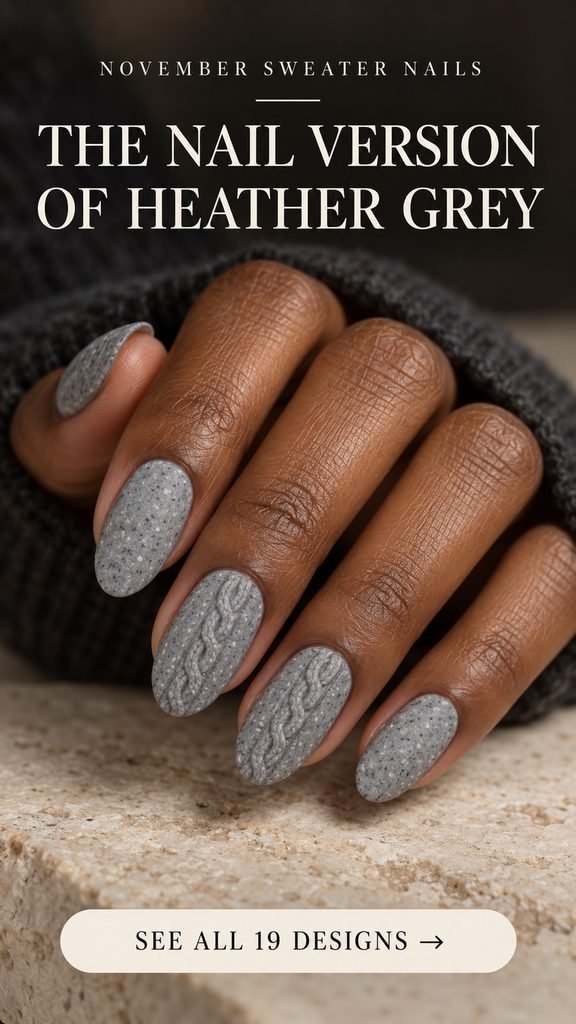
Heather grey gets its interest from two scales of detail. Fine charcoal and pale-grey flecks suggest the mixed yarn of a marled sweater, while a small raised cable provides a pattern you can pick out immediately. The background stays softly mottled rather than glittery.
Keep the flecks tiny and low in contrast. Large black dots would push the look toward a spotted design, and metallic particles would introduce a different finish. A useful compromise is a painted heather effect across the whole set with a cable on just two nails. Check the sample from normal viewing distance: the grey should blend first, with the little marks becoming visible when you look closer.
Salon note: A matte heather-grey base with subtle painted light-grey and charcoal flecks, plus two small cable-knit accents. No loose fibers or glitter; keep the mottling fine and softly blended.November sweater nail design 15 / 19
15. Cocoa Basketweave Panels
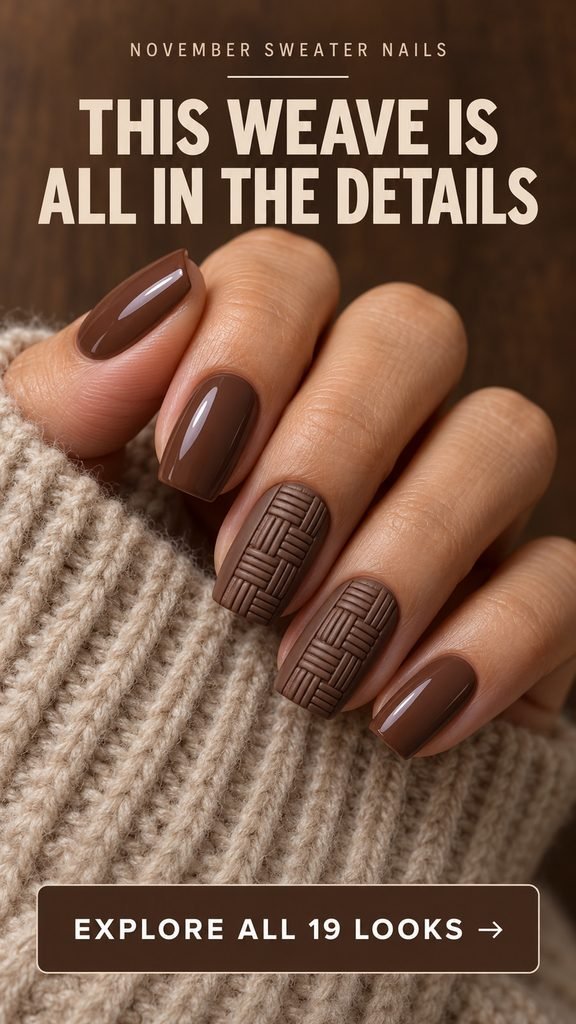
Cocoa basketweave asks you to look at how the little lines change direction. Small groups of ribs alternate across a central panel, giving two nails a woven-knit appearance. Glossy cocoa on the other fingers adds a quiet contrast to the matte relief.
The change from horizontal to vertical needs to be visible. Keep each group simple and leave a fine gap between neighboring blocks. A short nail can use a narrower panel with fewer blocks, rather than shrinking every rib until it disappears. This is a useful option when you enjoy detailed brown nails and want the interest to come from the structure of the pattern.
Salon note: Cocoa nails with two matte basketweave panels: small rib groups alternating horizontally and vertically. Keep the blocks readable and the surrounding nails glossy cocoa.November sweater nail design 16 / 19
16. Ecru Ribbing with Tiny Rust Hearts
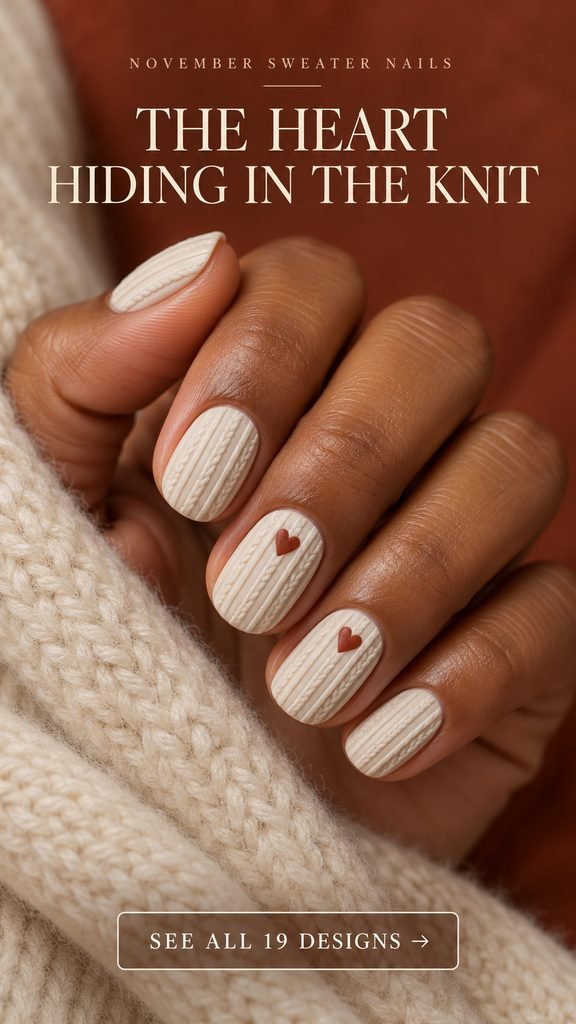
The tiny rust heart is easy to miss at first, which is part of its appeal. Ecru ribbing gives the set a quiet sweater texture, and two small hearts add just enough color to break the repeat. It feels personal without needing a name, initial, or a large statement motif.
Keep each heart flat and small enough to leave the ribbing visible around it. The accent can sit slightly above the center rather than near the tip, where a short nail offers less room. If you want an even more understated version, use one heart on each hand. The warm contrast between ecru and rust does most of the work, so there is little reason to add glitter or an outline.
Salon note: Short matte ecru nails with fine raised ribbing and tiny flat-painted rust hearts on two accents. Preserve clear rib lines around the hearts and keep the remaining nails simple.November sweater nail design 17 / 19
17. Burgundy-and-Sage Split Knit
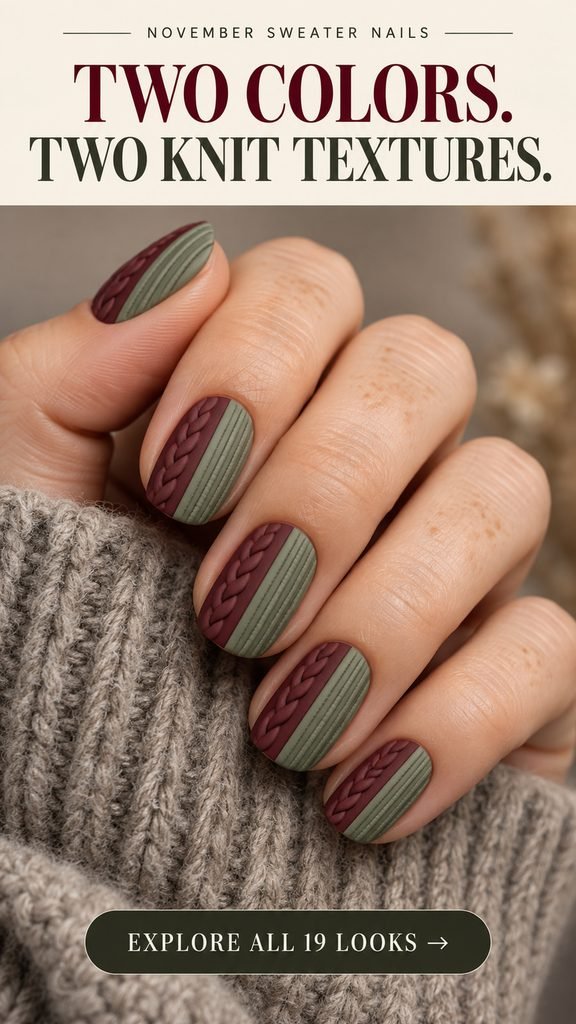
Burgundy and sage split knit gives each nail two distinct halves. A small cable belongs to the burgundy side, while straight ribbing fills the green. The color division makes the idea readable right away; the change in stitch rewards a closer look.
This layout works best when both halves have enough room to show their own pattern. On a narrow nail, make the cable side a little wider or move the split design to two accent fingers. Keep the dividing line clean and resist adding another border down the middle. The difference in color and texture already marks the seam, and a third detail can make the center feel cramped.
Salon note: A lengthwise burgundy-and-sage split with a small cable on the burgundy side and fine ribs on the sage side. Matte finish, shallow relief, and a clean seam without a separate outline.November sweater nail design 18 / 19
18. Almond-Beige Pointelle Accents
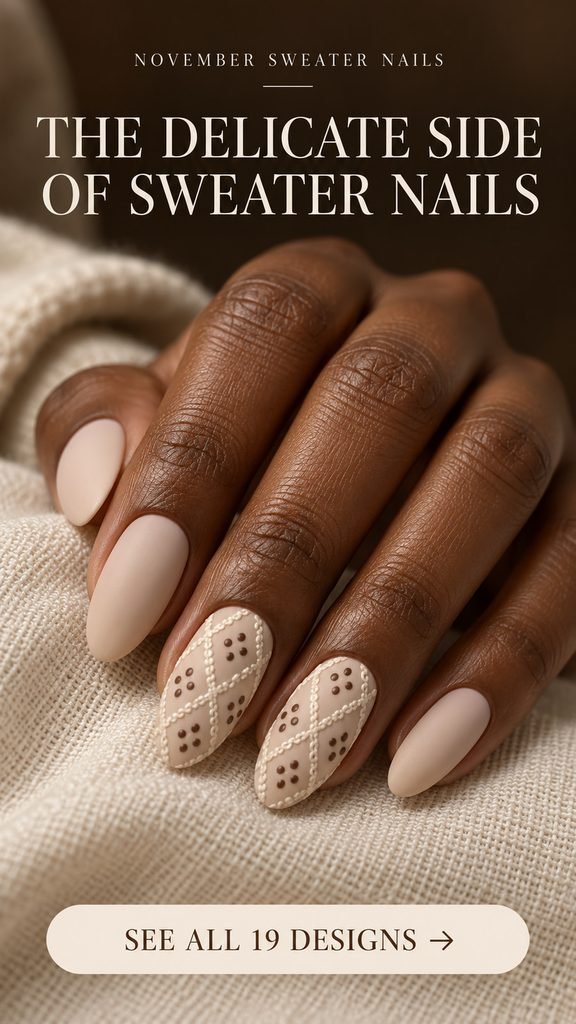
Pointelle-inspired nails borrow the airy look of tiny eyelets. Cocoa dot details sit inside delicate diamond-shaped stitch borders on almond-beige accents. The pattern looks light because so much of the background remains open, and the plain beige nails give those little details room to stand out.
The dots suggest eyelets; they are not holes in the nail. The reference gives them a little dimension, but fine painted marks are a flatter alternative. Use a soft cocoa rather than a hard black for a gentler effect. On a short nail, one narrow column of diamonds can carry the idea. Preserve the airy arrangement even if you choose a completely painted interpretation.
Salon note: Matte almond-beige with two delicate pointelle-inspired accents. Tiny cocoa dot groups inside fine beige diamond-shaped stitch borders. No actual holes; use painted dots for a flatter version and keep plenty of open background.November sweater nail design 19 / 19
19. Charcoal Knit with a Silver Seam
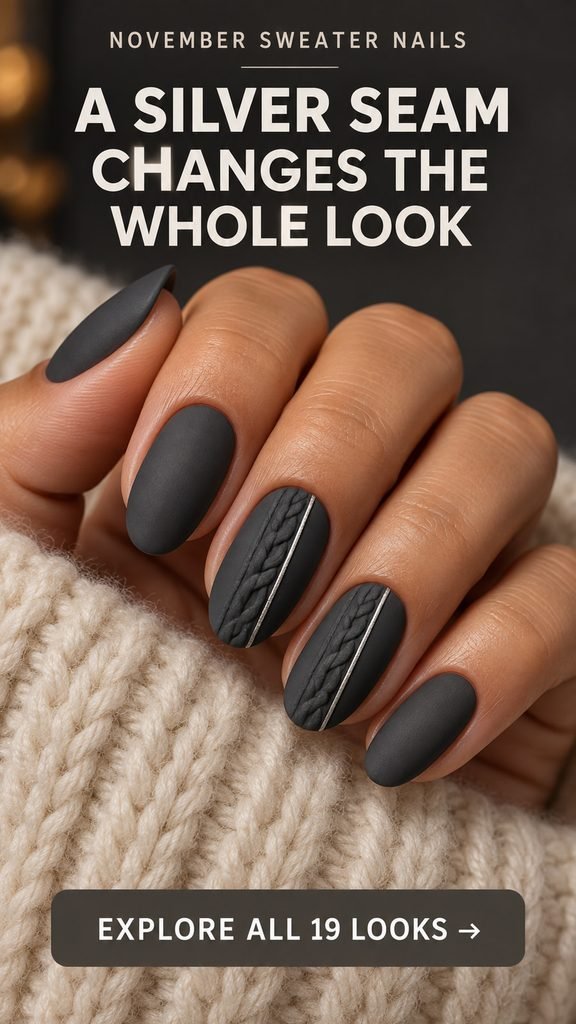
A silver seam gives charcoal knit a small flash of light. Two accent nails pair a raised cable with a fine metallic line running beside it. The rest of the set stays matte charcoal, so the silver feels like a considered finishing detail rather than an all-over metallic manicure.
Ask for the line to be painted and narrow, with a little separation from the cable. Putting silver on every raised ridge would create a much busier effect. If your nails are short, keep one slim braid and let the seam follow its direction. This is a good reference for someone who likes dark nails but wants a detail that is visible even when the texture blends into the base.
Salon note: Matte charcoal with two low-relief cable accents, each beside one hairline painted silver seam. Leave a small gap between cable and metallic line; keep other nails plain charcoal.
Make the Pattern Fit Your Hands
Before you settle on a set, point to the part you would miss if it disappeared. With cardigan nails, that might be the button strip. With the burgundy-and-sage split, it is the contrast between the two stitches. Naming that one feature helps your artist know what to preserve when adjusting the scale.
Then choose how much of it you want to wear. One detailed nail can introduce the idea; a pair of accents makes the pattern easier to repeat; an entire textured set makes it the main event. Ask for the price based on that exact amount of artwork, since a simple rib and a multicolor patchwork panel involve different work.
Look at the first finished accent straight on and from the side before committing to the whole layout. Are the stitches distinct? Does the raised height feel right for you? Is there enough plain space around the pattern? Those small decisions are easier to settle on a sample than after every nail is decorated.
A Few Useful Questions About Sweater Nails
Which sweater patterns suit short nails?
Start with a small repeat: sage seed stitch, navy ribs, or ecru ribbing with one tiny heart. A short nail can also carry a cable, but it may need fewer side details. Choose a pattern your artist can simplify while keeping its main shape recognizable.
Can I get a sweater look with regular nail polish?
A painted interpretation is an option. Fine lines, V-shaped stitch marks, dot arrangements, and small diamonds can suggest knitted fabric without a raised gel pattern. Use a compatible finish for your polish system. Expect the appearance of knit rather than the dimensional ridges shown in many of these concept images.
Does every nail need to be matte?
No. The espresso cardigan and cocoa basketweave designs show how matte artwork can sit beside glossy nails in the same color family. Decide which surface you want on the plain nails as well as the decorated ones, so the difference looks intentional.
How can I make the textured details less prominent?
Ask for shallower relief, fewer textured accents, or a painted version of the motif. A small cable with open space around it reads differently from a dense full-nail pattern. Discuss the finished feel with your artist; a delicate-looking image does not tell you exactly how raised a real application will be.
What should I bring to the appointment?
Bring the image you like and its salon note, then mention your preferred nail length and which parts you are happy to change. If color matters most, select a real swatch at the appointment. These images communicate a design direction; they are not exact polish shade references.
Save the sweater detail you keep coming back to, whether it is one little cable or an entire patchwork panel. That is the detail to build your November manicure around.