15 Men’s New Year’s Eve Outfits for Dinner, Dancing, and Formal Invitations


Start with the invitation. For a dressy restaurant dinner, a blazer, fine knit, and tailored trousers give you an easy starting point. For dancing, choose a shirt or knit you like with the jacket off. For black tie, begin with a tuxedo. The words on the invitation matter more than how much shine an outfit has.
These 15 men’s New Year’s Eve outfits cover relaxed dinner reservations, cocktail parties, late-night dancing, and formal celebrations. Each look includes a complete clothing and shoe combination, plus a fit detail to check before you leave. Use pieces you already own where you can.
Choose Your Look by the Invitation
- Dinner with a smart-casual dress code: compare looks 1–3 and 5. Look 4 adds a suit and tie when the dinner calls for cocktail attire.
- Dancing and festive parties: looks 6–11 offer different levels of color, shine, and tailoring. Look 8 includes jeans, so use it only when the venue allows denim.
- Black-tie optional: choose the dark suit in look 12, or either tuxedo in looks 13–14.
- Black tie: start with look 13 or 14. Save the green velvet dinner jacket in look 15 for creative black tie or a host-approved variation.
Emily Post’s attire guide distinguishes festive dressing, black tie, and black-tie optional. A dark suit with a white shirt and conservative tie is an option for black-tie optional; standard black tie calls for a tuxedo. If an invitation says only ‘formal,’ ask the host whether they expect a dark suit or a tuxedo before choosing.
The images are AI-generated styling concepts for dbsguy.com. They illustrate outfit combinations, not specific products or firsthand wear testing.
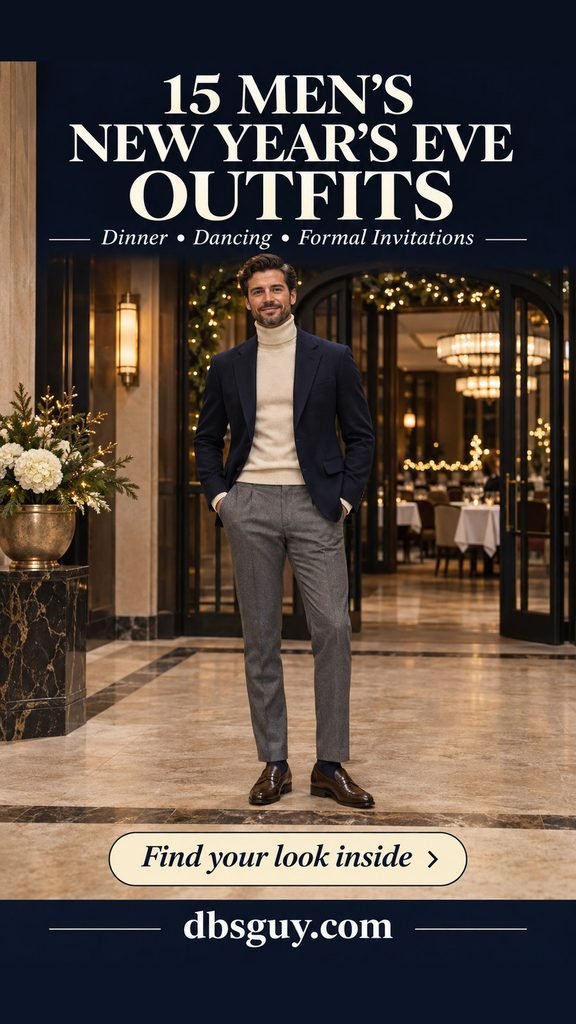
1. A Navy Blazer, Cream Turtleneck, and Gray Trousers
Best for: Dressy casual dinner.
A navy blazer over a fine cream turtleneck is a good choice for a restaurant that welcomes tailored separates. Add medium-gray wool trousers, dark brown leather loafers, and dark socks. The pale knit gives the outfit contrast without needing a tie or a decorative shirt.

Keep the turtleneck light enough to sit smoothly beneath the jacket. Button the blazer while standing: the lapels should lie flat, and the upper sleeves should let you reach forward. If the knit gathers at your neck or pushes the collar outward, try a thinner layer. This is a dinner outfit for a relaxed dress code; use a suit when the invitation asks for one.
2. A Chocolate Suit With a Black Knit Polo
Best for: A tailored dinner without a tie.
Choose a chocolate-brown two-piece suit with a black long-sleeve knit polo and black leather loafers. Matching jacket and trousers make this more coordinated than separate pieces, while the open polo collar keeps it suitable for a dinner where ties are optional.
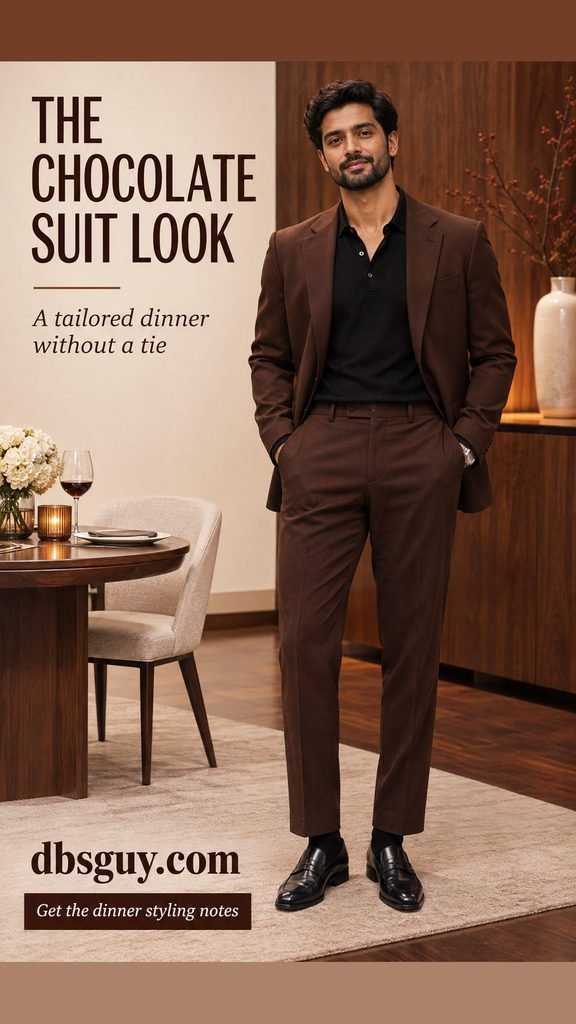
Look for a smooth, fine knit rather than a thick rib that crowds the jacket. Wear the polo collar inside the lapels, and tuck the hem only if it lies flat. A suit with a little room through the seat and thighs will be easier to sit in than a tight cut. Keep the belt, if needed, plain and black so the brown suit stays the focus.
3. A Burgundy Cardigan Over a White Oxford Shirt
Best for: A relaxed restaurant or dinner at home.
For a neighborhood restaurant or dinner with friends, try a burgundy V-neck cardigan, white Oxford shirt, black tailored trousers, and black leather Derby shoes. The cardigan provides a removable layer; the shirt still gives the outfit shape when you take it off.
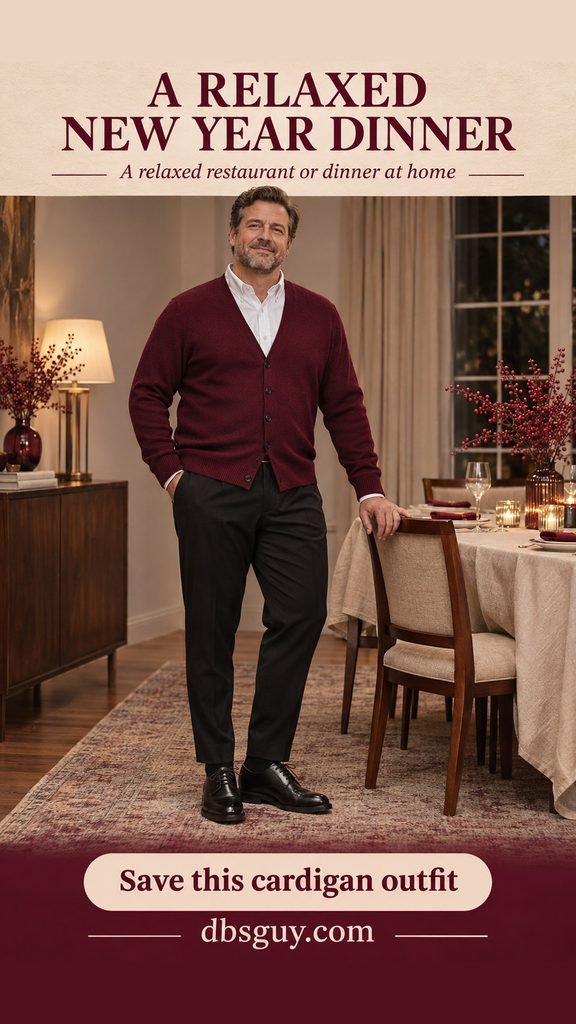
Tuck the shirt and check that its collar sits neatly inside the cardigan neckline. Leave the cardigan’s lowest button open if that helps it fall without bunching. Choose a smooth knit and a hem near the hips so it doesn’t swallow the trouser pockets. If the restaurant requires jackets, this cardigan combination won’t meet that rule by itself.
4. A Charcoal Suit With a Burgundy Tie
Best for: Cocktail attire and dressier dinners.
A charcoal two-piece suit, white dress shirt, burgundy silk tie, and black Oxfords make a dependable starting point for a cocktail invitation. The tie introduces a small amount of color, and the white shirt keeps the whole combination crisp.
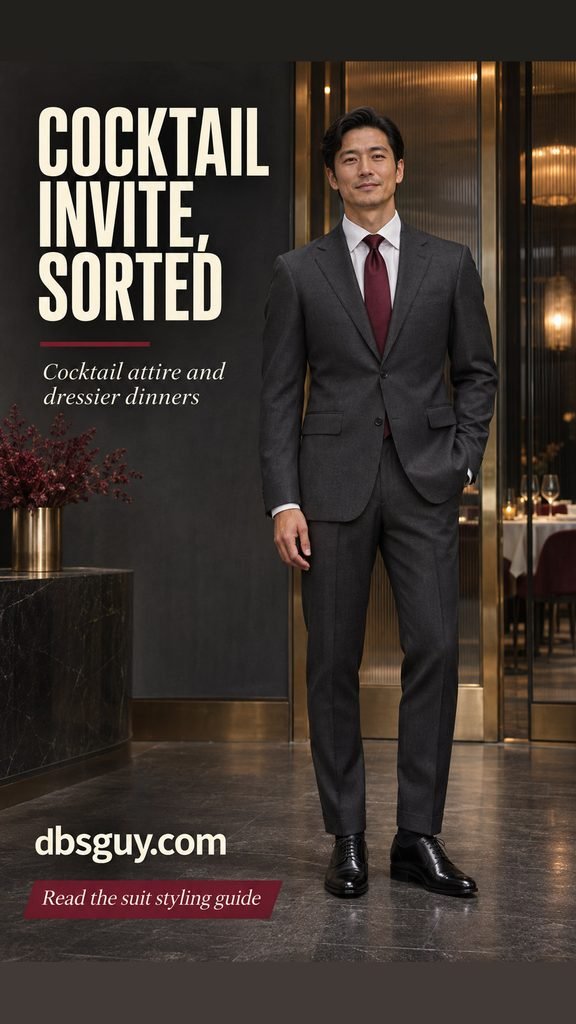
Use a plain or subtly textured tie if the suit already has a visible weave. Before leaving, check that the tie reaches around the waistband and the shirt stays tucked when you sit. Choose a jacket that closes without an X-shaped pull at the button. You can build this from a work suit; pressed trousers, clean shoes, and a freshly prepared shirt make the difference.
5. An Olive Overshirt With Charcoal Pleated Trousers
Best for: A casual dinner before the party.
An olive overshirt worn open over a plain black crewneck tee offers a softer alternative to a blazer. Pair it with charcoal pleated trousers and black leather Chelsea boots. The tailored pants keep this from looking like an everyday errand outfit, but it still belongs at a casual venue.

Choose an overshirt that ends around the hips and leaves enough room to move your arms. The trousers should fall over the boot shafts without catching or stacking heavily. For a warm room, use a light tee and let the overshirt provide the texture. Confirm the dress code before using this for a ticketed dinner; an overshirt isn’t a substitute for a required suit jacket.
6. A Black Velvet Blazer With an All-Black Base
Best for: Festive cocktails and lounge dancing.
For a festive party, layer a black velvet blazer over a black open-collar shirt and matte black tailored trousers. Black leather loafers and dark socks finish the look. The difference between velvet and the smoother base layers creates interest without adding another color.
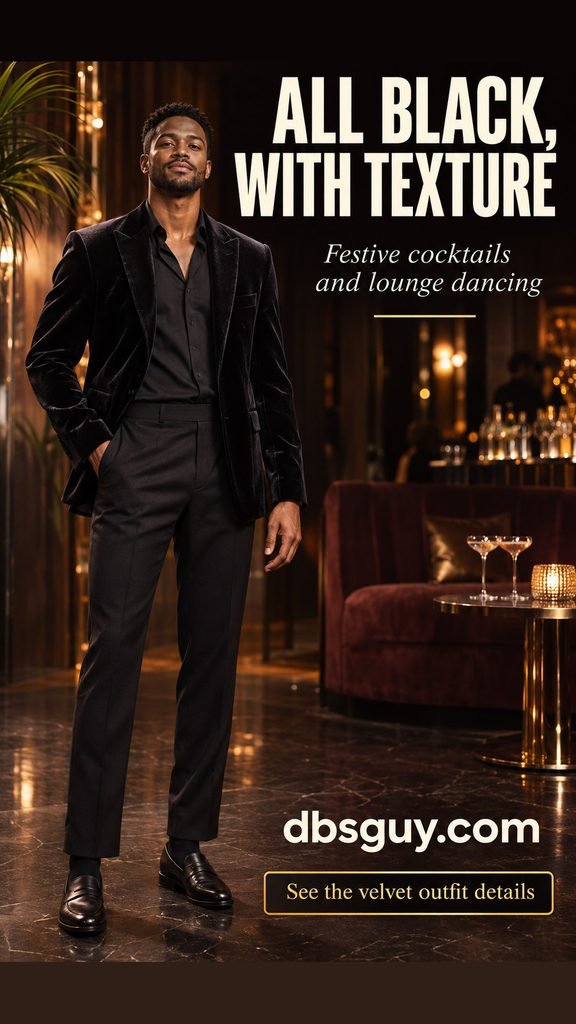
Keep the shirt plain so it also works when you remove the jacket to dance. Check the velvet under a lamp before leaving and lift visible lint with a suitable clothing brush or roller. This open-collar combination is festive evening wear. For a standard black-tie invitation, use the tuxedo styling in looks 13–14 instead.
7. A Bronze Satin Shirt With Black Trousers
Best for: An indoor dance party with no jacket requirement.
A bronze satin shirt can provide the entire party detail. Tuck it into black flat-front trousers and add black leather loafers. Keep the neckline modestly open and the jewelry simple; the warm sheen is already visible when you move.
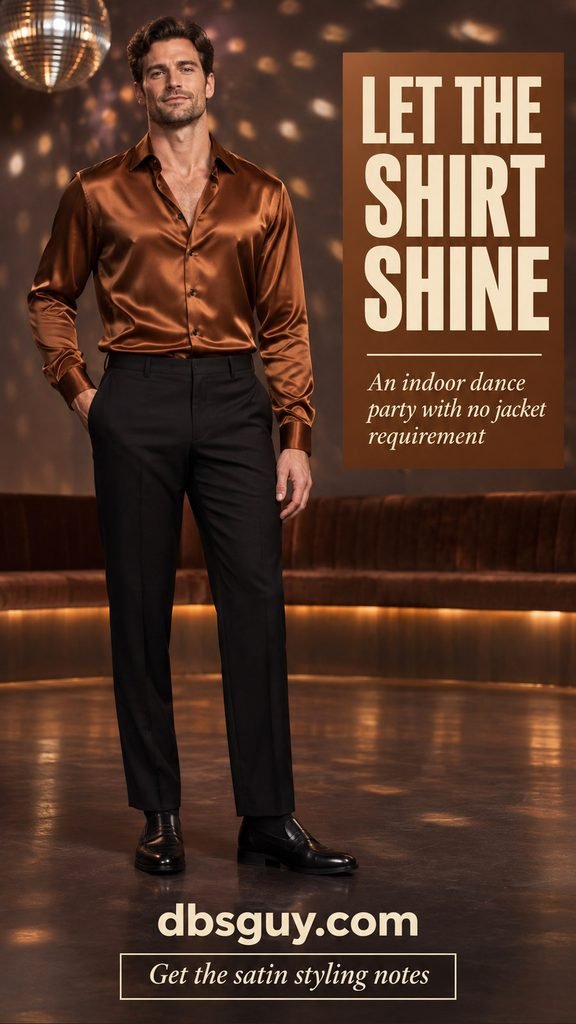
Satin names a weave, not a fiber, so check the label rather than assuming the shirt is silk. Try it under bright light to check coverage, then reach forward to see whether the buttons strain. Follow its care instructions when removing creases. A shirt that feels comfortable standing still may fit differently once tucked and worn for dancing.
8. A Leather Jacket, White Tee, and Black Jeans
Best for: A denim-friendly bar or casual music venue.
A plain black leather zip jacket, substantial white tee, straight black jeans, and black Chelsea boots suit a casual bar or live-music plan. The white tee breaks up the dark layers, while jeans let the outfit stay distinctly casual.
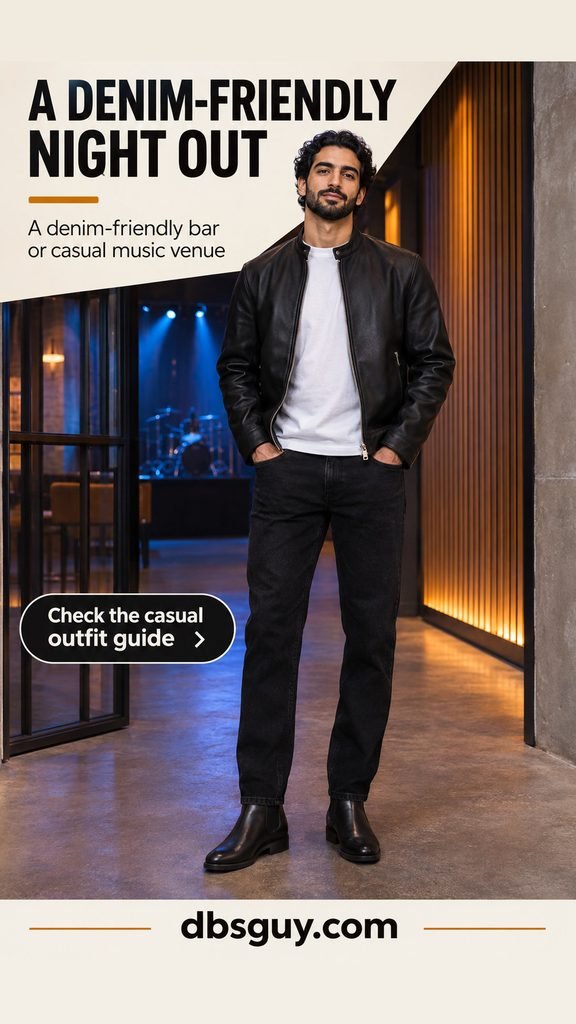
Check the venue’s New Year’s Eve entry rules before choosing denim. Pick jeans without rips and boots you’ve already worn comfortably. The jacket should zip without trapping the tee or restricting your shoulders, even if you plan to wear it open. For more everyday combinations to reuse after the holiday, see our guide to styling a sweater and jeans outfit for men.
9. A Black Knit Polo With Gray Pleated Trousers
Best for: Dinner followed by a relaxed dance floor.
If your plans allow a jacket-free outfit, pair a black short-sleeve knit polo with medium-gray pleated trousers and black leather loafers. The open collar and visible trouser pleats give the look shape without layers you will need to carry later.
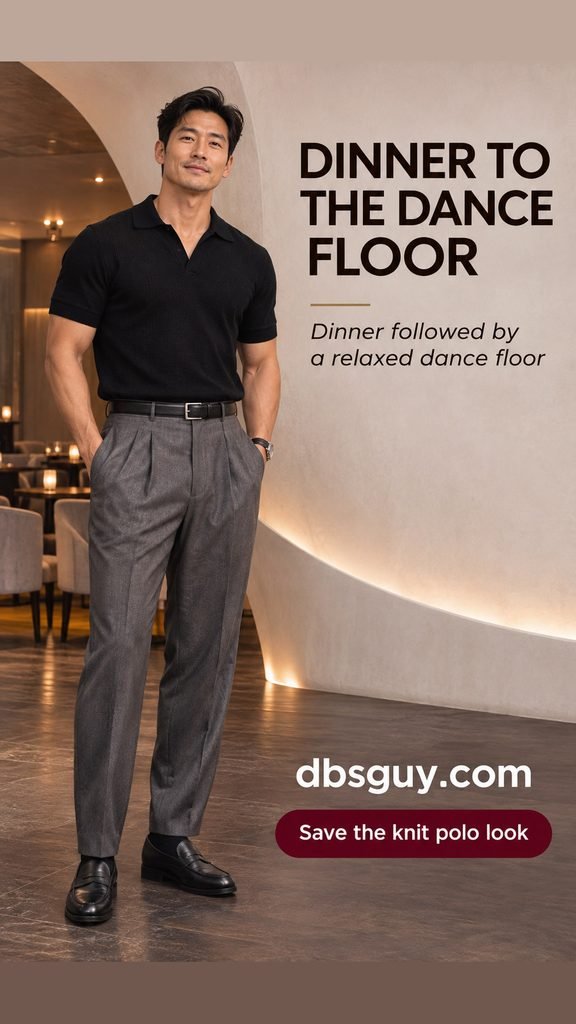
Try the polo tucked in to show the waistband, provided the knit is fine enough to sit flat. A roomier thigh can make a deep pleat hang more cleanly than a very narrow cut. Sit, lift your arms, and take a few dance steps in the complete outfit. If the shirt rides up or the trouser pockets flare, adjust the fit before adding accessories.
10. A Bronze Jacquard Blazer Over a Black Crewneck
Best for: A festive party that welcomes statement jackets.
Choose a black blazer with a bronze geometric jacquard pattern, then keep the rest plain: a fine black crewneck, black tailored trousers, and polished black Derby shoes. The woven pattern gives you a party jacket without the texture of full sequins.
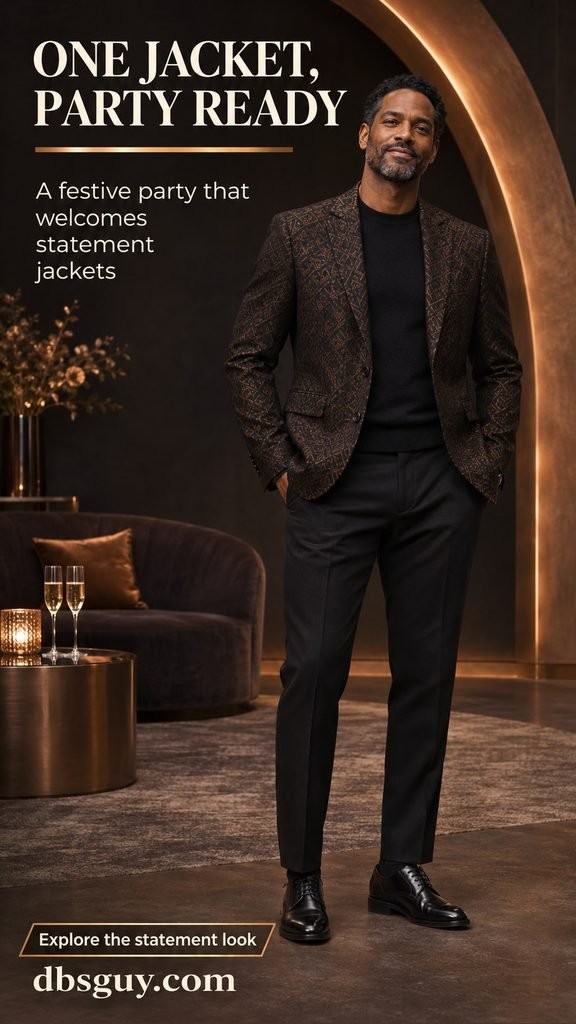
Hold the jacket beside your base layers in the same light. A large, high-contrast pattern will look much bolder than a dark tonal weave, so choose the effect you actually want. Skip a patterned pocket square and let the jacket provide the detail. A crewneck makes this a festive styling choice; it doesn’t turn the blazer into black-tie attire.
11. A Deep Plum Suit With an Ivory Shirt
Best for: A colorful suit for a festive evening.
A deep plum suit gives you color across the whole outfit rather than in one accessory. Pair it with an ivory open-collar dress shirt, black leather Oxfords, and dark socks for a festive dinner-and-dancing invitation that allows an open neckline.

Choose a matte suit cloth so the color stays the main feature. The ivory shirt softens the contrast, and a clean tuck helps the outfit look finished if the jacket comes off. If the host expects a tie, change to a white shirt with a dark tie instead. For black-tie optional, choose a conventional dark suit such as look 12 rather than assuming a colorful suit meets the request.
12. A Charcoal Three-Piece Suit for Black-Tie Optional
Best for: Formal when you are choosing a suit.
For a black-tie optional invitation, a solid charcoal suit, white dress shirt, conservative black silk necktie, and polished black Oxfords offer a formal suit option. A matching vest adds another layer of tailoring, though a well-fitting two-piece dark suit also works.

The vest should cover the trouser waistband without pulling across your middle. Try all three pieces together while seated; size and cut matter more than adding a vest for its own sake. Leave the vest’s bottom button undone in the conventional style, and avoid a bright novelty tie. This is the suit route for black-tie optional. A standard black-tie request calls for a tuxedo.
13. A Classic Black Peak-Lapel Tuxedo
Best for: A traditional black-tie invitation.
For standard black tie, choose a black tuxedo with satin-faced peak lapels, matching formal trousers, a white pleated-front formal shirt, and a black bow tie. Add black patent-leather Oxfords, black dress socks, and a black cummerbund or appropriate formal waistcoat.

If you rent, arrange a fitting early enough to check the actual outfit. Try the shirt with its studs or buttons, fasten the bow tie, and check the trouser hem over your event shoes. Tuxedo trousers commonly use side adjusters or suspenders rather than a visible belt. A black business suit with a bow tie won’t reproduce the formal details of this look.
14. A Midnight-Blue Shawl-Collar Tuxedo
Best for: A black-tie alternative to black.
A very dark midnight-blue tuxedo with black satin shawl lapels offers a different color and neckline while keeping the formal outfit intact. Wear matching midnight-blue tuxedo trousers, a white formal shirt with a concealed placket, a black bow tie, black cummerbund, and black patent Oxfords.
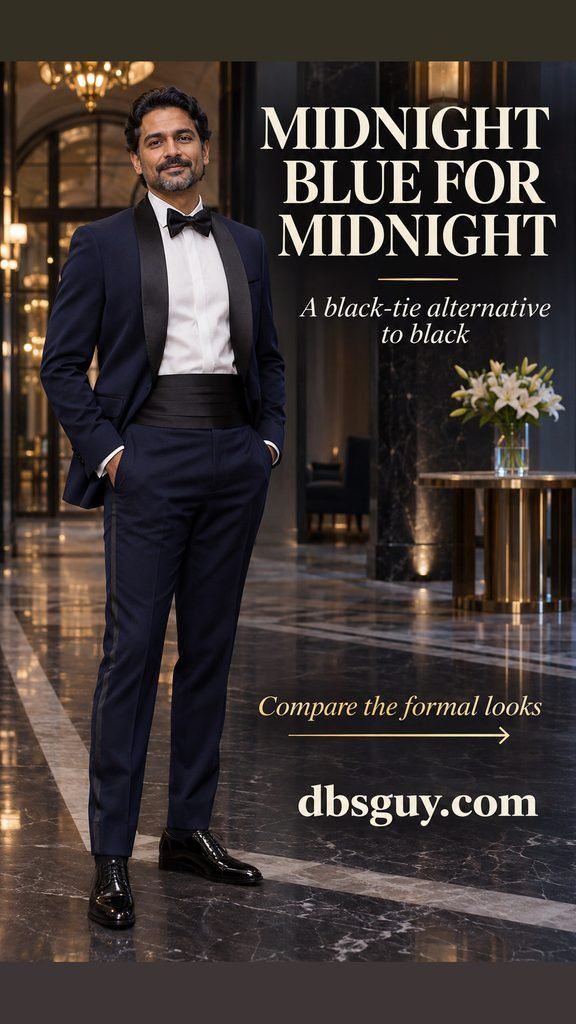
Choose the jacket and trousers as a coordinated tuxedo, not separate navy pieces that nearly match. Under indoor lighting, the blue should remain deep rather than reading like a bright business suit. When arranging alterations, wear the formal shirt and shoes so sleeve and trouser lengths are checked with the right layers. The softer shawl curve is a style choice, not a lower dress level.
15. A Green Velvet Dinner Jacket for Creative Black Tie
Best for: A formal variation approved by the host.
For creative black tie, consider a deep green velvet dinner jacket with black satin shawl lapels, black tuxedo trousers, a white formal shirt, black bow tie, and black patent Oxfords. Keep a black cummerbund at the waist so the colorful jacket sits within an otherwise formal combination.
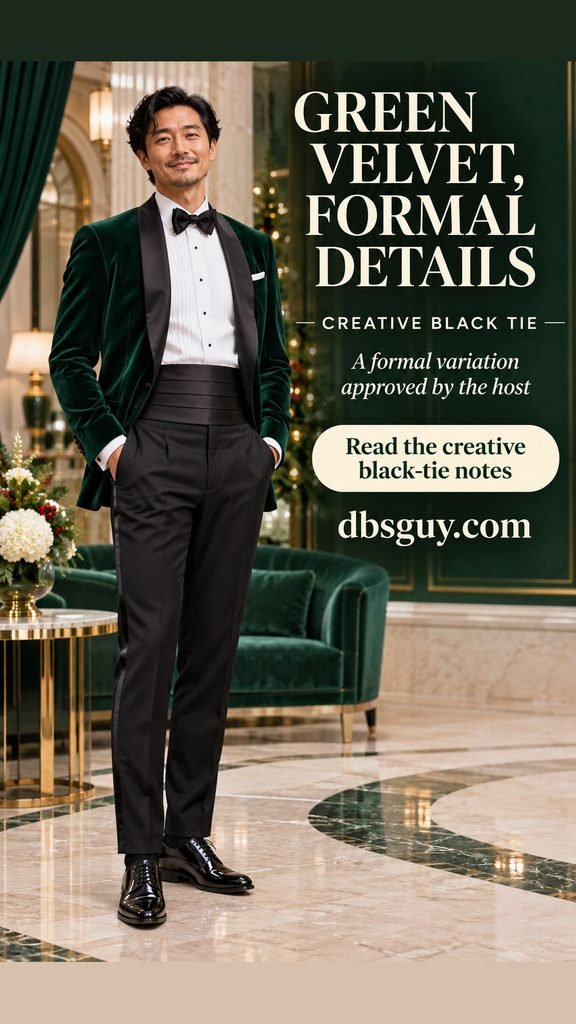
Choose a dinner jacket designed for evening wear, rather than assuming any green velvet blazer has the same effect. The formal trousers and shirt distinguish this from the open-collar velvet outfit in look 6. Confirm the host welcomes this variation if the invitation simply says black tie. When the expectations are traditional or unclear, the black tuxedo is the more straightforward choice.
Check These Details Before You Leave
- Try the outfit in motion. Sit through a few minutes, reach forward, and take full steps. Check shirt buttons, the waistband, jacket shoulders, and trouser hems with the shoes you will wear.
- Choose shoes you know fit. Walk in the complete outfit before the event. A shiny finish doesn’t tell you whether a shoe will feel good or grip the surfaces you will cross.
- Plan the trip as well as the room. Add a coat, socks, and weather-appropriate accessories for the forecast and time outdoors. These indoor styling concepts don’t show every layer needed for a freezing queue or an outdoor countdown.
- Check entry rules and coat storage. A restaurant dinner, club ticket, and hotel gala can have different requirements. Confirm whether denim, boots, or open collars are allowed and whether you can check your outerwear.
Men’s New Year’s Eve Outfit FAQs
Do men have to wear a suit on New Year’s Eve?
Only when the host or venue requires one. A cardigan and shirt can work for a casual dinner; a festive or cocktail event may call for a jacket or suit. Follow the stated dress code rather than assuming every December 31 celebration is formal.
What should I wear if dinner leads straight to dancing?
Choose a base layer you like without the jacket, such as the black shirt in look 6 or the knit polo in look 9. Make sure the trousers let you sit and move comfortably. If dinner requires a suit jacket, bring it even if you expect to remove it later.
Can I wear jeans or sneakers?
Use jeans only for a casual event that allows denim, as in look 8. Clean sneakers may suit a relaxed gathering, but check the event’s footwear rules before substituting them. They aren’t the default choice for cocktail or formal invitations.
What is the difference between festive and black tie?
Festive dressing allows celebratory color or texture, such as a patterned blazer or satin shirt. Black tie specifies formal evening attire centered on a tuxedo. Sparkle, velvet, or an all-black palette alone doesn’t establish that dress level.
What can I reuse if I don’t want to buy a new outfit?
Start with the trousers and shoes that already fit you. Add a familiar fine knit for a relaxed dinner, or prepare an existing dark suit with a white shirt and tie for an appropriate dressier invitation. For black tie, compare a complete rental with purchases you would realistically wear again; include fitting and return arrangements in that decision.
Choose the look that meets your invitation first, then adjust the color or texture to your taste. Put on the complete outfit before the night itself so you have time to fix the hem, change a tight layer, or choose a more comfortable pair of shoes.