
A rug makes the biggest difference where your feet actually land: beside the bed, between two roommates’ beds, or under a reading chair. Start with that spot, then choose a texture and pattern that work with the bedding you already own.
These 13 dorm rug ideas range from quiet oatmeal weaves to sage checks and colorful abstract designs. Each one includes a way to place or style it, so you can choose a rug that looks inviting without making your room harder to use.

The visuals are AI-generated design concepts. Adapt the furniture, rug dimensions, and accessories to your assigned room and residence hall rules.
Choose the Spot Before You Choose the Rug
Measure the usable floor with your bed, desk, and dresser in position. Open the closet and drawers, pull out your chair, and check the door’s full swing. A rug that fits the room’s advertised dimensions can still interfere with all four.
- For your side of the room: Compare a 3-by-5-foot rug with a 4-by-6-foot rug. Choose the footprint that covers your bedside landing without taking over the shared aisle.
- For a narrow strip of floor: Measure for a runner. A 2-by-6-foot size is one possible starting point; check the actual product dimensions against your space.
- For shared open floor: Compare 5-by-7 and 5-by-8 feet only if the layout has room. Neither size is a universal dorm standard.
For construction, flatwoven and low-pile rugs are useful starting points near moving furniture. Plush pile makes more sense in a small bedside spot where a desk chair will not cross it. IKEA’s rug guide explains the differences between rug constructions and their care needs.
Check your own housing rules before buying a rug or pad. Choose an underlay approved for the existing floor and rug backing; do not assume adhesive corner grips are permitted. If you share the room, agree on the shared rug, cleaning, and ownership before either person orders.
1. Start With an Oatmeal Flatweave

Oatmeal is a useful middle ground when bright white feels impractical and a dark rug would make the room feel heavier. Look for a warm cream-and-tan weave with small variations in the yarn, then pair it with ivory bedding and one taupe layer.
Place the rug beside the bed with most of its surface exposed. There is little benefit in paying for texture that disappears beneath storage bins. A 4-by-6-foot footprint is worth comparing if you want more than a small landing spot.
Flatwoven does not mean cushioned. If softness matters, feel a sample when possible and check whether a compatible thin pad gives you the comfort you want. Keep the total thickness low enough for nearby doors and drawers.
2. Give Solid Bedding a Sage Checkerboard

A sage-and-cream checkerboard gives a plain bed a focal point without introducing lots of separate accessories. Choose broad, clearly defined squares if you want to see the pattern from the doorway. Smaller checks create a busier surface.
Keep the duvet or quilt mostly solid and repeat the green once in a pillowcase or throw. That leaves the rug’s pattern easy to read, especially in a room where books, bags, and laundry already add visual activity.
Compare the sage with your actual bedding in daylight. A yellow-leaning green and a cool gray-green can look quite different beside the same cream fabric. You can keep the school’s wood furniture exactly as it is.
3. Add Warmth With a Faded Rust Medallion

A vintage-inspired rust rug works especially well with darker school furniture. A faded blue detail in the medallion gives you a second color to borrow for a small accessory, while ivory bedding keeps the room from becoming too dark.
Let the decorative center show. Slide only a little of the rug under the bed if needed, rather than burying the medallion beneath the frame. Check that under-bed drawers or rolling bins still open easily.
For this look, you can choose a contemporary low-pile or printed design; an antique is unnecessary. Distressed coloring is a visual treatment, so compare fiber, backing, and care instructions separately. Pattern does not make a rug stain-proof.
4. Fit a Blue Striped Runner Beside the Bed

When your open floor is long and narrow, a runner can use it more effectively than a rectangular area rug. Run it parallel to the mattress, positioned where you step down and walk toward the desk.
Blue-and-ivory stripes make a simple coastal combination with a denim or powder-blue quilt. In this concept, the stripes follow the length of the runner, keeping the pattern clear within a narrow footprint.
Measure the aisle at its tightest point, including projecting dresser handles and anything you need to open. Leave the runner clear of the door swing and check that its ends lie flat. A longer rug is useful only if the extra length stays out of the way.
Also Read: 13 Blue Dorm Room Ideas for a Calm, Coastal Vibe
5. Define a Reading Corner With a Round Blush Rug
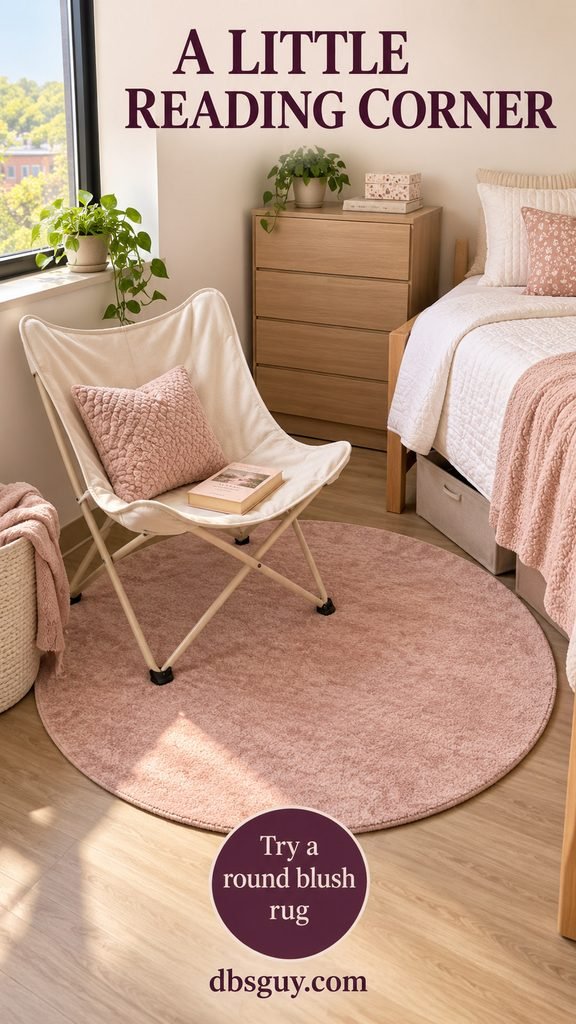
A round rug gives a small chair its own place within a room full of rectangular furniture. Dusty blush is a gentle accent beside cream upholstery and warm wood; you can repeat it in a cushion without changing the whole bed.
Measure the chair fully open, including any recline. A circle around 4 feet across is one starting point, but the chair’s footprint decides what fits. Aim to keep all the chair’s feet on the same surface and leave its legs away from the rug edge.
If that arrangement crowds the closet or walkway, skip the extra chair. You can use the same blush palette in a smaller bedside rug and keep the floor available.
Also Read: 15 Pink Dorm Room Ideas That Are Anything But Basic
6. Reserve Faux Shearling for a Small Bedside Landing

You do not need a room-size shag rug to get a fluffy surface underfoot. A small ivory faux-shearling rug beside a low bed concentrates that texture where you use it first thing in the morning.
Keep this one away from rolling desk chairs and the busiest part of the aisle. Its irregular outline looks relaxed beside a straight bed frame, but it still needs to sit securely and flat. Move slippers and bags out of the stepping area.
Read the specific care label before buying. Faux shearling describes a look, not one universal washing method. If you only have a small vacuum and little drying space, decide whether the extra pile is worth the upkeep.
7. Make a Terracotta Arch Rug the Main Accent

Large terracotta and ochre arches can supply nearly all the color a simple dorm needs. The curved shapes soften the look of a boxy bed-and-desk arrangement, while the cream background connects with plain bedding.
Use this when you want a noticeable change from one purchase. Repeat either terracotta or ochre once, then pause before adding more patterns. A single cushion can connect the bed to the floor.
Look at the pattern in the size you plan to order. A small version may crop the arches differently from the listing’s largest rug. Choose a layout that leaves enough of the design visible beside the bed for the shapes to make sense.
8. Connect Two Different Beds With a Navy Border

A cream rug with a navy border can give two roommates a shared starting point while leaving each bed different. One side can use solid dusty blue; the other can bring in stripes. The border creates a clear frame around the middle of the room.
Choose the size together after both furniture layouts are settled. Center it within the usable shared floor, keeping the edge clear of storage that needs to slide out. A strip of exposed flooring around it helps you see whether the rug is sitting straight.
Discuss who will vacuum it, how you will handle spills, and who takes it home. If your tastes or cleaning plans differ, separate small bedside rugs may be the easier choice.
9. Use a Pastel Abstract Rug Instead of More Decor

A rug with lilac, peach, butter yellow, and ivory can bring a playful palette into a mostly neutral room. Large flowing shapes give it a different mood from checks or stripes, especially when the surrounding fabrics stay simple.
Choose one color from the rug for the bed. Here, a lilac cushion is enough; buying matching accessories in every shade would make the room feel more crowded.
Before ordering, compare a close-up of the pile with a full-room image. A design can look soft in a photograph while having a very thin surface. Decide whether you mainly want the color, a cushioned feel, or both, and check the construction accordingly.
10. Try a Cotton Rag Rug for a Relaxed Woven Look

A cotton rag rug brings visible fabric-strip texture rather than a plush surface. Muted denim, cream, and tan stripes suit a casual bed and can connect with a blue coverlet you already own.
A small version works well as a personal bedside rug. Look for neatly finished ends if you want to avoid long tassels in a tight space. Check that the weave and any pad stay smooth when you walk across them.
Do not assume every cotton rug can go into a campus washer or dryer. Check its care instructions, including possible shrinkage and drying requirements. Also check the fiber label if recycled material matters to you; the rag-rug appearance alone does not establish how it was made.
11. Borrow the Look of Jute With a Faux-Jute Weave

A tan basketweave-style rug adds a natural-looking texture to gray vinyl flooring and white bedding. Pair it with an olive cushion or a woven storage basket to give the room a little warmth without introducing a strong print.
If you like this appearance, compare natural jute with synthetic faux-jute options based on the feel and care routine you actually want. The concept shows a fine, uniform faux-jute-style weave, not a specific product.
Check the material, backing, and cleaning directions separately. A natural-looking synthetic rug is not automatically machine-washable, and a coarse weave is not automatically comfortable for bare feet. A sample or a clear return policy is useful when texture is the main reason you are buying.
12. Balance a Charcoal Heather Rug With Cream

For a darker foundation, choose a charcoal rug with small gray flecks rather than a completely flat black surface. The heathered texture adds detail while leaving you free to use plain bedding.
Keep the bed and at least a few larger surfaces light. Ivory, pale wood, and a cream throw give the darker floor some contrast. This is especially useful if the supplied furniture already has black metal details.
Think about what you will see on the rug: pale lint and crumbs may stand out against charcoal. Choose a surface you can vacuum with the equipment you have, and check a fabric sample in your room’s light before committing to a large dark patch of floor.
13. Bring in Botanical Pattern With Olive Leaves

A cream rug with olive leaf-and-stem motifs gives a room a garden reference without needing a collection of plants. It works with simple white bedding, wood furniture, and one green cushion.
Choose larger, spaced-out leaves if you want the design to read clearly from the doorway. Leave a useful area of the pattern exposed rather than hiding every stem beneath furniture. If you tuck an edge under the desk, test the chair’s full movement.
Keep the other patterns quiet so the botanical shape remains the feature. This is an easy way to add green when you enjoy the color but do not want another plant to water, transport, or fit near a window.
Make the Rug Easy to Live With
Before you remove the tags, lay the rug in its planned spot and repeat the everyday movements: get out of bed, pull out the chair, open storage, and walk to the door. Follow the maker’s instructions for flattening it, and deal with a curling edge before using the room normally.
“Washable” is only useful if you can follow the full washing and drying process. Check the exact rug size and construction against the manufacturer’s washer requirements, then confirm your campus laundry permits rugs. A removable cover and its pad may have different care instructions.
Choose a rug you can move for cleaning and take home at the end of the year. For a shared purchase, include the pad and any cleaning costs in the decision. Start with one rug that solves a clear problem; a second layer can wait.
Dorm Rug Questions
What size rug should I put beside a Twin XL bed?
A 3-by-5-foot rug, a 4-by-6-foot rug, or a runner can each work, depending on the exposed floor. Measure the place where you step down and the space needed for nearby furniture. The mattress length alone does not determine the rug size.
Should a dorm rug go under the bed?
It can extend a little beneath the frame if that makes the placement work. Full under-bed coverage is optional. Keep useful rug area exposed and make sure storage, bed access, and any approved ladder arrangement remain usable.
Can I put an area rug over existing carpet?
Check your housing rules first. If allowed, look for an underlay specifically suited to the rug and existing carpet, and test whether the rug stays flat under normal use. Skip the extra layer if it shifts, buckles, or catches your chair.
Is a shag rug a good dorm choice?
It can suit a small bedside spot when softness is your priority and you can maintain it. For the desk area or a busy shared aisle, a flatter surface is usually a more practical starting point. Choose for the way you use that part of the room.
How do I choose a color that works with my bedding?
For patterned bedding, try a quieter rug that repeats one existing color. For plain bedding, use the floor for checks, arches, or an abstract print. Compare the fabrics beside your actual floor and furniture before buying extra matching pieces.
The easiest place to begin is the cold or bare spot you notice every day. Measure it, choose one of the looks above, and let the rest of the room settle around that decision.