How to Style Valentine Bedroom Decor Around Your Bed, Lighting, and Keepsakes


Start with the bed, soften the light beside it, and give one or two meaningful objects a place where you can see them. That is enough to make Valentine bedroom decor feel connected. A rose-colored blanket, a shaded lamp, and a framed note can do more together than a room full of unrelated decorations.
The order matters: style the largest surface first, check the room after dark, then add your keepsakes. You can use your everyday bedding and furniture for most of this. The example below brings ivory, dusty rose, wine, and warm wood through all three areas.

The images are AI-generated styling concepts created for dbsguy.com. Use them as visual guides, then adjust the arrangement to your room and the items you own.
Before You Start, Clear Space for the Things You Use
Make the bed and remove anything from the nightstands that belongs elsewhere. Put back the essentials first: your lamp, water, glasses, phone, or whatever you reach for at night. The space left over tells you how much decoration will actually fit.
Gather a throw or quilt, one accent pillow, a small frame, and a keepsake you would enjoy seeing every day. Check what you own before shopping. Measure the usable surface of your nightstand and the pillow cover you want to change; a decorative piece that crowds the switch or hangs over an edge is too large for that spot.
Leave the bed’s walking routes and the swing of doors and drawers clear. If you share the room, ask which bedside items need to stay within reach. Keeping those habits intact makes the finished space easier to enjoy.
1. Let the Bed Carry the Color
Choose your accent from something you already like in the room. Here, dusty rose covers a broad strip of the bed, while a single wine-colored pillow adds a deeper note. Ivory stays visible around both, so the colors have clear edges.

Build the layers in a usable order
- Keep your comfortable base. Use the sheets and duvet you actually like sleeping under. You do not need a new sheet set just to bring in a seasonal color.
- Fold a quilt or throw across the lower third. Lay it across the width of the bed, with its edges resting on the mattress or falling evenly over the sides. Refold it until you can still see a generous area of the duvet above it. Keep it off the floor.
- Stand your sleeping pillows at the headboard. In the queen-bed example, two ivory pillows make a simple backdrop. Use the sleeping pillows your bed needs rather than buying extras for height.
- Add one smaller accent pillow in front. A horizontal lumbar shape leaves the sleeping pillows visible. Center it, then check that it does not hide the whole headboard or overwhelm a narrower bed.
The distinction between the fabrics gives this arrangement depth: a smooth cotton base, a textured quilt, and a velvet accent. You can make the same kind of contrast with fabrics already in your closet. Hold them together before putting them on the bed; if every layer has a busy pattern, the small accent pillow may disappear.
Adjust for warmth and nightly cleanup
In a bedroom that already sleeps warm, use the quilt as a daytime styling layer and fold it away at bedtime. If you need the extra warmth, spread it out when you get in. February weather varies widely, so the room’s actual temperature should decide how much bedding stays on overnight.
Give the decorative pillow a clean storage spot before adding it. A closet shelf or existing basket is more useful than a pile on the floor. If you have nowhere to put several pillows, one is plenty. Check care labels before washing the layers together, especially when a dark accent sits against pale bedding.
2. Set the Lighting From the Bedside
Make your lighting decisions after dark. Turn on the bedside lamp, sit where you normally read, and look toward the shade. If you can see a bright bare bulb, adjust the lamp’s position or choose a shade and lamp combination that shields it from your usual eye level. The light should still reach the page and the things you need.
Choose warm light, then set the brightness
For the warm white look shown here, start by checking bulbs labeled around 2700–3000K. Kelvin describes the appearance of the light; lumens describe brightness. A warmer color alone will not fix a lamp that is too bright or too dim for its job.
If you use a dimmer, check that both the LED bulb and the dimming system are compatible. Also follow the lamp’s bulb limits and any enclosed-fixture requirements. You can lower the light for relaxing and raise it for reading, but keep enough illumination to move around comfortably.
With two bedside lamps, start with similar light colors so one side does not look blue beside the other. Their brightness can still suit each person’s needs. Switch off the overhead light for a moment to judge the lamps by themselves, then use whichever combination lets you see comfortably.
Keep the nightstand functional
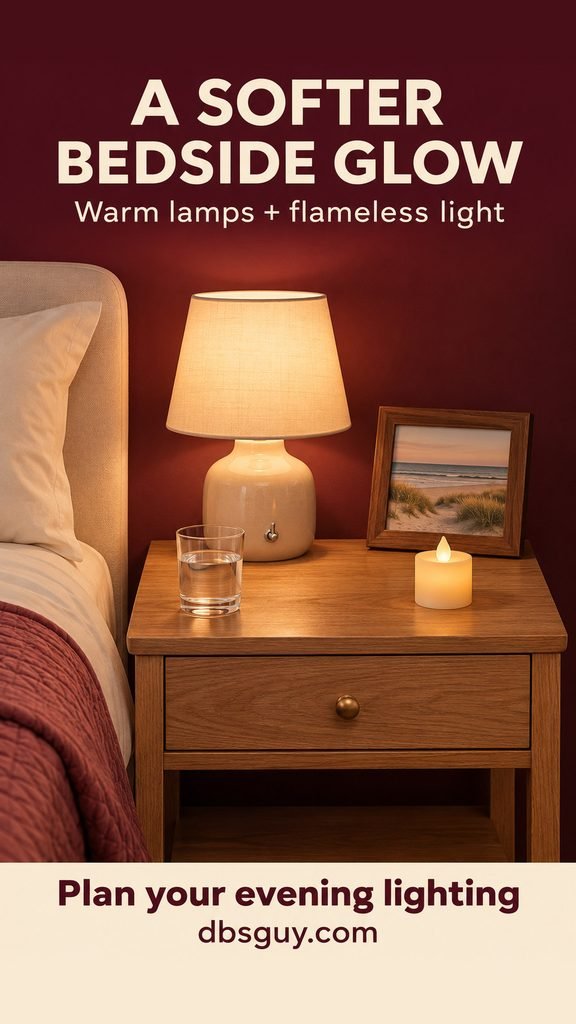
Place the lamp toward the back of the table, leaving its switch accessible. In the concept image, a small frame sits behind the open front area, and one flameless candle sits to the side. Your own water glass and charging space get priority; leave out the candle or move the frame if the surface feels cramped.
Use battery-operated flameless candles for a candlelike glow. The U.S. Fire Administration’s candle guidance advises against lit candles in bedrooms and sleeping areas. A small LED accent gives this display its evening glow without an open flame.
Route the lamp cord behind the furniture without pinching it, and keep it out of the walking path. Keep bedding and paper away from the fixture. For this arrangement, the shaded lamp and optional flameless accent provide enough detail; there is no need to weave loose light strings through the pillows.
3. Give Your Keepsakes a Clear Place
Pick something with a story you recognize: a note, a photograph of a favorite place, or a small object brought home from a trip. It does not have to be a couple’s keepsake. A message from a friend or a family memory can make the room feel personal, too.

Choose the display around the available surface
For a nightstand, start with one small easel-back frame. Try a frame for a 4-by-6-inch print, but check its outside dimensions and the depth of its stand; the print size does not tell you how much tabletop it occupies. Set it behind your everyday items, where you can see it without reaching around it.
A dresser can hold a slightly fuller arrangement. The image pairs a larger framed note with a smaller landscape photo, a closed keepsake box, and a shallow dish holding a pebble. The taller frame goes behind the smaller one, with enough of each showing to understand what it holds. Keep every frame’s support fully on the furniture.
The box gives private letters a home, while the displayed note shares only a short line. A short wine-colored ribbon on the box repeats the bed’s accent. Leave the front edge of the dresser empty so the display does not spread into the place where you set things down.
Display copies of irreplaceable pieces
Use a reproduction of a treasured photo or letter, and keep the original protected elsewhere. The Library of Congress recommends considering a facsimile for valuable photographs because light damage builds over time, even behind UV-filtering glass. Avoid direct sunlight on your display, and do not assume an ordinary decorative frame provides preservation storage.
You can print a copy with a wide border or use a mat so a small image feels settled inside a larger frame. If you are displaying a note, choose a line you are comfortable leaving visible. Skip glue and decorative tape on original keepsakes.
If you want to write something new for the display, 21 Valentine Card Ideas That Make a Simple Message Feel Personal offers starting points for turning an ordinary shared detail into a message.
Check the Three Areas Together
Stand in the doorway once in daylight and once with the evening lighting on. You should be able to notice the bed first, see a comfortable pool of light beside it, and discover the keepsake as you move closer. The objects do not need equal attention.
In this example, the wine pillow and the ribbon on the keepsake box connect the two surfaces. The warm wood frames relate to the nightstands. Those small repetitions give the room continuity without requiring matching accessories everywhere.
- If the bed looks crowded: remove an extra pillow or fold the quilt into a narrower band.
- If the lighting feels harsh: check for an exposed bulb and adjust brightness before buying more decorations.
- If the nightstand is awkward to use: move the keepsake display to the dresser and reclaim the surface.
- If the display looks scattered: bring the frames closer together and put loose private papers in the box.
Before bedtime, remove the decorative pillow, put away any styling layer you do not need, and check that you can reach the light switch. The room should still work just as easily when the decorations are no longer the focus.
Valentine Bedroom Decor Questions
Do I need pink or red bedding?
No. Keep the bedding you enjoy and make the personal display your Valentine detail. If you do want seasonal color, a removable pillow cover or a quilt you already own is a smaller commitment than replacing the full bed set.
What should I do first in a small bedroom?
Style the bed, then leave the bedside surface for your lamp and essentials. Put the keepsakes on an existing dresser only if there is room. You can also use just one small frame; the display does not need every object shown in the concept.
How can I decorate without buying anything?
Refold an existing blanket across the bed, bring out a favorite photo, and rearrange the lamp you already have. Check the room after dark before deciding something is missing. Clear space around a meaningful object often helps it stand out.