How to Deep Clean Your Dishwasher (Step by Step, No Fancy Products Needed)


If your glasses are coming out cloudy or your dishwasher smells like something died in there, it is not broken. It just needs a deep clean.
Most of us treat the dishwasher like it cleans itself. It does not. Every load leaves behind a little grease, a few food scraps, and a thin layer of soap scum, and over time that buildup turns into a machine that cannot do its job properly. The good news is that fixing it takes less than 30 minutes and you probably already have everything you need under your sink.
This guide walks through exactly how to deep clean your dishwasher from the filter to the door seal, plus the mistakes that keep people from getting real results and how often you actually need to do this.
Signs Your Dishwasher Needs a Deep Clean
You do not have to wait for a full-blown smell to know it is time. Watch for these clues:
- Dishes come out with a greasy film or white spots
- There is a musty or sour smell when you open the door
- Water pools at the bottom after a cycle finishes
- Glasses look cloudy even though they used to come out clear
- You can see food debris stuck in the bottom or around the door seal
If any of that sounds familiar, keep reading. This exact routine will fix it.
What You Will Need
Nothing here is expensive or hard to find. Most of it is already in your pantry.
- Distilled white vinegar
- Baking soda
- Dish soap and warm water
- An old soft-bristle toothbrush
- A microfiber cloth or soft sponge
- A toothpick or small brush for the spray arm holes
- Rubber gloves, if you have sensitive skin
- A dishwasher-safe bowl
Skip anything with bleach if your dishwasher has a stainless steel interior. Bleach can pit and discolor stainless steel, so stick with vinegar and baking soda for the natural route, or a dishwasher-specific cleaning tablet if you prefer a store-bought option.
Step-by-Step: How to Deep Clean Your Dishwasher
1: Empty the Dishwasher Completely

Take out all the dishes and pull out both racks along with the silverware basket. You need full access to the interior for this to actually work, and it is much easier to spot grime once the racks are out of the way.
While the racks are out, give them a quick inspection. If they look dingy or have rust spots on the tines, soak them in warm water with a splash of vinegar in your sink while you tackle the rest of the machine.
2: Remove and Clean the Filter

This is the step most people skip, and it is the one that makes the biggest difference in how your dishwasher smells and performs.
The filter is usually a small cylindrical piece at the bottom of the tub, under where the bottom rack sits. Twist it counterclockwise and lift it out. If you are not sure your model has a removable filter, a quick search of your dishwasher’s model number will tell you.
Rinse it under hot water first to knock off loose debris. Then dip your toothbrush in a little baking soda and scrub the mesh in small circles to loosen the grease and grime clinging to it. For a heavier buildup, let the filter soak in warm soapy water for five to ten minutes before scrubbing. Rinse thoroughly and set it aside to dry while you keep working.
3: Clean the Spray Arms

The spray arms are the spinning arms that shoot water at your dishes, and their tiny holes clog easily with hardened food and mineral deposits, especially if you have hard water.
Most spray arms pop off with a gentle pull or twist, but check your manual if yours feels stuck. Once removed, run water through each arm to check the flow, then use a toothpick to clear any blocked holes one by one. If there is heavy mineral buildup, let the arms soak in a bowl of warm water and vinegar for 15 to 20 minutes before rinsing and reattaching.
Clogged spray arms are one of the most overlooked reasons dishes come out dirty even after a full cycle, so do not skip this step even if it feels tedious.
4: Wipe Down the Interior Walls and Door

With the racks and filter out, take your microfiber cloth or sponge, dampen it with warm water, and sprinkle on a little baking soda. Wipe down the interior walls, the floor of the tub, and the inside of the door.
Pay extra attention to the corners and the area around the detergent dispenser, since soap residue tends to build up there and can leave a filmy layer over time. Rinse your cloth often as you go so you are not just spreading grime around.
5: Clean the Door Gasket and Seal

The rubber gasket that lines the door is one of the most common places for mold and mildew to grow, mostly because it stays damp and gets overlooked during regular wipe-downs.
Run your finger gently along the folds of the gasket. If you see black specks or a slimy film, that is mold, and it needs attention. Make a paste of baking soda and water, apply it along the seal, let it sit for a few minutes, then scrub gently with your old toothbrush. Rinse with a damp cloth and dry the area completely.
6: Run a Hot Cycle With Vinegar
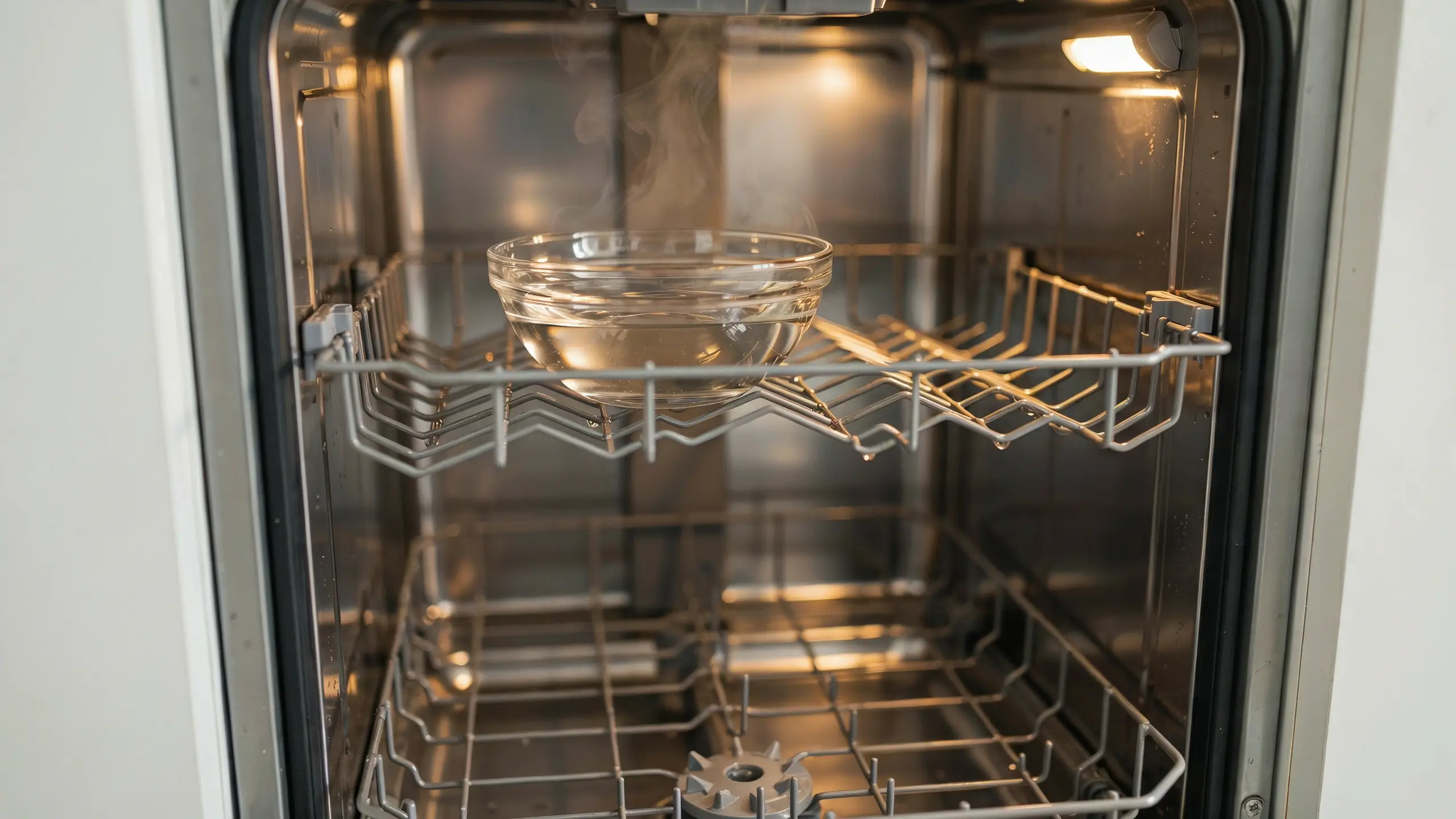
Once everything is wiped down, put the clean racks back in. Fill a dishwasher-safe bowl with one cup of distilled white vinegar and set it on the top rack, facing up.
Run the dishwasher on the hottest, longest cycle it has, with nothing else inside. The vinegar cuts through grease, breaks down soap film, and helps dissolve mineral deposits from hard water, leaving the whole interior noticeably brighter.
7: Run a Short Cycle With Baking Soda

After the vinegar cycle finishes, sprinkle one cup of baking soda across the bottom of the empty tub and run a short hot cycle, often labeled quick wash or express wash depending on your model.
The baking soda works as a gentle deodorizer and helps lift any last bit of residue the vinegar loosened. This is your machine’s version of a fresh start, and it is usually the step that finally takes care of a lingering odor.
8: Wipe Down the Exterior

Do not stop at the inside. Wipe down the control panel, handle, and door front with a damp cloth and a small amount of dish soap. If you have a stainless steel dishwasher, always wipe in the direction of the grain to avoid streaking, and finish with a dry microfiber cloth for a streak-free shine that photographs beautifully if you are the type to admire a clean kitchen.
9: Leave the Door Open to Air Dry

Once the final cycle ends, crack the dishwasher door open and let it air out for a few hours, or overnight if you can. Trapped moisture is one of the main reasons odors come back so quickly after a deep clean, so giving the tub time to fully dry makes a real difference in keeping it fresh longer.
How Often Should You Deep Clean Your Dishwasher
For most households, once a month is the sweet spot. If you have hard water or run your dishwasher daily, bump that up to every two weeks. Between deep cleans, a quick filter check and interior wipe-down once a week will keep buildup from getting out of hand.
A simple rule that works well:
- Scrape food off dishes before loading.
- Clean the filter monthly.
- Do the full vinegar and baking soda routine once a month.
Your dishwasher will thank you with cleaner dishes and a much longer lifespan.
Mistakes That Are Keeping Your Dishwasher From Getting Truly Clean
- Skipping the filter. This is the single biggest reason dishwashers start to smell.
- Overloading the racks. Water and detergent need room to circulate, so cramming in every dish from the week blocks proper cleaning.
- Using bleach on stainless steel. It can cause pitting and permanent discoloration.
- Running hot water elsewhere during the cycle. Using the shower or washing machine at the same time can lower the water temperature reaching your dishwasher, which means it never gets hot enough to sanitize properly.
- Leaving the door closed right after a cycle. Trapped steam breeds mold faster than almost anything else.
- Ignoring the drain. If water is pooling at the bottom after every cycle, a clogged drain is likely the cause and deep cleaning alone will not fix it.
Final Thoughts
A dishwasher deep clean sounds like a bigger job than it actually is. Give yourself 30 minutes, work through the filter, spray arms, gasket, and a vinegar and baking soda cycle, and you will notice the difference the very next time you run a load. Cleaner dishes, no more mystery smell, and a machine that actually earns its keep in your kitchen.
Have you tried this routine before, or do you have a trick that works even better? Drop a comment below and let me know how it went for you.