January Nail Design Ideas to Pair With the Winter Colors You Already Wear

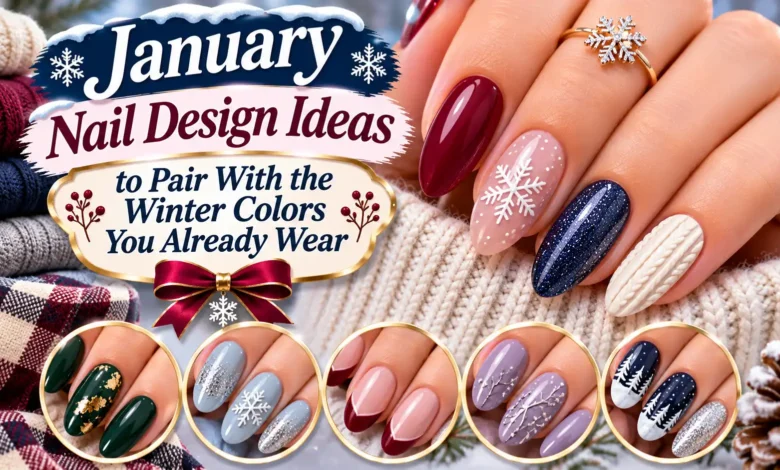
For January nail designs that fit the colors you already wear, try a layered blue French with navy and denim, caramel-and-espresso blocks with camel, or pearl ivory with winter-white knits. The useful choice is where to put the color: across the whole nail, along an edge, or on two accents.
These eight pairings give you a specific design to take to an appointment, plus ways to simplify it at your usual nail length. Pick the wardrobe combination you repeat most often; you do not need to recreate the entire outfit in the image.

The visuals are AI-generated styling concepts for dbsguy.com. They illustrate color, placement, and finish; they are not photographs of completed salon work or exact polish swatches.
Find the Design That Fits Your Winter Colors
- Navy and denim: two shades of blue concentrated at the tips.
- Black and charcoal: slate panels on two glossy black nails.
- Camel, cream, and brown: diagonal caramel-and-espresso accents.
- Winter white and oatmeal: pearl ivory with taupe at the nail base.
- Olive and khaki: a green side French over sheer beige.
- Burgundy and plum: berry frames with open-looking pink centers.
- Dusty pink and gray: blush nails with deeper mauve scallops.
- Mixed black, camel, and cream: amber tortoiseshell accents.
Before choosing, decide which part of the reference matters most: the two-color tip, the diagonal division, or the amount of sheer base. You can change the shade to suit your clothes while keeping that feature intact. The combinations below are editorial styling suggestions, not rules about which colors you are allowed to wear.
1. Layered Blue French Tips With Navy and Denim
A navy coat and blue jeans give you two depths of the same color to work with. Repeat that relationship on the nails: a muted denim-blue French band, finished with a much finer navy edge at the outer tip. Most of the nail stays sheer pink-beige.
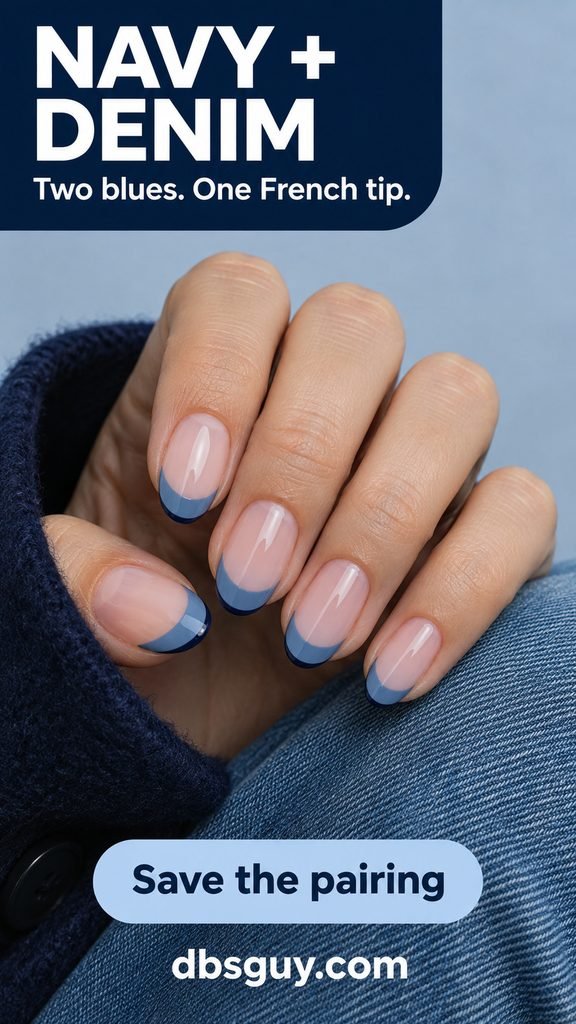
The denim band should remain clearly visible. If the navy becomes equally wide, the tip starts to look like two heavy stripes. Ask your artist to show you the balance on one nail before repeating it across the set.
For a regular-polish interpretation, paint the denim tip first, then add its navy edge once the first color is ready for detail work. Essie’s French-manicure guide explains using a fine brush and short strokes to build a curved tip. Follow your own products’ drying and finishing directions.
On very short nails, use one denim-blue edge and leave out the second line. You keep the wardrobe connection without squeezing two bands into a tiny space.
Also Read: 15 Blue January Nail Art Ideas With More Than Snowflakes
2. Slate Panels With Black and Charcoal Layers
If black trousers and charcoal sweaters make up most of your week, try a design built from those same two tones. Use glossy black on every nail, then give the thumb and ring nail a broad slate-gray panel running lengthwise along one side.

This is a block of gray, rather than a fine stripe. Leave enough black beside it to make the straight division visible, and keep the remaining nails solid. A similar glossy finish on both colors lets the panel shape carry the design.
Ask for “short squoval nails, glossy black, with an off-center slate panel on the thumb and ring finger.” Squoval means a square outline with softened corners; keep your existing rounded shape if that feels more comfortable.
Check the gray against the black sample before application. If they look nearly identical indoors, choose a lighter slate. For a simpler set, put the panel on the ring nail only.
Also Read: Simple January Nail Art for a Little Winter Refresh
3. Diagonal Color Blocks With Camel, Cream, and Brown
Bring the colors of a camel coat, cream sweater, and brown bag into one manicure without painting each finger a different shade. Keep the index, middle, and little nails creamy ivory. Split the thumb and ring nail diagonally between caramel near the base and espresso toward the tip.

The warm colors belong together, but their difference in depth is what makes the diagonal readable. Choose a caramel that is plainly lighter than the espresso; two medium browns can blur into one another.
The salon detail to emphasize is one clean diagonal boundary on each accent. There is no extra outline, glitter, or third band. The ivory nails give the darker accents some breathing room.
On a short oval nail, let the diagonal cross near the middle so both brown areas remain visible. If you are painting at home, practice the split on a spare tip and begin with one accent per hand. You can keep the three-color palette even when you reduce the artwork.
Also Read: What Nail Color Works for January? Start With Your Winter Wardrobe
4. Pearl Ivory and Taupe Crescents With Winter White
With white and oatmeal clothing, a small darker border gives a pale manicure definition. This design puts mushroom taupe at the base of each nail in a shallow reverse-French crescent. Pearl ivory covers the rest.

Keep the pearl effect soft enough that you can still see the taupe curve. The reference has a fine, light-catching sheen rather than scattered glitter or a mirror finish. Ask to compare a pearl-ivory sample beside your sweater; a bright white may create a sharper contrast than you want.
Describe the placement as “a slim taupe crescent following the cuticle curve, painted entirely on the nail.” It belongs at the base, not at the free edge. On the smallest nail, make the crescent shallower so ivory remains the main color.
This is a useful salon reference if painting close curves feels fiddly. For a simpler interpretation, wear pearl ivory throughout and use the taupe crescent on one ring nail.
Also Read: January Nails: How to Choose Your First Manicure of the Year
5. Olive Side French With Khaki and Green Outerwear
A side French lets you repeat the green in a jacket without committing to a full olive manicure. Keep a sheer beige base and sweep muted olive diagonally along one side toward the tip. The beige should occupy most of the nail.

The reference uses one green sweep per nail, with no white border. Its diagonal edge is the feature to preserve. Ask your artist to show you which direction the sweeps will face on each hand, especially if you prefer a mirrored set.
Compare the olive with your actual sleeve. A yellow-leaning khaki and a cool forest green create different combinations; neither is automatically the right match. Choose the one you like next to the clothes you wear indoors as well as your coat.
For short nails, move less green into the center. A small diagonal corner keeps the idea readable. If the beige area disappears, reduce the sweep rather than adding another decorative line.
Also Read: January Nail Art for Beginners: Simple Designs to Practice at Home
6. Berry Frames With Burgundy and Plum
When you wear burgundy leather or plum knitwear, a sheer center gives a deep-colored manicure a lighter interruption. Paint the index, middle, and little nails glossy plum. On the thumb and ring nail, trace a narrow cranberry frame around a sheer rosy center.
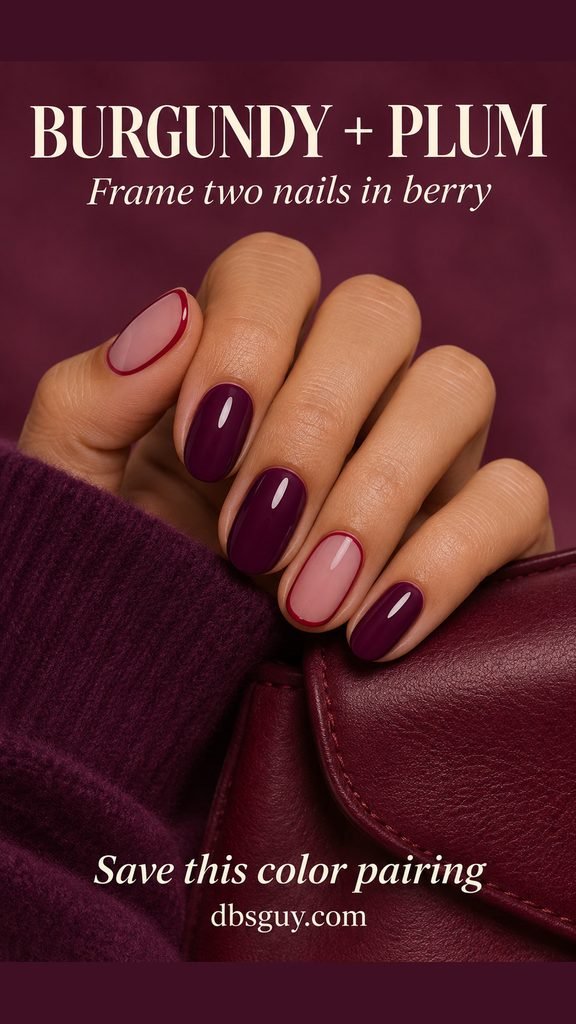
The frame follows the nail’s full perimeter, just inside the edge. Keep the middle visibly open-looking; a thick border would make the accent read more like a solid red nail with a small pink patch.
This is the most precise outline in the group, so bring it to a nail artist if an even frame matters to you. Ask to see the cranberry beside the plum in ordinary indoor light. You should still be able to recognize two berry tones.
On a narrow or very short nail, use just one framed accent per hand. Keep the shape rounded at a length you already enjoy wearing; you do not need extensions to use the color combination.
Also Read: Red January Nail Art That Works After the Holiday Season
7. Mauve Scalloped Tips With Dusty Pink and Gray
If you favor blush cardigans and gray layers, use a deeper version of pink to define the nail edge. Start with an opaque pale blush base and add dusty-mauve scalloped tips. Three rounded lobes make the boundary different from a smooth French curve.

Keep the scallops near the free edge—the outer tip, away from the cuticle. The pink base needs to remain the larger area. A muted mauve gives the scallops contrast without introducing a completely different color family.
For your appointment, specify “short squoval nails, a solid blush base, and a shallow mauve tip with three rounded scallops.” Ask for painted, flat artwork if you want the smooth surface shown in the concept.
On an extra-short nail, use two smaller lobes or put the three-lobe detail on the ring finger only. Avoid extending the mauve farther down the nail just to fit the pattern. If blush and mauve look too similar on the sample, deepen the mauve before increasing the size of the art.
Also Read: January Nail Color Ideas for When You’re Torn Between Soft and Moody
8. Tortoiseshell Accents With Mixed Winter Neutrals
When your outfits move between black, camel, and cream, an amber-and-espresso accent brings two of those depths onto the same nail. Keep three nails glossy black, then use a tortoiseshell pattern on the thumb and ring finger.

The important detail is the amber showing between irregular dark patches. Ask for patches of different sizes with softened edges; evenly spaced dots would create a different pattern. The reference stays warm and translucent-looking on the accents.
Request a finished sample before choosing the service. “Tortoiseshell” describes the effect, not a particular polish formula, and your artist may use different products to create it. Check that their amber is light enough to remain visible beside the black nails.
For small nails, use fewer patches with clear amber gaps. One tortoiseshell ring nail and four black nails is also a complete interpretation. This lets the accent connect brown accessories with black clothing while leaving a patterned scarf room to stand on its own.
Also Read: January Nail Art for When Your Winter Outfit Needs a Small Detail
Turn Your Favorite Pairing Into a Clear Salon Request
Save one design image and one photo of an outfit you wear often. Then name four things: your usual length, the base coverage, the accent colors, and their placement. “Short oval, creamy ivory, caramel and espresso diagonals on two nails” gives your artist more useful information than “cozy winter nails.”
Confirm the polish system and removal plan when booking. These concepts do not require a particular brand or service. If you are adapting a design with regular air-drying polish, choose compatible products and follow their preparation, drying, finishing, and removal directions. A lamp-cured product needs its own specified process.
Questions About Pairing January Nails With Winter Clothes
Should my nails match my coat exactly?
They can, but an exact match is optional. In the camel pairing, the nails repeat the outfit’s light, medium, and dark tones. In the navy pairing, the lighter blue tip creates a connection without matching the coat. Decide which relationship you prefer.
Which design should I choose if my clothes change color every day?
Start with the colors that repeat in your accessories. The tortoiseshell accents may suit a black bag and brown boots; pearl ivory with taupe is another option to compare with mixed neutrals. If neither appeals to you, keep the sheer base from the blue or olive design and use just one colored accent.
Can these designs work without long almond nails?
Yes. The panels, diagonal blocks, reverse French, scallops, and tortoiseshell concepts are shown on shorter shapes. Keep less detail on a small nail: one panel, a shallower crescent, or fewer patches. Use the shape you like wearing rather than changing it to match the photo.
How can I tell whether a color will look right on my hands?
Compare a real finished swatch over your nail beside your sleeve, in daylight and your usual indoor lighting. Check the coverage as well as the color. A sheer beige and an opaque beige can look quite different even when their bottle colors seem similar.
Once you have chosen a pairing, keep the detail that attracted you and simplify anything that feels crowded. A readable two-color tip or one well-placed accent is enough to carry the idea into your everyday wardrobe.