Green Valentine Nails: Sage Hearts, Emerald Tips and a Fresh Color Crush

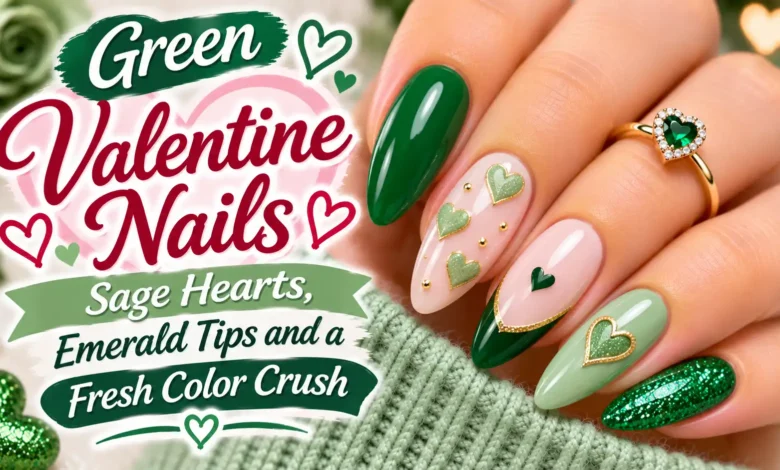
For green Valentine nails, start with the detail you want to notice first: soft sage hearts on a sheer base, a crisp emerald French edge, or a heart-shaped window in deep forest green. The color can cover the whole nail or occupy just a small corner of the manicure.
These six designs give you different ways to use that palette, with placement notes, short-nail adjustments, and clear requests to take to your nail artist. If you want the gentlest introduction to green, begin with the sage hearts. For a stronger evening look, compare the emerald tips with the shimmer finish.
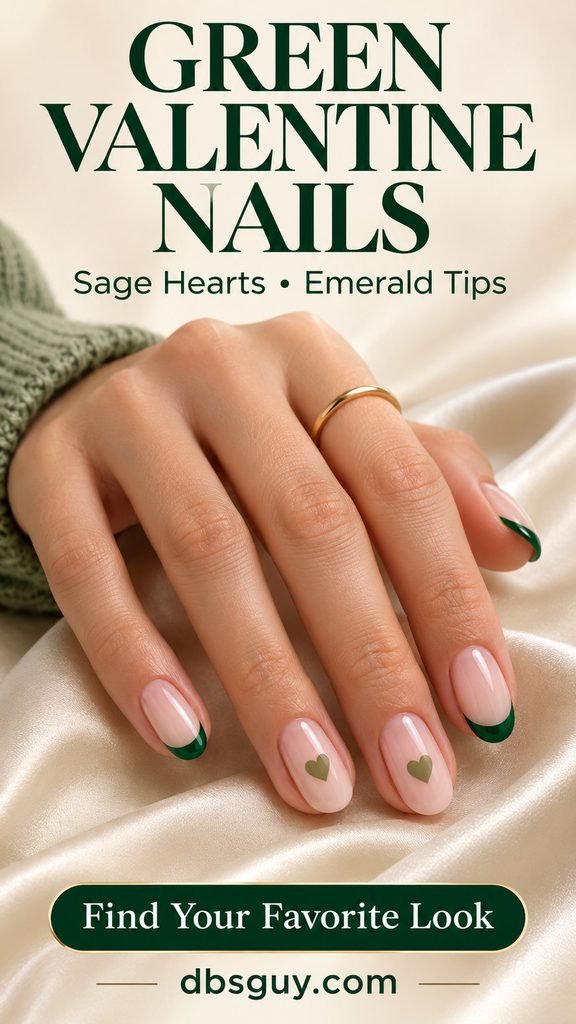
The images are AI-generated manicure concepts for dbsguy.com. Use them to discuss color, shape, and placement; they do not document completed salon work or wear tests.
Choose Your Green Before Choosing the Art
For this collection, sage means a muted gray-green, emerald means a richer jewel green, and olive means a warmer, more yellow-leaning green. Polish names are not consistent across brands, so bring the image rather than relying on the shade name alone.
Look at a painted swatch beside your hand in daylight and indoor light. If a deep green looks almost black to you, choose a clearer green or put it on the tips instead of the whole nail. With a sheer base, decide whether you want your natural nail visible; an opaque pink will give the design a different backdrop.
- For mostly bare-looking nails: choose the sage hearts or emerald tips.
- For opaque color and a graphic accent: choose the sage-and-blush split, forest heart window, or olive checks.
- For a reflective finish: choose emerald shimmer with one gold outline.
1. Sage Hearts on Sheer Blush Nails
A translucent blush base lets the little green shapes stand on their own. Use one sage heart on one accent nail and three separated hearts on its neighbor, leaving the remaining nails plain. The difference in spacing makes the pair feel connected without turning every finger into a pattern.
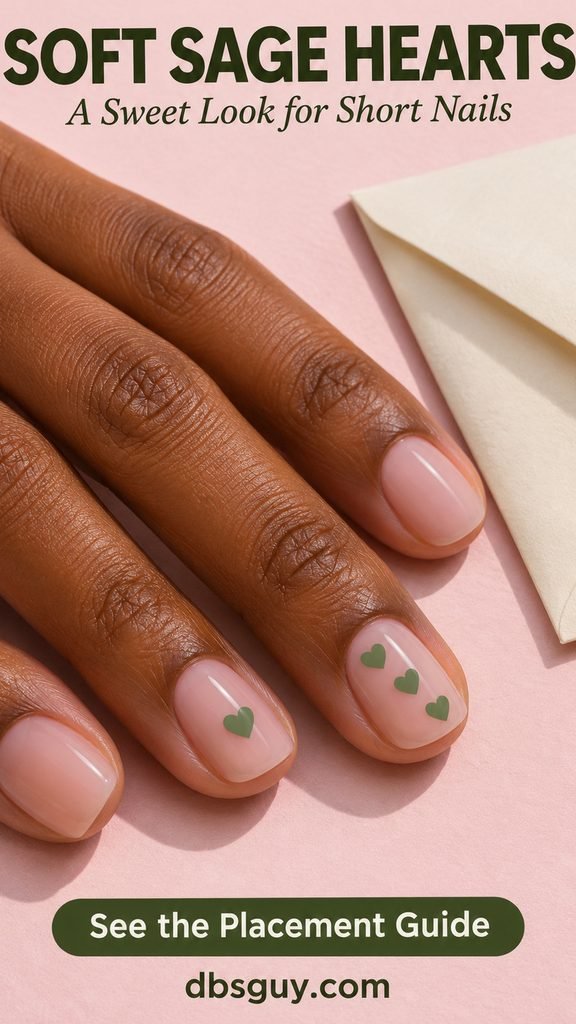
On short squovals, check the space around the three-heart arrangement first. Each heart needs a visible notch and a little blush between it and the next one. If the cluster fills the nail from edge to edge, ask for smaller hearts or fewer of them. Keep the single-heart nail quiet enough that the two accents have different jobs.
Ask your artist: “Sheer blush, muted sage hearts on two neighboring nails, and a smooth glossy finish. Please leave the other nails plain.” For an at-home version, small flat heart decals avoid the need to paint each outline; compare their size with your nail before applying them.
If you prefer even more open space, see Minimalist Valentine Nails With Tiny Details and Plenty of Bare Space.
2. Emerald French Tips With One Ivory Heart
Choose this when you want green to frame the nail rather than cover it. A sheer rose-beige base and narrow emerald tips keep the center light. Add one small ivory heart below the tip on the ring nail, with a visible gap between the heart and the green edge.
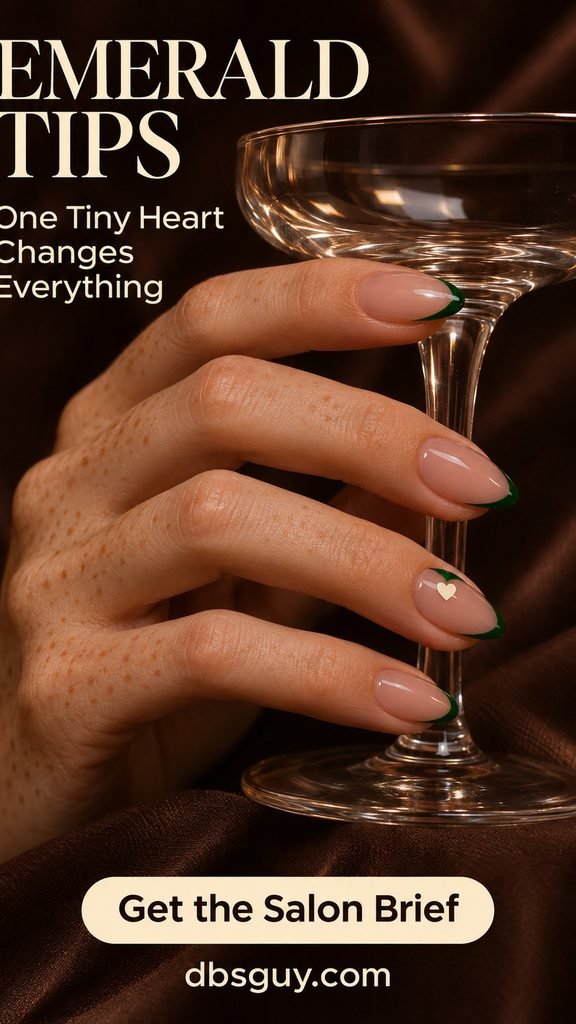
The reference uses medium almond nails, which give the curved tips room to taper at the sides. On a shorter rounded nail, reduce the depth of the green band instead of copying its exact proportions. The base should still be the larger visible area.
Salon brief: “Narrow emerald French tips over sheer rose-beige, plus one ivory heart on each ring nail. I want a slim curved edge, not a deep green tip.” Ask to see the tip width on one nail before the artist repeats it.
For regular polish at home, Essie’s French manicure guide explains the sheer base, curved smile line, and top-coat sequence. Use emerald for the tip color. If your nails barely extend beyond your fingertips, our Very Short Valentine Nails guide offers more help with scale.
3. Sage and Blush With a Split-Color Heart Accent
Here, the Valentine detail sits where two colors meet. Keep most nails solid sage, paint one blush, and split the ring nail lengthwise between those same colors. A small dark emerald heart crosses the seam, making the join part of the design.
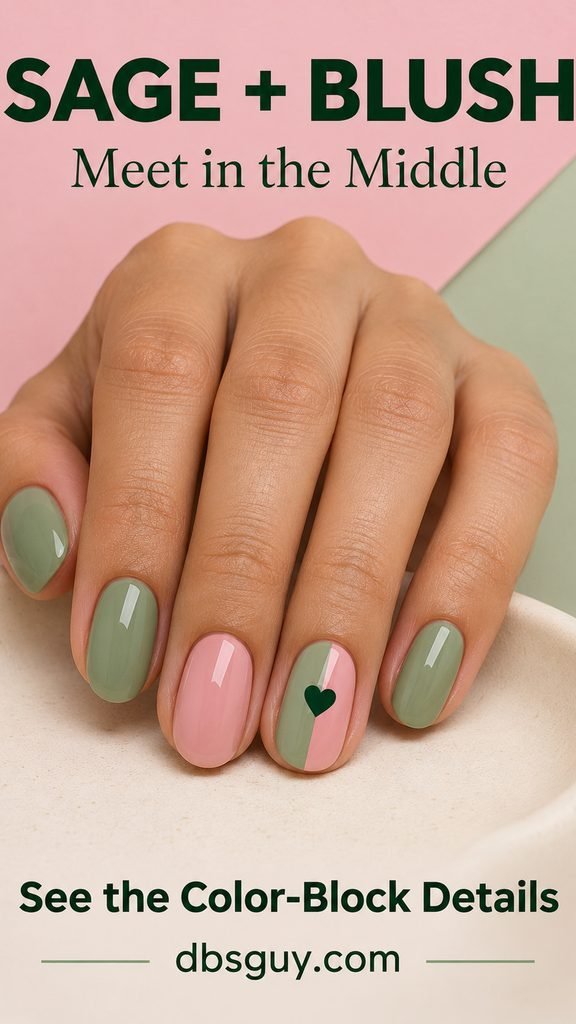
Choose a blush and sage with similar softness so neither half overwhelms the other. The darker heart provides the contrast. Check it against both halves of the accent nail: if it disappears into the sage, choose a deeper green for the heart or a lighter sage for the base.
Show your artist the lengthwise division and point out that the heart straddles it. A diagonal French tip would change the layout. On a narrow nail, keep the heart compact and leave both color panels visible from the cuticle area to the tip. You do not need extra dots or an outline around the nail; the seam already gives the eye a line to follow.
4. Forest Green With a Sheer Heart Window
This design reverses the usual heart accent. Instead of painting a heart on top of the green, leave a heart-shaped area of sheer rose-beige visible inside an otherwise forest-green ring nail. The surrounding nails stay fully green.
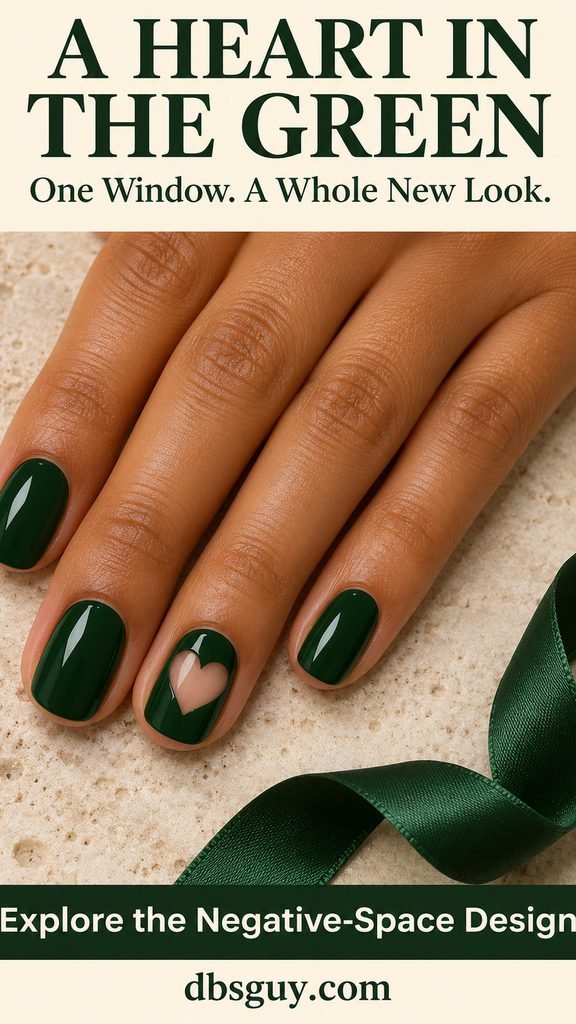
The window should sit entirely inside the colored nail, with a continuous green border around its lobes and point. That border matters more than making the heart large. On a small nail, an oversized window can meet the sidewall and lose its silhouette.
Be specific at the appointment: “I want a sheer heart-shaped window in the green, with the base showing through. Please keep it flat and glossy.” A pale opaque heart would create a similar color contrast, but it would hide the translucency that defines this version.
This is a useful salon option if clean edges are the detail you care about most. Ask to check the shape before the manicure is finished, especially the notch between the two lobes. The reference shows a soft, rounded heart rather than a long, pointed one.
5. Olive Checks With a Dusty Pink Heart
For a more playful pattern, keep four nails olive and give the ring nail an olive-and-ivory checkerboard. One dusty pink heart sits over the checks, edged with a fine ivory border so its shape remains visible where it overlaps a green square.
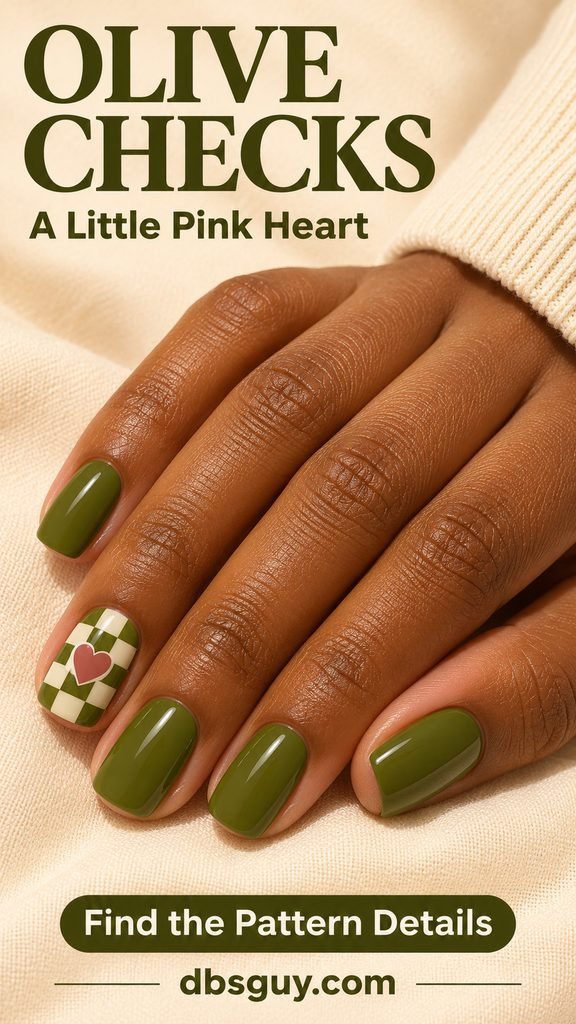
Use clear alternating tiles rather than a dense grid. The reference has roughly three columns across the accent nail; that is a starting point for the pattern’s scale, not a fixed count for every nail width. If the nail is narrow, use fewer, larger squares.
Ask for a checkerboard if you want solid alternating squares. Gingham uses crossing stripes and darker intersections, which would produce a different pattern. Keep the check spacing readable before adding the heart, and make the ivory border thin enough that pink remains the main accent color.
A smooth painted heart or a suitably sized flat decal suits this version. Keeping the other nails solid gives the small patterned area enough attention without needing a second accent nail.
6. Emerald Shimmer With a Gold Outline Heart
Fine emerald shimmer changes the finish without adding another pattern. Use it across the set, then put one thin gold outline heart in the center of the ring nail. Leave the heart open so the same green shimmer remains visible inside it.
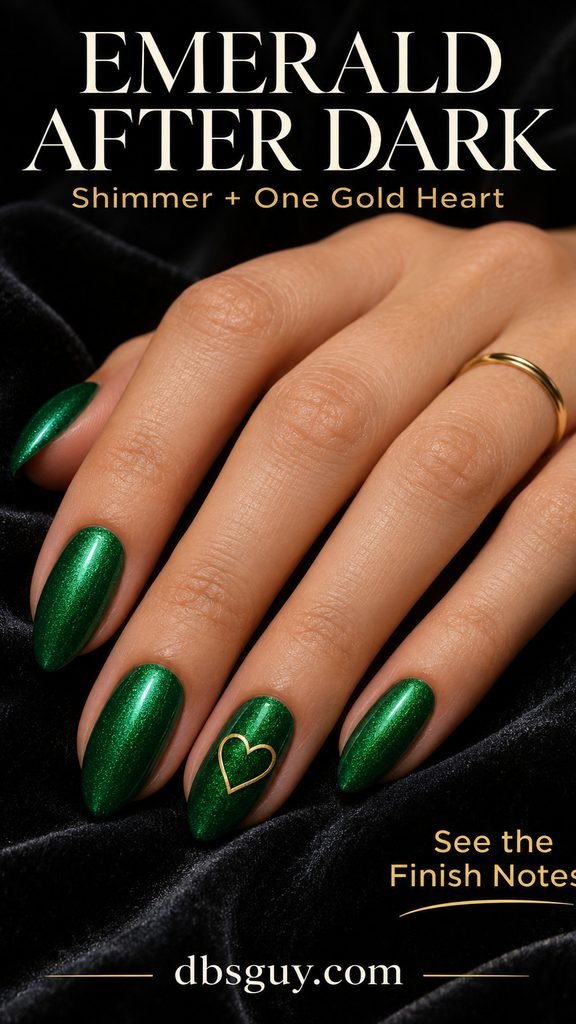
When comparing swatches, look for fine reflective particles rather than large glitter pieces. The reference has shimmer distributed across the nail, without a distinct magnetic cat-eye stripe. Show that distinction to your artist if you want this particular finish.
The gold line needs enough contrast to remain visible while leaving an open center. On a short nail, make the heart a little wider before making the outline thicker; a heavy line can fill the opening. Ask for a flat painted outline or thin flat decal if you want the smooth surface shown here.
This is the strongest choice in the collection when you want full green color and a little metallic detail. A simple gold ring echoes the outline, while leaving the nails themselves free of extra foil, stones, or charms.
What to Bring to Your Nail Appointment
Choose one reference and identify the feature you want preserved: the spacing between sage hearts, the width of an emerald tip, the sheer center of the forest-green heart, or the open gold outline. Then agree on your nail length, shape, base coverage, and finish.
Ask for a color swatch and one sample accent before the design is repeated. If the image’s nail length differs from yours, let the artist adjust the scale while keeping that defining feature. An AI concept is a conversation starter; your actual nail width and the available materials should guide the final placement.
Green Valentine Nail FAQs
Can green nails look romantic without red?
Yes. The heart shape supplies the Valentine reference in all six designs. Sheer blush, ivory, or a small gold outline can soften the palette without adding red. Choose the sage hearts for the lightest color coverage or the forest heart window for a darker version.
Which design should I choose for very short nails?
Start with the sage-heart layout and adjust the number of hearts to the space you have. The forest-green window can also fit a short rounded nail if the green border stays visible. Choose a narrow French edge only when there is enough room to see both the base and tip clearly.
Do these looks require gel or extensions?
The color layouts do not inherently require extensions or a gel finish. Regular polish can create the base colors, tips, and painted art; small flat decals offer another way to add hearts. Agree on the product system separately from the design, and follow that system’s application and finishing instructions.