Blue January nail art can take its cue from a favorite pair of jeans, patterned porcelain, or a dark winter sky. These 15 ideas use stitching, checks, soft gradients, flowers, and changes in finish to give blue something interesting to do beyond a snowflake.
For a small detail on short nails, start with the denim accent or silver half moons. If you want the finish to do the work, compare sapphire velvet, matte slate, and icy chrome. Each design below includes the placement that matters and a way to adjust it to your usual length.

The images are AI-generated manicure concepts for dbsguy.com. They illustrate color, placement, and finish; they do not document completed salon work or product tests.
Choose Your Kind of Blue
- Soft and light: Powder blue, milky blue, and the blue-to-white fade keep the color gentle.
- Dark with one detail: Navy provides a clear background for silver moons, a constellation, or a smoky patterned accent.
- Bright and graphic: Cobalt ribbons, periwinkle checks, and blue color blocks give the pattern more contrast.
- Light-catching: Velvet has a luminous shimmer; chrome has a more mirror-like reflection. Compare both before choosing.
Look at a blue swatch beside your own skin and something you wear often. If navy reads almost black in your usual indoor light, try a slightly lighter ink blue. If a pastel looks too white, choose a dustier blue rather than adding more decoration.
1. Denim Blue With a Stitched Accent
A medium denim blue makes a useful starting point when you want nail art that works with everyday clothes. Keep the set glossy and add a broken white border inside the ring nail, leaving a slim blue margin around it. The little dashes suggest stitching without needing a detailed picture.

For a home interpretation, use regular blue polish and a fine nail-art brush for the white marks once the base is ready for artwork according to its directions. Place a few dashes first, then fill the gaps; a continuous white outline would change the effect. On very short nails, use a stitched arc near the tip instead of a full border.
For a smaller first practice project, see January Nail Art for Beginners: Simple Designs to Practice at Home.
2. Navy Nails With Silver Half Moons
Put the shine at the base of the nail. A shallow silver half moon against glossy navy gives this set a small metallic detail while leaving most of the blue uninterrupted. The curved silver shape is filled in, rather than drawn as a thin outline.

Ask your artist to size the moon to each nail and keep a clean gap from the skin. A deep silver semicircle can overwhelm a short nail, so check the smallest nail before repeating the placement. Metallic silver lacquer can interpret the color contrast at home; it does not need to reproduce a mirror-chrome finish.
3. Cobalt Ribbons Over a Sheer Base
A single cobalt ribbon winds across each nail, leaving the sheer base visible on either side. Unlike a French edge, the curve travels through the nail rather than staying at the tip. Medium almond nails give the S shape room to bend.
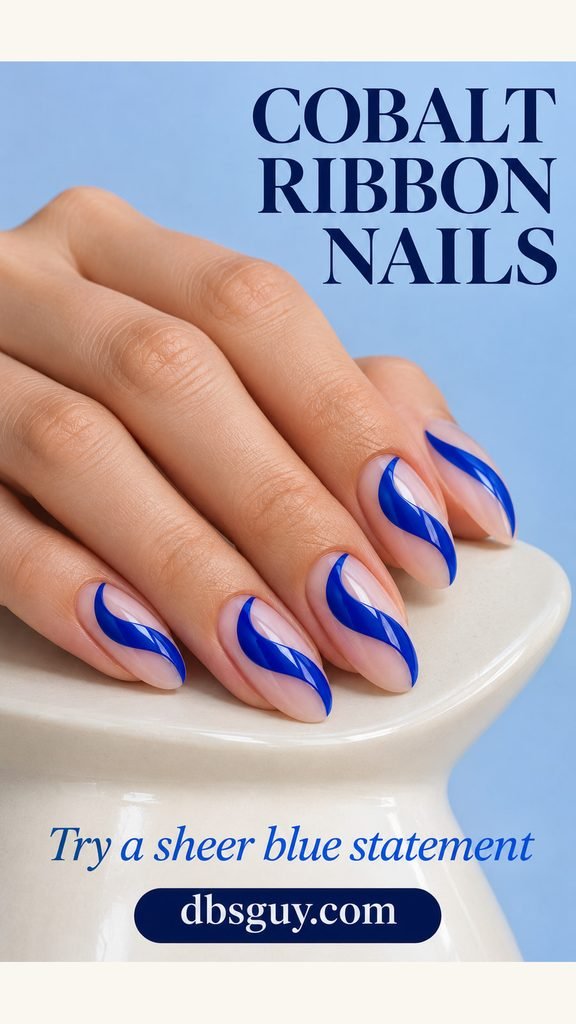
Choose the translucent base on your own hand: rose, peach, or beige can all provide a quieter background for the blue. Show your artist how much open space you want to keep. For short nails, reduce the design to one broad diagonal bend; squeezing a complete S into a tiny area can make the ribbon look like a solid block.
4. Icy Blue Marble With Fine Navy Veins
White veining softens pale blue, while a few fine navy lines give the marble definition. Keep the pattern on the middle and ring nails, with the remaining nails solid icy blue. That balance lets you see the stone effect without covering every finger in linework.
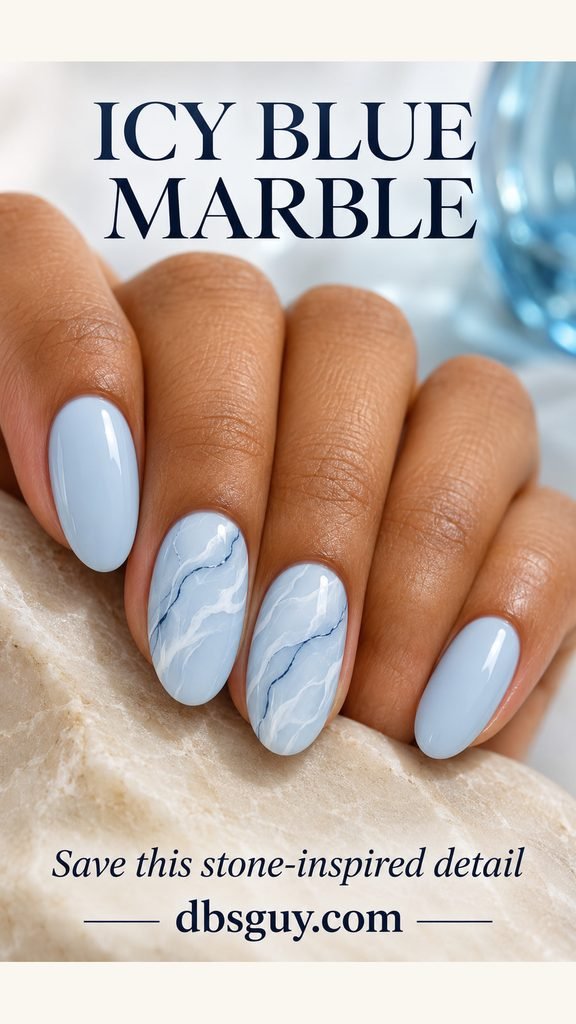
The important salon request is an irregular, lightly veined pattern with open blue areas. A dense web of equally dark lines will read differently. If your nails are small, choose one marble accent and fewer veins. Ask for a finished sample before adding more navy; it is easier to decide how much contrast you want when you can see it against the pale base.
5. Sapphire Magnetic Velvet
This sapphire set uses the finish as its design. A bright shimmer moves through the blue under changing light, while the surface stays smooth. Here, “velvet” describes an optical effect, not loose fibers or a fuzzy coating.
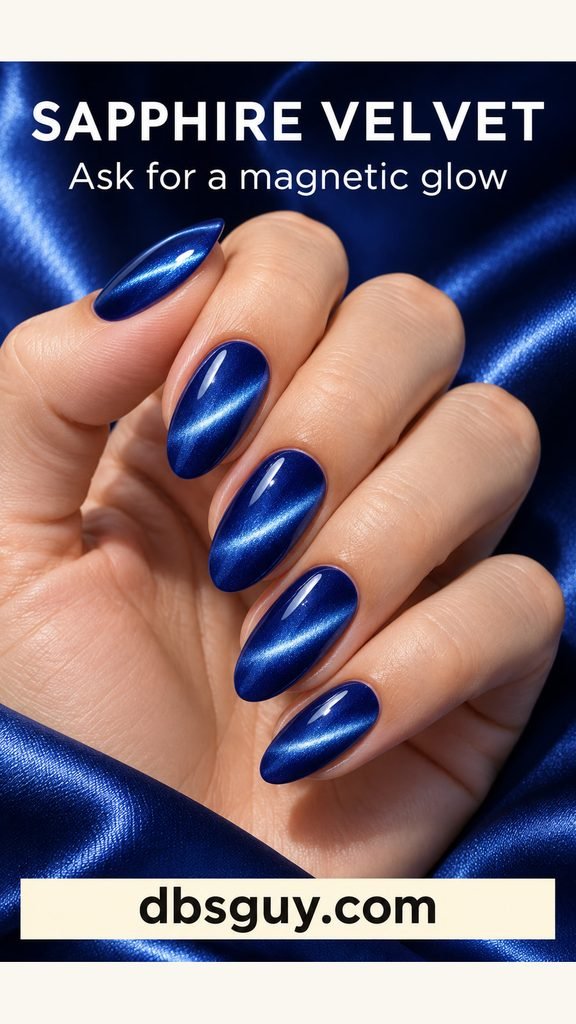
OPI’s magnetic gel application guide shows how a magnet shapes the reflective effect. Ask for a broad, soft glow if you prefer this reference to a sharply defined cat-eye stripe. Have your artist show the sample at more than one angle.
Short oval nails can carry the same all-over finish. An ordinary blue shimmer polish is a simpler alternative, though its reflection will differ from a magnetic effect. Any magnetic product needs its own application directions; this image does not supply a universal curing routine.
6. Periwinkle Checks on One Nail
Periwinkle brings a lavender undertone to the blue palette. Pair it with cream checks on the ring nail and leave the other nails plain. The reference uses broad squares, so the checkerboard remains legible at a glance.
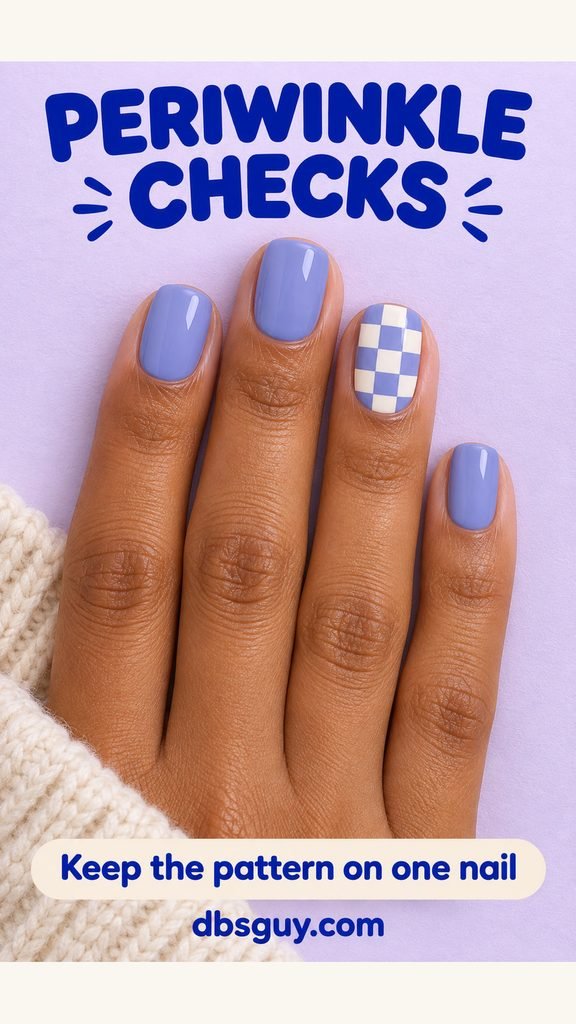
Plan the grid around the width of your actual nail. A narrow nail may need two columns rather than three, and a shorter one may need fewer rows. Keep the checks large enough to see instead of shrinking the whole pattern. If painting a grid feels too fiddly, look for a flat nail-art wrap with a similar scale and follow its fitting instructions.
7. Powder Blue With a Painted Cable Knit
A white cable down one powder-blue nail gives the set a sweater reference. In this version, linked chevrons sit between two fine lines. The motif is painted flat; it does not need raised gel or a grainy coating to suggest knitwear.
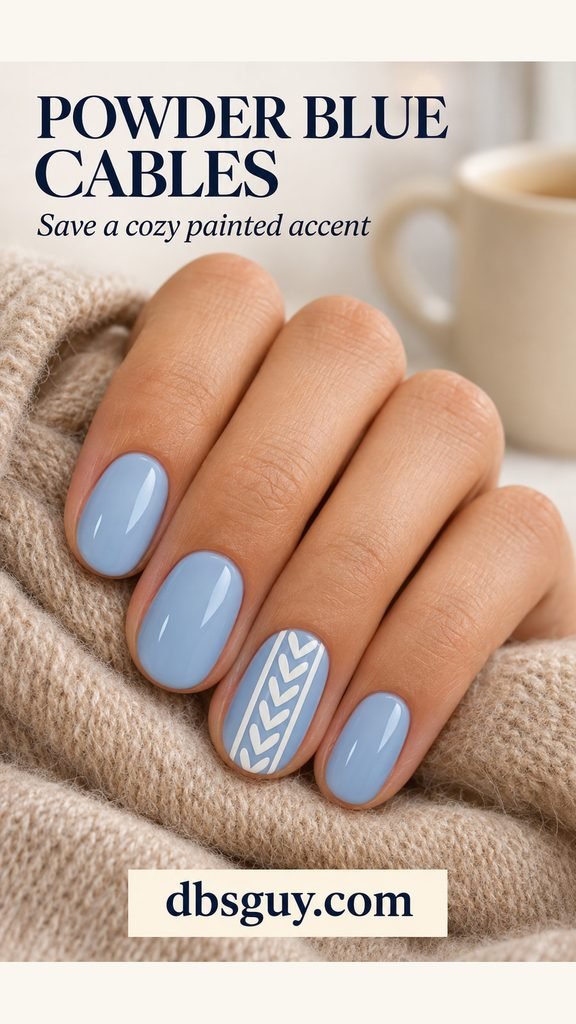
Keep the white cable centered and leave plain blue visible along both sides. When adapting it to a shorter nail, remove a link or two rather than making every part microscopic. A salon can hand-paint the detail, or you can choose a suitably sized flat decal. Confirm that the final surface will be smooth if you are using the reference specifically for its flat finish.
8. A Tiny Constellation on Midnight Blue
Four silver dots connected by fine lines, with one small four-point star beside them, turn a navy accent nail into a little night sky. The arrangement is decorative rather than a map of a named constellation. Keep the other nails plain so the tiny details have a clear focal point.
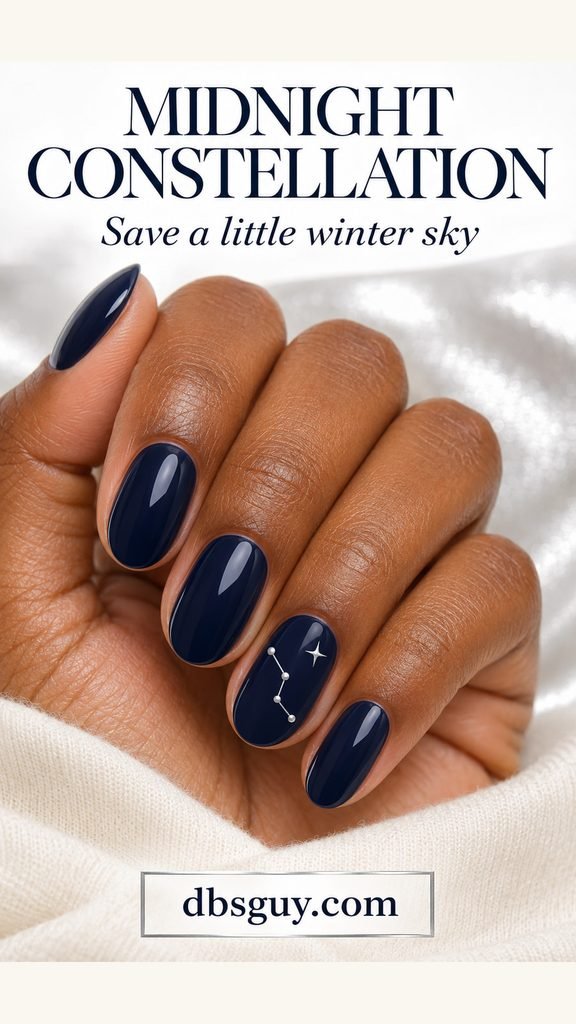
The connecting lines should be finer than the dots. If your ring nail cannot hold both the path and the star comfortably, keep the connected dots and leave out the star. Flat painted marks or a flat nail decal can give you the placement without raised stones. Avoid adding scattered silver dots to every finger; the quiet navy is part of this design.
9. Milky Blue With a Royal-Blue Aura
A blurred blue center makes this look different from a tip gradient. The stronger color stays in the middle, with milky blue around the cuticle, sides, and tip. There should be no hard circle around the glow.
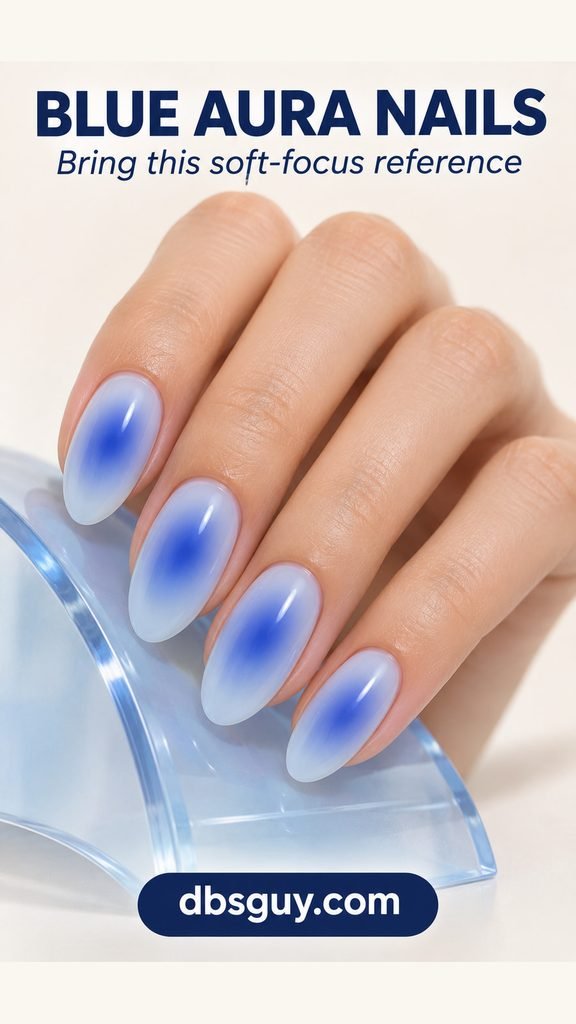
Ask your artist to keep the center small enough that the pale border remains visible. On short nails, a compact round glow can work better than the elongated oval shown here. A finished swatch helps you choose the strength of the blue and the softness of the blend. The reference shows the intended result; the products and blending method should come from the system your artist uses.
10. Sky Blue Fading Into White Tips
Keep sky blue near the cuticle and let it fade gradually into white at the free edge. The result has a winter palette without a painted winter motif. The white is concentrated near the tip, with no crisp French line dividing the colors.

For short nails, reduce the white area so the blue still occupies most of the surface. A regular-polish sponge gradient is one possible home interpretation: practice the blue-to-white blend on a nail swatch before working on your hand, then follow your polish’s layering and drying directions. If you prefer a salon version, point out that you want a soft transition rather than a solid white band.
11. Smoky Blue Tortoiseshell
This cool interpretation swaps the amber of traditional tortoiseshell for smoky steel blue. Irregular navy patches sit over a lighter blue accent nail, with plain navy on the other fingers. The lighter gaps keep the mottled pattern visible.
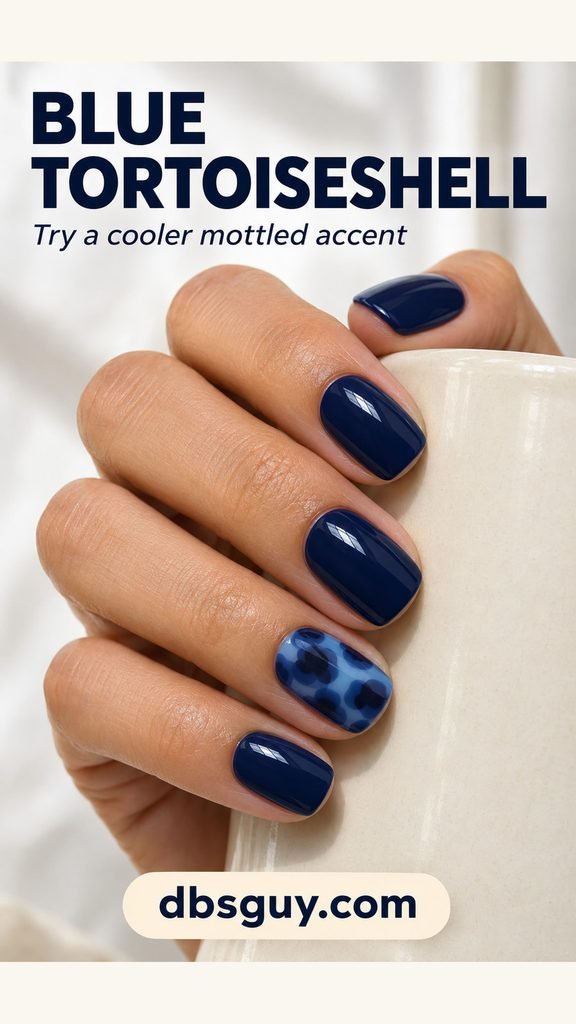
Ask for uneven, layered patches rather than evenly spaced spots or outlined leopard rings. Keep the accent limited to one nail if you want the pattern to feel restrained. On a very short nail, use fewer patches and leave more of the smoky base showing. Take the image to your appointment: “blue tortoiseshell” alone may leave the balance of dark and translucent-looking blue open to interpretation.
12. Matte Slate Blue With Glossy Tips
Use the same slate blue across the whole nail, then let matte and gloss draw the French shape. Most of the surface stays matte; the curved tip catches the light. The contrast appears through reflection rather than a second color.
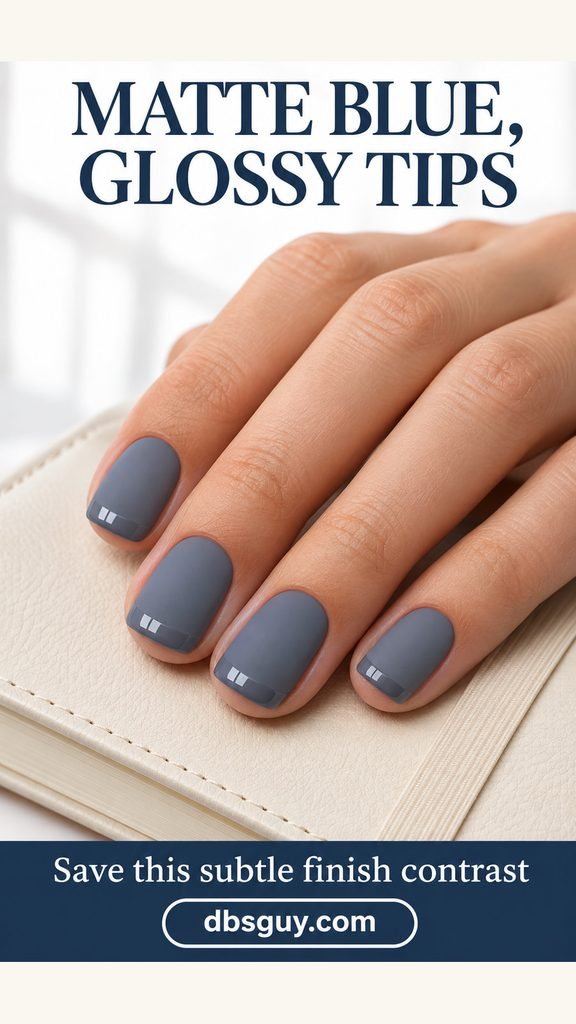
Ask to see one finished nail under ordinary light before repeating the set. On short squoval nails, keep the glossy edge narrow. If you use compatible matte and glossy finishing products at home, follow their layering directions and preserve the separate final areas. Brushing gloss over the entire nail at the end would cover the matte effect.
For more ways to change the edge, browse 17 January French Tip Nail Ideas Beyond the Classic White Edge.
13. Porcelain-Style Blue Flowers
Small cobalt flowers on a milky-white ring nail bring a pottery-inspired detail to cornflower-blue nails. Two flowers and a slender leafy stem give the white accent a clear design without filling every space. The surrounding nails stay solid blue.

This is a useful choice if you enjoy florals but want to keep a cool January palette. On a smaller nail, use one flower with a short stem rather than compressing the full arrangement. Ask for flat painted petals and fine leaves. Keep the main blue and flower blue close enough to feel related, with the darker flower color providing definition against the white.
14. Icy Blue Mirror Chrome
Chrome makes light blue look more like polished metal than cream polish. The reference has broad, clean reflections across a blue surface, rather than visible glitter particles. Leaving every nail the same gives the finish room to stand out.

Compare a finished chrome sample with a pearly or metallic lacquer before choosing. Ask for a blue that remains visibly blue in ordinary light; a very pale sample may look mostly silver. Short rounded nails can wear the same finish without the almond length. A reflective blue lacquer can suggest the palette at home, but it may not reproduce the mirror effect. Follow the chosen product system instead of borrowing steps from a different chrome tutorial.
15. Dusty Blue With Graphic Color Blocks
Finish with a design built from clean shapes: dusty blue as the main color, an ivory diagonal across the ring nail, and a small navy corner at the tip. The three colors provide the pattern. Keep the other nails plain to make that one arrangement easy to read.
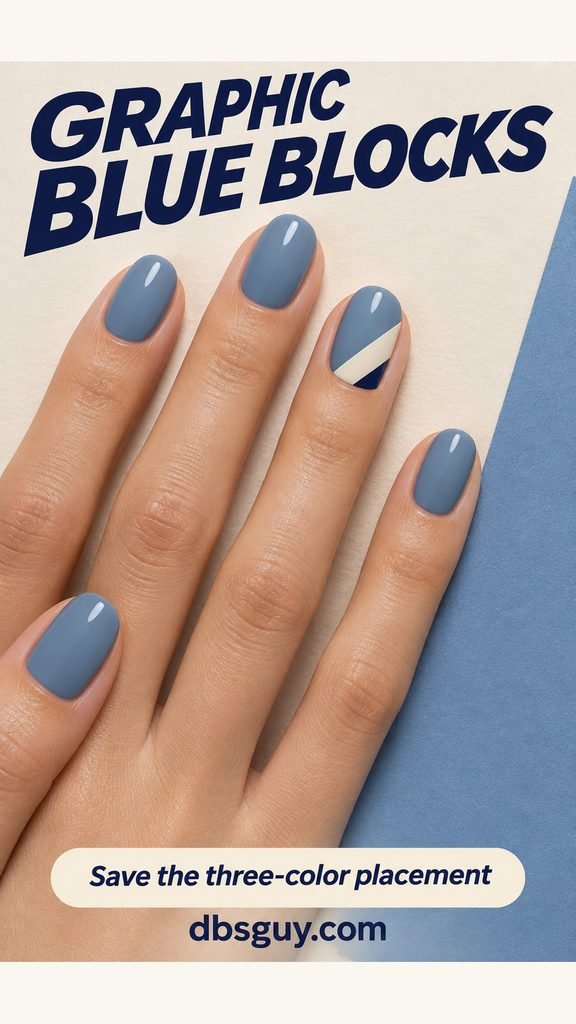
Decide the direction of the diagonal before painting both hands, especially if you want the accents to mirror one another. For a very short nail, widen the ivory band slightly and keep the navy corner small. At home, nail-art guides may help with the boundary, but use them only when your base is ready for adhesive contact according to the product directions.
Turn Your Favorite Into a Clear Salon Request
Save one main image and name the part you want to keep: the stitched border, pale aura margin, broad velvet glow, or matte-and-gloss edge. Then agree on your length and shape before deciding how much artwork fits.
- Choose the blue on your hand. Check a swatch in daylight and ordinary indoor light when possible.
- Point out the plain areas. The open base beside a ribbon and the light gaps in a mottled pattern matter as much as the colored marks.
- Confirm the surface. Flat artwork, smooth magnetic shimmer, matte polish, and mirror chrome are different requests.
- Approve one accent first. It is the clearest way to settle the scale of checks, cable links, or flowers before repeating them.
Blue January Nail Art Questions
Which ideas work best on very short nails?
Start with shallow silver moons, matte-and-gloss tips, or an all-over magnetic finish. For painted art, use a partial stitched border, fewer checks, or one porcelain flower. Reduce the number of details before reducing their size.
Can I make these designs with regular nail polish?
The stitched accent, silver moons, checks, flat cable, constellation, gradient, and color blocks can be interpreted with regular polish and nail-art tools. They vary in brush control and practice required. Magnetic velvet and mirror chrome depend on the products used, so a standard blue lacquer will give a different finish.
How can I keep light blue from looking too pale?
Try a dustier blue or add one darker accent, such as the navy marble vein or cobalt flower. Compare the color on your hand first. Adding more artwork will not solve a base shade you do not enjoy wearing.
Do all five nails need different designs?
No. Most patterned looks here keep the surrounding nails plain. Choose one focal detail and repeat the base color across the hand. The mixed cover image introduces several options; you can select one of them for a complete set.