Valentine Classroom Ideas for a Day Full of Crafts, Games, and Kindness

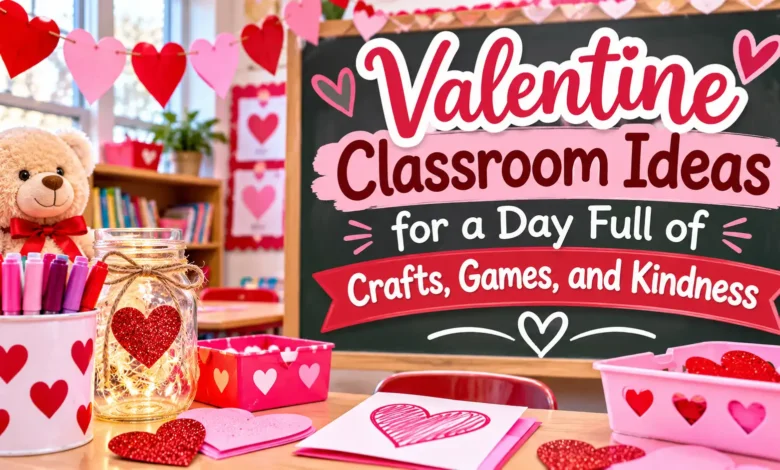
Start with one craft, one game, and one kind action. A torn-paper heart card, a cooperative matching game, and a short note exchange give children something to make, something to do together, and something thoughtful to take home.
These Valentine classroom ideas are planned for kindergarten through third grade, with ways to simplify the cutting, writing, and movement. The nine activities form a menu: choose the ones that fit your class. For a one-hour celebration, use the sample plan below rather than trying to fit in every idea.
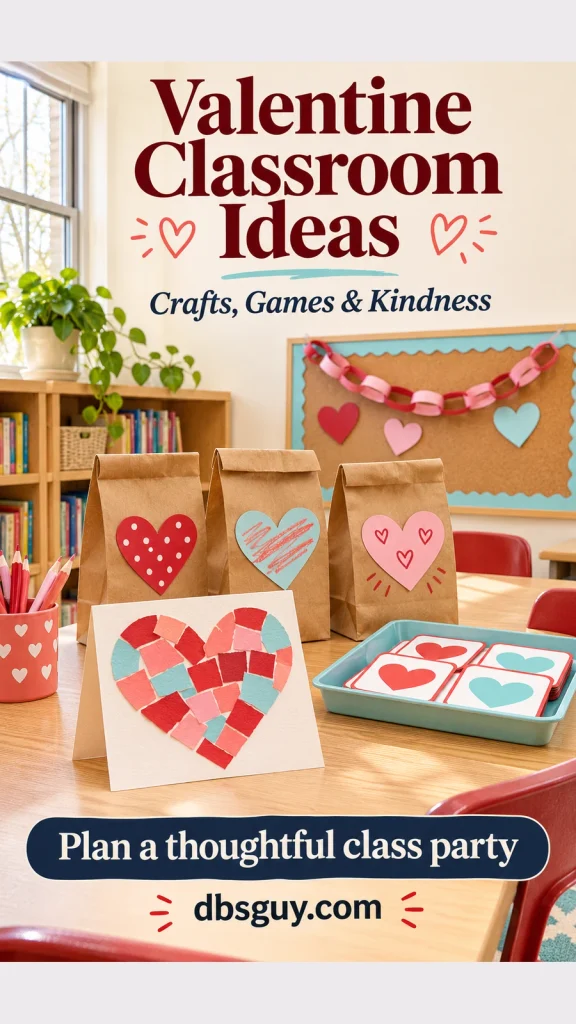
The visuals are AI-generated classroom concepts, not photographs of activities tested with students.
Set up a celebration your whole class can join
Confirm the celebration date, activity rules, and card-exchange policy with the teacher before collecting supplies. Frame the day around friendship, appreciation, and helping. Give children a choice to write, draw, dictate, or point to a picture, and offer a quiet place to work within the teacher’s supervision.
The activities below use paper and art supplies instead of food. Still check materials against students’ individual allergy plans. CDC’s guidance for teachers and paraeducators recommends following school allergy procedures, avoiding allergens in classroom projects, and choosing nonfood celebrations. A craft supply is not automatically suitable for every student just because it is not a snack.
Choose school-approved, age-appropriate materials in their labeled containers. Use washable, unscented supplies where suitable, supervise their use, and plan for handwashing and cleanup. Large paper pieces, precut shapes, and broad crayons make useful options for children who find tiny details difficult.
A manageable 60-minute classroom plan
For a class of 24, make three groups of eight. Prepare the stations in advance: heart mosaic cards from idea 1, heart matching from idea 4, and kindness notes from idea 7. Keep the note-writing station near the teacher so an adult can help with wording and check messages.
- 5 minutes: Welcome the class, explain the activities, and demonstrate the rotation signal.
- 30 minutes: Give each group 10 minutes at each of the three stations.
- 5 minutes total: Allow for moving between stations, putting supplies back, and settling in.
- 10 minutes: Distribute the checked kindness notes and let children read or have an adult read them quietly.
- 10 minutes: Finish projects, clean tables, wash hands, and pack up.
These are planning estimates, not tested completion times. Have the card bases ready to decorate, and shorten the mosaic to a heart border if needed. With one adult, run the same three activities with the whole class in sequence so you can demonstrate and supervise each one.
For this sample plan: Gather about 30 folded card bases and 30 blank note slips, construction-paper scraps, pencils, crayons, school-approved glue sticks, two sets of eight matching cards, and a class roster. Each matching set serves four children. Use existing school folders or envelopes to collect notes; paper-bag mailboxes are an optional project to make earlier.
Valentine classroom crafts
1. Fill a heart card with torn-paper color
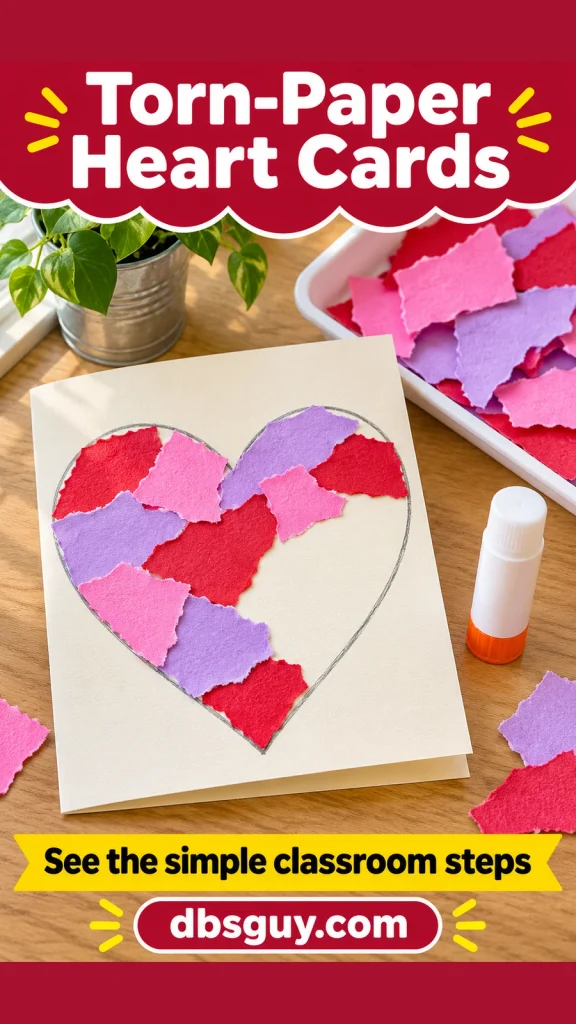
A mosaic card gives children room to make different choices while sharing the same small set of supplies. Put pink, red, and purple construction-paper scraps in shallow trays. Fold a half sheet of cardstock into a card and draw a large heart on the front, or prepare the outline before class.
- Tear paper into pieces roughly 1 to 2 inches across. Offer ready-torn pieces as an option.
- Arrange a few pieces inside the outline before adding glue.
- Glue the pieces down, overlapping edges or leaving small gaps.
- Add a drawing or a short message inside once the front is finished.
Allow about 10 to 15 minutes. For a shorter station, decorate only the heart’s edge. Keep one finished example nearby, but let children choose their own colors and arrangement. If the card will join a class exchange, assign its recipient before anyone starts writing.
2. Make a fold-and-press painted heart
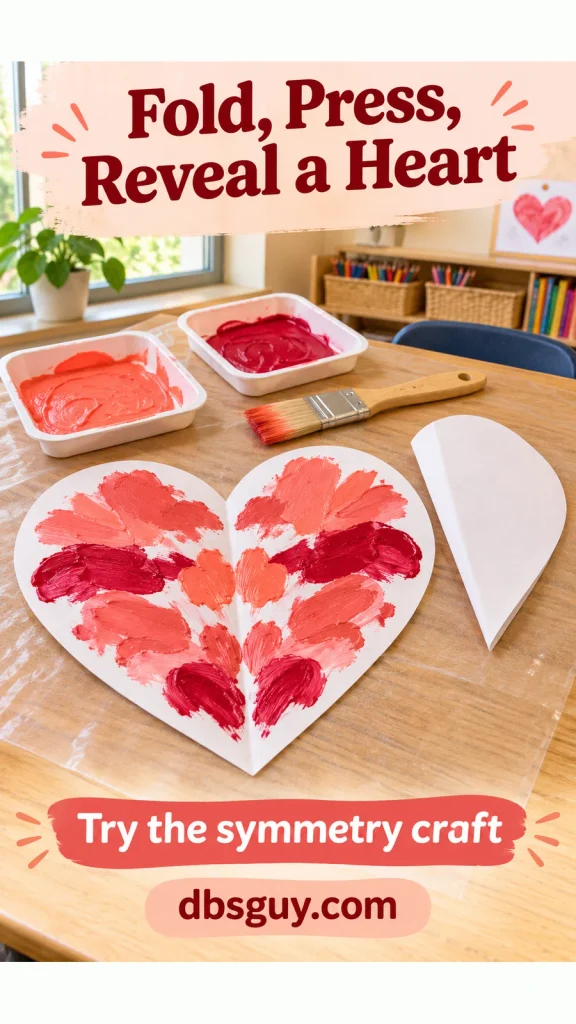
Choose this craft when you have a protected work surface, a drying area, and time for cleanup. Fold sturdy white paper in half, draw half a heart against the fold, and cut it out while folded. An adult can prepare the shapes so children can start with the paint.
Open the heart. Brush a few small dabs of washable paint onto one half, leaving the other half bare. Close it along the crease, press gently from the outside, and reopen it to reveal a mirrored print. Ask, “What do you notice on both sides of the fold?”
A thin layer of paint is easier to manage than puddles. Label the back first and leave the finished hearts open on a drying tray. Plan around 15 minutes of activity time plus drying time, which depends on the paint and paper. A child who prefers dry materials can draw matching crayon shapes on both halves.
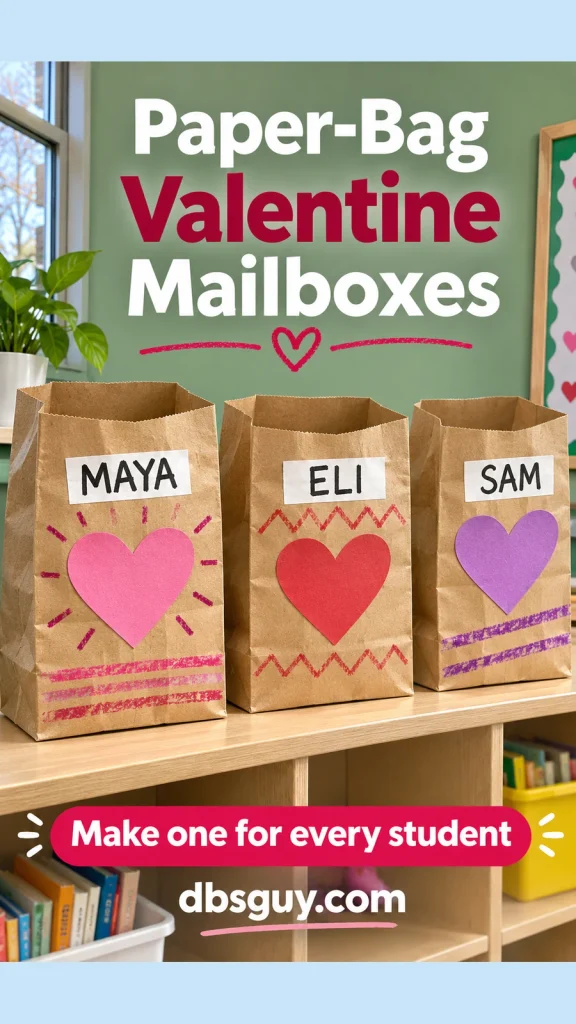
3. Decorate a paper-bag Valentine mailbox
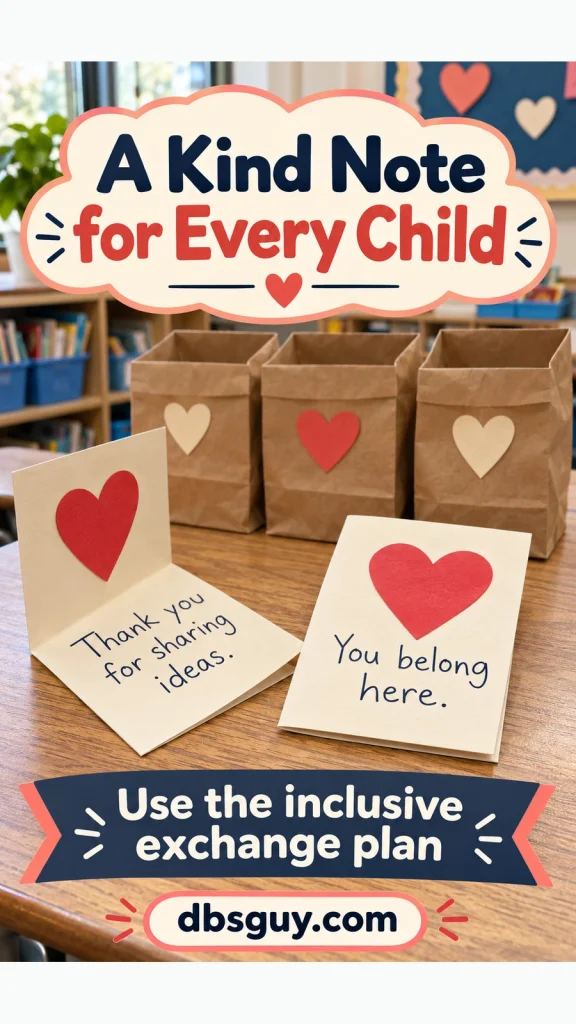
Make mailboxes the day before the celebration so the party can begin with the bags ready. Use one upright paper lunch bag per student, plus a few extras. Try a finished card in a sample bag first; the opening should be wide enough for it to slide in without bending.
Children can glue on large paper hearts, add crayon borders, and attach a clearly written name label. Keep the top open. Line the bags up on a reachable shelf or table in roster order, with duplicate first names distinguished in the way the teacher normally uses.
Allow roughly 10 minutes for decorating. Prepare a bag for an absent child, too. A plain envelope or school folder does the same collecting job if table space is limited.
Also Read: 21 Valentine Card Ideas That Make a Simple Message Feel Personal
Valentine classroom games
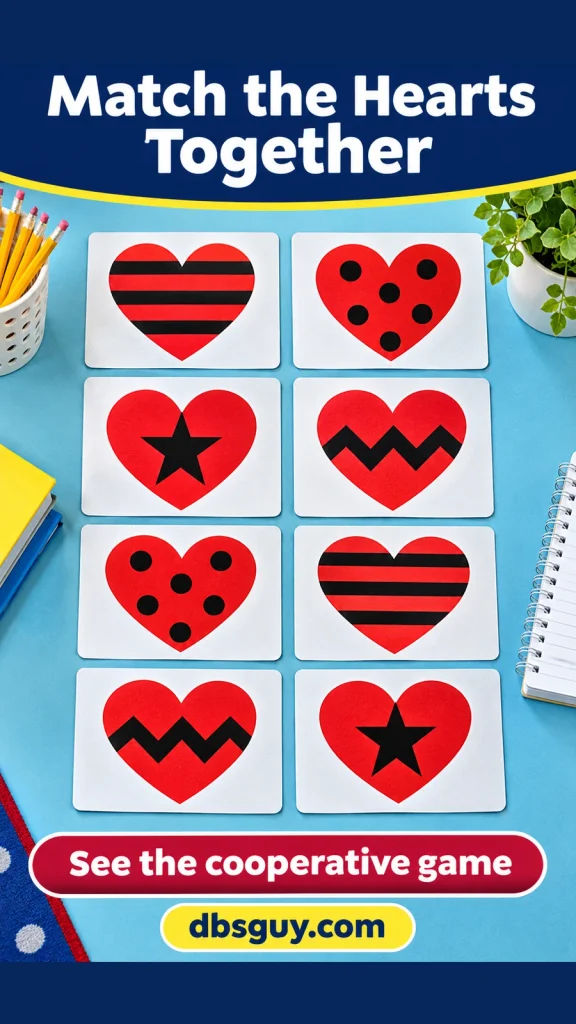
4. Find the heart pairs together
Make eight large cards for a group of two to four children. Draw the same red heart on each card, then add four pairs of bold black patterns: stripes, dots, a star, and a zigzag. The patterns make the matches recognizable without relying on color alone.
Start with the cards face up and ask the group to find all four pairs. Then shuffle them, turn them face down, and take turns flipping two cards. Leave a matching pair face up. Turn an unmatched pair back over after everyone has had a look.
Work toward finding the whole set together; children can help one another remember a card’s position. Play another round if the first finishes quickly. Allow 8 to 10 minutes, and use two sets for a station of eight students. Larger cards and a face-up version are useful adjustments when visual scanning or remembering positions is difficult.
5. Act out kindness charades
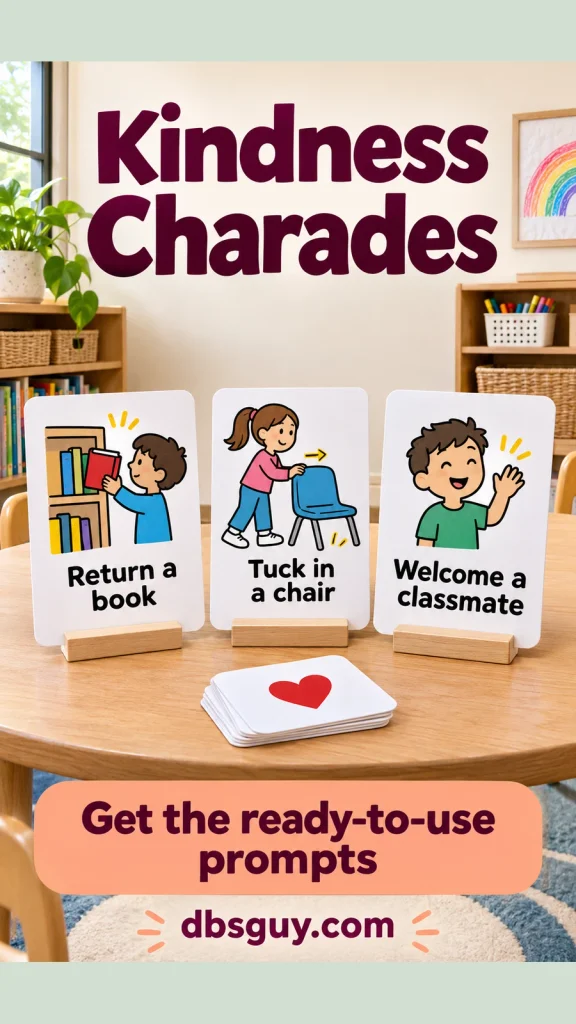
Use quick, familiar actions instead of holiday trivia. Draw a simple picture on each prompt card and add a few words so an adult can read it aloud when needed. These six prompts are ready to use:
- Return a book to its shelf.
- Tuck in a chair.
- Welcome a classmate with a wave.
- Offer someone a pencil.
- Pick up a dropped paper.
- Make room for someone at a table.
Model one action, then invite a volunteer to mime another while the group guesses. After the guess, ask, “When could that help someone in our room?” Keep turns brief and let children pass, act with a partner, or choose between two picture cards. Props are optional; miming keeps the setup small.
Plan about 10 minutes. Use actions that can be done in a child’s own space, with no touching required. Accept spoken guesses, gestures, or pointing so there is more than one way to take part.
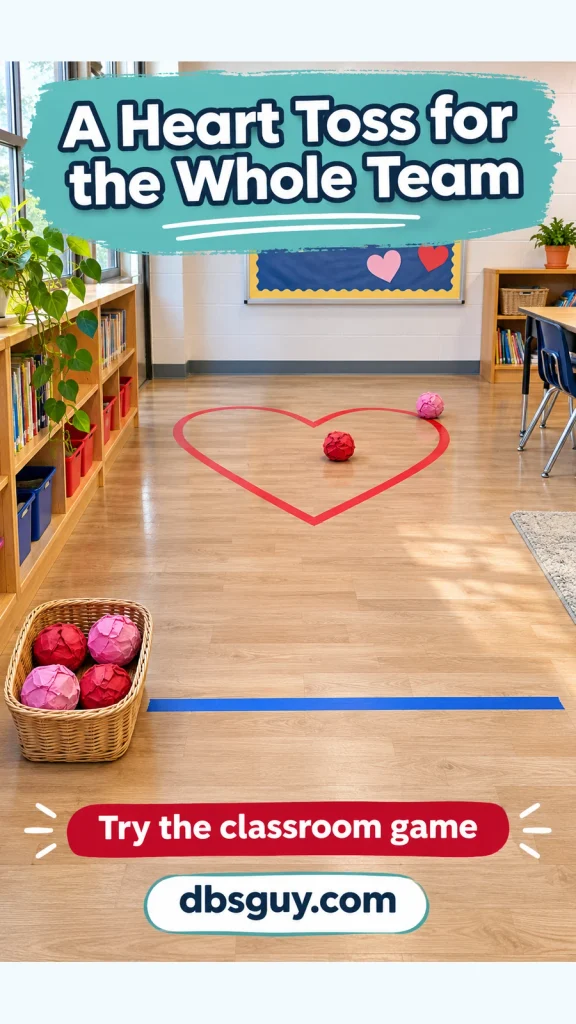
6. Play a cooperative paper-ball heart toss
Make a large heart target on a clear floor using surface-appropriate removable tape. Try a heart about 3 feet across and a throwing line about 3 feet away, then adjust after a practice toss. Check the tape on the flooring first and keep the game away from doorways and regular walking routes.
Crumple six sheets of scrap paper into soft, palm-sized balls. Each child takes a turn making an underhand toss toward the heart. Count the balls that land inside as one shared total. Collect them only after everyone has stopped throwing, then try another round.
Offer a closer line, a seated toss, or a gentle roll. Everyone can choose the position that works for them. Allow 8 to 10 minutes, keep spectators beside the lane, and have an adult manage retrieval. In a crowded room, choose the tabletop matching game instead.
Kindness activities with a clear purpose
7. Arrange one thoughtful note for every student
Plan the recipients before handing out paper. On a private roster, assign each child one classmate to write to, with every student receiving one note and nobody assigned to themselves. One simple method is to put names in a teacher-chosen order and assign each person the next name, with the last person writing to the first.
Offer plain note slips, pencils, and these message starters:
- “Thank you for helping with…”
- “I appreciate the way you…”
- “One kind thing I noticed was…”
- “I’m glad you are part of our class.”
Model a specific, friendly sentence such as “Thank you for sharing ideas during our project.” Children can draw a kind action, dictate a message, or use a general welcome when they do not know their recipient well. Keep comments focused on actions and belonging.
Allow about 10 minutes for creating notes and a separate 10 minutes for checking and distributing them. Check every message before delivery and tick off each recipient on the roster. Have an adult prepare a note if a writer is absent or chooses another activity, and save notes for absent recipients. Follow the teacher’s existing policy for any additional cards brought from home.
8. Offer a helping-hands task menu
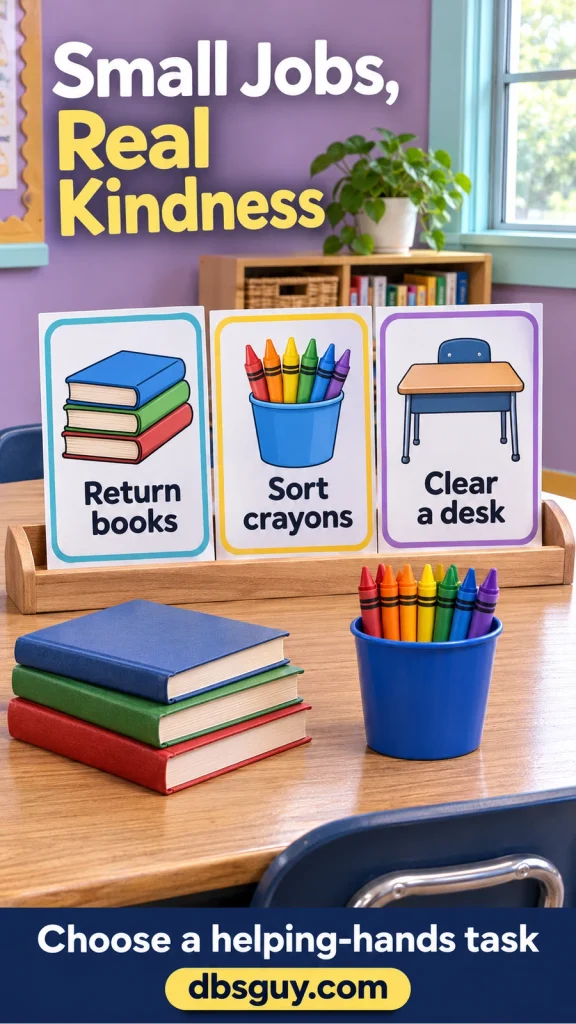
Give kindness a practical job in the room. Put out three picture cards labeled “Return books,” “Sort crayons,” and “Clear a desk.” Explain the small task behind each card: return a few approved books to their labeled basket, sort a shared crayon tray, or clear paper scraps from a designated work surface.
Ask before helping with someone else’s belongings. Offer seated jobs, such as sorting crayons or pairing blank cards with envelopes, alongside tasks that involve moving around. Children can choose a job or suggest another teacher-approved way to help.
Use 5 to 10 minutes near cleanup time. Avoid rankings or a reward for doing the most jobs; the useful result is a room that is ready for the next activity. Close with a concrete observation: “The crayons are sorted, so the next group can find what they need.”
9. Build a paper chain of classroom thanks
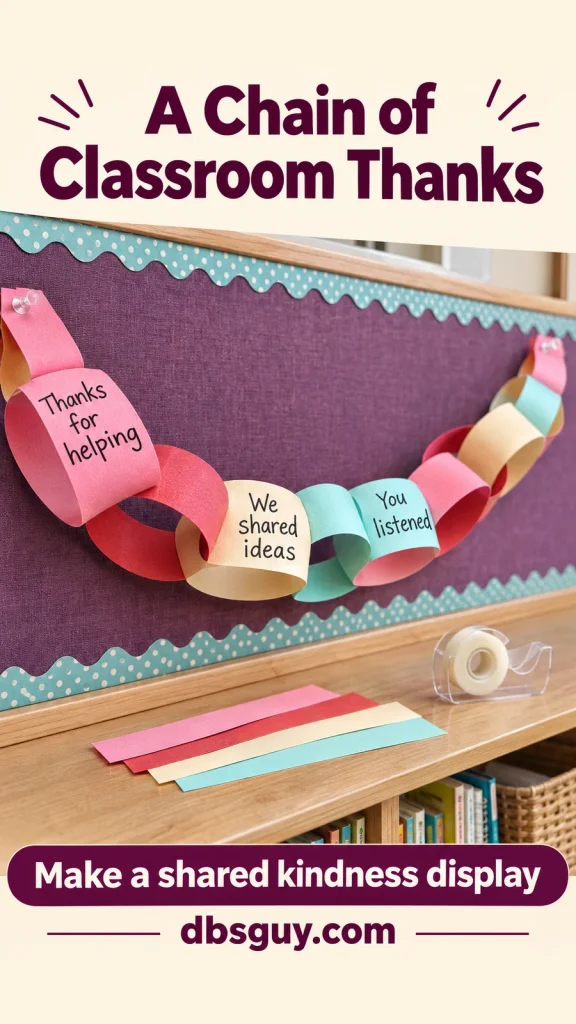
Cut paper strips about 1 inch wide and 8½ inches long. Invite each child to write or draw one moment of help they appreciated: someone listening to an idea, explaining a game, or making space at a table. An adult can write a dictated sentence.
Loop the first strip and tape its ends together. Thread the next strip through that loop before closing it, then continue to build an ordinary interlocking paper chain. Keep the writing facing out. Assemble it in small sections if several children want to help at once.
Allow about 10 to 15 minutes. Attach the finished chain to a bulletin board, clear of walkways and door hardware, following the school’s display rules. Let children contribute without naming a classmate, and make reading their message aloud optional. The chain can stay up as a record of shared moments rather than a count of individual behavior.
Also Read: 25 Valentine Decor Ideas From Heart Garlands to Flower-Filled Tables for more paper-heart display inspiration.
Quick answers for teachers and room parents
What works if we only have 30 minutes?
Use 5 minutes to explain the plan, 10 minutes to decorate a small card and write an assigned kindness note, 10 minutes to check and distribute notes, and 5 minutes to clean up. Prepare the card bases and recipient assignments beforehand. Save the games for another time.
How can I adapt the activities for kindergarten?
Offer precut hearts, large paper pieces, picture prompts, and an adult who can write dictated messages. Play the matching game face up first. Demonstrate one step at a time and keep the finished example where children can see it.
What if a student does not celebrate Valentine’s Day?
Ask the teacher and family about an appropriate option in advance. A student might make a neutral thank-you card, complete the same matching task with familiar shapes, or choose another quiet activity. Keep the arrangement discreet and provide the same attention and materials.
How do I keep supplies affordable?
Choose a paper-based craft and use classroom crayons, scrap paper, and glue sticks already approved for the group. Plain folders can collect cards. A modest station with materials portioned into trays is easier to prepare than a separate purchased kit for every child.
Do I need printable activity packs?
The games and prompts here can be made by hand. Draw the four matching motifs on eight cards, copy the charades prompts onto scrap cardstock, and write the three helping jobs on a sheet of paper. Prepare one sample of your chosen craft so children can see where to begin.
Choose the activities your room can comfortably support, set out the first step, and make time for a checked note to reach every child. Those details give the celebration a clear beginning, a thoughtful exchange, and a manageable finish.