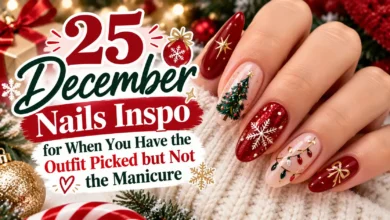
25 Winter Nails Inspiration Ideas for When You Can’t Pick Your Next Manicure


If your saved nail folder has everything from sheer pink to silver chrome, choose what you want to notice first: the color, the reflection, or one small detail. You can narrow the decision before choosing a specific design.
These 25 winter nails inspiration ideas range from brush-only colors to salon effects and patterned accents. Keep your usual comfortable length, then use the notes beneath each image to decide what to keep, simplify, or ask your nail artist to change.

The visuals are AI-generated manicure concepts for dbsguy.com. They illustrate color, finish, and placement; they do not document completed salon work. Real results will vary with your nails, products, and lighting.
Start With the Part You Actually Want to Wear
- A quiet everyday color: compare oat cream (2), mushroom taupe (3), and dusty mauve (4).
- A dark manicure with a small detail: look at espresso and copper (7), green and gold (8), or navy with silver cuffs (9).
- Shine without painted artwork: compare plum velvet (10), icy-blue glaze (11), silver mirror (12), and sheer opal (15).
- An obvious winter reference: start with snowfall dots (16), a snowflake (17), knit texture (18), or plaid (19).
- Something graphic or colorful: try emerald tips (23), tuxedo diagonals (24), or five related blues (25).
Choose the shape before deciding how much art to include. A short oval or squoval can carry the same palette as a longer reference, but a complex accent may need fewer lines. Our short December nail ideas offer more examples of keeping a small detail readable.
1. Sheer Pink With Tiny Silver Dots
If you keep saving elaborate manicures but usually wear barely-there polish, start here. A translucent pink base keeps the natural nail visible, while one small silver dot near each cuticle gives the set a deliberate detail. Short oval nails leave just enough room for both.
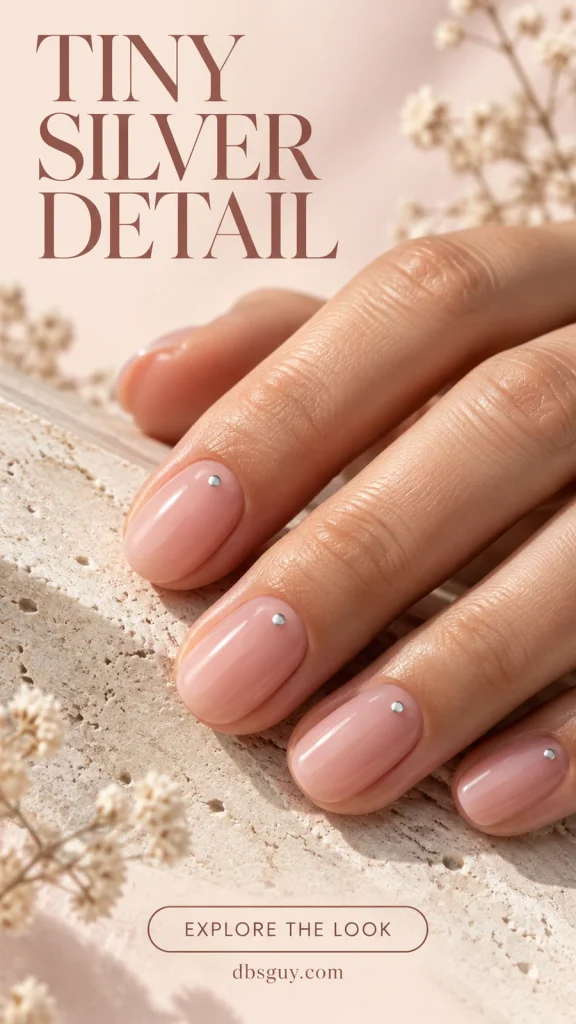
Ask for a tiny metallic dot centered above the cuticle, with a clear gap between the decoration and your skin. The reference has a slightly dimensional shine; a painted silver dot is the smooth-surface alternative. Keep the dots the same size rather than adding a larger accent on the thumb.
2. Glossy Oat-Cream Nails
Oat cream is a warm off-white with a little beige in it. Choose this when your winter wardrobe is mostly camel, cream, and brown and you want an opaque manicure that sits comfortably beside those colors. A short rounded-square shape keeps the result compact.
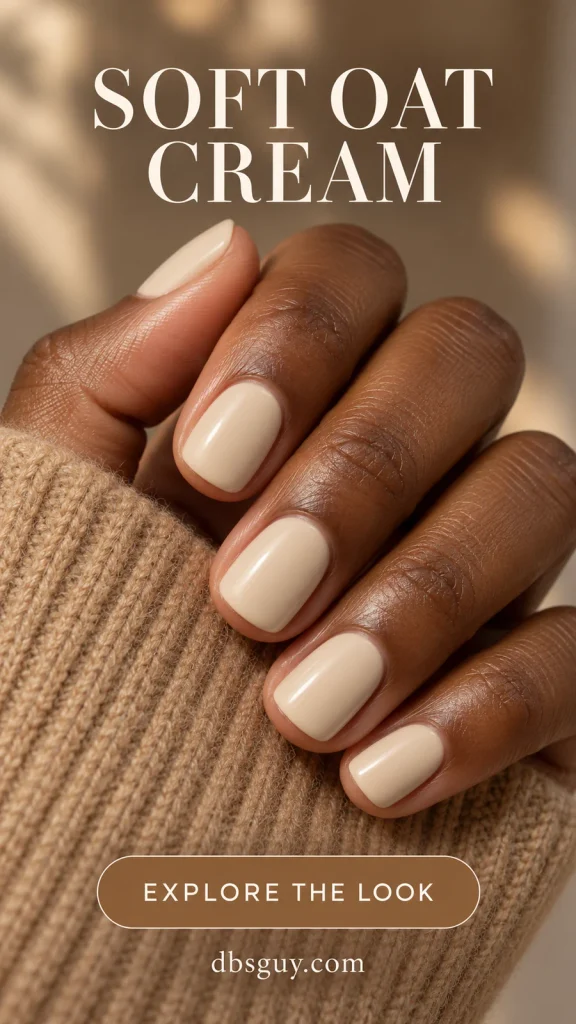
Check the swatch against a white tissue: the beige undertone should be easy to see. Request full, even coverage and gloss, with no pearl finish. If you are painting at home, this is one of the brush-only choices in the list; use thin coats and the drying intervals on your polish label.
3. Matte Mushroom Taupe
A muted gray-brown manicure changes character when the shine disappears. Here, the matte surface is the design, so skip metallic trim and raised decoration. It is a useful pick when you like winter neutrals but want something less familiar than glossy beige.
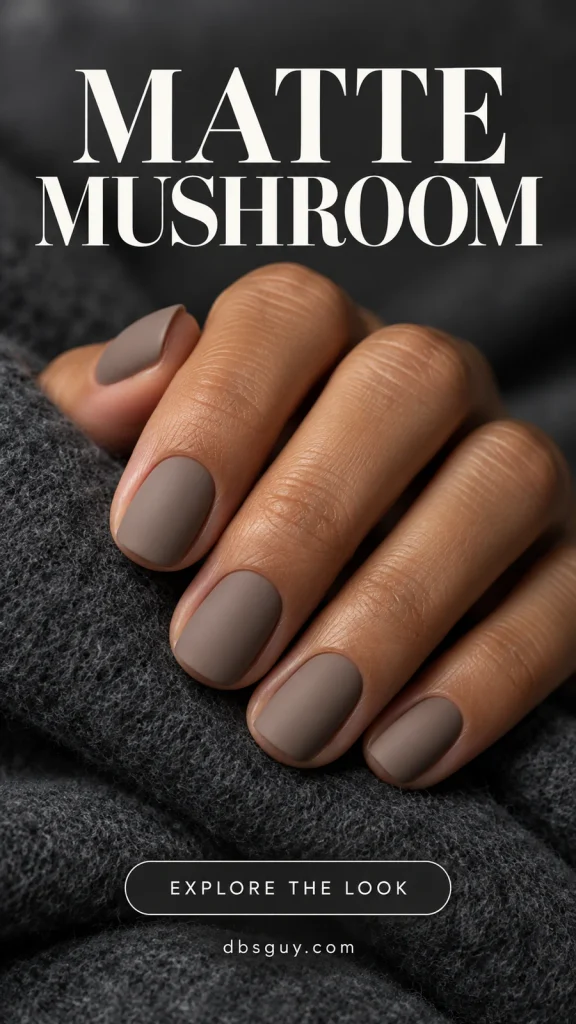
Bring a reference for the finish as well as the color. A taupe with a strong purple cast will look different from a brown-leaning mushroom shade. Ask to see the chosen color with a compatible matte top coat on a sample tip; judging from a glossy bottle can make the final surface hard to picture.
4. Dusty Mauve With a Glossy Finish
Dusty mauve adds color without the brightness of a pink pastel or the depth of burgundy. The muted rose-purple tone works well when you want the manicure to register at a glance but leave your rings and clothes room to stand out.
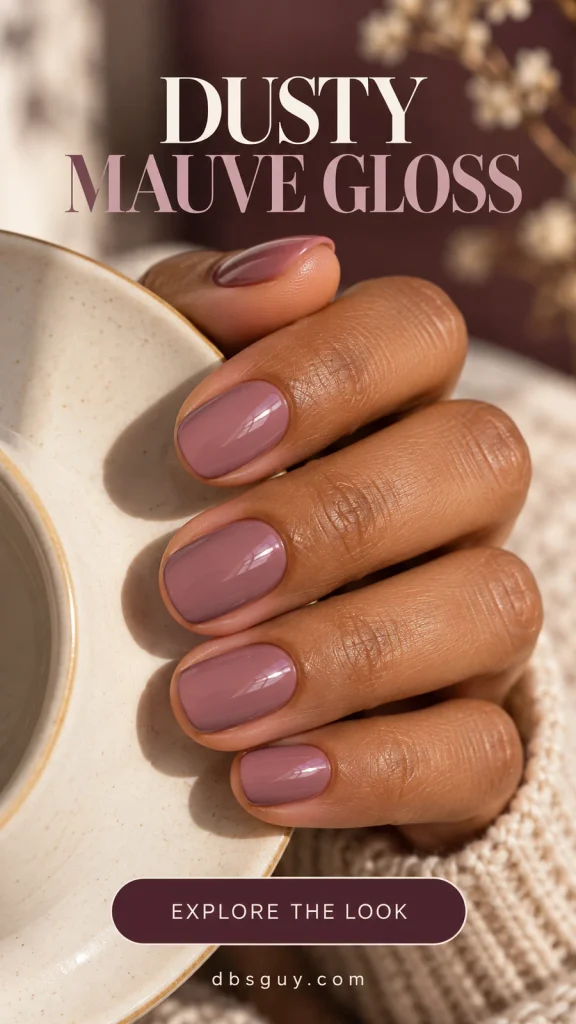
Choose a cream formula rather than shimmer, then keep every nail the same shade. In the reference, the shine comes from the top surface rather than particles in the polish. For a less purple version, ask for a mauve that leans rose; for a cooler effect, compare a gray-lilac swatch beside it.
5. A Barely-There Black Micro French
This is the option for someone who likes a clean base but wants a graphic edge. The black line belongs only at the free edge, leaving most of the translucent beige-pink nail visible. Short oval nails make the tiny dark border the main event.
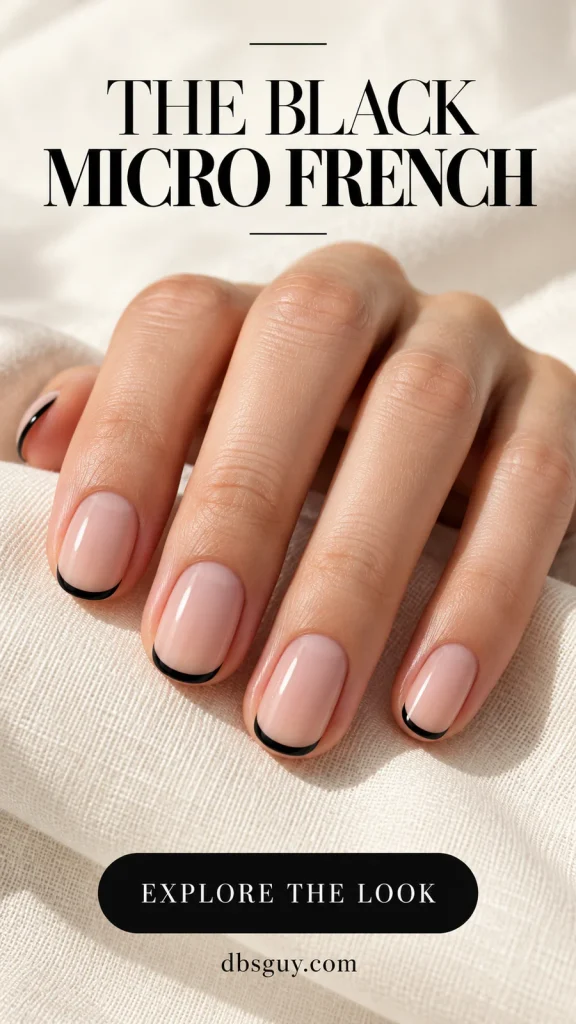
Tell your artist how fine you want the tip before the first nail is finished. If the black band becomes broad, the balance changes quickly. On very short nails, an extremely narrow curved tip can suggest the same idea without painting a deep smile line.
6. Glassy Oxblood on Short Nails
Oxblood is a good starting point when you want a solid dark shade with visible warmth. It is a deep red with a brown undertone, worn here as a glossy manicure without glitter or art. The short rounded-square outline gives the dark color a crisp border.

Compare the shade in daylight and ordinary indoor light. If it looks entirely black in both, move one swatch lighter to keep the red visible. This is also a straightforward way to simplify a complicated saved design: keep its wine color and leave out the decoration.
7. Espresso With One Copper Side Arc
An espresso base and a fine copper curve offer a warm alternative to icy silver. The metallic line follows one side of the ring nail, while the other nails stay plain. That off-center placement gives the manicure movement without a full swirl pattern.
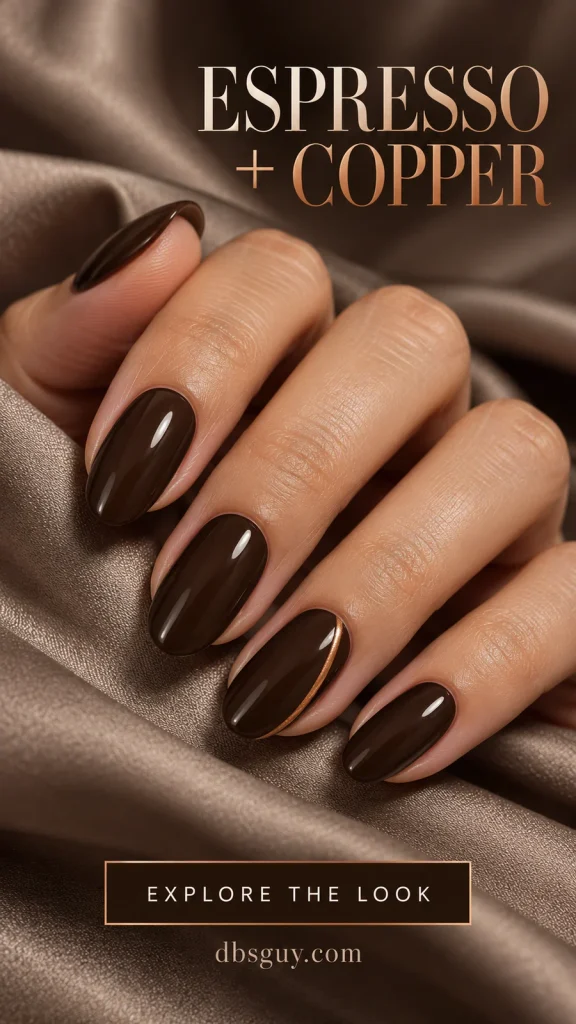
Ask for a flat painted arc rather than a raised metal strip. Leave a sliver of brown beside the line so it stays on the nail instead of touching the sidewall skin. On a short nail, shorten the arc rather than thickening it; the contrast should come from copper against brown.
8. Bottle Green With a Gold Half Moon
This dark-green manicure puts a small gold semicircle at the base of one nail. It is a useful compromise if you enjoy gold jewelry but do not want a fully metallic manicure. Keeping the other nails plain makes the half moon easy to read.

Specify the base of the ring nail when showing the reference; a gold French tip would put the accent at the opposite end. The gold shape should look small beside the green area. If your nail bed is narrow, ask for a shallower moon with clean edges.
9. Midnight Navy With Silver Cuticle Cuffs
A thin silver curve tracing the base of each navy nail gives this set its tailored outline. Compared with the single gold half moon above, these finer silver outlines repeat the same detail across the hand. The tips remain solid navy.
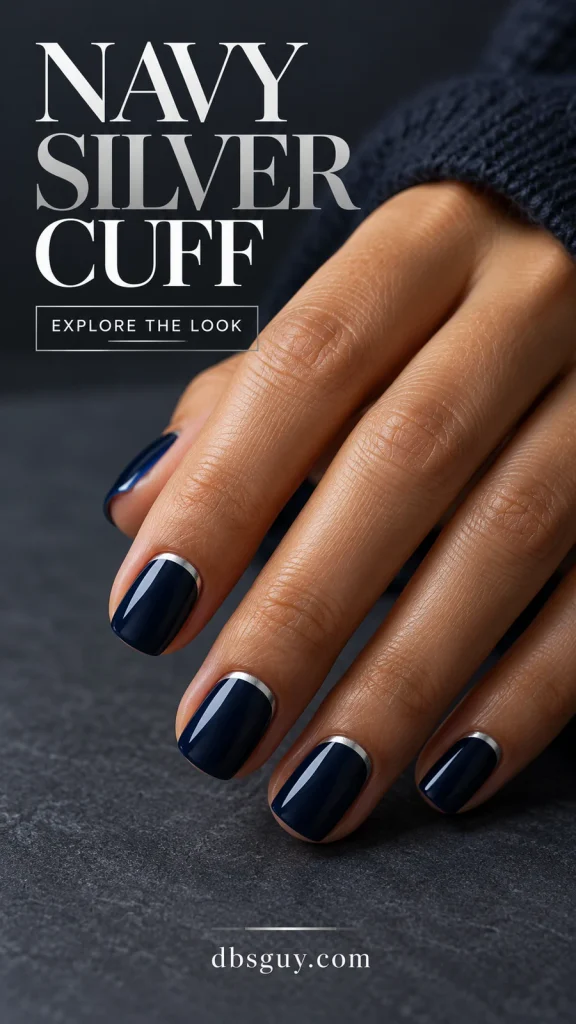
Bring up placement explicitly: silver at the cuticle curve, not a silver French tip. Ask for the line to sit on the nail with a clean margin from the skin. If five cuffs feel busy on your own nails, keep the same line on just the two ring fingers.
10. Plum Velvet With a Soft Glow
Velvet nails offer visual movement without painted motifs. This plum version has a broad lavender-pink glow floating within the darker color. The surface is smooth and glossy; the velvet description refers to the light effect, not a fuzzy coating.
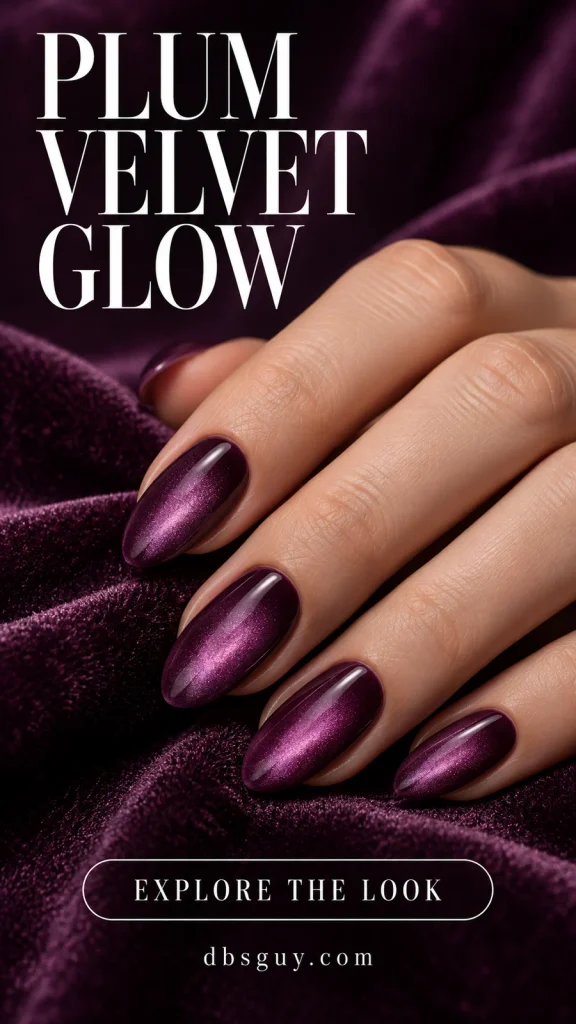
Ask for a diffused magnetic glow instead of a narrow, sharply defined cat-eye stripe. Magnetic products and magnet placement affect the reflection, so a still picture is a starting point rather than a guarantee of an identical result. If available, tilt a sample tip before deciding. More variations appear in our velvet cat-eye guide.
11. Icy Blue With a Pearl Glaze
This look keeps pale blue visible beneath a delicate pearly reflection. It is softer than the full silver mirror manicure that follows, making it a useful choice when you like cool shine but still want an obvious polish color.

Use the words sheer pearl over pale blue when discussing the finish. An opaque metallic layer could hide the blue completely. If you prefer regular polish, look for a pearlescent pale-blue formula as an approximation; compare the actual finish rather than expecting every product called chrome to behave alike.
12. Short Silver Mirror Nails
Silver mirror nails make a statement through reflection alone. A short rounded-square shape gives the metallic surface clean boundaries, and leaving off gems keeps the sharp light-and-dark reflections visible.
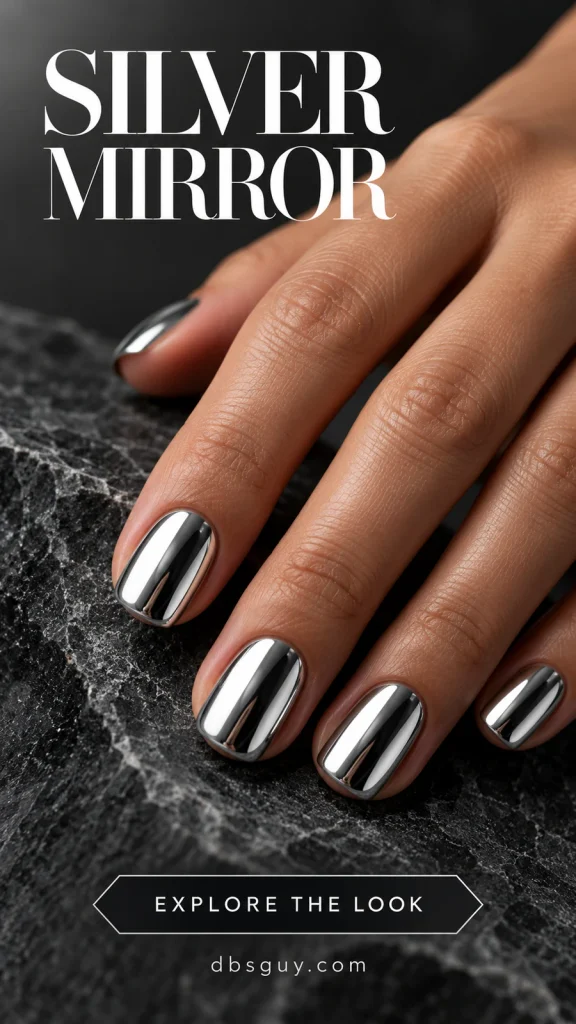
Show your artist that you want a mirror effect, not a silver glitter polish. Those finishes catch light differently: a mirror reads as a reflective surface, while glitter shows separate particles. Keep the length you normally find comfortable; you do not need long extensions to make this color noticeable.
13. Rose-Quartz Marble
For a softer patterned manicure, choose a translucent rose base crossed with wispy milky-white veins. The irregular lines give it a stone-like appearance without turning every nail into a dense drawing. Leave out foil so the pink-and-white movement stays clear.
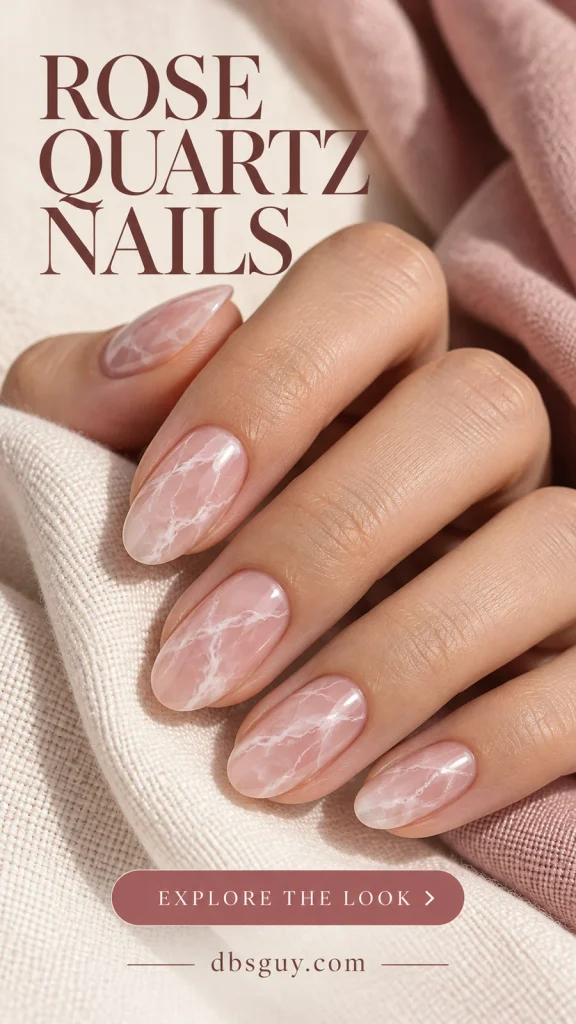
Ask for a few broken, fine veins with plenty of pink space between them. Repeating the exact same stripe on each finger will look more graphic than marbled. On smaller nails, reduce the number of veins; the translucent base is part of the effect, not unfinished space to fill.
14. Smoky Lavender Aura Nails
A lighter lavender center fading into gray-purple edges gives this design a blurred halo. It is a different kind of depth from magnetic velvet: the center-to-edge color placement is the feature, rather than a moving reflection.

Ask for a soft gradient with no hard ring around the center. A medium oval or rounded almond leaves room to see the fade; on shorter nails, use a smaller light center and keep the contrast gentle. Avoid piling a snowflake or glitter over it if the hazy effect is what drew you in.
15. Sheer Opal With a Pink-Green Shift
An opal-inspired manicure starts with a milky translucent base and adds a sheer iridescent reflection. Look for pink and green hints that appear as the hand changes angle. This is the quieter option if mirror silver feels too strong and a flat neutral feels too plain.
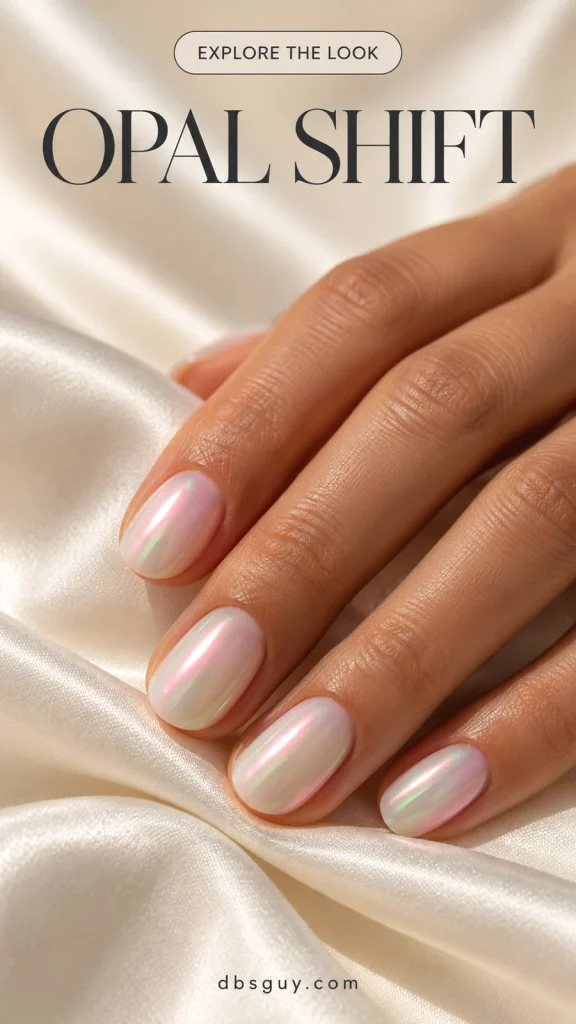
Request a smooth surface with a fine color shift, rather than chunky foil or glitter flakes. The reference is intentionally pale; ask to see the effect over both a sheer base and a more opaque sample if you want to control how much natural nail remains visible.
16. Slate Blue With Sparse Snowfall Dots
A scattering of small white dots suggests snow without drawing individual snowflakes. Keep them on two accent nails and let the rest of the slate-blue set stay plain. Uneven spacing is useful here: neat rows would turn the pattern into polka dots.
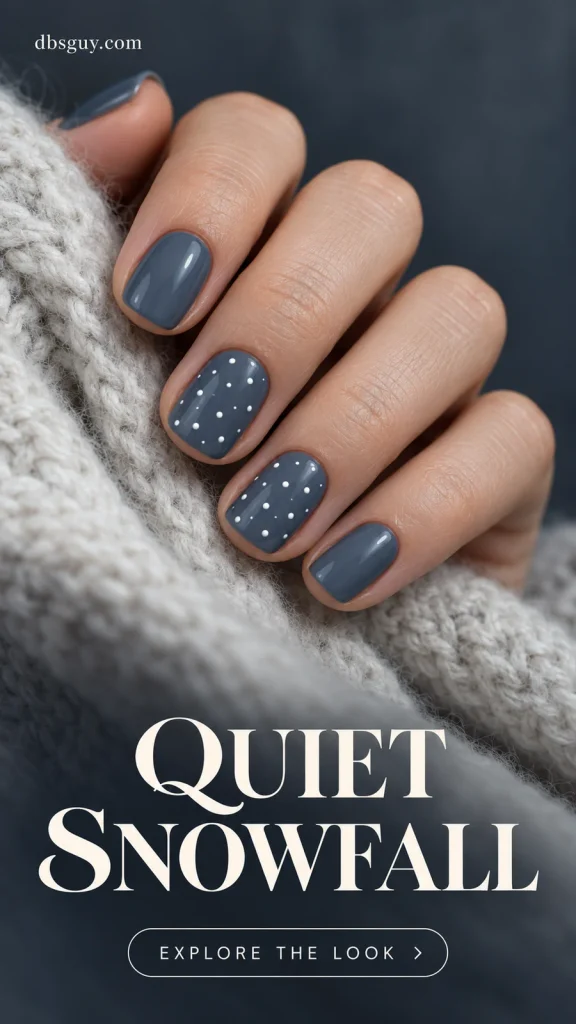
For a home adaptation, practice small dots on a spare surface before touching the manicure. Use only a little white polish and wait until the base is ready according to its directions. Leave clear blue spaces between dots rather than building a solid white patch at the tip.
17. Periwinkle With One Little Snowflake
Periwinkle gives a white snowflake a gentler backdrop than navy. One small motif on the ring nail is enough to make the manicure feel wintry, with the rest of the set left glossy and plain. Choose this when you want a recognizable seasonal detail without a holiday theme.

A six-armed shape with visible space around it will read more clearly than several overlapping flakes. If you use a decal, compare its full width with your nail before applying it. On a narrow nail, choose a simpler snowflake rather than squeezing detailed branches against the edges.
18. An Ivory Cable-Knit Accent
The contrast here is between a raised ivory knit pattern and plain matte taupe nails. Limiting the texture to one finger keeps the braided lines visible and gives you a clear way to try the look before committing to a textured full set.
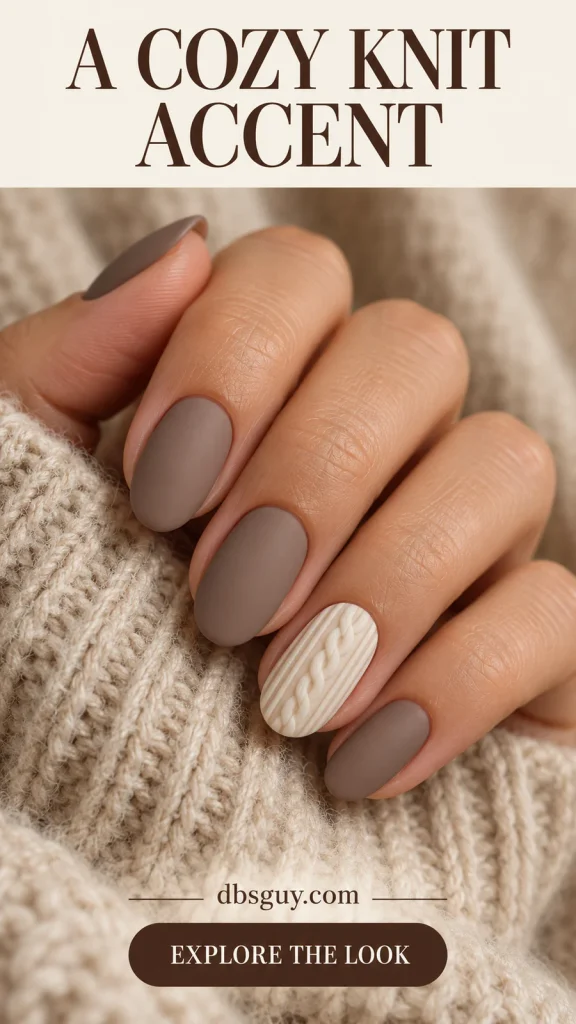
Discuss both the height and placement with your nail artist. The braid should run along the nail with space beside it, rather than becoming a thick mound. If you prefer a smooth manicure, request a flat painted cable pattern instead; it can suggest knitwear, although it will not reproduce the raised reference.
19. Blue-Gray Nails With a Plaid Accent
A plaid ring nail makes this set feel like part of a winter wardrobe. The base is dusty blue-gray, with a small number of navy and white crossing lines. The other nails use the same solid base color, so you are choosing one pattern rather than five competing ones.
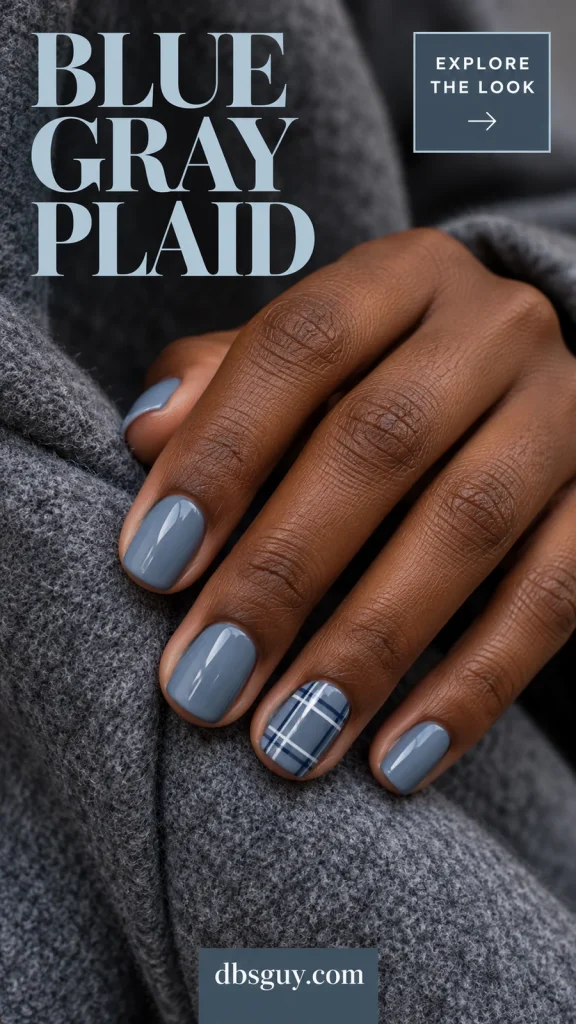
Keep the line widths different: a slightly stronger navy line and finer white lines are easier to separate visually. Ask for a simplified plaid if your nails are short. A dense fabric pattern copied at full detail can become a block of color when reduced to nail size.
20. Burgundy With Amber Tortoiseshell Accents
Amber tortoiseshell warms up a dark burgundy set. Put the translucent amber-and-brown pattern on the middle and ring nails, then keep the thumb, index, and pinky solid burgundy. The two adjacent accent nails make the pattern feel deliberate without covering the whole hand.

Ask for irregular dark patches with amber still visible between them. Evenly spaced spots will read more like an animal print than tortoiseshell. If you want a simpler version, keep only the ring-finger accent; preserve the translucent amber base rather than replacing it with opaque orange.
21. Black Nails With Tiny Silver Stars
A glossy black base gives a few small silver stars plenty of contrast. Keep the celestial art on the ring nail and use flat painted details rather than raised charms if you want the surface to stay smooth.
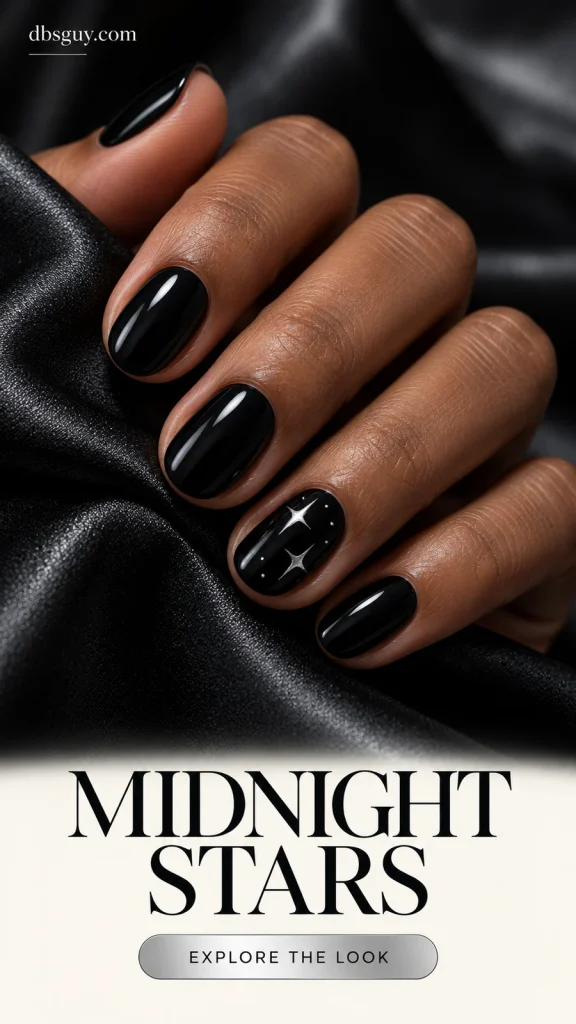
Two small four-point stars and a few dots are enough for this version. Leave black space between them so the shapes do not merge at a glance. This is an evening option that also works after the holidays, since it does not rely on Christmas colors or a dated New Year’s message.
22. Champagne Glitter Gathered at the Base
Move the sparkle away from the tips and gather it near the cuticles instead. A shallow champagne crescent fading into a sheer pink-beige base gives the manicure a dressed-up detail while leaving the outer half of each nail relatively clear.
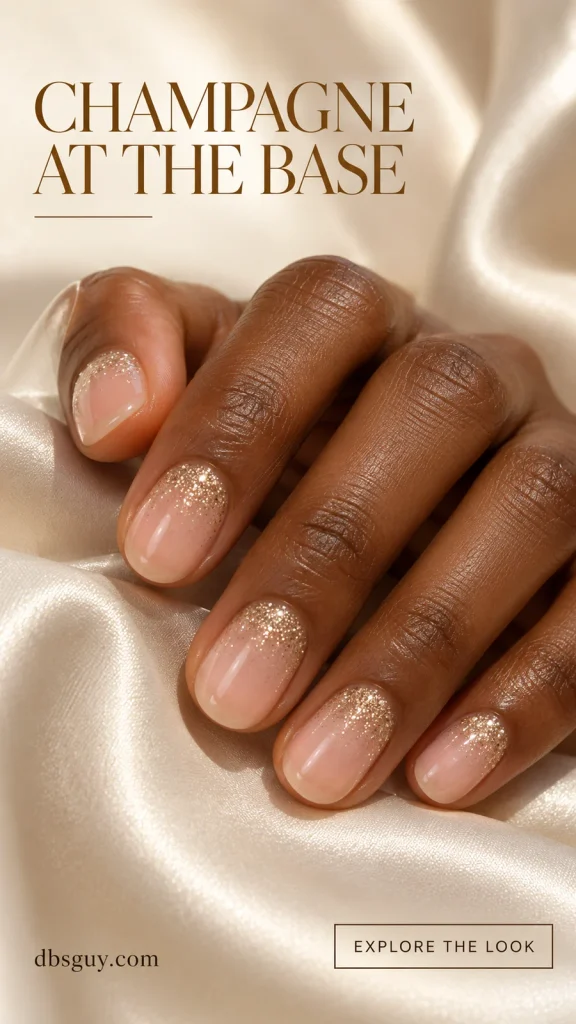
Ask for fine glitter with a soft, scattered edge rather than a thick solid band. The glitter should stop on the nail before the surrounding skin. If you are adapting it with regular polish, use a lightly loaded detail brush to place a small amount of a suitable glitter topper; several heavy dabs can overwhelm the sheer base.
23. Deep Emerald French Tips
Emerald tips put a dark winter color at the ends of an otherwise sheer manicure. This version uses a narrow curved band, leaving the pink base visible. Choose it when you like green but find a fully dark manicure more color than you want.
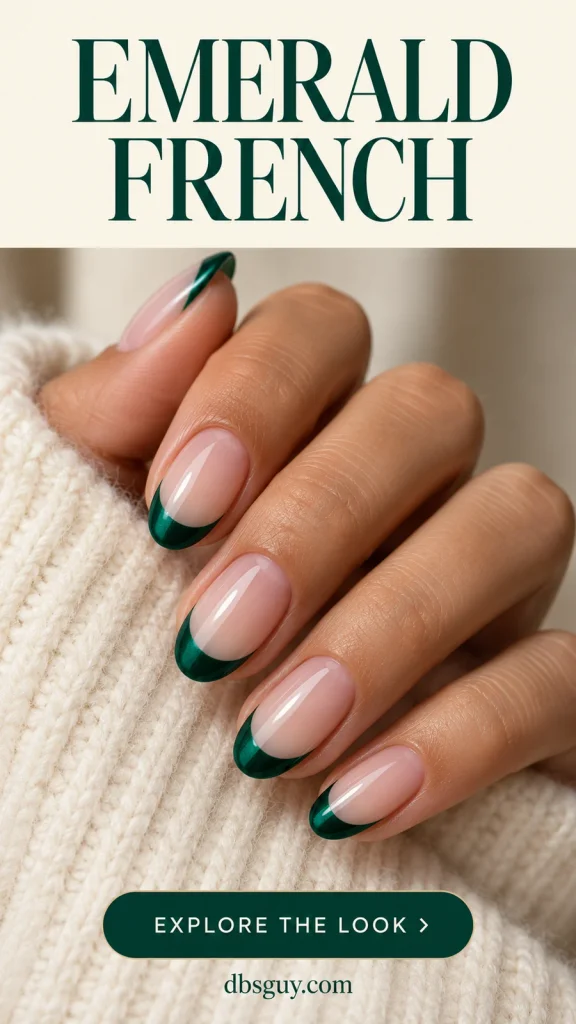
Show the depth of the green as well as the tip shape. A bright grass-green swatch creates a very different effect from deep emerald. On short nails, reduce the band width and follow the natural outline; a deep painted curve can use up most of the visible nail bed.
24. Black-and-Ivory Tuxedo Diagonals
If your saved folder is full of neutrals but you want something bolder, try a sharp diagonal divide. An ivory base and a black section crossing from the tip toward one side create a graphic two-color manicure. There is no need for metallic trim around the border.
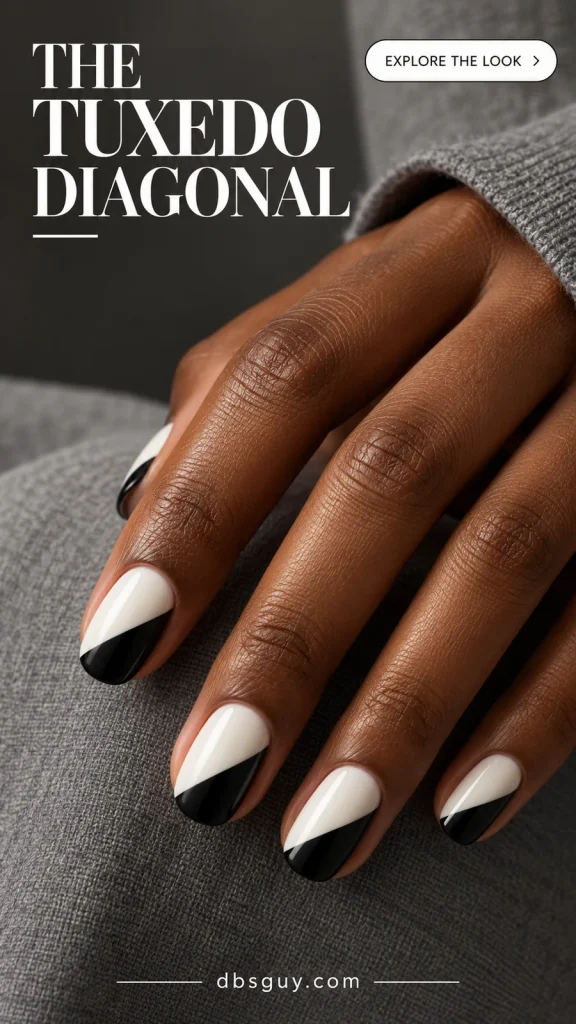
Keep the diagonal traveling in a consistent direction across the visible nails. Ask your artist to adjust the angle to your nail beds rather than copying an identical measurement. The contrast is already strong, so skip extra dots, bows, or glitter that would compete with the clean dividing line.
25. A Five-Shade Winter-Blue Manicure
You can keep the color family even when you cannot choose a single blue. Use one solid shade per nail, progressing from pale icy blue through dusty and denim tones to smoky slate and midnight navy. The interest comes from the sequence, so keep the shape and glossy finish consistent.
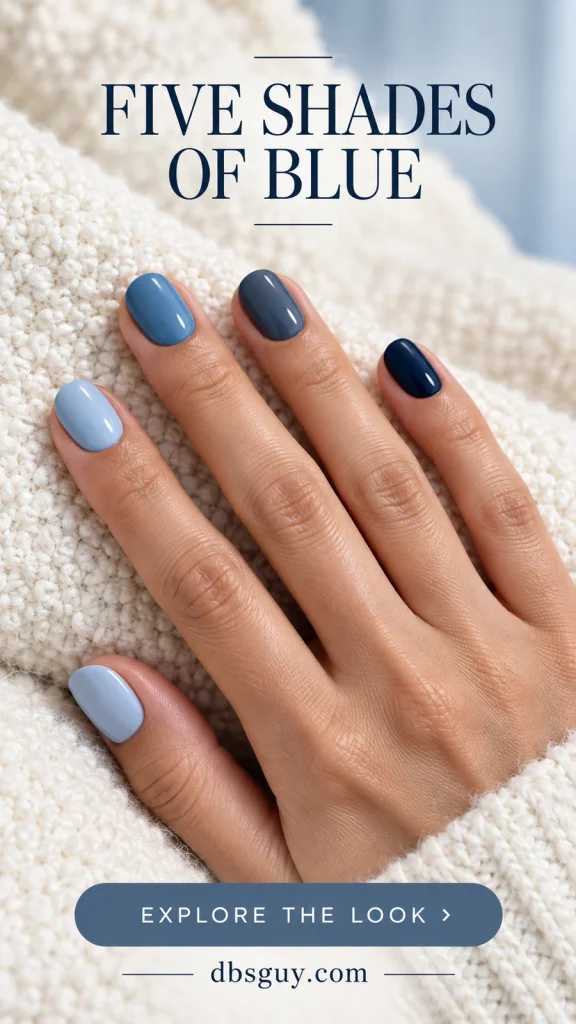
Lay out five painted swatches before starting. Check that neighboring colors are different enough to see, especially the middle three. Use the same order on the other hand if you want a mirrored pair, or repeat the light-to-dark sequence in the direction you prefer. No extra nail art is needed.
Turn Your Favorite Reference Into a Clear Salon Request
Save one main image, then identify the features you actually want: your preferred length, the base color, the finish, and which fingers carry the detail. If you bring a second reference, explain exactly what it contributes. “This color, with that placement” is clearer than asking for both complete designs at once.
For example: “Short oval nails, glossy bottle green, with one small gold half moon at the base of each ring nail. Leave the other nails plain.” Ask whether the service includes the effect or accent before the appointment starts; the materials and extra artwork can change the quote.
If you are choosing between two looks, decide which feature you would miss more. Keep that feature and simplify the rest. For a palette-first choice, our neutral December nail ideas compare more warm and cool options without requiring a full patterned set.
A Few Questions Before You Choose
Which of these winter nail ideas suit very short nails?
Start with oat cream, dusty mauve, oxblood, the tiny silver dots, or the five-blue palette. Their effect does not depend on a large drawing. For a micro French or cuticle cuff, ask your artist to scale the line to the visible nail rather than copying the width from a longer reference.
Can I adapt these looks with regular nail polish?
The solid colors, dots, painted stars, French tips, and some glitter effects can be adapted with regular polish. Fine lines require more brush control. A pearlescent polish may echo the color of a glaze without reproducing a particular chrome finish. Magnetic effects require a magnetic formula; follow its own directions rather than treating all magnetic products as interchangeable.
What is the difference between velvet, chrome, and shimmer?
Velvet describes a soft-looking magnetic reflection. Chrome can refer to a mirrored metallic finish or a sheer reflective glaze, so the word alone does not tell your artist which result you mean. Shimmer has fine reflective particles distributed through the polish. Show the reflection you like and ask to see a sample when possible.
How do I keep a winter manicure from looking specifically Christmas-themed?
Choose a finish, an abstract pattern, or a color sequence rather than ornaments or holiday characters. Taupe, plum velvet, rose-quartz marble, opal, and the blue palette all work without a Christmas motif. Snowfall and a single snowflake are also winter-weather references if you still want a seasonal detail.
What should I keep in mind if I choose gel?
A design reference is not a product application guide. Follow the chosen system’s instructions, including its compatible lamp and curing directions. The American Academy of Dermatology’s gel-manicure guidance recommends protecting hands from curing UV with broad-spectrum, water-resistant SPF 30 or higher sunscreen, or dark opaque gloves with the fingertips removed. It also advises against picking off gel. Arrange suitable removal rather than peeling away a lifting manicure.