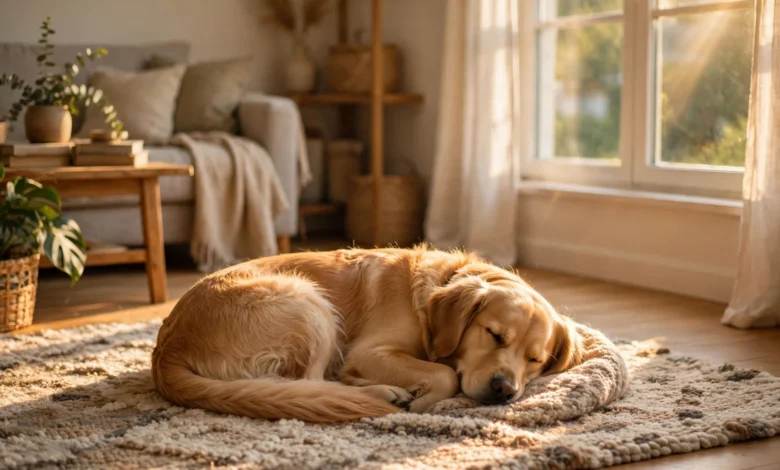
It is one of the hardest urges to resist as a dog owner. Your dog is curled up on the rug, fast asleep, looking impossibly peaceful, and all you want to do is scoop them up, bury your face in their fur and give them a cuddle. It feels like affection, and in your heart it is. But from your dog’s side of the moment, being woken suddenly can feel very different. A sleeping dog is not choosing to ignore you, and a dog that reacts badly to being startled awake is not being naughty. They are simply a creature whose instincts are still very much intact, even in the middle of your living room. Understanding what is going on in those few seconds can change how you handle the moment, and it can keep both you and your dog safe.
1. A Sleeping Dog Is Not Ignoring You — It Is Deep in Rest
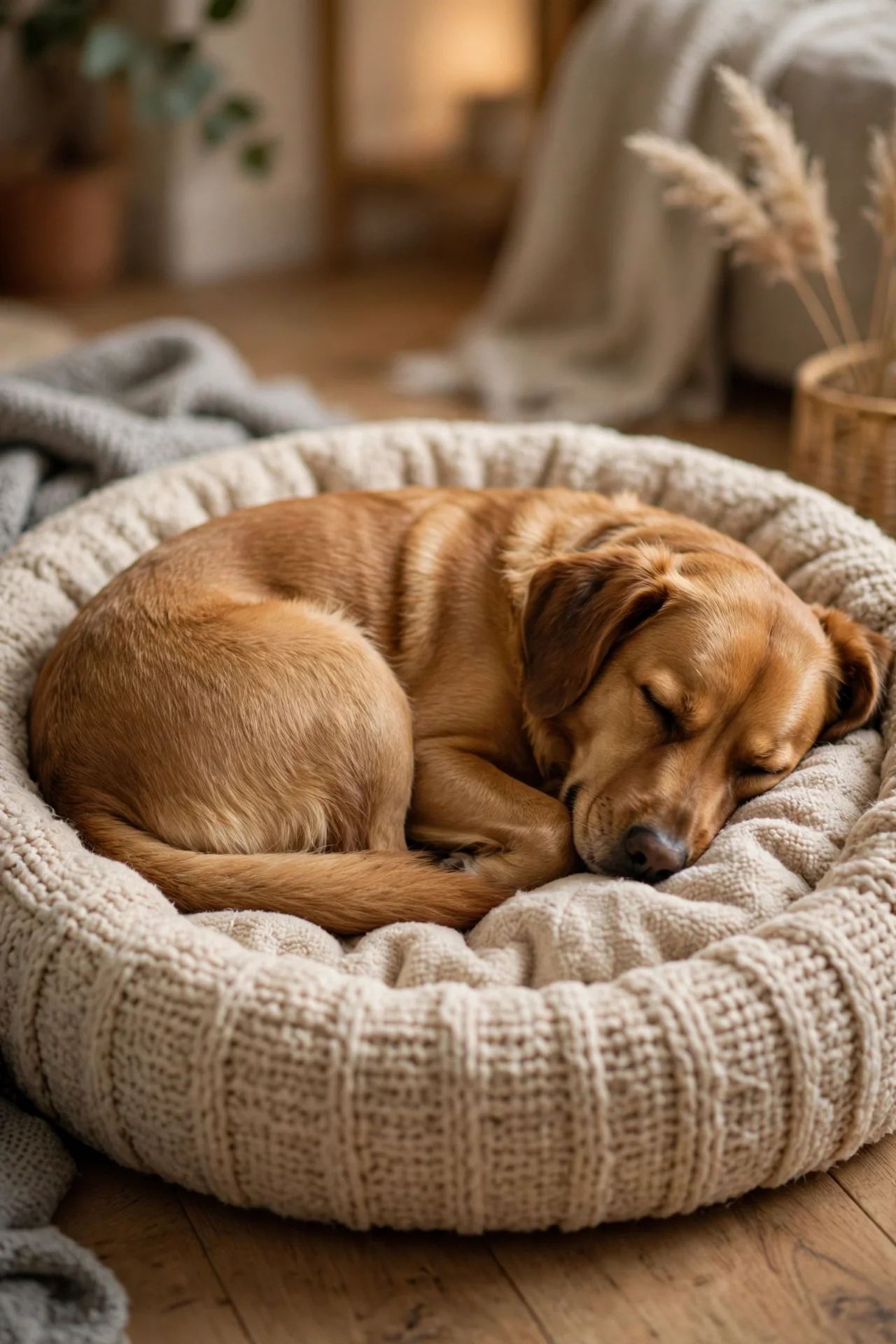
Dogs sleep a great deal more than people do, and they need that sleep just as much as we need ours. An adult dog may sleep for twelve to fourteen hours a day, and puppies and older dogs often sleep even longer. Much of that sleep is light dozing, but dogs also fall into deep sleep, the stage where their bodies repair and their brains process the day. A dog in deep sleep lies limp and breathes slowly, and may even dream, paws paddling gently as if chasing something in their sleep. When you see your dog like that, you are looking at an animal that is properly switched off. They are not being lazy, and they are certainly not ignoring you. They are doing exactly what their body needs them to do, and that rest is part of what keeps them healthy, calm and happy during their waking hours.
2. Why a Sudden Wake-Up Can Feel Like a Threat
Imagine being shaken awake in the middle of the night by someone grabbing you before you have even opened your eyes. You would not feel loved in that first second — you would feel alarmed, and your body would react before your brain had time to catch up. Dogs experience something very similar. A dog that is woken suddenly, especially by touch, has no time to work out who is there or what is happening. For a split second, their ancient instincts take over, and those instincts say one thing: something has got hold of me, and I need to protect myself. Even the most gentle, well-loved family dog can react in that moment, because the reaction happens faster than thought. It is not a decision, and it is not personal. It is a reflex, built into every dog, that fires before the part of the brain that recognises you has had a chance to switch on.
3. What a Startled Reaction Actually Looks Like
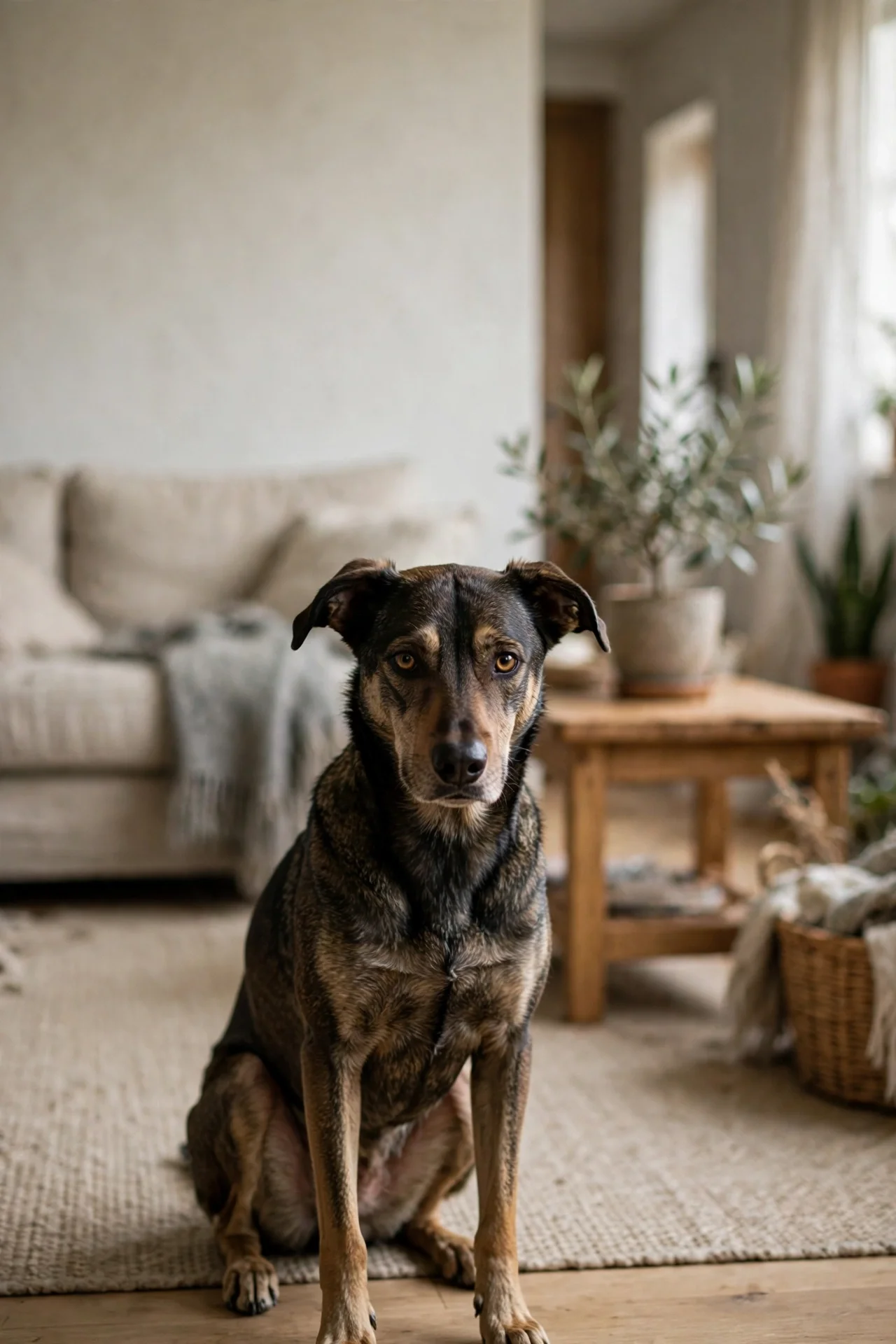
A startled dog does not always snap, and it is worth learning the quieter signals too, because those are the ones most people miss. A dog that is suddenly woken may growl, and that growl is a warning, not an act of defiance — it is the dog saying, in the clearest language it has, that it is frightened and needs space. Some dogs snap at the air, a short, sharp warning bite that does not connect but means business. Others react by moving away fast: they scoot backwards, scramble to their feet, or bolt out of the room entirely. Some hide, squeezing under furniture or into a corner, and some tremble or shiver once the moment has passed. And some simply freeze and fix you with a hard, unblinking stare, their body gone stiff. None of these reactions means you have a bad dog. The dog that growls when startled awake is communicating honestly, and that honesty is something to be grateful for, not punished.
4. Every Dog Reacts Differently
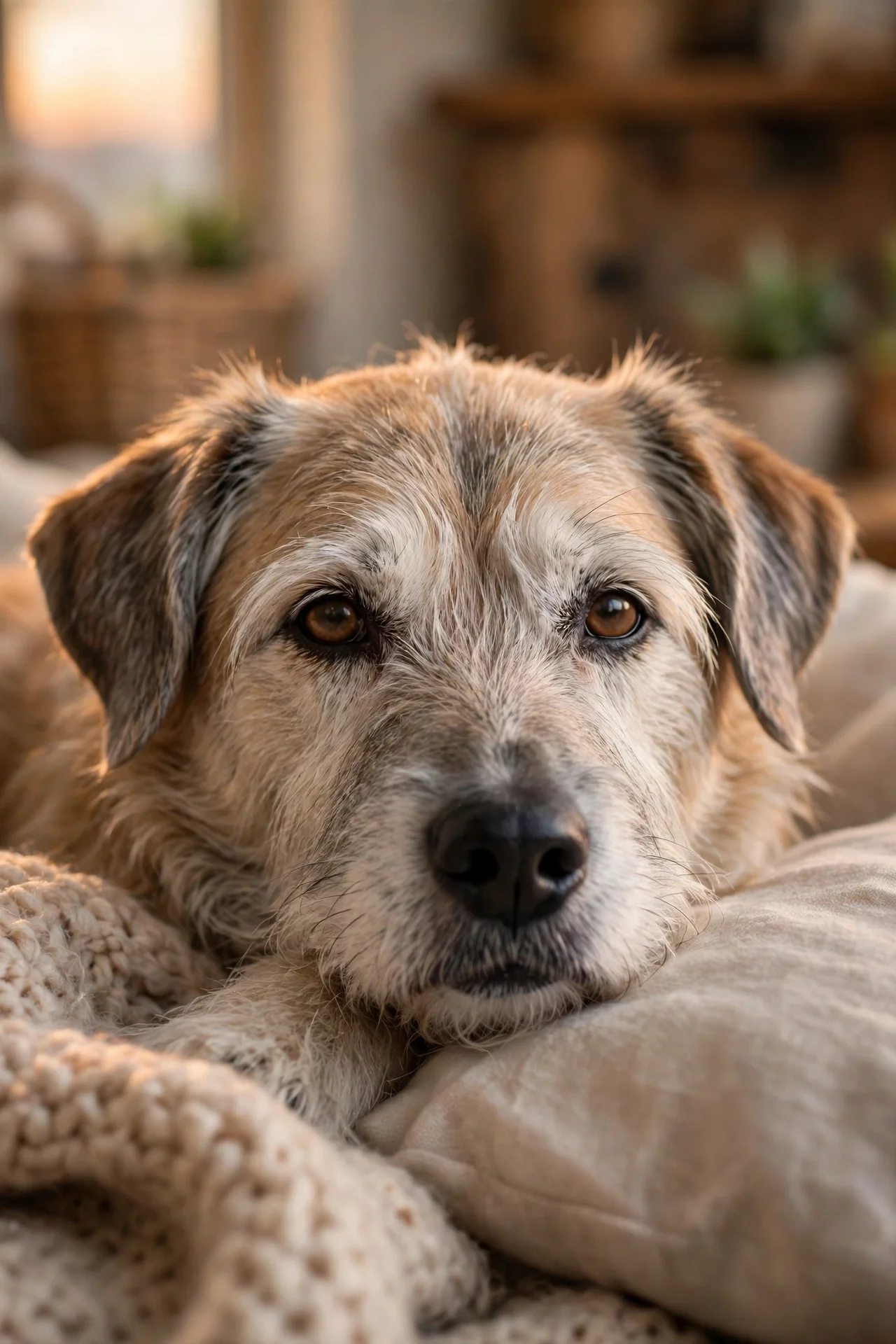
Not every dog will react the same way, and that is where knowing your own dog really matters. A confident dog that trusts you deeply may simply blink, sigh and go straight back to sleep when disturbed. A nervous dog, or one that has had a difficult past, may react far more strongly, because for them the world has not always been safe. Age plays a part too: older dogs can be stiffer and more easily startled, especially if they are in pain, and puppies are still learning what is safe and what is not. Deaf dogs deserve special thought, because a dog that cannot hear you coming has no warning at all — a touch out of nowhere is the only signal they get, and it can be genuinely terrifying. There is no single rule for every dog, only the rule that fits the dog in front of you.
5. The Gentle Way to Wake Your Dog
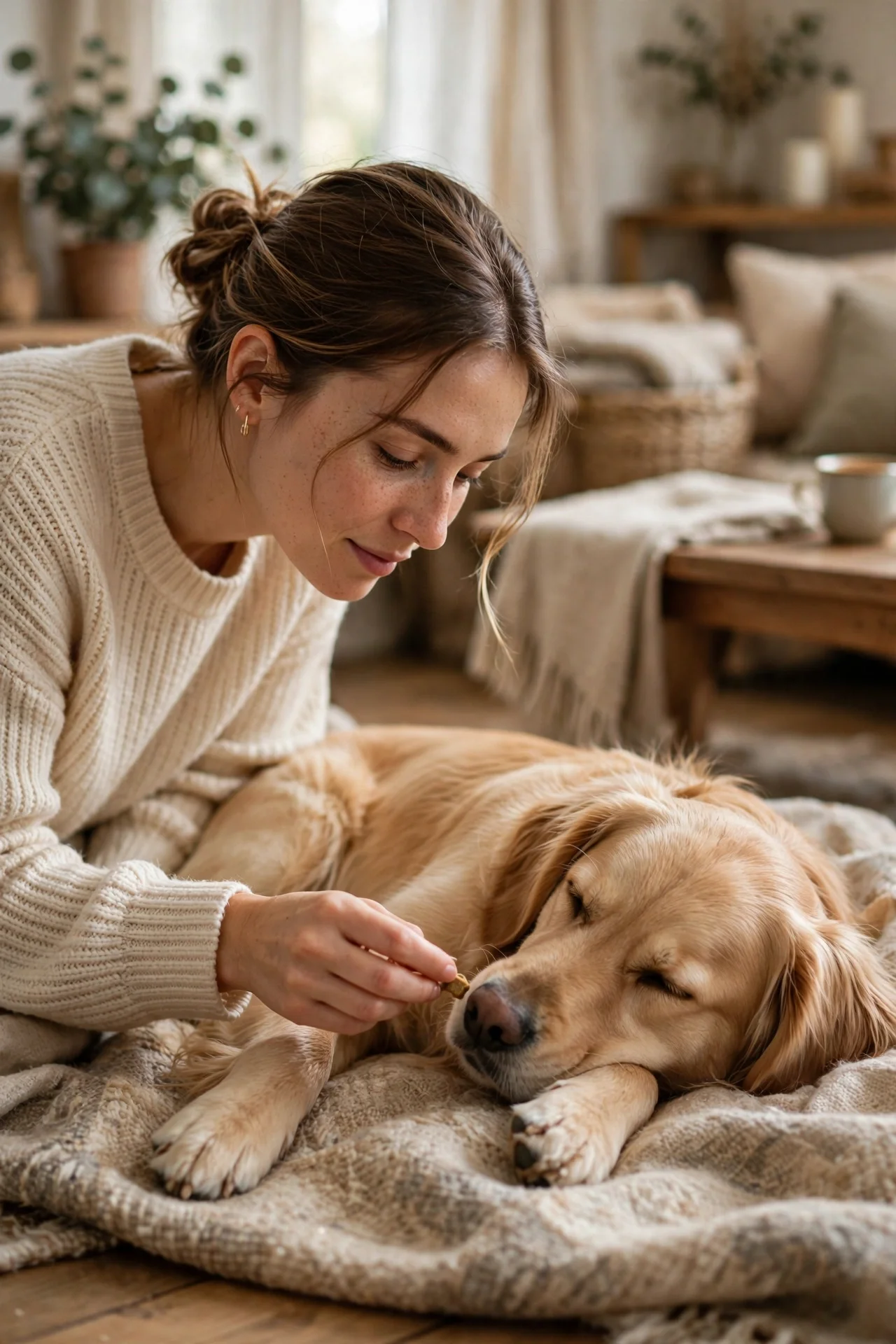
The good news is that you do not have to avoid your sleeping dog altogether — you just need to wake them the right way, with a little patience. The simplest approach is to say their name softly from a short distance away, giving them a moment to hear you and stir on their own. You can also make a gentle, familiar sound, like crinkling a treat bag or squeaking a favourite toy, which gives them a happy reason to wake up. For a deaf dog, scent works beautifully: hold a smelly treat near their nose and let the smell do the waking, so they come round gradually and pleasantly. Once your dog has opened their eyes, give them a few seconds to reorient — let them blink, stretch and realise where they are and who you are. Then let them come to you.
6. Teach Kids and Guests the Same Rule
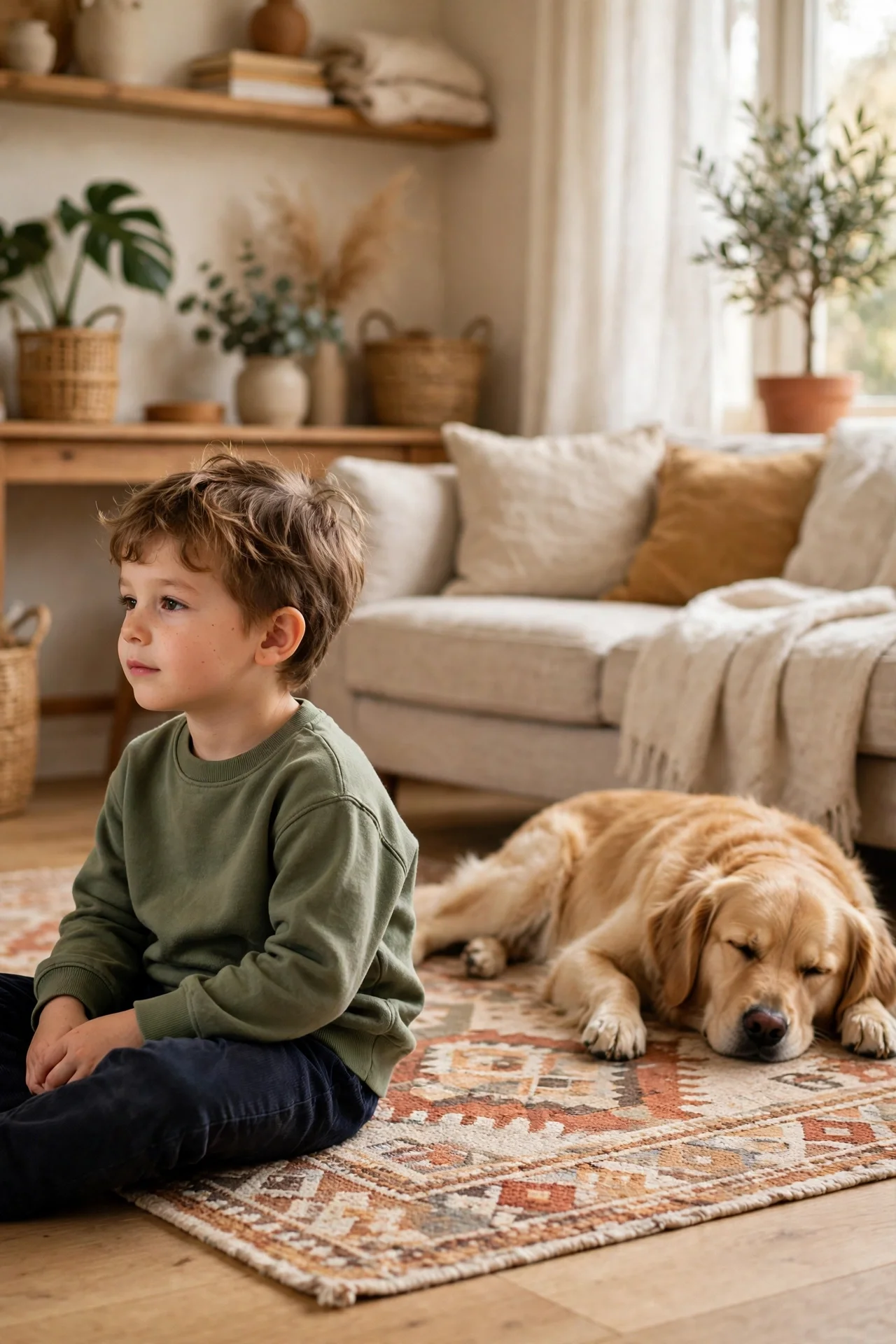
This rule matters most with the people who love your dog but do not live with them every day. Children, in particular, often cannot resist a sleeping dog, and their instinct is to dive straight in for a hug. It is worth teaching them early, calmly and without making the dog sound scary, that a sleeping dog is a dog we leave alone until they wake up on their own. The same goes for guests and visiting family members, who may not know your dog’s habits and may assume that any dog is always happy to be cuddled. You are your dog’s advocate, and part of that job is speaking up for them when they cannot speak for themselves. A simple, friendly line — “let’s let her wake up first, then she’ll come to you” — protects everyone in the room. It protects your guests from a startled snap, it protects your children from a fright, and it protects your dog from being put in a situation they never asked for.
7. When a Change in Sleep or Behaviour Deserves a Vet Visit
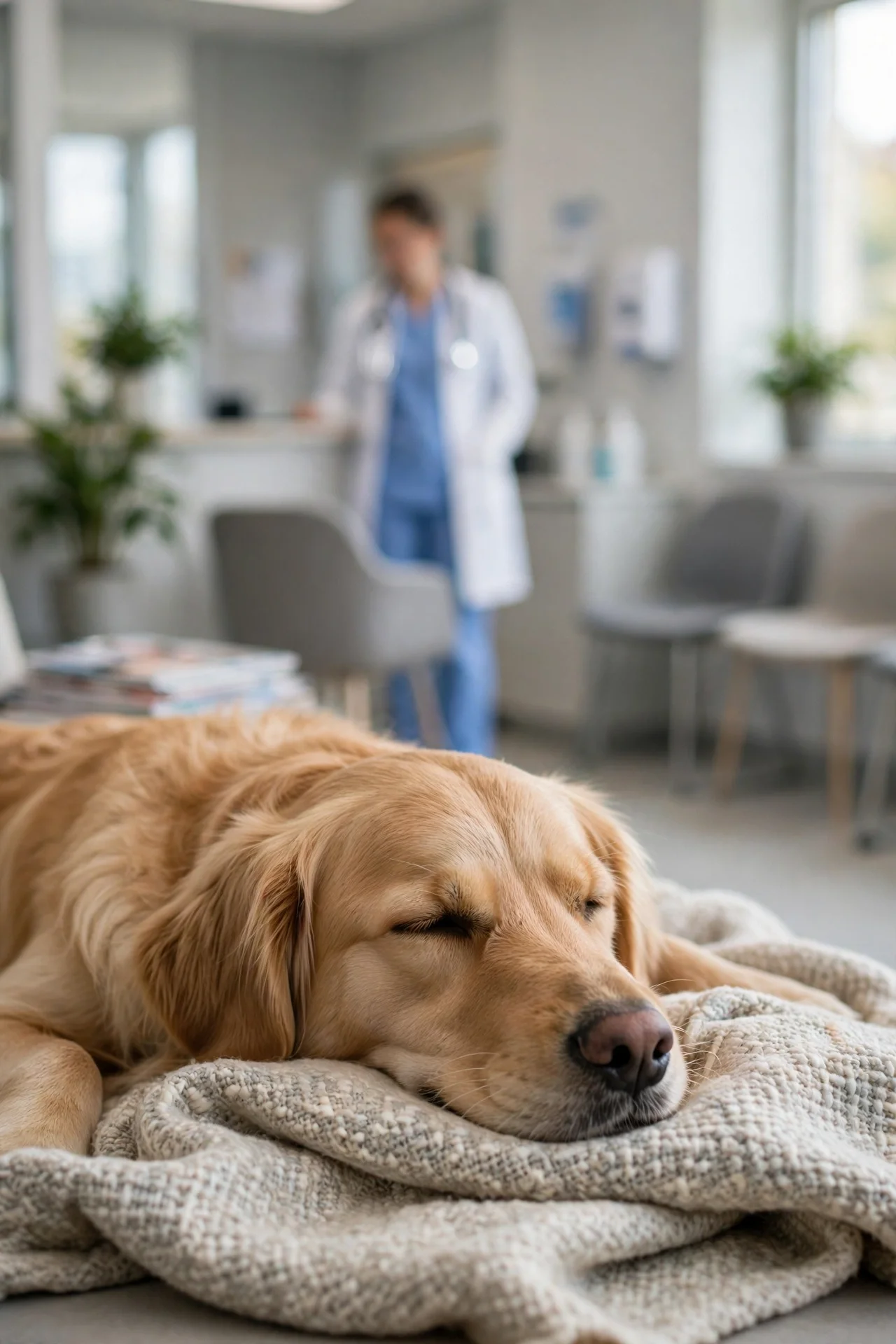
Most of the time, a dog that startles when woken is simply being a dog, and a gentle wake-up routine is all that is needed. But it is worth paying attention if something changes. If a dog that used to sleep peacefully suddenly starts reacting much more strongly to being woken, or if their sleep patterns shift noticeably — sleeping far more than usual, or seeming restless and unable to settle — that can be worth a conversation with your vet. The same applies if a dog that was once relaxed about being touched suddenly flinches, growls or pulls away from contact they used to enjoy, as that can sometimes be a sign of pain or discomfort rather than mood. But a vet can check for pain, hearing loss or other health issues that might be making your dog more easily startled, and ruling those out gives you peace of mind and your dog the best chance of feeling comfortable again.
At the end of the day, the urge to cuddle a sleeping dog comes from a good place, and nobody is suggesting you stop loving your dog. The point is much simpler, and much kinder: let them wake up first. A few seconds of patience, a soft word, a familiar sound or a tempting smell, and your dog will come to you ready for affection, eyes open and tail wagging, instead of startled and confused. That small change costs you nothing, and it tells your dog something important — that their rest matters to you, and that their boundaries will be respected even when they are asleep.