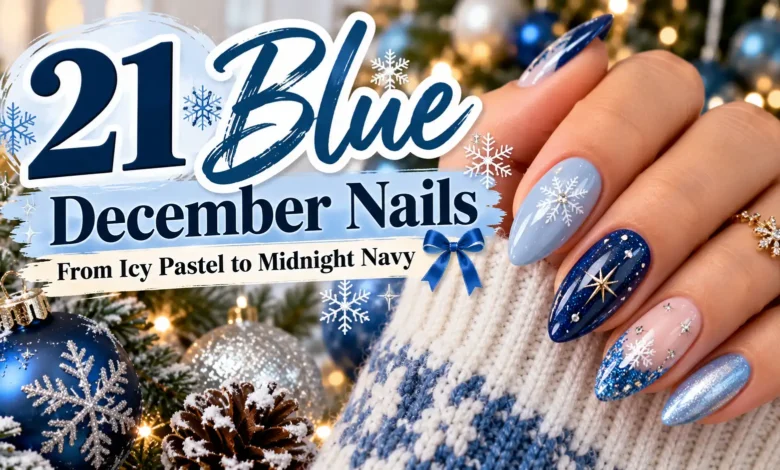
For a soft December manicure, start with icy blue cream, a milky pearl finish, or a powder-blue micro French. If you want more contrast, try sapphire velvet or midnight navy. White artwork brings in a snowy detail; silver adds shine without changing the blue color story.
These 21 blue December nails move from pale and quiet to deep and dressy. Each idea includes the detail that makes it different, a clear salon request, and a way to adjust it to your nail length. Choose the shape you already like wearing before adding extra length just to fit a design.
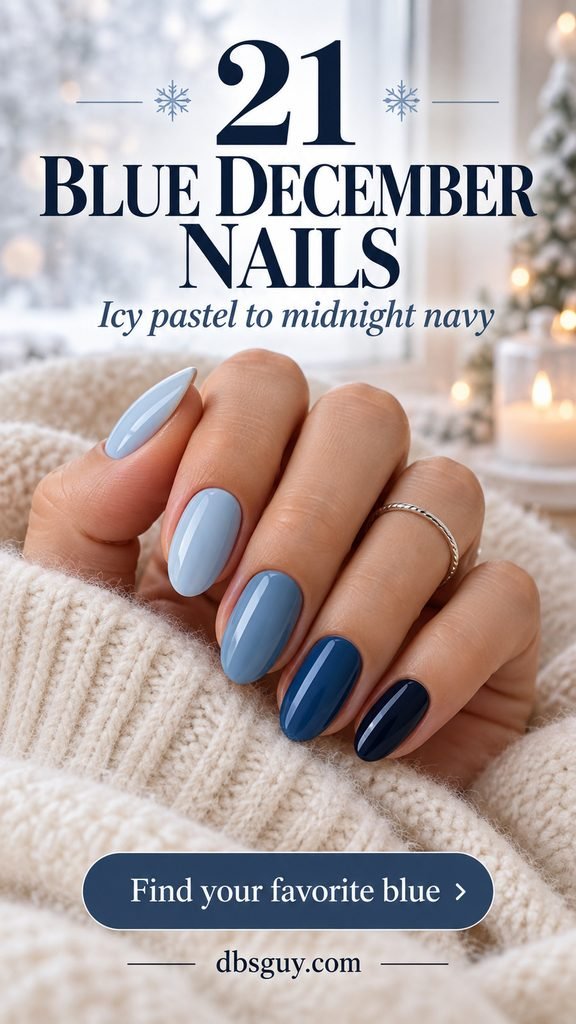
The images are AI-generated nail-design concepts, not photographs of completed or tested manicures. Use them to discuss color and placement with your nail artist; actual polish, finish, and small details will vary.
Find Your Blue December Look
Want an easy regular-polish option? Start with the solid pastel in #1, the snow dots in #7, or glossy navy in #18. For a little artwork on short nails, compare the single snowflake in #5 with the windowpane accent in #9. For evening light, look at the magnetic glow in #12 or the silver gradient in #21.
Choose blue in daylight beside your hand. An icy shade can lean white, green, or lavender, while very dark navy can look almost black indoors. Ask to see a finished swatch with the intended top coat, especially when deciding between matte, pearl, and magnetic effects.
1. Icy Pastel on Short Rounded Nails
An opaque, pale blue cream gives you the winter palette without adding a holiday motif. Short rounded edges keep the look soft; a glossy finish gives the flat color a little reflected light. This is a useful starting point if you want your manicure to work with both a sweatshirt and a dressier coat.
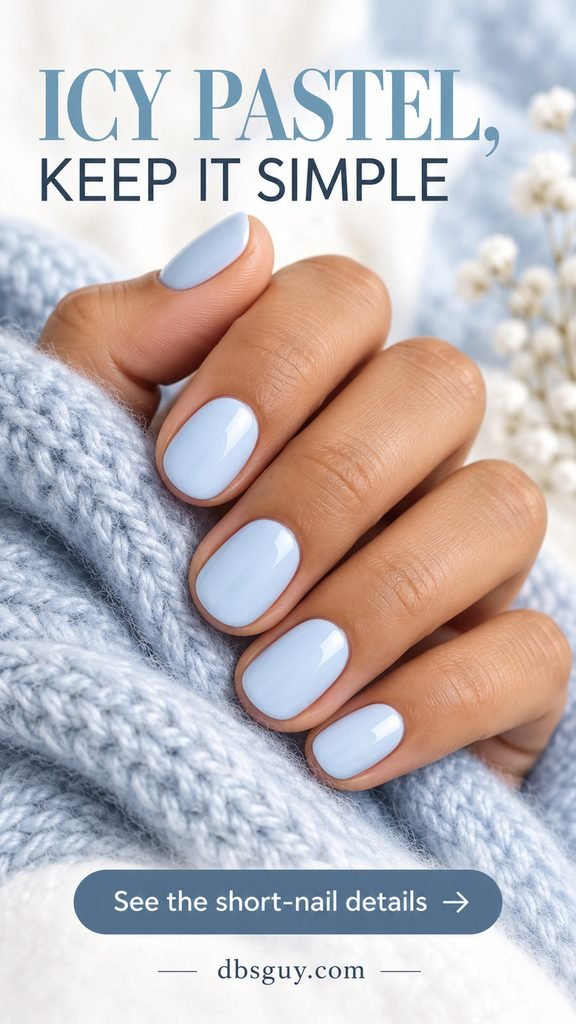
Ask for a very pale blue cream on short round or oval nails, with no shimmer. For a home manicure, use the number of thin coats your polish needs for even coverage and let each dry as directed. If the swatch looks nearly white, move one step deeper in blue rather than adding decoration.
2. Milky Blue With a Pearly Sheen
This version trades opaque cream for a softer, milky base with a fine pearly glow. The blue stays light, but the surface changes as it catches the light. It is a gentle choice for December dinners when you want something more reflective than plain polish without a mirror-chrome finish.
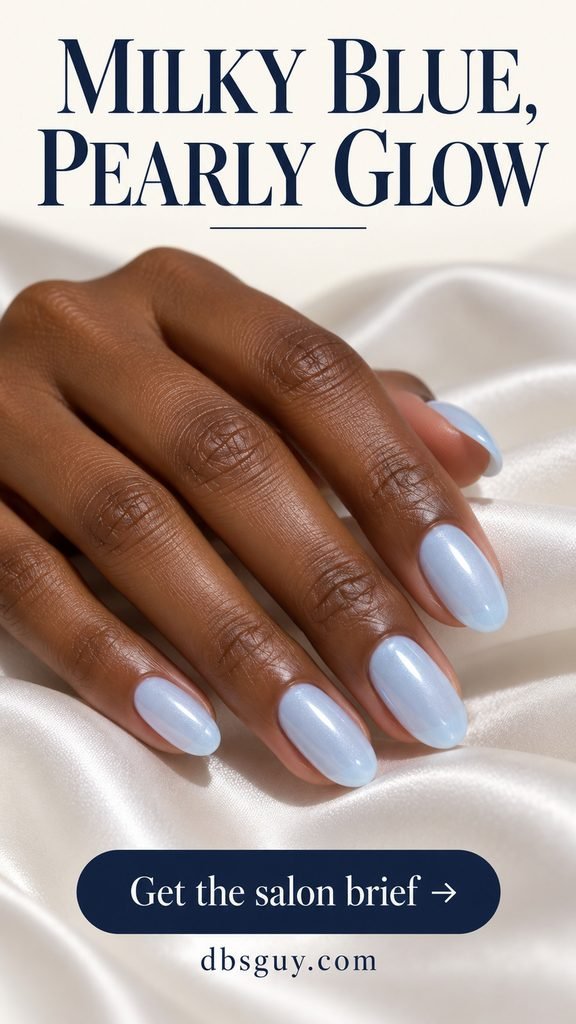
The salon brief: milky pale blue, a smooth pearl sheen, and an oval shape. Ask how much of your natural nail line will remain visible; milky does not necessarily mean full coverage. On short nails, keep the same finish and skip an accent so the subtle sheen remains easy to see.
3. Powder-Blue Micro French Tips
A very thin blue tip leaves most of the nail sheer, so you get a trace of winter color rather than a full blue manicure. The short squoval shape makes the line feel crisp, while a rosy nude base keeps the overall look familiar if you usually wear French tips.
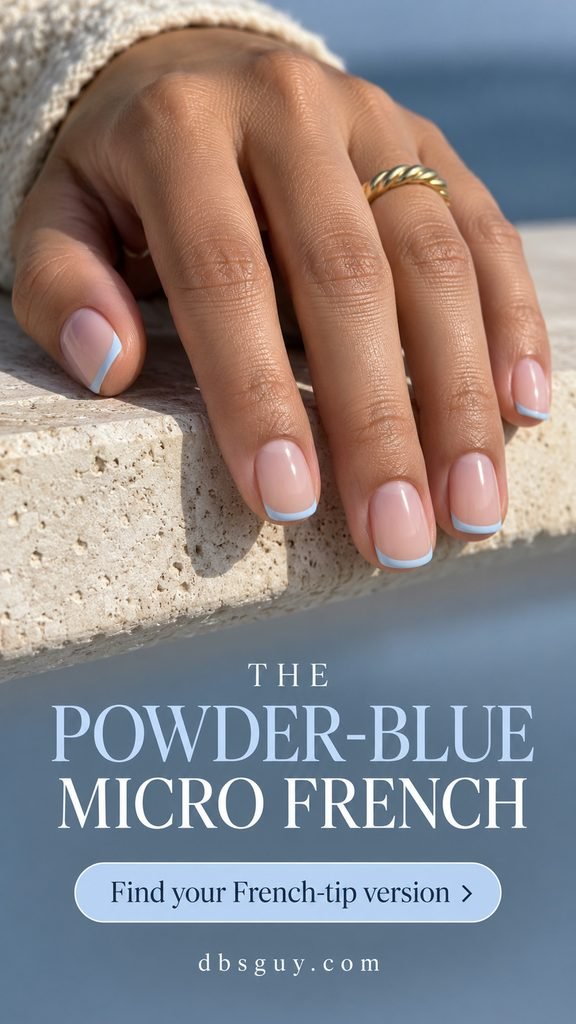
Ask for a sheer base that suits your skin and a fine powder-blue line following the free edge. Have the artist show the width on one nail first: a deep blue band changes the proportions. If your nails have almost no free edge, a hairline of blue can still suggest the design without drawing a large artificial tip.
4. Milky-to-Glacial Blue Ombré
Here, the color travels along each nail: milky near the cuticle, gradually becoming glacial blue at the tip. That soft transition gives the impression of frost without snowflake artwork. The medium almond shape in the concept leaves enough room to see both colors and the blend between them.
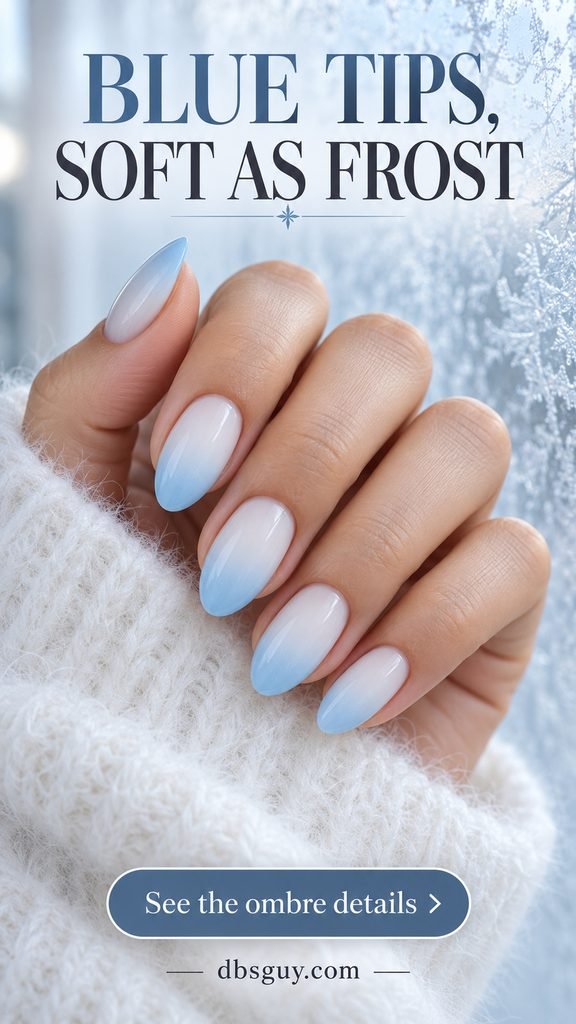
Show your artist the direction of the fade, not just the two shades. Ask for a gradual milky-to-blue blend with no hard stripe. On shorter nails, use a smaller area of blue near the ends and keep the rest softly milky; trying to fit several color bands into the fade can make it look crowded.
5. One White Snowflake on Powder Blue
A single white snowflake gives a powder-blue manicure a clear winter detail while leaving the other nails quiet. Put it on the ring nail, with a little blue visible around its branches. A couple of tiny snow dots can sit nearby without turning the whole hand into a pattern.
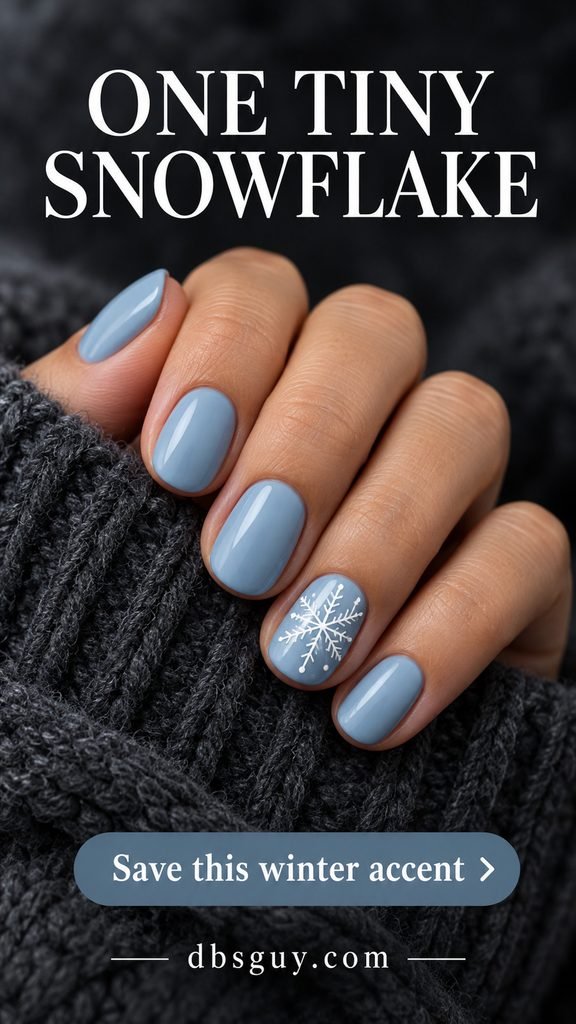
Ask for glossy powder blue and one fine white snowflake accent. Bring a close reference so the artist can judge how much detail fits your nail. For very short nails, choose a smaller, simpler flake or a partial flake near one side; thick branches packed edge to edge will lose the delicate effect.
6. Ice Blue With Scattered Silver Foil
Small, irregular silver fragments give pale blue a different kind of shine from glitter. Keep them clustered toward one side of the ring nail, near the tip, so the placement looks airy. The plain neighboring nails make those few reflective pieces easier to notice.
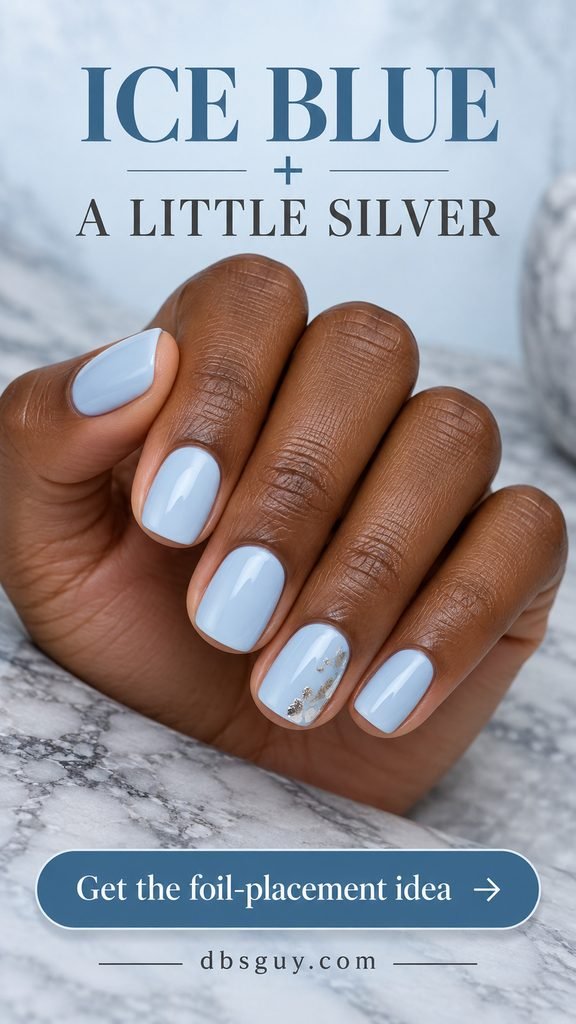
Request pale icy blue on short squoval nails with a sparse silver-foil accent. Specify silver if you want this cool palette; gold would change the mood. Ask for a smooth, sealed surface rather than exposed edges. If you prefer to do the look with ordinary polish, a few flat silver nail-art flakes can suggest the same placement when used according to their instructions.
7. Periwinkle With Snow Dots
A blue-leaning periwinkle is a useful middle ground when baby blue feels too pale and cobalt feels too bright. Tiny white dots on two neighboring nails bring in a snowy reference without detailed linework. Keep the remaining nails plain so the dots have a clear place in the set.
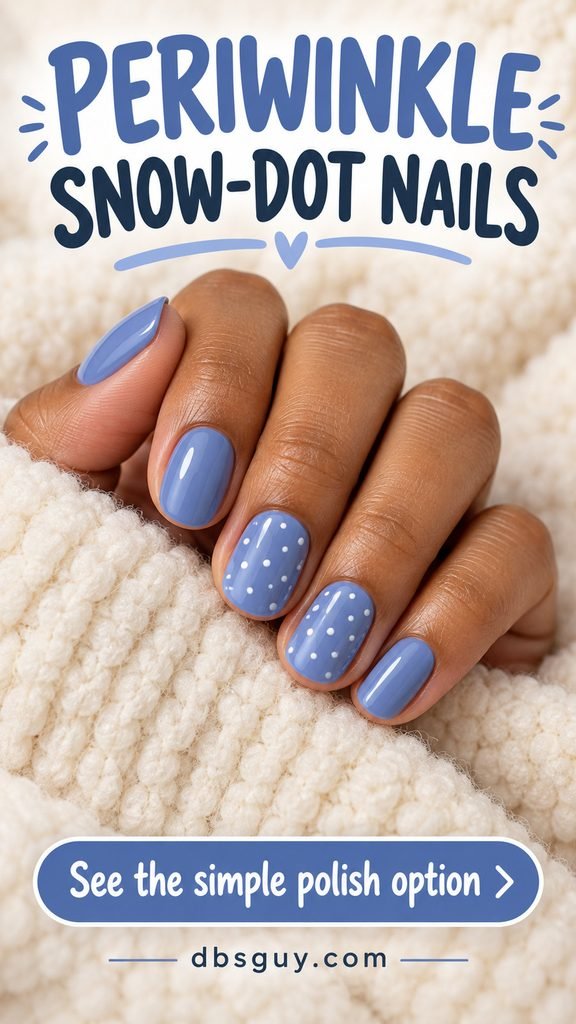
For a regular-polish version, paint the blue base, let it dry, then use a small dotting tool with white polish. Vary the spacing instead of making a rigid polka-dot grid, and let the marks dry before top coat to avoid dragging them. On tiny nails, decorate just one finger with fewer dots.
8. Dusty Blue With a Flat Sweater Print
A muted blue base and a pale cable pattern suggest a winter sweater without raised decoration. The print belongs on one accent nail; plain matte blue around it keeps the small stitches visible. This suits someone who likes the knit reference but wants a smooth surface.
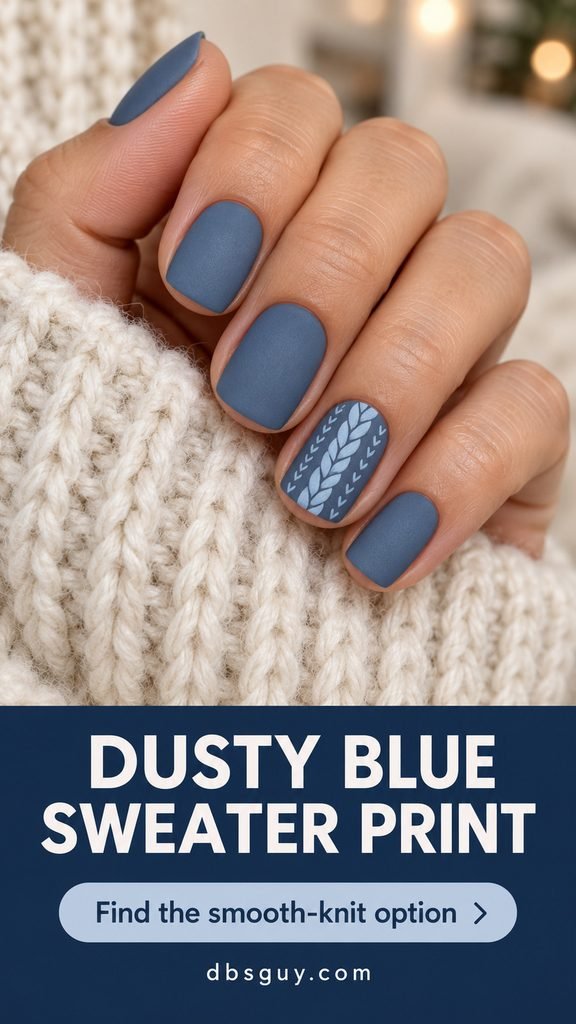
Ask for a flat painted cable down the ring nail, with thin strokes and plain margins at the sides. Say explicitly that you want painted artwork, because a sweater-nail request may otherwise be interpreted as a textured service. On short nails, simplify the braid to a few clear turns instead of shrinking a complicated panel.
Also Read: 17 Sweater Nail Designs for December That Bring Cozy Knit Texture to Your Manicure
9. Blue-Gray With a Windowpane Accent
Blue-gray is the quieter choice in the middle of this palette. A fine white windowpane grid on one nail gives it structure, especially beside a plain knit or tailored cuff. The wide spaces between the lines matter more than the number of squares.
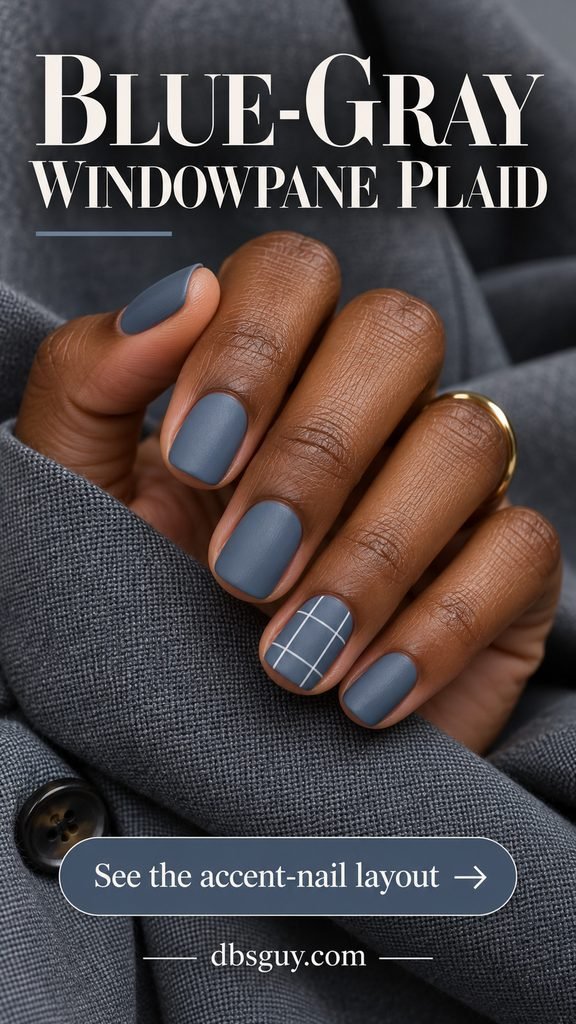
The salon request is blue-gray with a satin or matte finish and a sparse white grid on the ring finger. Use only a couple of vertical and horizontal lines. For a very short nail, one off-center cross is enough to suggest windowpane plaid; adding more lines can turn the accent into a dense checkerboard.
10. An Icy Blue Manicure With a Painted Bow
One navy bow gives an icy blue set a small gift-ribbon reference. Keeping it flat makes the detail graphic rather than sculptural, and the darker outline is easy to see against the pale base. It is a festive choice if you want a Christmas touch without adding red or green.
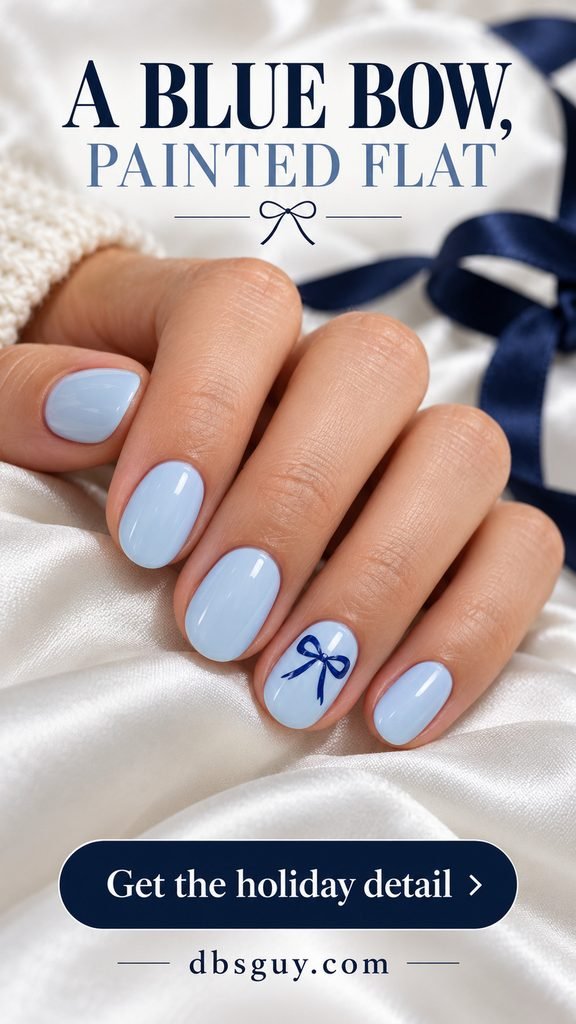
Ask for a small navy ribbon bow on one ring nail, with two loops and short tails; keep the other nails plain glossy blue. A small nail needs a simple silhouette more than extra folds and highlights. Show the artist the intended size before painting so the bow leaves a little breathing room around its edges.
11. Sapphire French Tips With a Silver Edge
A sapphire French has more depth than powder blue while keeping the center of the nail sheer. An extremely fine silver line at the boundary of the blue adds a second edge. The result suits a dressier outfit without covering the whole nail in metallic color.
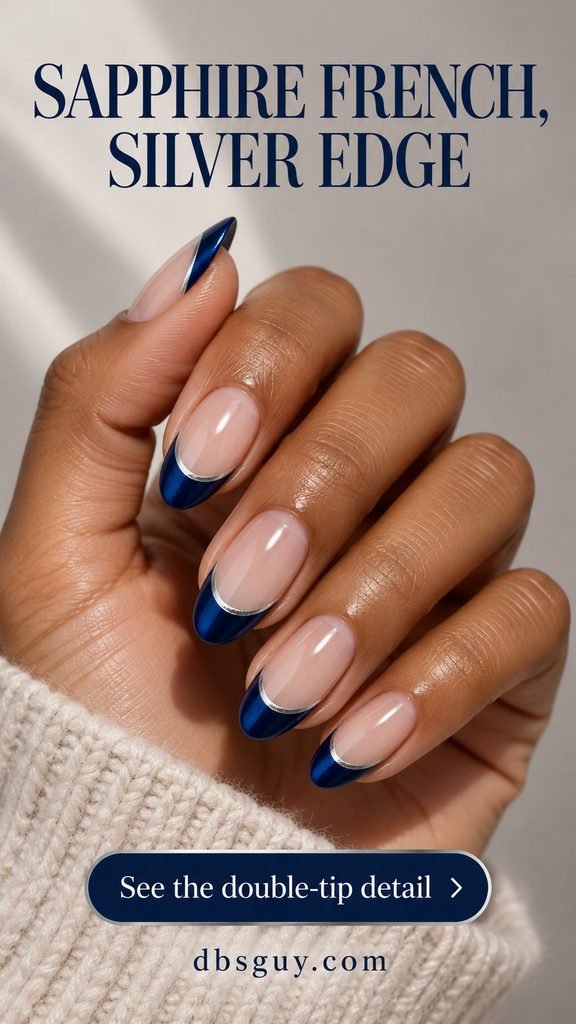
Ask for sheer nude bases, sapphire tips, and a slim silver line tracing the smile line. On medium almond nails, follow the curve of the tip rather than drawing a straight band across it. For short nails, narrow both elements or use the silver on just one accent; the blue should still be the most visible part of the tip.
12. Sapphire Velvet With a Luminous Sweep
The feature here is a luminous blue sweep inside a deep sapphire base. Magnetic shimmer creates the visual glow; the finished surface is smooth. This is a good option when you want the polish itself to be the detail, with no bow, foil, or snowflake competing for attention.
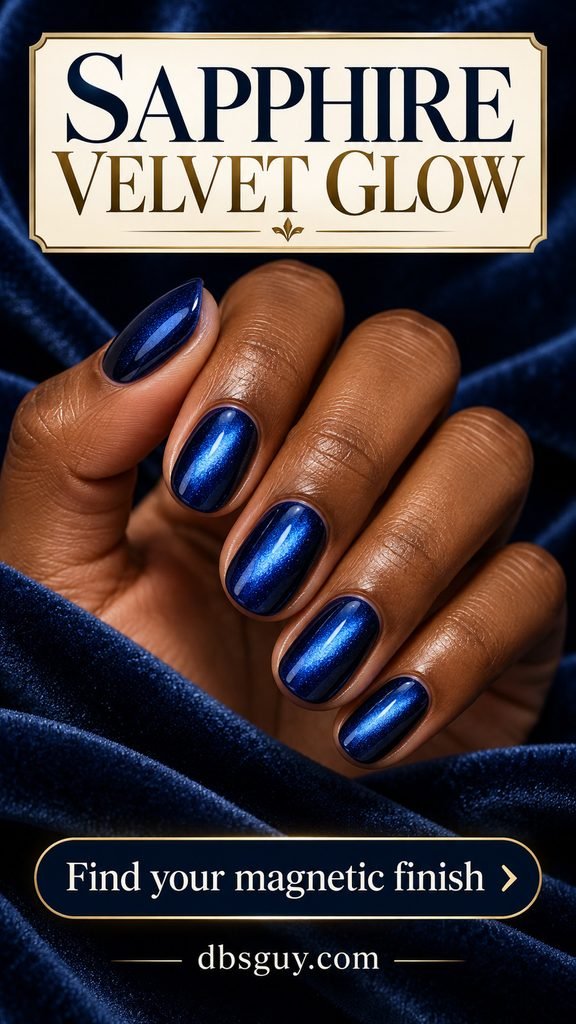
Ask for a sapphire magnetic velvet effect with a soft luminous sweep and darker edges. Ask whether you prefer a diffused glow or a more concentrated cat-eye stripe, because those reflections read differently. The effect changes with viewing angle, so inspect a finished swatch as you turn it. For short oval nails, keep the whole surface available for the reflection.
Also Read: 21 Velvet Cat-Eye Nail Ideas for December That Catch the Light Beautifully
13. Denim Blue With Silver Cuticle Crescents
This reverse-French placement puts the metallic detail at the base of the nail instead of the tip. Denim blue gives it a softer color than navy, while the thin silver crescents make the cuticle area the focal point. Leave the tips plain to preserve that distinction.
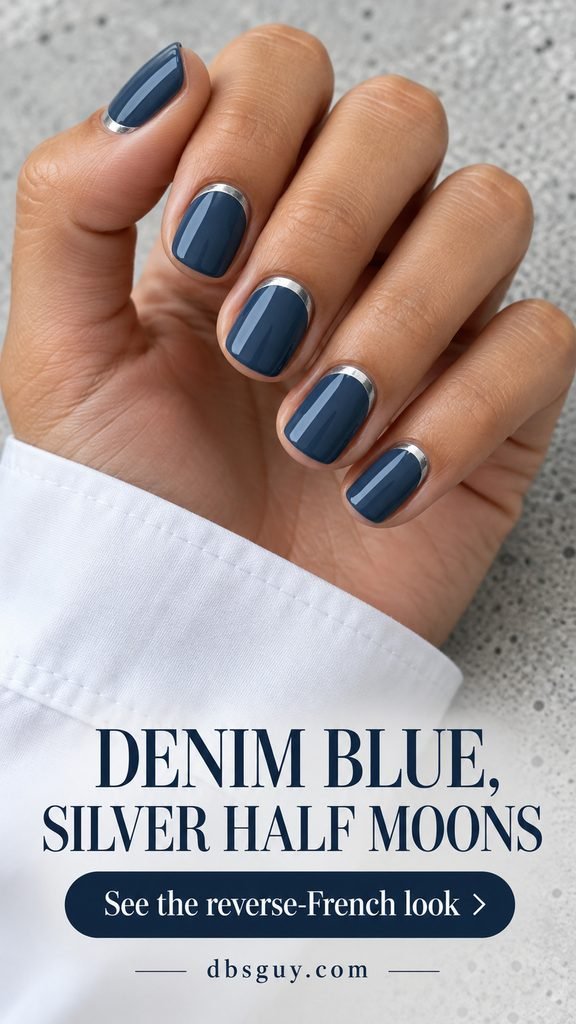
Request a glossy denim-blue base with fine silver outlines following the cuticle curve, painted on the nail rather than the skin. Ask to see one crescent before repeating it across the hand. If the full set feels too detailed, keep the silver on two nails; a thicker band is not necessary to make it visible.
14. Slate Blue With Two Cloudy Marble Accents
Slate-blue nails frame two lighter marble accents in this set. The middle and ring nails combine icy blue patches with wispy white veins; the plain thumb, index, and pinky give the cloudy pattern a clear border. This creates variety through movement and translucency rather than sparkle.
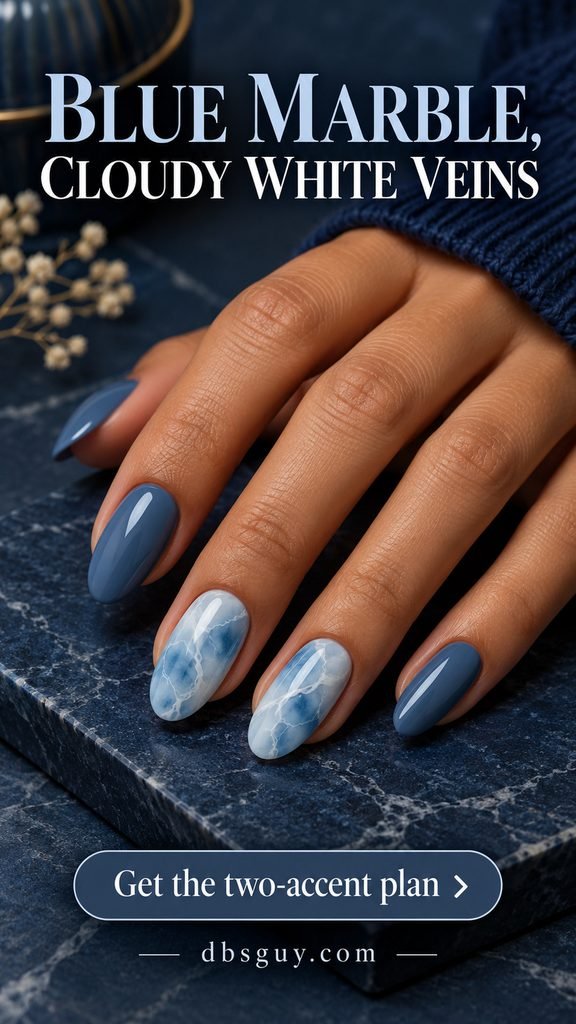
Ask your artist for blue-and-white marble on two nails and solid slate blue on the rest. Bring the reference to show that you want loose, irregular veining rather than repeated stripes. On short nails, use one marble accent with a few soft veins. Keep the palette to blue and white if you want the pattern to remain the main detail.
15. Frosty Blue Swoops With Sheer Centers
Curved, softly shimmering blue edges let you wear a winter shade while leaving much of the natural-looking base visible. Unlike a traditional French tip, the blue sweeps along a side and bends toward the end. A glossy sheer center gives the curves room to stand out.
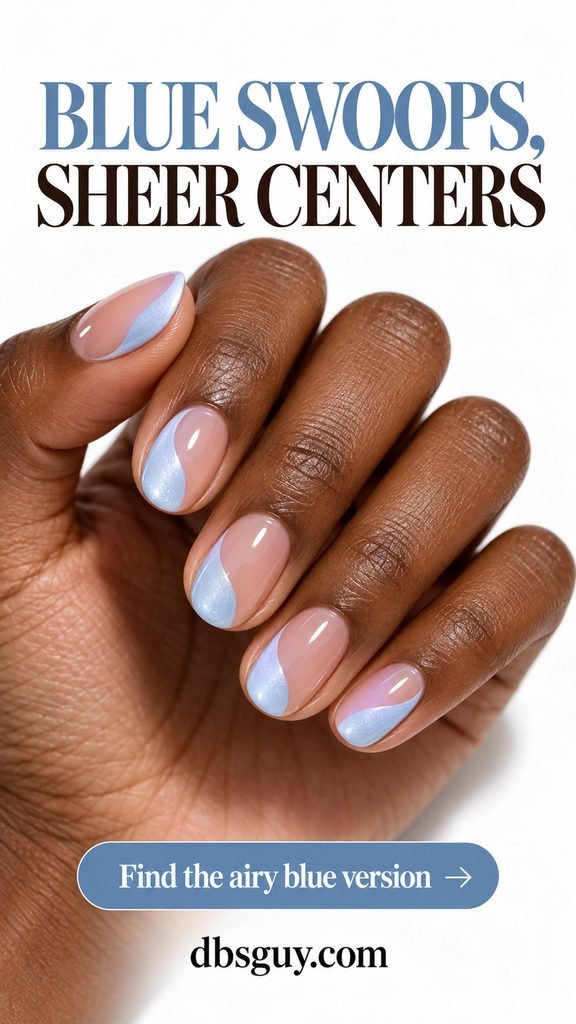
Ask for asymmetrical frosty-blue side swoops over a rosy sheer base. Point out how much open space you want in the middle; a wide painted curve can quickly turn this into a nearly solid blue nail. Short oval nails only need one clean sweep each. Match the general curve across the hand without insisting that every nail carry an identical shape.
16. Royal Blue With Silver-Glitter Tips
Royal blue brings a stronger color statement than the dusty shades above. Silver glitter, including a few larger flecks, concentrated at the free edges adds a party detail while leaving most of the blue visible. A softened square shape gives the sparkling tips a clear, broad edge.
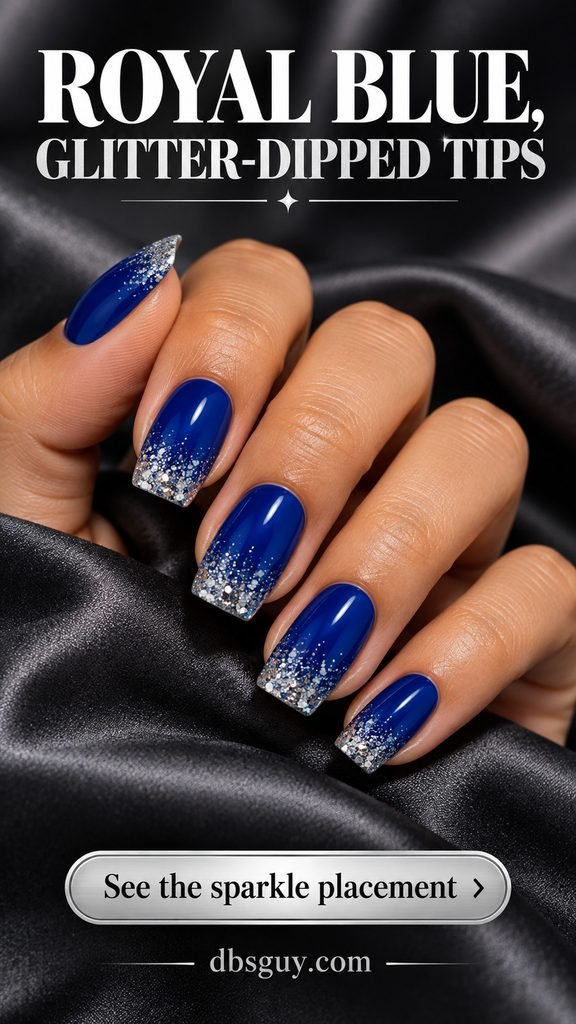
Request a solid royal-blue base and a fine silver glitter fade starting at the tips. Specify small glitter particles rather than large confetti pieces if you want this close, even sparkle. On short nails, keep the glitter fade shallow. For a simpler version, put the glitter on one ring nail and leave the remaining tips plain blue.
17. Cobalt and Ice-Blue Diagonal Color Blocks
Two opaque blues separated by a clean diagonal make a graphic alternative to seasonal artwork. Cobalt supplies the contrast; icy pastel blue keeps the set from looking uniformly dark. The straight boundary is the design, so extra glitter or linework would change its character.
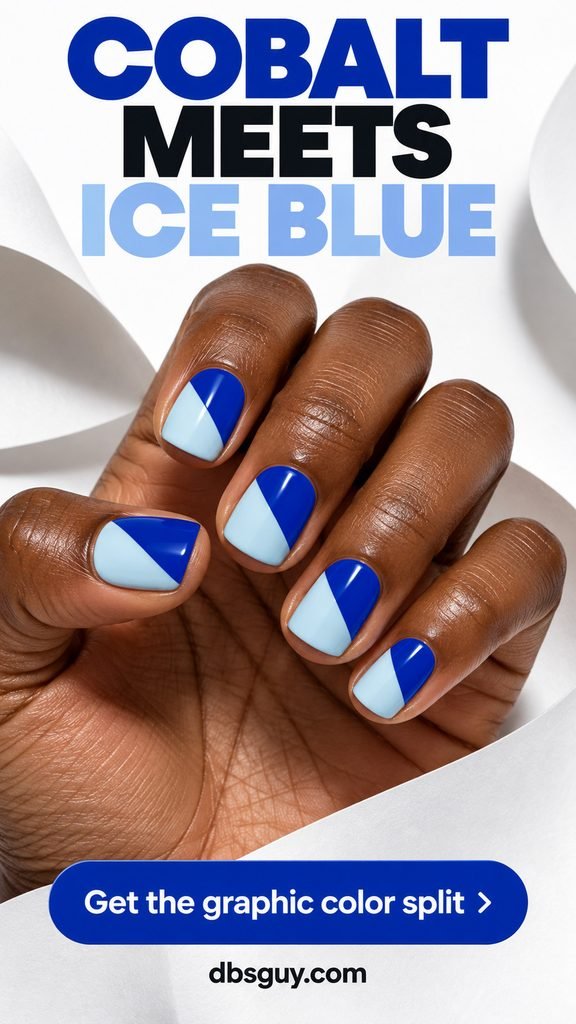
Ask for a two-tone diagonal split on short squoval nails, with no sheer gap between colors. Decide which blue should occupy the larger area before the artist starts. For a home version with regular polish, let the first color dry thoroughly before using a suitable nail-art guide; test your polish and guide together so lifting it does not pull up the base.
18. Midnight Navy With a Glossy Finish
If you want one dark blue that needs no artwork, choose midnight navy and let the shine show its depth. The short squoval outline in this concept keeps the color compact. It pairs easily with ivory, charcoal, denim, or a black evening outfit when you want your manicure to stay simple.
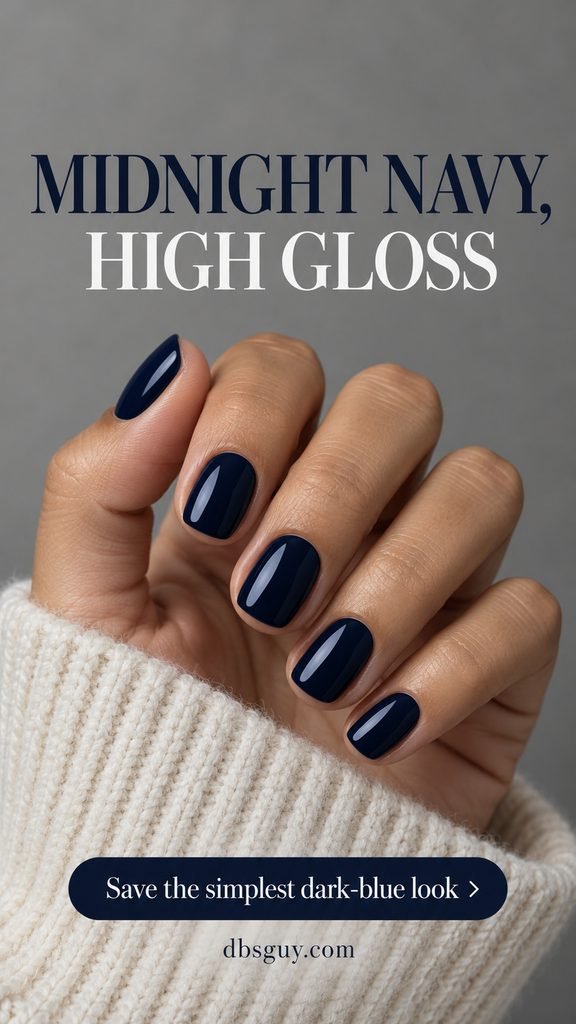
Ask to see the navy swatch in daylight and indoor light before choosing; some shades read nearly black away from a bright reflection. Request a blue you can still recognize as blue. This is also a straightforward regular-polish option: use the product’s base and top-coat directions, and take your time around the edges where dark color makes uneven lines easier to notice.
19. Matte Navy With a Fine White Winter Twig
A single bare twig gives matte navy an understated winter motif. The white line is finer and less symmetrical than a snowflake, so it feels like a small drawing rather than an all-over seasonal print. Leave the neighboring nails plain to keep the delicate branches readable.

Ask for short oval matte navy nails and one fine white twig on the ring finger. Specify bare branches rather than leaves if you want the winter reference shown here. On a small nail, shorten the stem and use fewer side branches. Have the artist show a matte sample first, since a flat finish changes the way the navy reflects light.
20. Midnight Navy With a Tiny Silver Sky
One silver crescent and a couple of small stars turn a dark blue accent nail into a little night sky. Keep most nails plain, with perhaps one tiny silver dot on a neighbor. That spacing lets the crescent remain recognizable instead of disappearing into a field of sparkle.
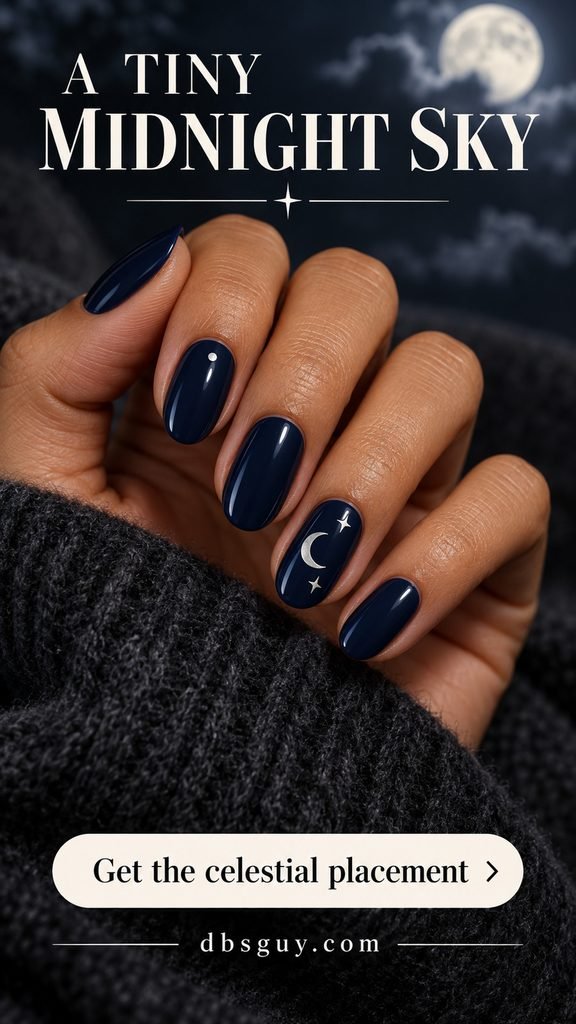
Request flat painted or decal-style celestial details on glossy midnight navy, rather than raised gems. Choose the crescent placement on the ring nail first, then fit the stars around it. On short nails, use only the moon and one star. This is a useful December-to-January option if you prefer a nighttime motif to Christmas-specific artwork.
21. Midnight Navy With a Silver Cuticle Fade
This final look reverses the glitter placement in #16. Fine silver sparkle gathers near the bases, then thins out toward plain midnight-blue tips. The dark ends keep the color visible while the cuticle-side shimmer gives the set a dressed-up finish for the countdown.
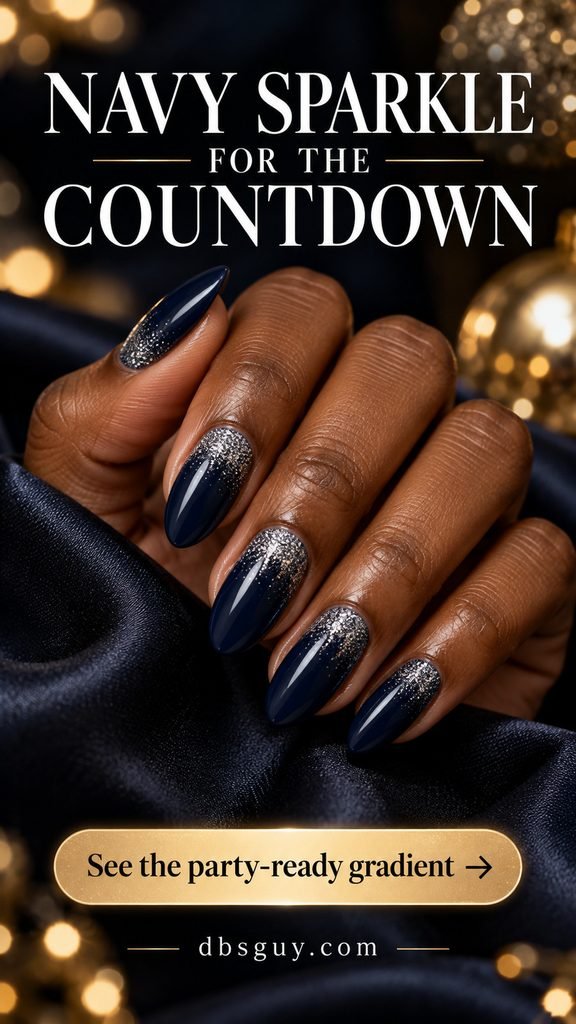
Ask for a navy base and a fine silver micro-glitter gradient starting near the cuticles, with no solid metallic band. Keep the glitter on the nail and leave a neat boundary at the skin. Medium almond nails give the fade more room, but short nails can use a smaller scattering near each base. A single glitter accent is the quieter alternative.
Turn Your Favorite Image Into a Clear Salon Request
Save one complete look, then write down three things: the blue shade family, the finish, and the location of the artwork. A request such as “short oval powder blue, glossy, with one white snowflake on the ring nail” is clearer than asking for winter nails.
Send the reference when booking and ask whether the artist offers that finish or level of detail. Confirm pricing and what the service includes directly; these concepts do not establish a salon’s cost, appointment length, or wear time. For gel, use the product system and curing instructions specified by its manufacturer rather than borrowing a timing from a different polish.
Keep Nail Care in the Plan
For gel appointments, the American Academy of Dermatology recommends broad-spectrum, water-resistant SPF 30 or higher on your hands, or dark opaque gloves with the fingertips removed, to reduce curing-lamp UV exposure. Keep cuticles intact, moisturize between manicures, and arrange proper removal rather than picking gel off. If you have recurring nail problems, consider traditional polish and ask a dermatologist for advice.
Blue December Nail Questions
Which blue December nails are easiest to do at home?
The solid icy pastel and glossy midnight navy need the least decorative work. Snow dots are a useful next step if you have a dotting tool. Use regular polish if that is the system you know; a design reference is not a reason to improvise gel curing or removal.
Can blue nails feel festive without snowflakes?
Yes. A navy bow, a silver-edged French tip, a magnetic sapphire finish, or fine silver glitter adds a December detail without a snowflake. For a look you can keep wearing after Christmas, choose the finish or celestial accent you like best.
Which of these designs works on very short nails?
Start with a solid color, a micro French, a few snow dots, or one small foil accent. Scale the artwork to the actual nail instead of shrinking a highly detailed drawing. You can use any blue family here; the amount and placement of detail are the more useful choices.
Is pearl, chrome, or velvet the same finish?
No. The pearl look here has a soft sheen; mirror chrome gives a sharper metallic reflection. Magnetic velvet creates a glow that changes as you move the nail. Salon names can overlap, so show a reference and compare finished samples rather than choosing from the name alone.
Also Read: 25+ December Nail Ideas to Match Your Mood, From Cozy to Party-Ready