Fashion Experts Say These 6 Clothing Choices Are Actually Very MAGA-Coded

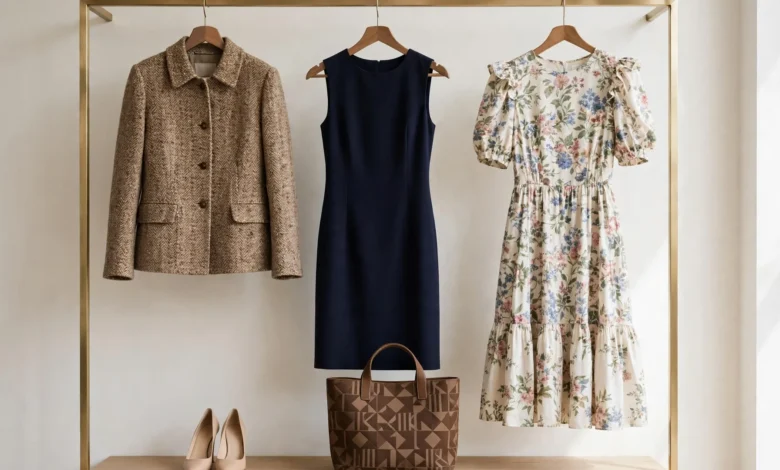
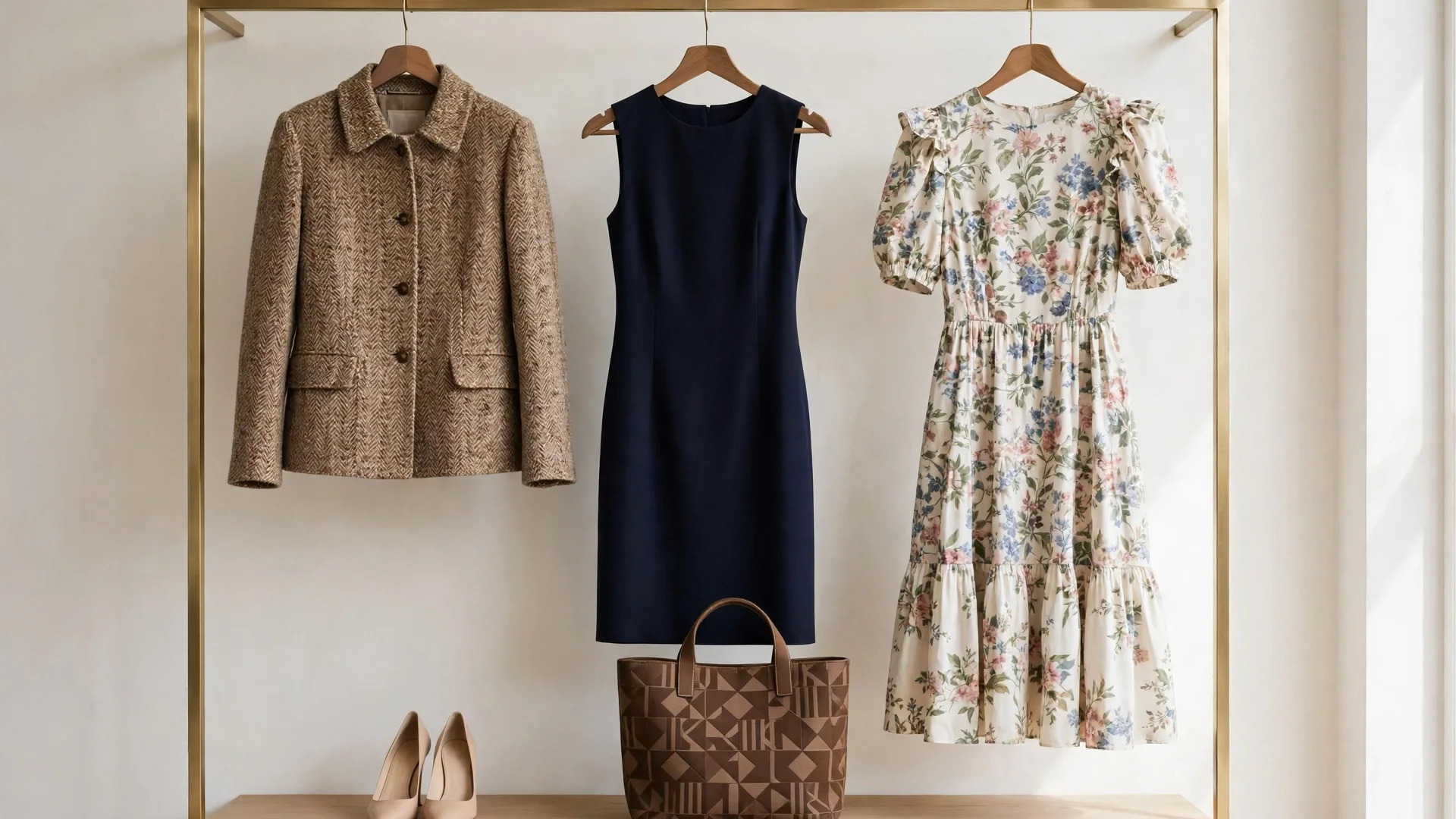
Long before you introduce yourself, your outfit has already done it for you. Clothes are one of the fastest forms of communication we have. They hint at income, tribe, priorities and, whether we like it or not, politics. A single glance at a jacket, a handbag or a neckline can leave a stranger feeling fairly confident about how you might vote, what you value and what kind of life you admire.
That is why stylists and fashion historians have spent the past few seasons naming a particular cluster of choices that read, in the current shorthand, as MAGA-coded: polished, traditional and proudly establishment, drawing on country-club dressing, pageant polish and old-money restraint. None of these pieces is new, and none of them belongs exclusively to any one party. But worn together, commentators say, they form a recognisable dialect that other people read instantly.
This is not about mocking anyone’s wardrobe, and it is certainly not a rulebook. It is a guide to reading the signals — the six choices fashion experts mention most often — so that whatever your clothes happen to say about you, they say it because you chose the message.
It also works in both directions. Just as a tweed set can place someone instantly, so can a slogan-free trainer, an oversized blazer or a deliberately thrifted jacket. Every tribe has its uniform; this article simply translates one of the most talked-about. Once you can read these six signals, you will start noticing them everywhere — on television panels, at weddings, in school-gate crowds — and you will understand why a single outfit can make headlines before its wearer says a single word.
1. Tweed And Old-Money Silhouettes
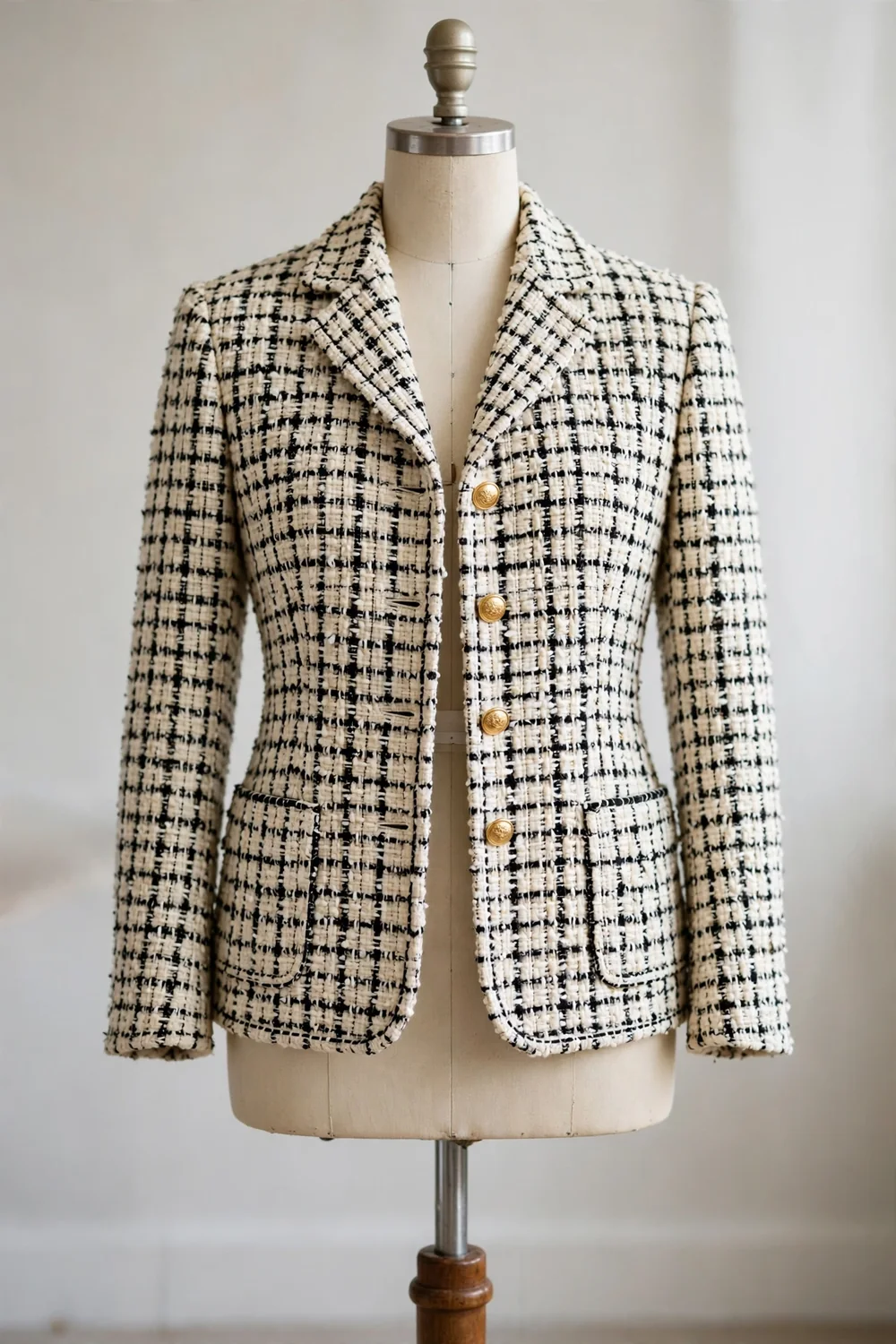
Few fabrics carry as much history as tweed. The structured tweed jacket — boxy, textured, finished with braid or gold buttons and worn with a matching skirt or neat trousers — descends from the wardrobes of country estates, Ivy League campuses and Parisian couture salons. It is the uniform of institutions, and it has barely changed in half a century, which is precisely the point.
Fashion historians point out that old-money dressing works by signalling continuity: nothing trendy, nothing loud, everything immaculately maintained. In a political moment that prizes tradition and is suspicious of disruption, that restraint reads as a value statement all by itself. The effect is ladylike, deliberate and quietly expensive — even when it is not, as these affordable fashion finds that look expensive prove season after season.
Context matters, too. Throw a tweed jacket over jeans and a plain T-shirt and the signal softens into something merely classic. Wear it as a full matching set, every button fastened and every hair in place, and it speaks fluent establishment.
The details do the heavy lifting: the glint of a gold button, the braid along a pocket, the skirt that matches the jacket exactly rather than merely coordinating with it. Matching, in this dialect, is a virtue. It suggests a wardrobe that was planned rather than improvised, and a worldview in which planning, order and precedent are pleasures in themselves.
2. The Preppy Shift Dress
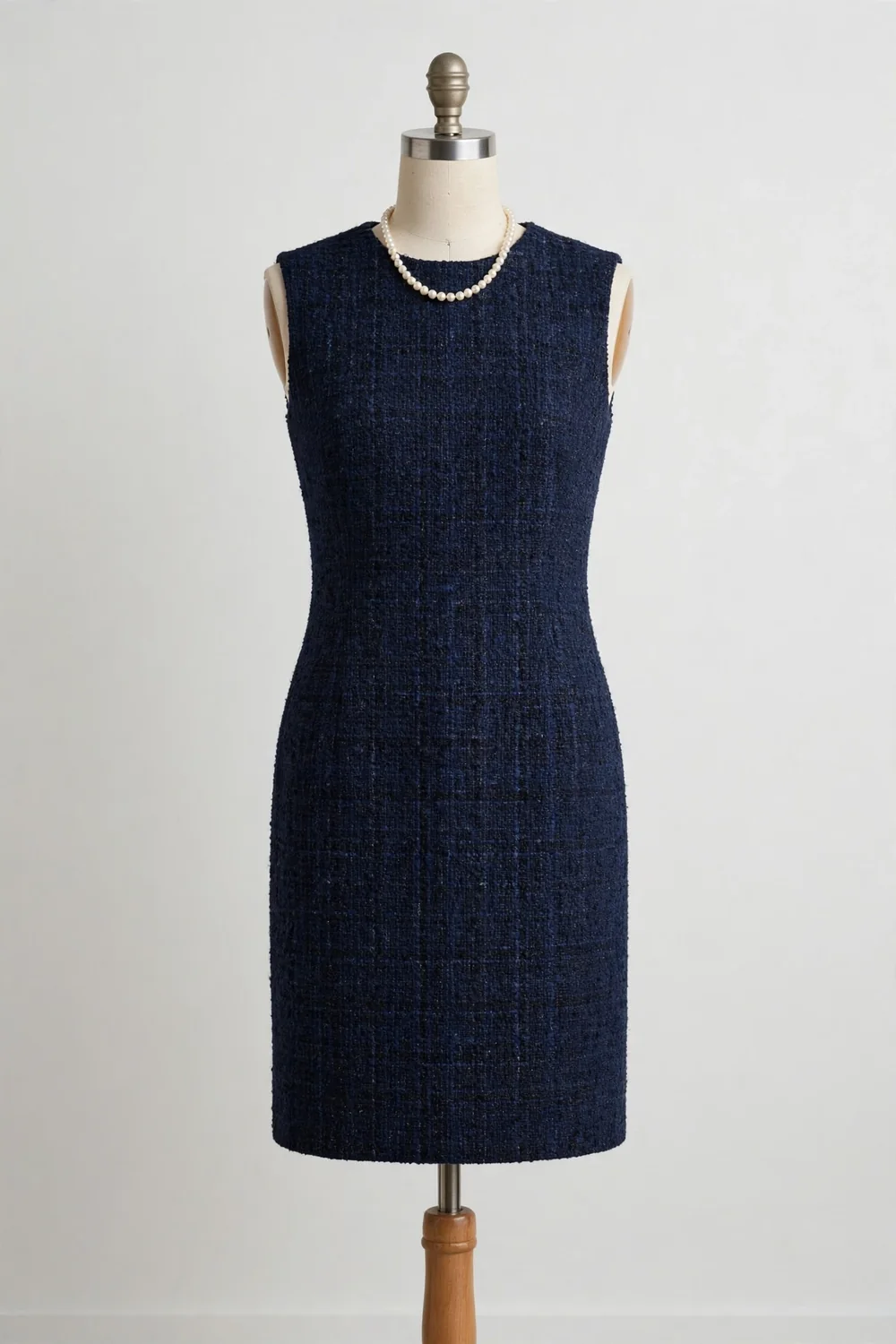
If tweed is the establishment’s jacket, the sleeveless shift dress is its warm-weather uniform. The cut is simple to the point of severity: straight, knee-length, usually in navy, black or a sober pastel, and finished with polished hair, neat makeup and, very often, a single strand of pearls. It is the dress of luncheons, fundraisers, church socials and courthouse steps.
Stylists describe preppy dressing as order made visible — clothes that are pressed, matched and entirely without surprises. The navy tweed shift in particular has become an emblem of a certain polished political style: feminine but armoured, decorative but disciplined. Nothing about it is accidental, and that total control is the message. In a style landscape where the opposing tribe prizes ease, irony and individuality, this kind of immaculate neatness reads as a deliberate counter-statement. It says that standards matter, and that keeping them is a pleasure rather than a burden.
There is also a geography to it. The shift dress belongs to warm-climate formality: the charity lunch under a ceiling fan, the garden party, the televised interview in summer. Sleeveless but never revealing, bright but never brash, it threads a needle of modesty and polish that few other dresses attempt. That balance — being noticed for being impeccable rather than for being daring — is the essence of the preppy signal.
3. Loud Luxury Logo Handbags
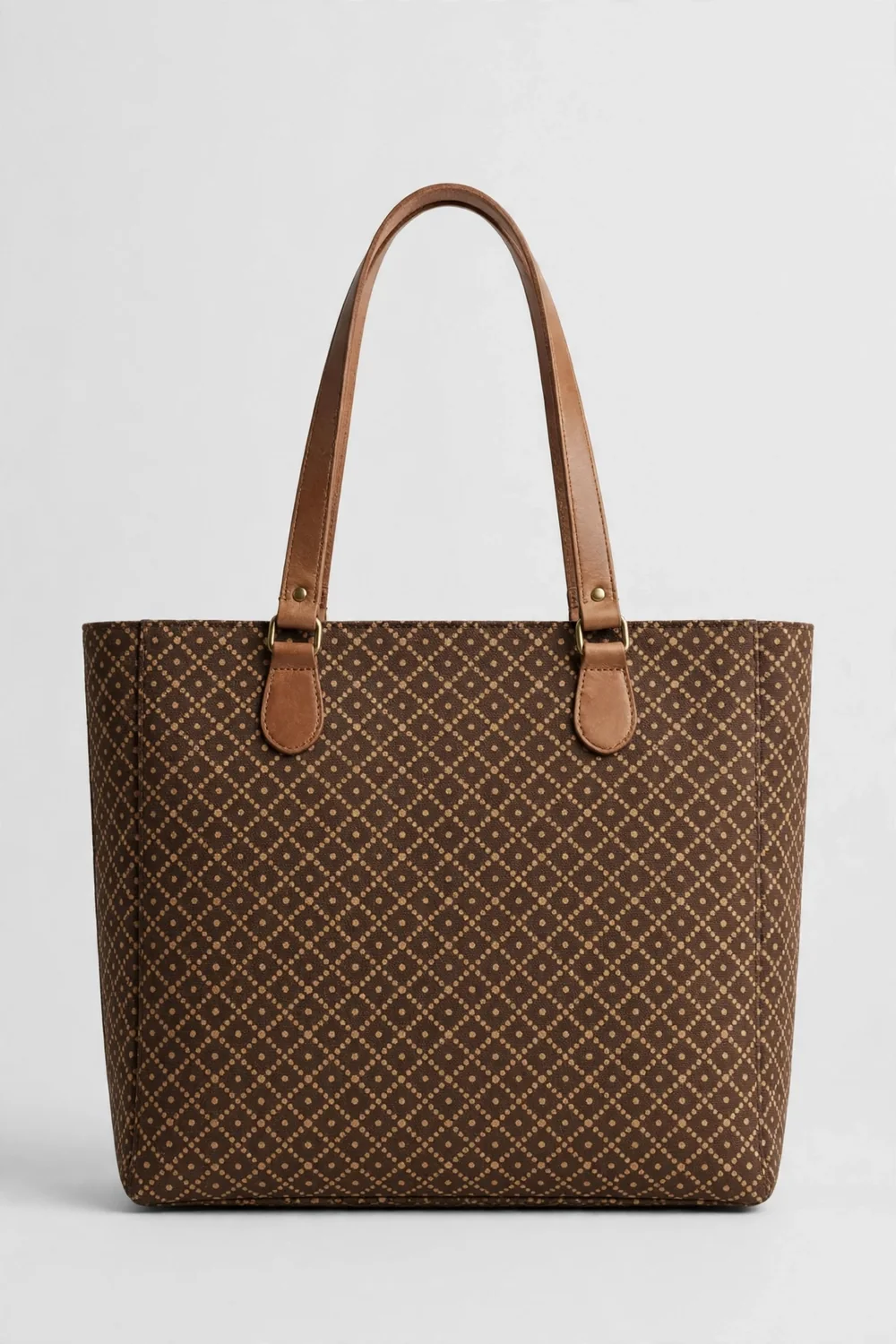
Every aesthetic has its opposite, and in recent years high-end dressing has split into two camps: quiet luxury, all unmarked cashmere and logo-free leather, and loud luxury, where the branding is the entire point. The oversized monogram tote — canvas covered from seam to seam in a repeating designer pattern, carried everywhere from the school run to the evening event — sits firmly in the second camp.
Fashion commentators note that conspicuous logos do a specific kind of work: they announce success in a way nobody in the room can misread. Where stealth-wealth dressing whispers to the initiated few who recognise the cut, a monogram bag speaks to absolutely everyone, and that unapologetic display of having made it sits comfortably within a politics that celebrates visible success and personal branding. It is not really about the bag at all. It is about the billboard — and about being entirely unembarrassed to carry one.
Size plays a role as well. The coded version of this bag is rarely a discreet clutch; it is the big, carry-everything tote, the one that holds the laptop, the folder and the day. Practicality wrapped in pattern, it doubles as a credential. You do not need to know anything about fashion to read it, and that instant legibility — no insider knowledge required — is exactly what makes it such an effective signal.
4. Pointed-Toe Nude Heels
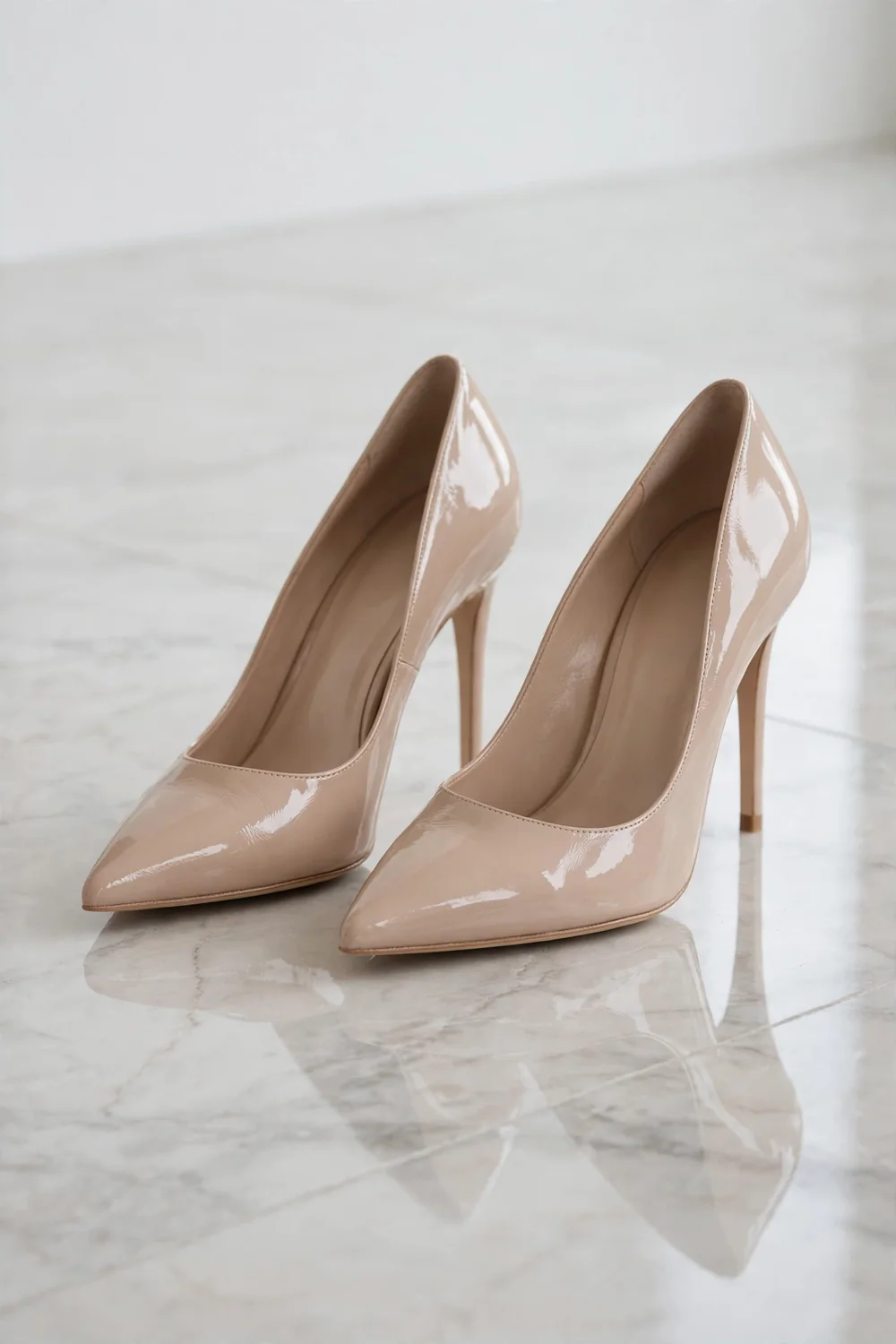
The pointed-toe nude pump might be the hardest-working shoe in traditional dressing. Skin-toned, glossy and unapologetically high, it lengthens the leg, goes with everything and never, under any circumstances, looks casual. It is the shoe of news studios, pageant stages and campaign trails — anywhere that polish is non-negotiable and femininity is presented in its most classic, finished form.
Stylists point out that the nude heel functions less as a fashion choice than as a finishing standard: hair set, makeup done, heel on. You will see exactly the same logic running through most fall professional outfit ideas, where the pump quietly does the elongating, unifying work of the whole look. Its opposite numbers — the trainer, the chunky boot, the deliberately undone shoe — belong to a different style tribe entirely, which is precisely why the perfect nude pump reads as such a clear signal.
Notice, too, what the nude pump refuses to do. It refuses comfort dressing, refuses irony and refuses the undone, off-duty look that dominates so much of modern style. On a stage or a panel, that refusal is the point: it presents effort as respect — for the occasion, for the audience and for the role being played.
5. Large Cross Necklaces
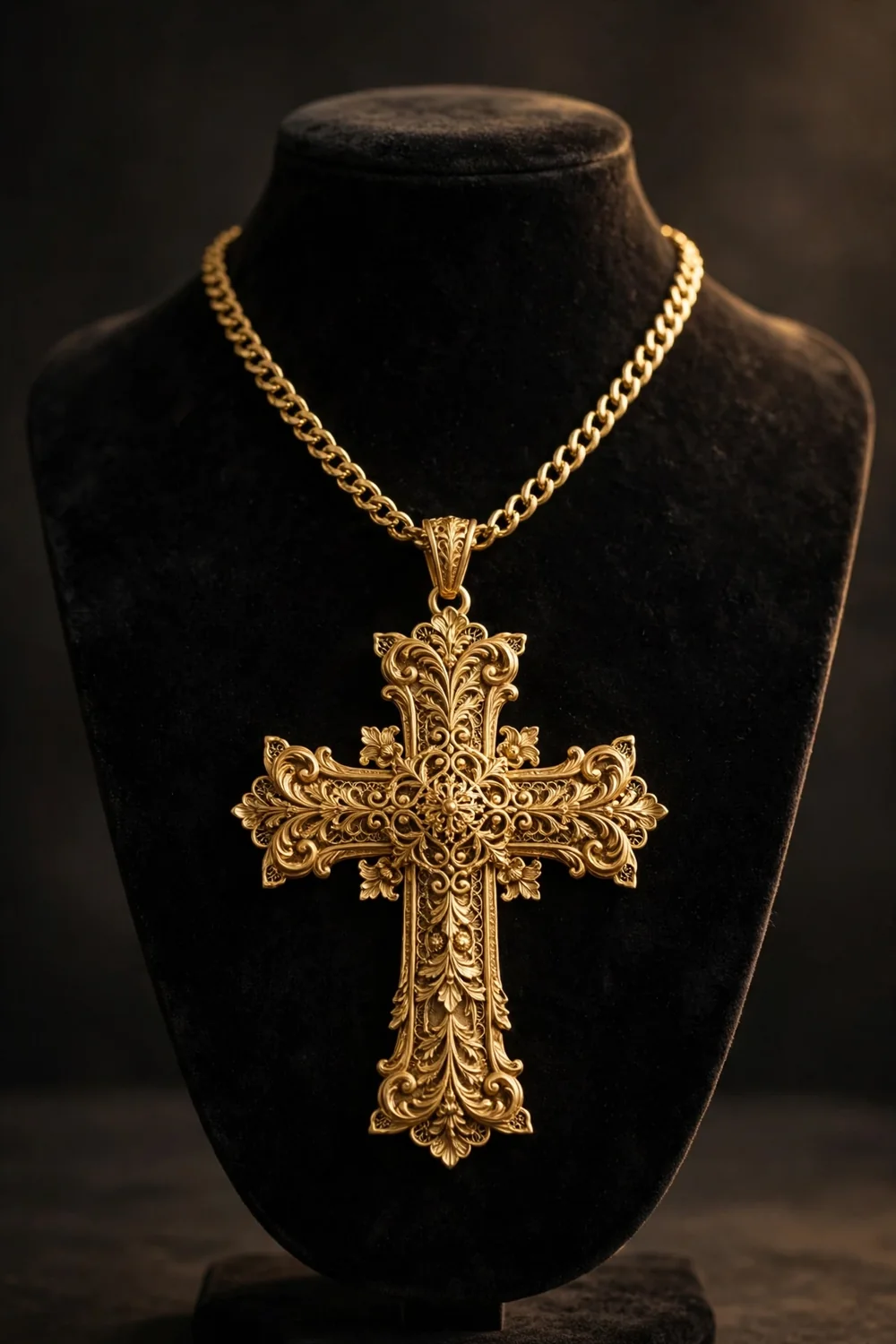
Most jewellery whispers. The oversized cross pendant does not. Worn large, usually in gold, over a plain dress or even a simple top, the cross has moved from private devotional object to public fashion statement — one that stylists say is meant, consciously or not, to be read from across the room.
Fashion historians place it in a long tradition of wearing belief as identity, stretching from pilgrim badges to Sunday-best church jewellery. What has changed is the scale and the styling. The bigger, more ornate pendant turns faith into the headline of the outfit rather than a footnote to it. Paired with the polished dresses and perfect pumps above, it completes a look that presents traditional values not only as beliefs a person holds, but as an aesthetic they are proud to wear.
Context sharpens it further. A small cross on a fine chain reads as private devotion. The statement version is larger, heavier and often more ornate, frequently layered with pearls or worn over the polished dresses earlier in this list. At that scale, the necklace stops being an accessory and becomes an announcement, and announcements are what style signals are.
6. Puffy Sleeves And Prairie Dresses
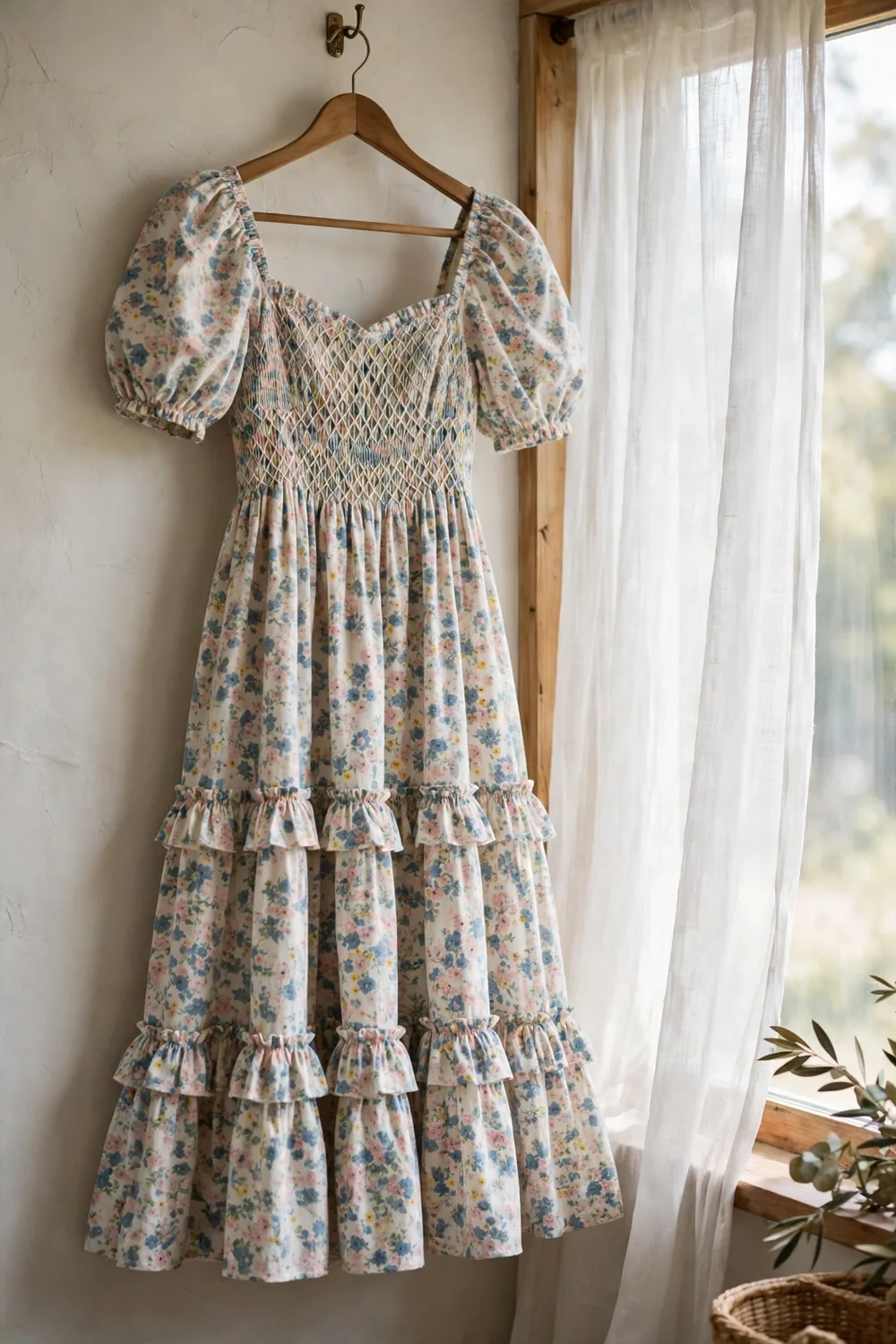
At the softer end of the spectrum sits the prairie dress: puff or gigot sleeves, a smocked or high-necked bodice, ditsy florals and a long, swishing skirt. It is romantic, modest and deliberately old-fashioned, a silhouette borrowed from pioneer and homestead imagery and revived in recent years with complete sincerity.
Commentators link its rise to a broader nostalgia for an imagined simpler past: home baking, homesteading, large families and clearly traditional roles. Where the shift dress signals the country club, the prairie dress signals the homestead — but both, stylists note, romanticise a version of femininity that predates the modern era. It is the gentlest-looking item on this list, and one of the most eloquent.
The fabrics tell the same story: cotton rather than synthetics, prints that look inherited rather than designed, colours borrowed from a farmhouse kitchen. Even the way the dress moves — swishing, unhurried, slightly impractical — argues against the speed and sharpness of city dressing. It is nostalgia you can wear, and it knows it.
None of this makes any of these pieces good or bad, in fashion or in politics. Tweed is beautifully made. A prairie dress is lovely in July. A nude pump has rescued a thousand outfits at the last minute. Style signals are simply real, and they operate whether we acknowledge them or not. The stranger reading your outfit across the room does not wait for your permission.
So treat this list the way stylists do: as a phrasebook. If these six pieces dominate your wardrobe, your clothes are already making a particular speech — and if that is the speech you mean to give, then wear them well and wear them proudly. If it is not, you now know exactly which dials to adjust. The only real mistake is not knowing what you are saying.
More Style Reads You’ll Love
If reading wardrobes has become your new favourite hobby, keep going with our edit of boho summer outfits — the free-spirited opposite end of the style-signal spectrum — and then revisit the tweed, shift dresses and pumps linked above to see how the same classic pieces change their meaning completely with different styling.