
The most useful nursing student outfits start with the day’s dress code: your required uniform for clinicals, the specified clothing for skills lab, and comfortable campus clothes when your program allows them. You can still make each day feel put together. The trick is choosing the right fit, layer, and shoes for what you will actually be doing.
These 11 looks cover patient-care days, chilly labs, rainy commutes, long lectures, study sessions, and presentations. The navy scrubs shown are a styling example; use your school’s required color, approved garments, identification, and footwear.

The visuals are AI-generated outfit concepts. They illustrate styling ideas, not real students, tested products, or uniforms approved by a particular nursing program.
Choose your outfit by the day’s requirements
Check your current student handbook, course instructions, and placement policy before buying anything for clinicals. If those instructions conflict, ask your clinical faculty to resolve the difference. A scrub set being sold as “nursing scrubs” does not make its color, cut, or branding acceptable for your program.
For a concrete example, OHSU’s nursing uniform requirements address program-approved colors, identification, footwear, layers, and clean scrubs for each lab, simulation, or clinical occurrence. Your own program may set different requirements.
- Clinical uniform days: start with look 1, then consider the permitted layer in look 2.
- Travel to a clinical site: use look 3 to plan outerwear and a shoe change, subject to the site’s changing arrangements.
- Business-casual assignments: consider look 4 only when that is the requested attire.
- Ordinary campus days: choose from looks 5–10 when your classroom policy allows them.
- A presentation or career event: use look 11 and check the event instructions.
Also Read: 19 Freshman Orientation Outfits: Cute, Comfy & Campus-Ready for more ideas for general campus events.
1. A well-fitting scrub set for clinical days
Start with your required scrub top and pants, permitted socks, and shoes that meet the exact clinical policy. In this navy example, straight legs and an untucked V-neck top keep the silhouette simple. The useful styling detail is the fit: the top has enough length for coverage, and the pants clear the shoes without bunching on the floor.
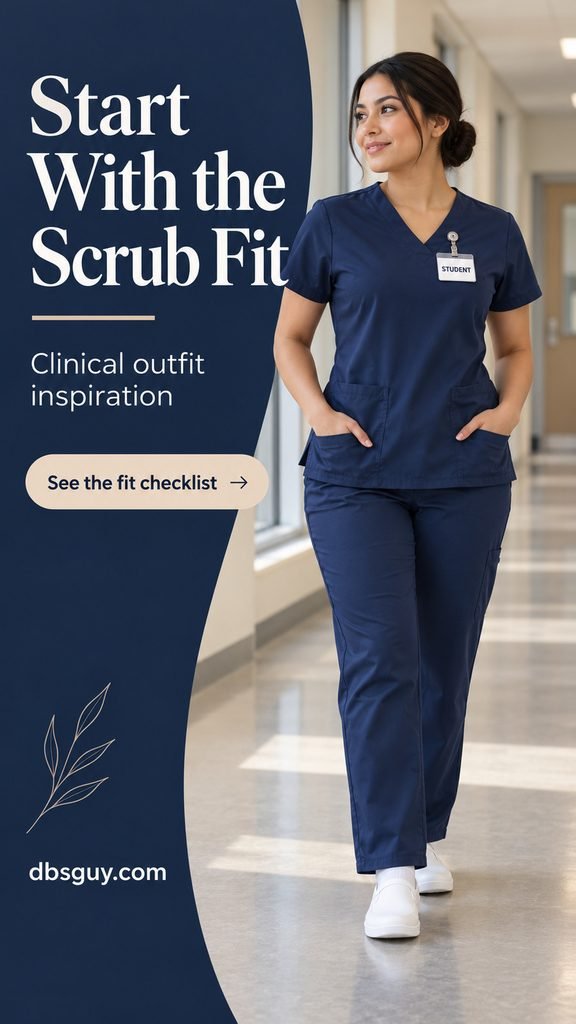
Try the complete uniform on with the shoes and any undershirt you will wear. Sit, reach forward, lift your arms, and bend your knees. If the neckline gaps, the waistband digs in, or the top rides above it, try another approved size or cut. A different inseam can solve a dragging hem without changing the rest of the fit.
Check footwear wording closely. White sneakers can have a mesh upper, while some schools require a nonporous finish; closed toes alone may not satisfy the rule. Confirm the color, upper material, heel coverage, and sole requirements before purchasing. Clip required identification where your program specifies, keeping it visible rather than buried under a bag strap.
2. A matching scrub jacket for a chilly lab
A navy scrub jacket over the matching set creates a practical layered outfit when your lab permits that garment. A zip front makes the layer easy to remove, and a reasonably trim sleeve is easier to manage than a loose cardigan cuff.
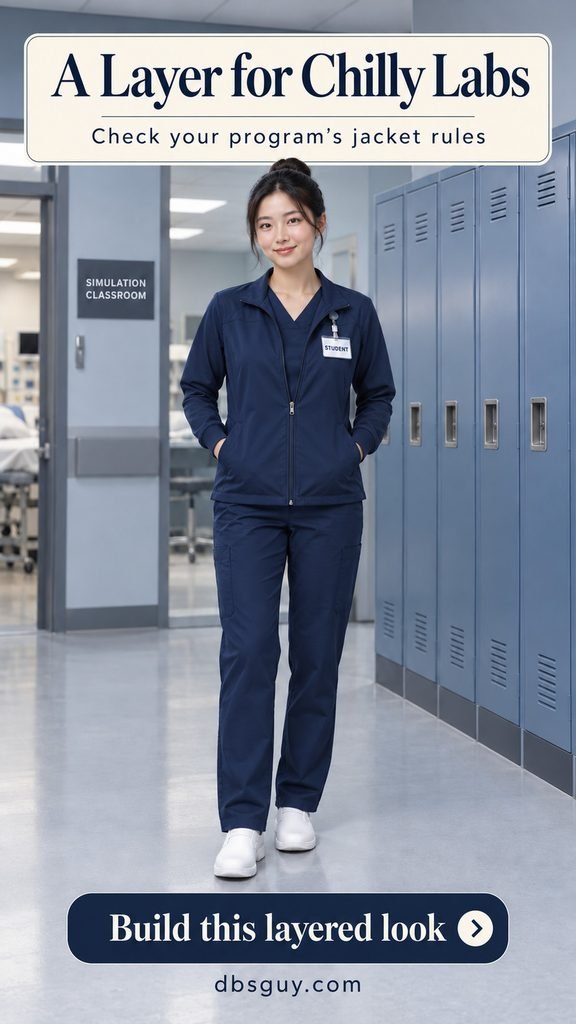
Check the approved jacket style and sleeve rules before choosing one. Some programs specify school embroidery, particular colors, or restrictions on outer layers during clinical activities. A campus fleece and a scrub jacket are not automatically interchangeable.
Try the jacket with your pockets loaded as you would use them. You should be able to reach and bend without the shoulders pulling or the hem pushing the scrub top upward. Move your required badge to the prescribed visible position on the outer layer. If the jacket must come off for an activity, have a designated place to store it.
3. A raincoat-and-scrubs outfit for the commute
For a wet trip to an early clinical, layer a camel raincoat over your required uniform and use weather-appropriate travel shoes. The navy-and-camel combination shown keeps the outfit easy to coordinate, while a zipped backpack leaves your hands available for the trip.

The rain boots are commute footwear. Pack your permitted clinical shoes and dry socks separately, then allow time to change on arrival. Keep damp boots and outerwear apart from clean supplies. Check whether the site expects you to arrive in uniform or change there before planning to travel in scrubs.
Choose a coat that closes comfortably over the uniform without catching the pant legs. In the image, the secured black hijab is part of the travel outfit; follow your program’s head-covering requirements for clinical work. The coat comes off before entering the work area, and clinical identification must be positioned as required after changing.
4. A polo and chinos for a business-casual assignment
A plain navy polo, khaki straight-leg chinos, and black enclosed shoes make a useful option when your instructor specifically requests business casual. That might be a community education assignment, a program meeting, or another setting with its own attire instructions.

Keep the polo long enough to remain tucked when you reach. Choose chinos that let you sit comfortably without pulling across the front pockets. Flat pockets and a simple belt, if needed, keep the outfit easy to wear while carrying handouts or a notebook.
Do not assume that a community placement allows street clothes: it may require the standard uniform, a designated polo, or another specified outfit. For patient-facing activities, the site’s footwear and identification rules still matter. The loafers pictured are a styling example, so choose the shoe construction your assignment actually permits.
5. A striped tee, cardigan, and jeans for early lectures
On a lecture-only day that allows casual clothes, pair a navy-and-ivory striped tee with dark straight-leg jeans and a rust cardigan. White campus sneakers finish the outfit, while the burgundy shoulder bag adds another warm tone. Switch to a roomy zipped backpack when you need a laptop and notes.

The removable cardigan is the useful part when your walk to class and the room itself feel different. Check that it fits inside your bag; a bulky knit that you have to carry all day can become inconvenient. Wear the tee untucked if that feels better through a long seated lecture.
If jeans feel restrictive, use dark pull-on trousers with a similar straight leg. This is a casual classroom formula. If your schedule includes lab or simulation, bring the required change of clothes rather than assuming the lecture outfit covers both.
6. A matching sweatshirt set for a casual exam day
A sage sweatshirt with matching relaxed sweatpants makes an easy outfit for a campus exam when casual clothing is allowed. Gray sneakers, socks, and a graphite backpack keep the look simple enough to assemble the night before.
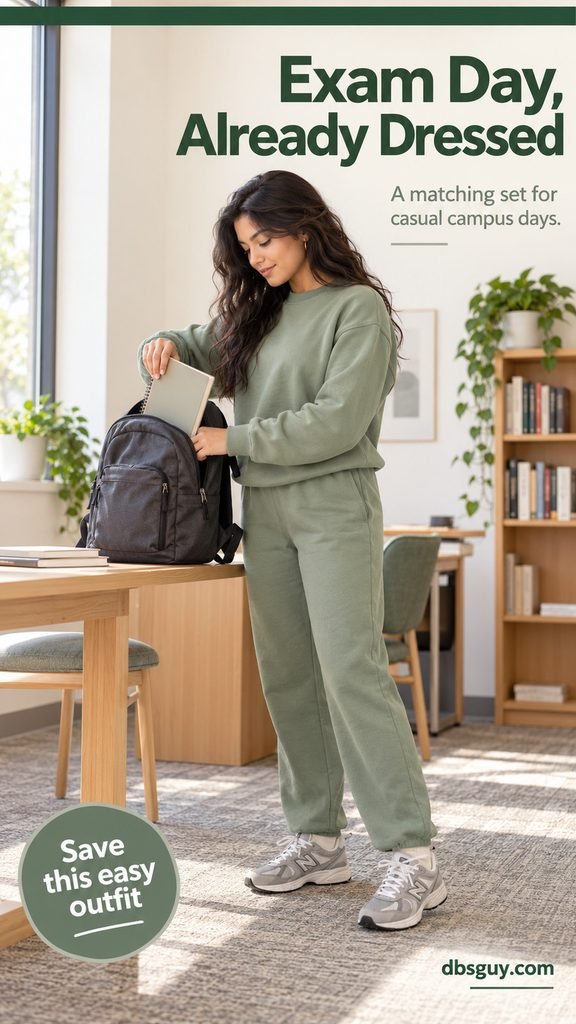
Choose the set by how it feels seated. A thick waistband can become distracting even when the pants look roomy standing up. Check that the sweatshirt sleeves do not bunch against your writing hand and that the pant hems stay clear of your heels.
Read the testing instructions separately: identification, pockets, watches, bags, and outer layers may have specific rules. Take the required ID even though the concept image does not show one. If your program requires uniforms or business casual for exams, use that outfit instead. Keep this soft set for permitted campus days or studying at home.
7. An ivory sweater and charcoal trousers for polished lectures
For a classroom outfit with a little more structure, combine an ivory crew-neck sweater with charcoal wide-leg trousers and burgundy loafers. The darker shoes give the neutral pieces a clear finishing detail, while a roomy tote carries your class materials.

Let the sweater sit at the high hip if you prefer an untucked fit. If the knit is thick, forcing it into the waistband can make sitting uncomfortable; a shorter sweater or lighter knit gives a similar proportion with less bulk.
Hem the trousers with the actual shoes you plan to wear. The fabric should clear the floor when you walk, including at the back of the heel. Try stairs and a normal seated position before committing to the combination. This look suits lectures and faculty appointments when their attire instructions allow it; use the specified uniform for clinical activities.
8. A light button-down and navy pants for warm weather
A pale blue short-sleeve button-down, navy relaxed trousers, and cream sneakers give a warm-weather lecture day a neat, uncomplicated shape. The version shown uses a hip-length untucked shirt and a tan backpack. The same formula works across different fits and gender presentations.

Look at the actual fabric rather than choosing on the fiber label alone. A thick linen blend can feel quite different from a light one, and some fabrics crease more than you will want to manage. Check the shirt in daylight and sit with it buttoned to make sure the front does not pull.
Pack a light layer if your classroom tends to feel cool. The canvas sneakers pictured are for a casual campus schedule; they are not a recommendation for clinical footwear. For a more structured classroom dress code, use the prescribed shoes and swap in dress trousers if necessary.
9. A denim jacket and utility pants for library days
An ivory tee, olive utility pants, and a blue denim jacket make a sturdy casual combination for the library or a group study session. Black sneakers keep the base quiet, and the navy shoulder bag repeats the jacket’s darker tones. Choose a backpack if it carries your class materials more comfortably.

Pay attention to pocket placement when choosing the pants. Large, stuffed pockets can press against your legs in a chair, so keep bulky items in your bag. A straight leg gives you room without leaving excess fabric around the shoes.
The jacket is easy to take off while studying, but denim can feel stiff under backpack straps. Try your bag with it before leaving, particularly if you carry a laptop. This outfit is for casual campus time; pack a complete change if your study session follows a uniform-required activity.
10. A knit midi dress for class and an after-class meetup
A plum A-line knit midi dress, tan cardigan, and cream sneakers offer a one-piece alternative to pants. A small brown crossbody works for a light day; use a backpack or larger zipped bag if you need a laptop, lunch, or several books.
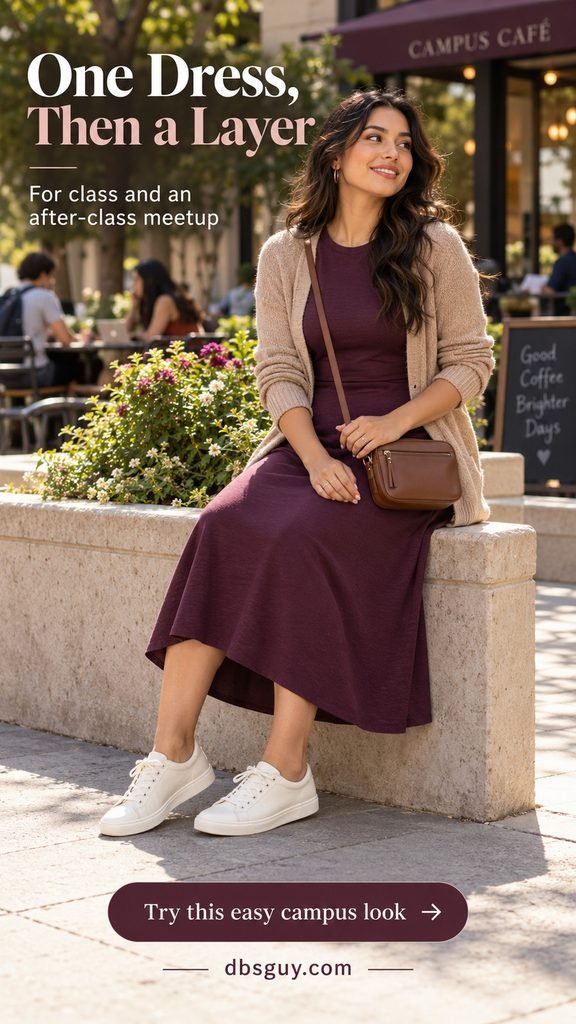
Choose an opaque knit that gives you a full walking stride. Sit down, climb a step, and try the bag across your body to check whether the neckline or skirt shifts. The A-line shape shown has room through the skirt without needing a high slit.
This is a casual class-to-coffee outfit when your program permits it. Keep the cardigan because it serves your temperature and coverage preferences, not because every dress needs another layer. A dress being comfortable and below the knee does not establish that it meets a particular clinical policy.
11. A blazer and trousers for presentations or career events
For a classroom presentation or a career event that calls for business casual, start with a navy blazer, an opaque ivory blouse, gray straight-leg trousers, and black closed-back loafers. A folder keeps printed materials organized, and a zipped tote holds the rest.

Rehearse a few minutes of your presentation in the complete outfit. Reach toward an imaginary screen, sit down, and carry the bag. If the jacket pulls across your back or the blouse needs repeated adjusting, change the fit before the event.
Wear shoes you have already walked in comfortably. If the invitation specifies business professional, choose the requested level of formality, such as a matching suit. For a clinical orientation, follow its uniform instructions instead of assuming a blazer is the right substitute.
Also Read: Freshman Year: The Complete Survival Guide for organizing the routines around your college schedule.
Build the wardrobe around laundry and your schedule
Buy required uniform pieces first. Confirm the approved supplier, embroidery, pants style, and shoe requirements before paying for optional colors or extra layers. When possible, establish the fit of one approved set before buying duplicates.
Work out quantities from your actual week. For example, three uniform-required days before your next laundry opportunity call for three clean sets available across those days. If you can wash and dry a set between sessions according to its care instructions and your program’s rules, your rotation may work differently. Allow for drying time and an unexpected spill rather than choosing a number from an outfit list.
For permitted campus days, start with pieces you own: one comfortable pair of jeans or trousers, a tee, a removable layer, and familiar shoes. Add a dressier combination only if your calendar needs it. You do not need to purchase all 11 outfits to have a useful school wardrobe.
Also Read: First Week of College: The Freshman Survival Guide (Orientation to First Friday) for planning your first week around classes and campus tasks.
Nursing student outfit FAQs
Do nursing students wear scrubs to every class?
It depends on the program and course. Clinicals, simulation, and skills labs can require uniforms, while lecture clothing may be casual, business casual, or another specified standard. Check each course’s instructions instead of treating every on-campus day the same.
Can I wear jogger scrubs, any scrub color, or a hoodie?
Only when the applicable policy permits them. A jogger cut may fall outside an approved uniform list, and even a plain hoodie may be an unapproved outer layer. Confirm the garment, color, and setting before buying or wearing it.
What should I check besides the clothes?
Review the rules for identification, hair, head coverings, nails, jewelry, fragrance, and any required equipment. Programs differ, so a detail allowed in an inspiration image or another school’s handbook may not be allowed in yours.
Can I keep wearing my clinical uniform around campus afterward?
Check your program’s rules about wearing uniforms outside clinical activities and follow the site’s changing and laundering instructions. If you have a lecture or study session afterward, a packed change of clothes may be the simplest plan. Store worn clothing separately from clean items.
How can I make the required uniform feel more like my style?
Start with the approved cut that fits you best, an appropriate inseam, and a permitted layer. Use your personal color and accessory preferences on casual campus days. For clinicals, the useful finishing touches are a clean uniform, correctly positioned identification, and shoes that meet the policy and fit comfortably.