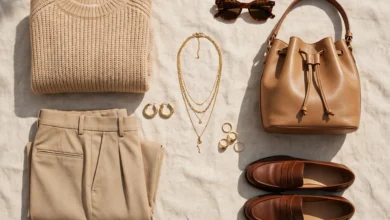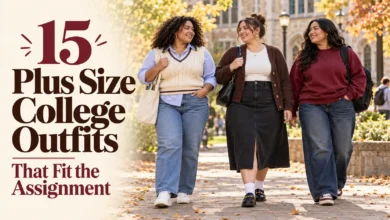
Start your back-to-school shopping list with the clothes that get you through an ordinary week: tops you can wash easily, bottoms that feel comfortable in class, shoes for your route, and layers for your weather. Add the pieces you are missing. A closet that already works does not need a complete replacement.
These 19 wardrobe pieces are a practical checklist for college students, with feminine styling examples you can adapt to your own taste. Some belong in your first shopping trip; others only make sense for your climate or schedule. You do not need to buy all 19.

What to buy first—and what can wait
First priority: replace worn-out daily shoes, missing everyday tops, an uncomfortable main pair of pants, or weather protection you need immediately. Socks and underwear also come before a second dressy outfit.
Next: choose a useful indoor layer and a more polished option if presentations, work, or campus events call for one. Save extra colors, a second casual jacket, and occasional outfits for later.
Before shopping, make five outfits from your own clothes and note what stops them from working. Our guide to shopping your own closet can help with that first pass. Use the same shoes and bag you expect to take to class.
- Check your requirements: read school, lab, clinical, athletic, or workplace clothing instructions before buying for those settings.
- Choose a workable palette: for example, navy, denim, ivory, and olive. Your existing clothes should decide the colors.
- Count laundry days: plan enough clean next-to-skin items to reach your next wash, with a small backup.
- Read the care label: a bargain becomes inconvenient if you cannot wash or dry it as directed. The FTC’s clothing care-label guide explains the instructions attached to garments.
The visuals below are AI-generated styling concepts, not photographs of tested products. Use them for outfit ideas; check the actual garment’s fit, fabric, and care instructions before buying.
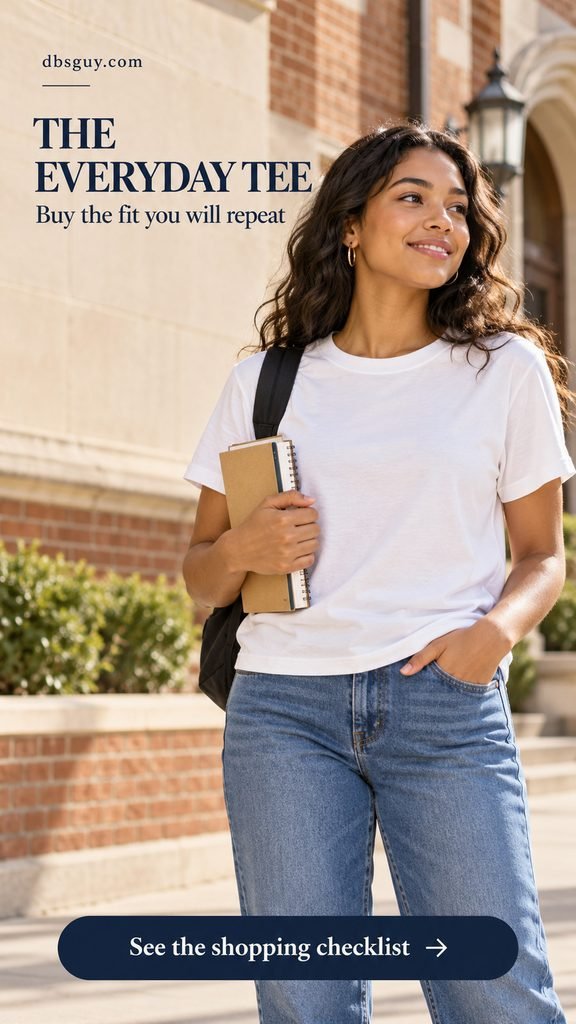
1. An everyday crewneck T-shirt
A plain tee earns its place when you can wear it with jeans, trousers, and your favorite casual bottom without adjusting it all day. Start with one color that fills a gap; white is useful, but a dark neutral may suit your laundry routine better.
Try it with the bra or base layer you normally wear. Check opacity in daylight, lift your arms, and see where the hem lands when you sit. A tee that only feels right when tucked in should still have enough length to stay there. Buy a second after you know the first one’s fit and care routine work for you.
2. A full-length layering tank
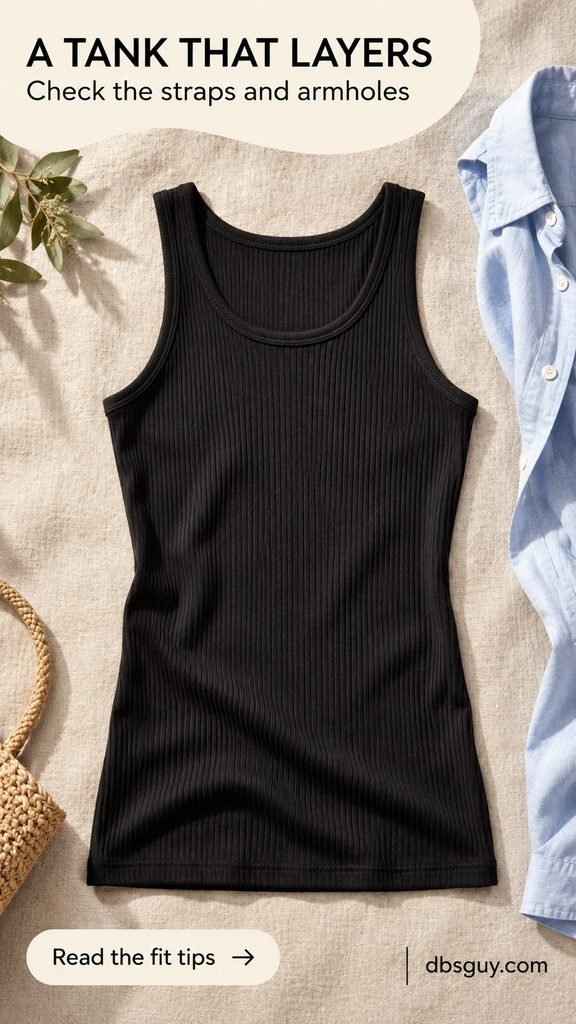
A tank serves a different purpose from a tee: it can sit under an open shirt or cardigan without adding sleeves. A full-length black ribbed version is an easy starting point if it works with your existing layers.
Look at the armholes, strap placement, and neckline with your usual undergarments. Bend forward and reach overhead to check coverage. If you would only wear it under one particular top, it may not deserve an early place on the list. For a school with sleeve requirements, use it as an underlayer and keep the outer shirt on.
3. A lightweight long-sleeve top
Choose this for days when a short sleeve feels too bare but a sweatshirt is more warmth than you want. Thin jersey also fits more easily under a cardigan than a bulky knit does.
Cream-and-navy stripes add some pattern to a small wardrobe without requiring a separate set of matching clothes. A solid works just as well. Try the sleeves under your jacket: cuffs should not bunch into a lump at your wrists. If long sleeves will spend most of the semester in a drawer in your climate, keep one you already own and prioritize warm-weather tops instead.

4. A relaxed button-down shirt
An everyday button-down can work open over a tee, buttoned with jeans, or tucked into trousers. Pale blue is shown here because it pairs easily with denim, charcoal, and navy; use another color if it fits your closet better.
Button it fully during the fitting, even if you expect to wear it open. Sit, reach forward, and check whether the placket pulls. Room through the shoulders is useful, but sleeves that cover your hands can become annoying when writing. Skip a delicate, high-maintenance shirt if this is supposed to be your grab-and-go school layer.

5. A lightweight cardigan
If you get cold indoors, a cardigan lets you add warmth without changing your whole outfit. Choose one that folds into the bag you take to class rather than assuming you will carry it all day.
An oat-colored, hip-length style works over the white tee, striped top, tank, or navy dress in this list. Check that the knit does not itch at your neck or wrists, and that buttons stay closed without pulling if you want to wear it that way. Read the drying instructions before buying: needing a flat drying spot matters in a small dorm.

6. A comfortable crewneck sweatshirt
A sweatshirt is the warmer casual layer for early classes, study sessions, and cool evenings. Pick a shape that works over your tee and under your outerwear; buying the biggest size is not the only way to get a relaxed fit.
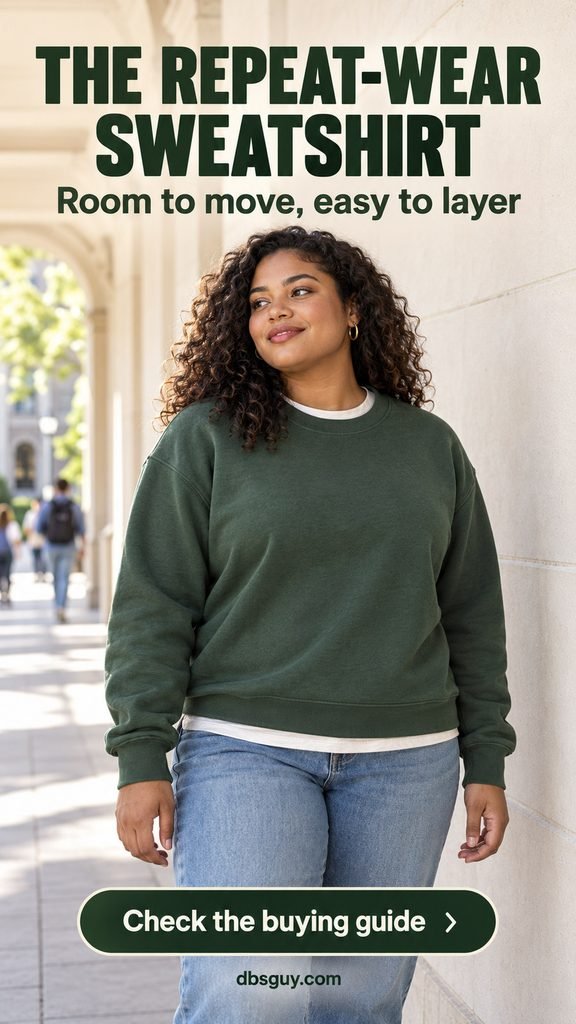
The forest green version shown adds color while still working with blue jeans and charcoal joggers. Raise your arms and check the hem, then bend your elbows to test the cuffs. If you want school spirit wear, let that sweatshirt fill this slot. You do not need an additional plain version just to complete a checklist.
7. Straight-leg jeans that fit seated
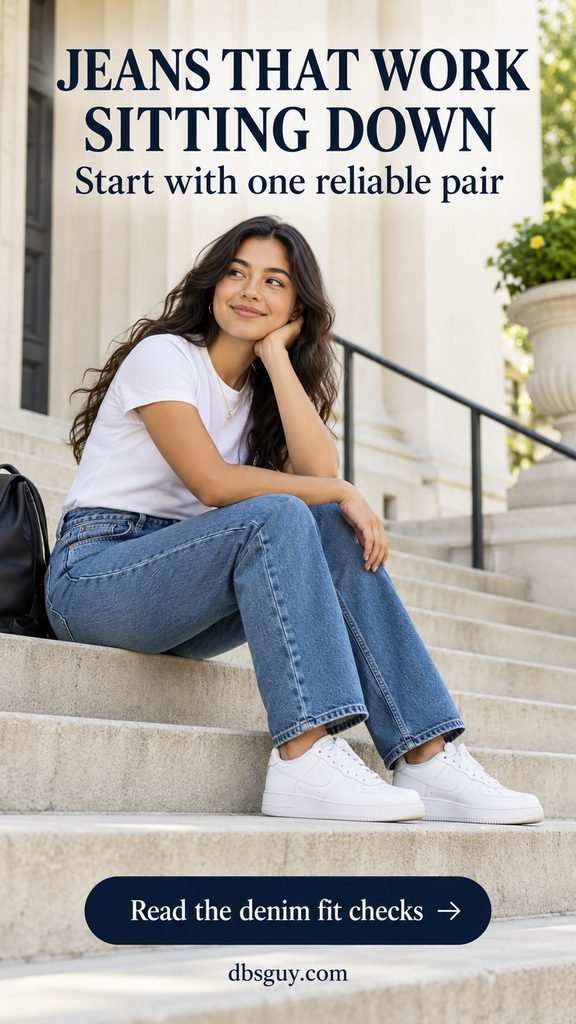
Start with one reliable wash and rise before buying a second silhouette. Mid-blue straight-leg jeans work with every top shown here, but your favorite cut is a better choice if you already know you enjoy wearing it.
Sit down in the fitting room. Check whether the waistband presses, the back gaps, or the thighs feel restricted. Then try the jeans with your daily shoes and check the hem while walking. Petite, tall, curvy, and other fit options are worth comparing when the standard cut is almost right. Do not buy a painful waist on the assumption that wear will solve it.
8. Relaxed trousers for a more polished day
Trousers give you an option when denim feels too casual for a presentation, campus job, or event. Charcoal straight-leg trousers can go with the button-down and loafers, then switch to a tee and sneakers for an ordinary class day.
Look for pockets that lie flat, a waistband that stays comfortable seated, and a hem that works with the shoes you own. Allow for any alteration cost before deciding that a pair fits your budget. These are a flexible everyday option; check an interview or event’s actual dress expectations rather than assuming one pair covers every formal situation.

9. Opaque leggings, if you wear them regularly
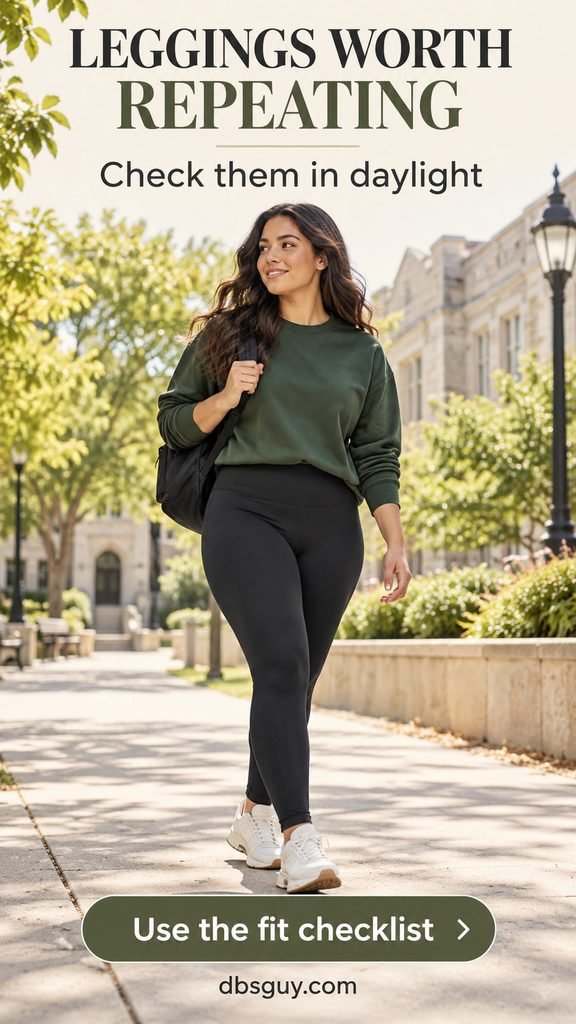
Leggings are worth adding when they fit your style, school rules, and routine. If you prefer woven pants, keep that money for another everyday pair instead.
For a pair you plan to wear to class, check opacity while bending in bright light, whether the waistband rolls, and whether the fabric catches on your other layers. A mirror check will not establish how long the fabric lasts, but it can reveal coverage problems before checkout. If you also want workout use, read the item’s stated intended use and care instructions; a soft lounge pair and training leggings are not automatically interchangeable.
10. Joggers for the casual part of your week
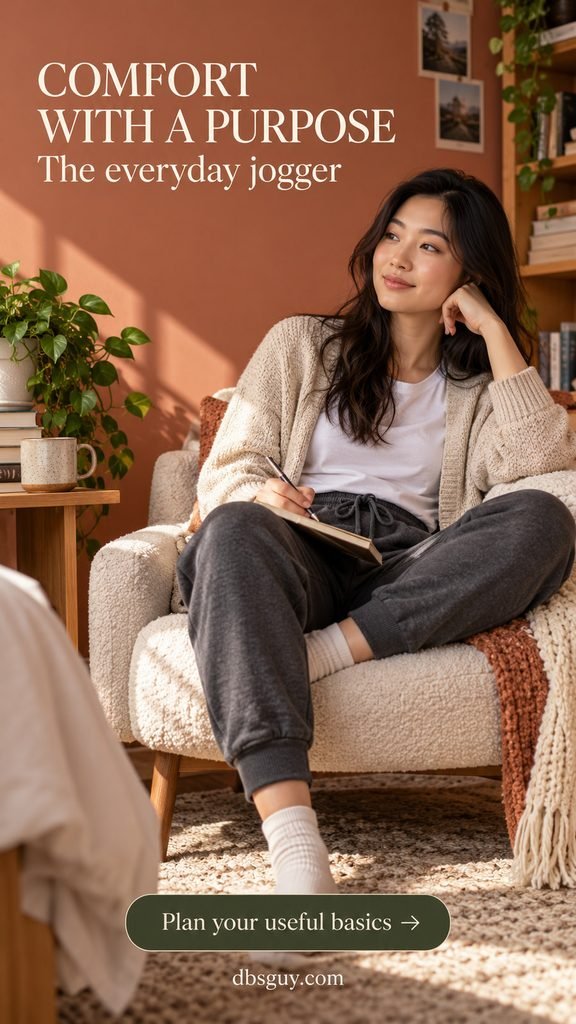
Joggers offer a looser alternative to leggings for dorm downtime, library sessions, and relaxed classes. Charcoal or navy can pair with the tops you already wear, so a matching sweatshirt is optional.
Try sitting with your phone in a pocket to see whether the pocket placement bothers you. Check the drawstring, ankle opening, and rise; an elastic waistband can still feel restrictive if the cut is wrong. Choose cuffs that stay above the floor without pulling the legs tight. If your favorite sweatpants already do this job, mark this category covered and move on.
11. Everyday shorts for warm weather
Move shorts higher on the list if school starts in hot weather where you live. Relaxed tan shorts give you a different option from denim and work with the white tee, striped long sleeve, or button-down.
Check school rules first, then judge the length seated as well as standing. Walk a few steps and see whether the legs ride up or the waistband shifts. Choose pockets that hold what you need without pulling the shorts out of shape. For a cool-weather campus—or a wardrobe where you never reach for shorts—this is an optional category, not a gap you must fill.

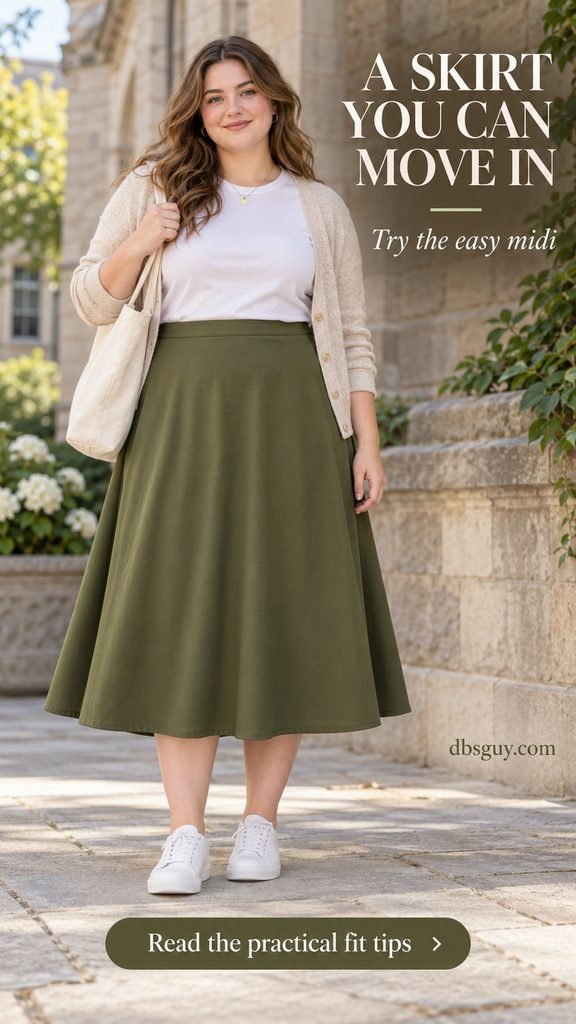
12. A midi skirt you can move in
An A-line midi skirt is useful if you like feminine outfits but still want room to walk and sit. The olive version shown works with a tee and sneakers, while the cardigan adds a light layer.
Take a normal stride and try a step before buying. A narrow hem can restrict movement even when the waist fits. Check the fabric against daylight and decide whether you need a lining or a slip. If your commute involves a bike, assess the skirt with that routine in mind; pants may be simpler. Skip this piece entirely if you consistently choose trousers instead.
13. An easy jersey dress
A simple T-shirt dress gives you a complete base outfit on a morning when you want fewer decisions. Navy, a relaxed shape, and a comfortable knee-length hem make the version shown easy to pair with sneakers and the oat cardigan.
Check how the dress falls when you sit and whether your backpack pulls the shoulders or shifts the hem. Look at opacity and pocket placement, if it has pockets. This is a casual one-piece option, not an automatic substitute for formalwear. If you would rather wear separates, another everyday top will probably get more use than a dress bought for an imagined occasion.

14. Sneakers for your everyday campus route
If your current shoes pinch or are worn out, deal with this before buying another outfit. Start with the pair you will use to reach class, whether that means a short commute or a route across several buildings.
Try both shoes with your usual socks. Walk around, check for toe pressure and heel slipping, and see whether you can fasten them comfortably. Do not assume a popular model will fit your feet. Neutral sneakers are easy to style, but comfort is individual and an image cannot establish it. Before wearing a new pair outdoors, check the seller’s return conditions and test them indoors.

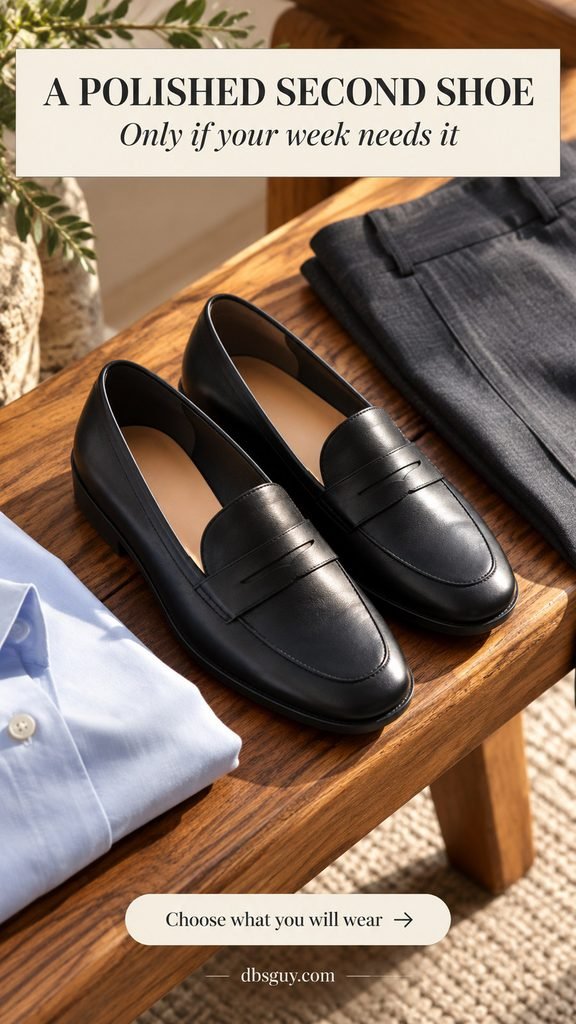
15. Flat loafers for days that need them
A second pair of shoes earns its place when it covers a real gap. Plain black loafers may suit a campus job or a more polished outfit with trousers; if sneakers cover your week, this purchase can wait.
Try loafers with the socks you intend to wear. Check the heel, toe room, and where the upper bends when you walk. A flat shoe is not automatically comfortable, and a sole’s appearance does not prove grip on wet ground. Choose a style you can put on and fasten easily. Skip stiff, rubbing shoes bought only because they look good beside a pair of trousers.
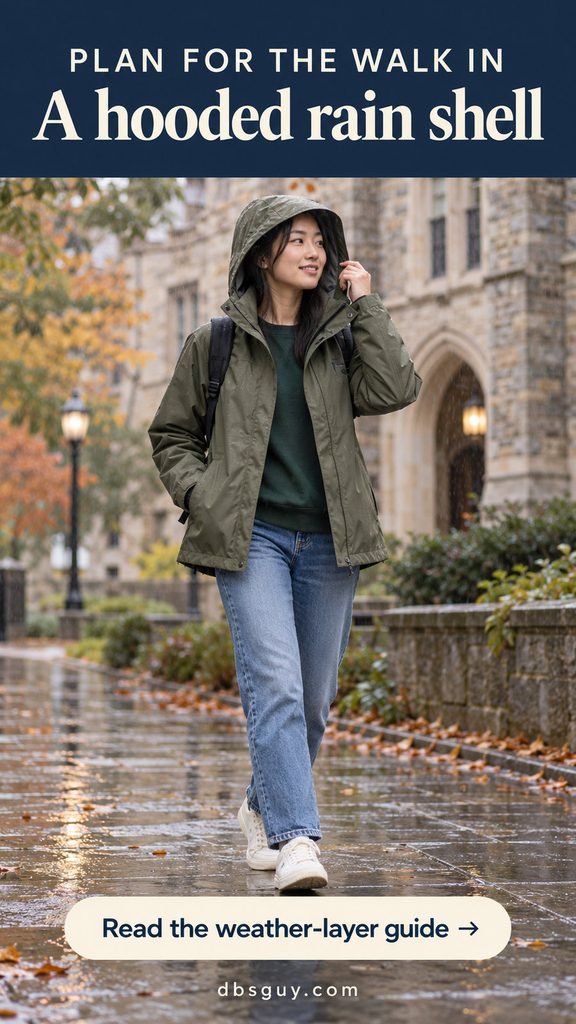
16. A hooded rain shell
For a rainy commute, choose outerwear by its stated weather protection before its color. A water-resistant layer is intended for lighter exposure; a waterproof shell is the more relevant category for sustained rain. Check the product description for construction details rather than treating those terms as interchangeable.
Try the shell over the layer you expect to wear underneath. Reach forward, adjust the hood, and check wrist coverage and access to pockets while carrying your bag. The olive concept shows a hip-length shell over a sweatshirt. It illustrates layering, not verified waterproof performance. A shell also does not replace insulation when temperatures drop.
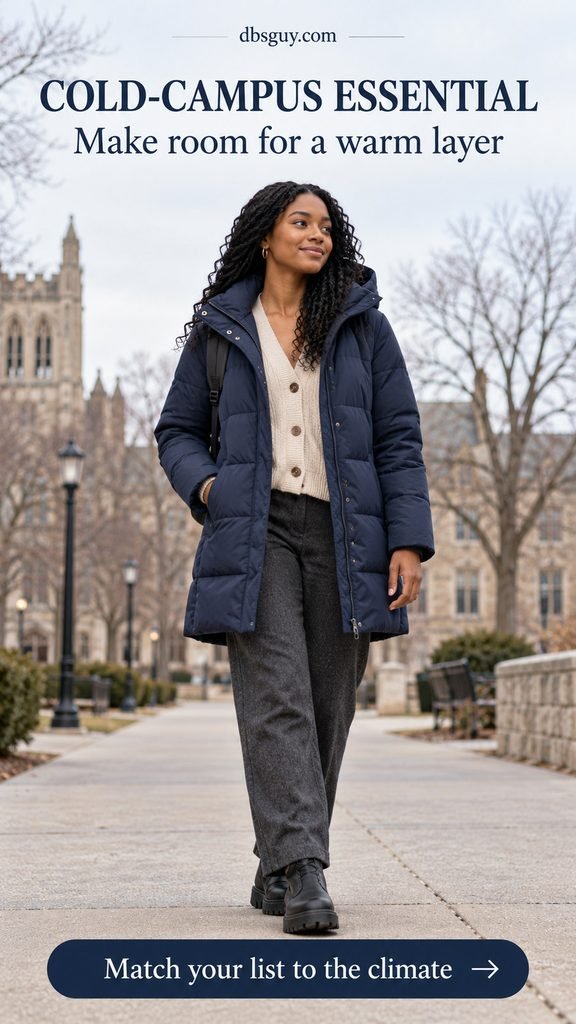
17. An insulated coat for a cold campus
A warm coat belongs near the top of the list if cold weather is already part of your school day. If you are moving to a different climate, plan for the destination rather than the weather at home.
The navy, mid-thigh coat shown has room over a cardigan and covers more than a short jacket. Try your intended layers underneath and check whether you can sit, reach, and carry your bag comfortably. Shape alone does not tell you how warm a coat is; review its materials and manufacturer guidance. Snow or ice may also call for suitable boots and accessories beyond this everyday wardrobe list.
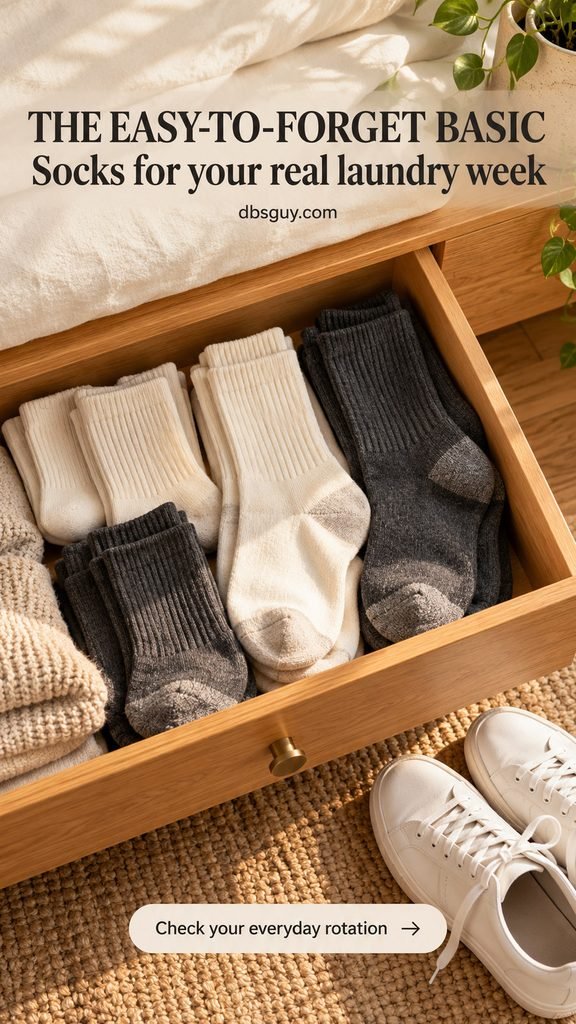
18. Socks that cover your laundry cycle
Count sock-wearing days between washes before buying a multipack. If you wear socks every day and do laundry weekly, seven clean pairs plus a couple of backups is a reasonable planning example. Add more when workouts or wet weather mean changing pairs; the number is not a rule for everyone.
Check that the cuff, toe seam, and thickness feel right inside your usual shoes. A bulky crew sock may change the fit of a loafer. Use the same laundry count for underwear and any bras or base layers you need. Those are part of your real essentials budget, even though the styling images focus on visible wardrobe pieces.
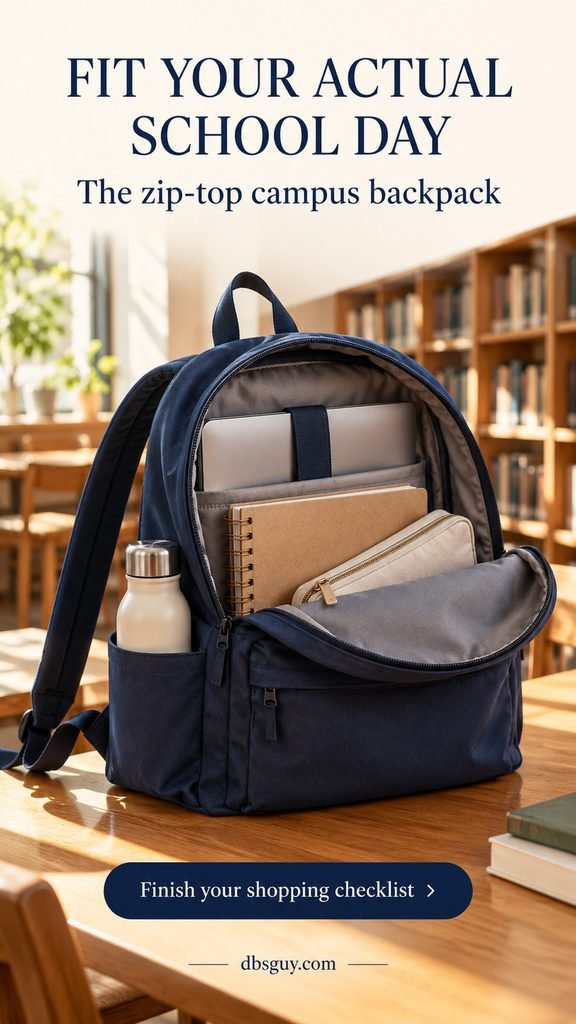
19. A zip-top backpack that fits your school day
A bag finishes the outfit, but its first job is to hold what you actually take to class. Lay out your laptop, notebook, charger, bottle, and other daily items before choosing a size.
Check the laptop compartment’s stated dimensions against your device, including its case. A general screen-size label is not enough. If possible, try the bag with a realistic load and see whether you can adjust the straps and reach the pockets. The navy concept has a padded laptop sleeve and an outside bottle pocket. For help separating class supplies from workout extras, read What’s in My College Gym Bag.
Turn the checklist into a shopping plan
Mark each category covered, replace, buy now, or wait. Buy-now items should solve something specific: no comfortable pants, too few clean tees between washes, or no rain layer for your commute.
Write a spending limit beside each genuine gap and add tax, delivery, and any alterations before checkout. This guide does not quote live prices or recommend a particular retailer. Compare the total you would pay, the care involved, and the seller’s return conditions.
For example, a hypothetical $150 budget could reserve $60 for needed daily shoes, $45 for pants, $25 for tops, and $20 for socks and checkout costs. Those are planning allowances, not verified prices or a promise that every item will fit them. If your shoes are already fine, move that allowance to the gap that matters.
Try this one styling check before keeping a new piece: make a complete outfit with clothes you own, then try another if versatility is the reason you bought it. A practical rain shell does not need to create three new looks to be worthwhile.
Back-to-school wardrobe questions
How many clothes do I need for a week of college?
Work backward from laundry. If you want a fresh top each day across seven days, start with seven suitable tops from your existing closet, plus a backup if useful. Bottoms and layers may repeat when clean and appropriate. Add changes for workouts, jobs, or course requirements. The 19 entries here are categories to check, not a minimum number of purchases.
What if I only have money for a few pieces?
Fix the problem you notice most often. That might be one better-fitting pair of pants and two everyday tops, or replacing shoes while keeping every outfit you already own. Do not spread a limited budget across optional categories just to mark them complete.
Should I buy a blazer or interview outfit now?
Buy for an actual requirement or upcoming event. A shirt and trousers may cover some situations, while other interviews or programs have different expectations. Check those first. If nothing is scheduled, note the gap and wait until you know what is needed.
Is it better to buy everything before school starts?
Have the clothes and weather protection you need for the first days. You can choose optional pieces after seeing your commute, storage, laundry access, and typical schedule. For the rest of your arrival planning, use our first-week-of-college guide.