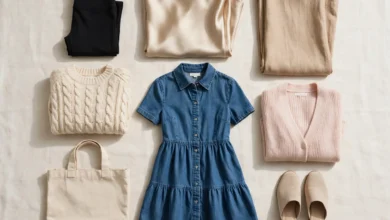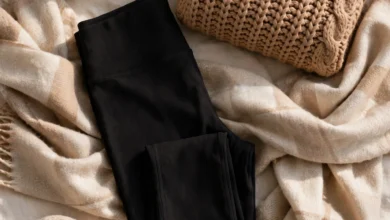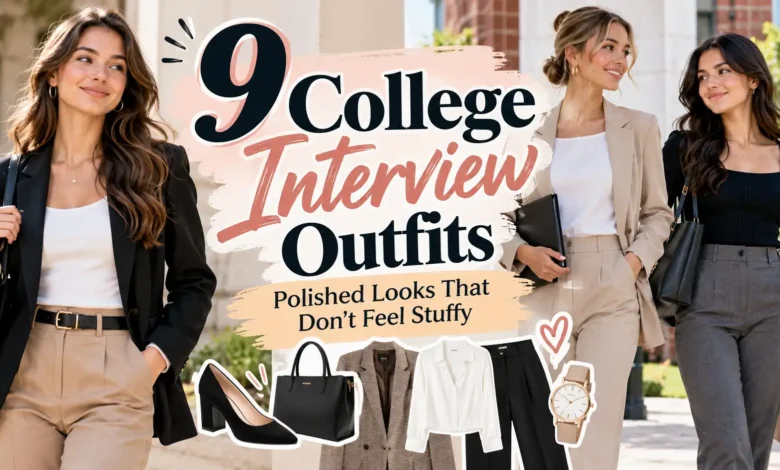
A knit top, comfortable trousers, and shoes you can walk in are a useful starting point for a college interview. Add a cardigan or soft blazer if you want another layer. You do not need to build an office wardrobe for one admissions conversation.
These nine college interview outfits give you specific combinations to work with, from a relaxed alumni meeting to a chilly campus visit. Most are styled with women’s wardrobes in mind, but the trouser, shirt, and knitwear formulas work across gender expressions. Start with pieces you already own and adjust the colors, coverage, and fit to feel like yourself.
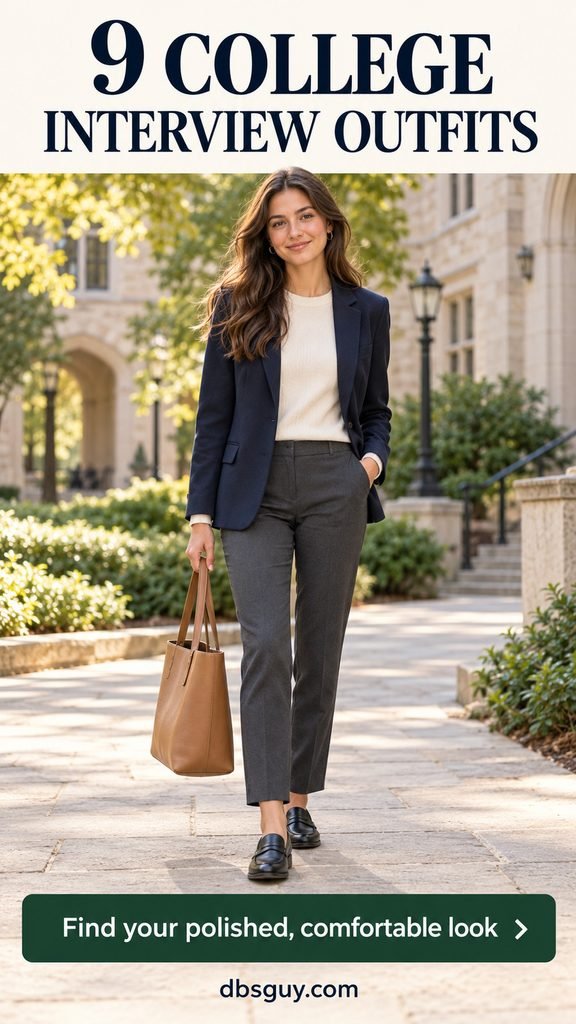
The visuals are AI-generated outfit concepts, not photographs of real applicants or clothing we have wear-tested.
First, Check What Your College Actually Asks You to Wear
Read the invitation before deciding how formal to go. MIT’s undergraduate interview guidance, for example, says applicants do not have to dress up. That is guidance for MIT, not a dress code for every college.
If your invitation gives no clothing guidance, the outfits below offer a polished middle ground: familiar clothes with a little structure, enough room to sit comfortably, and practical shoes. These are styling suggestions, not admissions requirements. An outfit cannot guarantee a successful interview.
- For a relaxed alumni conversation: Start with the cardigan, Oxford shirt, or knit polo looks.
- For an on-campus meeting: The soft blazer, shirtdress, or sweater-and-skirt combination gives you an easy starting point.
- For cold weather: Build around the mockneck and coat, with footwear suited to the actual forecast.
- For a video interview: Try the matte blouse and test the complete outfit on your own camera.
A scholarship panel, audition, or program interview may have different instructions. Follow those first. Religious clothing, cultural dress, natural hair, mobility aids, and the coverage you prefer belong in the outfit you plan.
1. A Soft Navy Blazer, Ivory Knit, and Straight-Leg Trousers
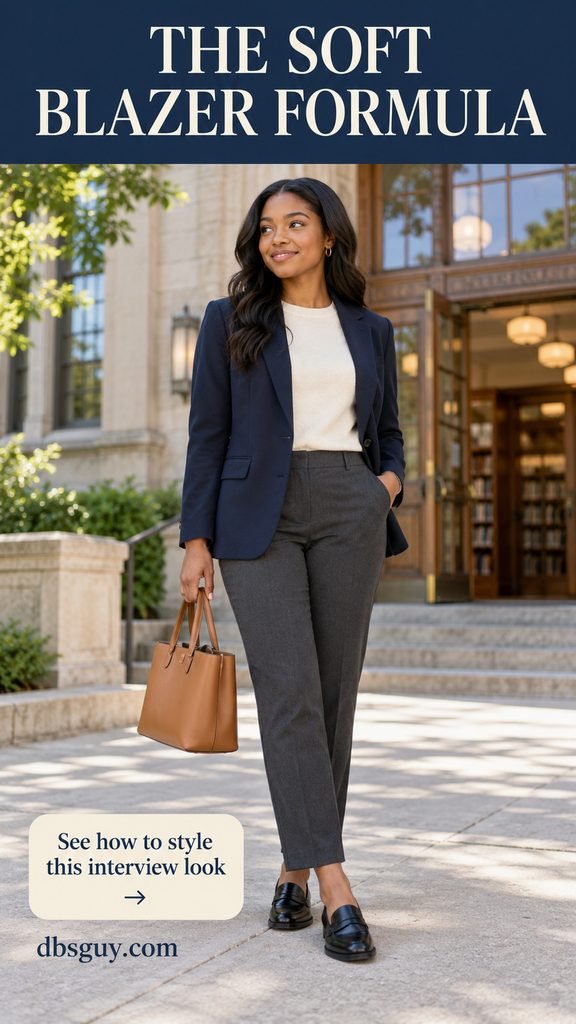
This is the most structured option in the lineup without being a matching suit. The navy blazer gives the outfit a defined shape; the ivory crewneck keeps the layer underneath simple and soft. Charcoal ankle-length trousers and black loafers finish it without adding heels or a tie.
Look for a blazer that sits comfortably at your shoulders and lets you reach forward. Try it while seated, with your hands resting as they would during a conversation. If the sleeves pull or the back feels tight, a different cut will serve you better than sizing for a particular label.
A plain knit you already wear can work here. Choose enough substance that it sits smoothly beneath the jacket, and check that it stays in place when you stand up. Carry a tote that holds what your invitation asks you to bring; there is no need to buy a briefcase.
2. A Sage Cardigan, Cream Tee, and Navy Wide-Leg Pants
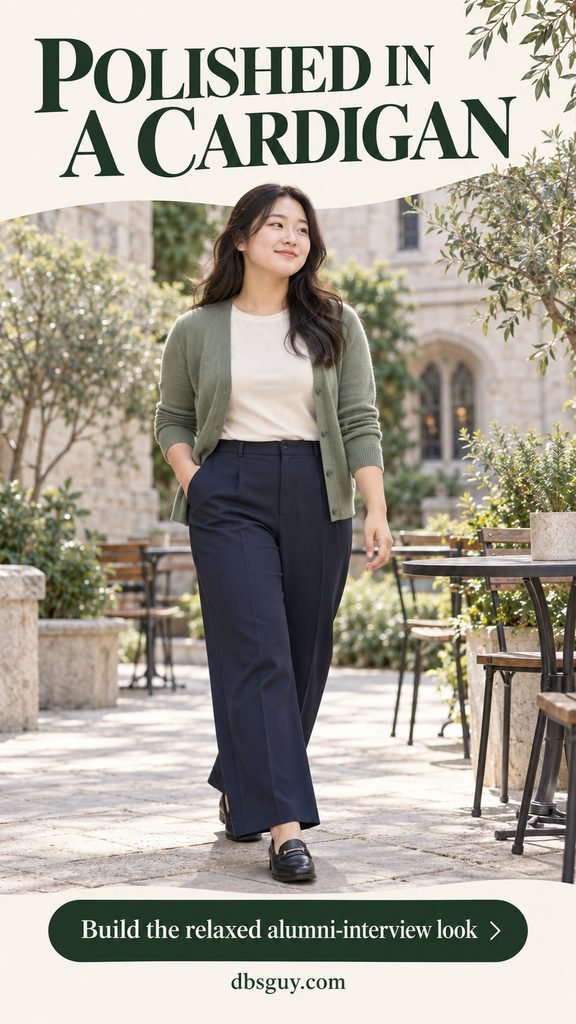
A fine-knit cardigan is a useful choice when a blazer feels unlike you. Pair a sage version with a plain cream crewneck tee, navy tailored wide-leg pants, and black loafers. The green adds some color while the trousers keep the combination intentional.
This works especially well for a relaxed alumni interview in a café or another informal setting. Wear the cardigan open if the tee sits neatly underneath. If you prefer it buttoned, check for gaps when seated rather than assuming it fits because it looks fine standing up.
Keep the pant hems clear of the ground in the shoes you will actually wear. Wide legs should give you room to move, not become something you have to lift on stairs. Remove visible pilling from the cardigan and choose a tee without a stretched neckline.
3. A Pale-Blue Oxford Shirt, Tan Chinos, and Brown Loafers
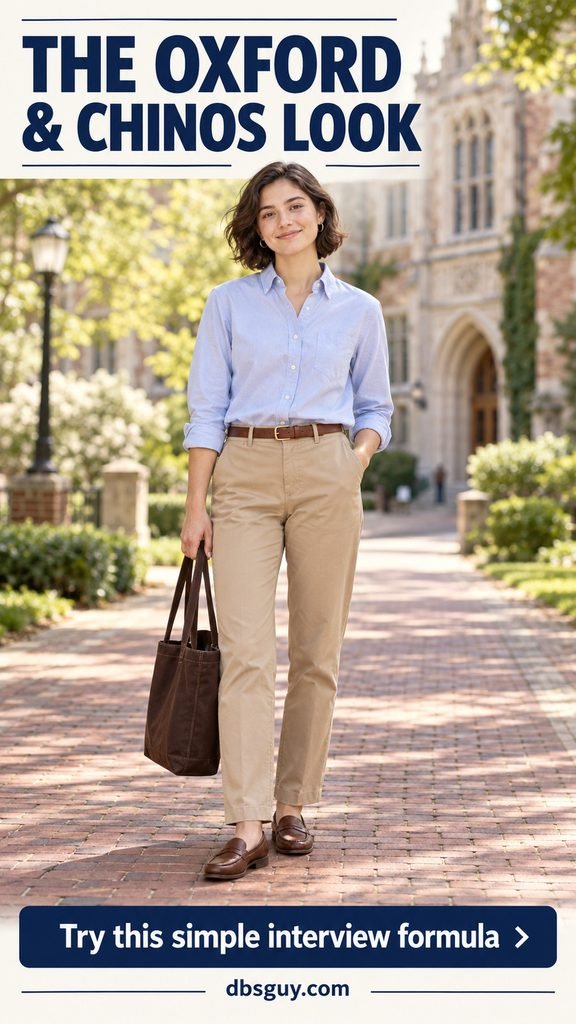
The Oxford-and-chinos combination is straightforward to borrow from an existing wardrobe. A pale-blue cotton button-down, tan straight-leg chinos, a brown belt, and brown loafers provide definition without needing a jacket.
Choose the shirt by how it behaves, not how crisp it looks on a hanger. Button it, sit down, and reach for a bag. The front should not pull open, and the collar should feel comfortable. A tucked shirt makes the waistline tidy; if tucking bothers you, use a shirt designed with a shorter untucked hem.
Press the areas that show most: the collar, front placket, and cuffs. You do not need to buy matching brown accessories. Similar tones are enough, and a plain bag you own is perfectly usable. This is also an easy formula to adapt with a longer shirt or different coverage.
For ways to reuse similar layers after the visit, explore DBSGuy’s fall fashion outfits, including casual and business casual ideas.
4. A Forest-Green Midi Shirtdress and Cognac Flats
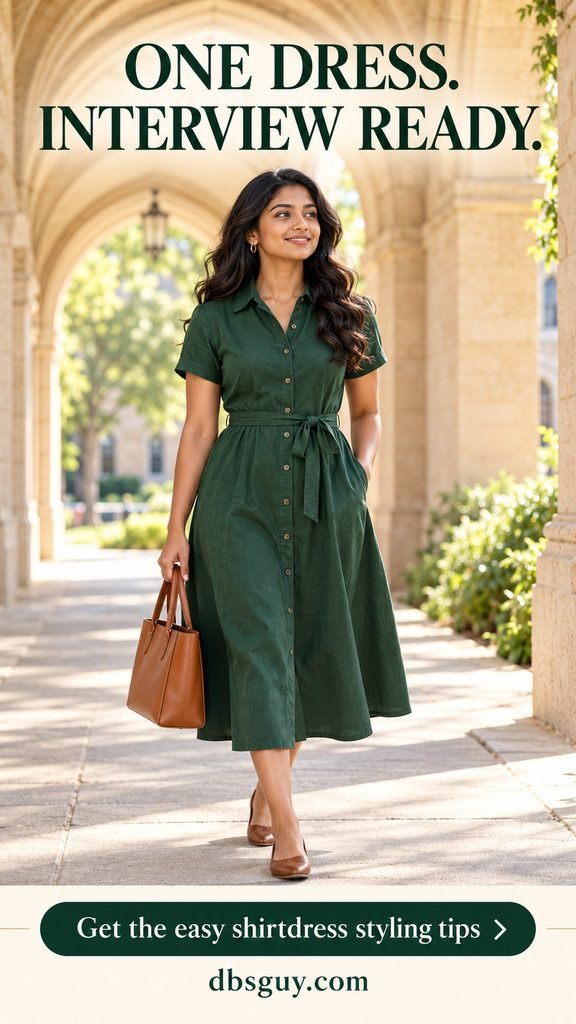
If you would rather choose one garment than coordinate separates, try a short-sleeve shirtdress. The concept pairs forest green with a matching fabric waist tie, a mid-calf hem, cognac closed-toe flats, and a small coordinating tote.
A collar and button front give the dress some shape while leaving the skirt easy to move in. For a warm campus visit, choose a fabric that feels comfortable in the forecast and check whether it needs a slip. Stand near a bright window to check opacity before the day arrives.
The important fit check is through the buttons. Sit, bend to pick up your bag, and take a long step. If the front gaps or the skirt restricts you, try another cut. Bring a light layer if you expect strong air-conditioning, but choose shoes you have already walked in rather than making interview day their first outing.
5. A Camel Sweater, Navy A-Line Midi Skirt, and Mary Janes
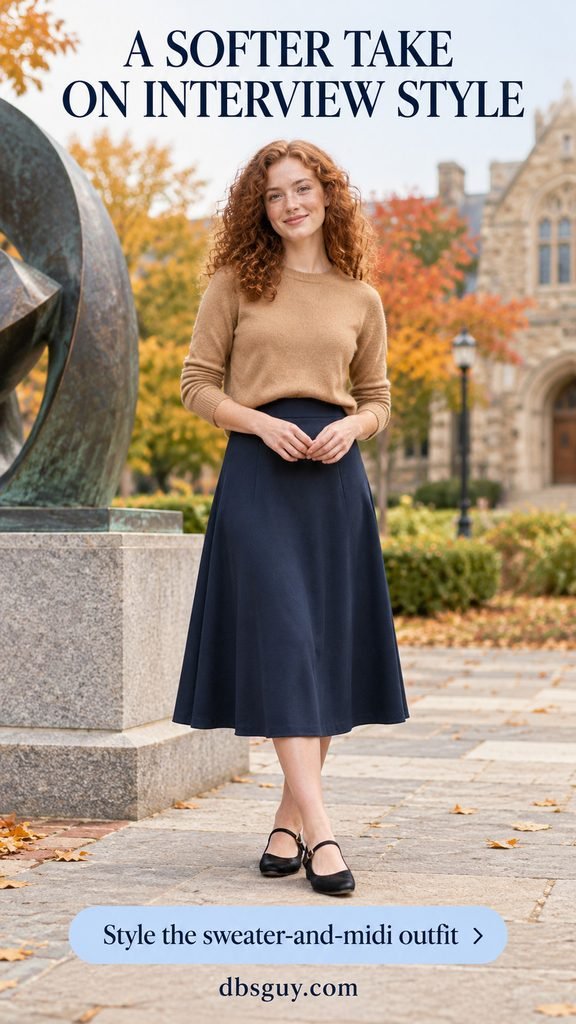
This combination suits someone who likes a skirt but does not want the close fit of a pencil skirt. A navy woven A-line midi leaves room to sit and walk, while a camel fine-gauge sweater adds warmth without a bulky jacket. Flat black Mary Janes make a practical finishing choice.
Use a small front tuck if the sweater is thin enough. If it bunches beneath the skirt, leave it untucked and try a hem that ends near the waistband. The aim is a comfortable waist, not a particular styling trick.
Check the skirt length on your own body, especially on stairs and when seated. Mid-calf is the illustrated option, not a universal required length. Add opaque tights when they suit the weather, and make sure the shoe strap does not rub when you walk.
6. A Burgundy Mockneck, Charcoal Pants, and a Camel Coat
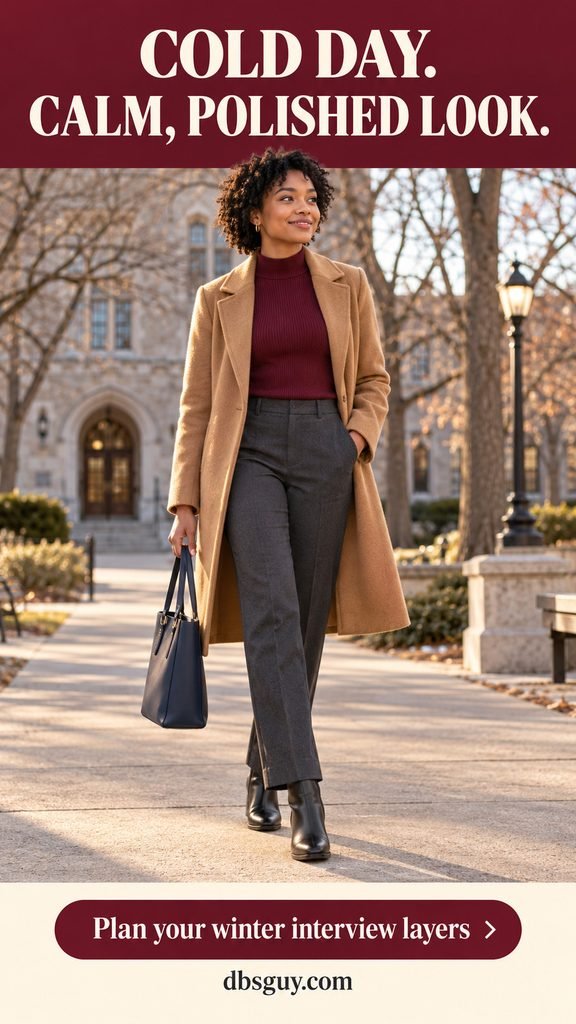
For a chilly interview day, build a complete indoor outfit first: a burgundy fine-knit mockneck, charcoal straight-leg trousers, and black ankle boots. Then add the camel coat. That way, taking off your outerwear does not leave you with an unfinished combination.
Choose a neckline you can wear without tugging. If a mockneck feels restrictive or itchy, use a crewneck in the same color. Check that the trouser hems fall comfortably over the boot shafts instead of catching every time you stand.
The illustrated boots have a low, broad heel and suit a dry walkway. For rain, snow, or ice, prioritize weather-appropriate footwear and traction; change indoors if needed. A wool coat is a styling option, not a reason to be cold or wet. Wear the warm outerwear you already have if it better suits the conditions.
7. A Cream Sweater Vest Over a White Button-Down
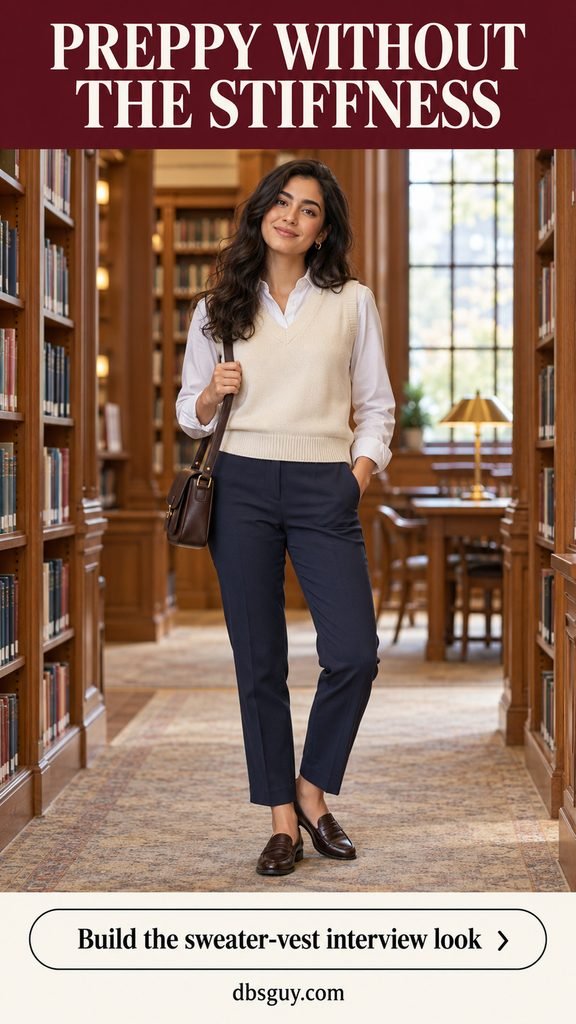
A smooth cream sweater vest brings an academic feel to a white collared shirt without the stiffness of a blazer. Add navy straight ankle trousers, dark brown loafers, and a small satchel. The visible collar and cuffs give this look its character, so extra accessories are optional.
Keep the shirt sleeves comfortable beneath the vest’s armholes. A very oversized shirt may bunch at the sides; a very fitted one may pull when you reach forward. Try both layers together before deciding either piece fits.
This is useful for a cool morning when you want an extra layer around your torso. If your hair usually falls forward while you read or talk, choose a familiar way to keep it comfortable. DBSGuy’s 8 Best Preppy Hairstyles: The Best Styles for a Classic Look offers optional styling inspiration; no particular hairstyle is required for an interview.
8. A Matte Blue-Gray Blouse and Navy Trousers for Video
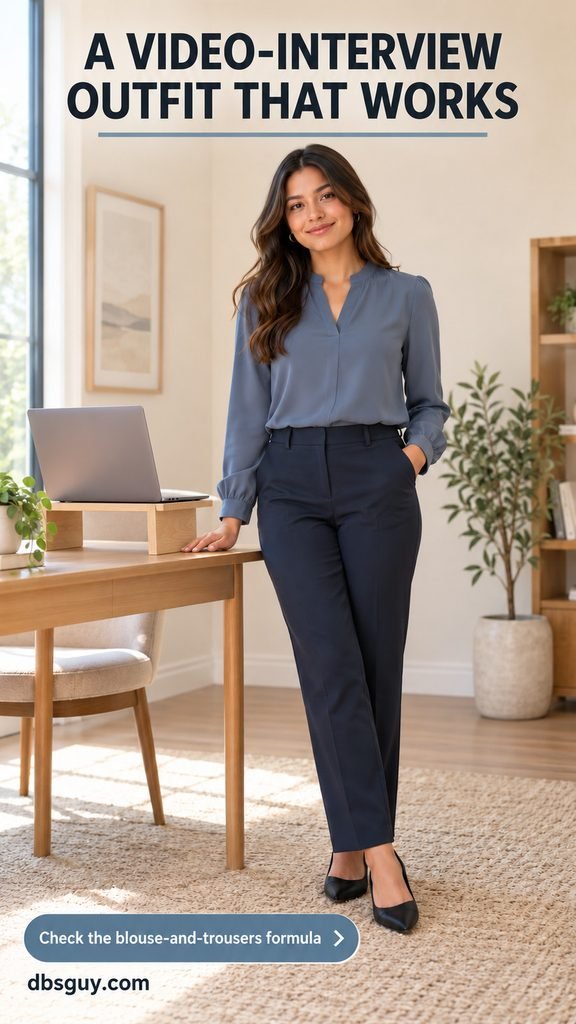
A muted blue-gray blouse with navy trousers gives you a simple video-interview outfit that also works in person. Choose a matte fabric and a neckline you will not need to adjust. The illustrated blouse has a small split neckline, with black pointed-toe flats completing the outfit.
Before choosing the color, open the actual video platform in the room you plan to use. A top that looks distinct in a mirror may blend into your wall or look different under a lamp. If it does, change the lighting, background, or top based on what you see.
Test the blouse while seated, including what happens when you lean forward. Set the camera near eye level on a stable surface, and check for glare from jewelry or glasses. A solid top is an easy starting point, but you do not have to replace a comfortable patterned blouse if it looks clear on your camera.
9. A Navy Knit Polo, Olive Chinos, and Walkable Loafers
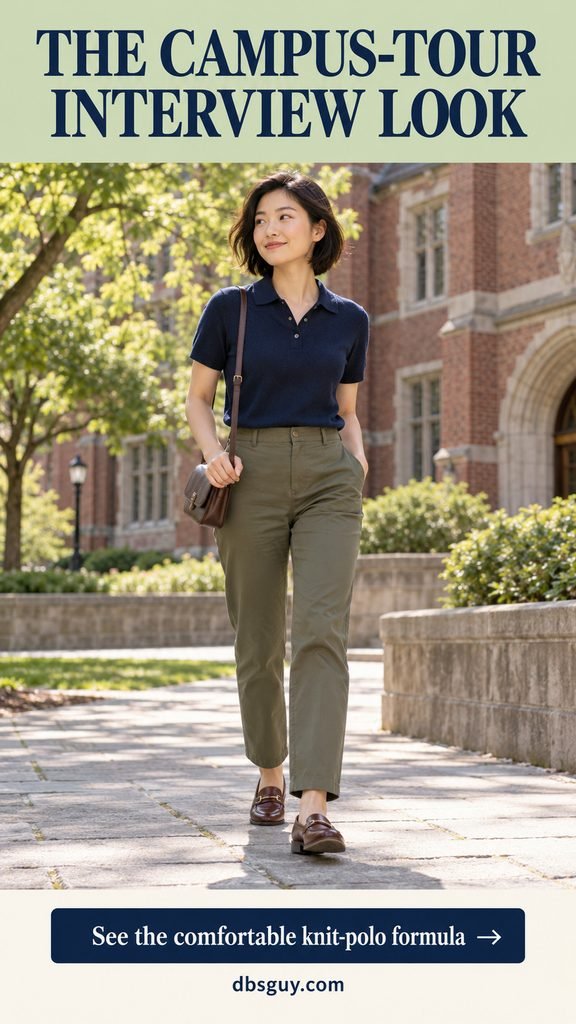
For an informal interview paired with a campus tour, a plain fine-knit polo is an alternative to both a tee and a button-down. The concept combines a navy short-sleeve polo with olive straight-leg chinos, brown loafers, and a small shoulder bag.
The knit texture and collar make this feel more considered than a sports top. Look for a collar that lies flat and a hem that stays comfortable tucked or untucked. If the school explicitly welcomes casual clothing, use that guidance rather than adding layers you do not want.
Walking comfort matters more than the exact shoe pictured. Wear supportive shoes that suit your feet, including orthotics or other needs. Clean sneakers can be an option when the college’s guidance and the setting allow them. Test the whole outfit on a walk, with the bag you intend to carry, before committing to it.
Build Your Outfit Without Buying a Whole New One
Start with the best-fitting pants, skirt, or dress you already own. Add one familiar top or layer, then shoes you trust. Repeating a navy, black, brown, or cream piece is an easy way to coordinate; there is no requirement to wear neutrals.
If something is missing, identify the actual gap before shopping. You may need a plain top under a cardigan rather than a new blazer, or a pressed shirt rather than an entirely different outfit. Borrowing a layer or checking secondhand options can help, but leave time to check fit and follow the garment’s care label.
A comfortable fit does more useful work than an expensive label. For sensory needs, choose familiar textures and remove irritating tags where practical. Build the outfit around your body and mobility needs rather than forcing yourself into the concept image.
Do One Seated, Walking, and Camera Check
- Sit: Make sure waistbands, buttons, necklines, and skirt hems stay comfortable without constant adjustment.
- Move: Reach forward, walk, and use stairs if those are part of your visit. Check that shoes and bag straps feel secure.
- Check the forecast: Choose suitable outerwear and footwear for the route, not just the interview room.
- Look closely: Deal with stains, loose threads, visible pilling, or wrinkles according to the garment’s care instructions.
- Review the invitation: Confirm clothing guidance and bring only the materials requested. For video, check your outfit and setup on camera.
College Interview Outfit Questions
Do I need a suit for a college admissions interview?
Do not assume so. Start with the college’s instructions; MIT, for example, explicitly says dressing up is unnecessary. The blazer look here is an option if you enjoy structure. A neat shirt, cardigan, or dress can be a more comfortable choice when no formal attire is requested.
Can I wear jeans?
Check the invitation and admissions guidance. Where casual clothing is welcome, clean jeans without distressing may fit the setting. If you want a slightly dressier option and already own comfortable chinos or trousers, use those. Buying new pants is not an admissions requirement.
Are sneakers, flat shoes, or no makeup okay?
Heels and makeup are not part of these outfit formulas. Wear shoes that meet your comfort and mobility needs, then consider any specific dress guidance. For an informal setting that welcomes casual clothing, clean sneakers may be practical, especially if a tour is involved.
What if I have a scholarship interview or an audition too?
Read the instructions for that activity separately. A performance, practical assessment, or scholarship event may call for clothing different from an informal admissions conversation. Ask the organizer when the instructions are unclear, and bring a change if the activities require different outfits.
Choose the combination that lets you sit, walk, and speak without managing your clothes. Set it out ahead of time, then give your attention to what you want the interviewer to learn about you.