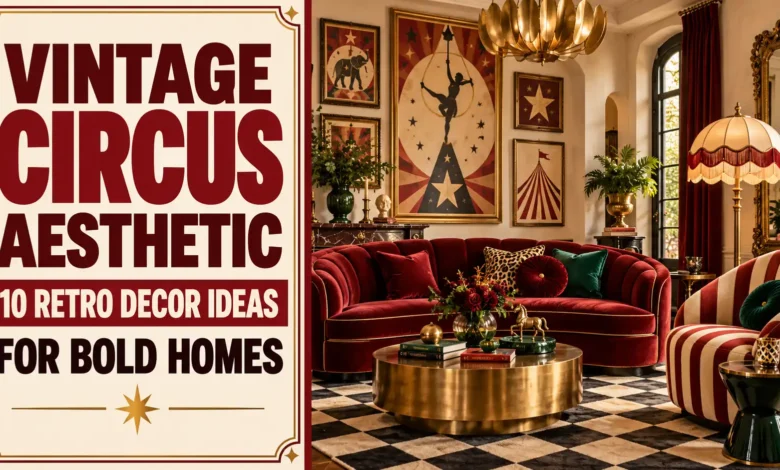
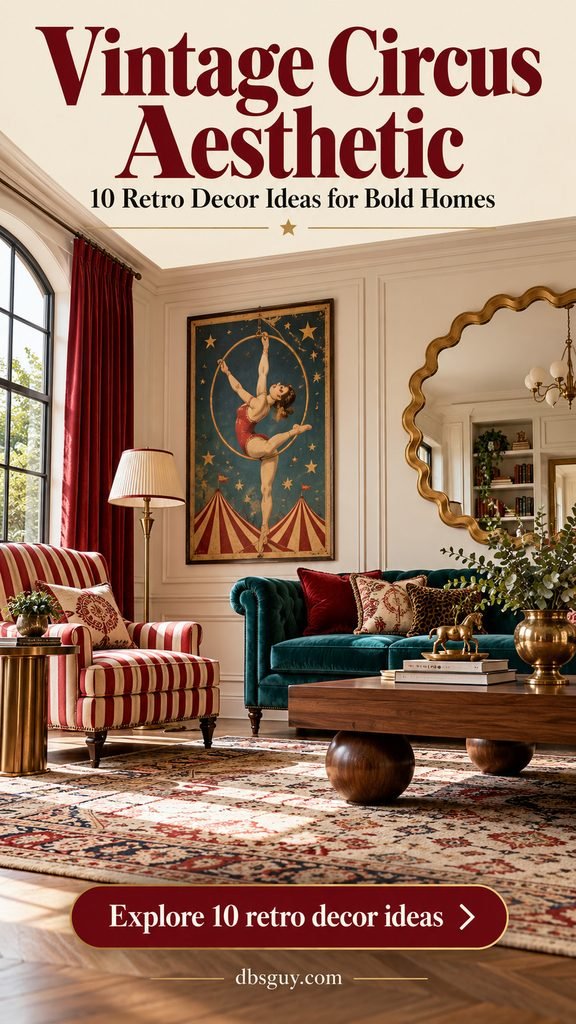
The vintage circus aesthetic works through bold stripes, curved edges, old-poster colors, and a little theatrical shine. For a home that still feels comfortable day to day, start with one major feature—an accent wall, ceiling, or chair—then support it with two quieter details.
These 10 retro decor ideas range from a framed-print refresh to a painted ceiling. Each includes a way to make the look work in a real room, plus a detail to consider before spending or decorating.
The images are AI-generated design concepts, not photographs of completed homes. Use them for color, shape, and placement inspiration; check dimensions and installation requirements in your own space.
Choose Your Starting Point
For an easy first experiment, choose the art, lamp, or velvet pillow approach. A chair or window treatment takes more planning but can move with you. The ceiling and painted cabinet are bigger commitments.
My suggested starting palette is cream, burgundy, and pale blue, grounded by walnut. Mustard, teal, and navy offer alternate directions in the ideas below; you do not need all of them in one room. Test your chosen colors together before making the largest change.
Pinterest’s 2026 Pinterest Predicts report includes a circus-inspired home direction called Fun Haus. The combinations here are editorial styling suggestions, not a requirement to follow a trend. This look works year-round; burgundy textiles and warm lighting can also feel especially inviting in fall.
1. Paint a Big-Top Ceiling in Burgundy and Cream
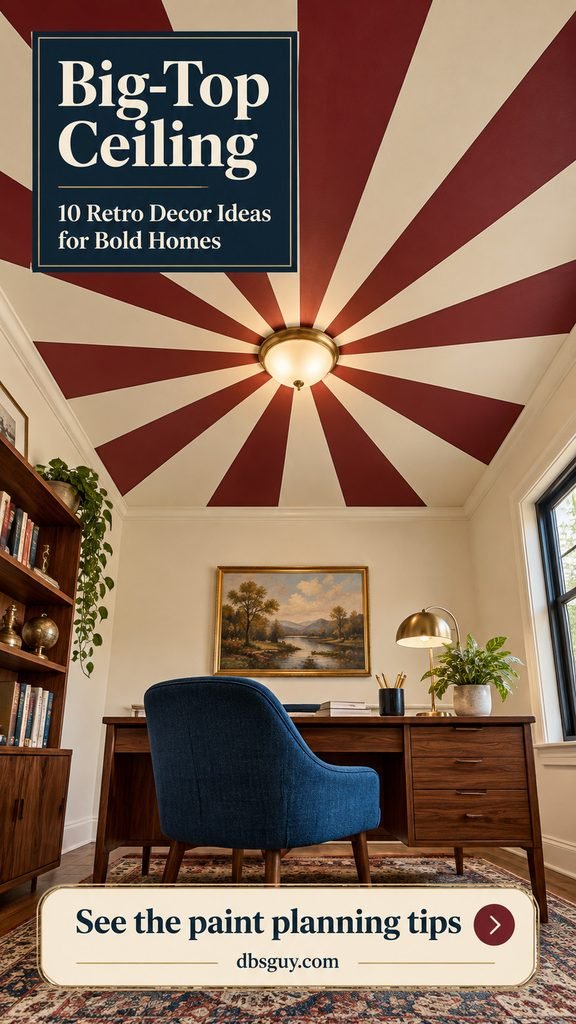
A radial striped ceiling makes the room feel like a small theatrical pavilion. Use it in a study or snug where you can see the full ceiling from the doorway. Keep the walls cream and repeat burgundy in just one smaller detail below.
Before buying paint, sketch the ceiling to scale, mark the convergence point, and draw alternating wedges out to the perimeter. The wedges naturally widen toward the walls; they are not equal-width bands. Test the layout with removable tape and view it from several positions before painting.
For the concept shown, a compact central light leaves the pattern visible. Ask a painter to plan the convergence, perimeter spacing, and clean edges around the fixture. If the room has an off-center light or awkward ceiling angles, parallel stripes may be easier to resolve. Skip a competing patterned wall here.
2. Give One Wall a Broad Circus Stripe
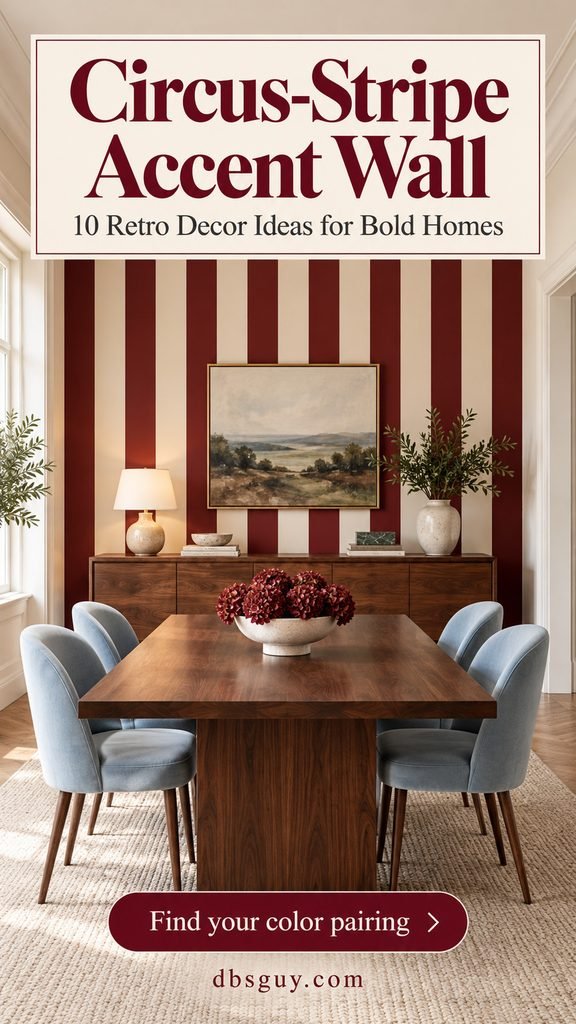
Oxblood and ivory vertical stripes bring the graphic side of vintage circus decor into a dining room. A single wall behind a sideboard gives the pattern a clear boundary, while pale blue chairs keep the palette playful.
Try a stripe width of roughly 6–8 inches as a starting point, then adjust to your actual wall. Divide the usable width on paper first so you do not end with a thin sliver beside a corner. These dimensions are a styling suggestion, not a rule.
Paint large sample boards and check them in daylight and lamplight. Cream can turn yellow beside some reds, and a deep red can look almost brown at night. For a rental, a removable wallpaper may be an option if permitted, but test it and follow its surface-preparation and removal instructions; “removable” does not guarantee damage-free removal.
3. Frame Vintage-Inspired Acrobat Art
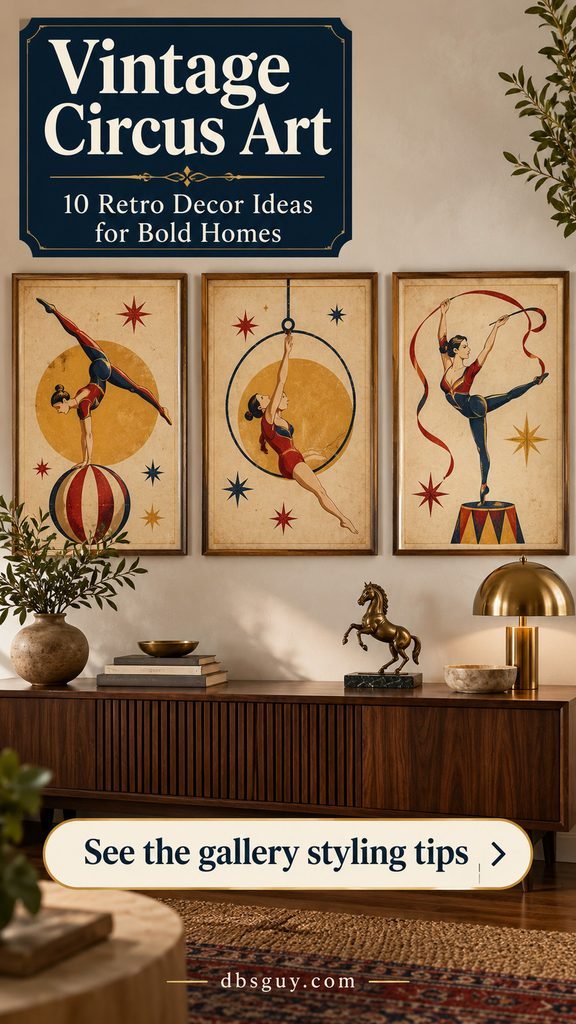
Illustrations of acrobats, trapeze performers, or abstract big-top forms bring in the circus reference without requiring a full-room makeover. Choose aged-paper tones with red, navy, and mustard details, then let those colors guide nearby accessories.
A three-piece arrangement over a console works best when the prints share a visual language. Matching mats can unite different frames. Lay the composition on the floor first, then use paper templates on the wall; about 2–3 inches between frames is a useful starting point.
Buy an original, a licensed reproduction, or a print whose rights are clearly stated. An image being old or online does not by itself make it free to reproduce. The illustrations in our concept are newly generated, not authentic historical posters. For a deeper wood-and-art setting, our dark academia decor ideas offer related inspiration for vintage furnishings and display.
4. Add a Scalloped Valance to Solid Curtains
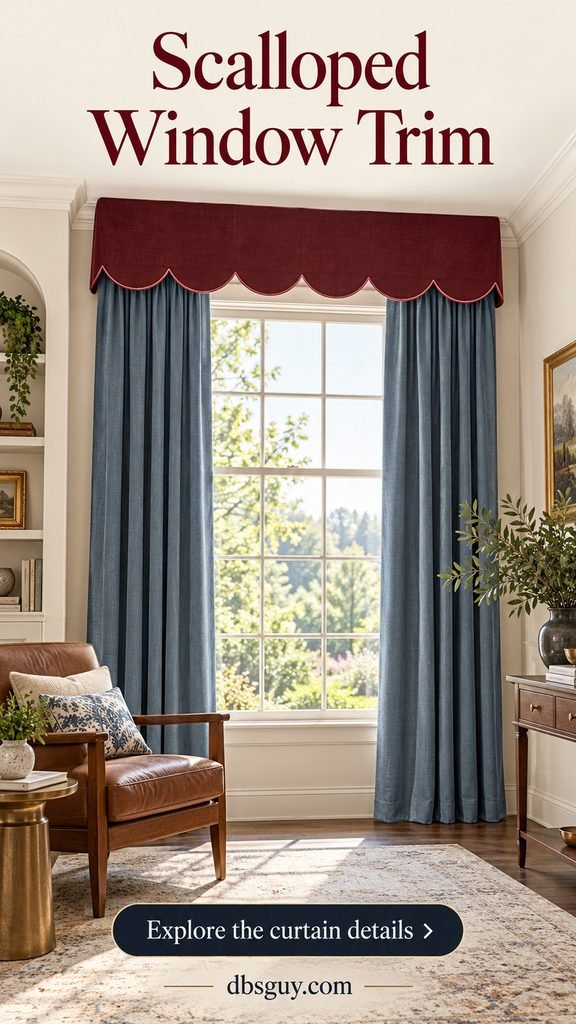
A burgundy scalloped valance over dusty blue curtains recalls a stage curtain in a surprisingly livable way. Here, the shape does the work: solid fabric lets the curved edge stand out.
Ask a curtain maker for a structured, lined valance with consistent scallops and a clean contrast edge. Bring the window measurements, rod location, ceiling height, and a photo of the room. Have the maker show the proposed depth on a drawing so the valance does not cover more daylight than you want.
Use the curtains as the softer element and the valance as the crisp one. Keep nearby cushions simple. If the window is short or the ceiling low, a shallow scalloped edge can be enough; an oversized swag may crowd the opening.
5. Make One Striped Armchair the Star
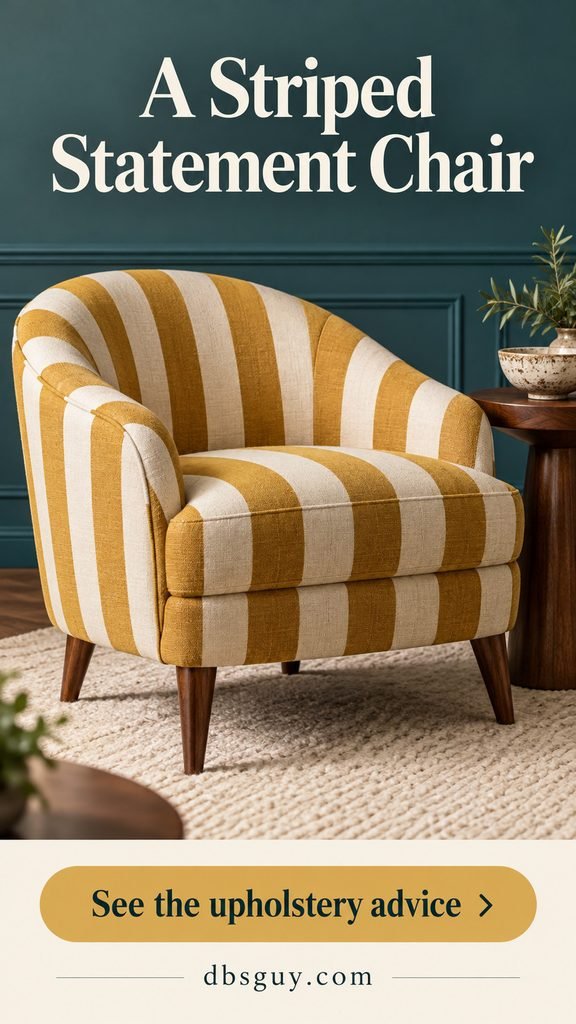
A curved chair in mustard and cream stripes gives a plain corner an instant identity. The rounded silhouette softens the pattern, and exposed walnut legs help it sit comfortably beside older furniture.
When shopping secondhand, check the frame, joints, springs, and cushion support before pricing the fabric. Ask an upholsterer to estimate both repairs and upholstery. A low purchase price can become an expensive project if the structure needs work.
Request a stripe layout that follows the chair’s centerline and looks intentional where the seat meets the back. Wide stripes show mismatches clearly, so pattern placement matters. Give the chair a plain rug and a small side table. If you need help fitting it into a compact corner, see our small-space reading nook ideas for seating and layout inspiration.
6. Borrow Fairground Glow Through Lighting
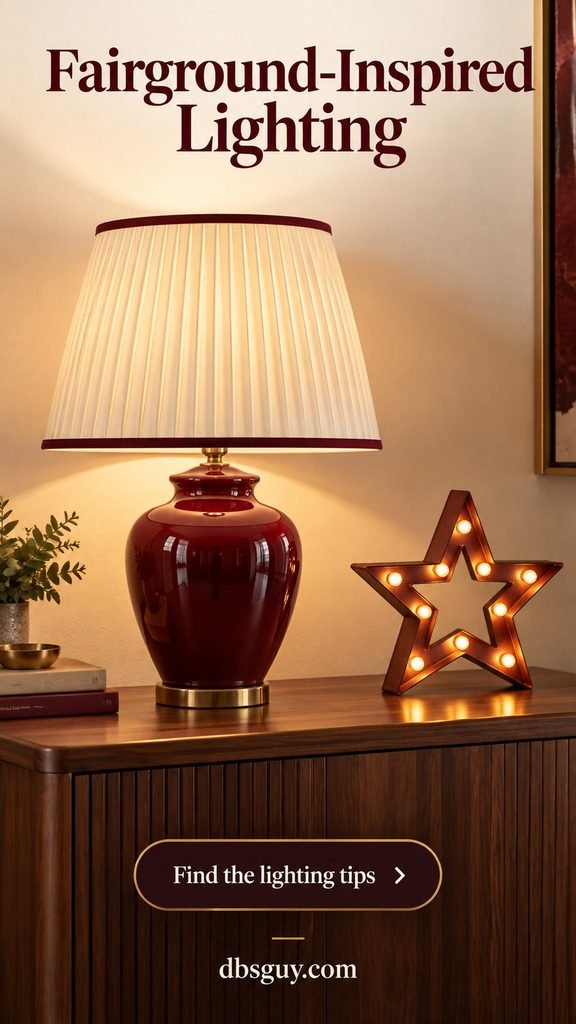
A ceramic lamp with a pleated shade provides useful ambient light, while a small star-shaped marquee light adds a fairground reference. Keeping both on one console makes this a contained lighting moment rather than a room full of novelty bulbs.
Choose a new indoor decorative light with clear manufacturer instructions. Follow the specified bulb type, wattage, ventilation, and placement requirements. A shade’s appearance cannot tell you whether it is compatible with a particular lamp.
For a vintage lamp, have a qualified repair professional assess the wiring and socket before use. Keep cords clear of walkways and fabric away from bulbs. A decorative star is an accent, so retain a separate lamp that gives you the light you need for reading or tasks.
7. Ground the Palette With Jewel-Tone Velvet
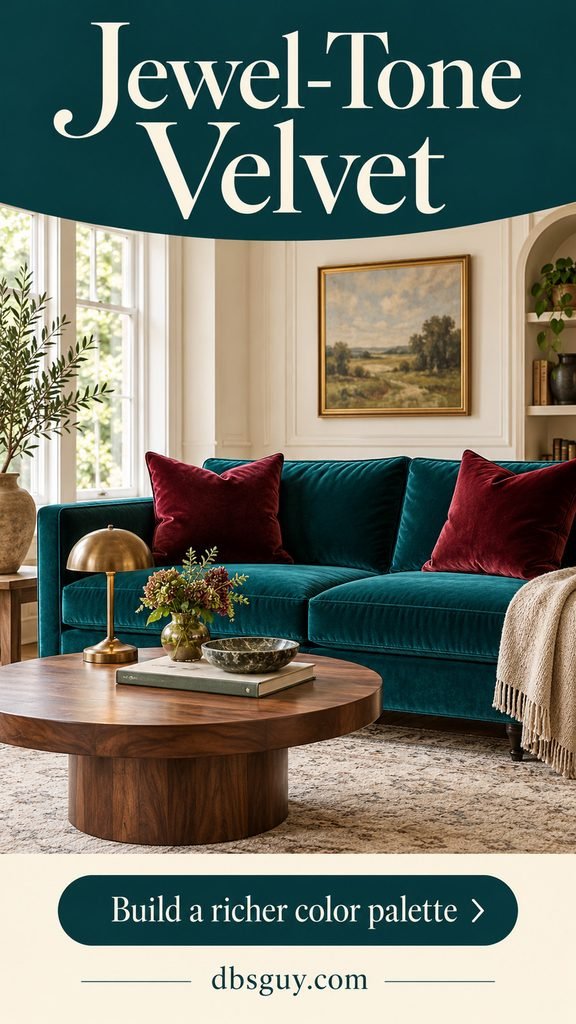
Teal velvet and oxblood pillows bring richness to a circus-inspired room even when the walls stay pale. The solid upholstery gives the eye a rest between striped or scalloped details elsewhere.
Start with the largest textile you already own. If it is neutral, try burgundy or teal pillow covers before committing to a sofa. If you are buying upholstery, compare swatches in your own light and ask about the specific fabric’s care requirements, abrasion information, and suitability for your household.
Velvet’s pile can make the same color look lighter or darker from different directions. Judge a large swatch from more than one angle. Pair it with walnut and a little aged brass rather than adding every jewel tone. Our living room sofa design guide can help you compare shapes before choosing the upholstery.
8. Paint Harlequin Diamonds on a Small Cabinet
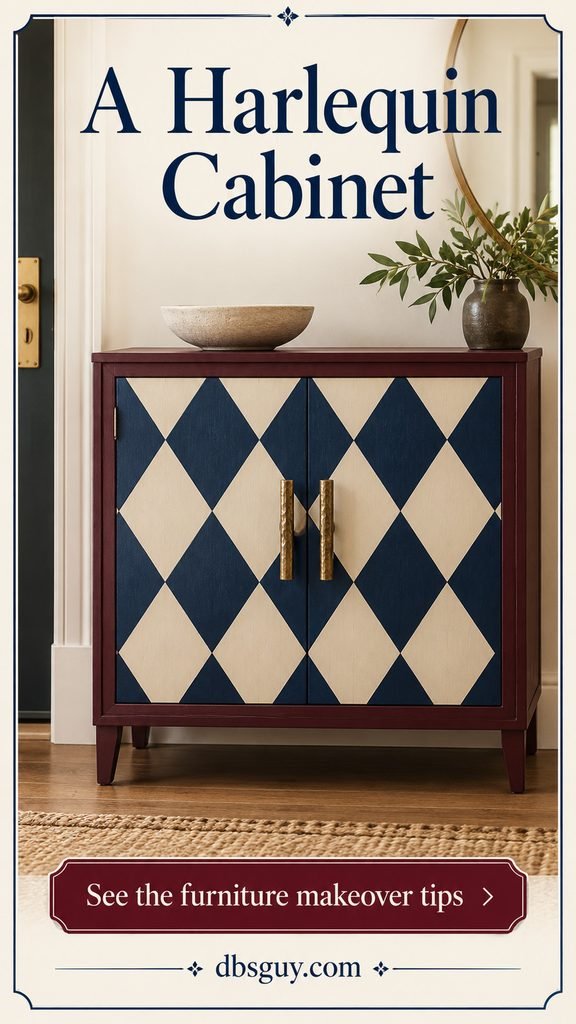
Large navy-and-cream diamonds make a small cabinet feel like a piece of theatrical scenery. Restrict the pattern to the doors and use a solid burgundy frame so the furniture keeps a readable outline.
Begin with a sound cabinet and identify the surface material. Follow a compatible coating system’s cleaning, preparation, primer, drying, and curing directions. Draw the diamond grid on paper first, then center it across the two doors as a single composition. Remove hardware before painting.
Do not dry-sand an unknown old painted finish. The EPA’s lead-exposure guidance identifies old paint and furniture refinishing as potential exposure sources. Assess the finish before disturbing it. Secure top-heavy furniture as directed; the CPSC’s Anchor It guidance explains furniture anchoring. Avoid adding a diamond rug directly beneath this piece—the cabinet already supplies the geometry.
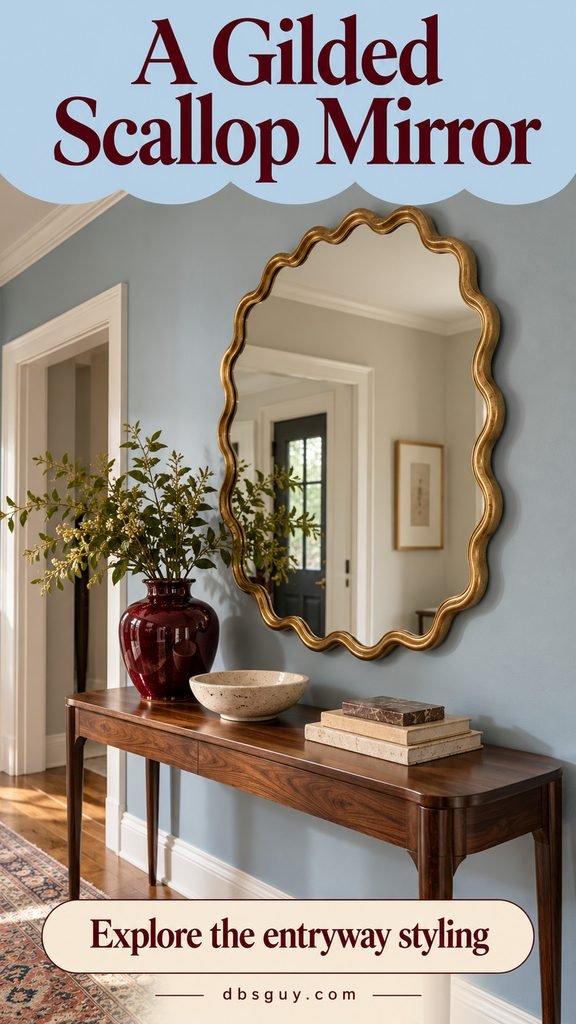
9. Use a Gilded Scallop Mirror in the Entry
A scalloped gold mirror suggests the decorative edges of old fairground signs while remaining useful for an everyday entry. Pale blue walls and a narrow walnut console give its warm frame room to stand out.
Choose the mirror for its outline before choosing its ornament. A simple repeating curve can feel lighter than a heavily carved frame. Check what it will reflect from the main approach: a doorway or calm wall is usually easier to live with than a cluttered storage area.
Measure the console and wall before buying. Leave visible wall around the frame so its shape reads clearly. Use fixings rated for the mirror’s weight and your wall construction, following the mounting instructions. Keep the console styling low enough that it does not obscure the reflection.
10. Edit a Curiosity Shelf Into Three Small Groups
A brass star, an acrobat illustration, and a blue ceramic urn suggest a collector’s shelf with a circus undertone. The point is to give a few objects space to be noticed, rather than filling every inch with themed souvenirs.
Use three loose groups as a starting arrangement: a sculptural object, a framed piece, and a vessel. Vary the heights and leave clear gaps between them. Repeat a color already in the room so the shelf belongs to the wider scheme.
Use a shelf and fixings suited to the wall and the total load. Keep fragile or heavy pieces where they will not be knocked by a passing shoulder. Add meaningful finds gradually; a personal collection feels more convincing than a matching set of circus accessories bought at once.

How to Keep the Room Cohesive
Pick the feature you want to notice first. If it is the striped ceiling, keep the largest wall and floor surfaces simple. If it is a patterned cabinet, repeat one cabinet color in a solid textile across the room.
Before adding another decorative piece, check whether the room still has useful clear surfaces, comfortable seating, and easy movement. A circus-inspired home should support ordinary life as well as look interesting in a pin.
Frequently Asked Questions
How do I make vintage circus decor feel grown-up?
Focus on tailoring, materials, and proportion. A well-framed print, a curved upholstered chair, or a lined scalloped valance gives you the reference with a finish that belongs in an adult living space. Use literal circus imagery selectively.
Can I get this look in a small apartment?
Yes. Choose a movable focal piece, such as a striped chair or lamp, and keep the rest of the palette coordinated. Measure the item’s footprint and the route through the room before buying. A large pattern can work in a small room when it has a clearly defined place.
Do I need genuine vintage furniture?
No. Vintage-inspired silhouettes and contemporary fabrics can create the same visual direction. If you do buy older pieces, check their condition and restoration needs. Age alone does not guarantee quality.
Can I combine stripes and harlequin diamonds?
You can, but separate them and vary their scale. Try broad curtain stripes with a smaller diamond detail on a cabinet, using shared colors. In a compact room, choose one as the dominant pattern and assess the room before adding the other.
What should I buy first on a small budget?
Start with a print or pillow cover that relates to furniture you already have. Decide on the palette first, then buy one piece at a time. Reframing existing art or rearranging a shelf may give you the direction without replacing large furniture.
The strongest starting move is the one you are excited to live with: one expressive feature, a few supporting colors, and enough quiet space to enjoy it.