
A pink dorm room gets interesting when the color has something to play against: dark wood, cherry stripes, a crisp navy pattern, or a useful piece of storage. You can keep the standard bed and desk and still make the room feel like yours.
These 15 pink dorm room ideas cover complete color combinations and smaller changes you can make one at a time. For a quiet look, start with blush and espresso or tonal textures. For more energy, try cherry red or chrome. If your room is already decorated, skip to the desk, cart, and under-bed storage ideas.
The images are AI-generated design concepts, not photographs of completed dorm rooms. Adapt the layouts and any wall decor to your room measurements and residence hall rules.

Before You Buy Anything Pink
Check your housing inventory and measure the mattress, desk, under-bed clearance, and space needed to open drawers and pull out your chair. Buy sheets for the actual mattress size; do not assume every dorm bed is Twin XL. Photograph the existing wood, flooring, and wall color so you can compare pink fabrics with what is already there.
Read your own school’s decorating policy before buying adhesives, wallpaper, headboards, extra furniture, or lighting. Rules vary. For example, UT Austin’s residence hall packing guidance specifies permitted wall adhesives and lighting and warns that wall damage can lead to charges. A product labeled removable is not permission to use it in your building.
Keep doors, exits, vents, detectors, and sprinklers clear. Start with bedding and useful accessories, then decide whether the room needs another decorative piece after move-in.
1. Ground Blush Pink With Espresso Wood

Dark dorm furniture does not need to disappear behind matching covers. Let it anchor the room. A muted blush duvet, ivory sheets, and one chocolate-brown lumbar pillow make dark wood feel connected to the bed instead of left over from a different design.
Choose a slightly dusty pink rather than a very cool candy shade if you want the warm effect shown here. Hold a pillowcase against the desk in daylight before committing to a full bedding set.
Start small: If you already own white bedding, add a blush coverlet and a brown pillow cover. Keep the furniture finish visible; the contrast is what gives this room its depth.
2. Wake Up Powder Pink With Cherry Red Stripes

Powder pink can handle a surprisingly bold partner. Use cherry red in two deliberate places, such as a striped lumbar cushion and a compact lamp, while leaving the sheets and larger furniture quiet. The repeated red makes the combination look planned.
Broad stripes are easy to read from the doorway, so you do not need several busy patterns. If your quilt already has a print, swap the striped cushion for a solid red cover.
The cherry artwork in the concept is optional. One red accent you genuinely like is more useful than a whole basket of themed objects. Choose an approved LED lamp and keep the desktop usable.
3. Bring Sage Green Into a Botanical Pink Room

For a softer contrast, pair blush bedding with a sage cushion and a green checked throw. Pale wood and cream keep the combination light. A botanical print can repeat the green without adding another object to water or dust.
If you want a real plant, choose one for your actual window conditions and use a pot with a protective saucer. Keep it away from your laptop and allow room for growth. One manageable plant is enough; a botanical postcard works if plants are not practical or permitted.
For more ways to balance the two colors, browse our sage green bedroom ideas and borrow the textile combinations rather than the permanent room changes.
4. Give Pink a Tailored Navy Stripe

This is a useful option if you like pink but want a more tailored bed. Start with navy-and-ivory striped bedding, fold a dusty pink coverlet across the lower half, and finish with a pink cushion edged in navy. The dark piping connects the two layers.
Vary the scale: let the duvet carry the main stripe and keep the remaining fabrics mostly solid. A second equally bold stripe can make a narrow bed feel visually busy.
Work with the wood desk you have. A small brass-toned lamp can add warmth, but replacing hardware or buying a matching nightstand is unnecessary.
5. Make a Tonal Pink Bed Interesting With Texture

A room does not need a second accent color to have depth. Combine a rose waffle coverlet, a quilted blush cushion, and a ribbed pink throw. Light catches each surface differently, so the bed has detail even when the palette stays close.
Keep the shades within a similar warm or cool family. Comparing the fabrics together is more useful than relying on online color names such as blush, rose, or ballet pink.
Limit decorative pillows to the ones you have somewhere to put at night. Check care labels before buying; a beautiful throw becomes less appealing if its cleaning routine does not fit dorm life.
6. Let a Scalloped Headboard Be the Main Event

If your hall allows an added headboard, a scalloped outline gives a plain bed an architectural focal point. Dusty rose upholstery works well with white bedding and a small burgundy detail. Leave the wall around the scallops relatively empty so the shape reads clearly.
Check the bed frame, approved attachment method, mattress height, and product dimensions before ordering. Use only a compatible, securely installed headboard following its instructions and your housing policy. A loose upholstered board propped behind pillows is not a substitute.
If headboards are prohibited, skip the hardware purchase. The tonal-texture bed in idea 5 gives you a soft focal point entirely through bedding.
7. Style Your Existing Bed as a Daybed
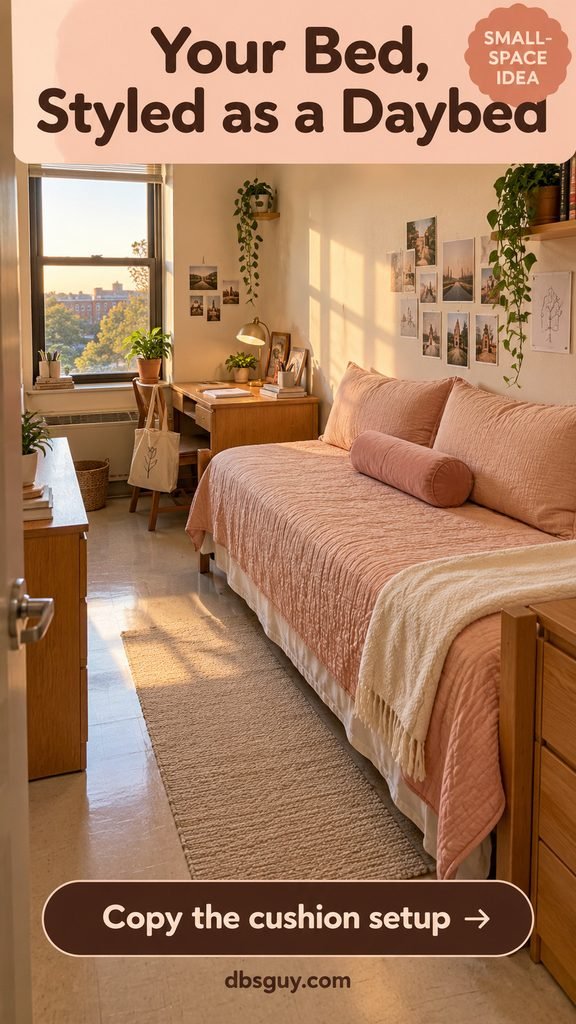
When a separate chair would block the aisle, make the bed your daytime sitting spot. Place two large rectangular cushions along the wall side and add one short bolster. A smooth peach-pink quilt gives the whole surface a finished look without a complicated pillow arrangement.
This works best with a low bed that is easy to sit on. It is not a reason to alter a loft or remove required bed rails. Make sure your back cushions actually support you when reading rather than slipping into a gap.
Keep an empty basket or existing storage space for the cushions at bedtime. For other compact layouts, our reading nook ideas for small spaces offer inspiration to adapt to your available footprint.
8. Create a Pink Study Zone With Real Writing Space
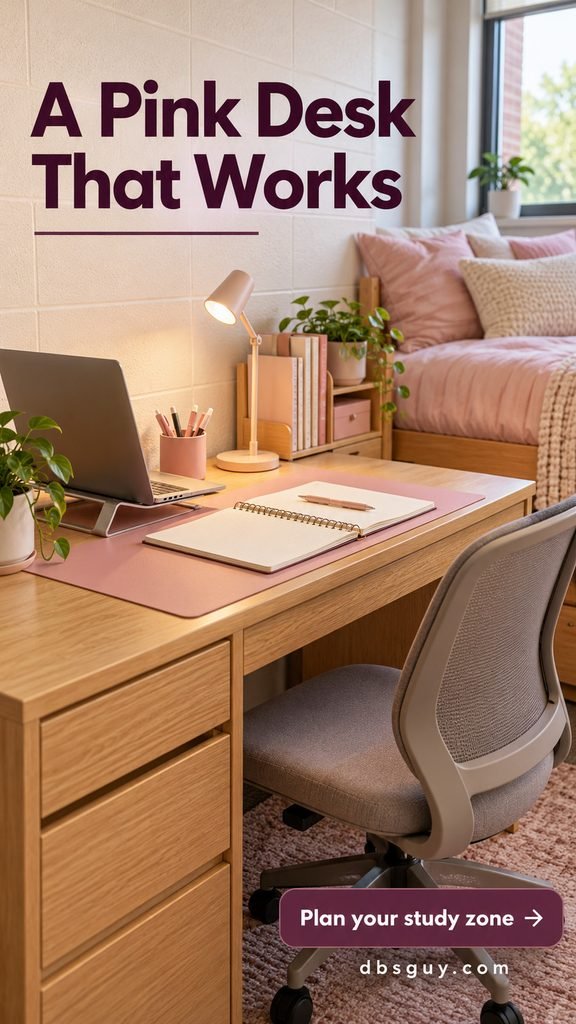
Let a pink desk mat, pen cup, and one file holder carry the color. Set out your laptop and largest notebook first, then position accessories around the space you actually need. A pretty setup should still let you take notes without moving five decorative objects.
An adjustable task lamp is more useful here than pink-tinted mood lighting. Aim it at the page and check for screen glare. If you use a laptop stand for extended typing, plan space for a separate keyboard and mouse rather than balancing your wrists at an awkward height.
Keep frequently used books at the back or in the desk’s existing storage. A freestanding organizer avoids making the whole plan depend on wall-mounting permission.
9. Use a Pink Rolling Cart as Your Bedside Station

A slim pink cart can earn its floor space by holding things you reach for every day. Reserve the top for water and a small catchall, the middle for a closed pouch, and the lower tier for books. Keeping each level simple makes the cart easier to clean and move.
Measure the gap with drawers open and your chair pulled out. Do not choose a cart that only fits when nobody is using the room. Use the wheel locks if supplied, respect the weight limits, and keep heavier items low.
Place a wired lamp on a stable desk or approved surface nearby. A movable cart is less convenient if cords tether it across the walking route.
10. Turn Under-Bed Storage Into a Quiet Pink Detail

If the space beneath your bed is visible, use a small group of matching dusty rose boxes instead of a row of unrelated bags. The pink repeats the bedding while the closed containers keep spare linens and off-season clothes out of sight.
Measure the lowest clearance, including braces, then check the full box height with handles and lids. You also need enough floor space to pull a box out. Assign each box a category and add a simple label to its handle if the contents are otherwise hard to remember.
Use the bed’s existing approved configuration. Do not add improvised risers to fit storage; choose shallower boxes if necessary, and keep nearby vents accessible.
11. Make One Oversized Print Your Color Starting Point

Choose one graphic print you would enjoy seeing every morning, then pull a pink shade from it for your bedding. The coral-and-butter-yellow arches shown here give a plain dorm desk a strong focal point without requiring a collection of small decorations.
An 18-by-24-inch print is a starting size to mock up with paper, not a universal fit. Measure the desk and the clear space above it. A lightweight frame on a stable desktop easel can work when its footprint leaves enough writing room and it cannot easily tip or slide.
If the desk is too shallow, use a smaller print or a housing-approved wall installation away from the sleeping area. The idea is one confident artwork, not the largest frame you can squeeze in.
12. Start the Pattern at Floor Level With a Checker Rug
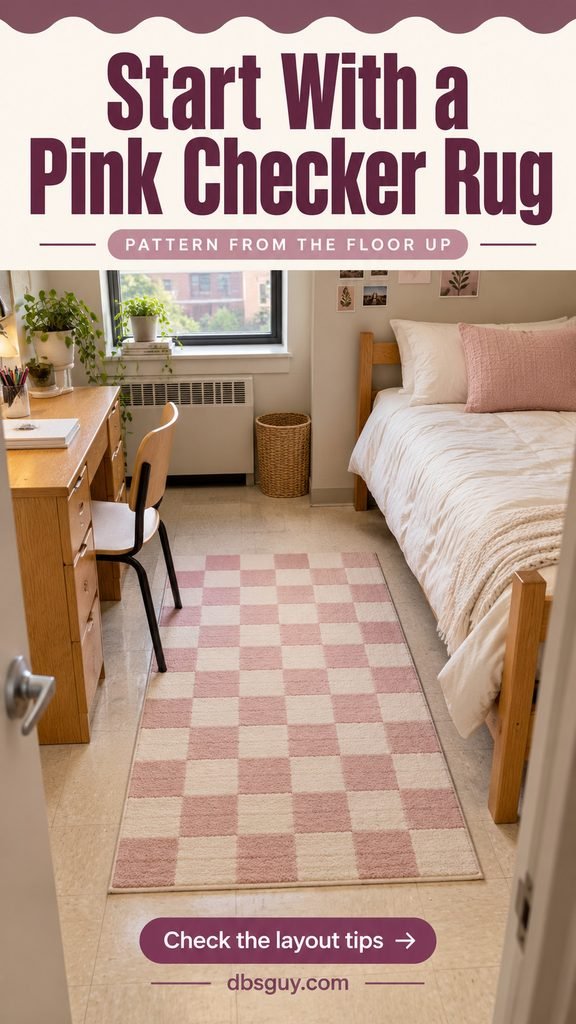
A dusty pink-and-cream checker rug can do the work that patterned bedding usually does. Pair it with a plain ivory duvet and one pink pillow so the floor becomes the main graphic element. This is especially helpful if you already own neutral bedding.
Map out the proposed rug footprint before ordering. A 3-by-5-foot rug may fit beside a bed, but room layouts vary; check door swing, drawer clearance, and the route to the exit. Make sure your desk chair can move without catching an edge.
Choose low pile and a suitable non-slip backing or pad for the floor, following product and housing guidance. If it is labeled washable, check the care instructions and whether the available laundry machine can handle it.
13. Add a Little Edge With Hot Pink and Chrome

For a pink room with sharper contrast, add one saturated magenta cushion and a chrome desk lamp. A small silver-tone desktop mirror repeats the reflective finish without taking the scheme into full sparkle territory.
Keep the larger bedding pale and the walls as they are. The difference between the soft fabric and hard metal is enough; you do not need mirrored furniture or several bright pink accessories.
Check reflections from your normal sitting position. Move the mirror or lamp if it sends window glare toward your screen or bed. Choose a stable mirror sized for the desk, rather than a tall leaning one that needs extra anchoring.
14. Coordinate Roommates Without Buying Identical Sets

Agree on a shared foundation, such as cream and dusty pink, then let each person choose a separate accent. One roommate might like cherry stripes while the other prefers sage checks. Repeating the same pink family helps the room feel connected without making either side a copy.
Coordinate the things you genuinely share: a rug, cleaning tools, or a permitted shared appliance. Decide who brings each item, how you will divide costs, and who takes it home afterward. Matching lamps are optional; individual task lighting is the useful part.
If your roommate does not like pink, keep it within your own bedding and accessories. Leave shared walkways and surfaces open, and get agreement before adding decor to their side.
15. Finish With a Pink Pinboard That Tells Your Story
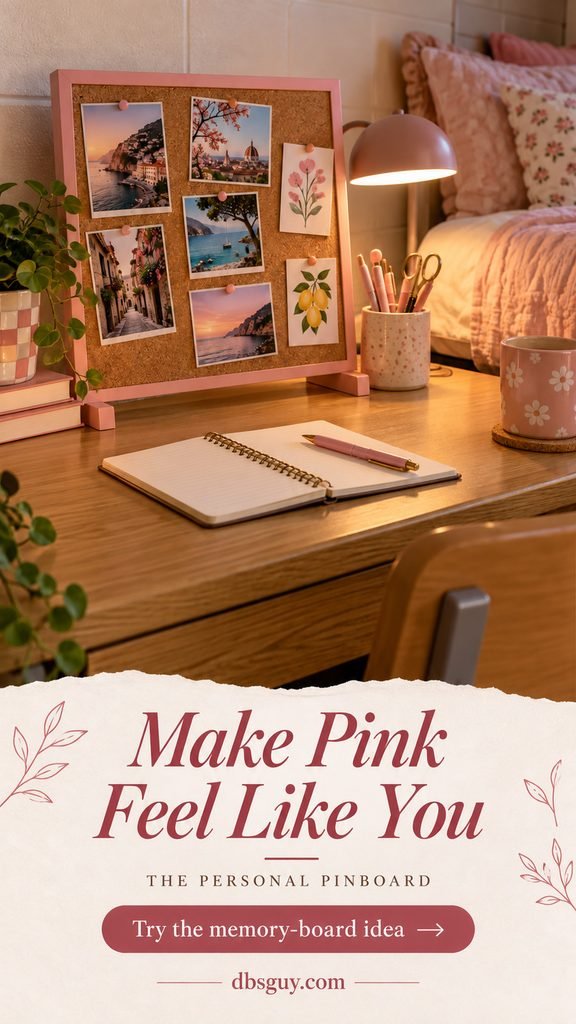
A pink-framed pinboard can hold the things a coordinated decor bundle cannot supply: your photos, postcards, sketches, and small reminders of home. Start with five photos and two postcards, then leave some cork showing so new memories have somewhere to go.
Use a supplied bulletin board if your room has one. Otherwise, a compact freestanding version can sit at the back of a sufficiently deep desk; check that its stand is stable and does not crowd your work. Keep pins contained in the board and store spares safely.
Choose a pink frame or backing rather than editing every photo to match. The room will feel more personal when the memories keep their own colors. Swap pieces throughout the semester instead of continually adding more.
Put Together Your First Pink Dorm Setup
Pick one foundation and one practical upgrade. Blush-and-espresso bedding can pair with under-bed boxes; the cherry-red look can pair with a useful bedside cart. You do not need to combine all 15 ideas.
Use what you own first, buy bedding in the correct size, and leave larger optional purchases until you have measured the room in person. If you are refreshing an existing dorm midsemester, a cushion cover or desk mat may be all the pink you need. Save the matching extras for after you know what is missing.
Pink Dorm Room FAQs
How can I make a pink dorm room feel more grown-up?
Give pink a clear partner: espresso wood for warmth, navy for structure, or chrome for a graphic edge. Keep one strong pattern and let useful objects carry some of the color. A room can still include bows, cute prints, or sentimental pieces; the goal is to choose the ones you love and give them room to stand out.
What is the easiest budget-friendly place to start?
Start with the largest surface you already own: usually the bed. A pink pillow cover or throw over neutral bedding changes the color story without replacing the whole set. Then consider a useful small piece, such as a pen cup. Make a spending cap before browsing and avoid buying storage until you know what needs to fit inside it.
Can I use peel-and-stick wallpaper or removable hooks?
Only if your own residence hall permits the specific product and application. Removable products can still affect paint, and a general renter-friendly label does not override housing rules. If permission is unclear, use textiles, an existing bulletin board, or stable desktop decor until you have an answer.
Which pink works with gray floors or orange-toned wood?
Try a dusty rose or muted blush alongside the actual finishes before purchasing. Cream can bridge pink and warm wood; navy can give gray and pink more definition. Look at fabric samples in daylight and under the room’s lamps, because the same pink can appear warmer or cooler as the lighting changes.
How do I keep a small pink room from feeling crowded?
Choose a single focal point, keep the bed’s decorative pillows manageable, and protect the space needed to study and move around. Use the storage already built into your furniture before adding floor pieces. When something new comes in, decide what it replaces or which specific problem it solves.