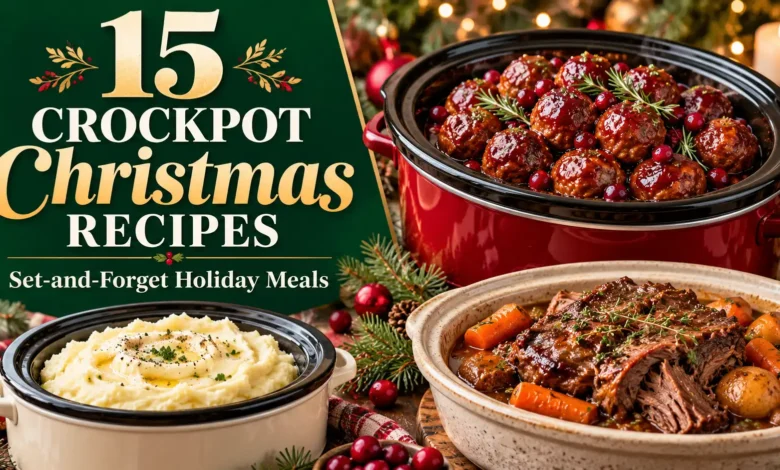
Choose a main dish, give it the right cooking window, and leave the oven free for everything else. These 15 crockpot Christmas recipes include 10 main dishes and 5 sides, with ingredient quantities and instructions for every one. Start with turkey for a smaller Christmas dinner, pot roast for an all-day cook, or mushroom-lentil stew for a meat-free centerpiece.
What “set-and-forget” means here: most of the cooking happens with the lid closed. Some recipes need a short sear, a final stir, mashing, or a quick stovetop sauce. Those steps are listed so you can plan the last few minutes before dinner.

Recipe note: these recipes have not been kitchen-tested. Cooking times are estimates; use the doneness checks in each method. The AI-generated food visuals are illustrative concepts, not photos of tested batches.
Choose the Recipe That Fits Your Day
- Cooking most of the day: cranberry-orange pork (2), rosemary pot roast (3), or mushroom-lentil stew (8).
- Starting after breakfast: turkey breast (1), maple Dijon chicken (4), or balsamic tomato chicken (5).
- A casual Christmas Eve buffet: cranberry meatballs (6) or sausage and peppers (7).
- Plant-based mains: mushroom-lentil stew (8), squash-chickpea curry (9), or rosemary white beans (10).
- Using a second cooker for sides: mashed potatoes (11), carrots (12), sweet potatoes (13), stuffing (14), or creamed corn (15).
Before You Load the Slow Cooker
Use a conventional slow cooker with LOW and HIGH settings. A pressure cooker’s slow-cook mode may heat differently. Follow your appliance manual for filling limits and acceptable roast sizes; aim for roughly half to two-thirds full when your model allows. The lid must close fully. Do not double a recipe in the same insert if that exceeds its recommended capacity.
Start with fully thawed meat and poultry, keep perishables refrigerated until you assemble the meal, and switch the cooker on immediately. Do not use a delayed-start timer with raw meat. Keep the lid closed except for the checks and additions the method calls for. WARM is for holding cooked food, not cooking raw ingredients. See the USDA slow-cooker food-safety guidance for the underlying handling advice.
All measurements use US cups, tablespoons, and teaspoons; all temperatures are Fahrenheit. Salt amounts assume a medium-grain kosher salt. If using fine table salt, begin with less and adjust after cooking. Prep times cover ingredient preparation; slow-cooking and finishing times are listed separately.
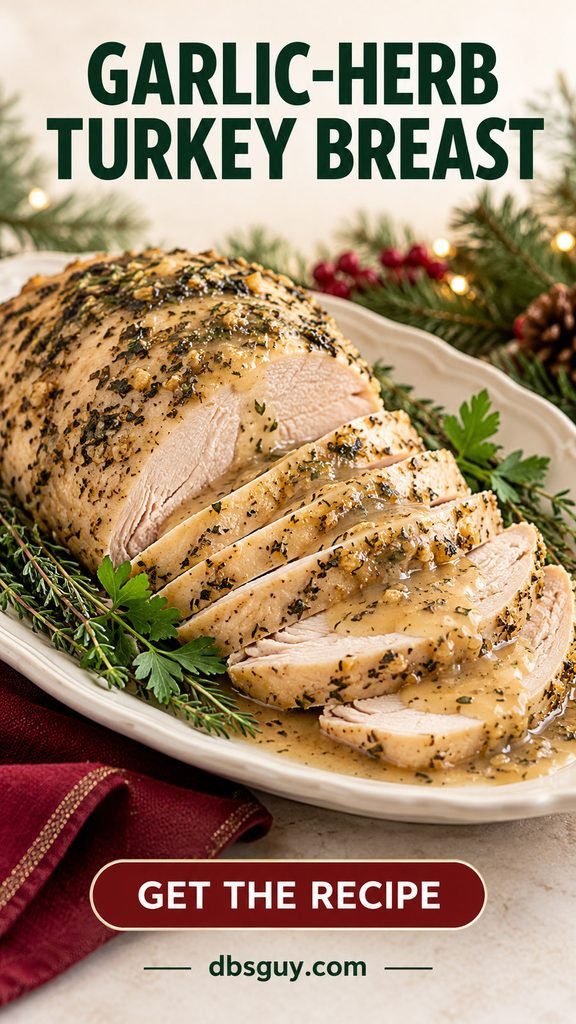
1. Garlic-Herb Turkey Breast with Simple Gravy
For a smaller Christmas dinner, a boneless turkey breast gives you a centerpiece without carving a whole bird. Onion and carrots lift the meat slightly above the liquid, and the cooking juices become a quick gravy.
Serves 6 | Cooker: 5–6 quarts | Prep: 15 minutes | LOW: about 4–6 hours | Finish: 15 minutes
Ingredients
- 1 fully thawed, boneless turkey breast roast, about 3 pounds; unstuffed
- 1 large yellow onion, cut into thick wedges
- 2 medium carrots, cut into 2-inch pieces
- 1 cup low-sodium chicken broth
- 2 tablespoons softened unsalted butter
- 4 garlic cloves, minced
- 1 teaspoon each dried thyme and dried rosemary, crushed
- ¾ teaspoon kosher salt, or ¼ teaspoon if the turkey is already salted; ½ teaspoon black pepper
- For gravy: 1 tablespoon cornstarch mixed with 1 tablespoon cold water; extra broth as needed
- Optional garnish: 1 tablespoon chopped fresh parsley
How to Make It
- Put the onion, carrots, and broth in the cooker. Mix the butter, garlic, herbs, salt, and pepper; rub over the turkey. Set the roast on the vegetables. If the roast has food-safe cooking netting, follow its package directions.
- Cover and cook on LOW for about 4–6 hours. Begin checking at 4 hours; the thickest center must reach 165°F. Check more than one spot, keeping the probe away from the netting.
- Transfer the turkey to a board, loosely cover, and rest 10–15 minutes. Remove any netting as directed, then slice. The surface will be herb-coated and lightly golden, rather than crisp.
- Strain the juices into a saucepan, skim excess fat, and measure 1½ cups, adding broth if needed. Bring to a simmer, whisk in the cornstarch mixture, and simmer 2–3 minutes until lightly thickened. Serve with the turkey and optional parsley.
Helpful detail: Choose an unstuffed roast that lets the lid close completely. A large bone-in breast needs a different cooking schedule; do not substitute one and assume these times will hold.
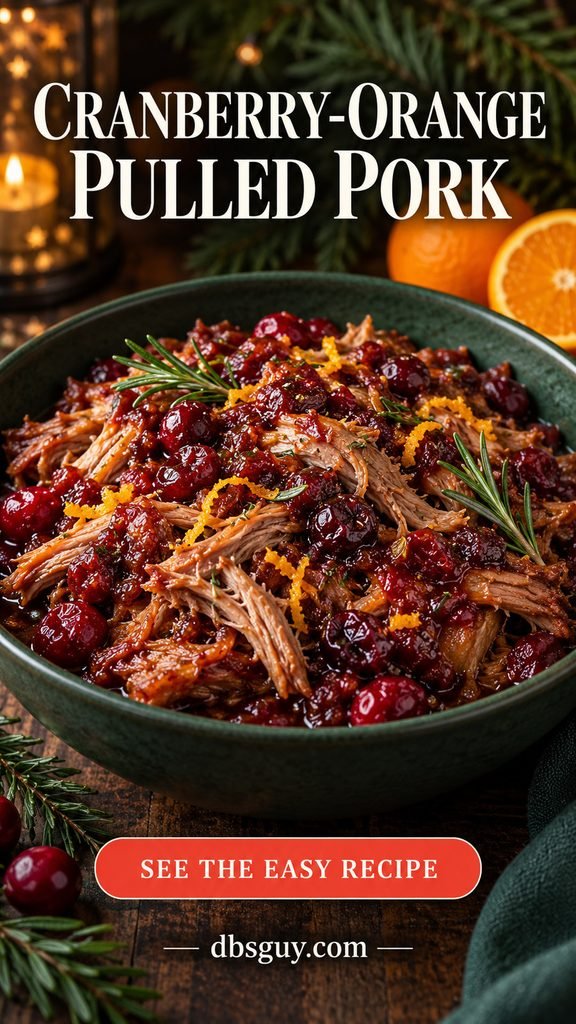
2. Cranberry-Orange Pulled Pork
Tart cranberries and orange turn pork shoulder into a holiday dinner that can also fill rolls for a casual Christmas Eve buffet. This is a shreddable shoulder recipe; lean pork loin will not behave the same way.
Serves 8 | Cooker: 6 quarts | Prep: 15 minutes | LOW: about 8–10 hours | Finish: 15 minutes
Ingredients
- 3 pounds boneless pork shoulder, trimmed of thick exterior fat and cut into 3 large pieces
- 1 large onion, sliced
- 1 can (14 ounces) whole-berry cranberry sauce
- ½ cup orange juice and 1 teaspoon finely grated orange zest
- ¼ cup low-sodium chicken broth
- 2 tablespoons apple cider vinegar
- 3 garlic cloves, minced
- 1 teaspoon dried rosemary, crushed
- ¾ teaspoon kosher salt and ½ teaspoon black pepper
- Optional: 1 tablespoon cornstarch mixed with 1 tablespoon cold water; extra orange zest for serving
How to Make It
- Spread the onion in the cooker and place the pork on top. Stir together the cranberry sauce, juice, zest, broth, vinegar, garlic, rosemary, salt, and pepper. Pour over the pork.
- Cover and cook on LOW for 8–10 hours, until the pieces pull apart readily with two forks. Pork must pass 145°F with at least a 3-minute rest for safety, but shoulder needs substantially longer cooking to become shreddable.
- Move the pork to a bowl. Skim fat from the sauce. For a thicker sauce, simmer it in a saucepan with the optional cornstarch mixture for 2–3 minutes.
- Shred the pork, discarding remaining large fatty pieces. Toss with enough sauce to coat; pass the rest separately. Add extra zest if you like.
Helpful detail: Serve over mashed potatoes for dinner or in small rolls with slaw for a buffet. Keep the cranberry flavor balanced by using unsweetened orange juice rather than orange soda.
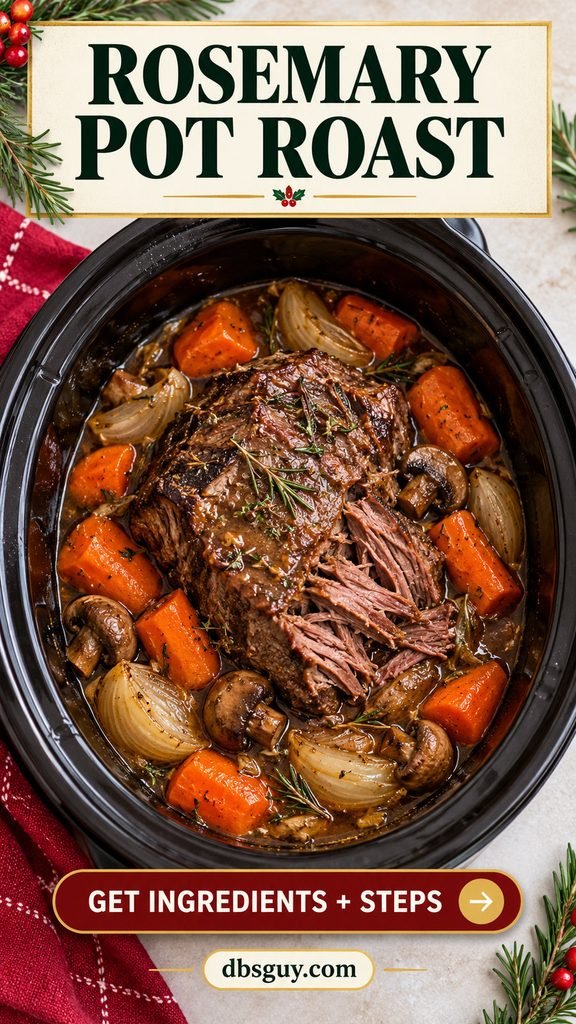
3. Rosemary Pot Roast with Carrots and Mushrooms
Pick this when dinner needs to cook through most of the day. Chuck roast becomes tender in a rosemary-scented broth, while thick carrot pieces keep their shape better than thin coins.
Serves 6–8 | Cooker: 6 quarts | Prep: 20 minutes | LOW: about 8–10 hours | Finish: 10 minutes
Ingredients
- 3 pounds boneless beef chuck roast, trimmed and cut into 2–3 large pieces
- 1 tablespoon olive oil
- 1 teaspoon kosher salt and ½ teaspoon black pepper
- 1 large onion, cut into wedges
- 1 pound carrots, cut into 2-inch chunks
- 8 ounces cremini mushrooms, halved
- 1½ cups low-sodium beef broth
- 2 tablespoons tomato paste
- 1 tablespoon Worcestershire sauce
- 4 garlic cloves, minced; 1 teaspoon dried rosemary; 1 bay leaf
- Optional gravy: 1 tablespoon cornstarch mixed with 1 tablespoon cold water
How to Make It
- Season the beef with salt and pepper. Heat the oil in a skillet over medium-high heat and brown the beef for about 3 minutes on two sides. Move it directly into the cooker; do not refrigerate partly cooked meat for later.
- Put the onion and carrots beneath and around the beef. Add the mushrooms. Mix the broth, tomato paste, Worcestershire, garlic, and rosemary; pour around the meat and add the bay leaf.
- Cover and cook on LOW for 8–10 hours, until the beef separates easily with a fork and the carrots are tender. Whole-cut beef needs at least 145°F with a 3-minute rest, but chuck will usually need much more time for tenderness.
- Remove the bay leaf. Transfer the beef and vegetables to a platter. If desired, skim and simmer the juices in a saucepan with the cornstarch mixture for 2–3 minutes. Spoon over the meat.
Helpful detail: Keep potatoes separate if you want a smooth mashed-potato base. For more detail on choosing the cut and building a full roast dinner, see our Slow Cooker Pot Roast guide.
4. Maple Dijon Chicken with Carrots
Maple syrup softens Dijon mustard’s sharpness without turning the sauce into candy. Boneless thighs suit this shorter cooking window, so this is useful for a late lunch or a relaxed holiday evening.
Serves 6 | Cooker: 4–5 quarts | Prep: 15 minutes | LOW: about 4–5 hours | Finish: 10 minutes

Ingredients
- 2½ pounds boneless, skinless chicken thighs, fully thawed
- 1 pound carrots, cut into ½-inch-thick diagonal pieces
- ½ cup low-sodium chicken broth
- ¼ cup Dijon mustard
- 3 tablespoons pure maple syrup
- 1 tablespoon apple cider vinegar
- 3 garlic cloves, minced
- 1 teaspoon dried thyme
- ½ teaspoon kosher salt and ¼ teaspoon black pepper
- For a thicker sauce: 1 tablespoon cornstarch mixed with 1 tablespoon cold water
How to Make It
- Place the carrots in the bottom of the cooker. Arrange the chicken over them.
- Whisk together the broth, mustard, maple syrup, vinegar, garlic, thyme, salt, and pepper. Pour over the chicken.
- Cover and cook on LOW for about 4–5 hours, checking at 4 hours. The chicken must reach 165°F in the thickest pieces and the carrots should be tender.
- Transfer chicken and carrots to a serving bowl. For a thicker sauce, simmer the cooking liquid in a saucepan with the cornstarch mixture for 2–3 minutes. Pour over the chicken.
Helpful detail: Cut carrots evenly and keep them underneath the chicken. Very thick chunks may still be firm when the chicken is ready. Serve with potatoes or rice cooked separately.
5. Balsamic Tomato Chicken with Peppers and Olives
This saucy chicken brings a different flavor to the Christmas table: tomatoes, balsamic vinegar, peppers, and briny olives. It works particularly well when your other holiday meals are heavy on cream and butter.
Serves 6 | Cooker: 5 quarts | Prep: 15 minutes | LOW: about 4–5 hours | Finish: 5 minutes

Ingredients
- 2½ pounds boneless, skinless chicken thighs, fully thawed
- 1 can (28 ounces) crushed tomatoes
- 1 large red bell pepper, thinly sliced
- 1 medium onion, thinly sliced
- 2 tablespoons balsamic vinegar
- 3 garlic cloves, minced
- 1 teaspoon dried Italian seasoning
- ½ teaspoon kosher salt and ½ teaspoon black pepper
- ⅓ cup pitted black olives, halved
- ¼ cup loosely packed fresh basil leaves, torn
How to Make It
- Put the pepper and onion in the cooker. Stir in the tomatoes, balsamic vinegar, garlic, Italian seasoning, salt, and pepper. Nestle the chicken into the sauce.
- Cover and cook on LOW for 4–5 hours, checking at 4 hours. Confirm that the thickest chicken pieces reach 165°F.
- Stir in the olives and basil just before serving. If the sauce is thinner than you want, lift out the chicken and simmer some of the sauce in a saucepan until reduced.
- Serve with crusty bread, or spoon over separately cooked polenta or pasta. Keep the chicken pieces whole or break them into large chunks.
Helpful detail: Do not add extra broth at the start: the tomatoes and chicken release liquid. Taste before adding more salt because olives vary considerably in saltiness.
6. Cranberry Barbecue Meatballs
These are dinner-size homemade beef meatballs, not a bag of frozen party bites. Serve the cranberry barbecue sauce over rice or mashed potatoes, or set out rolls for an informal family meal.
Serves 6 | Cooker: 4 quarts | Prep: 20 minutes | HIGH: about 3–4 hours | Finish: 5 minutes

Ingredients
- 1½ pounds lean ground beef, fully thawed
- ½ cup plain dry breadcrumbs
- 1 large egg
- ¼ cup milk
- 1 teaspoon garlic powder
- ½ teaspoon each kosher salt and dried oregano; ¼ teaspoon black pepper
- 1 cup whole-berry cranberry sauce
- 1 cup barbecue sauce
- ½ cup water and 1 tablespoon apple cider vinegar
- Optional garnish: 1 tablespoon chopped parsley
How to Make It
- Mix the beef, breadcrumbs, egg, milk, garlic powder, salt, oregano, and pepper just until combined. Shape into about 24 meatballs, roughly 1½ inches across. Wash hands and surfaces after handling raw meat.
- Whisk the cranberry sauce, barbecue sauce, water, and vinegar. Spread one-third in the cooker, gently arrange the raw meatballs in no more than two loose layers, and spoon the remaining sauce over them.
- Cover and cook on HIGH for about 3–4 hours. Avoid stirring early while the meatballs are delicate. Test several meatballs from different parts of the cooker; their centers must reach 160°F. Continue cooking if needed.
- Once cooked, gently turn to coat in the sauce. Scatter with parsley if using and serve hot.
Helpful detail: Ground turkey changes the required temperature to 165°F and may give a softer mixture. Do not replace the raw mixture with frozen meatballs and assume this cooking schedule is suitable.
7. Italian Sausage and Christmas-Colored Peppers
Red and yellow peppers make this a colorful buffet option. A brief skillet browning gives the sausages a better exterior before their long simmer in tomato sauce.
Serves 6 | Cooker: 5–6 quarts | Prep: 20 minutes | LOW: about 5–6 hours | Finish: 5 minutes

Ingredients
- 2 pounds fresh, uncooked Italian pork sausage links, fully thawed
- 1 tablespoon olive oil
- 3 bell peppers, preferably 2 red and 1 yellow, sliced into strips
- 1 large onion, sliced
- 1 can (14½ ounces) diced tomatoes, undrained
- 2 tablespoons tomato paste
- ¼ cup water
- 2 garlic cloves, minced
- 1 teaspoon dried oregano and ¼ teaspoon black pepper
- Optional for serving: 6 rolls or separately cooked polenta
How to Make It
- Heat the oil in a skillet over medium heat. Brown the sausages for about 6–8 minutes, turning occasionally; they do not need to be cooked through. Transfer immediately to the cooker.
- Add peppers and onion. Stir the tomatoes, tomato paste, water, garlic, oregano, and pepper together and pour over everything.
- Cover and cook on LOW for 5–6 hours, until the peppers are soft and the centers of several sausage links reach 160°F. For fresh chicken or turkey sausage, use 165°F instead.
- Serve the links whole or slice after cooking. Spoon the pepper mixture and sauce over polenta or into rolls.
Helpful detail: This starts with raw sausage, not smoked or precooked links. The sauce usually needs little extra salt; taste after the sausages finish cooking.
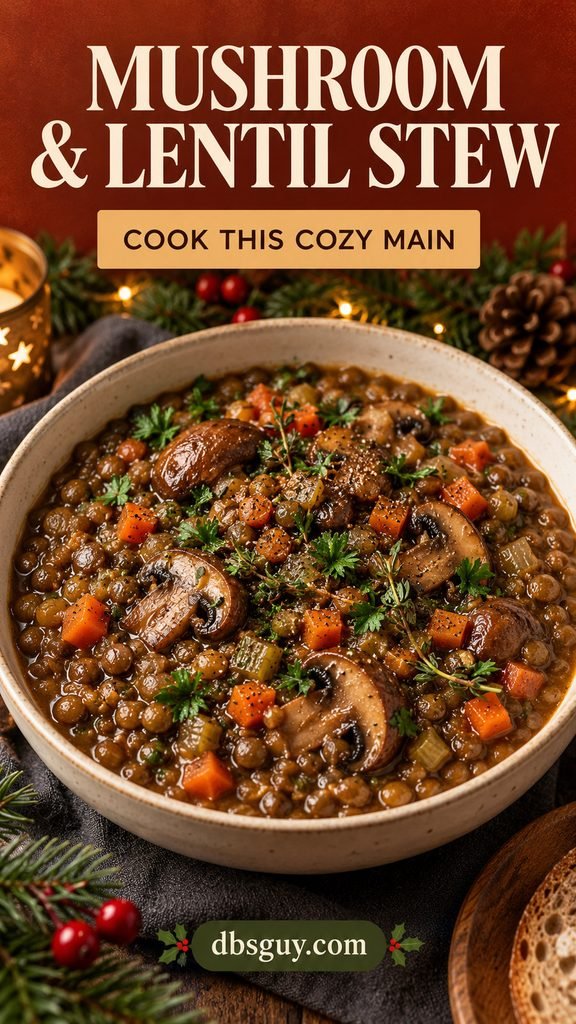
8. Mushroom and Lentil Holiday Stew
Mushrooms give this meat-free main a savory center, while green or brown lentils keep enough shape to make a substantial stew. Serve it in shallow bowls with bread or over mashed potatoes.
Serves 6 | Cooker: 5–6 quarts | Prep: 20 minutes | LOW: about 6–8 hours | Finish: 10 minutes
Ingredients
- 1½ cups dry green or brown lentils, picked over and rinsed
- 1 pound cremini mushrooms, thickly sliced or quartered
- 2 medium carrots and 1 large onion, diced
- 5 cups low-sodium vegetable broth, plus more if needed
- 2 tablespoons tomato paste
- 1 tablespoon low-sodium soy sauce
- 3 garlic cloves, minced
- 1 teaspoon dried thyme and 1 bay leaf
- ½ teaspoon kosher salt and ½ teaspoon black pepper
- 1 tablespoon olive oil; 1–2 teaspoons balsamic vinegar; 2 tablespoons chopped parsley
How to Make It
- Put the lentils, mushrooms, carrots, onion, broth, tomato paste, soy sauce, garlic, thyme, bay leaf, salt, and pepper in the cooker. Stir well.
- Cover and cook on LOW for 6–8 hours, until the lentils and carrots are tender. Start checking around 6 hours; older lentils can take longer. Add a little hot broth if the stew becomes too thick before the lentils soften.
- Remove the bay leaf. Mash a ladleful of lentils against the side and stir back in if you want a thicker texture.
- Stir in the olive oil, 1 teaspoon vinegar, and parsley. Taste, then add the second teaspoon of vinegar if the stew needs brightness.
Helpful detail: Red lentils break down and give a different texture, so use green or brown here. For a vegan plate, pair with dairy-free potatoes or bread and check the broth ingredients.
9. Butternut Squash and Chickpea Coconut Curry
A golden curry brings warmth to a Christmas Eve dinner without competing for oven space. Canned chickpeas keep preparation simple, and spinach goes in at the end so it stays visible in the finished dish.
Serves 6 | Cooker: 5–6 quarts | Prep: 20 minutes | LOW: about 5–6 hours | Finish: 10 minutes

Ingredients
- 1½ pounds peeled, seeded butternut squash, cut into 1-inch cubes
- 2 cans (15 ounces each) chickpeas, drained and rinsed
- 1 medium onion, finely diced
- 1 can (13½ ounces) full-fat unsweetened coconut milk
- ½ cup vegetable broth
- 1 tablespoon mild curry powder
- 1 tablespoon grated fresh ginger and 3 garlic cloves, minced
- ¾ teaspoon kosher salt
- 3 packed cups baby spinach
- 1 tablespoon lime juice, plus lime wedges; separately cooked rice for serving
How to Make It
- Combine the squash, chickpeas, onion, coconut milk, broth, curry powder, ginger, garlic, and salt in the cooker. Stir to coat the squash.
- Cover and cook on LOW for 5–6 hours, until the squash is tender when pierced. Begin checking at 5 hours so the cubes do not collapse completely.
- Fold in the spinach, cover, and cook another 5–10 minutes until wilted. Stir in the lime juice.
- Mash a few squash cubes into the sauce if you want it thicker. Serve with rice cooked separately and lime wedges.
Helpful detail: Curry powders differ in heat and salt. Choose a mild unsalted blend for a mixed-age gathering and offer hot sauce at the table.
10. Rosemary White Beans with Spinach and Lemon
For a quiet Christmas lunch, this creamy bean braise needs little more than crusty bread. Mashing some of the beans thickens the broth without cream.
Serves 6 | Cooker: 4 quarts | Prep: 15 minutes | LOW: about 3–4 hours | Finish: 15 minutes

Ingredients
- 4 cans (15 ounces each) cannellini beans, drained and rinsed
- 1 small onion, very finely diced
- 1½ cups low-sodium vegetable broth
- 3 garlic cloves, minced
- 2 tablespoons olive oil
- 1 teaspoon dried rosemary, crushed
- ½ teaspoon kosher salt and ½ teaspoon black pepper
- 3 packed cups baby spinach, roughly chopped
- 1 teaspoon lemon zest and 1 tablespoon lemon juice
- Crusty bread for serving
How to Make It
- Combine the beans, onion, broth, garlic, olive oil, rosemary, salt, and pepper in the cooker.
- Cover and cook on LOW for 3–4 hours, until the onion is tender and the beans are hot throughout. The beans are already cooked; the aim is a gentle braise.
- Mash about 1 cup of beans against the side, then stir them back in. Fold in the spinach, cover, and cook for another 10–15 minutes until wilted.
- Stir in the lemon zest and juice. Taste for seasoning and serve with bread. Add a splash of hot broth if the mixture is thicker than you like.
Helpful detail: Use canned beans for this recipe. Dry cannellini beans require different preparation, liquid, and cooking times and cannot be swapped directly.
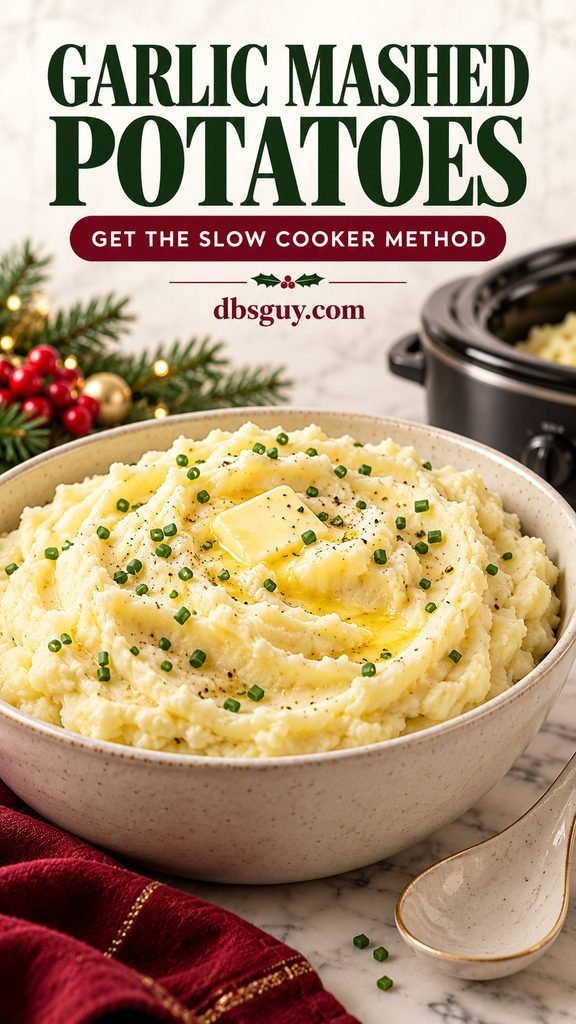
11. Garlic Mashed Potatoes
Put the potatoes in a second cooker while the main dish cooks, then mash near serving time. Warm milk gives you control over the consistency; add it gradually rather than making the potatoes loose all at once.
Serves 8 as a side | Cooker: 5–6 quarts | Prep: 20 minutes | HIGH: about 3–4 hours | Finish: 10 minutes
Ingredients
- 3 pounds Yukon Gold potatoes, peeled and cut into even 1-inch pieces
- ¾ cup low-sodium vegetable or chicken broth
- 4 garlic cloves, peeled and halved
- ¾ teaspoon kosher salt, plus more to taste
- 4 tablespoons unsalted butter
- ½–¾ cup whole milk, warmed separately
- ¼ teaspoon black pepper
- Optional garnish: 1 tablespoon chopped chives
How to Make It
- Place the potatoes, broth, garlic, and salt in the cooker. Cover and cook on HIGH for 3–4 hours, until all the pieces crush easily with a fork. Check both the center and outer edges.
- Mash the potatoes and garlic with the remaining cooking liquid using a hand masher. If your cooker manual discourages mashing in the insert, transfer them to a bowl first.
- Fold in butter, ½ cup warm milk, and pepper. Add more milk a tablespoon at a time to reach the texture you like. Taste for salt.
- Serve promptly with optional chives. If holding briefly on WARM, keep the potatoes at 140°F or hotter and loosen with a little warm milk before serving.
Helpful detail: A blender or food processor can make mashed potatoes gluey. A hand masher leaves a softer texture and a few small potato pieces.
12. Maple-Orange Carrots
These lightly glazed carrots bring color beside turkey or pot roast. Orange zest does more of the flavor work than a large amount of sugar, keeping the side from tasting like dessert.
Serves 8 as a side | Cooker: 4 quarts | Prep: 15 minutes | HIGH: about 3–4 hours | Finish: 5 minutes

Ingredients
- 2½ pounds carrots, peeled and cut into ½-inch-thick diagonal chunks
- 3 tablespoons unsalted butter, cut into pieces
- 2 tablespoons pure maple syrup
- ¼ cup orange juice
- 1 teaspoon finely grated orange zest, divided
- ½ teaspoon kosher salt and ¼ teaspoon black pepper
- 1 teaspoon fresh thyme leaves, or ¼ teaspoon dried thyme
How to Make It
- Add the carrots, butter, maple syrup, juice, half the zest, salt, pepper, and thyme to the cooker. Toss to coat.
- Cover and cook on HIGH for 3–4 hours, until the thickest pieces are tender. Begin checking at 3 hours.
- Use a slotted spoon to transfer the carrots to a serving dish. For a more concentrated glaze, simmer the cooking liquid in a small saucepan for 3–5 minutes.
- Spoon the glaze over the carrots and finish with the remaining zest.
Helpful detail: Carrot thickness matters more than the exact shape. If using baby carrots, choose similarly sized pieces and expect the cooking time to vary.
13. Pecan-Topped Sweet Potato Mash
This version keeps the sweet potatoes smooth and the pecans crunchy, with no oven-baked topping to manage. Add the nuts only when serving so they do not soften in the steam.
Serves 8 as a side | Cooker: 5–6 quarts | Prep: 20 minutes | HIGH: about 3–4 hours | Finish: 10 minutes

Ingredients
- 3 pounds sweet potatoes, peeled and cut into 1-inch pieces
- ½ cup water
- 3 tablespoons unsalted butter
- 2 tablespoons pure maple syrup
- ½ teaspoon ground cinnamon
- ½ teaspoon kosher salt
- ¼–½ cup warmed whole milk, as needed
- ½ cup chopped pecans
How to Make It
- Put the sweet potatoes and water in the cooker. Cover and cook on HIGH for 3–4 hours, until very tender throughout.
- Drain off any pooled liquid, reserving a little in case you need it. Mash with butter, maple syrup, cinnamon, and salt.
- Stir in ¼ cup warm milk, adding more gradually if needed. Alternatively, loosen with a little reserved cooking liquid.
- Toast the pecans in a dry skillet over medium-low heat for 3–5 minutes, stirring and watching closely. Scatter over the mash immediately before serving.
Helpful detail: For guests with tree-nut allergies, leave off the pecans and use a clean serving utensil. The mash is complete without a topping.
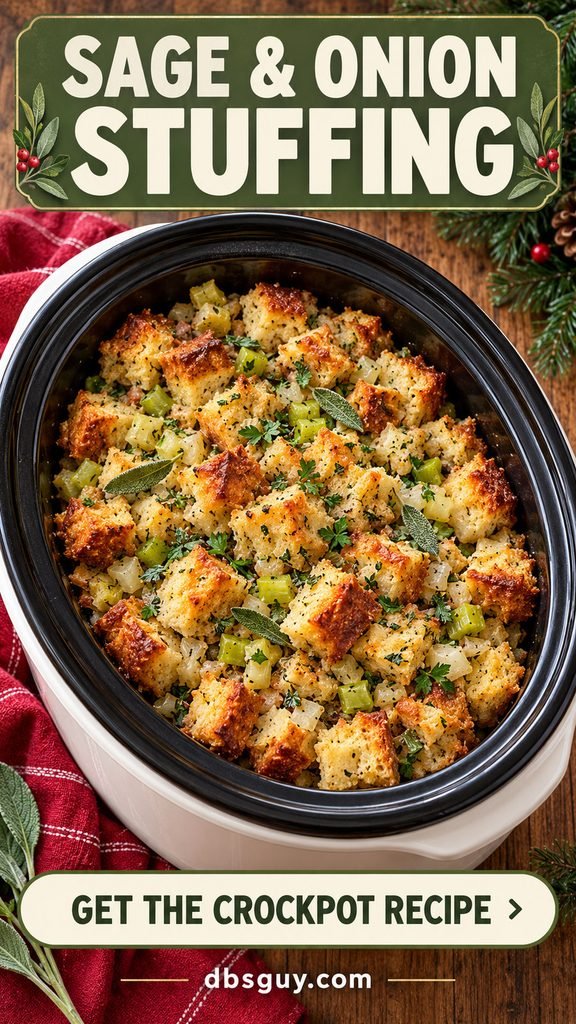
14. Sage and Onion Bread Stuffing
Cooking stuffing separately makes portioning easier and keeps the turkey recipe straightforward. This gives a moist center with firmer edges; it will not develop the same crust as a wide oven-baked pan.
Serves 8 as a side | Cooker: 5–6 quarts | Prep: 25 minutes with dried bread | HIGH: 1 hour, then LOW: about 2–3 hours | Finish: 5 minutes
Ingredients
- 10 cups plain dried bread cubes, about 12–14 ounces by weight
- 5 tablespoons unsalted butter, divided
- 1 large onion, diced
- 3 celery stalks, diced
- 1 teaspoon dried rubbed sage and ½ teaspoon dried thyme
- ½ teaspoon kosher salt and ½ teaspoon black pepper
- 2–3 cups low-sodium vegetable broth, divided
- 2 large eggs, beaten
- ¼ cup chopped fresh parsley
How to Make It
- Start with dry bread cubes. If using fresh bread, cut into ¾-inch cubes and dry on baking sheets at 300°F for about 25–35 minutes, tossing once; cool before mixing. This drying time is additional.
- Melt 4 tablespoons butter in a skillet. Cook the onion and celery over medium heat for 8–10 minutes until softened. Stir in sage, thyme, salt, and pepper.
- Toss the bread with the vegetables and parsley. Whisk the eggs with 2 cups broth, then fold into the bread. Add extra broth a little at a time, only until the cubes feel damp throughout without pooling liquid.
- Grease the cooker with the remaining tablespoon of butter. Loosely spoon in the mixture without packing. Cover and cook on HIGH for 1 hour, then LOW for about 2–3 hours, until the center and several other spots reach 165°F.
- If the edges are ready before the center, gently fold them inward once and continue cooking. Serve after the temperature check; avoid repeatedly opening the lid.
Helpful detail: Bread absorbs liquid differently. A fluffy white loaf may need less broth than dense country bread. Make the mixture just before cooking rather than refrigerating raw egg-moistened stuffing overnight.
15. Parmesan Creamed Corn
Creamed corn is useful when you want a mild side that goes with either beef or poultry. The corn cooks first; dairy is stirred in near the end to keep the sauce smoother.
Serves 8 as a side | Cooker: 4 quarts | Prep: 10 minutes | HIGH: about 2–3 hours | Finish: 20–30 minutes

Ingredients
- 2 pounds frozen corn kernels, thawed in the refrigerator and drained
- ½ cup low-sodium vegetable broth
- 2 tablespoons unsalted butter
- ¼ teaspoon kosher salt and ¼ teaspoon black pepper
- 4 ounces block cream cheese, cut into small cubes and softened briefly
- ½ cup whole milk, warmed
- ½ cup finely grated Parmesan cheese
- 1 tablespoon chopped chives
How to Make It
- Combine the thawed corn, broth, butter, salt, and pepper in the cooker. Cover and cook on HIGH for about 2–3 hours, until hot and tender.
- Stir in the cream cheese and warm milk. Cover and cook for another 20–30 minutes, stirring once halfway through, until the cream cheese has melted into the sauce.
- Fold in the Parmesan and chives. Taste before adding more salt. For a thicker texture, mash a scoop of corn against the side and stir it back in.
- Serve hot. If the mixture tightens while holding, stir in a splash of warm milk.
Helpful detail: Use finely grated Parmesan rather than large shreds so it melts into the sauce. This is spoonable creamed corn, not a baked corn casserole.
Build a Christmas Menu Without Needing Five Cookers
With one cooker: let it handle the main. Serve turkey breast with stovetop mashed potatoes and a crisp salad, or pot roast with bread and its own carrots and mushrooms. White beans need only bread and something fresh alongside. The sides above are alternatives for an available cooker, not a requirement to make several slow-cooker dishes at once.
With two cookers: pair turkey breast with maple-orange carrots, or cranberry pork with garlic mashed potatoes. Start the long-cooking main first and work backward from dinner for the side. For example, an 8–10-hour pork recipe needs an early start for a 6 p.m. dinner; the 3–4-hour potatoes can start in the afternoon. Allow time for the final temperature check and sauce or mash.
For a meat-free table: pair mushroom-lentil stew with dairy-free mashed potatoes, or serve squash-chickpea curry with rice. The white-bean braise is another complete main with bread. Check broth, bread, and sauces for your guests’ dietary needs.
Keep a clear landing spot beside each appliance for spoons and hot lids. If the kitchen needs a festive touch without losing prep room, our Christmas kitchen decor ideas that keep counters clear focus on spaces away from the work surface.
Prep Ahead, Hold Hot, and Store Leftovers
The night before, measure spices and chop vegetables. Refrigerate prepared produce and raw meat in separate covered containers. Make stuffing only when you are ready to cook it; keep the dried bread separate from eggs and broth until then. Avoid putting a refrigerator-cold ceramic insert into a hot base unless your manual explicitly allows it.
Once food is fully cooked, hold it at 140°F or hotter and follow your cooker’s holding-time limit. Use a thermometer rather than assuming that a WARM label guarantees the right temperature. For quality, plan to serve chicken and turkey close to the end of their cooking window instead of holding them for hours.
Refrigerate leftovers in shallow containers within 2 hours, or within 1 hour if the surroundings are above 90°F. Keep the refrigerator at 40°F or below and use leftovers within 3–4 days. Reheat on the stove, in the microwave, or in the oven to 165°F; do not use the slow cooker to bring cold leftovers up to temperature. Transfer already-hot food to a preheated cooker only if you need to hold it for serving.
Frequently Asked Questions
Can I put frozen chicken or a frozen roast straight into the crockpot?
Thaw meat and poultry before using these recipes. Their cooking windows assume thawed ingredients. A commercially prepared frozen slow-cooker meal is a separate case: follow its package instructions.
Can I leave every recipe cooking for eight hours?
No. Pork shoulder, chuck roast, and some stews suit a long window. Boneless chicken, canned-bean dishes, and the sides have shorter schedules. Choose the recipe to match your day instead of adding hours to a dish that finishes early.
Do I have to brown the meat first?
Only where the method calls for it: the pot roast and sausage recipes include browning for flavor and color. The turkey, pork, chicken, and meatball recipes go directly into the cooker. If you brown raw meat, continue cooking immediately; do not partly cook it and refrigerate it for later.
Why is the sauce thinner than it looks in the picture?
Slow cookers trap moisture, and meat and vegetables release more liquid as they cook. The images are concepts, so use the method’s texture cues. Where a thicker sauce suits the dish, the recipe includes a separate saucepan reduction or measured cornstarch slurry. Do that at the end rather than adding extra thickener at the start.
Can I double a recipe for a crowd?
Use a second appropriately sized cooker or make separate batches. Doubling ingredients can overfill the insert, change heating, and make the listed time unreliable. Use the appliance’s capacity guidance and check doneness in several places.
Can the vegetarian recipes be vegan?
The mushroom-lentil stew, squash-chickpea curry, and rosemary white beans are written without animal ingredients, provided you use suitable broth, sauces, and serving bread. For the sides, choose plant-based butter and unsweetened plant milk where appropriate; stuffing contains eggs and creamed corn contains dairy, so those need a different formulation.