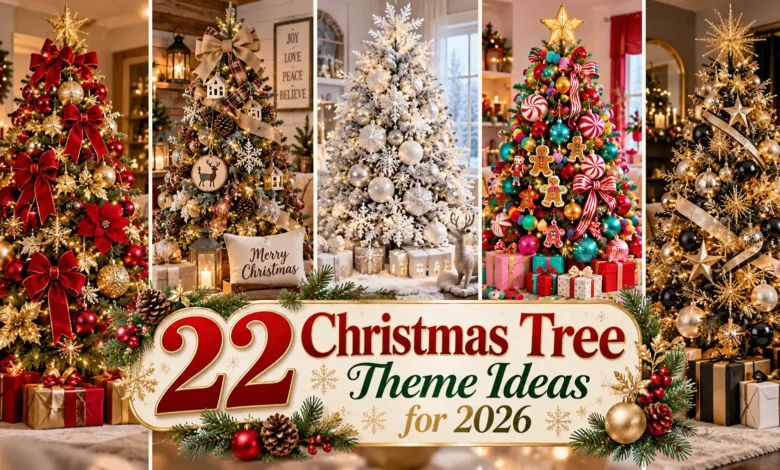
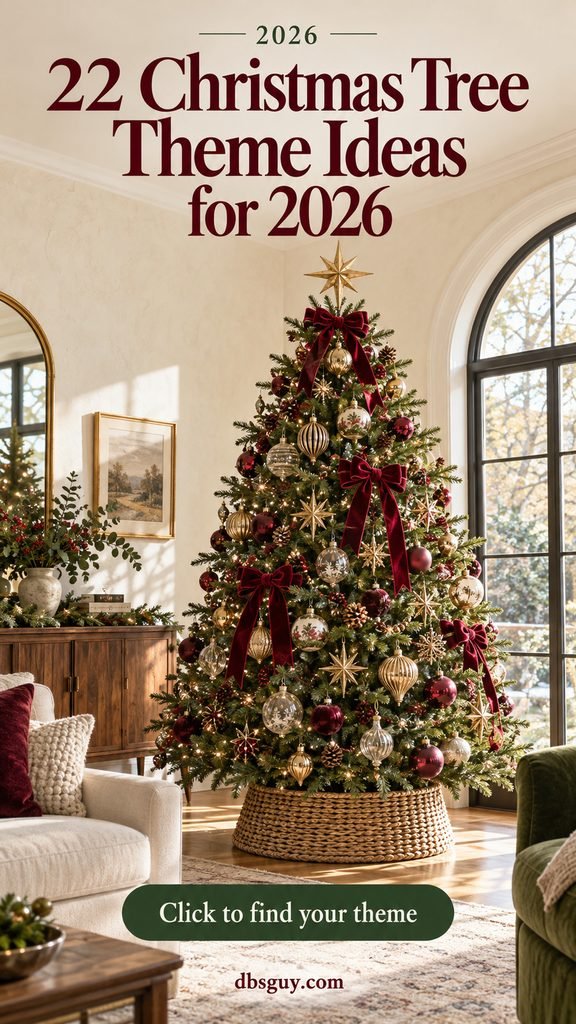
A good Christmas tree theme makes the next decorating decision easier. You know which ribbon belongs, which ornaments can stay in the box, and what kind of topper will finish the look. These 22 Christmas tree theme ideas for 2026 range from familiar tartan and heirlooms to paper crafts, celestial stars, and a carefully arranged rainbow.
For a traditional room, start with the heirloom tartan tree. For a quiet, natural look, consider straw stars or warm neutrals. If you want something playful, the gingerbread, candy cane, and Nutcracker themes give you recognizable details without requiring an entirely new tree.
There is room for both new ideas and old favorites this season. Hallmark’s 2026 Christmas trend guide includes handmade touches, candy-inspired decorating, and nature-focused themes. The options below are editorial styling ideas for your home, rather than a ranking of the year’s most popular trees.
The images in this article are AI-generated decorating concepts. Use them as visual inspiration for colors, materials, and placement.
1. Heirloom Tartan: A Traditional Tree With Room for Your Favorites
Red-and-green tartan gives mismatched sentimental ornaments something to gather around. Pair the plaid with red glass baubles, brass-colored bells, and a modest star topper. The pattern does the organizing, so a handmade ornament or an older glass decoration does not need to match everything else.
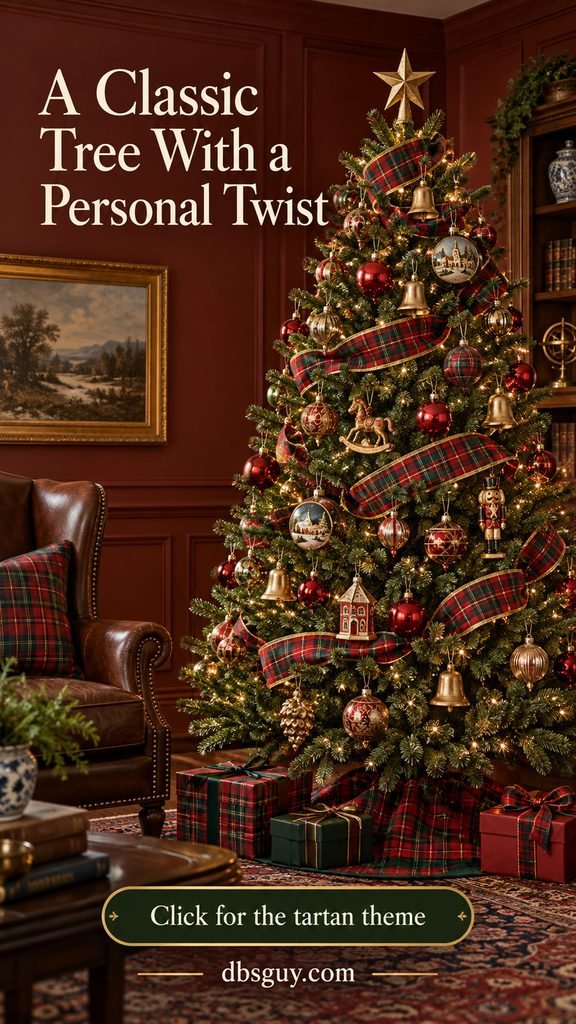
Shape a few loose ribbon sections across the tree instead of wrapping it in tight horizontal stripes. Hang your most meaningful pieces where you can see them from the sofa, then tuck simpler balls farther into the branches. Leave small patches of greenery between the ribbon and ornaments so the plaid stays readable.
This works especially well in rooms with wood furniture, warm upholstery, or traditional artwork. For an economical refresh, use your existing red ornaments and add one roll of tartan ribbon. Repeat that same plaid on a few gifts at the base; you do not need to introduce another pattern.
2. Midnight Celestial: Navy, Gold, Moons, and Stars
A celestial tree feels most convincing when its shapes do the talking. Gold crescent moons, small stars, and a starburst topper establish the theme; navy baubles provide the dark background. Warm white lights soften the contrast and keep the tree from disappearing into an evening room.
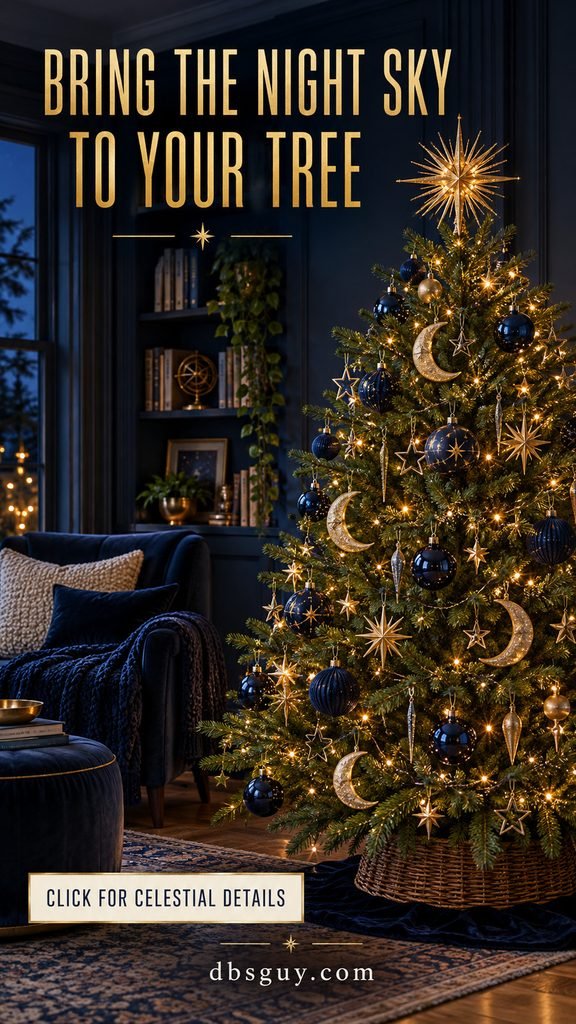
Let the moons and stars hang slightly beyond the branch tips, where their silhouettes are easy to recognize. Put navy balls a little farther inward and repeat gold at several heights. A few larger stars will show up from across the room more clearly than dozens of tiny pieces.
Choose this look for a navy sitting room, a cozy reading corner, or a home where red feels out of place. If you already have gold decorations, the main change can be a small set of moon ornaments and navy ribbon used sparingly. Avoid adding so many silver accents that the gold-and-navy plan becomes hard to see.
3. Alpine Lodge: Mini Skis, Knit Textures, and Forest Green
The alpine lodge theme is about a winter getaway, rather than a generic rustic tree. Miniature wooden skis make the story clear. Cream knit ornaments, pale snowflakes, pinecones, forest-green ribbon, and a wooden star bring in the cozy part.

Keep the ski ornaments near the front and use the cream pieces to brighten darker areas. A knitted skirt can carry the texture down to the base without adding another garland. In a timber room, let the natural wood around the tree contribute to the theme instead of covering every branch with more decorations.
You can adapt this to a city apartment with a smaller green tree and a few ski-shaped ornaments. Pick one winter-sport motif rather than mixing skis, sleds, camping gear, and woodland animals equally. That small editing decision makes the result read as a ski lodge even when the setting is an ordinary living room.
4. Scandinavian Straw Stars: An Airy, Handmade Look
Straw stars and wooden beads suit a tree with visible space between its branches. The pale ornaments sit lightly against the green needles, and a handful of red fabric hearts adds a small festive accent. A straw star at the top keeps the materials consistent.
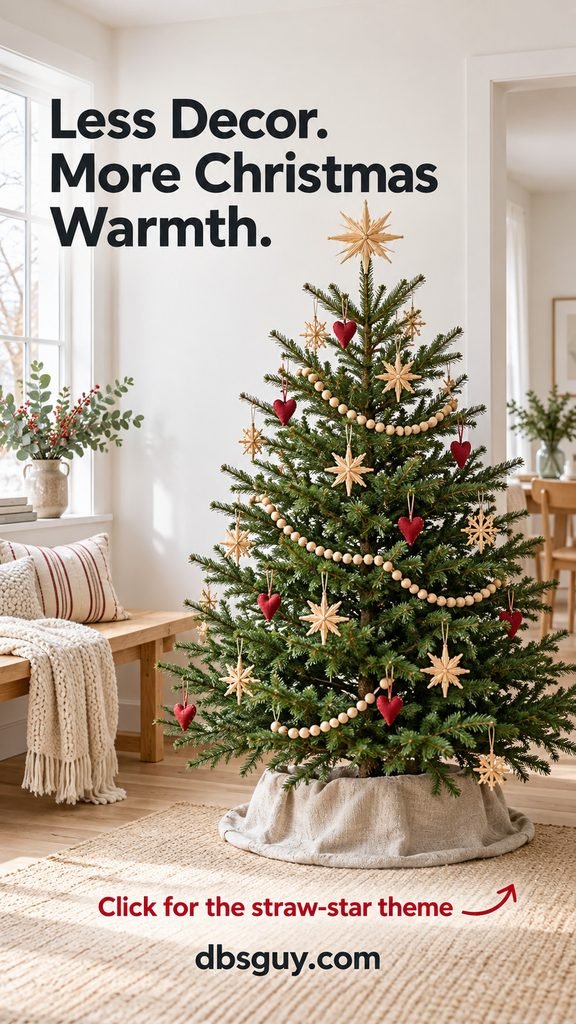
Drape the bead garland in relaxed arcs, then hang the stars where they can lie flat and remain visible. Resist filling every opening. This theme relies on the outline of the tree and the contrast between fine straw, round beads, and natural greenery.
It is a useful choice for bright rooms, small apartments, and anyone who wants the decorations to feel calm. You can leave out the red hearts for an even quieter version. If your tree is very dense, bring the stars to the outer tips and skip wide ribbon so the small handmade details are not swallowed up.
5. Candy Cane: A Crisp Red-and-White Theme
Candy cane decorating works when the stripes have room to stand out. Combine red-and-white cane ornaments with peppermint disks, solid red and white baubles, and a simple red bow topper. The solid colors give your eye a break from all the pattern.
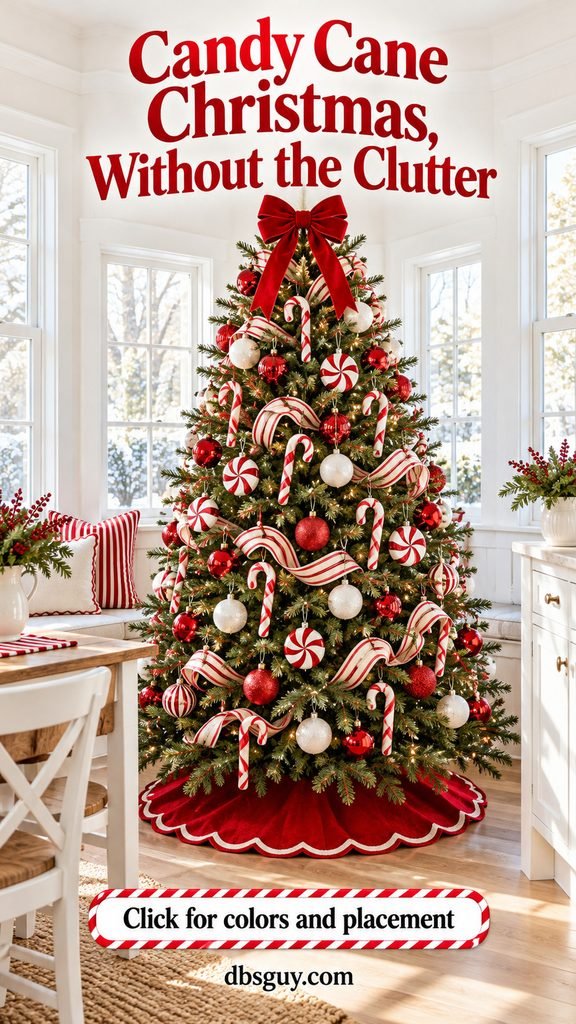
Use striped ribbon in short loops or separated sections, rather than building an uninterrupted striped spiral around the tree. Scatter the candy shapes across the front and sides so the theme remains visible from more than one angle. A red skirt makes a cheerful base without competing with the ornaments.
This is an easy family-room or breakfast-room choice. Decorative candy shapes are more reusable than an arrangement built around edible treats. For a smaller tree, reduce the ornament size first; a few oversized peppermint disks can otherwise hide most of the branches. Keep unrelated sweets for a different theme so the candy cane idea stays clear.
6. Gingerbread Bakery: Warm Brown, Ivory, and Icing Details
A gingerbread tree should look like a little bakery window. Faux gingerbread houses and people provide the recognizable icing details, while tan, brown, and ivory ornaments keep the palette warm. Narrow cream bows and an icing-style star finish the idea without needing bright red everywhere.
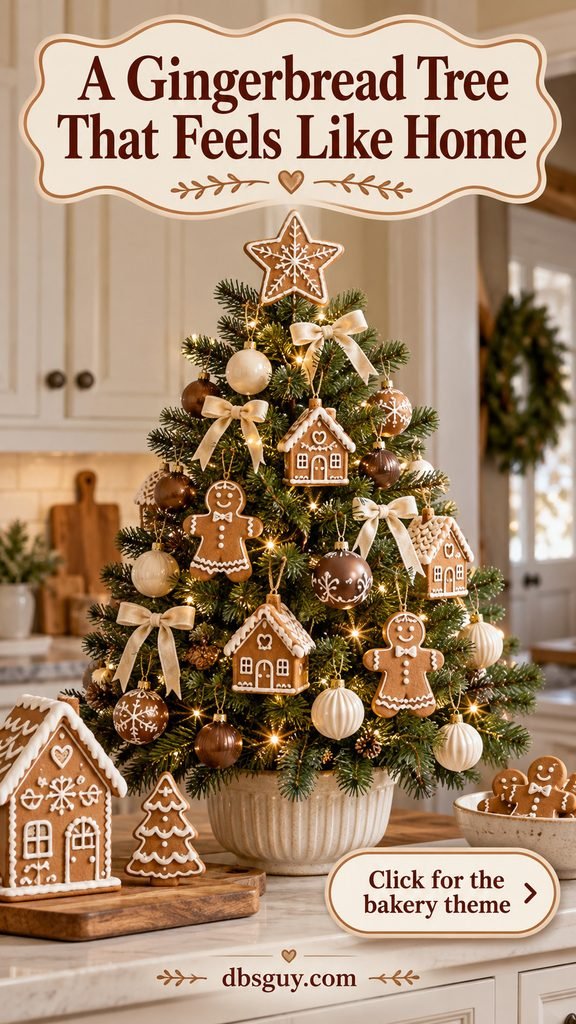
A tabletop tree on a kitchen sideboard is particularly effective because the small houses can be viewed up close. Place the decorated faces toward the room and use plain balls behind them. Give the tree its own clear surface instead of crowding the base with every cookie jar and serving plate you own.
Choose lightweight decorative ornaments for a display you can pack away and repeat next year. If you already have a full-size tree, concentrate the gingerbread pieces at eye level and use simple brown or cream filler above and below. The little white icing lines are the detail worth protecting.
7. Woodland Mushroom: A Small Forest on the Branches
Felt mushrooms, wooden birds, acorns, and pinecones turn a green tree into a woodland scene. Red-and-cream mushroom caps give it a playful focal point; moss-colored ribbon and a woven collar keep the rest grounded.
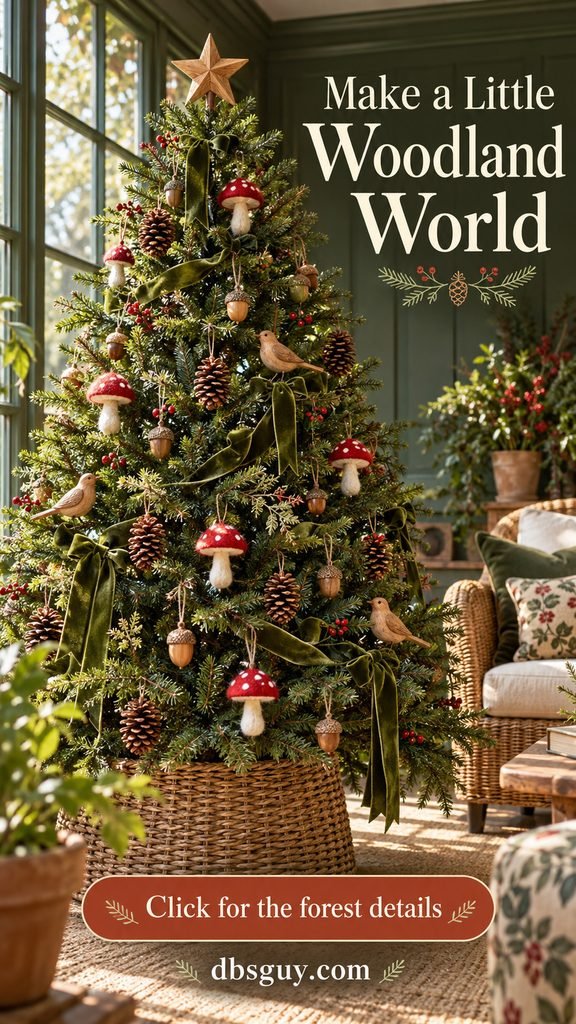
Spread the mushrooms through the tree rather than grouping them all at the bottom. Perch bird ornaments on sturdy branches and let pinecones sit slightly deeper. Use only a little ribbon, since broad loops can cover the very shapes that make this theme interesting.
This is a good fit for a sunroom, cottage, or living room with green walls and natural textures. You can make it gentler with cream mushrooms or more colorful with a few berry accents. When using a basket-style collar, keep the proper tree stand underneath and allow access for watering if the tree is real. The basket is the finish, not the support.
8. Citrus Botanical: Orange Slices and Warm Copper
Dried orange slices look especially lovely where daylight can pass through them. Pair their amber centers with ivory ribbon knots, small cinnamon-stick bundles, copper-colored baubles, and a simple wooden star. The result is more botanical than glittery.
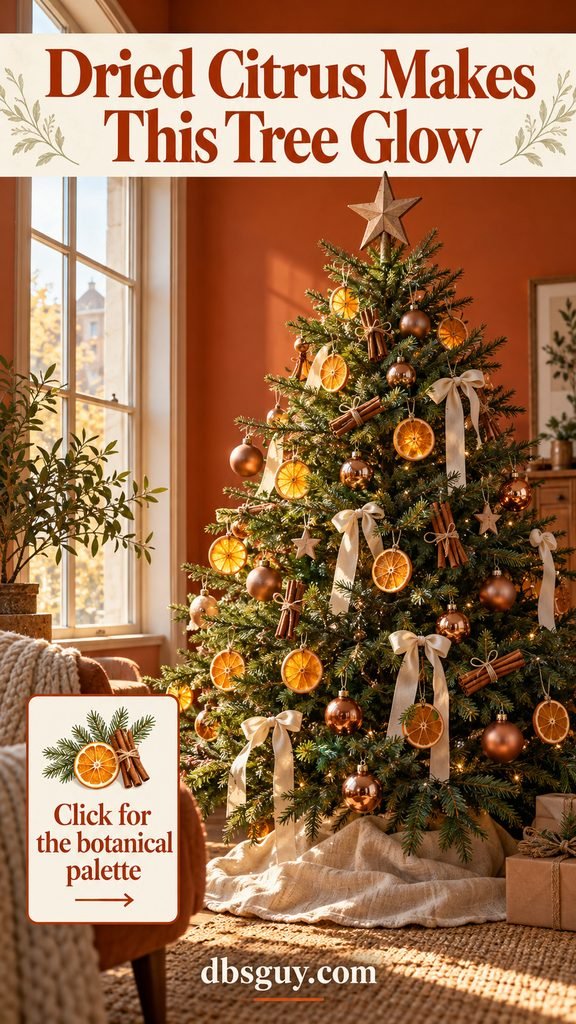
Hang the slices near the outer branches and use the copper balls farther back to add depth. Keep ribbon narrow enough that the orange shapes remain visible. A linen skirt and plain kraft wrapping echo the natural textures without adding another ornament category.
This theme suits a bright window corner or a room with terracotta, oak, or warm cream finishes. If dried fruit is inconvenient for your household, use realistic faux citrus ornaments and keep the same color plan. Do not describe this as an edible decoration display: these pieces are for styling, and natural materials still need to be kept clear of heat sources.
9. Jewel Box: Saturated Color With an Antique-Gold Finish
Emerald, ruby, sapphire, and amethyst make a tree feel rich without relying on lots of ribbon. Use glass-look balls and a few elongated gold finials, then carry the gold upward with small stars and an understated topper.
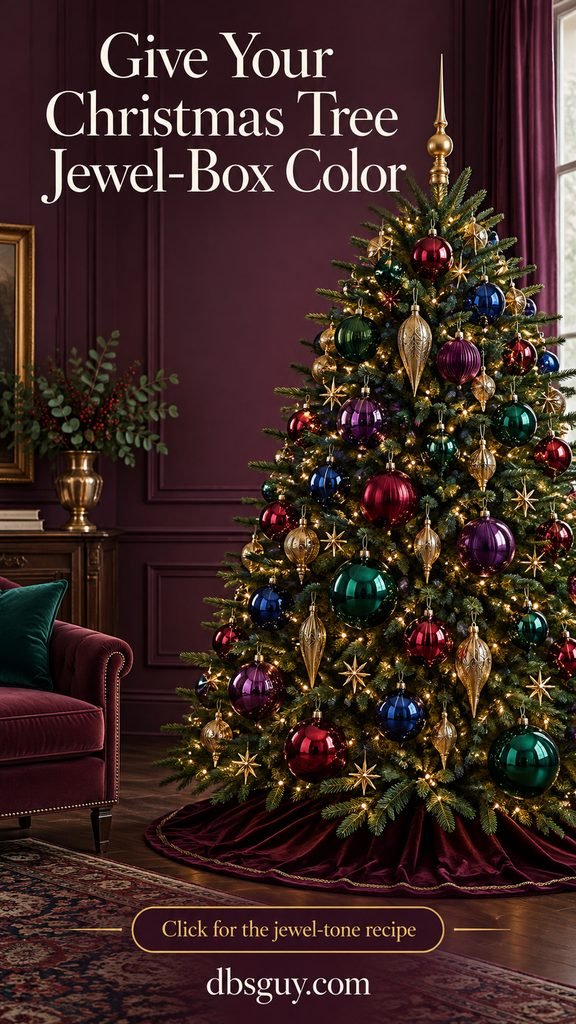
To prevent the colors from looking random, repeat each one in the upper, middle, and lower parts of the tree. Mix matte and reflective finishes within that plan. If the room already contains a strong color, let it lead: a plum room can support more amethyst, while a green room may benefit from extra ruby and sapphire.
The important purchase is a coherent set of saturated ornaments, not an expensive statement piece. Existing gold baubles can serve as the connecting layer. Take a few steps back before adding more; dark jewel tones need visible lights and small gaps of green so the tree does not become a solid block of color.
10. Velvet Bows: One Statement Topper and Smaller Repeats
A large velvet bow can carry an entire theme. Start with a burgundy topper and long tails, then echo it with smaller bows at selected branch tips. A few champagne baubles and fine lights are enough to support the fabric.

Decide where the large bow will sit before hanging the smaller ones. Allow its tails to fall through open spaces instead of stretching them tightly across ornaments. Vary the height of the smaller bows and leave clear branches between them; rows of equally spaced bows can feel rigid.
On a slim tree, use a narrower topper and lighter tails so the fabric does not overwhelm the silhouette. Wired ribbon makes structured loops easier to shape, while unwired velvet gives a softer drape. Choose the effect you want, secure the topper according to the tree’s instructions, and repeat that burgundy on gifts for an easy finishing touch.
11. Coastal Sea Glass: Aqua, Shells, and Soft Pearls
For a coastal Christmas tree, think frosted sea glass and sandy linen rather than a collection of nautical signs. Pale aqua baubles, ivory shell ornaments, and short pearl-like garland swags make the connection to the shore gently.
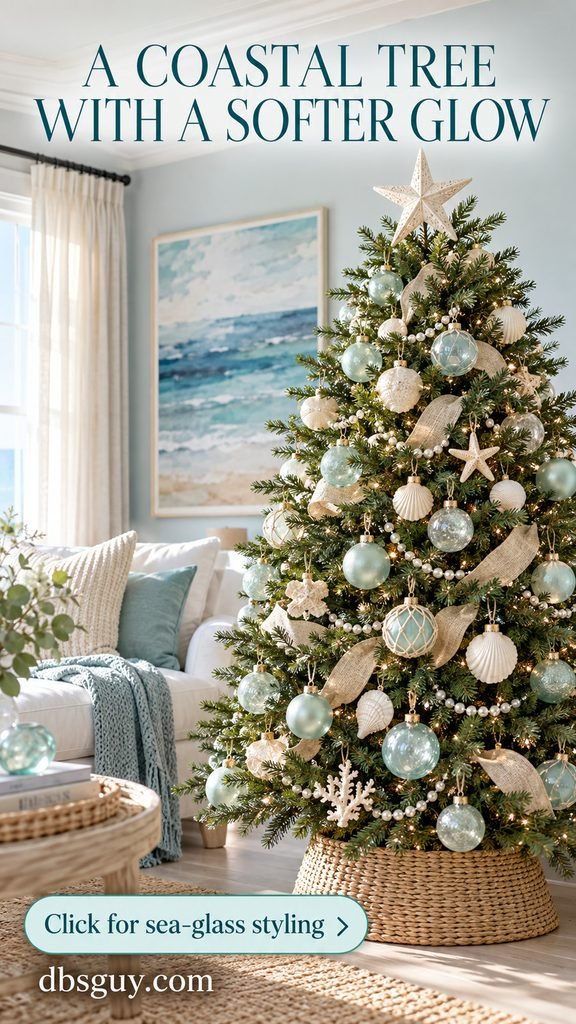
Use a green tree to give the pale decorations contrast. Hang the shells toward the front, place aqua balls at different depths, and keep the pearl swags short enough to avoid a heavy curtain across the branches. An ivory star and woven collar complete the quiet finish.
This fits a home with linen curtains, light wood, or blue artwork, even if the nearest beach is far away. Lightweight shell-shaped ornaments are easier to arrange than heavy real shells. If your room is already full of ocean blue, add more ivory and sand instead of making every ornament aqua. The theme should complement the room, not compete with it.
12. Blue-and-White Porcelain: A Collected, Patterned Tree
Small ornaments with cobalt floral patterns give this tree the feel of a collected china cabinet. Pair the patterned pieces with solid cobalt balls and narrow white satin bows so the fine blue details do not have to compete with more prints.
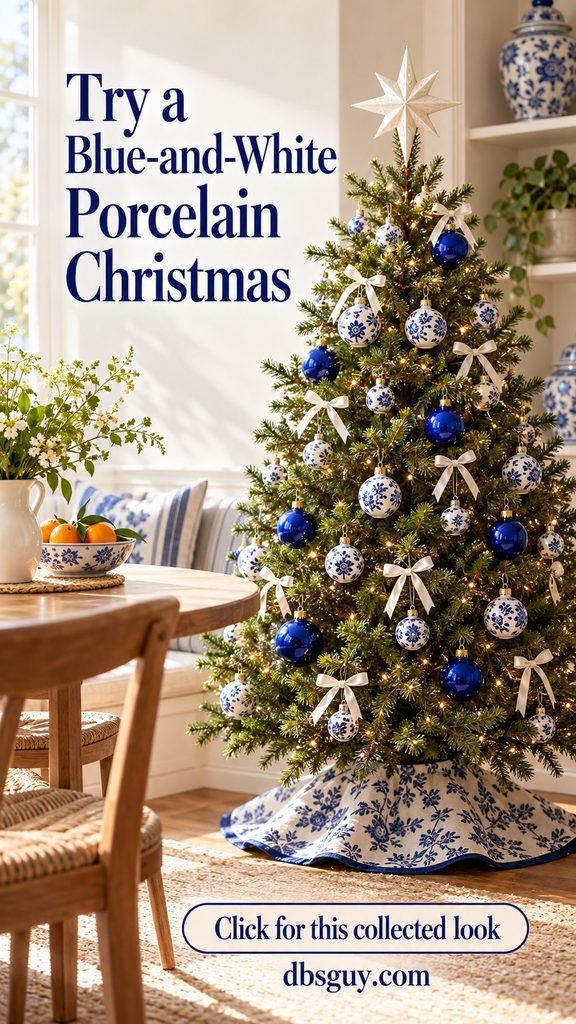
Use porcelain-style ornaments made for hanging, preferably lightweight versions, rather than suspending actual teacups or heavy dishes. Position the patterns near the outer branches with their decorated sides facing the room. A blue-and-white skirt can repeat the palette below while the tree remains in its proper stand.
A compact tree in a breakfast nook or dining area brings the small motifs closer to eye level. You can borrow the colors from a favorite vase without matching its pattern exactly. Avoid adding wide checked ribbon here; the floral ornament patterns should be the main decorative story.
13. Paper Workshop: Folded Stars, Fans, and Honeycomb Shapes
A paper tree feels handmade in a different way from straw or woodland decorating. Folded stars, paper fans, honeycomb ornaments, and a paper chain provide shape and texture. Cream, forest green, and russet make a restrained starting palette.

Make or choose a few larger folded stars first, then add smaller fans and honeycomb pieces around them. Keep the paper chain loose, with enough openings that it does not hide the ornaments. Using different shapes within a limited palette creates variety without needing glitter or another material.
This is a practical option for a craft-focused household or a tree assembled gradually over several evenings. Store the paper ornaments gently so they are not crushed, and follow the light manufacturer’s clearance guidance. Paper decorations belong away from heat and live flames. An inexpensive refresh can be as small as changing the paper-chain colors while keeping your best folded stars.
14. Retro Space Age: Silver Branches and Reflector Baubles
A silver artificial tree changes the whole backdrop, so the ornaments can stay relatively simple. Turquoise, burnt orange, and cherry red reflector-style baubles create the retro feeling, while an atomic starburst topper gives it a clear finishing point.

Look for ornaments with recessed or faceted centers that catch the room’s light. Hang them on the outside of the silver branches and skip thick garlands that obscure the sparkle. Walnut furniture and an ivory skirt keep the scene warm rather than icy.
For the same mood on a green tree, use the reflector ornaments and starburst topper with a small amount of silver garland. If you use a metallic tree, leave electrical lights off its branches: the Consumer Product Safety Commission’s holiday decorating guidance specifically warns against electric lights on metallic trees. Ambient room lighting can provide the glow. The illustrated concept is a styling reference, rather than documentation of a vintage installation.
15. Disco Silver: Mirrored Ornaments for a Party Mood
A disco theme is about mirrored texture, not just a silver color scheme. Mini disco-ball ornaments are the main event. Silver finials, a thin bead garland, and a shiny star support their reflective surfaces against a dark green tree.

Keep the garland delicate and leave the mirrored balls exposed near the branch tips. A restrained black skirt works in a charcoal or modern room. Test your lights with a few ornaments before decorating the whole tree; cool white gives a crisper party look, while warm white softens it.
You do not need to cover every branch in mirrors. Repeat a modest collection across the visible sides and use ordinary silver balls in the gaps. Avoid choosing ornaments so large or heavy that they pull the tips downward. The tree can feel celebratory through its surfaces alone, without a crowded base or extra party props.
16. Romantic Rose: Dusty Pink, Mauve, and Cream Rosettes
Dusty rose reads differently from bright candy pink. Mix muted pink baubles with mauve ribbon, cream fabric rosettes, pearl-like drops, and a champagne star. Keep the green branches visible so the softness does not become a wall of pale decoration.
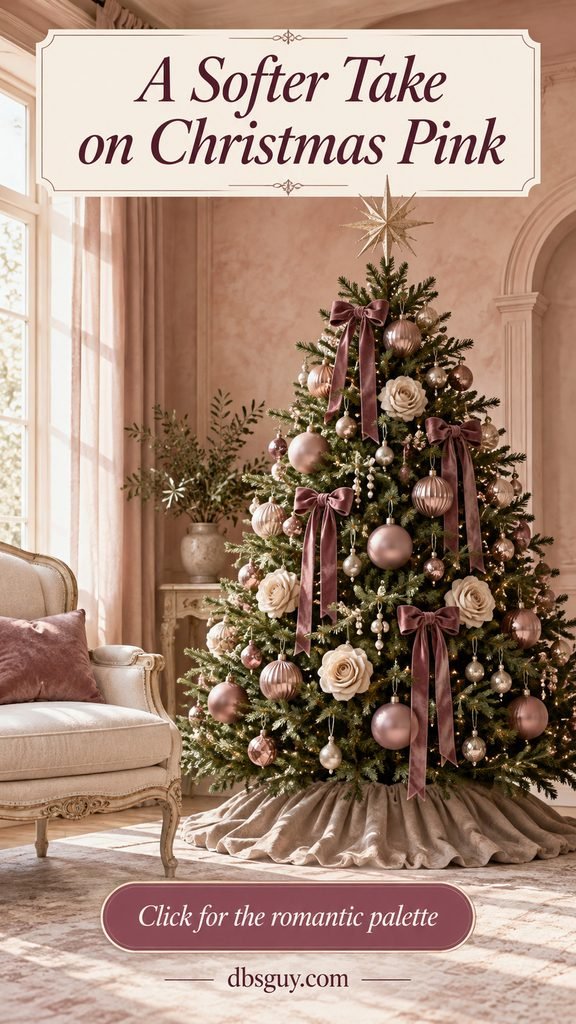
Use the rosettes as accents rather than creating a tree covered in flowers. Hang the pearl-like drops where they have space below them, and choose narrow ribbon so it falls gently between ornaments. A taupe skirt gives the pink a quiet base.
This suits a blush room, an antique-filled sitting area, or anyone who wants a softer holiday palette. If you own rose-gold ornaments already, add them sparingly; their shine can brighten the matte pink without turning the tree into a metallic theme. Avoid introducing several unrelated pink shades at once. Dusty rose and mauve are enough to establish the mood.
17. Warm Neutral: Oat, Caramel, Linen, and Wood
A neutral tree needs more than a pile of beige balls. Combine smooth oat and caramel baubles with textured cream ornaments, wooden rings, and softly draped linen ribbon. The variation in surface is what makes the palette interesting.

Keep the darkest caramel pieces distributed through the tree to add definition. Place textured ornaments at the front where their surfaces can be seen. A plain ivory star and canvas skirt continue the calm finish without adding a competing statement.
Choose this theme when the room already has plenty of visual detail or when you want the greenery itself to stand out. You can use existing white and gold ornaments, but reduce the gold if the goal is a soft neutral tree. Before buying anything, compare the cream shades together in daylight; a mix of warm ivory and cool gray-white can look accidental beside tan walls.
18. Book Lover: Mini Books, Scrolls, and Bookmark Ribbons
A book-lover tree belongs beside the reading chair. Lightweight miniature book ornaments, rolled-paper scrolls, and narrow ribbon that resembles bookmarks create the theme. Burgundy, brown, cream, and a little gold sit comfortably with the shelves around it.

Choose tiny decorative books rather than hanging actual hardcovers. Face their covers or spines outward and let a few bookmark-style ribbons drop vertically. A small tree works well here because the objects are easy to inspect and the library still feels like a usable room.
For a personal version, make ornament-sized reproductions of favorite book covers or write short family reading memories on scrolls. Keep irreplaceable books and original pages intact; printed copies are enough for the look. Avoid piling books against the stand where you need access. The shelves can provide the atmosphere while the tree stays simple.
19. Travel Souvenirs: A Tree Built Around Places You Love
Travel ornaments can be the starting point rather than an awkward addition to another theme. A tiny suitcase, cable car, sailboat, townhouse, or globe can recall different trips. Teal and champagne baubles give those varied shapes a shared background.

Hang the most recognizable souvenirs toward the front and use plain ornaments to link the empty spaces. Narrow tan ribbon can suggest the warmth of a travel journal without literally covering the tree in maps. A woven collar works well for a casual finish.
Choose ornaments connected to your own trips or places that matter to you; there is no need to collect a whole set of famous landmarks. If you have only a few souvenirs, a compact tree gives them more presence. Keep heavy objects on a nearby shelf and use light ornament versions on the branches, so the memories are visible without pulling the tree out of shape.
20. Family Memory: Photos, Drawings, and Keepsake Ornaments
A family-memory tree can include several styles because the connection is the people behind the ornaments. Lightweight photo frames, copied children’s drawings, red felt hearts, and simple cream balls provide a loose visual thread without making every keepsake identical.
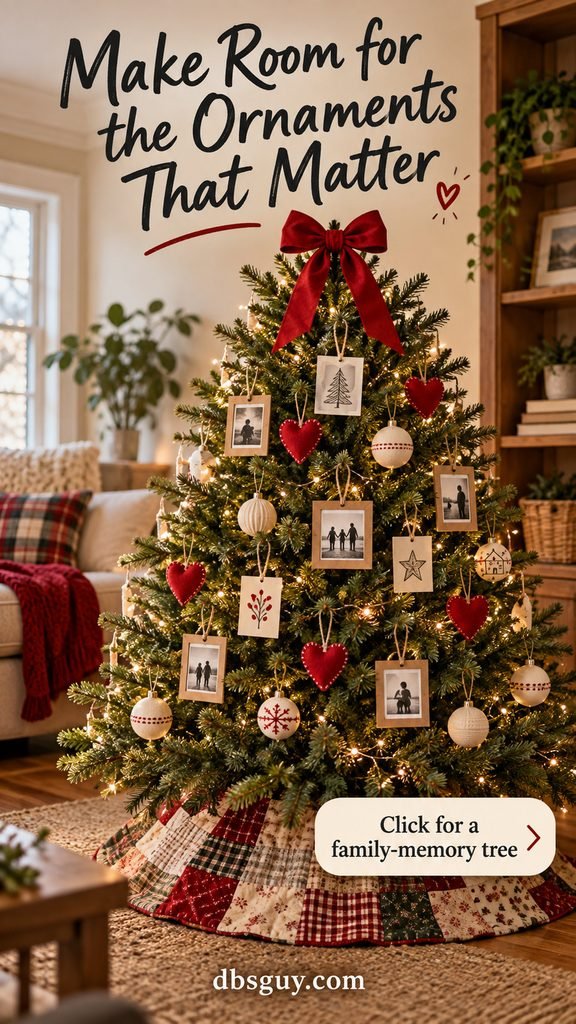
Use copies of photos and artwork in case they bend or fade. Hang meaningful pieces at comfortable viewing height and fill around them with plain ornaments. A red bow topper and a patchwork-style skirt make the tree feel warm and lived-in.
Leave room for this year’s addition rather than rearranging the tree to look perfectly symmetrical. It is fine if a handmade ornament looks different from the others. When children help decorate, choose suitable unbreakable pieces and keep small loose parts out of reach. The aim is a display you can talk about together, with enough repetition to hold the collection visually.
21. Nutcracker Ballet: Toy Soldiers, Slippers, and Soft Ribbon
Nutcracker decorating can feel theatrical without becoming crowded. Small toy-soldier ornaments establish the Christmas story, while ballet slippers, little crowns, blush ribbon, and gold details bring in the stage-inspired side.
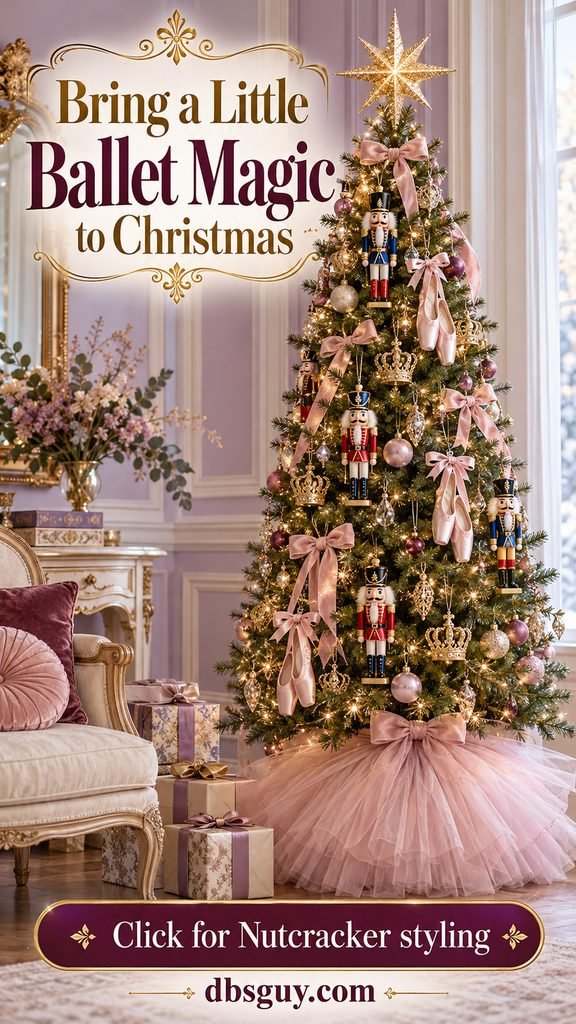
Use lightweight hanging ornaments rather than full-size freestanding nutcrackers. Spread the soldier figures across the visible tree and tuck the smaller crowns between them. Keep the ribbon soft and narrow; an enormous bow would pull attention away from the little characters.
A slim tree in a lavender, cream, or blush corner makes a lovely setting. Let blue, red, and gold appear in the nutcrackers themselves, then keep filler ornaments restrained. You can use a little blush tulle around the base over a secure stand, with clearance from lighting and cords. A gold star is enough at the top; the ornaments already provide plenty of detail.
22. Rainbow Gradient: A Clear Plan for a Colorful Tree
A rainbow tree looks organized when the colors follow a visible sequence. On a white artificial tree, arrange red at the top, followed by orange, yellow, green, blue, and violet toward the base. A neutral star and skirt keep the gradient as the focal point.
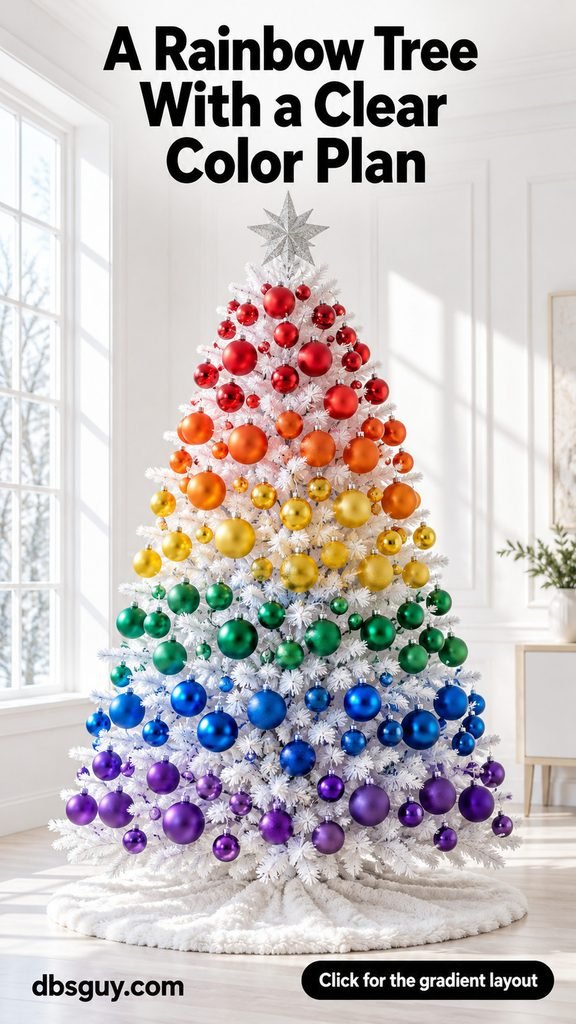
Sort the ornaments by color before you start. Lay out the bands on the floor, then decorate from top to bottom, checking the view from a few steps away. Keep the bauble shapes similar and blend neighboring shades gently where the bands meet.
The widest part of the tree will need more ornaments than the narrow top, so divide your collection by coverage rather than into equal counts. If you do not have enough colors, try a shorter progression such as pink to red to burgundy. Skip patterned ribbon here: the color arrangement is the theme, and it should stay easy to read.
How to Turn Your Favorite Theme Into a Decorating Plan
Start with the ornaments you already own. Choose one main idea, two or three supporting colors, and one material you want to emphasize. For example, tartan uses patterned fabric as its connecting detail, while the disco tree relies on mirrored surfaces. Buying more of every ornament style usually makes the decision harder.
Before ordering a topper, measure the tree in its stand and check the space between its highest branch and the ceiling. Consider the topper’s attachment and weight, not just its appearance. For a narrow tree, smaller ornaments and shorter ribbon sections help preserve the outline.
Decorate in layers. Shape an artificial tree according to its instructions, arrange the lights, add ribbon or garland, and then hang ornaments. Balsam Hill’s decorating guide also places ribbon after lighting and before ornaments. Place heavier decorations on branches that can support them; reserve fine tips for lighter pieces.
For a budget refresh, buy the detail that identifies the theme—a ribbon, paper shape, or small set of specialty ornaments—and reuse plain baubles as the background. Decorating the sides people can see is a reasonable choice when the tree sits in a corner. Finish the gifts and skirt in the same palette before deciding whether the branches need more.
Keep the Finished Tree Beautiful and Safe
Materials such as paper, ribbon, dried citrus, and tulle still need sensible placement. The U.S. Fire Administration’s holiday guidance recommends keeping a tree at least 3 feet from heat sources, watering a live tree daily, and checking light cords. Its holiday safety pictographs also advise unplugging tree lights before leaving home or going to bed. Keep exits clear, follow the manufacturer’s limits for connecting light strings, and use flameless decorations rather than real candles on the tree.
Frequently Asked Questions
Which Christmas tree themes feel relevant for 2026?
Handmade paper details, candy-inspired ornaments, and natural materials connect with themes in Hallmark’s published 2026 guide. Velvet bows, sentimental collections, and saturated colors also offer ways to refresh a familiar tree. Choose the look that fits your room and existing decorations; there is no verified single theme that every home needs to follow.
Can I combine two Christmas tree themes?
Yes, when they share a clear thread. Heirloom tartan can include family photos; a book-lover tree can include travel memories. Let one theme lead and use a common color or material to connect the second. Two unrelated sets competing for equal space are harder to make cohesive.
What is the easiest theme to create with a small budget?
Start with whichever theme is closest to your current ornaments. Red baubles adapt easily to tartan or candy cane styling; cream ornaments can support a neutral or straw-star tree. Paper stars and chains are another approachable option when you already have suitable craft supplies. Existing materials matter more than a universal cheapest theme.
Which themes work best on a small or tabletop tree?
Gingerbread, books, family photos, and porcelain-style ornaments benefit from being seen up close. Scale the decorations down, keep the topper light, and use only a little ribbon. A compact tree looks more intentional when its few key details are visible rather than buried under filler.
Do all my ornaments have to match?
No. Repeating a few colors, shapes, or materials is usually enough to make a tree feel connected. Keep meaningful pieces even when they differ from the main palette. Plain baubles, a consistent ribbon, or a simple base can provide the structure around them.
The strongest theme is the one you can explain in a sentence and recognize from across the room. Pick the idea that already has a place in your home, repeat its defining details, and leave room for the ornaments you love.