
A pink Christmas tree can be soft and snowy, rich and romantic, or bright enough to become the whole room’s focal point. The difference comes from your shade of pink, the color of the branches, and the decorations you repeat—not simply how many pink ornaments you buy.
For a gentle look, start with blush and ivory. For depth, try dusty rose with burgundy or navy. For a playful Barbiecore tree, choose fuchsia, reflective ornaments, and one clear accent color. You can create many of these looks on a green tree you already own.
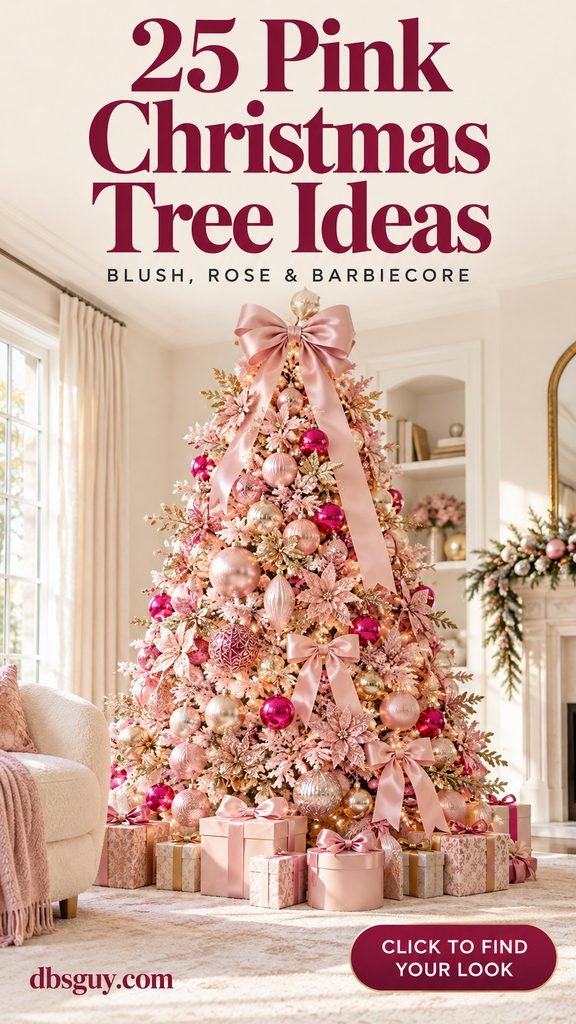
These 25 pink Christmas tree ideas each include a visual concept and practical ways to recreate the look, from full living-room trees to a small tabletop display. The images are AI-generated decorating concepts, rather than photographs of completed projects.
1. Blush and Champagne on a Flocked Tree
If your room already has cream upholstery, warm wood, or oatmeal textiles, this is an easy place to begin. Snowy branches soften the green, while pale blush ornaments and champagne metallics add color without taking over the room.
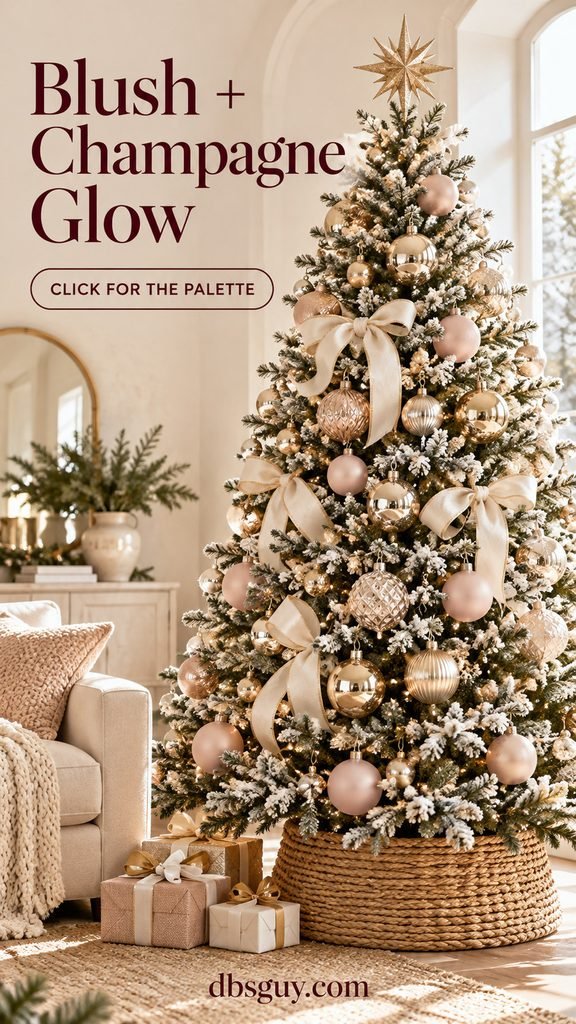
Build the palette around matte blush balls, champagne ornaments, and ivory ribbon. Mix smooth baubles with a few ribbed or textured pieces so the tree has detail even when the colors are close together. A warm champagne star and woven collar keep the finish relaxed.
Place larger ornaments farther into branches that can support them, then bring smaller ones toward the tips. Let the ivory ribbon form loose loops rather than a tight spiral. If the blush starts looking beige under your lights, add a few slightly rosier ornaments before buying another entire set.
2. Dusty Rose Velvet Against a Navy Wall
Dusty rose feels especially rich beside navy. This look suits a reading room or living room where you want a pink tree that still feels quiet in the evening.
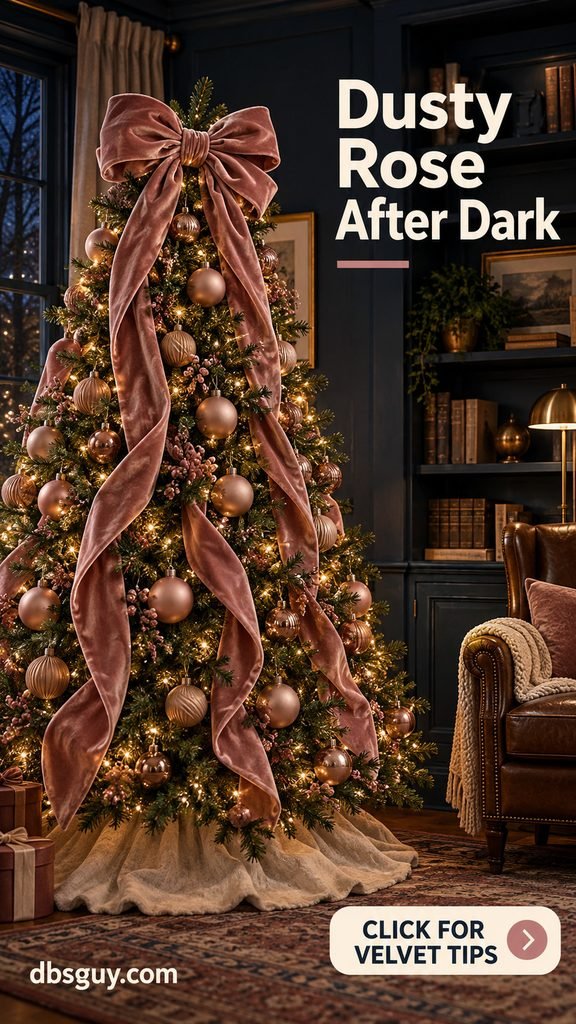
Use a green tree, dusty rose velvet ribbon, and a mixture of matte rose and restrained metallic ornaments. The velvet should be the main feature: start with a generous bow near the top, then guide the tails down in soft curves. Leave pockets of visible greenery between the ribbon.
For shaped cascades, choose wired ribbon; for a softer drape, use unwired velvet and secure it at a few branch junctions. Do a small trial section first so you can see whether the weight pulls the branches down. Keep the skirt neutral, and repeat dusty rose once in a pillow or gift ribbon.
3. Rose Gold and Copper on White Branches
Rose gold and copper are close relatives, but they do different jobs here. Rose gold supplies the pink sheen; copper gives the tree warmer, deeper points of contrast.
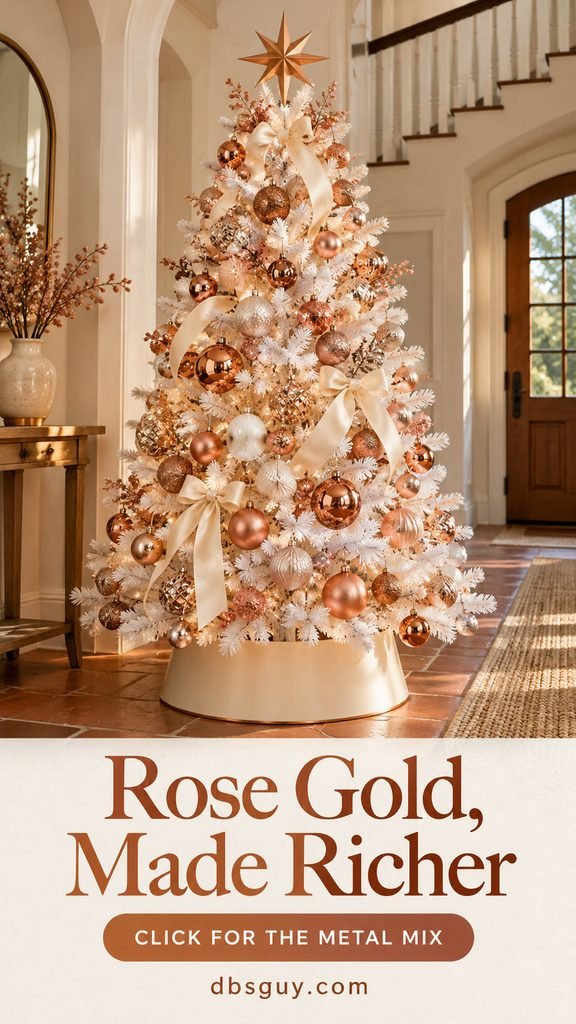
A white tree makes those metallic finishes easy to see. Combine pale rose-gold baubles with fewer copper ornaments, then break up the shine with ivory bows and matte blush balls. An ivory collar gives your eye somewhere to rest beneath the sparkle.
Set a few ornaments beside each other under your actual room lighting before committing to the mix. Some finishes sold as rose gold look peachier than others. If everything blends into one orange tone, increase the ivory and pale pink. Keep a copper star or similar topper light enough for the tree’s top branch or supported topper mount.
4. A Full Fuchsia Barbiecore Tree
This is the statement option: pink branches, glossy pink ornaments, and enough silver to catch the light. You do not need branded decorations to get the Barbiecore feeling.

Choose fuchsia as the anchor, bubblegum pink as the softer companion, and silver as the accent. A mixture of shiny and matte balls prevents the bright branches from becoming a single flat block of color. Wide pink bows can fill selected gaps without adding another motif.
Keep the surrounding furniture or wall relatively simple so the tree remains readable. A silver star, pink wrapping paper, and one pink cushion are plenty of supporting details. If a hot-pink tree is more commitment than you want, use the same ornaments on your green tree and concentrate the pink ribbon toward its visible front.
5. Baby Pink With Pearls and Ivory Satin
A pearl-and-ivory tree offers a softer kind of pink Christmas decor. The small rounded beads bring texture, while satin bows make the branches feel dressed without looking busy.
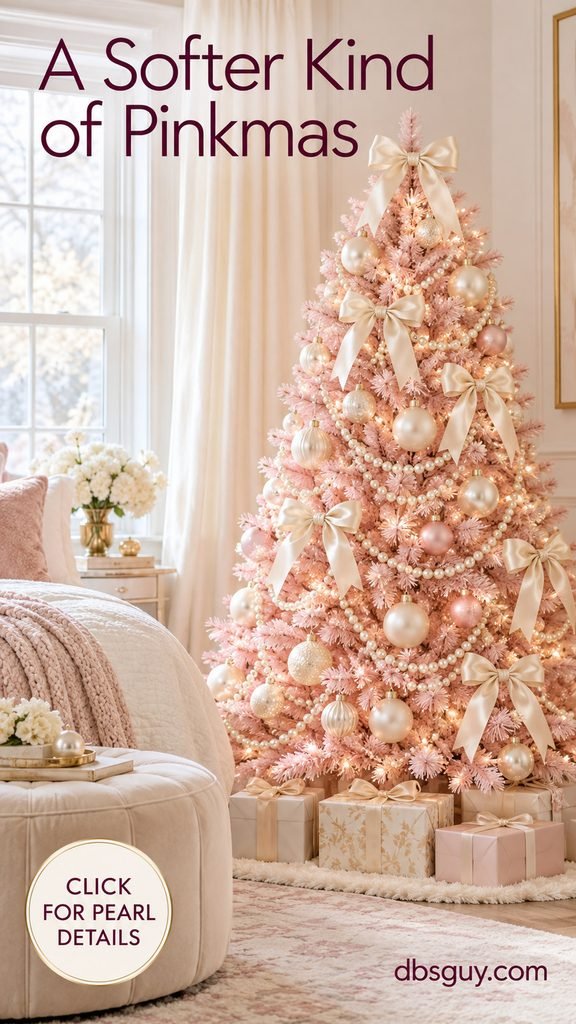
Use baby-pink branches as the background, then layer ivory bows, cream balls, a few blush ornaments, and a lightweight faux-pearl garland. Drape the garland in shallow swags, securing it at branch junctions so its weight does not pull down the tips.
Leave some space between the pearl strands and the bows. When both are packed together, the details disappear. A simple ivory bow topper and pale skirt complete the look; extra metallic picks are optional. For a bedroom, check the display’s width as well as its height so you can still open drawers and move comfortably around the bed.
6. Ballet Pink, Silver Snowflakes, and Clear Icicles
For a cooler winter look, pair ballet pink with silver rather than warm gold. White branches, snowflake ornaments, and clear icicles make the pink feel crisp.
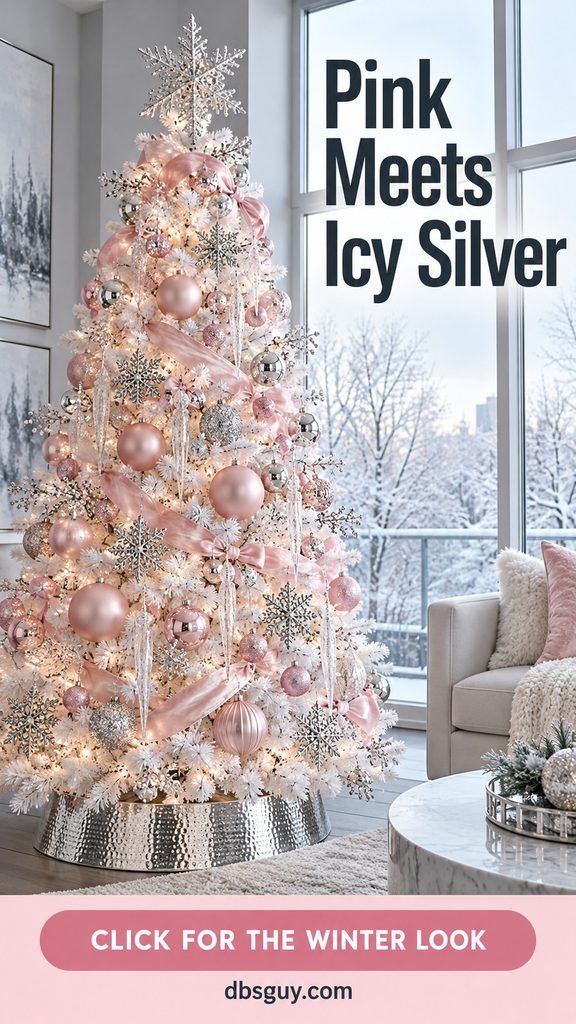
Begin with pink matte balls, then distribute silver snowflakes where their shapes can be seen against the white needles. Hang lightweight acrylic icicles near the outer branches, with enough room for them to fall vertically. A silver snowflake topper repeats the shape without introducing another theme.
Try neutral-white lights on a small section before lighting the whole tree. Very blue light can change how the pink appears, while strongly amber light will warm up the intended icy palette. Use a few reflective silver balls for sparkle, but keep the clear pieces from getting lost in a crowded layer of ornaments.
7. A Green Tree Covered in Small Pink Bows
Small bows are a useful way to make a green tree feel pink without replacing every ornament. This version works through repetition, with narrow satin bows scattered across the branch tips.
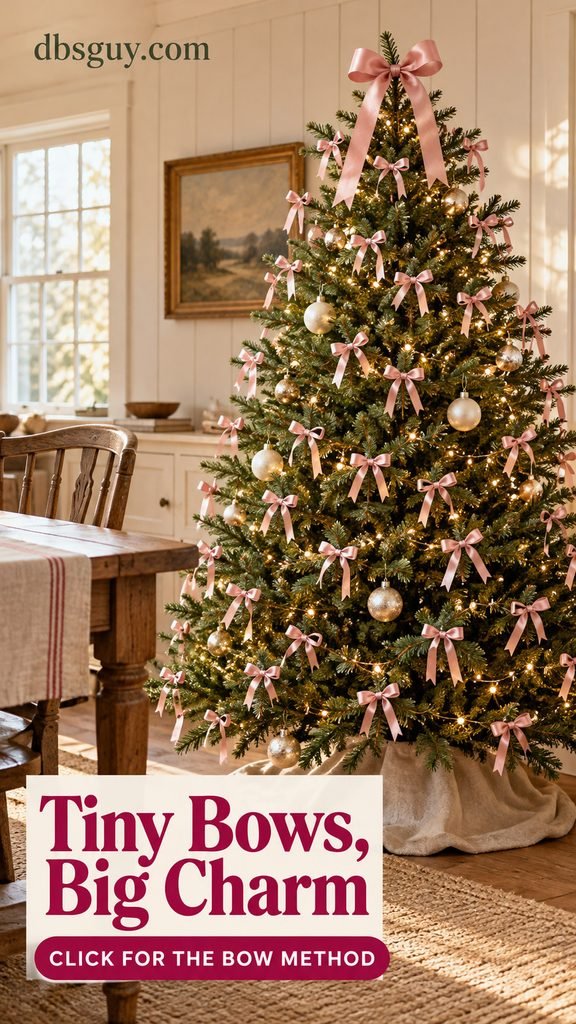
Tie one test bow and hang it before cutting the rest of the ribbon. You want a size that is visible from across the room but leaves the branches in view. Cut matching lengths once you like the proportions, then vary the placement rather than lining every bow up in strict rows.
Add a few ivory balls if the tree needs more substance. Keep the topper modest so it belongs with the smaller bows. A natural linen skirt and wood furniture stop the look from becoming overly formal. To refresh a familiar ornament collection, use the same pink ribbon as the hanging ties for selected pieces.
8. A Diagonal Trail of Blush Roses
A floral tree looks more intentional when the flowers follow a path. Here, blush and dusty rose blooms form a diagonal trail instead of covering every available branch.
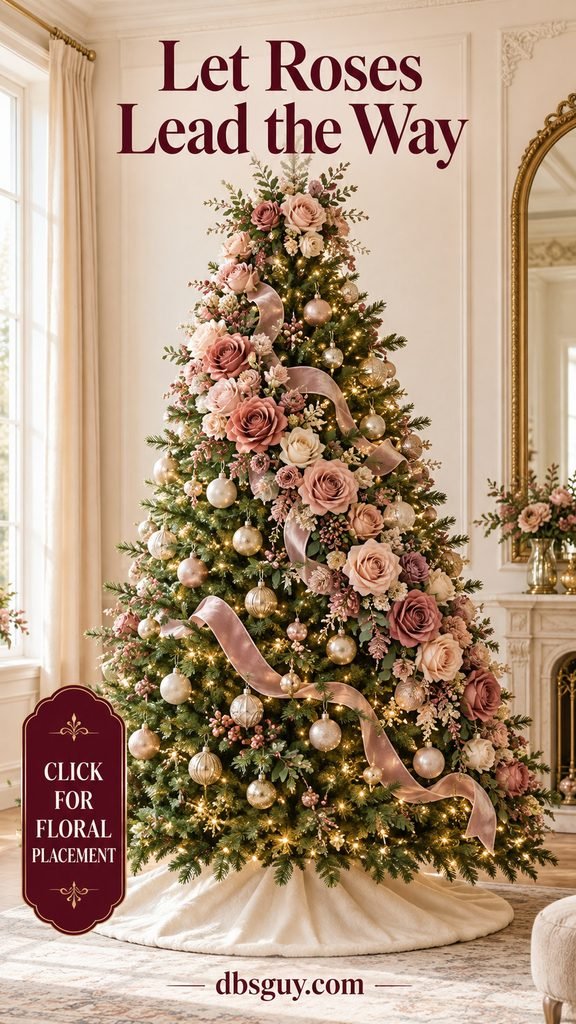
Use lightweight artificial roses with stems you can tuck and secure to sturdy branch junctions. Arrange the largest flower heads first, stepping back to check the diagonal. Add smaller blooms around the edges so the trail feels soft rather than like a solid stripe.
Fill the remaining tree with small champagne balls and warm lights. A compact floral cluster can replace a tall topper. Avoid forcing too many heavy stems into one branch; spread the attachments across several supports. If the flowers are the reason you love the look, keep the ribbon and ornament shapes simple enough that those roses stay visible.
9. A Pink and Mint Candy-Shop Tree
This tree is playful at a glance: pink-and-white swirl lollipops, pastel mint candy shapes, and pink branches. The oversized decorations are the feature, so the smaller ornaments can stay simple.
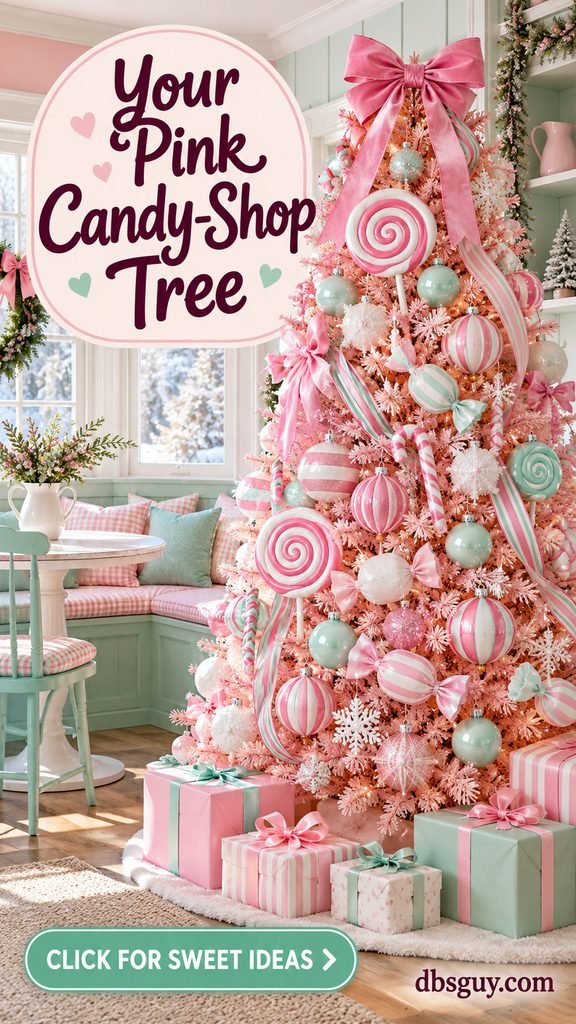
Choose a few lightweight faux lollipop picks or hanging decorations, then fill around them with mint and pink balls. Space the large candy shapes across different heights rather than clustering them only near the bottom. Keep their sticks and attachment points tucked into the branches.
Use decorative sweets rather than real food, especially in a home with pets or young children, and keep small ornaments out of reach. Pink and mint gift wrap echoes the theme without adding more candy shapes. If the tree starts feeling crowded, remove a few filler balls first—the distinctive candy ornaments deserve room.
10. Gingerbread Brown With Blush and Gingham
Brown gingerbread shapes make pale pink feel cozy. Unlike the glossy candy-shop tree, this version leans on warm wood, gingham, and simple decorative cookie shapes.

Use a green tree and alternate blush balls with lightweight gingerbread-person ornaments. Pink-and-white gingham ribbon connects the two colors. Tie it into bows or tuck a few loose sections through the branches; you do not need both treatments everywhere.
Look for gingerbread decorations with a clear white outline so the shapes stand out against the greenery. A woven collar and kraft-paper packages keep the base warm and unfussy. When pink disappears behind the brown, add blush ornaments near the outer branches. Treat the gingerbread pieces as decorations, not snacks, and choose materials suited to the people and pets in your home.
11. A Retro Pink Tinsel Tree With Turquoise
Pink tinsel, turquoise finials, and raspberry reflector-style ornaments give this tree a distinctly retro personality. It fits naturally beside walnut furniture or a teal chair.
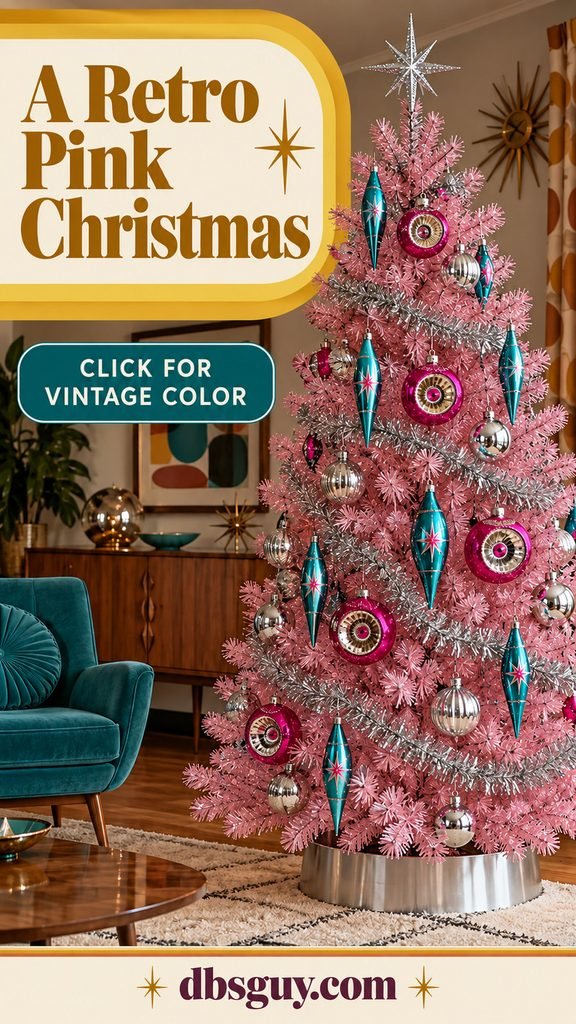
Let the branches provide much of the sparkle. Add a smaller selection of elongated ornaments and round reflector shapes rather than hiding the tinsel under thick ribbon. A simple silver star and plain silver base cover tie the shiny finishes together.
Use vintage-inspired reproductions if delicate old glass would be difficult to manage in your household. For a genuinely metallic tree, let room lighting provide the glow: the CPSC advises against using electric lights on metallic trees. Check the materials rather than relying on the word “tinsel.” The color combination also works on a regular pink PVC tree; follow that tree’s own lighting instructions.
12. A Blush-to-Fuchsia Ornament Ombre
The branches stay white; the ornaments create the gradient. Pale blush begins at the top, medium rose fills the middle, and fuchsia grounds the bottom.
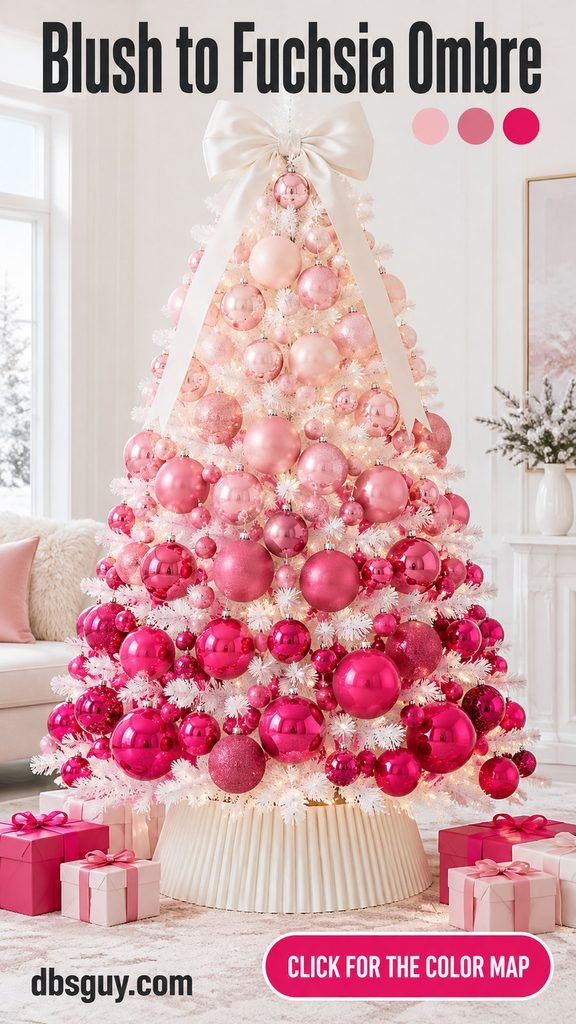
Sort your ornaments into three or four shade groups before decorating. Start with the pale group at the top, then add the next shade below it. Blend neighboring shades around each transition so you get a gradual change rather than three hard horizontal stripes.
Keep the finish consistent where possible—an all-matte gradient reads differently from a mix of glitter and mirror shine. You will usually need more ornaments for the wider lower section than the narrow top. A white bow and ivory collar keep attention on the color map. Use a phone photo from across the room to spot any fuchsia ornaments sitting too high.
13. Emerald and Magenta Jewel Tones
Deep magenta can feel more like a jewel tone than a pastel. Pair it with emerald and a little gold for a saturated tree that suits darker rooms.
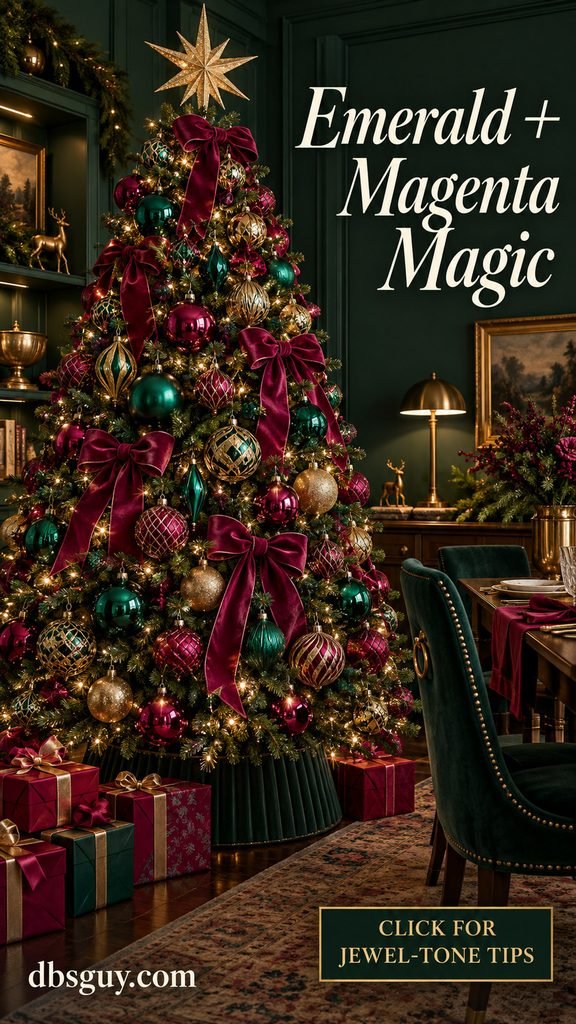
A dense green tree is a good foundation. Put the magenta ornaments where they will stand out near the branch edges, then use emerald balls and a few gold pieces to add depth. Rich magenta bows repeat the pink without making every decoration the same shape.
Watch the green-on-green details: emerald ornaments can disappear when tucked too far into dark branches. Move the shinier ones toward the light, and let magenta do most of the visible color work. A gold star and dark collar finish the design. Keep bright red out of the mix if you want the palette to remain clearly magenta and emerald.
14. Dusty Rose, Burgundy Velvet, and Brass Bells
Burgundy gives dusty rose a deeper companion without turning the tree into an all-red display. Small brass bells add another shape and a warm finish.

Spread matte dusty rose balls across a green tree first. Add burgundy ribbon in several soft trails or large bows, then hang a few brass-toned bells where their silhouettes remain visible. An oversized burgundy bow can serve as the topper.
This combination works well beside taupe walls, brown leather, or warm wood. Keep the rose ornaments slightly lighter than the ribbon so the two colors do not merge after dark. If you are reusing red decorations, hold them beside the burgundy ribbon first; a bright scarlet can pull the look in a different direction. Rose-colored packages are an easy final repeat at the base.
15. Pale Pink With Black Bows and Graphic Stripes
Black accents give pink branches a sharper outline. Narrow bows and a few striped ornaments are enough to create the graphic effect.
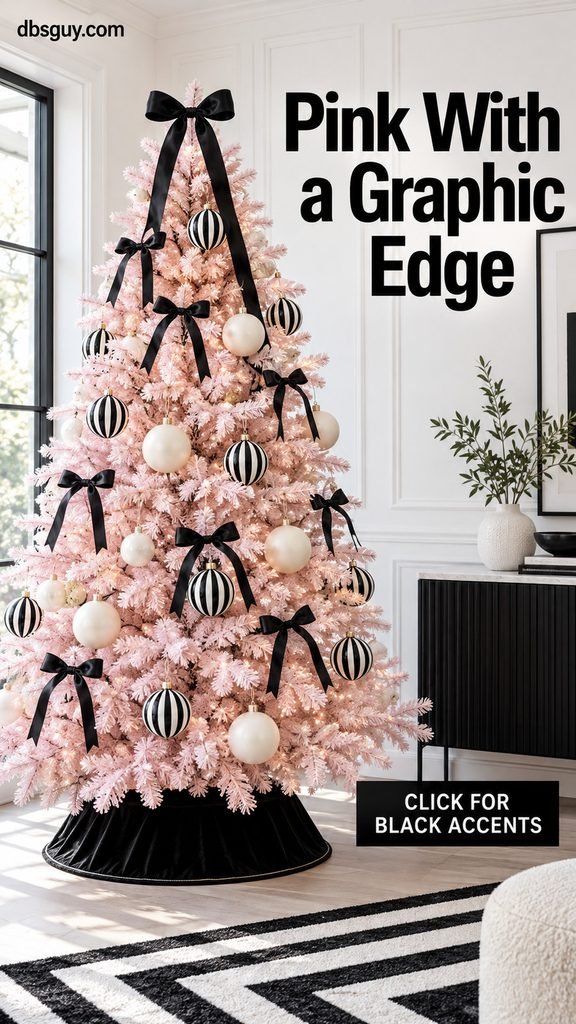
Choose a pale-pink tree, then add thin black satin bows, ivory balls, and black-and-white striped baubles. Keep the black decorations smaller or less numerous than the light ones so the tree still reads as pink. A narrow black topper bow repeats the accent.
Place the striped ornaments across several heights, with plain balls between them. Too many adjacent patterns make the branches harder to see. A black skirt connects the tree to a black console or picture frame in the room. If you prefer a gentler version, swap stark white stripes for ivory and choose matte rather than glossy black ornaments.
16. Blush and Sage With Woodland Texture
For a quieter pink tree, trade glitter for pinecones, wooden stars, and sage ribbon. The color stays soft while the materials bring variety.

Use natural-looking green branches, matte blush balls, sage linen bows, and lightweight wooden ornaments. Keep the pinecones distributed rather than making one heavy cluster. A wooden star and wicker collar make sense with the rest of the materials.
Choose clean, dry pinecones intended for indoor decorating or commercially prepared decorative ones. Secure them to suitable branches instead of balancing them loosely. If the whole tree looks too brown, bring blush ornaments forward and remove a few wood pieces. This is a good option for a room with baskets, pale timber, and wool textiles because it shares those textures.
17. Seashell Pink and Pale Blue for a Coastal Tree
A coastal pink tree can feel seasonal without becoming a collection of beach souvenirs. Keep shell pink and pale blue as the main colors, with only a few shell-shaped ornaments.
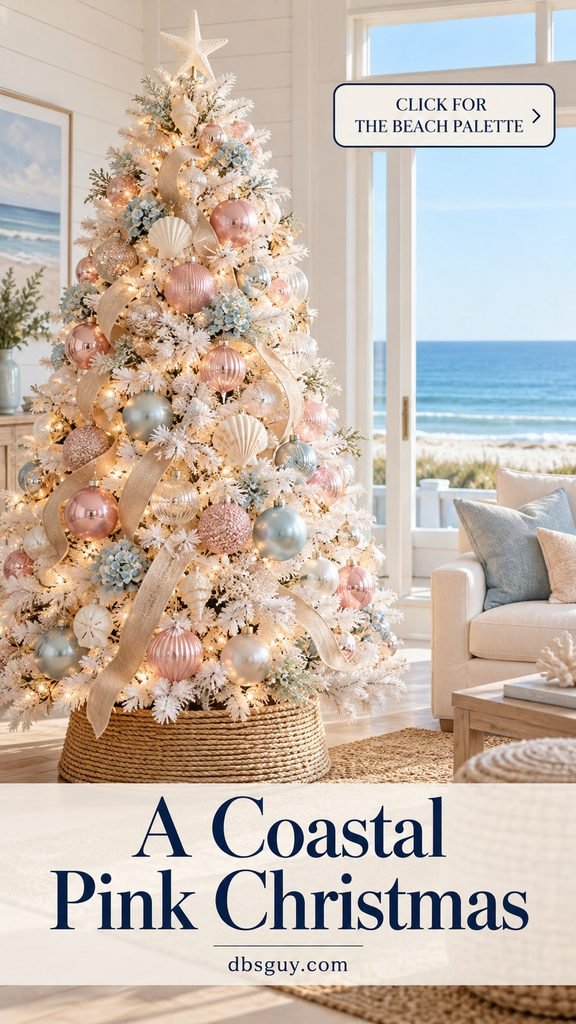
White branches make the pastel combination clear. Mix shell-pink balls with pale blue baubles, then add sand-colored ribbon. Lightweight shell ornaments bring the coastal reference; a white starfish-style topper and woven collar keep the outline simple. A few soft blue floral picks, as shown here, are optional.
Skip heavy shells unless the tree can support them securely. If you already own natural shell decorations, use a few on sturdier inner branches and keep the fragile pieces away from the main walkway. Avoid adding every shade of blue at once. The pale blue is there to cool the pink, while the sand-colored details connect the tree to wood and woven furniture.
18. Pink and Red Peppermint on a White Tree
Pink and red can share a Christmas tree when white gives them breathing room. Peppermint discs supply the familiar holiday pattern, while rose-pink balls keep the look playful.

Start with white branches and a mix of red and rose-pink ornaments. Add red-and-white peppermint discs, then repeat pink through narrow ribbon bows. A striped bow topper is enough pattern at the top; you do not need a second garland competing with it.
Distribute the red pieces around the tree so one side does not feel heavier. Put a pink ball near some of the peppermint ornaments to make the combination deliberate. This version differs from a pastel candy tree by keeping the palette focused on pink, red, and white—leave mint, cupcakes, and lollipop picks for another look.
19. Lavender, Silver Stars, and a Crescent Moon
A celestial tree gets its character from recognizable shapes. Silver stars and crescent moons stand out against pale pink branches and lavender ornaments.
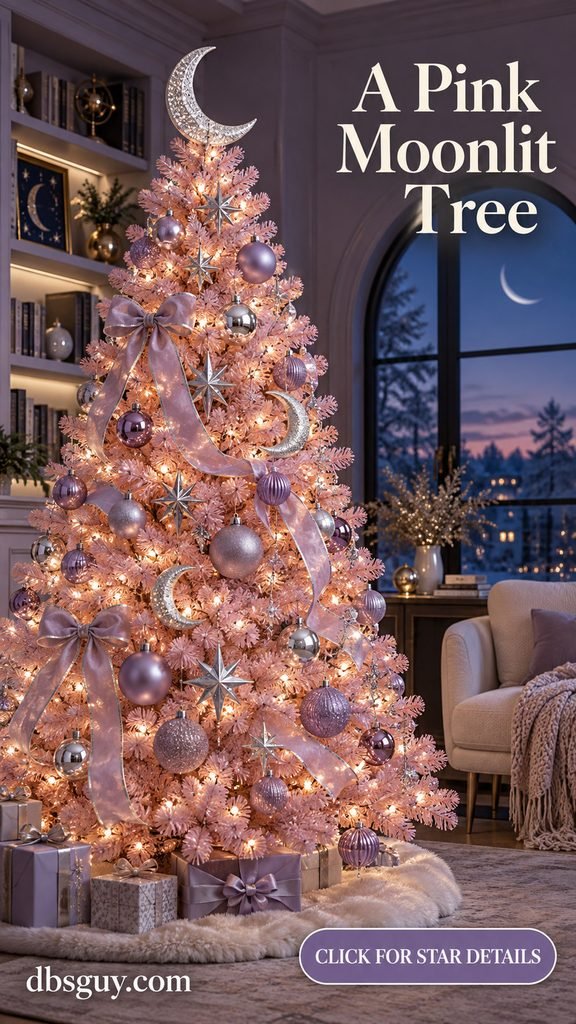
Use lavender balls as the secondary color, then scatter a manageable number of star and moon decorations around the tree. Hang the crescents so their openings remain visible rather than letting them turn sideways into the branches. A lightweight crescent topper completes the theme.
Keep ribbons minimal if you want the silhouettes to lead. Warm or neutral-white lights help the silver catch the light without washing everything in purple. A cream collar lets the upper decorations feel special without adding another color at the floor. In a dark room, move a few silver shapes toward the outside so they can still be seen.
20. A Ballet-Pink Nutcracker Tree
Ballet slippers, tulle bows, and small pink-and-ivory nutcrackers make this tree feel like a holiday stage set. The motifs matter more than the amount of sparkle.
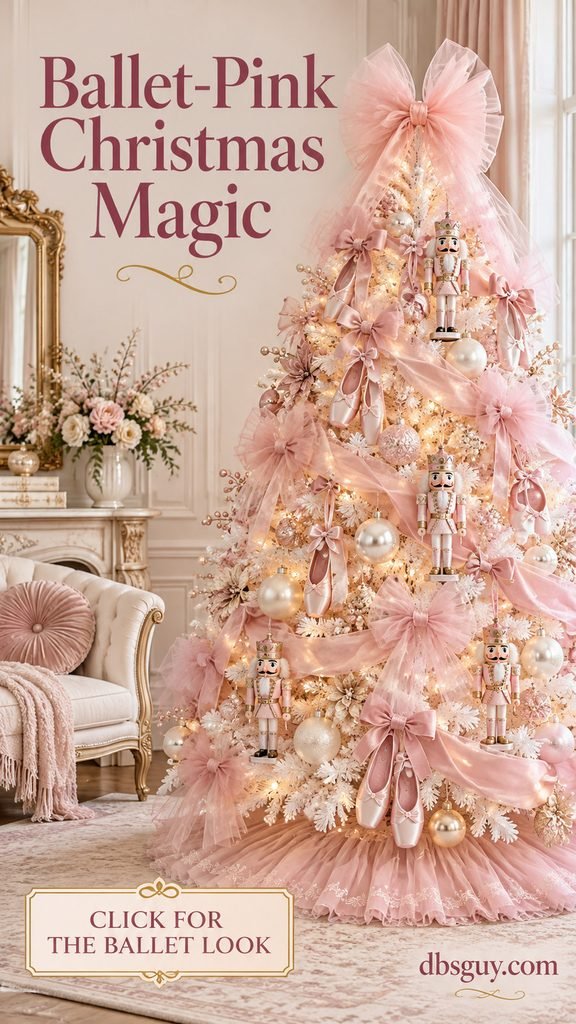
Start with a white tree and ballet-pink ribbon. Add lightweight slipper ornaments and small nutcracker decorations, then fill gaps with pearl-finish balls. A soft tulle bow at the top repeats the texture without needing a large figurine topper.
Use tulle sparingly: several small bows look clearer than yards of fabric wrapped over the branches. Keep all fabric clear of bulbs, plugs, and electrical connections, following the light manufacturer’s instructions. Place the character ornaments at heights where their details can be enjoyed. If one figurine is too heavy to hang, display it beside the tree instead.
21. A Minimal Green Tree With Blush Paper Stars
Pink does not have to mean a densely decorated tree. A sparse green silhouette, folded blush stars, and a few wooden balls can make a small collection look considered.
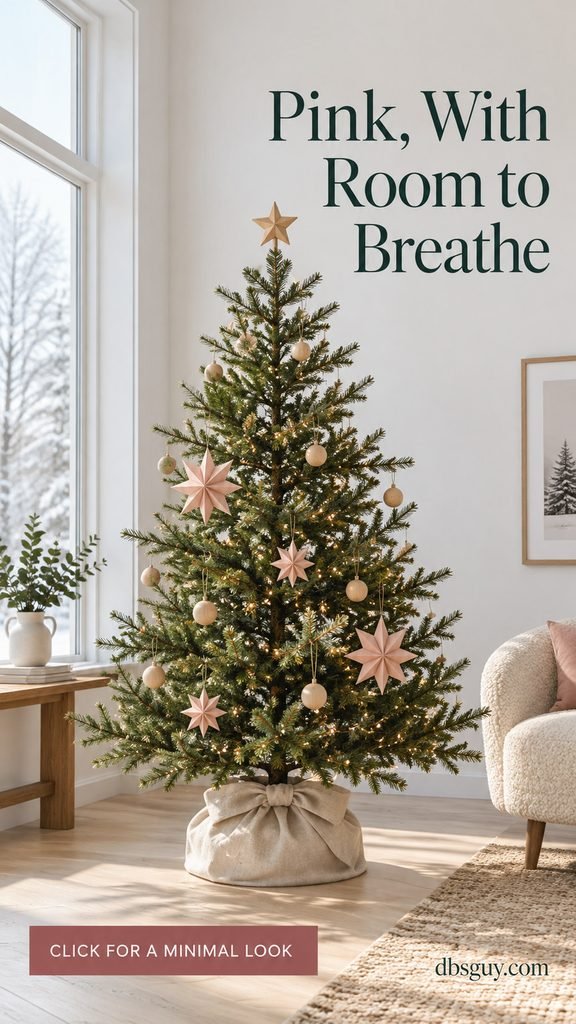
Choose an open-branched artificial tree, or simply resist filling every space on the one you own. Hang the paper stars where their folds are visible, then use small unfinished wooden balls as quieter companions. A modest wooden topper and linen-wrapped stand keep the materials consistent.
Decorate the whole visible outline lightly instead of concentrating everything in one patch. If a star blends into the wall behind it, move it in front of a darker group of branches. This is a useful option for a Scandinavian-style room, a secondary tree, or anyone who enjoys seeing the tree’s shape as much as its ornaments.
22. Handmade Pink Honeycomb Balls and Paper Fans
Dimensional paper ornaments give pink Christmas decor a handmade feel. Honeycomb balls and folded fans bring enough texture that you can keep the rest of the tree simple.
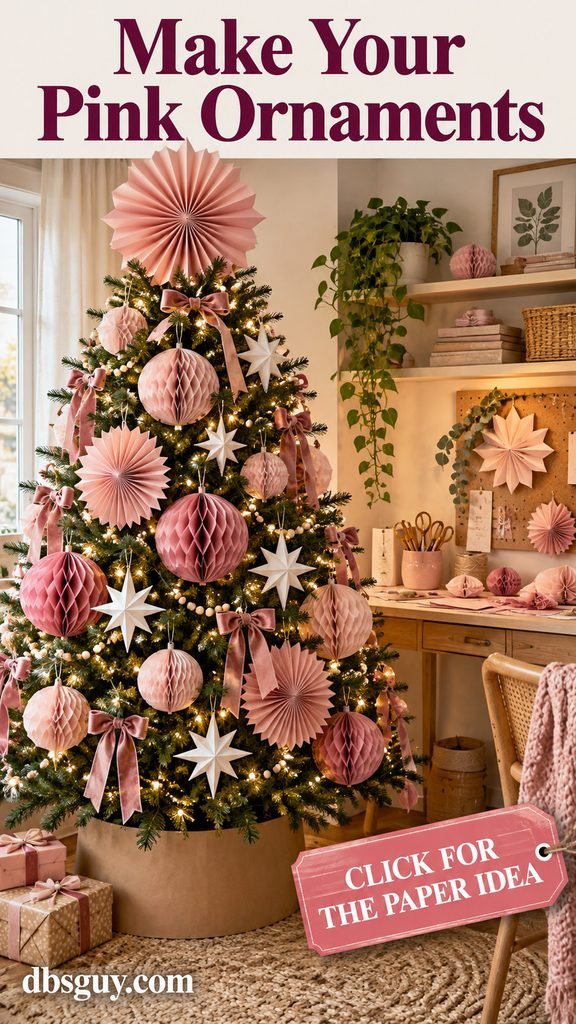
Use a green tree with dusty pink honeycomb ornaments, pale blush fans, and a few white paper stars. Ready-made paper decorations are fine; if you make your own, test the hanging loop and weight on one ornament before creating a whole batch.
For a basic fan, accordion-fold a rectangle of pink paper, fold it at the center, and attach the inner edges to form a semicircle. Join two matching halves for a round fan. Let adhesive dry completely before adding a secure hanging loop. Keep paper away from bulbs and electrical connections. Choose a broad lightweight fan for the topper, and store finished ornaments where they will not be crushed.
23. A Slim Pink Pencil Tree for an Apartment
A pencil tree gives you height with a narrower footprint. In pale pink, it can brighten a small apartment corner without requiring a full-width display.
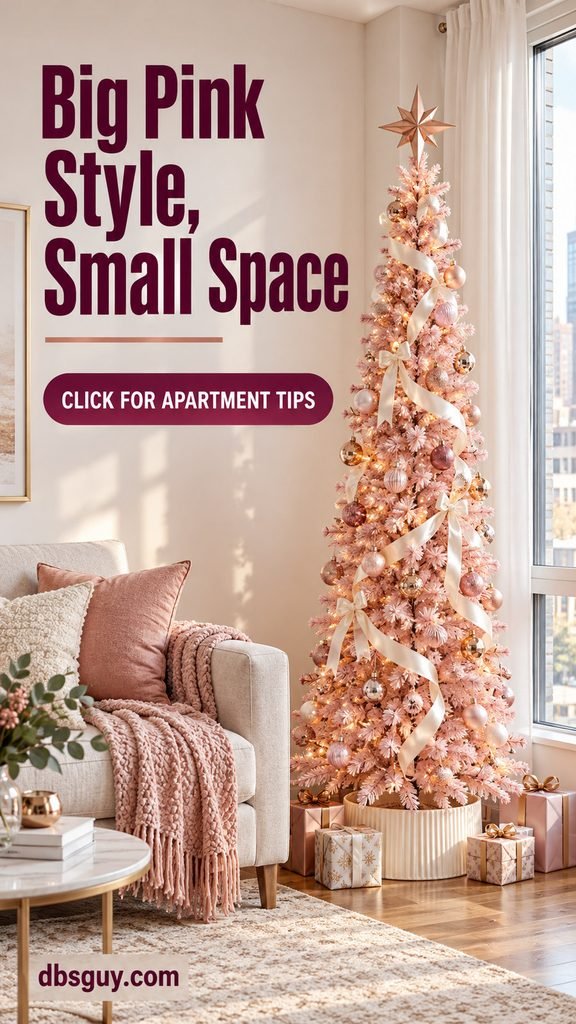
Measure the available floor space before shopping, including the stand and any collar. Then check how far branches and ornaments will project into the room. Keep the normal route between the sofa, window, and doorway open.
Use small blush and rose-gold balls, narrow ivory ribbon, and a lightweight topper. Oversized decorations can make the slim shape feel crowded or uneven. A compact collar and just a few packages finish the base. You can give the visible front more detail when the back faces a wall, but secure decorations evenly enough that the tree remains stable. Keep cords out of walking paths.
24. A Rose-Gold Tabletop Tree on a Sideboard
You can get the pink-tree feeling without moving furniture. A small rose-gold tree on a sideboard works well in a dining nook, home office, or entry.
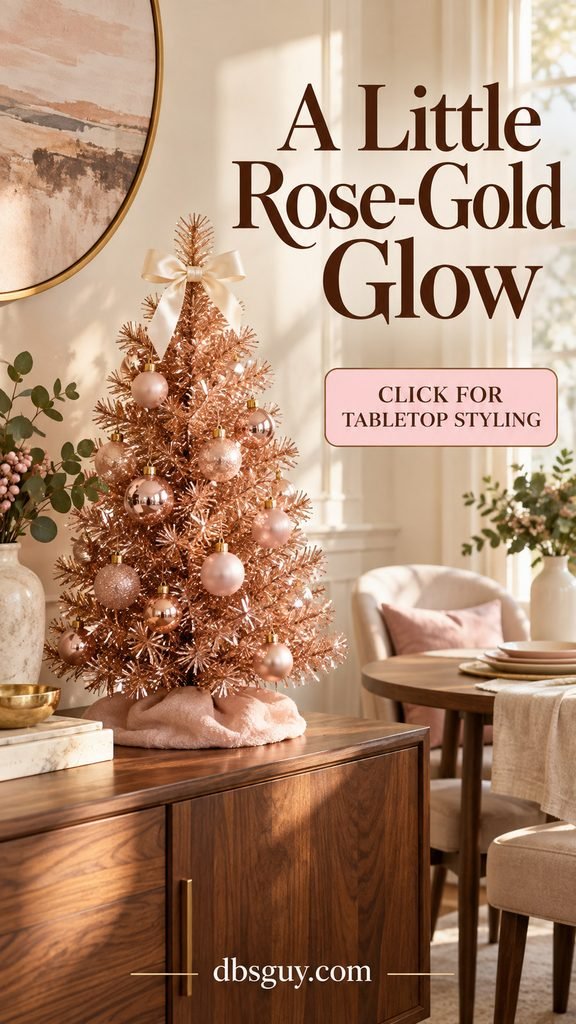
Choose a stable model around two feet tall if that scale suits the furniture, then use mini pale-pink ornaments and a small ivory bow. Let the metallic branches reflect daylight or room lighting; do not add string lights to a genuinely metallic tree. Keep the decorations proportional: a few fine details usually work better than a full-size ribbon roll on a little tree.
Set the base directly and securely on a sturdy surface. If you add a linen runner, make sure it does not make the stand wobble or hang where someone can pull it. Keep the display back from the furniture’s edge and leave room for the sideboard’s everyday use. A little clear space around the tree helps its silhouette stand out.
25. A Family Keepsake Tree Unified by Pink Ribbon
You do not have to retire the handmade stars, little houses, or mismatched ornaments your family loves. Pink ribbon can connect them while keeping their individual character.
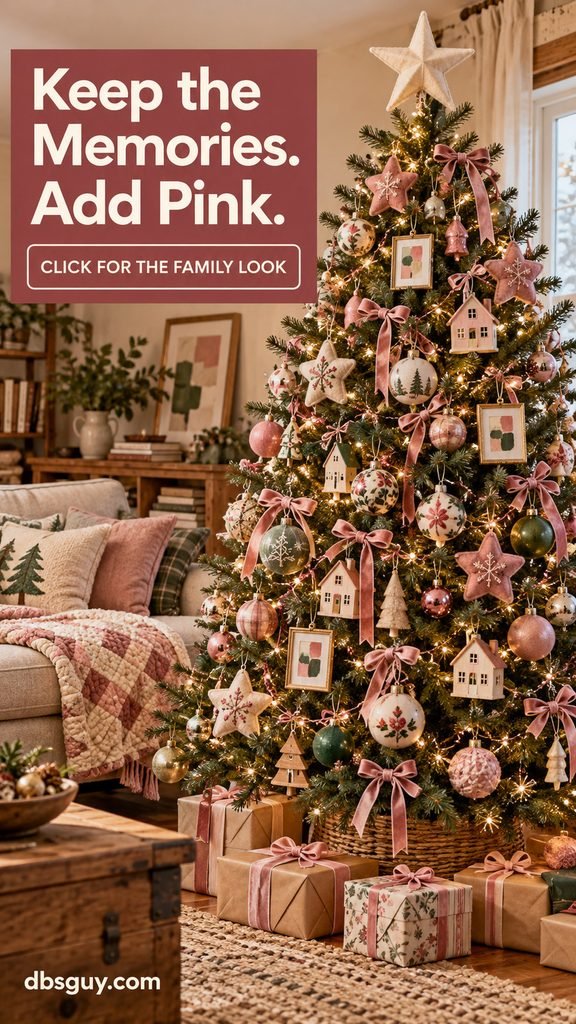
Choose one shade of blush ribbon and use it for selected ornament hangers, a few small bows, and the gift wrapping below. Spread the brighter keepsakes across the tree rather than trying to force them into a perfect color scheme. Plain blush balls can fill any gaps.
Put favorite pieces where people can see their details, and use sturdier inner branches for heavier ornaments. Delicate keepsakes can go higher or elsewhere according to your household. An ivory star and kraft-paper gifts provide a quiet frame. The goal is a family tree with a pink thread running through it, not a display where every memory has to match.
Make Your Chosen Pink Palette Work in Your Room
Before buying more decorations, put one pink ornament, one accent ornament, and a ribbon sample together beside the tree. Look at them in daylight and again with the tree lights on. Blush can look peachy in one room and cooler in another, so a small sample is more useful than a product thumbnail.
Use one main pink, one supporting color, and an optional metallic as a starting point. That is an editorial shortcut, not a decorating rule. If you want a mixed family tree, the repeating detail might be a ribbon color rather than an ornament palette.
For the decorating order, shape the tree first, add any separate lights according to their instructions, then place ribbon or garland before ornaments. Balsam Hill’s decorating guidance follows that sequence and recommends larger ornaments deeper in the branches, with smaller pieces toward the tips. Adjust the placement to what your particular tree can support.
Check the widest part of the decorated tree, the topper clearance, and the stand before settling on a spot. A beautiful pink tree should still leave you room to walk, open furniture, and use the room.
For lighting and placement, follow the NFPA’s Christmas tree safety guidance: keep the tree at least three feet from heat sources and away from exits, replace damaged light strings, follow the allowed number of connected strands, and turn tree lights off before leaving home or going to bed. If you use a fresh-cut tree, check its water daily.
Questions About Decorating a Pink Christmas Tree
Do I need pink branches to get a pink Christmas tree look?
No. Green branches make blush, magenta, and rose ornaments stand out, while white or flocked branches create a lighter background. Pink ribbon, repeated ornaments, and matching gift wrap can make an existing green tree feel strongly pink.
What colors go best with a pink Christmas tree?
Ivory and champagne suit a soft blush look. Silver works for a cooler, snowy display. Burgundy or navy adds depth to dusty rose, while mint, turquoise, or lavender creates a playful theme. Pick the combination that also feels comfortable beside your existing furniture.
How many ornaments and how much ribbon should I buy?
There is no single reliable count for every tree. Height, width, branch density, ornament size, and your preferred fullness all change the amount. Decorate one representative section with what you have, then estimate the remaining areas. Allow extra for a wide lower section, and check ribbon lengths before cutting matching pieces.
How can I make a pink tree feel polished on a smaller budget?
Start with the tree and neutral ornaments you own. Add one pink ribbon and a small, coordinated group of pink ornaments, placing them where they will be most visible. Repeat the ribbon on a few packages. Spend on the detail that defines your chosen look—bows, flowers, or candy shapes—before buying more filler.
What is the easiest look to change next Christmas?
A green or white tree with removable pink bows and ornaments gives you flexibility. Store ribbon, paper decorations, and fragile ornaments separately so you can reuse them. A fully pink tree is a stronger visual commitment, so choose it because you enjoy the branches themselves, not only one season’s theme.