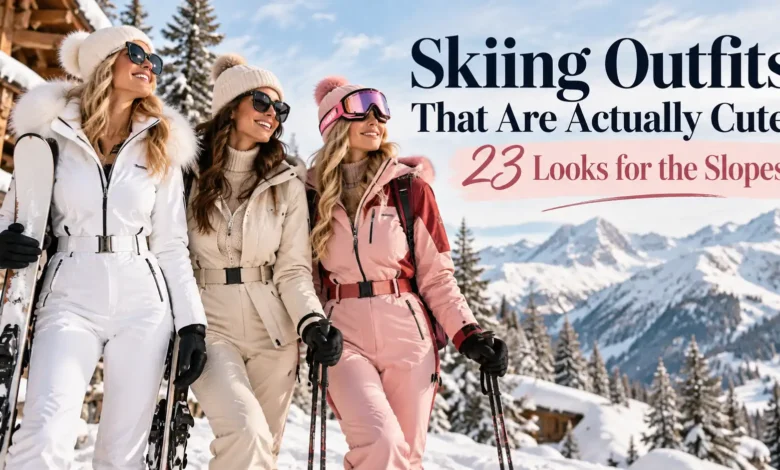
You can love a ski outfit in a photo and still have no idea how to put it together. Is that a bib under the jacket? Will those pants fit over ski boots? And how do you make all those practical layers look intentional?
The easiest starting point is one clear color story, a silhouette you can move in, and accessories that repeat a color already in the outfit. An ivory jacket with black ski pants is a simple first-trip option. A matching red set makes a bigger statement. Bibs, anoraks, and one-piece ski suits give you different shapes to work with.
Below are 23 cute skiing outfits for women, with the pieces to combine and the detail that makes each look work. These are resort-skiing styling ideas: choose actual ski clothing with suitable weather protection and layer it for your forecast.
A Cute Ski Outfit Starts with the Right Layers
The clothes you see in these looks are the outer layer. Underneath, start with a synthetic or merino base layer, add insulation as needed, and finish with a ski jacket and snow pants or bibs. Avoid cotton for active skiing. REI’s ski clothing guide explains the system.
A comfortably snug base layer helps manage moisture; bulky bunching makes the rest of the outfit harder to fit. See REI’s base-layer guide for fabric and fit details.
Finish with a properly fitted ski helmet, compatible goggles, insulated snow gloves or mittens, and ski boots. Choose goggle lenses for the light conditions. When skiing, wear the goggles over your eyes; some illustrations show them raised during a stationary break.
The images are AI-generated styling concepts, not photographs of tested products. Use them for color and outfit inspiration; confirm the features and fit of any real gear before buying.
23 Skiing Outfits to Make Your Own
Start with the look closest to the ski pants, jacket, or helmet you already own. You can borrow the color pairing without replacing your whole kit.
1. Ivory Puffer + Black Ski Pants
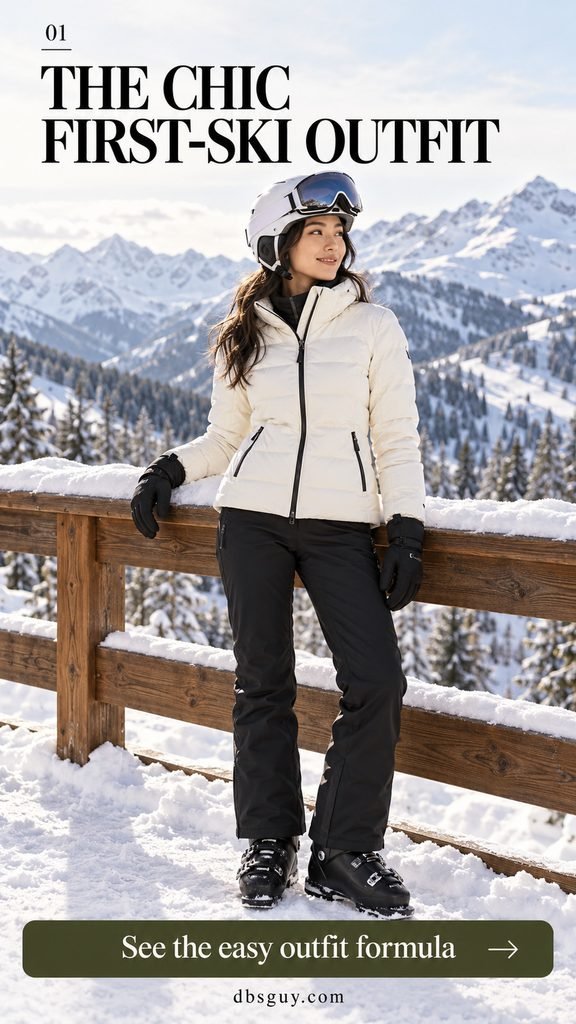
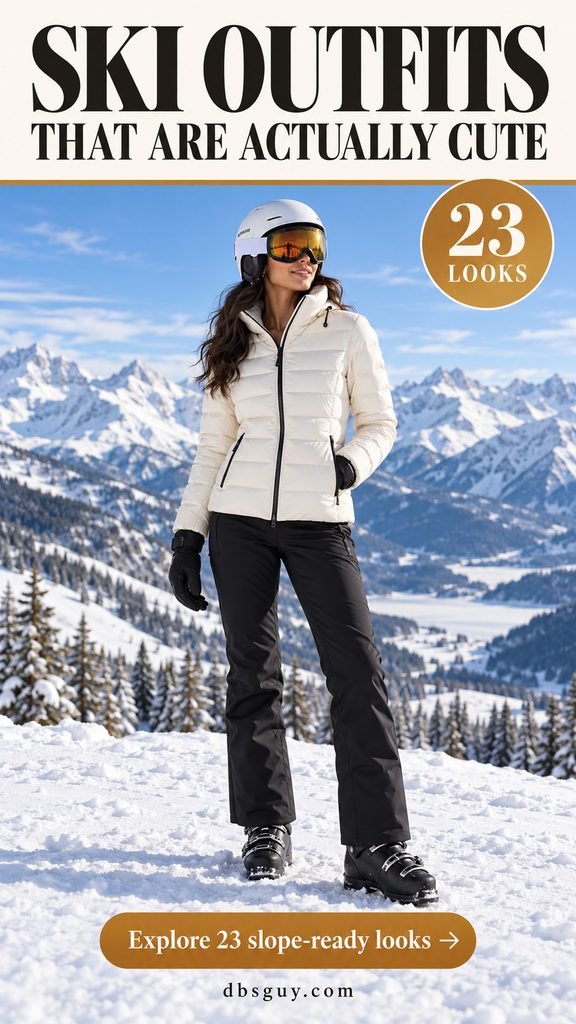
An ivory ski puffer and black straight-leg snow pants create a crisp, simple outfit with a little softness up top. The quilted jacket provides texture, so the rest of the look can stay quiet: black gloves, black boots, and a white helmet.
This is an easy direction for a first ski trip, especially if you already have black pants. Choose a hip-length technical jacket that overlaps the waistband when you reach forward. For a clean finish, repeat black in the zipper trim or gloves rather than adding another accent color.
2. Cherry-Red Matching Set
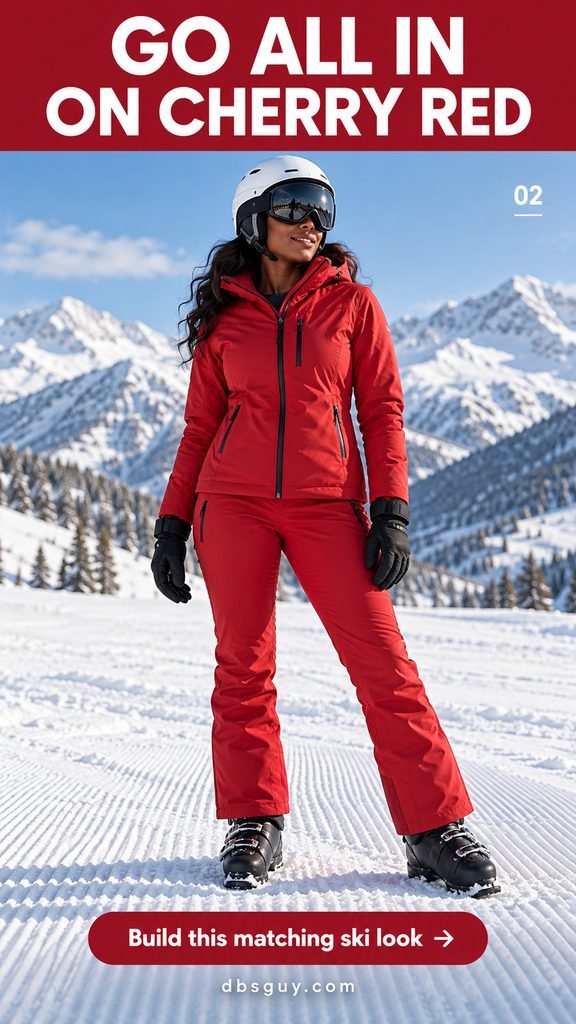
A red jacket with red ski pants is the outfit equivalent of choosing the statement piece first. Matching separates create a continuous color story, while black gloves and boots keep the edges grounded. A white helmet adds a bright contrast near the face.
Look for pieces sold in the same colorway if a close match matters to you; two different reds can lean orange and blue when worn together. A tailored jacket with straight pants keeps this version sporty. Let the red do the work and skip a competing patterned neck gaiter.
3. Navy Set with Racing Stripes
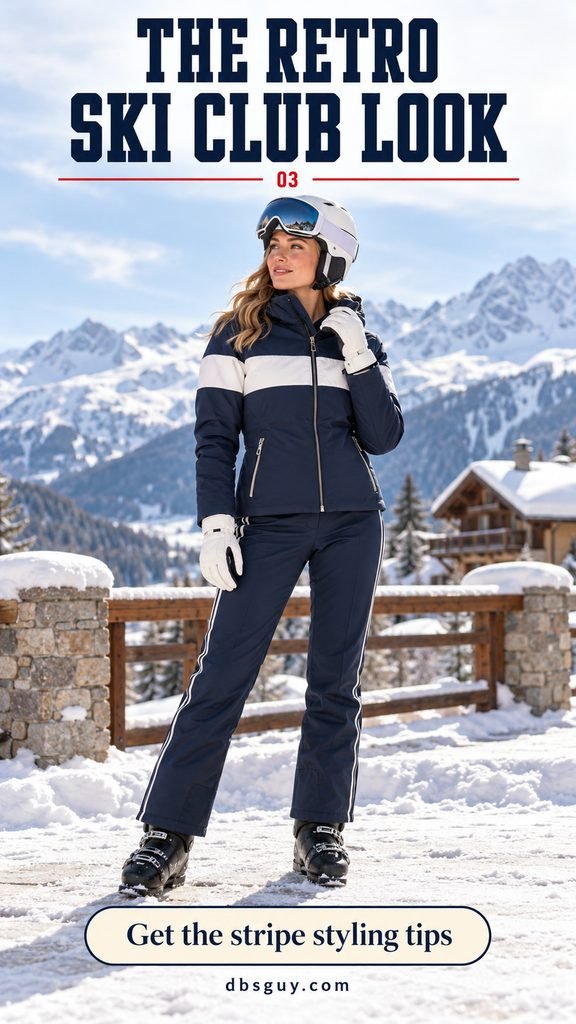
A white chest stripe and slim white lines down navy ski pants give this look its ski-club character. The dark background keeps the stripes readable, and white gloves echo the graphic detail without adding a second pattern.
Choose one dominant stripe on the jacket rather than several unrelated bands. If you own plain navy pants, they work too—the chest stripe already establishes the theme. Keep the proportions simple, with a hip-length jacket and pants that sit neatly over your boot cuffs.
4. Powder-Blue Jacket + White Bibs
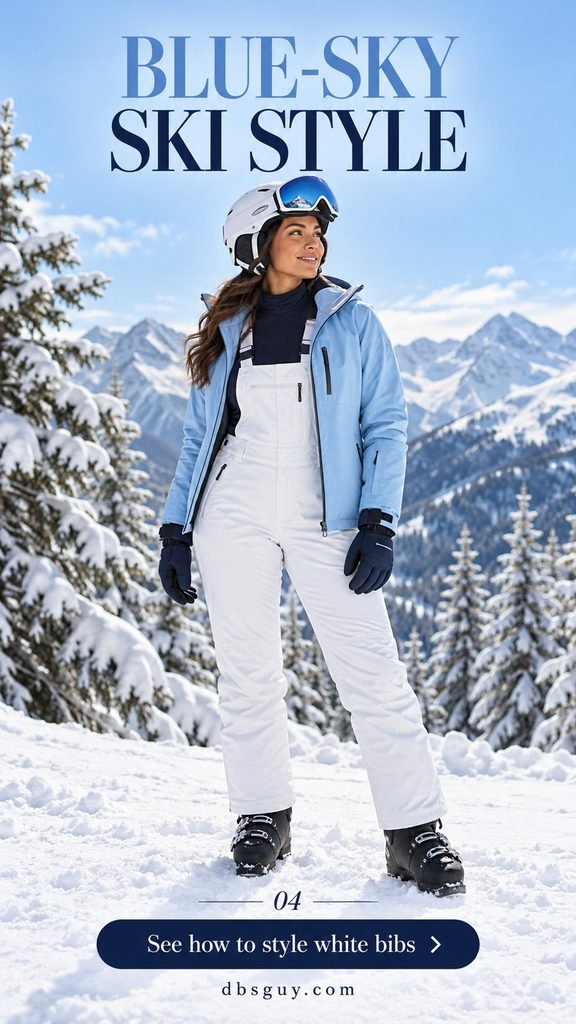
Powder blue over white bibs gives you a light, fresh palette without going white from head to toe. The bib front adds a different shape from ordinary pants, particularly when you open the jacket during a lodge break. Navy gloves tie in a darker base layer.
Bibs extend above the waist and use shoulder straps; REI’s pants-versus-bibs guide explains the coverage and bathroom-break tradeoffs. Before buying, test the straps with your layers on. For this palette, a white helmet repeats the bib color and makes the combination feel finished.
5. Blush Anorak + Charcoal Pants
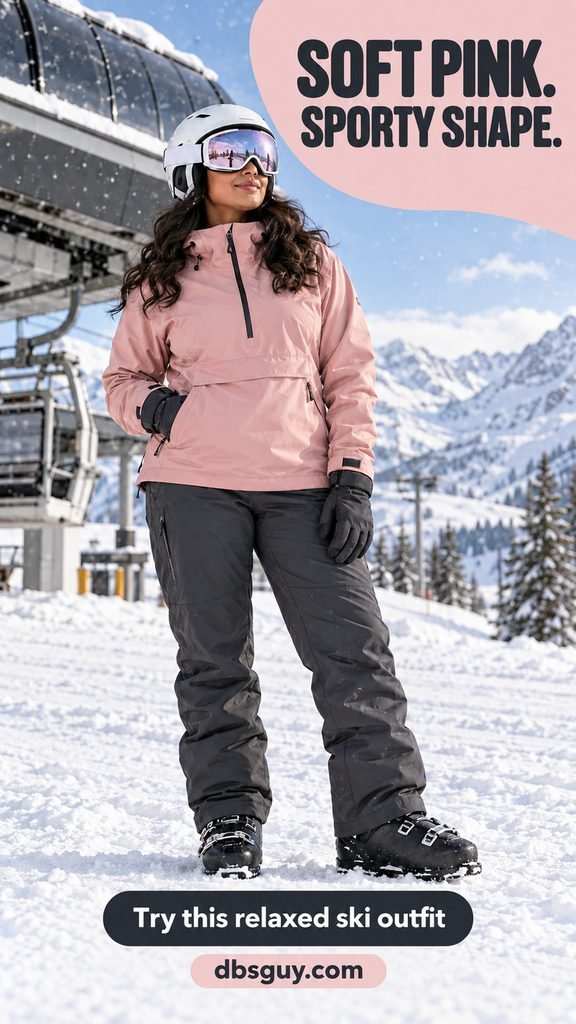
The soft pink color is only part of the appeal here. A pullover ski anorak, with a quarter zip and front pocket, has a more relaxed shape than a fitted full-zip jacket. Charcoal snow pants keep that sporty mood and offer gentler contrast than pure black.
Try the anorak over the midlayer you plan to wear, then raise both arms and bend your knees. It should feel easy to move in without becoming a billowing oversized top. A side opening, if the design has one, can make changing layers less awkward.
6. Forest Shell + Black Bibs
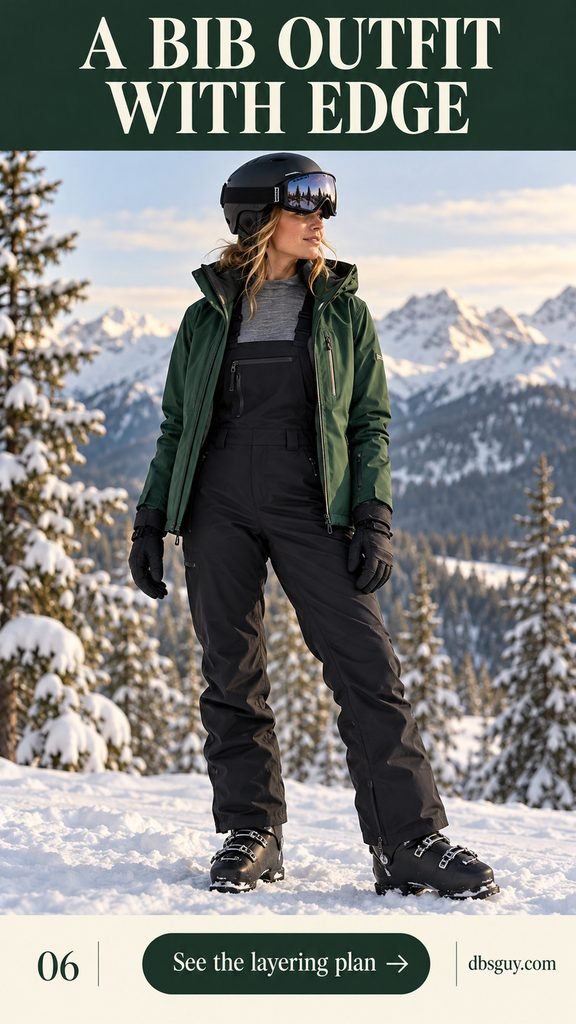
Forest green and black give a shell-and-bib outfit a strong outdoor feel. A matte jacket is especially effective here: it lets the color and pocket lines stand out without shine. The black bib front also creates a neat frame around a gray base layer during breaks.
Use this formula if you like choosing your insulation separately from your jacket. A shell supplies weather protection, so plan your warmth underneath it; evo’s layering guide explains how the layers work together. Check your layering space with the jacket closed, and make sure the bib straps sit comfortably beneath it.
7. Black Ski Suit with White Piping
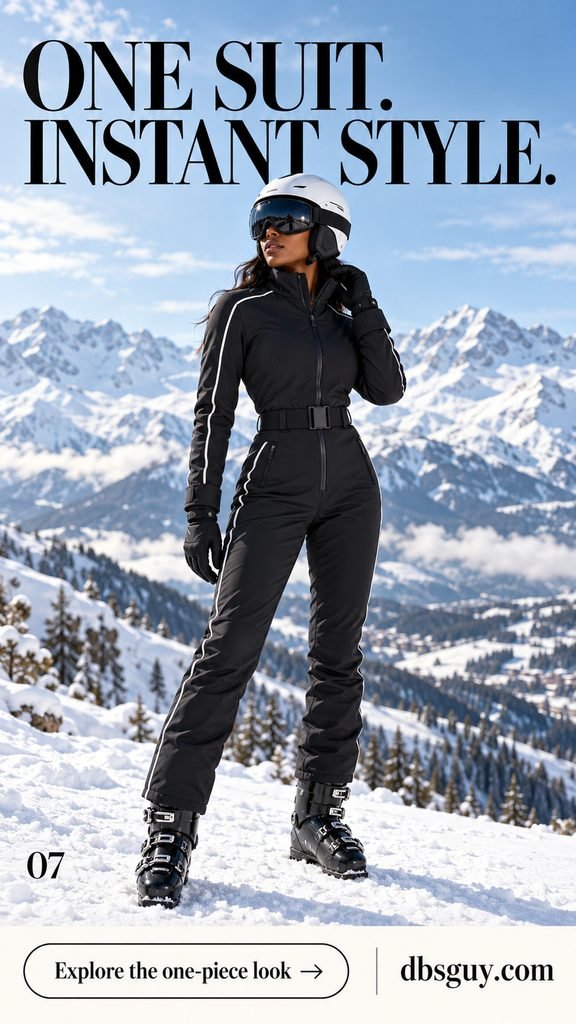
A black one-piece ski suit takes most of the color coordination out of getting dressed. White piping traces the shape of the suit, making it feel more graphic than an entirely plain black outfit. A white helmet picks up that detail at the top.
The important fitting question is torso length. Sit, squat, and reach in the suit with your base layer underneath; the shoulders and crotch should not pull against each other. An integrated belt can define the waist, but it should still allow comfortable breathing and movement.
8. Cobalt Shell + Yellow Pants
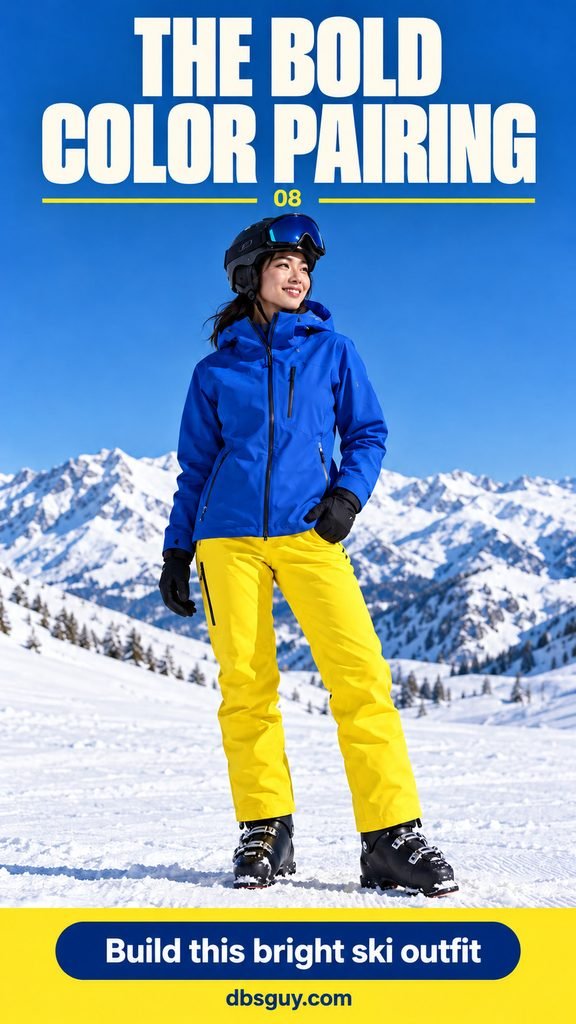
Cobalt and sunshine yellow create the most graphic two-color outfit in this edit. A plain blue shell balances the bright lower half; there is no need for a print, contrast zipper, or third statement color. Black accessories help both shades stay distinct.
This is a useful styling route if you already own colorful ski pants and want to build an outfit around them. Keep the jacket matte and the silhouette straightforward. If the full combination feels too bold, retain the yellow pants and use a navy jacket for a quieter version.
9. Plum Jacket + Lilac Pants
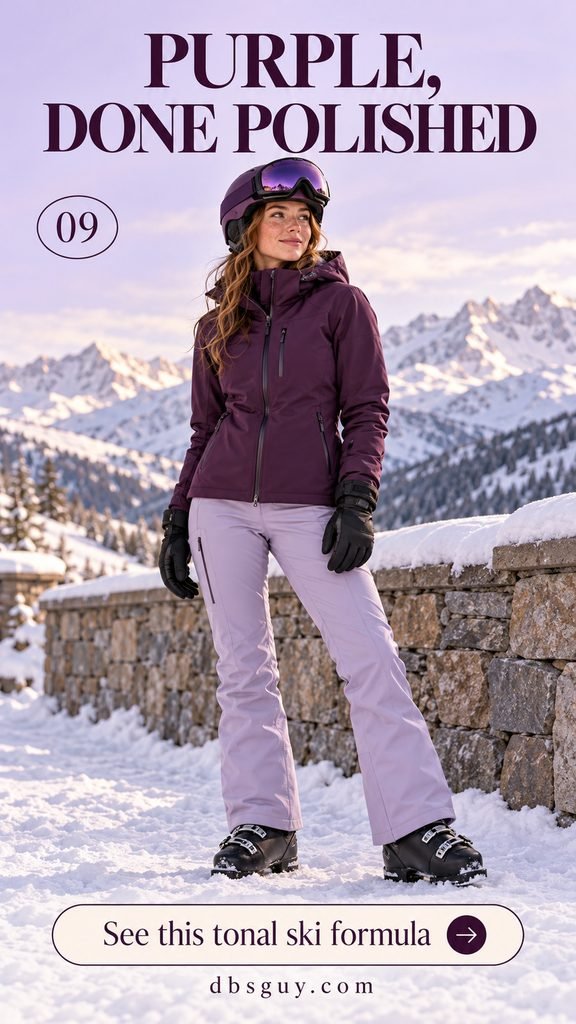
This tonal pairing has contrast without the sharpness of black and white. Deep plum anchors the upper half, while lilac pants introduce a softer shade of the same color family. A plum helmet continues the darker tone near the face.
Choose a visibly darker jacket and lighter pants so the combination looks deliberate. The pieces do not need to match perfectly; the relationship between them matters more. Keep any visible base layer dark and plain, and avoid adding pale pink accessories that would muddy the purple palette.
10. Sage Jacket + Cream Pants
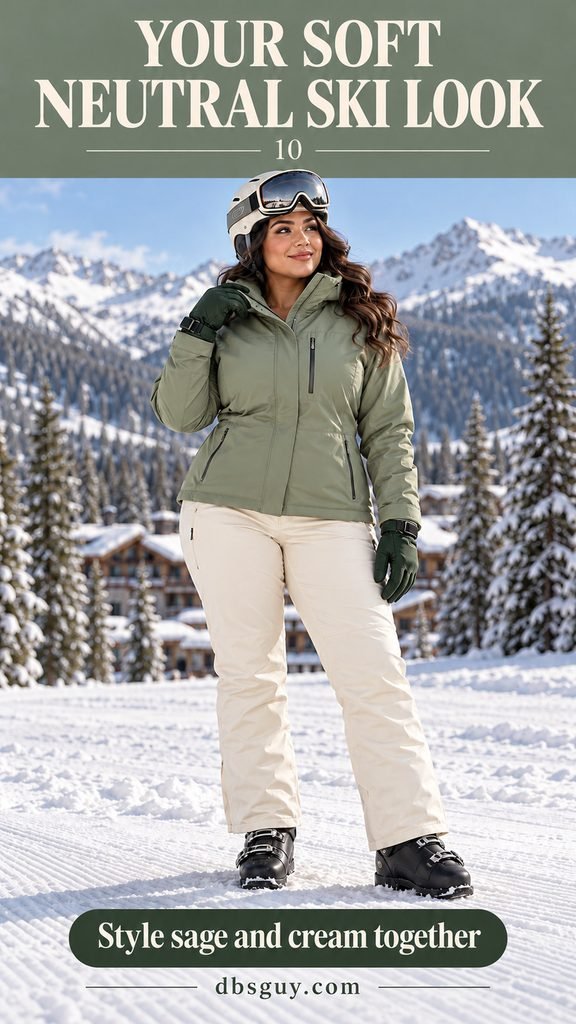
Muted sage and warm cream are a good starting point if you prefer understated color. Unlike an all-white set, this combination gives the jacket a little separation from the pants. Dark green gloves echo the sage without introducing a harsh accent.
Aim for cream rather than a very bright optical white if you want the soft look shown here. Compare the pieces in daylight when possible. Light pants show marks more readily, so follow the garment’s care instructions and decide whether you enjoy that tradeoff before committing to the palette.
11. Rust Anorak + Navy Pants
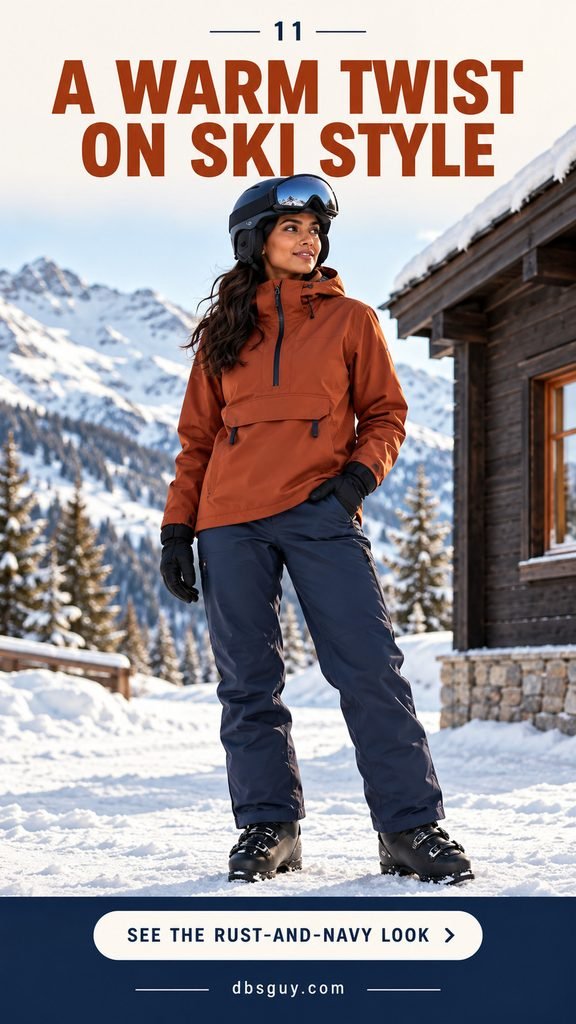
Burnt rust brings a warm, earthy color to an otherwise classic navy outfit. The anorak’s front flap pocket gives this look a different mood from sleek matching separates: relaxed, a little utilitarian, and easy to style with dark accessories.
Let the navy pants, helmet, and gloves act as one consistent background. When trying on a pullover jacket, check that you can reach its chest zipper and pockets with gloves on. If you prefer a full zip, borrow the rust-and-navy palette while keeping your familiar jacket shape.
12. White Ski Suit with Black Panels
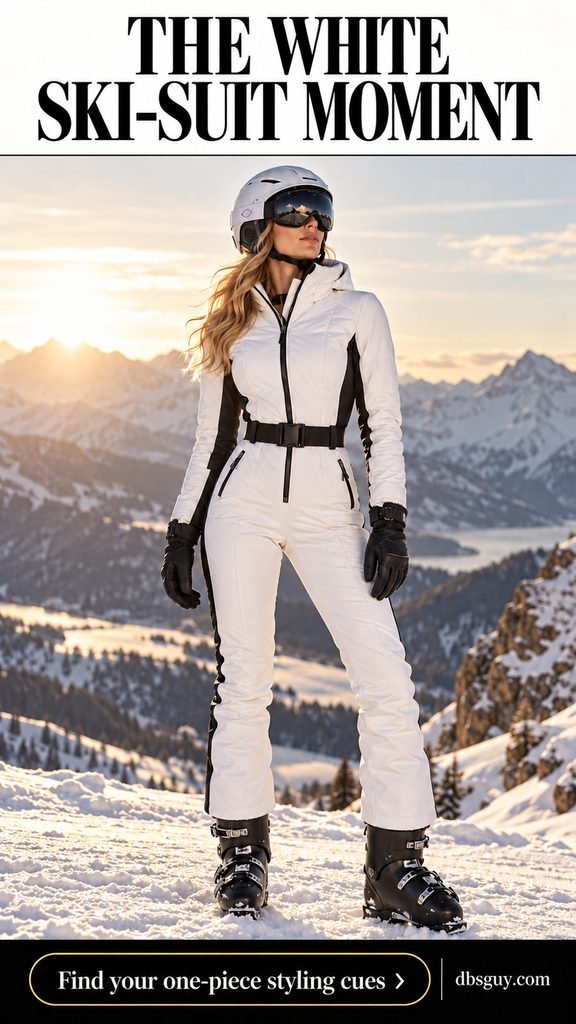
Black side panels and an integrated belt give a white ski suit clear definition. This is a different effect from the black piping suit: the white dominates, while the dark panels shape the sides. Black gloves and boots repeat the contrast.
Look for a genuine technical ski suit rather than a fashion jumpsuit with a similar appearance. Check its weather protection, insulation, and room for your layers. A one-piece also changes how you handle bathroom breaks, so inspect the zipper arrangement before you buy.
13. Retro Color-Block Jacket + Black Pants
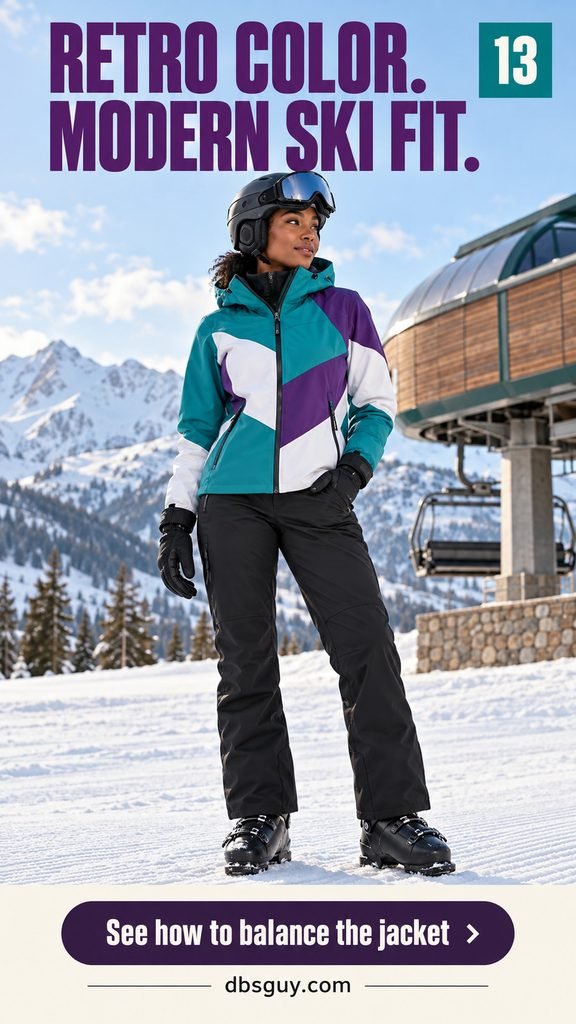
Teal, purple, and white panels give this jacket a lively retro character. Because the color blocking is already a complete composition, plain black pants are the easiest partner. Black gloves and a black helmet keep the eye on the jacket.
Choose angular panels if you like a stronger graphic look, or broader horizontal bands for a softer throwback feel. Skip patterned pants and busy accessories. You can get the same styling effect with a current technical jacket; an old vintage piece may need more careful assessment before active use.
14. Butter-Yellow Jacket + Chocolate Bibs
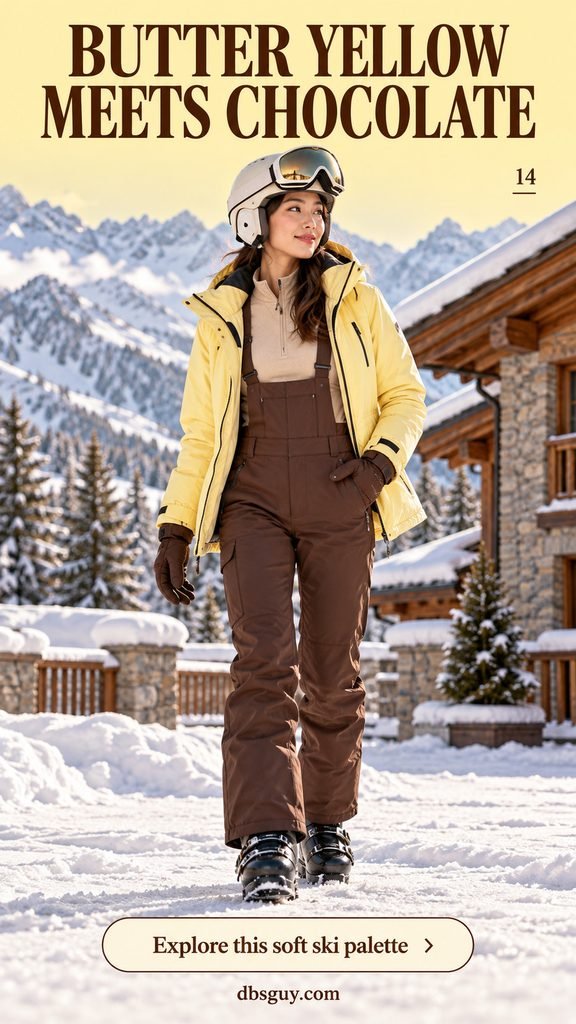
Butter yellow looks warmer and softer beside chocolate brown than it does beside black. The bibs create a substantial brown lower half, while an ivory helmet keeps the upper part light. Brown gloves quietly repeat the pants.
Pick a pale, creamy yellow for this effect; a neon shade would change the mood completely. Check how the bib chest sits beneath the jacket’s hem and zipper. If you already own brown snow pants, use those instead and keep the color story—the bib shape is an option, not a shopping requirement.
15. Leopard Ski Jacket + Black Pants
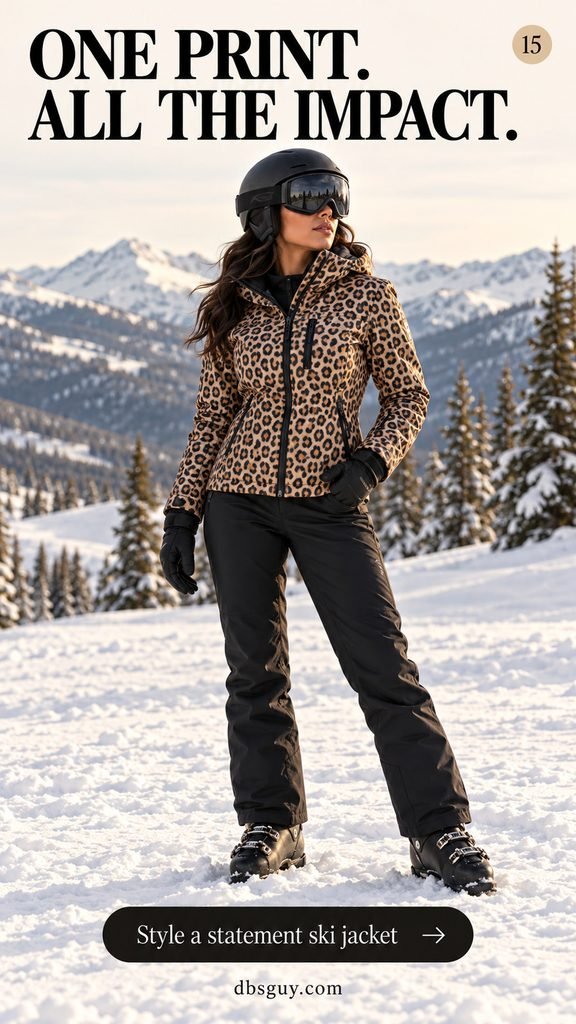
A leopard-print ski jacket works best here as the only pattern. Small tan-and-black spots create texture, while plain black pants keep the outfit from becoming visually crowded. The black helmet and gloves reinforce that simple frame.
Treat the print as a styling choice, then check the same technical features you would for a solid-color jacket. A fashion puffer in leopard print is not automatically a ski jacket. If you want a quieter interpretation, choose smaller spots and less contrast between the tan background and black markings.
16. Silver Jacket + Bootcut Ski Pants
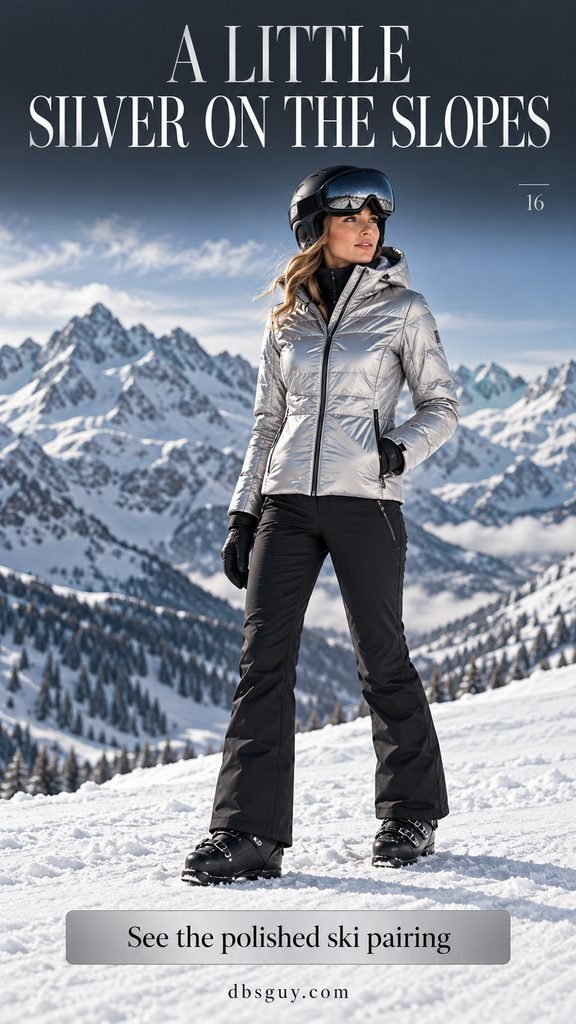
A softly metallic silver jacket supplies the shine; black bootcut ski pants provide a clean counterpoint. The slight flare at the lower leg gives this outfit a more tailored shape than relaxed bibs, while still making room for ski boots.
Choose pants designed for skiing, with an appropriate cuff and gaiter arrangement. A fashion flare or yoga pant creates a similar outline but serves a different purpose. Keep the silver finish subdued and the accessories matte so the jacket looks luminous rather than like a costume.
17. Black Jacket + Fuchsia Pants
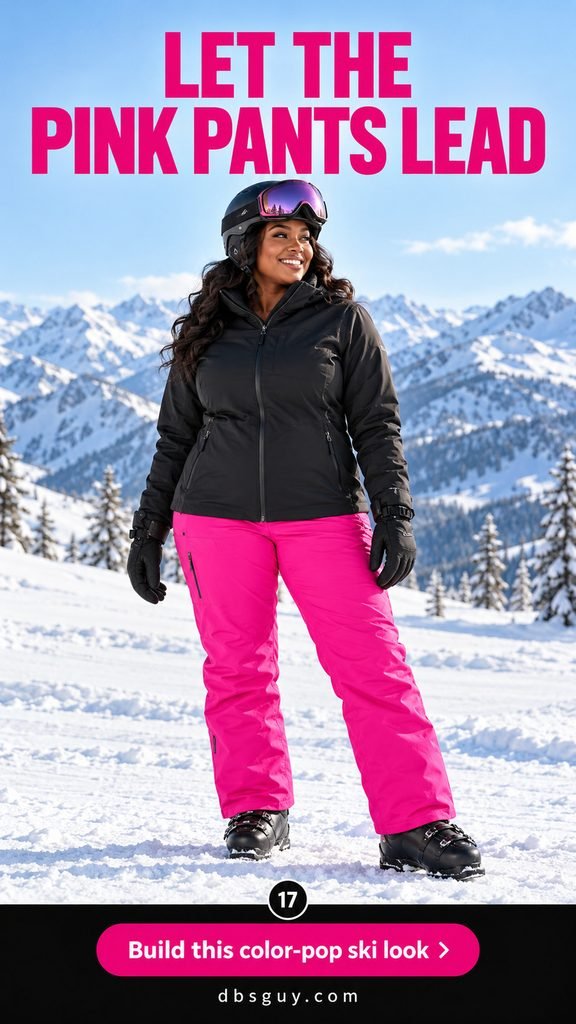
Bright pants can be the statement piece even when the jacket is completely plain. Fuchsia brings energy to the lower half, while black above and around it gives the color a clear boundary. A relaxed straight-leg fit keeps the result sporty.
This is a simple way to style a black jacket you already own. You do not need to replace the helmet or gloves to coordinate the look. If you are buying the pants, try sitting and bending in them with your base layer on rather than judging the fit from a standing mirror pose.
18. Burgundy Jacket + Blush Bibs
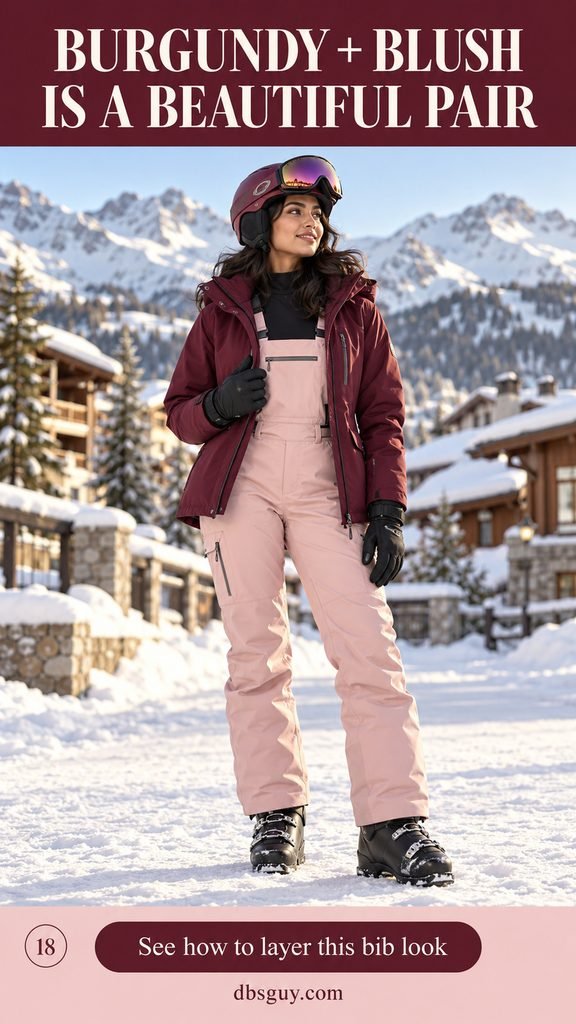
Burgundy and blush create a richer pink palette than the blush-and-charcoal anorak. The wine-colored jacket feels structured, while pale bibs soften the lower half. A burgundy helmet links the darker elements together.
A hip-length jacket works well over the higher bib front. Avoid a fashion crop that exposes the waist when you reach or sit. During a break, opening the jacket shows the blush panel; on the hill, close and layer your clothing for the conditions rather than for the photo.
19. Cream Color-Block Jacket + Taupe Bibs
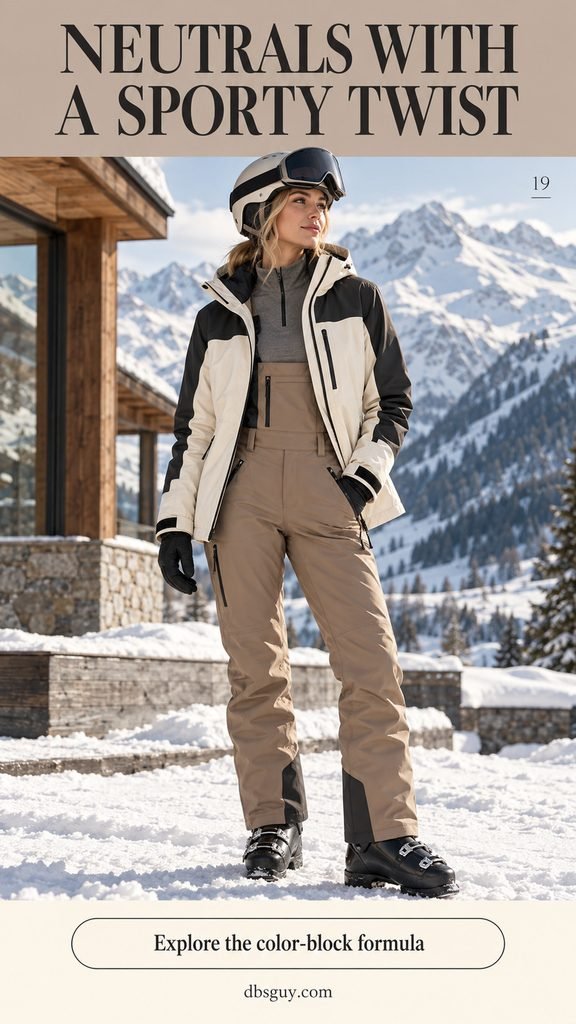
Charcoal shoulders and sleeves add a sporty edge to a cream jacket, so the outfit has more structure than a completely pale neutral set. Taupe bibs connect the cream and dark panels without making everything match exactly.
Use a plain gray base layer if part of the bib front will be visible during breaks. Keep the remaining accessories simple and dark. When you compare neutral pieces, look at the undertones: a warm taupe usually sits more naturally beside cream than a strongly blue-gray shade.
20. Tangerine Shell + Slate Pants
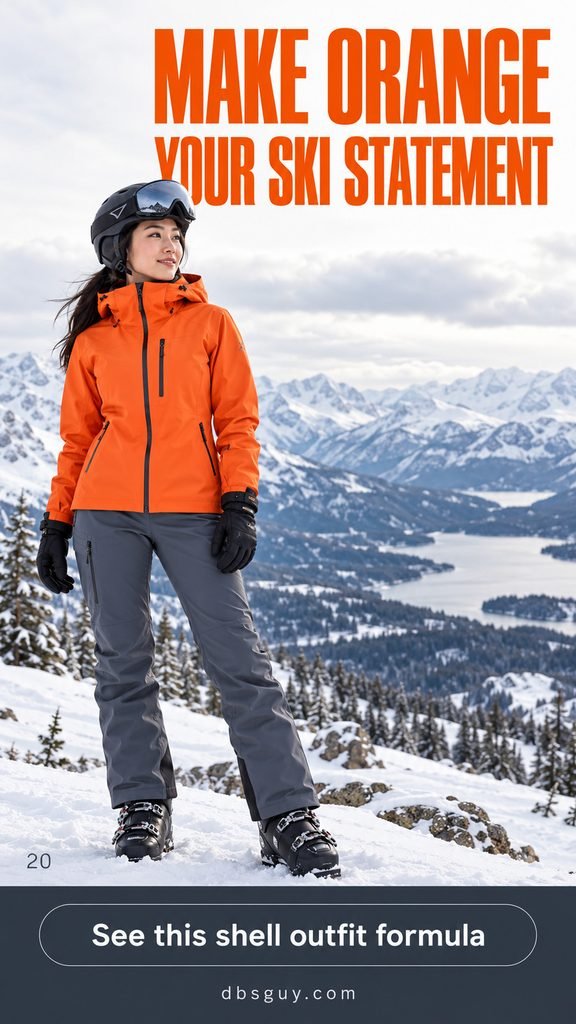
Tangerine is the focus in this shell-and-pants combination. Cool slate gray balances the orange without making the lower half as stark as black. A high collar and simple pocket layout keep the jacket’s silhouette clean.
This is an approachable bold-color option because only one major piece is bright. Choose an insulating layer separately to suit the forecast, and try the shell over that layer before deciding on a size. Repeat slate or black in the accessories so the orange remains the single focal point.
21. Lavender Longline Jacket + Navy Pants
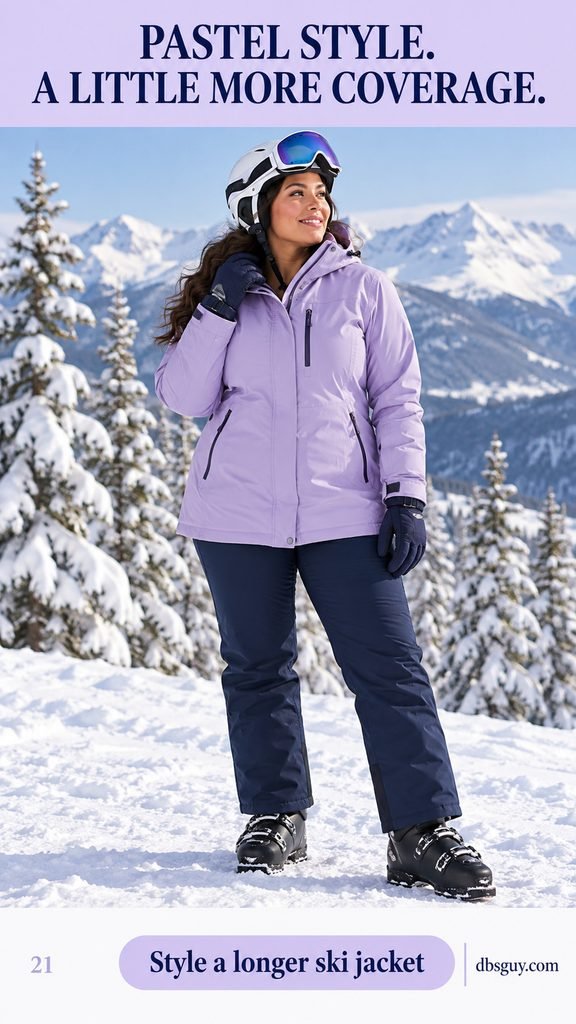
An upper-thigh-length ski jacket changes the proportions of the outfit. Lavender gives the longer shape a soft appearance, while navy pants keep the lower half simple. A white helmet adds a light finishing point.
Look for a longer jacket designed for skiing rather than a rigid city coat. Sit, bend, and lift your knees to check the hem’s movement. Straight pants are an easy balance for the added jacket length; very voluminous pants would create a fuller silhouette if that is your preference.
22. Checkered Ski Jacket + Burgundy Pants
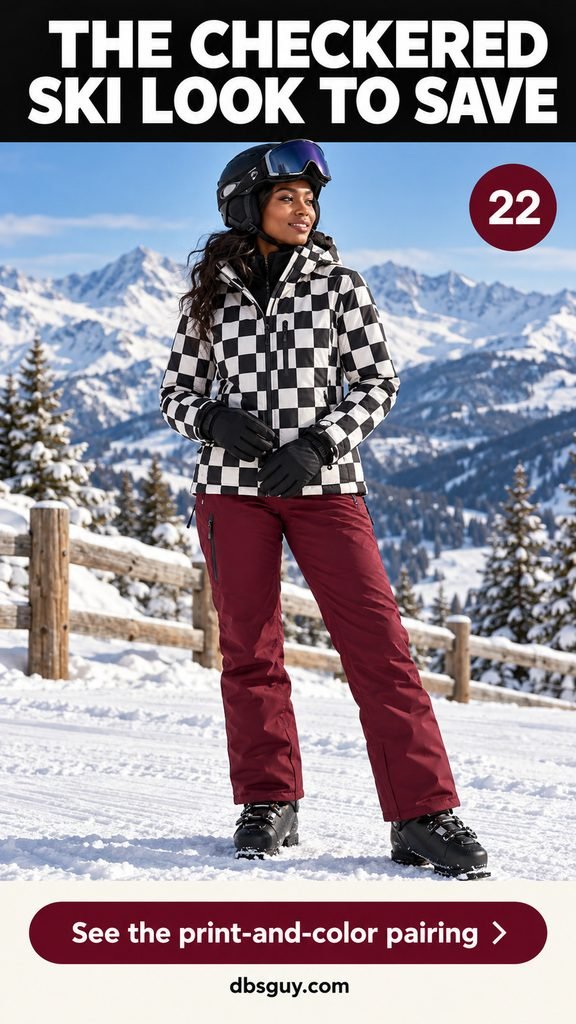
Black-and-white checks are graphic enough to carry the top half on their own. Burgundy pants add a solid block of color below, giving the outfit more warmth than an entirely monochrome pairing. Black accessories stop the palette there.
A medium-size check is a clear choice for this look; very small checks read more like texture from a distance. Keep the pants free of stripes or extra color panels. If you already own black pants, start with those and bring in burgundy only when you want a stronger color combination.
23. Olive Utility Jacket + Tan Pants
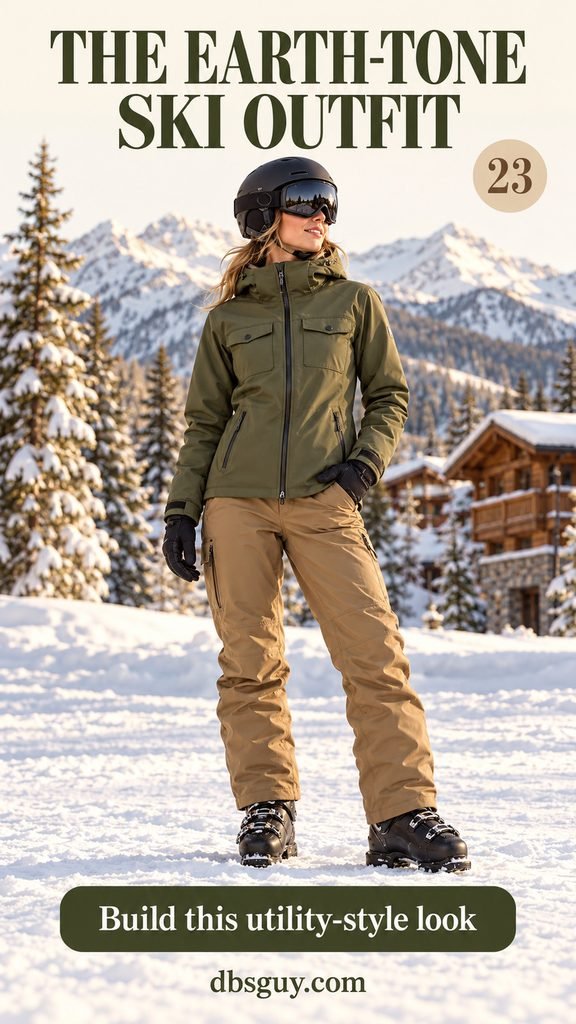
Olive and tan give this outfit an earthy, utilitarian character. The jacket’s flap pockets add detail without relying on a print, and relaxed pants continue the easy shape. Dark gloves and a black helmet sharpen the soft colors.
Choose a technical ski jacket with the pocket look you like, then check that the pockets are practical with gloves and layers. Keep tan on the lower half and olive above for the balance shown here. This is a useful alternative if pastel colors and high-shine ski suits do not feel like your style.
How to Choose Your Look Without Buying a Whole New Kit
Pick the piece you already like best and build around it. Black pants can support the ivory, leopard, color-block, or silver jacket ideas. A black jacket gives bright fuchsia pants room to lead. If you prefer a one-piece, choose the suit first and keep the accessories simple.
Before committing, try the complete outfit with your intended layers. Sit as you would on a chairlift, reach forward, and bend your knees. Check the waistband, torso length, shoulder room, and pant cuffs. A good-looking outfit should feel comfortable in those positions, too.
For your first trip, renting or borrowing equipment can help you learn what you like before making a bigger purchase. Ask the rental shop which items it supplies; outerwear availability varies.
Ski Outfit Questions, Answered
What should I wear under ski pants?
Wear a synthetic or merino base-layer bottom chosen for your conditions and comfort. Regular leggings vary in fabric and fit; they are not all suitable substitutes. Keep the layers smooth when trying on your ski pants.
Can I wear leggings or jeans as my outer ski pants?
Snow pants or bibs are the better choice for active skiing. Ordinary leggings lack their snow protection, and denim is a poor choice when wet. A similar-looking silhouette does not mean a garment has the same function.
Are bibs or ski pants easier to style?
Both work. Pants are familiar and generally easier for bathroom breaks. Bibs give more coverage above the waist and add a distinctive overall shape during breaks. Choose by comfort and features first; then use one of the color pairings above.
Should my ski socks be thick?
Choose the cushioning that works with your boot fit, rather than assuming thicker is better. Try boots with the socks you intend to ski in. REI’s ski sock guide explains why thickness, snug fit, and pressure points matter.
Can I replace a ski helmet with a cute beanie?
Wear a properly fitted ski helmet when skiing. A beanie can be part of your outfit after you finish for the day. Helmet fit comes before color coordination; the National Ski Patrol’s Eastern Division safety program promotes helmet use and responsible skiing.
How do I make the outfit work for après-ski?
At the end of the day, swap ski boots for suitable winter footwear and your helmet for a beanie. Keep the jacket-and-pants color story if you want an easy transition. Dry layers and comfortable shoes matter more than carrying every accessory from the slope into the lodge.
Start with one outfit that feels like you. A neutral base, a good fit, and one deliberate color or graphic detail are enough to make practical ski gear feel personal.