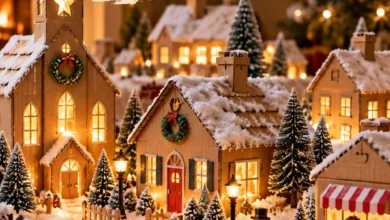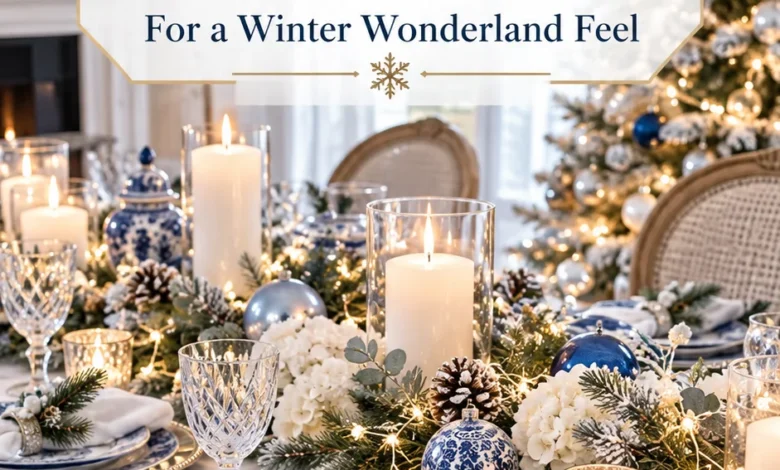
Blue and white Christmas table decor can feel snowy, cozy, or wonderfully traditional, depending on the details you choose. Start with white dishes or linen, repeat one shade of blue in two or three places, and add a clear Christmas cue: miniature trees, evergreen sprigs, stars, or a softly glowing village.
These 15 ideas give you different ways to get that winter wonderland feel, from a simple ornament bowl to a table dressed for Christmas dinner. Choose one main look and borrow a small detail from another. You do not need to fit every beautiful thing into the center of the table.
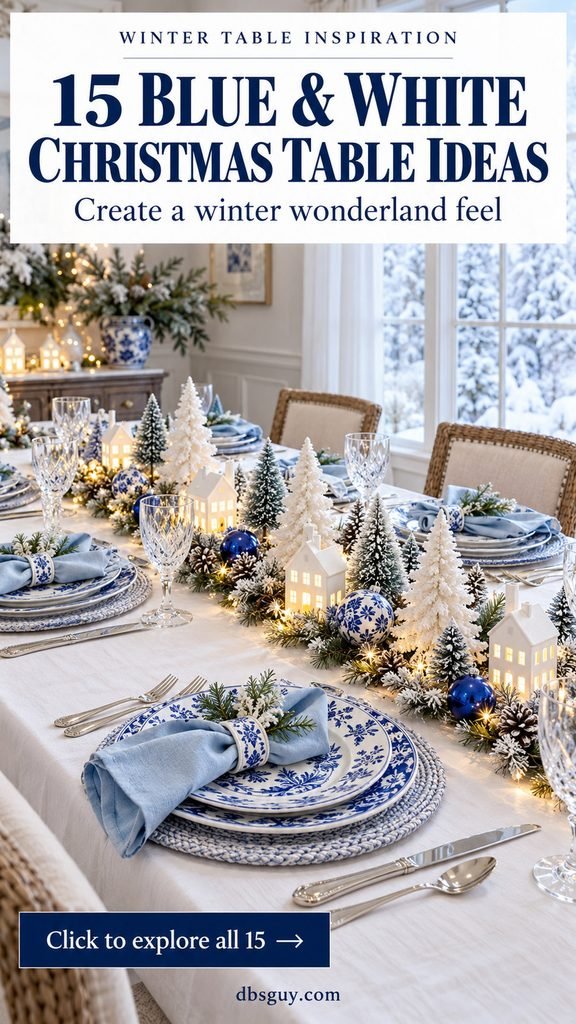
The visuals in this post are AI-generated styling concepts. Use them as inspiration for colors, materials, and placement, rather than photographs of completed projects.
1. Let Blue-and-White China Lead the Table
If you already own blue-and-white plates, you have a starting point that does not require a whole new holiday dinnerware set. A patterned salad plate over a plain white dinner plate gives the design a clean border, so the blue pattern stays visible.

Keep the supporting pieces quiet: a navy napkin, clear water glass, and silver flatware. A few evergreen sprigs and white ceramic stars along the center bring the Christmas feeling without competing with the china.
For mixed dishes, look for a shared blue tone rather than identical patterns. A floral plate and a striped serving dish can sit comfortably together when the linen is plain. If every layer has a busy design, remove the patterned charger first; a simple white base often makes the whole setting easier to read.
2. Pair Ice-Blue Glassware With a Silver Tray
For a more frosty look, let pale blue glass catch the light. Ribbed or faceted glasses add detail even when the plates are plain, and a small mirrored tray gives the centerpiece a defined footprint.
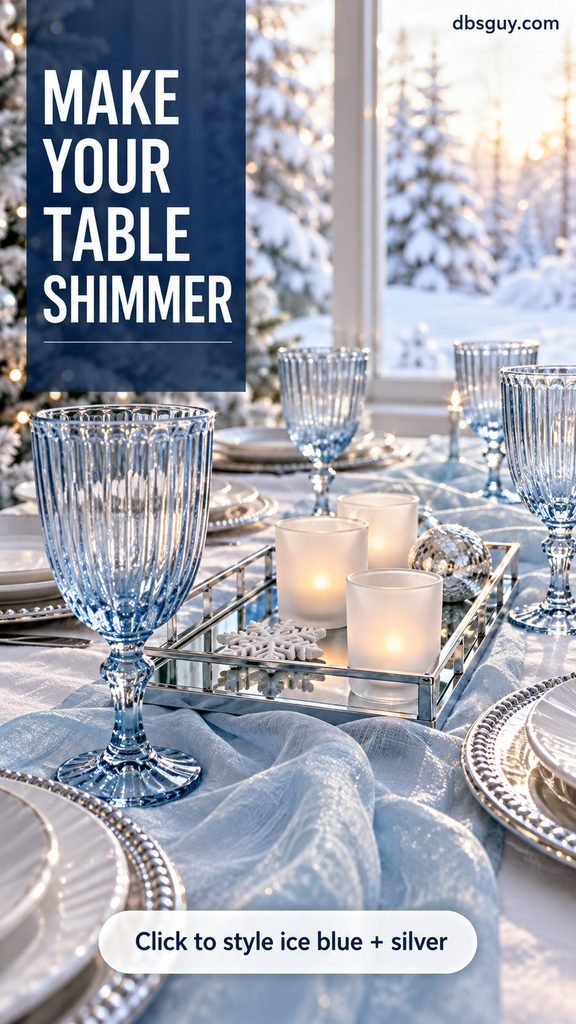
Set frosted votive cups with battery-operated lights on the tray, then add a couple of silver ornaments and one white snowflake decoration. Keep all those pieces inside the tray rather than spreading them between the glasses. An ice-blue gauzy runner supplies the softer layer underneath.
This works especially well for an afternoon gathering near a window. If the room is dim, use warm white LEDs so the table has a gentle glow. Skip loose glitter: the reflective glass and silver already provide enough sparkle. A polished silver-toned tray can stand in for a mirrored one.
3. Build a Little Light-Up Winter Village
A miniature village gives the table a small scene to enjoy. The warm windows make blue and white feel welcoming, which is useful if your dining room otherwise leans cool.
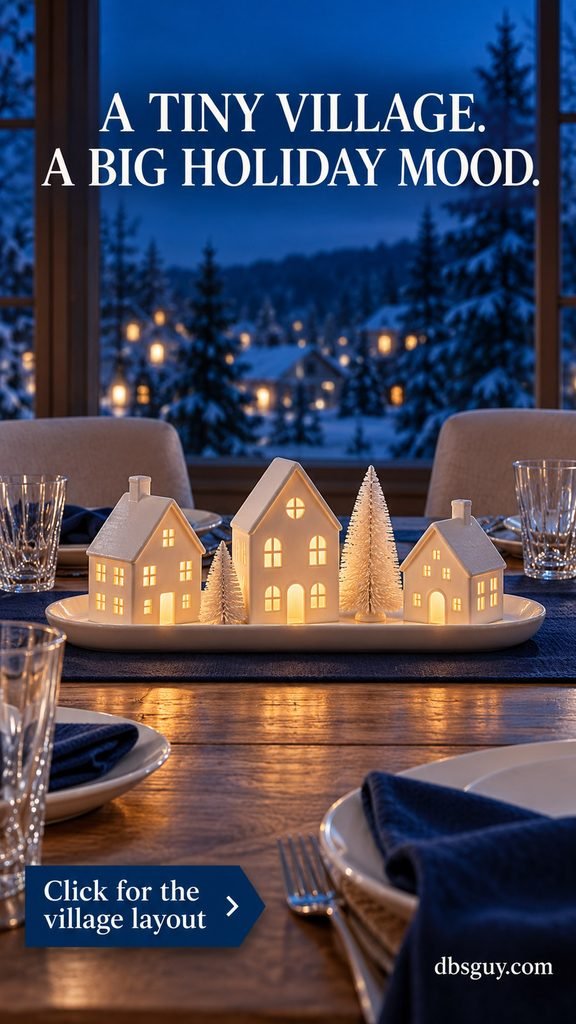
Use three small white ceramic houses and two miniature snowy trees on a narrow oblong tray. Place the largest house slightly behind the others, then offset the trees so the display has depth without becoming a solid wall.
- Choose battery-lit houses or place suitable LED lights inside houses designed to hold them.
- Lay a navy fabric strip beneath the tray to outline the white buildings.
- Keep the houses low enough that guests can comfortably see across the table.
You can lift the entire village onto a sideboard when dinner arrives. That is far easier than moving individual houses around hot serving dishes. Avoid filling the tray with loose artificial snow; white ceramic and snowy trees already suggest a winter landscape.
4. Arrange a White Bottlebrush Forest
White bottlebrush trees look especially crisp against a cobalt runner. Their bristly texture creates the snowy effect, while their small wooden bases keep the arrangement casual enough for a family table.
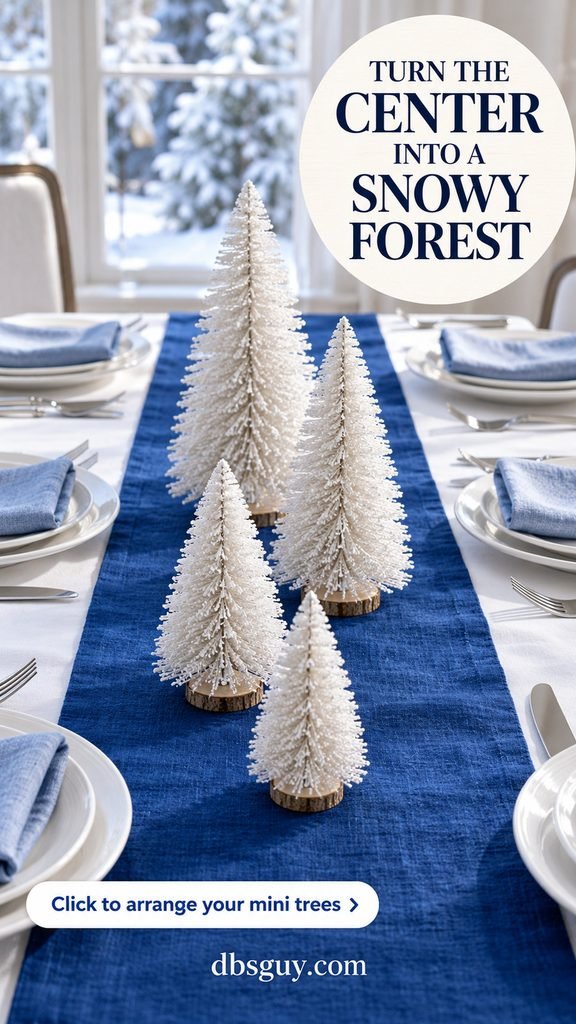
Make a staggered line down the middle rather than a perfectly even row. In the concept shown, taller trees sit farther back and shorter trees come forward. Leave gaps between the bases so the runner remains part of the design.
For a shorter table, begin with three trees. For a longer table, add a few more only after checking where the serving dishes will go. This is a good option when you want reusable decor without flowers or water-filled vases.
Keep the plates white and napkins pale blue. If the trees shed decorative fibers, brush them off away from the dining table before setting them out.
5. Soften the Look With Blue Toile and Velvet
Blue toile changes the mood from sparkling ice to a cozy winter storybook. The fabric provides the pattern, so plain cream or white dishes are enough.
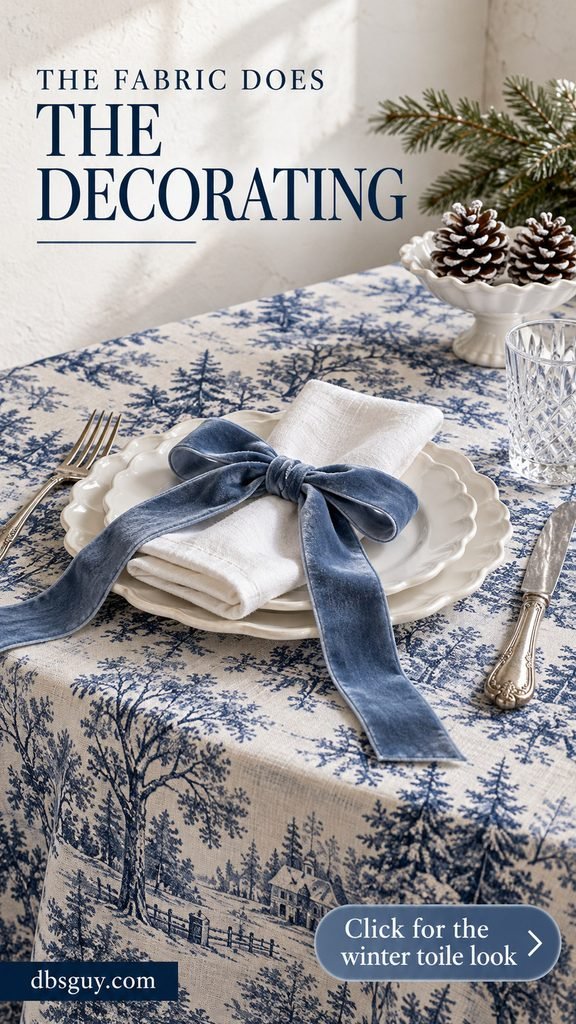
Fold a white linen napkin into a rectangle and tie a muted French-blue velvet ribbon loosely around it. Trim the tails so they stay within the plate area; a beautiful bow becomes less useful if it trails under a water glass.
A small white pedestal dish with white-tipped pinecones adds a Christmas detail without hiding the tablecloth. Let the blue in the ribbon relate to the toile, even if the shades are not exact matches.
If you do not own a toile tablecloth, use a toile runner over plain white linen. That smaller amount of pattern gives the same direction and is easier to combine with everyday dishes. Avoid adding patterned napkins as well—the fabric needs a little breathing room.
6. Gather White Blooms in a Low Blue Bowl
A cobalt bowl filled with white flowers makes a clear focal point. The bowl supplies the blue; the flower heads create a soft, snow-like mound above it.
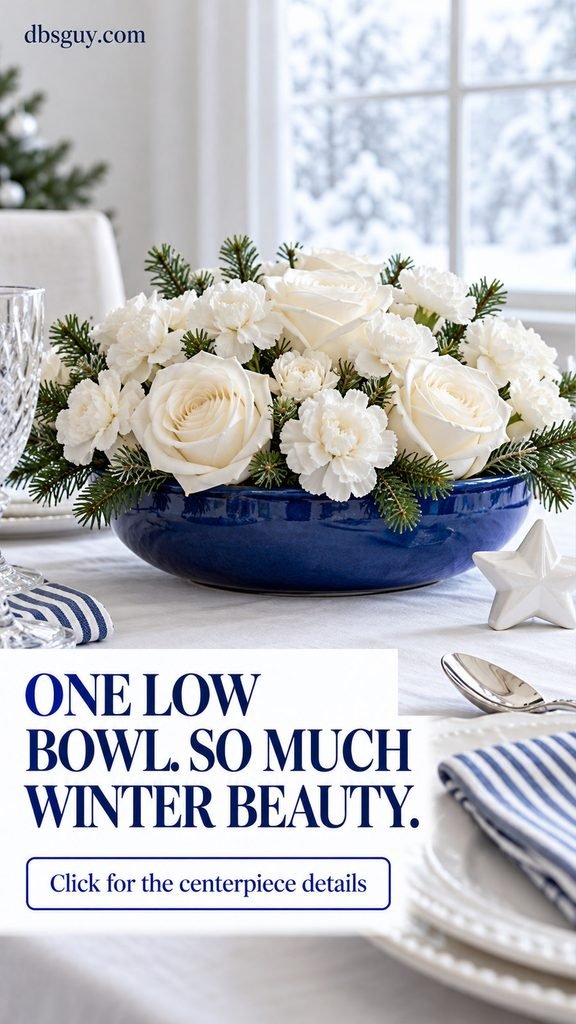
The concept combines white roses, smaller white carnations, and short evergreen sprigs. Use a shallow bowl roughly 8 to 10 inches across as a starting point for a medium dining table, then scale it to your available space. Those dimensions are styling suggestions, not a requirement.
Set a smaller water-holding vessel inside the decorative bowl if needed. Arrange the larger blooms first, tuck smaller flowers into the gaps, and keep the greenery short. Check the arrangement while seated: guests should be able to see one another over it.
Fresh or good-quality artificial flowers can work. With fresh stems, keep the water contained and protect the linen beneath the bowl. With artificial stems, bend or trim them so the bouquet looks low and full rather than like a tall arrangement pushed into a short container.
7. Make Folded Paper Stars the Centerpiece
Paper stars are a light, graphic alternative to a heavy garland. White accordion-fold stars on a powder-blue runner create a snowy scene with very little color or clutter.
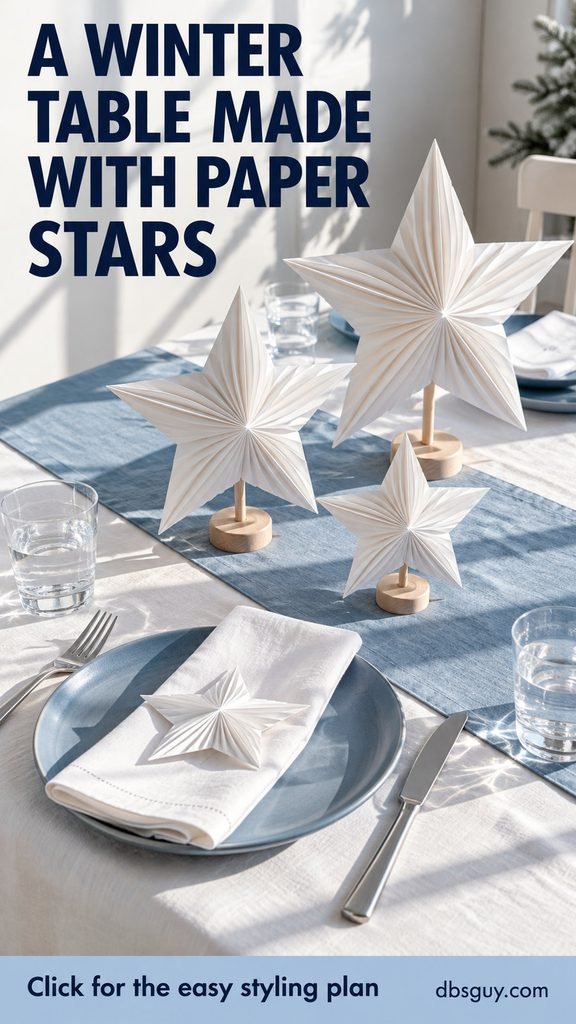
Choose freestanding stars with bases, or use prefolded paper decorations designed to stand on a table. Group three short stars at different heights and angles. Add one smaller star beside a napkin if you want to repeat the shape at a place setting.
Plain white dinnerware or solid blue plates suit this look better than elaborate patterns. The paper pleats are the detail worth noticing.
This is an easy direction for a craft-loving household, but you do not have to make the stars from scratch. Check that each base is stable before guests sit down, and keep the paper dry and away from hot dishes. Leave the stars unlit rather than putting candles or decorative lights inside them.
8. Fill a White Bowl With Blue and White Ornaments
Sometimes the most useful centerpiece is a bowl you can pick up with one hand. A wide, shallow white bowl filled with blue and white ornaments is quick to arrange and easy to move when dinner needs more room.
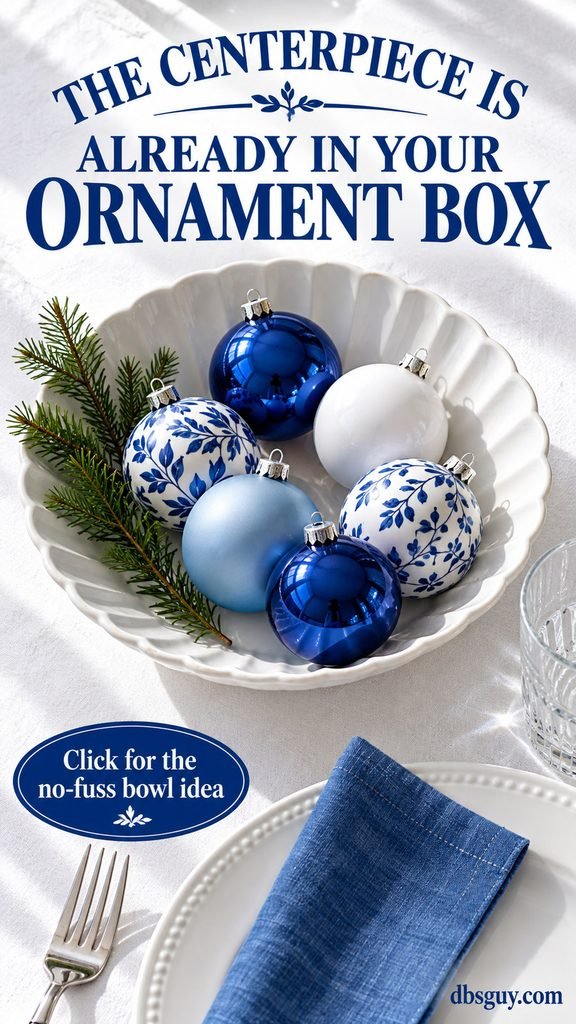
Mix glossy cobalt, softer powder blue, and matte white ornaments. A couple of blue-patterned white ornaments add detail, as the concept shows. The hanging caps help them read as Christmas decorations, so there is no need to conceal every cap. Start with enough ornaments to make a loose single-layer grouping, then stop before the bowl becomes a tall mound.
A fluted or scalloped bowl adds a little texture without another pattern. Set an evergreen sprig beside it, and let blue napkins carry the color around the table.
Use shatterproof ornaments when handling or breakage is a concern. Keep decorative ornaments separate from food, and remove the bowl before using it to serve anything.
9. Line a Blue Trough With White-Tipped Pinecones
For a rustic winter table, keep some natural brown in the palette. White paint on just the pinecone tips suggests snow while leaving the texture visible.

A narrow navy ceramic trough contains the display and makes it easy to place down a rectangular table. Add short fir sprigs between the pinecones rather than building a thick bed of greenery.
- Start with clean, dry craft pinecones.
- Lightly brush white craft paint onto the outer tips. Let it dry fully according to the paint instructions.
- Arrange the pinecones in a decorative trough and tuck in a few short sprigs.
- If you want a glow, use suitable battery-operated lights and keep their wire contained within the display.
Set the trough on white linen over a pale wood table, with muted blue napkins nearby. Treat the painted pinecones and their container as decor, and keep them away from food. A narrow blue tray works if you do not have a trough.
10. Set a Blue-Striped Christmas Brunch Table
A Christmas morning table can feel special while still being comfortable for coffee, pastries, and sleepy conversation. Blue-and-white ticking stripes bring the color scheme into a casual breakfast setting.

Run the striped fabric across a wood table and use white mugs and bowls with blue-rimmed plates. Fold blue napkins simply, leaving enough space for the breakfast dishes. One little white ceramic tree and a short evergreen sprig provide the holiday detail.
The croissants and clementines in the concept are part of the meal rather than extra decorations. If you are serving food family-style, let the serving plates occupy the center and put the tiny tree near one end.
You can use two striped placemats instead of a runner for breakfast for two. Skip chargers if they make the mugs, bowls, and food feel crowded.
11. Warm Up Navy Linen With a White Lantern
Navy linen makes white plates look bright and gives a winter evening table a settled, cozy mood. A short white lantern provides a focal point without requiring a long arrangement.
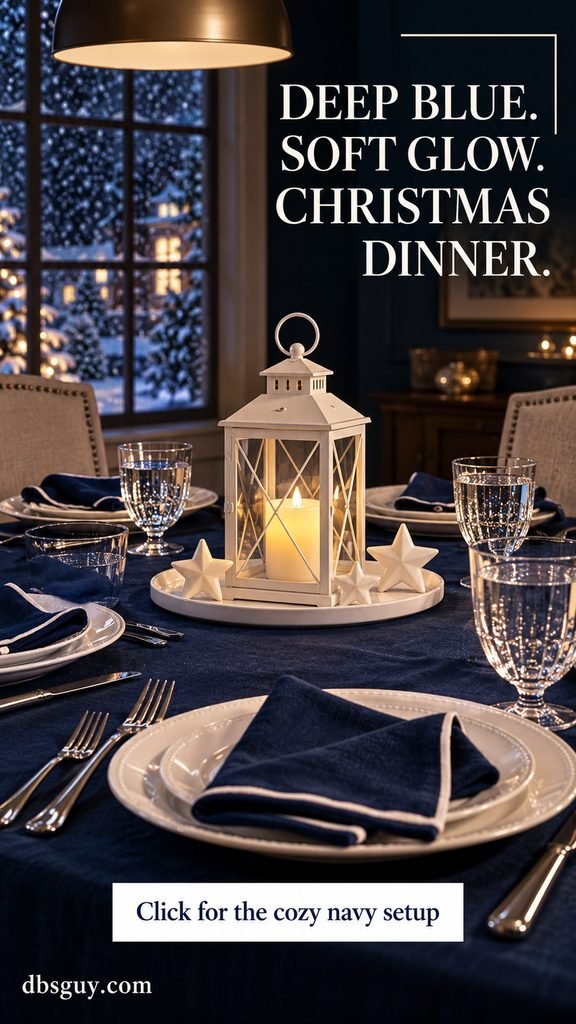
Place an ivory battery-operated pillar candle inside the lantern and set the lantern on a small white tray. A few white star decorations around its base repeat the snowy color. Clear glasses and silver flatware keep the rest of the setting light.
Look for a lantern that sits below your guests’ sight line; around 8 to 10 inches tall is a useful starting point, depending on the table and chairs. Keep the room lighting warm enough that diners can see the meal and one another comfortably.
This compact display calls for a flameless candle. If your navy cloth makes the table feel too heavy in daylight, add a narrow white runner beneath the tray.
12. Add Blue Marbled Crackers to White Place Settings
A blue-and-white marbled Christmas cracker turns an otherwise simple plate into a festive place setting. The flowing paper pattern adds movement without introducing another color.
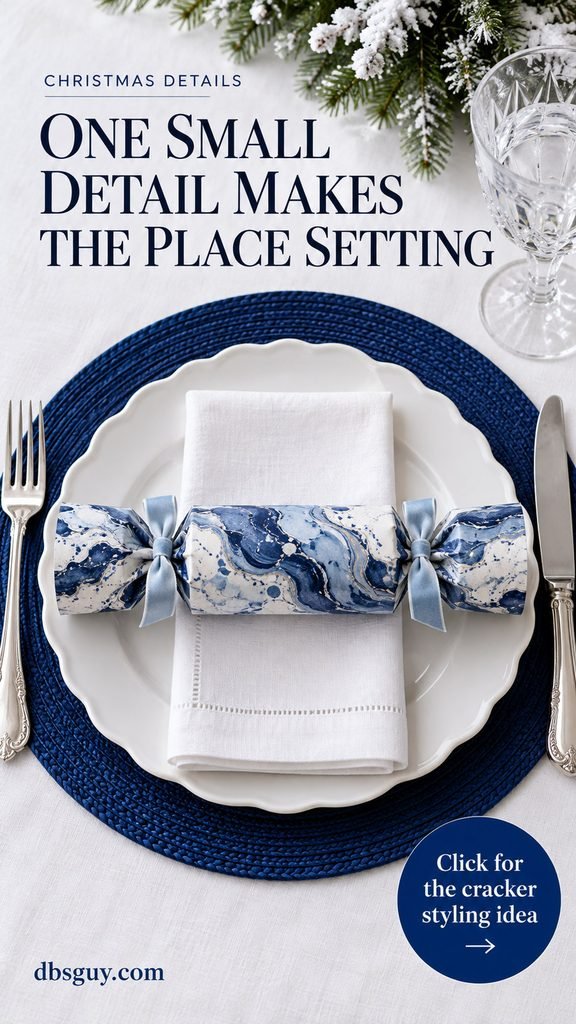
Lay one ready-made cracker horizontally across a folded white napkin on a white scalloped plate. Pale blue ribbon at the ends softens the indigo pattern, while a solid cobalt placemat gives the stack a clear border.
You do not need matching patterned dishes. In fact, a plain plate makes the marbled paper easier to appreciate. Choose crackers sized to fit the plate rather than long ones that extend into the flatware.
Use commercially made crackers according to their instructions, including any age guidance. A decorative non-popping version also works for the visual effect. Move the cracker off the plate before serving food, and clear paper pieces before the meal begins.
13. Keep a Small Round Table Open With One Centerpiece
A round table benefits from a compact center rather than a long runner crowded with objects. Repeat pale blue napkins around the outside and let one low cobalt vase anchor the middle.
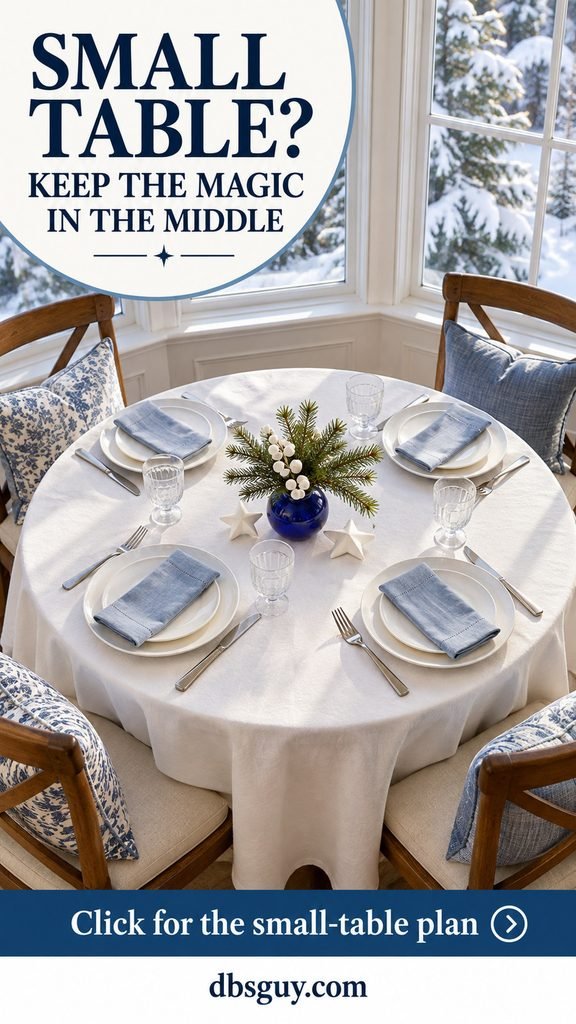
Fill the vase with short evergreen stems and a few white decorative berry picks. Keep the arrangement airy so you can still see the blue vessel. Two white stars beside the vase are enough to finish the Christmas feeling.
Set out the plates, flatware, and one water glass per person before placing the centerpiece. On a small table for four, aim for a display no wider than roughly one-third of the tabletop, then reduce it if the serving dishes need more space. Your actual dishes are the best test.
Skip chargers when they eat into the usable area. If dinner is served family-style, move the vase to a nearby shelf during the meal. Keep decorative berries in the arrangement, away from plates and food.
14. Mix Powder Blue With Knit Texture and Wooden Trees
Powder blue, soft white, and pale wood give the winter wonderland palette a gentler feel. This look is about texture: a cotton placemat with a knit-like surface, a linen napkin, and a smooth little wooden tree.
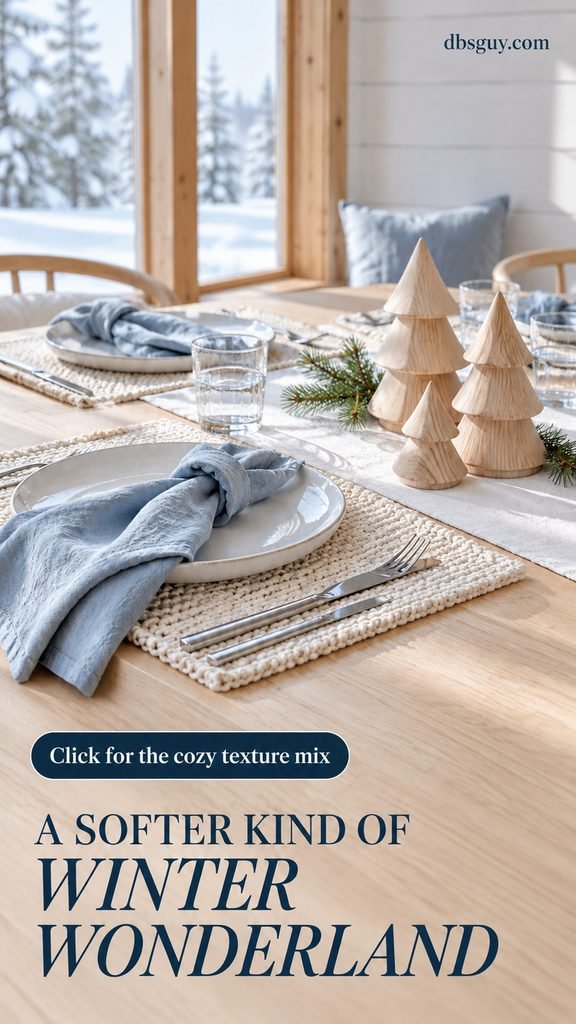
Use matte white stoneware over the textured mats and lay dusty blue napkins beside or across the plates. Group three short sculptural wooden trees on a narrow white runner. A single evergreen sprig is plenty if the trees already create a clear Christmas shape.
Choose flat, washable placemats made for table use. Thick knitted pieces can make plates and glasses sit unevenly, so keep the decorative texture shallow and test it before setting the table.
This suits a light wood dining room or a relaxed holiday lunch. If your room has darker furniture, use more white linen to keep the powder blue visible.
15. Give Coastal Blue a Snowy Christmas Finish
A coastal Christmas table can stay true to sea-glass blue while still feeling like December. Snowy trees and white stars supply the holiday cues; washed wood and pale blue glass carry the coastal mood.
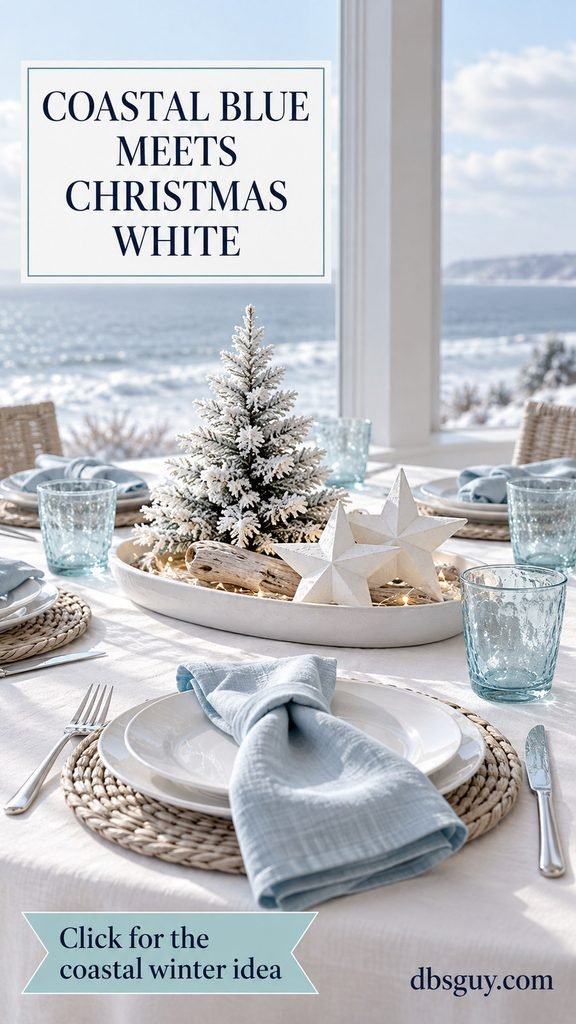
Layer white plates on driftwood-toned woven chargers and add sea-glass-blue napkins. Keep the centerpiece contained in a shallow white tray: one miniature snowy tree, a short piece of pale decorative driftwood, and two white star ornaments.
Suitable battery lights can add a little warmth inside the tray. Use a tree that does not shed its finish onto the dining surface, and keep the wood and ornaments separate from food.
You do not need seashells or sand to make the setting feel coastal. The pale wood, translucent blue glasses, and light linen do that work, leaving the Christmas shapes easy to notice.
How to Pull the Table Together Without Crowding It
Before buying anything, set out one complete place setting with the dishes you will actually use. That shows you how much space remains for decor. Add the serving bowls next if you plan to pass food around the table.
Choose a lead blue
Cobalt works well with patterned china and white trees. Ice blue suits glass and silver. Navy gives an evening meal more depth, while powder blue pairs gently with linen and pale wood. You can use a lighter or darker accent, but repeat your main blue so the setting feels intentional.
Check the pieces together in your dining room before committing to a match. A blue that looks pale beside a bright window can look much darker at dinner time.
Give one pattern room to stand out
Let toile linen, patterned china, marbled crackers, or striped fabric be the main pattern. Surround it with plain pieces. White dishes are particularly useful because they can support nearly every look in this list.
Keep the arrangement easy to move
A tray, bowl, or small vase makes the centerpiece portable. Test the view from each chair and leave a comfortable path for reaching glasses and passing dishes. There is no need to add extra flatware simply to fill an empty spot: the Emily Post Institute’s table-setting guidance recommends arranging utensils in order of use.
Use light thoughtfully
Battery-operated lighting suits the compact villages, lanterns, and greenery displays shown here. The U.S. Fire Administration recommends considering flameless candles. If you choose real candles elsewhere, use stable holders, keep them at least 12 inches from anything that can burn, and extinguish them when you leave the room. A glass holder does not remove the need for that clearance.
Prepare the reusable pieces ahead
For a Christmas Eve or Christmas Day meal, wash the dishes, press the linens, and assemble dry decorations a day or two ahead when practical. Add fresh flowers and greenery closer to the gathering, according to their condition, and check the lights before guests arrive. Store ornaments, ribbons, and miniature trees together afterward so the next setup is easier.
Frequently Asked Questions
How do I make a blue-and-white table look like Christmas?
Add a recognizable seasonal shape: a little Christmas tree, a ceramic village, stars, pinecones, or evergreen sprigs. Blue and white alone can feel suitable for any season. One clear holiday detail usually does more than a table full of unrelated blue accessories.
Does blue and white work with everyday white dishes?
Yes. Use the dishes as your white base and add blue through napkins, a runner, glasses, or one centerpiece container. You can recreate the ornament-bowl, bottlebrush-tree, or navy-lantern look without buying patterned plates.
Should I use silver or gold with blue and white?
For the frosty winter wonderland mood in this article, silver is the editorial choice. It connects easily with clear glass and snowy white. Gold can give blue and white a warmer, more traditional direction, but it changes the feel. If you already have silver-toned flatware, there is no need to add another metallic finish.
What is the simplest centerpiece to put together?
A shallow white bowl of blue and white ornaments is a useful starting point because it needs no flower arranging or wiring. If you want a taller shape, use a small group of freestanding white trees. In either case, assemble the display after laying out the dishes.
How can I create the snowy look without artificial snow?
Use white linen, white ceramic houses, white paper stars, or white bottlebrush trees. Their color and texture suggest snow without scattering material across the dining table. White-tipped pinecones add another option when you want natural brown texture to remain visible.
Can the decor stay on the table during dinner?
It can if guests have clear sight lines and there is space for the food, glasses, and serving utensils. If those areas compete, lift the centerpiece onto a sideboard. Keep the blue napkins, white dishes, and linen in place; the color scheme will still feel complete.