17 Natural Christmas Table Decor Ideas With Greenery, Pinecones, and Dried Oranges

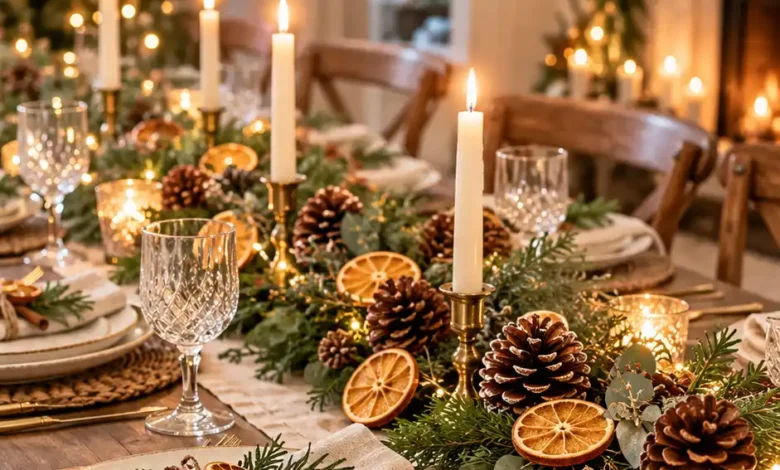
A few cedar sprigs, a handful of pinecones, and dried orange slices can give a Christmas table a warm, collected feel without covering every inch. The trick is choosing where those details will do the most work: down the center, at each place setting, or along the edge of a buffet.
For the easiest starting point, choose one centerpiece idea and one place-setting detail from the 17 below. Cream dishes, green or oatmeal napkins, and the amber color of dried citrus will tie them together. You can add more later, but the plates and serving dishes should get their space first.

The visuals are AI-generated styling concepts to help you picture each arrangement.
1. Run a Narrow Cedar and Dried-Orange Trail Down the Table
This is the natural Christmas table decor idea to start with when you want the whole table to feel festive. Feathery cedar makes a softer line than a bulky premade garland, while dried orange rounds give your eye little points of color to follow.

For a typical six-person rectangular table, start with short cedar cuttings, about five to eight orange slices, and four to six pinecones. Overlap the stems so the leafy tips hide the cut ends. Tuck the cones into the greenery and turn some citrus slices upward so they remain visible.
A strip roughly 6 to 8 inches wide is a useful styling starting point, not a rule. Set out your dinner plates before deciding how much greenery fits. If you serve dinner family style, leave deliberate breaks for bowls or move part of the trail to the sideboard before the food arrives. Protect delicate wood from damp foliage or sap with a narrow washable runner.
2. Put a Glowing Arrangement on a Woven Tray
A shallow rattan tray gives loose natural materials a tidy boundary. It also makes the centerpiece easy to move, which is particularly useful on a breakfast table that needs to return to everyday use.

Set two short flameless LED pillar candles on flat ceramic coasters inside the tray. Arrange cedar around them, then add a couple of pinecones and several orange slices near the front. Keep everything inside the tray’s footprint, including the greenery tips.
Choose a tray that leaves space for the place settings rather than filling the entire middle of the table. An oval shape is handy when your table is narrow. Before guests sit down, decide where the tray will go if dinner needs that space; a nearby console is easier than improvising while carrying hot dishes.
3. Make Pinecones the Main Event in a Wooden Bowl
When you already own a wooden dough bowl or long serving bowl, let it hold a pinecone-heavy arrangement. The repeated cone shapes provide texture without flowers, glitter, or a large collection of decorations.

Start with the largest cones, then fill the gaps with smaller ones. Thread a few fir tips between them and prop three or four dried orange slices where they can catch the light. Leave enough of the bowl’s rim visible to show its shape.
The useful balance here is more pinecones than greenery. Too much foliage hides the sculptural detail that makes this arrangement different from a garland. If your bowl is deep, place a clean folded cloth underneath the display to raise it rather than buying more filler. Keep the cloth concealed, and use the bowl for decoration during the meal rather than mixing the display with food.
4. Tie an Orange and Rosemary Bundle Around Each Napkin
One citrus slice, a rosemary sprig, and a short length of twine can make an ordinary linen napkin look considered. Olive green brings out the orange beautifully; oatmeal or white works if that is what you have.

Fold the napkin into a rectangle. Wrap the twine around it once, tuck in a clean culinary rosemary sprig, and attach an orange slice through a small hole near the rind. Tie it loosely enough for a guest to slip the whole bundle off without wrestling with a knot.
Use clean food-grade herbs and citrus for details placed on napkins or plates; craft-store botanicals belong off eating surfaces. Put the decoration on before seating, then remove it before eating. Skip extra charms or big ribbon bows here—the contrast between soft linen, rough twine, and translucent citrus is enough.
5. Turn Stable Pinecones Into Place-Card Holders
Pinecone place cards solve two jobs at once: they add woodland texture and show guests where to sit. They work especially well when the rest of the table is simple and you want one personal detail at every seat.

Choose broad cones that stand without wobbling. Write each name on a small ivory card and slide the bottom edge between two open scales. Try the card in the cone before finishing every name; a lighter card often stays upright more easily than a heavy folded one.
Place the holder beside the plate, with a small cedar clipping or orange round nearby if you want to repeat the center arrangement. Keep the cone off the eating surface. A cone that rolls around is better used in a bowl; do not depend on a precarious glue fix to keep a place card upright during dinner.
6. Shape Tiny Rosemary Wreaths for the Plates
A miniature rosemary wreath gives each place setting a complete little design of its own. Unlike the napkin bundle, this detail uses the open center of a plate to show off a simple circular shape.

Use two flexible, clean culinary rosemary sprigs. Overlap their ends into a loose circle about 4 inches across, then secure the joins with fine twine. Attach a small dried orange slice at one join. Set the finished wreath on an empty salad plate, ready to be removed before food is served.
Choose sprigs that bend comfortably rather than forcing thick woody stems into a tight ring. If yours resist, make a more open wreath with overlapping curved pieces. Assemble these close to the meal so the herbs look their best. A single orange accent keeps the wreath readable; several slices can overwhelm its delicate outline.
7. Give Amber Bottles a Second Job as Bud Vases
Short amber bottles bring a warm glow to a table even without candles. Their small openings make a few greenery cuttings feel intentional, so this is a useful option when you have limited foliage.

Clean three bottles thoroughly and arrange them in a loose triangle. Add water and one modest cedar or fir cutting to each. Tie a dried orange round to the outside of each neck with twine, keeping the fruit out of the water. A couple of pinecones beside the bottles finish the grouping.
Keep the stems short enough to see across the table. The bottles can vary slightly in height, but their bases should all sit securely. Add felt or waterproof coasters if your tabletop marks easily, and check the water before the meal. If you only have clear bottles, the same arrangement works; the citrus supplies the warm color.
8. Build a Little Dried-Orange Branch Tree for the Buffet
Save height for the buffet, where a sculptural arrangement can stand behind the dishes without blocking conversation. Bare twigs hung with orange slices have an airy outline that feels seasonal without becoming a miniature Christmas tree full of ornaments.

Use a heavy pitcher or stable vase, three branching twigs, several dried orange slices, and fine twine. Test the branches in the vessel first, then hang slices at different heights with short loops. Add a few fir tips at the rim and pinecones near the base.
Keep the tree toward the back of the buffet, with branches clear of plates, serving utensils, and the route guests use to reach food. Stop while you can still see the space between the twigs. If the branches make the pitcher top-heavy, switch to a wider vessel and secure their bases; a crowded serving table is no place for a balancing act.
9. Pair Natural Materials With Black Flameless Tapers
Matte black candleholders give greenery and citrus a sharper, more modern outline. This suits a dining room with simple furniture or a pale stone table where an elaborate rustic centerpiece would feel out of place.

Use three stable holders at different heights with compatible flameless taper candles. Instead of building a continuous garland, place a few small fir, pinecone, and dried-orange clusters around their bases. Leave visible tabletop between the clusters.
The negative space is part of the look. Adding more greenery can turn the arrangement back into a traditional runner, so step away and check the balance before filling another gap. Choose LEDs for this design: dried citrus and evergreen cuttings should not sit beside a live flame. If you want real candles elsewhere, follow NFPA candle guidance, including at least 12 inches of clearance from anything that can burn.
10. Arrange a Miniature Woodland on a Slate Tray
Upright pinecones resemble tiny trees when you vary their height and keep the setting restrained. A dark slate tray makes the green moss and amber citrus stand out without needing faux snow or little figurines.

Cover part of a narrow tray with purchased preserved craft moss. Stand your most stable cones in a loose group, with taller ones toward the middle and smaller ones near the ends. Tuck in short fir tips and a couple of dried orange slices at the edge.
Keep the moss inside the tray and away from food, and follow its supplier’s handling instructions. This is a decorative scene, not a serving platter. Test each cone for wobble before moving the tray; small removable adhesive dots can help on a separate protective liner. The arrangement reads best when individual cone shapes remain visible rather than disappearing into a thick moss mound.
11. Stamp a Botanical Kraft-Paper Runner
Paper can carry some of the decoration when you want a natural Christmas table without lots of loose pieces. A kraft runner stamped with evergreen silhouettes adds a handmade pattern, while a few real botanicals connect the print to the rest of the table.

Cut kraft paper to fit the table’s length, with comfortable room for plates on either side. Use an evergreen stamp and a suitable ink pad to make a scattered pattern rather than perfectly spaced rows. Simple hand-drawn pinecone outlines are optional. Let the ink dry fully before setting the table.
Add two orange slices and a short cedar sprig at an end where they will not compete with serving dishes. Test the ink on a scrap first, and keep the paper away from hot cookware and open flames. This runner is decoration, not protection for your tabletop; use proper trivets and coasters where needed.
12. Finish Each Seat With a Small Natural Favor Parcel
A tiny favor can make the table feel welcoming without needing a large centerpiece. Plain kraft boxes are particularly useful because they let the botanical detail do the decorating.

Choose boxes around 2 to 3 inches wide. Fill them with a small nonfood gift or an individually wrapped treat in suitable food packaging. Tie each box with twine, then tuck a short fir sprig and small dried orange round beneath the twine on the outside. Place a tiny pinecone beside the box rather than attaching a bulky cone to the lid.
Set the favor beside the plate so guests can move it easily. Avoid mixing decorative clippings with an unwrapped edible gift, and account for any food allergies if you choose treats. These parcels look more polished when the boxes match; the natural materials can vary slightly from seat to seat.
13. Put a Tiny Botanical Scene Under a Glass Cloche
A cloche turns a few small materials into a focal point. It is a good choice when you like the woodland look but prefer to contain loose pinecones and citrus rather than scatter them across the table.

On the cloche’s base, arrange three cones at different angles, then rest two orange slices against them. Add one short fir clipping near the bottom. Lower the dome slowly to make sure the display fits without pushing the foliage against the glass.
Use completely dry citrus and surface-dry greenery; damp materials can make a closed display look cloudy. Check it during use and remove the dome if moisture collects. Keep a dinner-table cloche small and low, or move it to the sideboard for the meal. Do not put a burning candle inside this botanical scene.
14. Hang a Citrus Garland Along the Buffet’s Front Edge
When the tabletop needs to hold food, move some of the decoration to its outside edge. A short orange-and-cedar garland gives a buffet a festive front without taking over the serving area.

Make small holes near the rinds of dried orange slices and thread them onto twine. Tie short cedar pieces between selected slices, then secure the strand with suitable removable clips under the table’s front edge. Let it form a shallow swag rather than long hanging loops.
Test your clips on the surface according to their instructions; do not assume an adhesive will suit every finish. Keep the strand above knee height, clear of drawers and chairs, and out of reach of children or pets who might pull it. This is best on a buffet or console rather than a busy dining edge where guests need to sit and stand.
15. Mix Whole Clementines With Dried Citrus in a Shallow Bowl
Whole clementines bring a fuller orange color to the table, while the dried slices add delicate translucent edges. This arrangement feels relaxed enough for Christmas breakfast and still works with your everyday cream dishes.

Fill a shallow ceramic bowl with whole clementines, then prop a few dried orange rounds around the rim. Arrange short cedar tips along the outside edge and place two pinecones beside the bowl. Sage linen helps connect the greenery and fruit without adding another strong color.
A shallow bowl keeps the fruit visible; a deep vessel can hide most of what you put in it. Treat botanicals and display citrus as decoration. If you want fruit guests can eat, offer a separate clean bowl kept free of foliage, craft materials, and handling from the display. Check the whole fruit regularly and remove any that is soft, damaged, or moldy.
16. Line a Buffet With Small Potted Rosemary Plants
Living rosemary gives the buffet an upright green rhythm without a tall floral arrangement. Terracotta pots add a warm earthy note that sits naturally with wooden serving boards and white ceramics.

Use two or three healthy small plants, each on a waterproof saucer. Place them along the back of the buffet with generous gaps for serving dishes. Tie a dried orange round to the outside of each pot and add a pinecone beside a saucer if the table still feels sparse.
Keep the pots away from food contact, spills, and hot cookware. Check the saucers after watering so moisture does not sit on your furniture. Rosemary needs appropriate growing conditions beyond the party, so return the plants to a suitable bright location afterward and follow their nursery care instructions. If you already own one plant, a single pot at a buffet corner is plenty.
17. Make an Evergreen Crescent on a Round Table
A straight runner can feel awkward on a round table. A curved arrangement uses the table’s shape and leaves an opening for one shared dish, which makes this idea especially useful for a small circular dining table.

Arrange short fir and cedar pieces in a loose C-shaped arc on a washable protective base. Hide the stems beneath the neighboring tips, then tuck pinecones and dried orange rounds into the curve. Leave the center and one side open for a low serving bowl.
Set the plates out before shaping the crescent, then test the actual serving dish in the opening. The greenery should frame the bowl without touching food or crowding anyone’s utensils. A half-circle usually provides enough visual movement; closing it into a full wreath removes the gap that makes this layout practical. Use less greenery if your table needs more room.
Prepare the Natural Materials Before You Set the Table
Dry the orange slices early
You can buy ready-dried citrus or make it before the day you host. For a published oven method, Good Food’s dried-citrus instructions use approximately 2 mm slices in a single layer at 110°C in a conventional oven, about 230°F, or 90°C fan, about 195°F. They allow around two hours, with an earlier check and the trays rotated halfway through.
Thickness and ovens vary, so use dryness rather than the clock as your finish line. Remove slices that dry sooner, let them cool fully, and do not enclose damp citrus in boxes or displays. Prepare extra slices for breakage, especially if you will thread them onto twine.
Keep fresh greenery hydrated until setup
K-State’s fresh-greenery guidance recommends keeping cut stems in water before use and soaking greenery overnight before arranging. Let the foliage drain and surface-dry before it goes near linen or wood. Water-filled vases are useful when you want cut stems to stay hydrated during the display.
Loose tabletop cuttings have no water source, so arrange them close to the meal and replace pieces that become brittle or shed. Keep them away from heat sources. Some decorative plants, including yew, mistletoe, and holly berries, can be poisonous to children or pets; do not treat unidentified greenery as edible. Use clean culinary rosemary for plate and napkin details.
Choose clean cones and keep the glow flameless
Use clean, dry, untreated pinecones. Brush off loose debris outdoors and reject any with mold or insects. Collect only where you have permission, or buy cones intended for crafts. Keep them beside the plates rather than on eating surfaces, and use a protective base on finishes that may mark.
For light among these natural materials, choose flameless candles. NFPA’s holiday guidance says to keep lit candles away from decorations and other combustible items. A glass holder does not make a flame safe beside dried orange slices, pinecones, or foliage. Secure battery compartments and follow the LED candle manufacturer’s instructions.
Questions About Natural Christmas Table Decor
How many of these ideas should I use together?
Start with one centerpiece and one detail at each seat. The cedar trail with pinecone place cards, or the wooden bowl with orange napkin bundles, are easy combinations. Adding a different decoration to every part of the table usually makes the natural materials harder to appreciate.
Can I use faux greenery with real pinecones and oranges?
Yes. Choose modest sprigs with believable needle shapes and a low-gloss finish, then use real cones and dry citrus to add texture. This can be practical for a table you want decorated for longer. Follow the greenery’s care instructions and keep faux materials away from flames too.
How far ahead can I assemble the table?
Prepare place cards, paper runners, empty favor boxes, and dry citrus ahead of time. Add loose fresh greenery and culinary-herb details closer to the meal. There is no single lifespan for fresh cuttings: the plant, room conditions, and access to water all matter. Inspect the materials before guests arrive instead of relying on a promised number of days.
What works best on a very small table?
Use a small removable tray, one short amber bottle, or a single pinecone place card at each seat. You do not need to shrink every centerpiece into the available space. A repeatable place-setting detail can make the whole table feel festive while leaving its center free.
Can I keep the dried orange slices for next Christmas?
Reuse is possible only if the slices stay completely dry and sound. Inspect them before storage and again before reuse; discard anything damp, moldy, discolored in a concerning way, or off-smelling. Humidity and storage conditions vary, so plan to replace them if necessary rather than expecting every batch to last another year.
Choose the arrangement that fits how you actually serve dinner, then repeat its greenery and citrus in one small detail. A table with room for the food and the people around it will feel more inviting than a display you have to dismantle before anyone can eat.