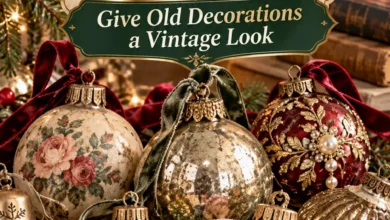
Burgundy brings depth to a Christmas tree. Gold gives that depth a little light. The combination can feel soft and welcoming, sparkling and dressy, or wonderfully simple—it depends on the finishes, the spacing, and what you let stand out.
These burgundy and gold Christmas tree ideas give you different ways to use the same palette. Start with the ornaments you already enjoy, then borrow the detail that changes the mood: velvet bows, pale gold glass, a few stars, or a rich skirt beneath quieter branches.
1. Matte Burgundy With Brushed Gold
For a gentle take on this palette, pair matte wine-red ornaments with brushed gold. The colors still feel festive, but neither finish has to compete for attention.

Recreate the look: Spread matte burgundy baubles across the visible sides, then place softly finished gold ornaments in the spaces between them. Add a few small burgundy ties if the color needs repeating near the top.
Use different ornament sizes while keeping their surfaces fairly simple. A larger burgundy sphere can sit slightly inside the branches; a smaller gold piece can hang farther forward. Check that each branch supports the piece comfortably.
If your existing gold ornaments are shiny, keep them. Mixing a few reflective pieces into a mostly matte arrangement adds variation. Leave some greenery around them so they appear as individual accents.
2. Burgundy Velvet Bows With Small Gold Ornaments
Velvet bows make burgundy visible even when you own only a few wine-colored baubles. Their soft loops create a repeating shape that feels inviting beside simple gold ornaments.

Recreate the look: Place medium velvet bows at different heights and stagger them across neighboring branches. Fill the spaces with smaller plain gold baubles. Keep the bow tails short enough that nearby ornaments remain visible.
Try one bow on the tree before making the rest. A loop that looks modest in your hand can become quite prominent among narrow branch tips. Wired velvet is useful when you want rounded loops; soft velvet works well for relaxed ties.
Let the bows provide most of the texture. If you also have broad ribbon on the tree, remove a section and look again. The velvet may already give the branches all the softness they need.
3. Burgundy Glass With Champagne Gold
Glossy burgundy glass brings reflections into the darker color. Pale champagne gold sits beside it more quietly than a very yellow metallic finish, giving the combination a softer shine.

Recreate the look: Mix smooth burgundy glass or glass-look baubles with pale gold ornaments in a few different textures. A ribbed champagne sphere beside a smooth wine-colored one supplies variation without introducing a third color.
Look at the ornaments with the tree lights on before settling their positions. Move a reflective piece slightly forward or sideways if a bright reflection hides its color. Keep the burgundy pieces visible from your usual seat.
Lightweight shatter-resistant ornaments are an option when glass is too heavy for the branches. Choose the finish you like, then use a secure hanger suited to the ornament rather than relying on a decorative ribbon bow.
4. Ivory Accents That Lighten Burgundy and Gold
A few ivory ornaments can open up a dark burgundy arrangement. They create lighter places for the eye to rest while keeping the tree within a warm, traditional palette.

Recreate the look: Place matte ivory baubles between burgundy ornaments, then add gold in smaller touches. Start with a small sample group—for example, two burgundy pieces, one ivory, and one gold—and adjust it against your actual branches.
Repeat ivory at different heights instead of using it only at the bottom. A cream skirt can carry the lighter color down to the floor, especially in a room with pale walls or upholstery.
If you already own white ornaments, try those first. Warm ivory and crisp white have different effects, so view your sample with the room lights on. Keep the combination that looks comfortable in your home.
5. Burgundy and Gold on a Flocked Tree
Snowy branches give burgundy a clear backdrop. Gold adds warmth, while the flocking supplies much of the texture that ribbon might otherwise provide.

Recreate the look: Hang burgundy ornaments where their outlines show against the snowy tips. Add a few gold stars or smaller gold baubles, then assess the tree before adding broad ribbon.
Keep enough flocked foliage visible to enjoy the contrast. Small burgundy ties are a useful starting point when a thick ribbon would cover the branch finish. For a heavily flocked tree, larger dark ornaments may be easier to distinguish than tiny wine-colored accents.
Handle the tree and attachments according to its care instructions. You can create this color scheme with an existing flocked tree; adding artificial snow to a green tree is a separate project with its own product and care requirements.
6. Gold Bead Garland Between Burgundy Baubles
A light gold bead garland gives the eye a path between ornaments. Shallow curves work especially well when you want the burgundy baubles beneath them to remain easy to see.

Recreate the look: Rest a lightweight decorative bead garland on several branch points, forming loose scallops. Place burgundy ornaments in the open spaces below and between those curves.
Begin with one section rather than wrapping the whole tree immediately. Look from the doorway to see whether the garland adds connection or creates too many horizontal lines. Adjust the depth of the curves to suit the tree’s width.
If a branch bends under the beads, use a lighter garland or shorten the unsupported span. A few curves can be enough. Keep the remaining decorations simple so the small gold beads do not disappear into a mass of glitter.
7. Burgundy Poinsettias as Focal Flowers
Burgundy poinsettias create larger areas of color than small baubles. Their pointed petals make them distinct from the round ornaments around them.

Recreate the look: Use artificial poinsettia picks made for decorating. Tuck their stems into supported areas of the tree, leaving the flower heads visible. Space several flowers at different heights, then add plain gold ornaments between them.
Turn each flower slightly until the petals look open from the room. A bloom pressed flat against a ribbon fold loses much of its shape. Check the arrangement from the side as well as the front, especially if the tree stands away from a wall.
For a smaller tree, begin with fewer, smaller flowers. The poinsettias already create strong focal points; plain ornaments give those points space to stand out.
8. Burgundy Berry Sprigs With Fine Gold Leaves
Berry sprigs bring burgundy into smaller spaces between ornaments. Fine gold leaf picks add another shape while letting plenty of green foliage show through.

Recreate the look: Pair small wine-colored faux berry stems with delicate gold leaf picks. Tuck the stems securely into the branches, then angle the visible berries and leaves toward the room.
Use the botanical accents in a few separate areas rather than around every bauble. If a section looks heavy, reduce the berry clusters before adding another gold spray. The aim is to see the individual shapes against the greenery.
Existing red berry picks can still work if their color sits comfortably beside your burgundy ornaments. Hold them together first. Keep brighter red in small touches when you want deep wine tones to remain the main color.
9. Burgundy Finials Among Round Gold Baubles
A familiar palette feels different when you change the silhouettes. Long burgundy finials create vertical lines between round gold ornaments.

Recreate the look: Distribute a few elongated ornaments across the visible sides of the tree. Hang round gold baubles nearby, leaving open space underneath each finial so its pointed end remains clear.
Move a long ornament to a deeper opening if it rests against the branch below. Changing the hanger length may also help, provided the new hanger remains secure. Support heavier glass ornaments on sturdy branches and choose lighter pieces for flexible tips.
You can start with two or three finials among a collection you already own. Repeat the longer shape at different heights, then step back to see whether it supplies enough variation before adding more.
10. Burgundy and Gold Brocade Ribbon
Brocade puts both colors into one textile. A burgundy ribbon with woven gold motifs can carry the theme while the surrounding ornaments stay simple.

Recreate the look: Make a few open folds with wired patterned ribbon, keeping its decorative face toward the room. Pair it with plain burgundy and gold baubles that repeat the ribbon’s colors.
Test the pattern in a finished fold before buying or cutting more. A large motif may disappear inside a tiny loop; a broader fold gives it room to show. The ribbon should sit comfortably among the branches without covering every ornament nearby.
If you already have a richly patterned ribbon, let it lead. Keep other prints restrained and use plain ornaments around the most detailed folds. A simple skirt gives the pattern somewhere to finish quietly at the base.
11. An Airy Alpine Tree With Small Burgundy Accents
An open, alpine-style tree has its own character. The spaces between branch tiers give small ornaments room to hang freely, so you can use less decoration and still appreciate the palette.

Recreate the look: Choose small burgundy baubles, delicate gold ornaments, and narrow burgundy ties. Distribute them across the branches while leaving the tree’s open outline visible.
Look at the hanging length as well as the ornament size. A small piece on a very long loop can dominate an airy branch tier. Shorten the loop only with a secure attachment appropriate to the ornament.
Keep broad ribbon and bulky clusters to a minimum here. If your tree is naturally open, you can enjoy that structure rather than filling every space. A plain base and discreet warm lights let the branch shape remain part of the decoration.
12. Pearl-Look Accents With Burgundy Velvet
Creamy pearl-look details give velvet a little luster. They add a lighter texture without asking you to introduce a bright new color.
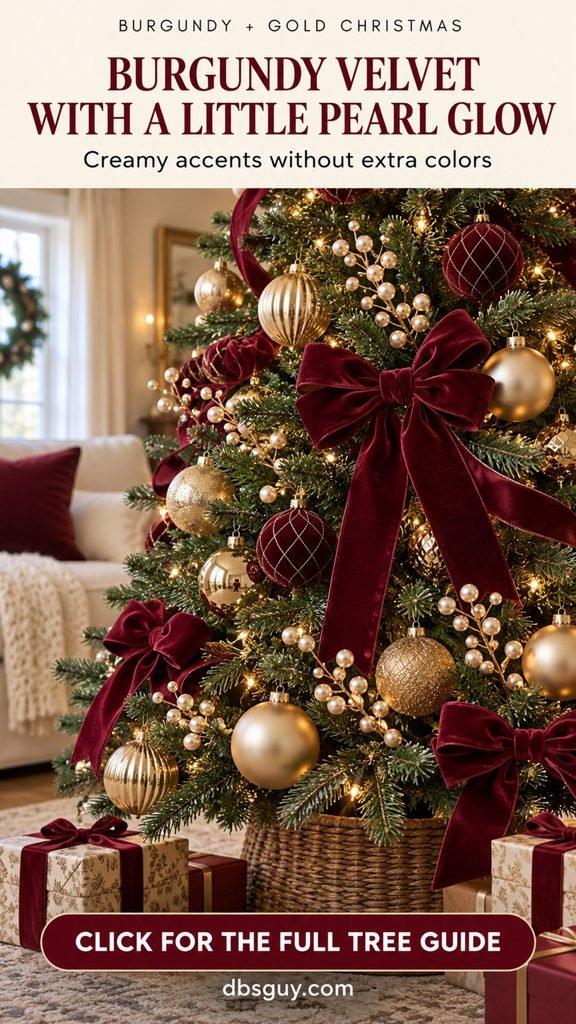
Recreate the look: Place small decorative pearl sprigs beside burgundy velvet bows, then add a few brushed gold baubles. Keep the pale accents modest enough that the velvet still supplies the strongest color.
Turn the pearl beads toward an open space where their outlines are visible. If they sit directly against another pale ornament, move one piece slightly so the different shapes can be appreciated.
Use lightweight decorations designed for tree display and secure their stems or hangers independently. A few pearl-look accents can soften the arrangement; they do not need to become a second garland running around the whole tree.
13. Pinecones With Burgundy and Antique Gold
Pinecones give burgundy and gold a more relaxed, rustic direction. Their rough surfaces contrast with soft velvet ties and gently aged metallic ornaments.

Recreate the look: Hang pinecone ornaments among burgundy baubles and muted antique gold pieces. Add narrow velvet ties near a few pinecones to repeat the wine color through the textured areas.
Choose ornaments with secure hanging attachments, and keep the pinecones visible rather than burying them behind broad ribbon. If the arrangement looks too brown, move a burgundy ornament into the same section before adding more metallic pieces.
A woven collar or plain neutral skirt continues the natural texture at the base. Existing gold ornaments can work here too: use them sparingly among the pinecones, then check whether the contrast feels balanced with the room’s wood tones.
14. Gold Stars With Simple Burgundy Spheres
Flat gold stars bring a clear shape into a tree filled with round ornaments. Repeating them between plain burgundy baubles gives the palette a cheerful, uncomplicated rhythm.

Recreate the look: Spread lightweight gold stars at different heights, leaving their points visible against the greenery. Add simple burgundy spheres between them, with a little open branch space around each star.
Keep most stars a similar size if you want their repetition to be obvious. You can vary the size of the round ornaments instead. A small star near a much larger bauble may need its own branch opening to stay noticeable.
This is a useful approach when you prefer recognizable shapes to a lot of ribbon. Try the stars and baubles first, then add a small topper that fits the upper branches.
15. Gold Mesh Ribbon With Burgundy Ornaments
Open-weave gold mesh creates shimmer while allowing greenery to show through the fabric. Plain burgundy ornaments give that airy texture a strong color beside it.

Recreate the look: Use decorative mesh ribbon made for this kind of display. Form a few loose folds with the open weave facing outward, then position burgundy baubles in the gaps beside them.
Begin with shorter sections so you can control the volume. If the mesh pushes far beyond the tree’s outline, reduce the fold size or tuck it deeper into a suitable supported space. Keep the finish close enough that it still looks integrated with the branches.
Separate reflective ornaments from the brightest mesh sections. A matte burgundy piece beside the gold weave helps both surfaces show, especially when the tree lights are on.
16. One Gold Sunburst Above a Burgundy Tree
Giving the strongest gold detail to the topper creates one clear point of attention. Burgundy ornaments below it provide a calmer backdrop.

Recreate the look: Choose a lightweight gold sunburst or starburst topper suited to your tree. Keep the branches below mostly burgundy, with small gold accents that connect the topper to the rest of the arrangement.
Hold the topper near the tree before attaching it. Check its width against the upper outline and leave comfortable clearance below the ceiling. Use the manufacturer’s attachment method and confirm that the top section can support its weight.
Keep nearby bows and large picks modest if you want the rays to stand out. Sometimes moving one ornament away from the upper branches is enough to make the topper’s shape easier to appreciate.
17. A Burgundy Skirt Beneath a Mostly Gold Tree
Burgundy can anchor the palette at floor level. A rich skirt beneath gold ornaments creates a different balance from a tree covered in wine-colored baubles.

Recreate the look: Decorate the branches mainly with plain gold ornaments, then add a deep burgundy fabric skirt around the original stand. A few burgundy accents higher up can connect the base to the branches.
Measure the stand and the available floor space before choosing the skirt. Arrange the fabric so it covers the hardware comfortably, leaves the walkway clear, and allows access to a real tree’s watering point.
Keep some of the skirt visible when adding gifts. Cream paper with narrow gold or burgundy ties can repeat the palette without hiding the fabric underneath. Leave plugs and electrical connections clear of the skirt.
18. Family Keepsakes Linked With Burgundy Ties
A coordinated color scheme can still include the handmade ornament and the little decoration that comes out every year. Repeated burgundy ties give a mixed collection a visual connection.

Recreate the look: Give favorite keepsakes visible positions, then add narrow burgundy ties beside a selection of their existing hangers. Use plain gold baubles between them to repeat a familiar finish.
Let each keepsake keep its original secure hanging attachment. The ribbon supplies color; it does not need to carry the weight of a fragile piece. Place the ties where they leave painted details and unusual shapes visible.
An ornament outside the palette can stay. Try giving it a little space, then repeat one of its colors elsewhere if you like. The burgundy-and-gold backdrop can bring the collection together while leaving its personal character intact.
19. Small Burgundy-and-Gold Ornament Clusters
Small groups of ornaments create focal points without needing oversized decorations. A loose group of wine and gold baubles can make a quiet section feel more deliberate.

Recreate the look: Arrange three small ornaments on neighboring supported branches, using slightly different hanging heights. Try two burgundy pieces with one gold, or reverse the colors if that section needs more light.
Give every ornament its own secure hanger. Leave a little greenery between the pieces so their shapes remain distinct, then keep a wider gap before the next group.
If the cluster looks like a heavy bunch, move one bauble to the side rather than adding another. Repeat the grouping idea in only a few areas at first. The spaces around the clusters help make those areas noticeable.
20. A Slim Tree With Narrow Burgundy Ribbon
A slim tree can carry this rich palette beautifully when the decoration fits its outline. Narrow ribbon and smaller gold ornaments keep the finished width manageable.
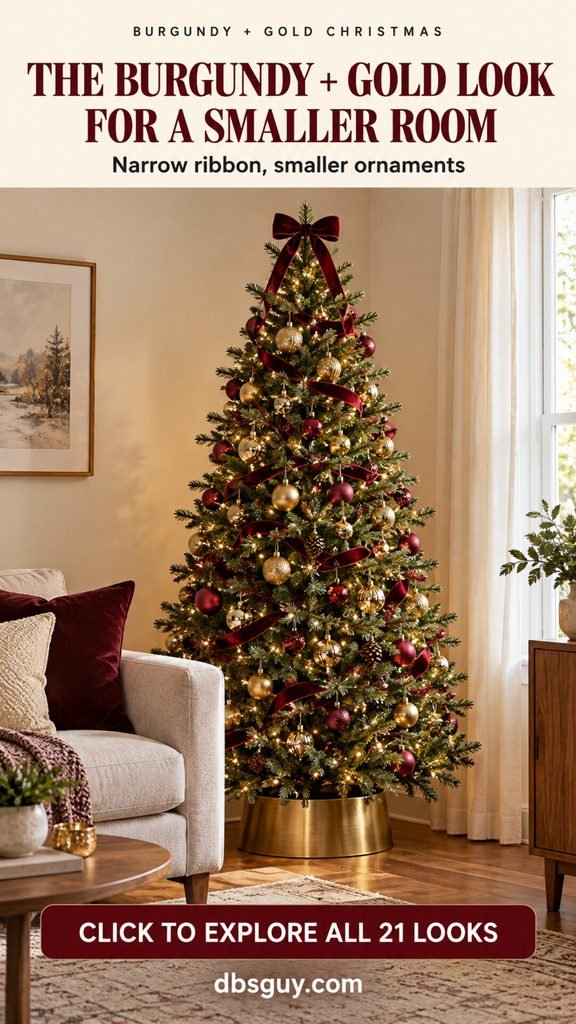
Recreate the look: Try burgundy ribbon around 1–1½ inches wide (2.5–4 cm) as a starting option. Make one modest fold against the branches, then add small gold baubles nearby before repeating the arrangement.
Keep most folds close to the foliage. A bow that extends well beyond a narrow tree can add unexpected width in a small room. Check the finished outline from the walkway, including the topper and lower branches.
Choose a skirt or collar using the actual stand measurements. Style the visible front and sides first if the tree sits in a corner, then decide whether the hidden back needs the same amount of decoration.
21. A Tabletop Tree With a Burgundy Base
A tabletop tree lets a small amount of burgundy make a clear statement. A fabric-covered base supplies the color while miniature gold ornaments bring light to the branches.

Recreate the look: Keep the tree on its original stable support, placed inside a decorative container that fits comfortably. Add burgundy fabric around the container’s outside, then decorate with tiny gold baubles and a small topper.
Set the tree well back from the table’s edge and check that the display remains stable. For a small live or cut tree, preserve access to its water or drainage needs and protect the furniture below.
Use the ribbon and ornaments at this smaller scale before cutting more material. A short remnant may cover the base, and narrow ties can supply the extra burgundy detail. Let the tabletop around the tree stay uncluttered.
Choose the Burgundy and Gold Balance That Suits Your Room
Start by choosing which color you want to notice first. A burgundy-focused tree feels different from a gold-focused one, even when both use the same ornaments. Large bows, flowers, and ribbon also count toward the color you see; counting baubles alone can be misleading.
For a burgundy-focused sample, try six wine-colored pieces, three gold pieces, and one ivory accent in a small arrangement. For a lighter sample, reverse the burgundy and gold amounts. These are optional starting mixes, not fixed decorating formulas. Change the sample when a large ribbon fold or a particularly reflective ornament shifts the balance.
Hold your actual burgundy ribbon beside several baubles. Wine red, brown-leaning oxblood, and purple-leaning burgundy can look different together. Small variations are often attractive, but the effect is easier to judge in the room than from color names on packaging.
Choose one main gold finish to connect the collection—brushed, pale champagne, or antique—then keep contrasting metallic finishes in smaller touches if you prefer a quieter result. Use the room’s furniture and existing decorations to help you decide.
Build the Arrangement Without Buying a Whole New Collection
Open the ornament box before making a shopping list. Gold baubles, ivory decorations, a plain skirt, or a few keepsakes may already give you most of the ingredients for one of these looks.
- Set up the foundation. Assemble the tree on its proper stand and shape artificial branches according to the tree’s instructions. Check the lights before covering them with decorations.
- Try one color sample. Place a burgundy detail, a gold ornament, and any supporting color together. Check the combination in daylight and with the tree lights on.
- Add the strongest details. Position the ribbon, flowers, topper, or other focal pieces that define your chosen look. Allow enough room to adjust and attach them securely.
- Repeat the colors through the tree. Distribute ornaments across the visible areas rather than finishing one dense patch at a time. Use different depths where the branches can support the pieces.
- Give favorites their own space. Add meaningful ornaments where you can enjoy them, then check the view from the doorway and your usual seat.
If something is missing, buy the detail that solves that specific gap. A little burgundy ribbon may connect an existing gold collection. A few ivory pieces may lighten a dark one. More ornaments are useful only when they add something the arrangement actually needs.
Fix the Parts That Look Too Dark, Shiny, or Crowded
If burgundy disappears: Turn the visible face of the ribbon toward the room, move a dark ornament slightly forward, or place a lighter accent nearby. Check after dark before adding more of the same color.
If gold takes over: Look for a group of highly reflective pieces in one area. Spread them farther apart or exchange one for a matte ornament. Gold mesh, beads, and metallic ribbon contribute to the shine too.
If the tree feels crowded: Find the focal points first. Clear a little greenery around a flower, star, or bow so its shape reads properly. Moving one decoration can help more than adding filler to another gap.
If the color collects at the bottom: Repeat a few smaller burgundy or gold details higher up, keeping their scale suited to the narrower branches. Assess the whole outline before changing every ornament.
If the new pieces feel disconnected: Repeat one shared color or finish near a few existing favorites. You can connect a collection through small details while allowing individual ornaments to keep their character.
Choose the Glow and Finish the Base
Warm white lights are a useful starting choice for burgundy and gold. Look at a sample of your ornaments under the actual lights before committing to the full arrangement. A gold finish that looks pale in daylight may appear more yellow in the evening.
If you enjoy multicolored lights, try the palette with those too. Keep some ornament surfaces plain so the light colors and decoration shapes remain readable. You can work with the lights you already have rather than treating a new set as part of the color scheme.
Use a skirt or collar that fits the original stand and the floor space available. Leave a real tree’s water reservoir accessible. Keep the area around the base usable, including the walkway and access to electrical connections.
Keep the tree at least 3 feet (about 0.9 m) from heat sources and leave exits clear. Replace damaged light strings, follow their indoor/outdoor ratings and manufacturer connection limits, and turn tree lights off before leaving home or going to bed. Never decorate with lit candles. Check and replenish a real tree’s water daily.
Burgundy and Gold Christmas Tree Questions
What shade of burgundy should I choose?
Choose the shade that looks good beside your gold ornaments and the room’s furnishings. A brown-leaning wine tone and a purple-leaning burgundy create different effects. Compare actual samples together in daylight and with the tree lights on; color names alone do not guarantee a match.
Should I use yellow gold or champagne gold?
Yellow gold gives a stronger warm metallic accent. Pale champagne gold offers a softer contrast beside burgundy. Try both with your existing pieces if you have them. You can use one as the main finish and the other as a smaller accent.
What third color works with burgundy and gold?
Ivory is an easy option when you want to lighten the arrangement. Natural pinecone brown adds a rustic texture, while the tree’s green branches already supply another color. Begin with one supporting accent and assess the result before adding several.
Can I use the same idea on a real Christmas tree?
Yes, with adjustments for the real tree’s branch strength and spacing. Choose ornaments each branch can support, use secure hangers, and keep the water stand accessible. A full artificial tree and an open real tree may need different ribbon volume even at the same height.
How much ribbon or how many ornaments do I need?
Make one finished bow or ribbon fold and measure the material it uses, then multiply by the number you intend to place and allow extra for trimming. For ornaments, decorate one representative section and use it to estimate the visible areas you want to fill. Tree width, branch spacing, and your chosen density matter as well as height.
Can I keep my existing red or silver ornaments?
Try a few with the burgundy-and-gold sample before setting them aside. Bright red can become a small festive accent; silver can add a cooler reflection. Repeat those pieces selectively and check whether the overall palette still has the balance you wanted.
Make the Palette Feel Like Your Christmas
Choose one detail that makes you want to start: the softness of velvet, the shine of burgundy glass, a gold star, or a few keepsakes tied together with wine-colored ribbon. Build around that detail with the pieces you already enjoy.
A rich, inviting tree leaves room for both the color scheme and your own traditions. Give favorite ornaments space, check the glow in the evening, and make the small adjustments that let the whole arrangement feel comfortable in your room.